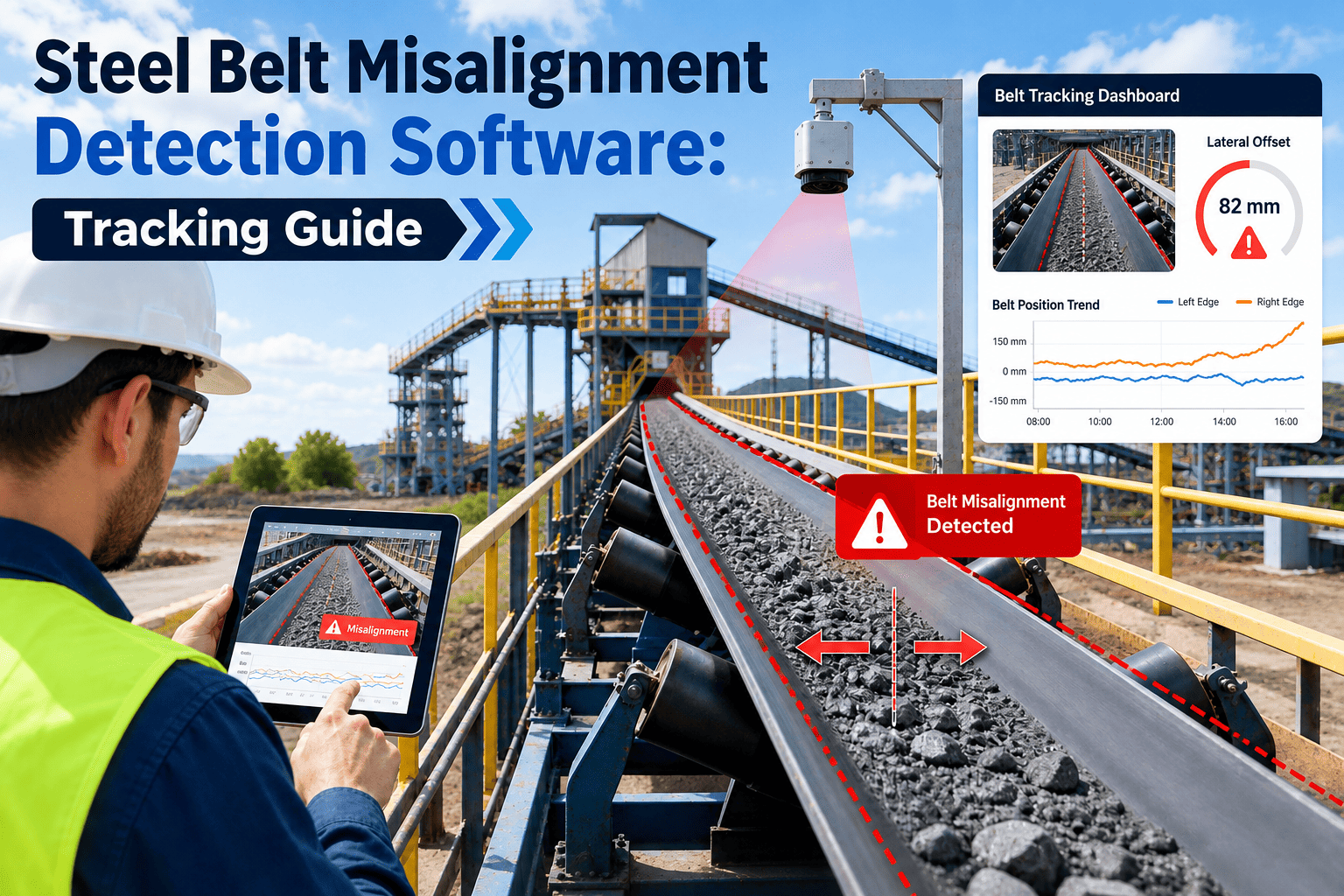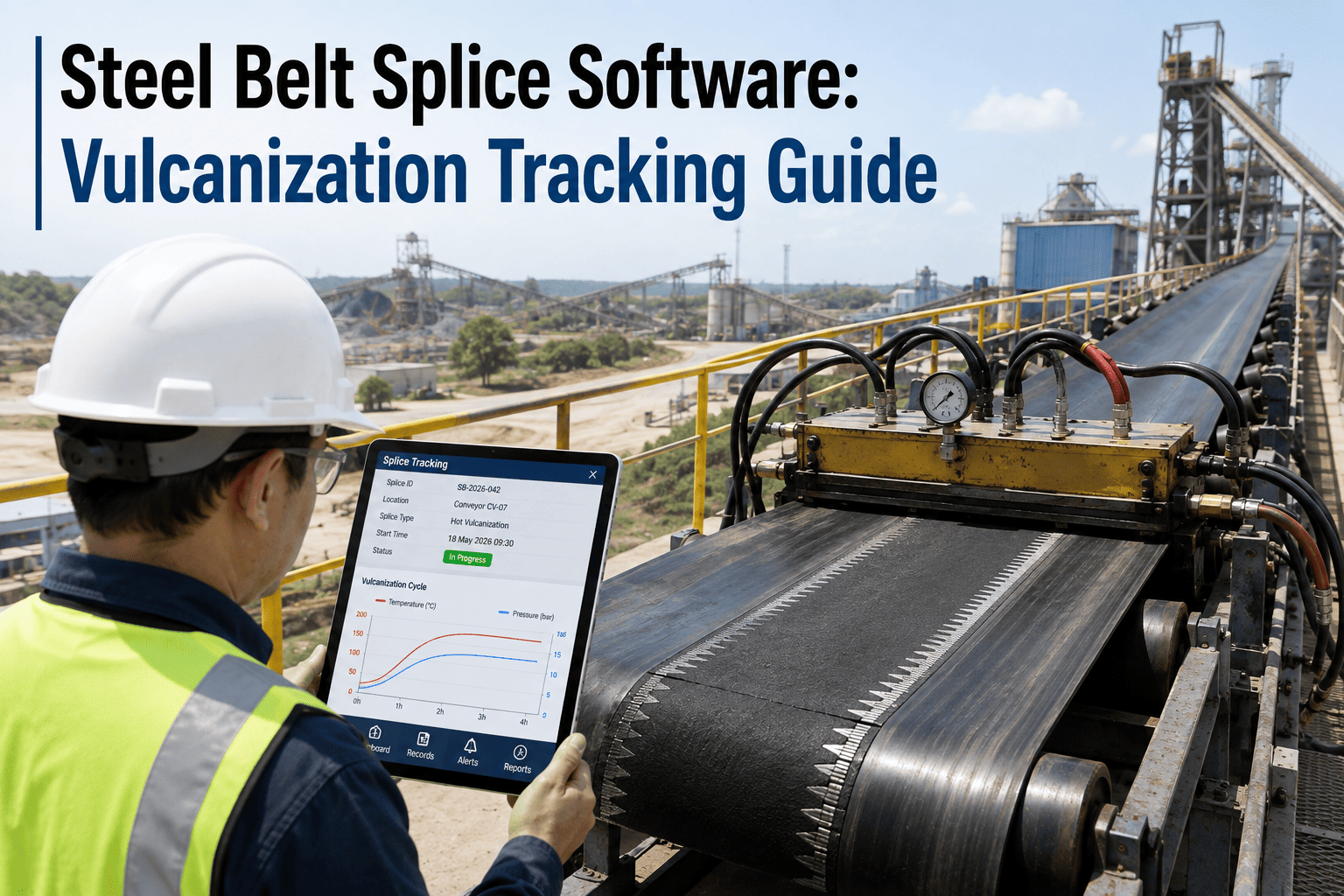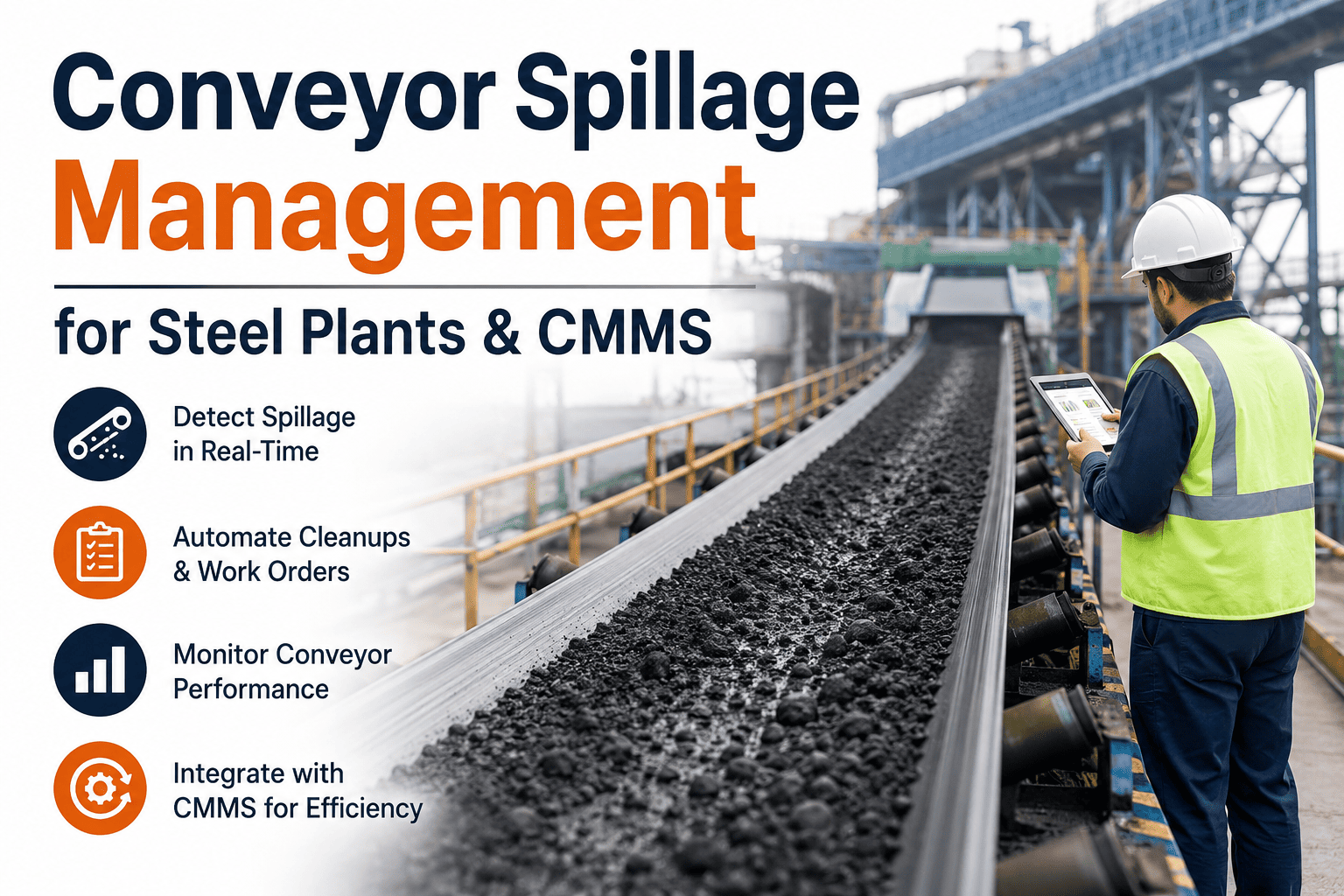
Conveyor spillage looks like a housekeeping problem until it starts eating into belt life, safety records, and unplanned downtime. In most steel plants, spilled ore, coke, and sinter fines collect fastest at transfer points, where worn skirting, misaligned chutes, and belt mistracking work together to push material off the belt and onto the walkway below. Left unmanaged, that spillage packs into idlers, drags on the drive, and creates a fire risk wherever hot fines build up near structural steel. Plants that bring spillage under control stop treating it as a daily shoveling task and start tracking it as a maintenance program with clear ownership. Start a free trial with Oxmaint to schedule skirting, tracking, and transfer point PM in one place, or book a demo to see the spillage workflow.
Turning Conveyor Spillage Into a Controlled, Measurable Program
Root cause analysis, skirting board PM, belt tracking discipline, and housekeeping accountability, mapped into one CMMS workflow instead of a running list of complaints from the floor.
Why Spillage Is a Reliability Problem, Not Just a Cleanup Problem
Every ton of material on the walkway is a ton that never reached the process, plus a cleanup task that pulls crew hours away from planned work. The real damage happens underneath the belt, where packed fines seize idlers, accelerate belt cover wear, and load the drive with drag it was never sized for.
Where Spillage Actually Starts — Follow the Chain
Spillage rarely has one cause. It is usually a chain reaction that starts at the loading point and compounds by the time material reaches the discharge end, which is why fixing the visible pile without addressing the chain brings the spillage right back within a week.
A Skirting Maintenance Schedule Steel Plants Can Actually Follow
Skirting fails gradually, which is why a fixed inspection interval catches wear long before it turns into visible spillage on the floor.
| Component | What to Check | Frequency | Failure Signal |
|---|---|---|---|
| Rubber skirt seal | Contact pressure against belt, cracking, and wear thickness | Weekly | Visible gap or dust escaping along the seam |
| Skirtboard steel | Alignment, entrapment points, and bottom edge smoothness | Monthly | Belt gouging or abrasion marks near the edge |
| Chute liner | Liner thickness at each transfer point | Monthly | Structural steel showing through worn liner |
| Wear bar / dust curtain | Fit against belt surface and mounting hardware | Weekly | Fugitive dust visible outside the enclosure |
| Sealing system fasteners | Tightness and corrosion of mounting brackets | Monthly | Loose panel movement during belt operation |
Belt Tracking Adjustments That Stop Spillage at the Source
Mistracking is the fastest way for a small skirting gap to turn into a spillage event, so tracking checks belong on the same PM cycle as skirting inspection rather than a separate, less frequent task.
| Symptom | Likely Cause | Corrective Action |
|---|---|---|
| Belt drifts to one side consistently | Misaligned idlers or out-of-square structure | Laser-align idlers and check frame squareness |
| Drift changes with load level | Off-center loading at the feed point | Reposition chute or add a centering plow |
| Drift appears at one fixed location | Material build-up on a pulley or idler | Clean build-up and inspect scraper tension |
| Belt edge shows repeated damage | Worn or crooked splice geometry | Inspect splice and schedule re-splicing |
Stop Chasing the Same Pile of Spillage Every Shift
Oxmaint schedules skirting checks, belt tracking inspections, and transfer point PM together, so a worn seal gets flagged before it becomes a housekeeping incident.
Four Steps That Turn Housekeeping Into a Managed Program
A cleanup crew alone never closes the gap, because spillage returns as fast as it is removed. A managed program layers detection, containment, cleanup, and prevention so the volume keeps shrinking instead of resetting every shift.
How Oxmaint Manages Conveyor Spillage End to End
Weekly skirting checks are logged per transfer point, so wear trends are visible before a seal fails completely.
Shift-level tracking checks record pass or fail plus a cause code, isolating repeat offenders from one-off drift.
Monthly liner measurements catch wear before structural steel is exposed and a chute replacement becomes unavoidable.
Every cleanup is logged by location, turning scattered complaints into a ranked list of conveyors that need root cause work.
Flagged skirting or tracking issues route straight to a work order, closing the gap between observation and repair.
Exportable records support internal safety walkdowns and external mill housekeeping audits without manual paperwork.
Reactive Cleanup vs. a Managed Spillage Program
Frequently Asked Questions
What causes most conveyor spillage in a steel plant?
Most spillage starts at transfer points, where loading impact, chute turbulence, and worn skirting combine. Belt mistracking then widens the gap and turns a minor leak into heavy spillage. Start a free trial to track these causes by conveyor.
How often should skirting boards be inspected?
Rubber seals and dust curtains should be checked weekly, since they wear gradually and fail before the damage is obvious. Skirtboard steel and chute liners can follow a monthly cycle unless a plant runs unusually abrasive material.
Can belt mistracking really cause spillage on its own?
Yes. A belt drifting even slightly off center opens the skirt gap on one side, letting material escape steadily even when the skirting itself is in good condition. Book a demo to see tracking inspection scheduling.
How does a CMMS help with spillage that a cleanup crew already handles?
A CMMS turns scattered cleanup tasks into location-tagged data, so repeat hotspots surface instead of getting cleared and forgotten. That data drives the root cause repair that actually stops the spillage.
What is the fastest way to start reducing spillage this month?
Start by logging every cleanup by conveyor and transfer point for two weeks. The pattern usually points straight to one or two skirting or tracking issues worth fixing first. Start a free trial to log hotspots automatically.
Bring Every Transfer Point Under One Spillage Program
Oxmaint connects skirting PM, belt tracking logs, and hotspot data so your team fixes the cause once instead of shoveling the same pile every shift.