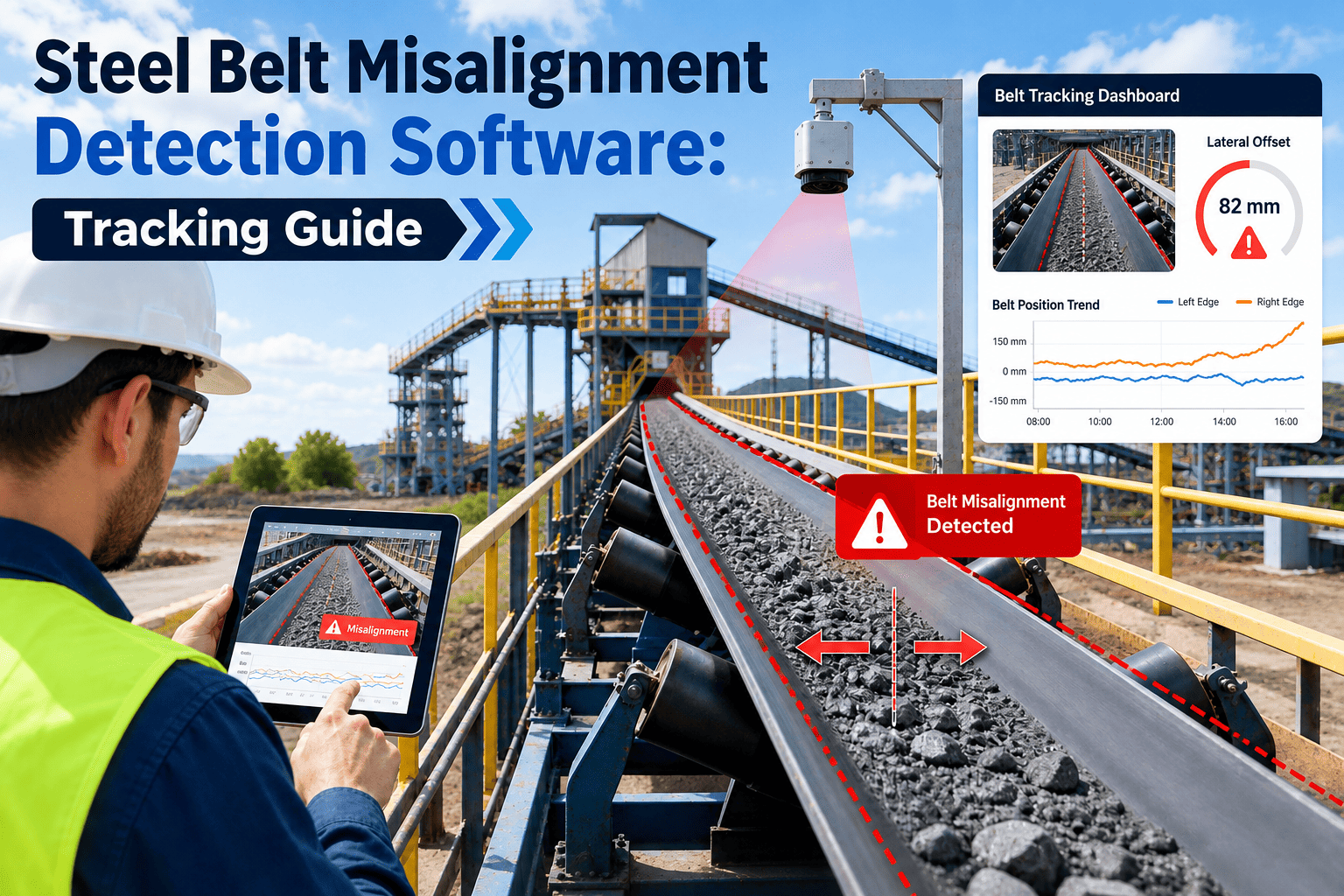
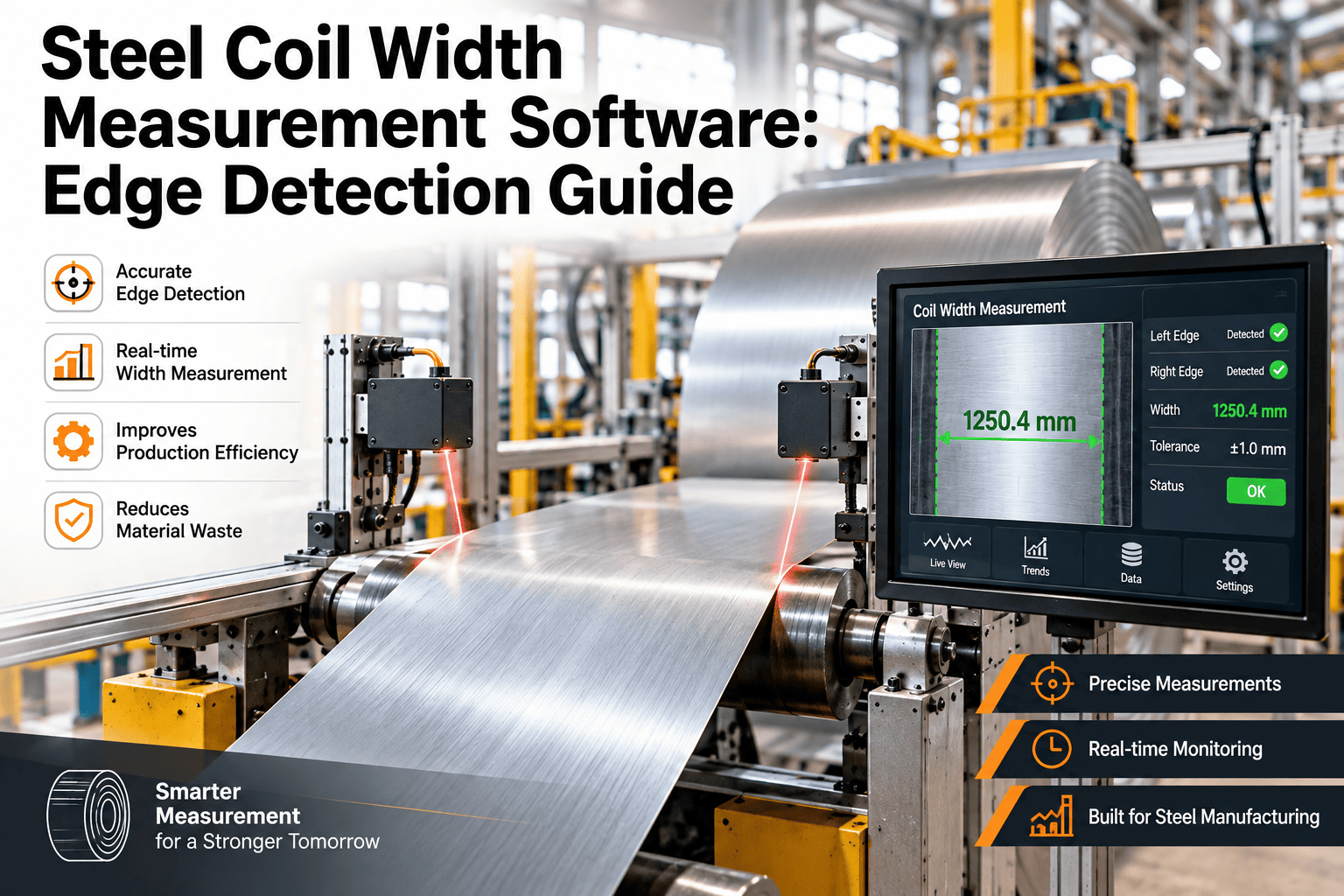
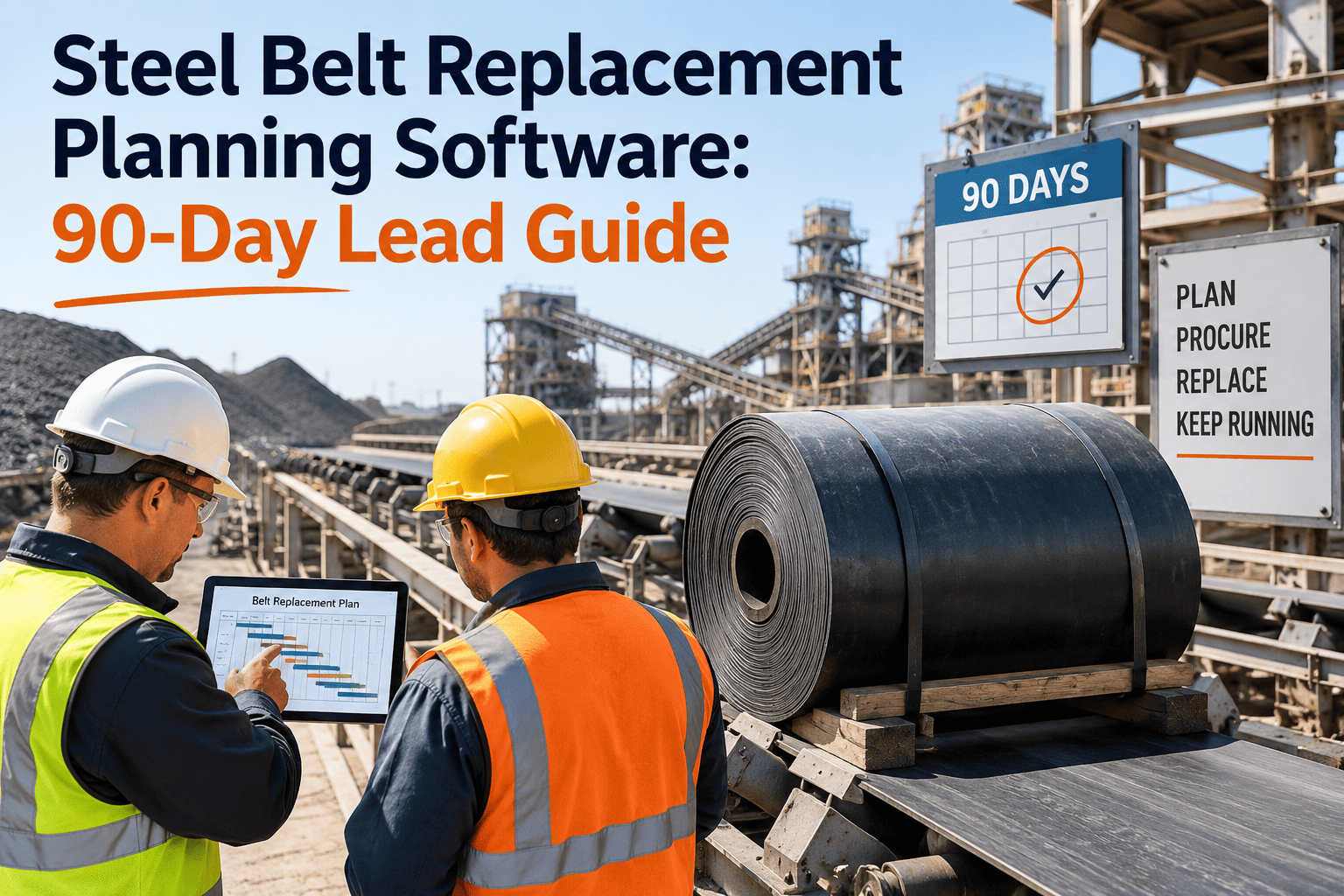
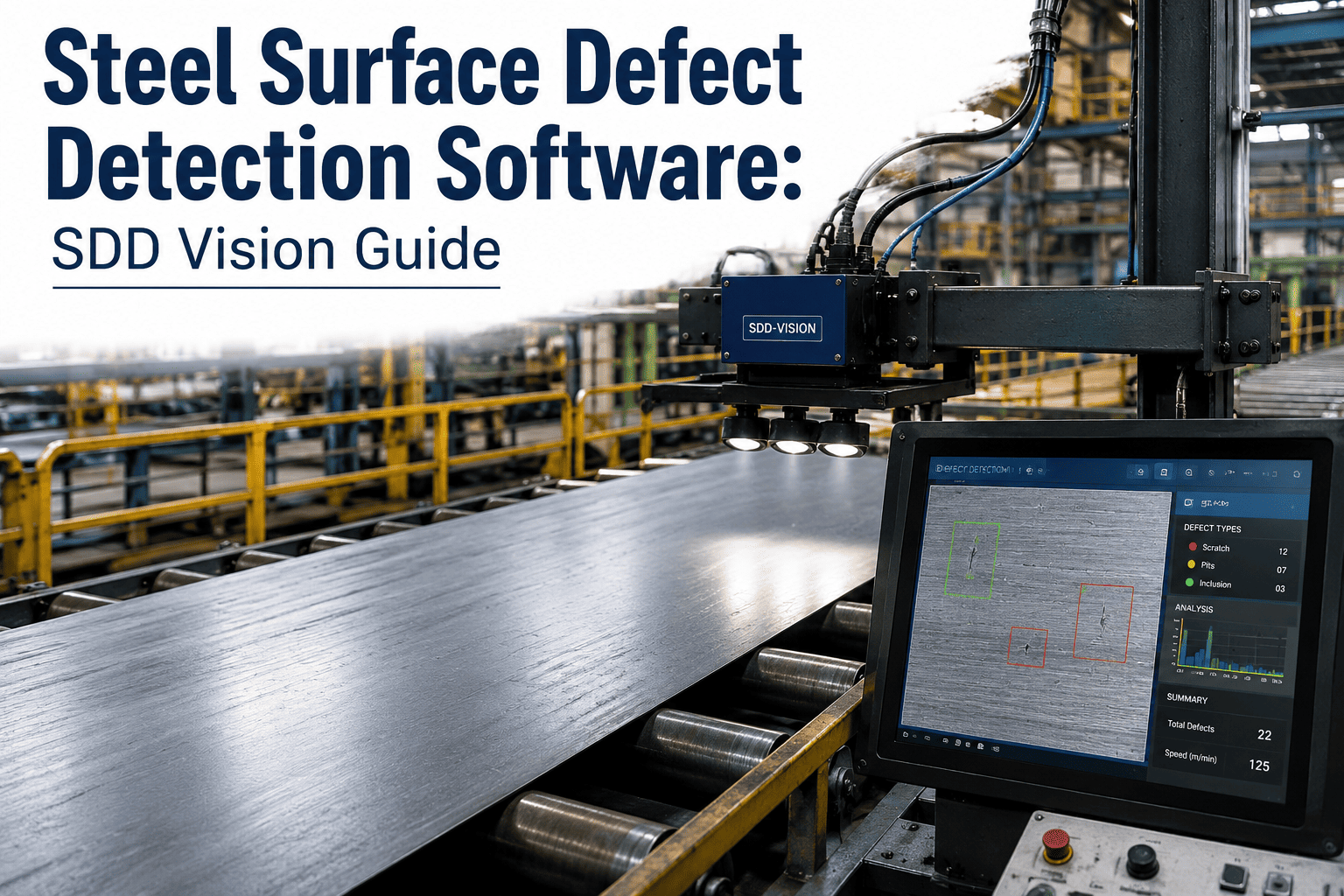
Every steel plant conveyor drifts a little — until it doesn't. A tracking roller shifts two millimeters out of true, nobody notices for a week, and by the time an operator sees the belt edge rubbing against the frame, the skirt rubber is shredded, the idlers are scored, and the return fines are spilling onto the walkway. Belt misalignment is quiet damage that steel plants treat as routine wear right up until it causes a four-hour unplanned stop on a strand or sinter line. Sensor-based tracking closes that gap by catching drift in millimeters, not in torn belting, and routes the alert straight into a work order before the edge ever touches steel. If your conveyors are still tracked by a walk-by glance once a shift, start a free trial with Oxmaint to see what continuous tracking looks like on your lines.
Conveyor Reliability · Belt Tracking · Predictive Maintenance
Steel Belt Misalignment Detection Software: The Tracking Guide Plant Teams Actually Use
Belt misalignment is the single most preventable cause of conveyor downtime in steel plants — and the hardest to catch with a manual walkaround. This guide breaks down why belts drift, how tracking sensors and CMMS work together to catch it early, and what a real detection-to-correction workflow looks like on a working strand, from the first sensor read to the trend review that stops the same zone from wandering again.
31%
Of unplanned conveyor stops trace back to untracked belt drift and edge damage
3mm
Typical drift threshold where sensor-based tracking triggers a work order, well before visible wear
6hrs
Average recovery time for a mistracked belt that reaches full edge-frame contact
Root Cause Breakdown
Why Steel Plant Belts Drift Off Center
Misalignment rarely has one cause. It builds from a combination of mechanical setup, material loading, and environmental factors that compound over weeks before anyone sees the belt riding the frame. Understanding which cause is at play matters because the fix is different for a worn idler than it is for an off-center chute.
01
Uneven Idler Wear
Idlers under a heavy sinter or coke feed wear unevenly across the roll face. One side spins slightly slower than the other, and the belt walks toward the faster-turning edge over hundreds of cycles.
02
Off-Center Loading
A chute or transfer point that loads material to one side of the belt shifts the center of mass permanently. The belt corrects toward the heavier side and never fully returns to center.
03
Structural Frame Drift
Conveyor structures settle and twist slightly over years of thermal cycling near furnaces and casters. A frame that is a few millimeters out of level pulls the belt with it.
04
Splice and Joint Wander
A belt splice that was not cut and joined square introduces a repeating drift pattern once per belt revolution, which is easy to mistake for random wander during a manual check.
05
Material Buildup on Pulleys
Sticky fines and dust cake onto the head or tail pulley face, effectively changing the pulley diameter on one side and steering the belt without any change to the structure itself.
06
Tension Imbalance
A takeup system that applies slightly uneven tension across the belt width creates a persistent lateral pull that manual tracking rollers can only partially correct.
What Drift Actually Costs
The Real Damage Chain Behind a Mistracked Belt
Stage 1
Edge Contact Begins
Belt edge starts rubbing the frame or skirt rubber. No production impact yet, but rubber dust and belt fray become visible on close inspection.
Stage 2
Skirt and Idler Wear
Sustained rubbing chews through skirt rubber and scores idler rolls. Spillage begins along the affected section of the run.
Stage 3
Belt Edge Fray and Cord Exposure
Repeated contact frays the belt edge down to the steel or fabric cording, weakening the belt structurally and accelerating further drift.
Stage 4
Emergency Stop and Recovery
The belt either tears, jams against the frame, or trips a safety switch. The line stops, and recovery runs four to eight hours depending on belt access and splice work required.
Catch Drift Before Stage 2
A Sensor Sees Three Millimeters of Drift. A Walkaround Sees It After the Rubber Is Already Torn.
Oxmaint connects belt tracking sensors directly to work orders, so drift gets flagged and routed to a technician the moment it crosses your threshold — not during the next scheduled inspection round.
Detection Method Comparison
How Steel Plants Actually Track Belt Position
Four detection methods cover most steel plant conveyors today, ranging from mechanical switches to camera-based vision systems. Each has a different cost, accuracy, and response speed profile, and most mature plants end up running a mix rather than standardizing on a single method across every belt. The right starting point is usually the belt where a stop is most expensive, not the newest sensor technology on the market.
| Method | Detection Speed | Accuracy | Best Fit |
| Mechanical tracking switch |
Reacts only at full deflection |
Low — binary trip point only |
Low-value, low-speed secondary belts |
| Ultrasonic edge sensor |
Near real-time, continuous |
High — millimeter-level edge tracking |
Dusty environments, sinter and coke handling |
| Laser alignment sensor |
Real-time, continuous |
Very high — sub-millimeter |
High-value strand and caster feed belts |
| Vision/camera tracking |
Real-time, continuous |
High, plus visual fault context |
Long overland runs with multiple failure modes |
The Detection-to-Correction Loop
How Tracking Sensors and CMMS Work Together
Sense
Sensor Reads Belt Position Continuously
Ultrasonic, laser, or vision sensors mounted at key points along the run measure belt edge position against the centerline every few seconds, not once per shift.
Flag
Drift Crosses the Configured Threshold
When measured drift exceeds a set tolerance, typically two to four millimeters depending on belt width and speed, the sensor raises a flag instead of waiting for visible damage.
Route
CMMS Opens a Work Order Automatically
The alert generates a work order tagged to the exact conveyor section and idler zone, so the assigned technician knows precisely where to look before walking the line.
Correct
Technician Adjusts Tracking Rollers or Idlers
Correction is usually a tracking roller adjustment, idler realignment, or loading point fix. Because it happens at three millimeters instead of thirty, the fix takes minutes, not hours.
Log
Correction and Drift History Are Recorded
Every correction, timestamp, and drift reading is logged against the asset, building a trend history that shows whether a section is drifting occasionally or chronically.
Trend
Recurring Drift Triggers a Root-Cause Review
If the same zone needs repeat correction within a set window, the CMMS escalates it from a routine adjustment to a root-cause investigation — idler wear, frame level, or loading point.
Applied by Conveyor Type
Belt Tracking Priorities Across Steel Plant Conveyor Types
Constant fines dust makes visual inspection unreliable, and heat near the strand accelerates skirt rubber wear once edge contact starts. Ultrasonic sensors handle the dust better than optical methods and hold accuracy through the fines buildup.
Heavy, uneven loading from hopper drops is the dominant drift cause here. Tracking should pair with load-cell data so a technician can see whether drift correlates with a specific loading pattern before adjusting hardware.
Runs stretching several hundred meters accumulate small structural shifts across many support towers. Vision-based tracking at multiple points helps isolate which section is actually drifting instead of guessing from the head end.
These belts run closest to the highest-value equipment, where a spillage or jam has the most expensive downstream consequences. Laser sensors with the tightest tolerance and fastest alert routing are typically justified here.
Match Sensors to Your Conveyor Risk
Not Every Belt Needs a Laser. Every Belt Needs a Threshold and an Alert Path.
Oxmaint helps you map sensor type to conveyor value, set drift thresholds per zone, and connect every alert to a routed, trackable work order — no more relying on a technician remembering to check.
Outcomes Plants Report
What Continuous Belt Tracking Changes in Practice
42%
Fewer Belt-Related Stops
Catching drift at the millimeter stage instead of the frame-contact stage prevents most of the emergency stops tied to torn edges and jammed skirts.
3x
Longer Belt Edge Life
Belts that are corrected before sustained edge contact show significantly longer usable life before replacement or re-splicing is required.
70%
Less Spillage Cleanup Labor
Reduced skirt wear and edge damage means less material escaping the belt path, cutting the housekeeping hours spent shoveling spillage.
2-3hrs
Correction Instead of Recovery
A tracking roller adjustment made early takes a fraction of the time of a full recovery from a torn or jammed belt.
Quick Reference
Belt Tracking Decision Guide
| Your Situation | Recommended Sensor | Alert Threshold |
| Heavy dust, sinter or coke lines |
Ultrasonic edge sensor |
3–4mm drift |
| High-value caster or mill feed belt |
Laser alignment sensor |
2mm drift |
| Long overland run, multiple towers |
Vision tracking, multi-point |
3mm drift per section |
| Low-value secondary belt |
Mechanical tracking switch |
Full deflection trip |
Getting Started
Building a Belt Tracking Program That Actually Gets Used
Installing sensors is the easy part. The programs that stick are the ones where thresholds, ownership, and escalation rules are decided up front instead of figured out after the first false alarm floods a technician's queue and gets ignored from then on.
A
Rank Belts by Consequence, Not Just Length
Start with the belts where a stop hurts the most — caster feed, strand feed, main charging conveyors — rather than the longest or oldest runs. Sensor budget should follow production risk first.
B
Set Thresholds Per Belt, Not Plant-Wide
A wide, slow raw material belt tolerates different drift than a narrow, fast finishing line belt. Copying one threshold across every conveyor produces either constant false alarms or missed early warnings.
C
Assign a Named Owner for Every Alert Type
Drift alerts that land in a shared inbox get ignored. Route each alert to a specific technician or crew by conveyor zone so there is no ambiguity about who responds and by when.
D
Review Drift Trends Monthly, Not Just Alerts Daily
Daily response handles the immediate fix. A monthly review of drift frequency by zone is what surfaces the idler, frame, or loading problems that keep causing the same belt to wander back off center.
E
Tie Correction Time Back to the Work Order
Logging how long each correction takes, not just that it happened, shows whether a section is getting easier or harder to keep aligned over time — an early signal of hardware that needs replacing.
F
Train Operators to Spot the Early Signs Too
Sensors cover the belts you have instrumented. Operators walking near uninstrumented sections should still know the early visual cues — rubber dust, a shifted load stream, a faint burning smell — as a backup layer.
Common Questions
Belt Misalignment Detection — Frequently Asked Questions
How much drift is actually dangerous before it damages the belt?+
Most steel plant belts tolerate a few millimeters of lateral movement without issue. Sustained contact with the frame or skirt is where damage starts, so thresholds are usually set at two to four millimeters.
Book a demo to size thresholds for your belt widths.
Can tracking sensors work in a dust-heavy sinter or coke environment?+
Yes. Ultrasonic sensors are built for this — they hold accuracy through fines and dust far better than optical or camera-based tracking, which is why they are the standard choice on raw material lines.
Do we need sensors on every conveyor, or just the critical ones?+
Most plants prioritize sensors on high-value or high-consequence belts first — caster feed, strand feed — and use mechanical switches on lower-value secondary runs.
Start a free trial to test tiered sensor placement.
How does a drift alert turn into an actual work order?+
When a sensor crosses its configured threshold, the CMMS generates a work order automatically, tagged to the specific conveyor zone, so the technician knows exactly where to check before walking the line.
What if the same section keeps drifting after correction?+
Repeat drift in the same zone within a set window is a signal to escalate from a routine roller adjustment to a root-cause check — usually idler wear, frame level, or an off-center loading point.
From the Floor
What Maintenance Teams Say
We used to find out about belt drift when someone smelled hot rubber near the skirt boards. Now the sensor flags it at three millimeters and the work order is sitting in the tech's queue before the shift even walks that section. We have not had a torn belt on the sinter feed since we put tracking sensors on it, and our skirt rubber budget for that line has dropped by more than half.
— Maintenance Planner, Integrated Steel Facility
Stop Finding Out From Torn Rubber
Belt Misalignment Is Predictable. It Should Not Take a Shredded Skirt to Notice It.
Oxmaint connects your belt tracking sensors to automatic, zone-tagged work orders — so drift gets corrected in minutes at three millimeters, not hours after the belt has already torn.