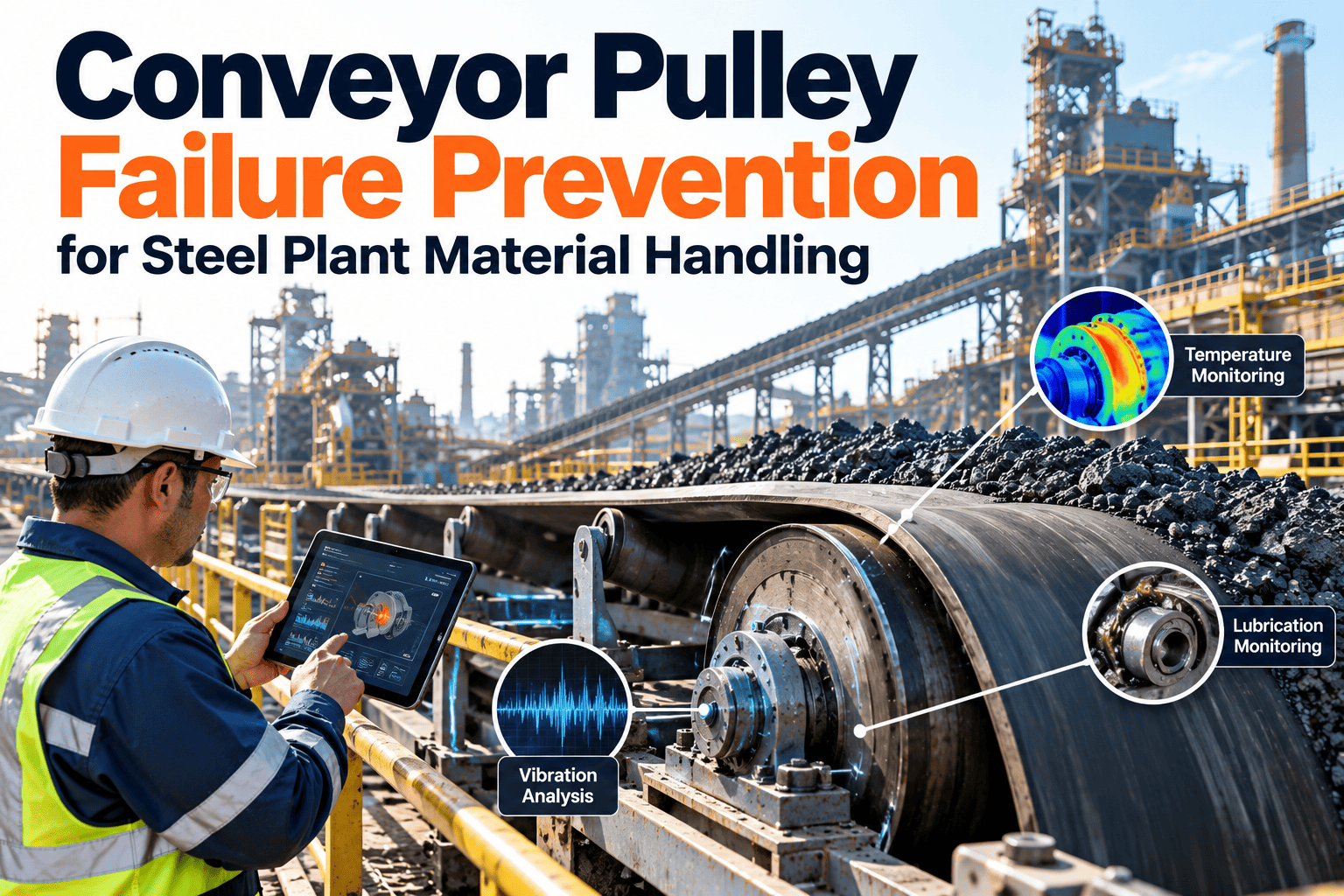
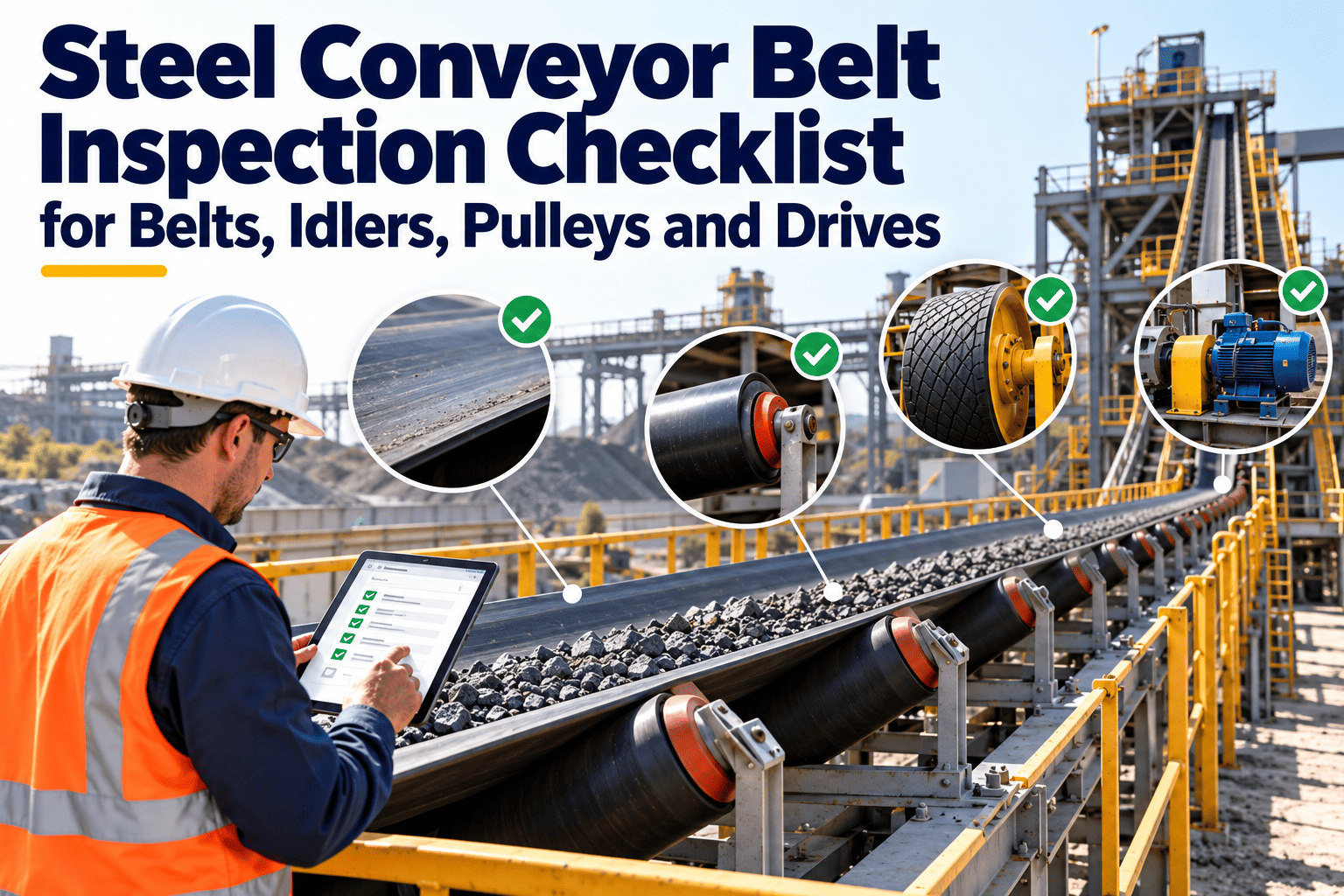
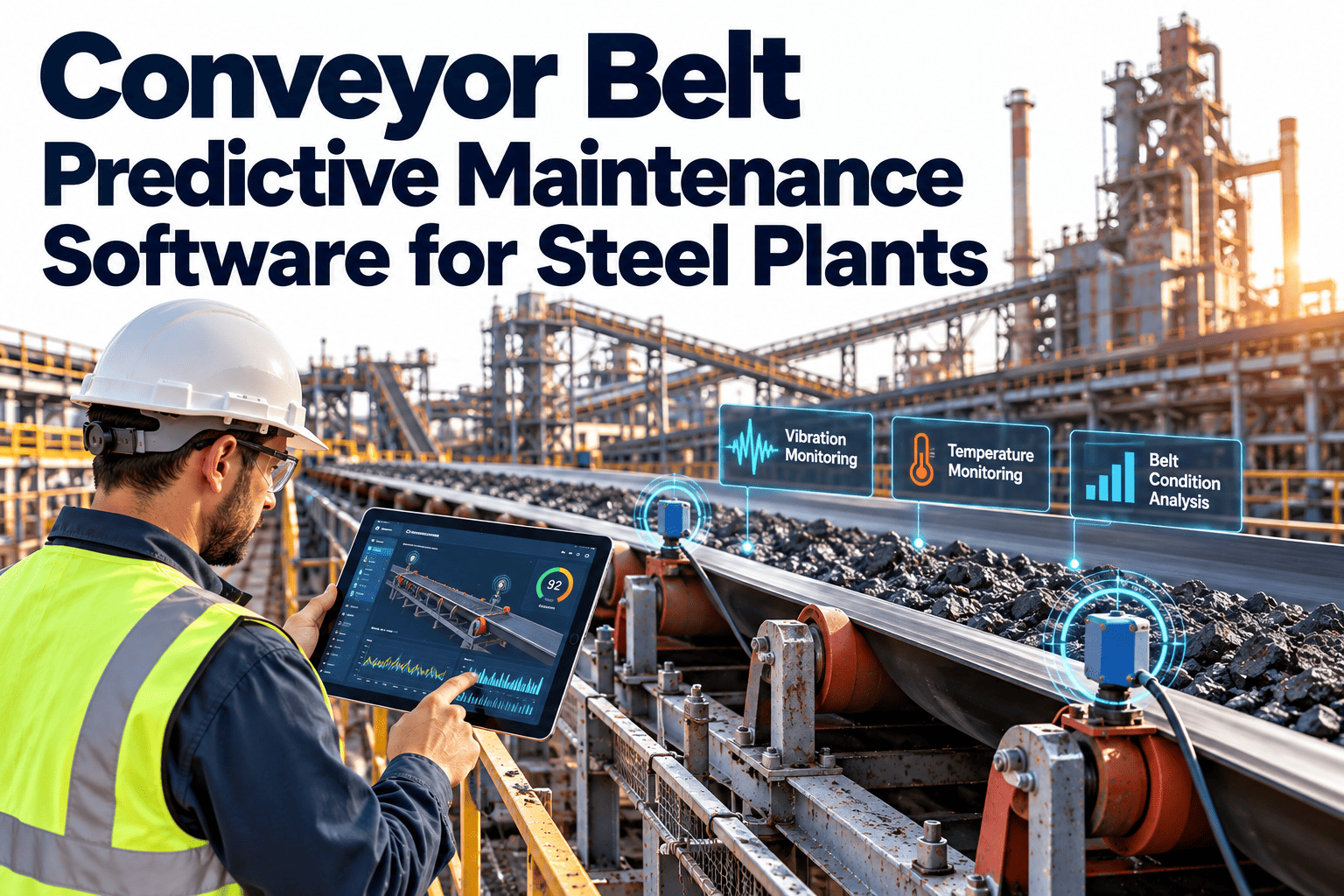
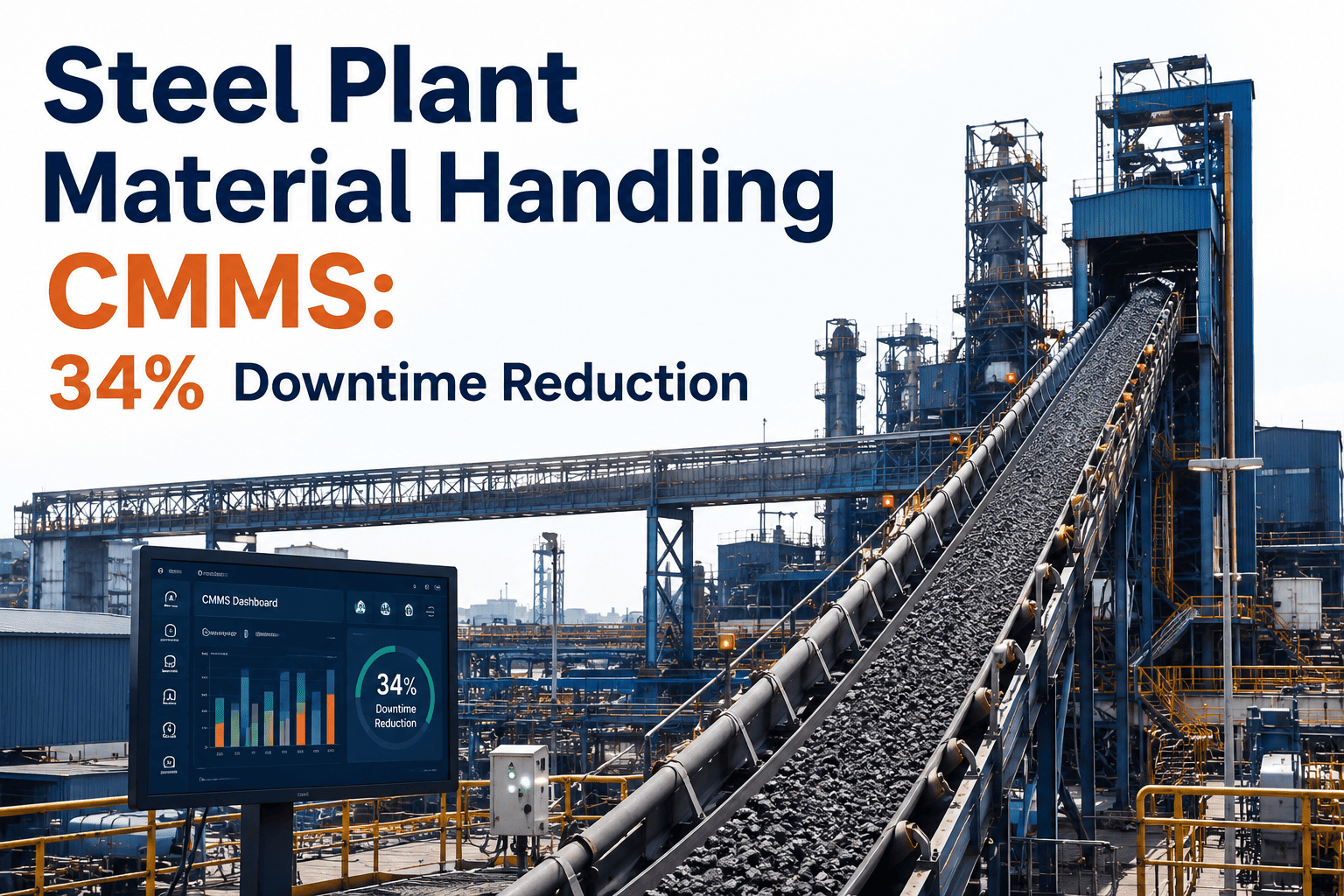
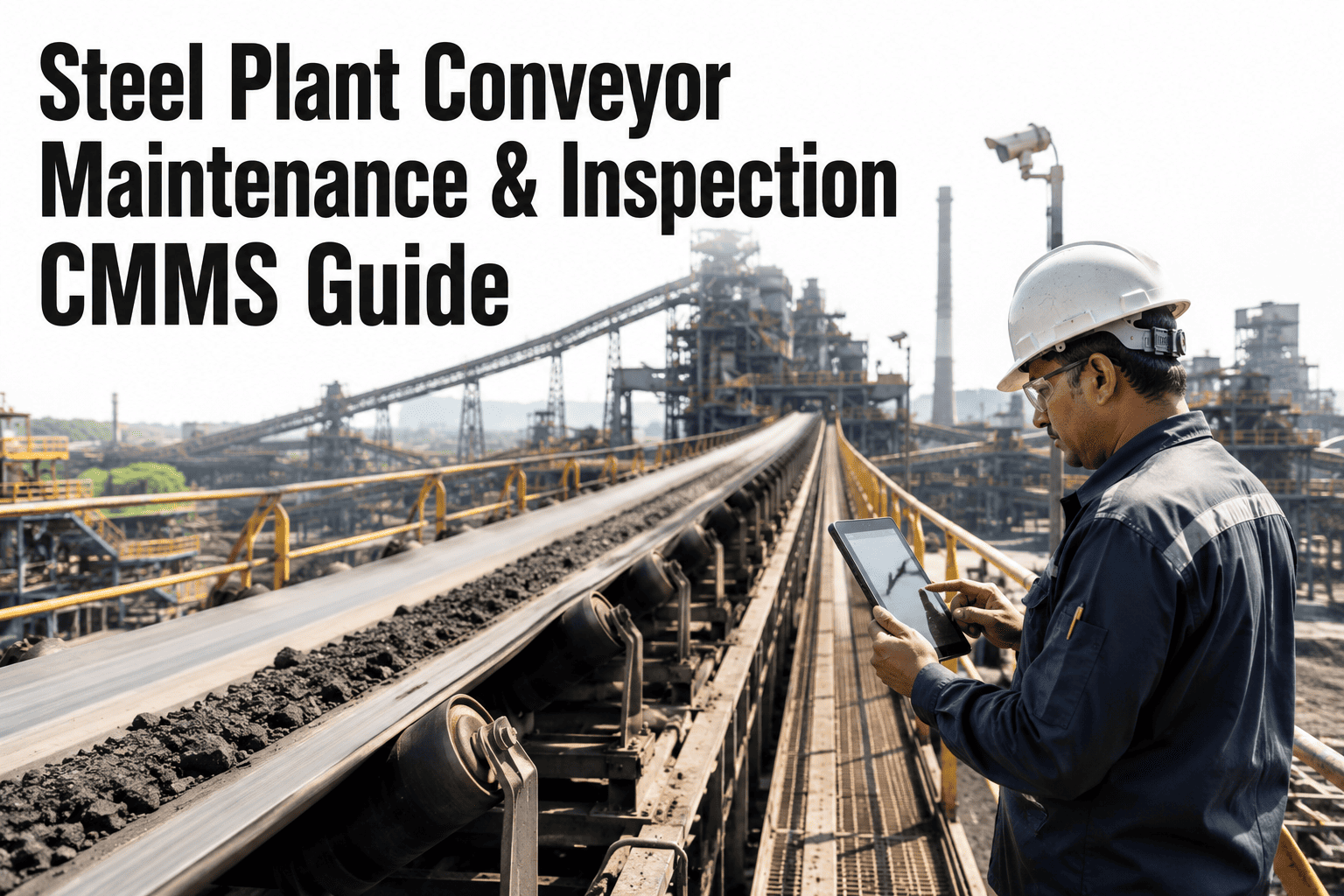
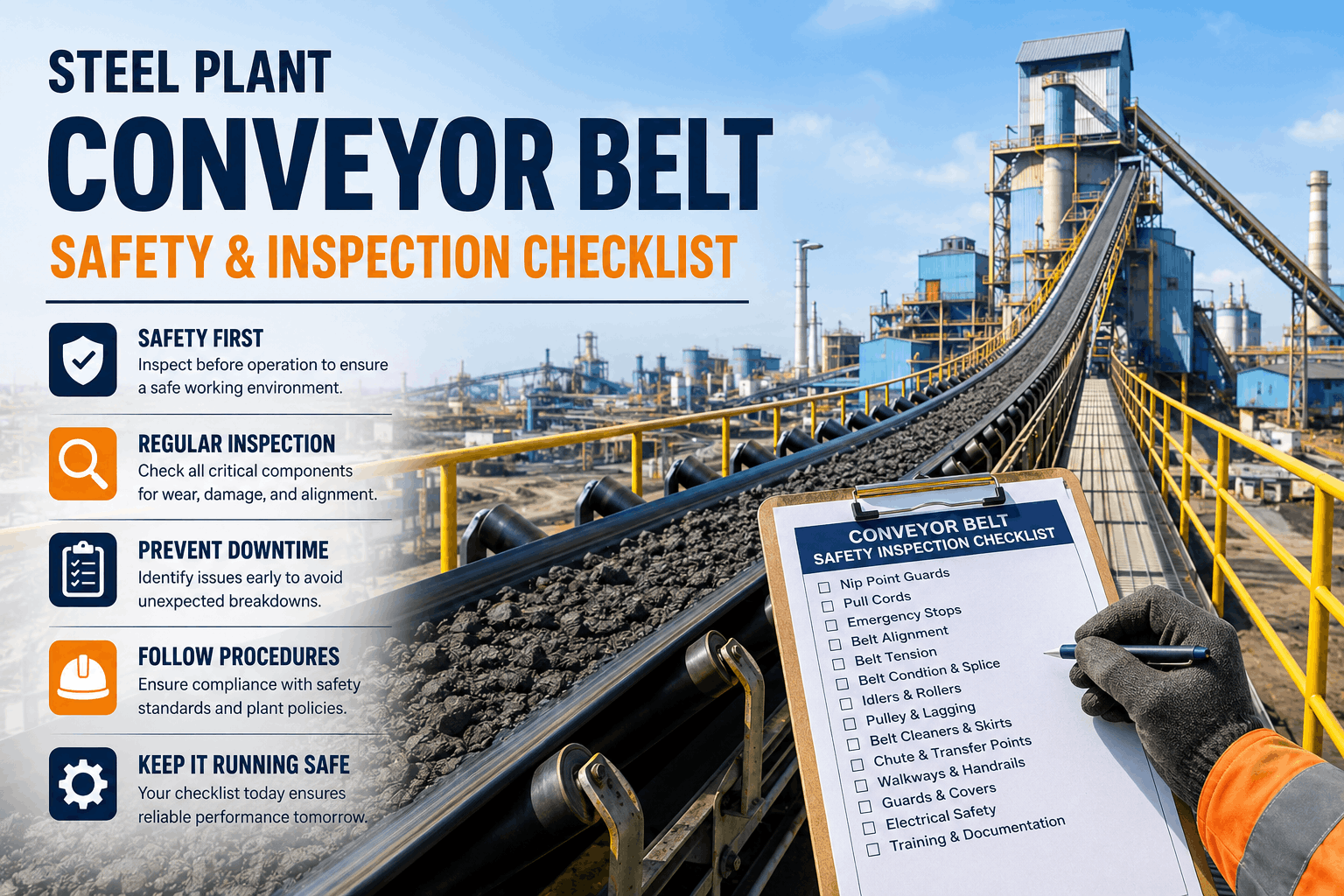
A conveyor belt that stops in a steel plant does not just pause material flow — it halts the entire production chain. With steel plants operating continuous casting, rolling mills, and ore handling lines that depend on uninterrupted conveyor throughput, an unplanned belt failure can cost tens of thousands of dollars per hour in lost production. Companies opting for low-cost or reactive-only conveyor maintenance face 3x more unplanned downtime than those running structured preventive programs. This checklist, built for steel plant operations and integrated with OxMaint's CMMS preventive maintenance module, covers every inspection point from belt tension and splice condition to pulley alignment, roller rotation, safety guards, and spillage management — organized by shift, weekly, and monthly frequencies so nothing gets missed.
Checklist · Material Handling · Steel Plant Operations
Conveyor Belt Maintenance Checklist for Steel Plants
A complete CMMS-ready inspection framework covering belt condition, tension, pulleys, rollers, idlers, safety guards, and spillage — structured by shift, weekly, and monthly intervals for steel plant conveyor systems.
3x
More unplanned downtime with reactive-only conveyor maintenance (Fives Group 2024)
50%
Downtime reduction possible with IoT predictive maintenance on conveyor systems
30%
Unplanned downtime reduction with IoT-enabled conveyor monitoring (Deloitte 2024)
Pre-Use — Every Shift
Shift Start Inspection — 15 Points Before Production Begins
These checks take 10–15 minutes per conveyor and catch the most common shift-start failure modes — belt tracking deviation, safety device status, and visual spillage — before material flow begins. Log all results in OxMaint before clearing the conveyor for operation.
Belt Condition
Belt tracking — centered within 25mm of conveyor centerline
Mistracking is the #1 cause of belt edge damage and spillage. Flag immediately if deviation exceeds tolerance.
Belt surface — inspect for cuts, gouges, exposed carcass, or burns
In steel plants, hot material and sharp ore edges accelerate surface damage. Exposed carcass requires immediate splice or replacement.
Splice integrity — check mechanical or vulcanized splice for separation or cracking
Splice failure is the most common cause of catastrophic belt failure in steel plant conveyors running abrasive ore loads.
Belt tension — verify tension gauge reading is within ±10% of specified operating tension
Under-tension causes slippage at drive pulley; over-tension accelerates bearing wear on all idler stations.
Safety Devices
Pull-cord emergency stops — test activation at both ends and mid-span on conveyors over 30m
OSHA and steel plant safety standards require pull-cord function verification before each production shift. Document test result and tester ID.
Belt slip switches — verify sensor position and confirm alarm circuit is active
Belt slip on drive pulley causes rapid belt and pulley shell damage if not detected within seconds of onset.
Belt sway switches — confirm both sides are positioned within 50mm of belt edge
Sway switches prevent belt from running off structure under mistracking conditions. Verify no physical damage to switch housings.
Guards and covers — all nip points, tail pulleys, and drive covers confirmed in place and secured
Missing guards around rotating nip points are OSHA Section 1910.212 violations. Do not clear conveyor for operation with missing guarding.
General Pre-Start
Spillage clearance — all material cleared from walkways, structure, and under belt return
Accumulated ore under belt return causes belt damage and fire risk in steel plants handling hot or oily materials.
Belt scraper contact — primary scraper blade in firm contact with belt, not riding on splice
Loss of scraper contact from wear creates material carryback, increasing spillage and belt return contamination immediately.
Visual check of entire conveyor length — no personnel, tools, or obstructions on structure
Walk the full length or confirm via camera before start command. Clear communication required with all working zones.
Weekly Inspection
Weekly Conveyor Inspection — Rollers, Pulleys & Drive Components
Weekly checks cover the components that degrade over days, not hours. Idler roller failure is the most common source of fire risk in steel plant conveyors — a seized roller generates heat from belt friction that ignites accumulated ore dust.
Idler Rollers
Rotate all idler rollers by hand — any that do not spin freely indicate seized bearings and must be replaced within 48 hours
Check for cracked, deformed, or missing roller shells — damaged rollers create belt wear concentrations
Verify carrying idler alignment — all rollers perpendicular to belt travel direction within 3mm
Inspect training idlers — confirm they are free to pivot and have not seized in mistracking position
Pulleys
Drive pulley — inspect lagging for wear, cracking, or delamination. Worn lagging reduces drive friction and causes belt slippage
Tail pulley — check for ore buildup on shell. Buildup causes mistracking and uneven belt loading
Snub and bend pulleys — inspect bearing housings for lubricant leaks, abnormal heat, or noise during operation
Pulley alignment — verify all pulleys are square to conveyor centreline and at correct elevation
Drive System
Gearbox oil level — check sight glass and confirm within operating range; log reading in OxMaint
Coupling condition — inspect flexible coupling elements for cracking, wear, or misalignment
Motor temperature — thermal gun check on motor housing during operation; alert if above 80°C
Backstop device — verify anti-runback device is engaged and functional on inclined conveyors
Chute & Transfer Points
Chute liner wear — inspect wear plates and liner sections for holes, loose sections, or thinning below minimum thickness
Chute skirtboards — confirm rubber skirts are in contact with belt across full width with no gaps
Impact bars at load zone — check for deformation or cracking from ore drop impact
Dust suppression — verify spray nozzles at transfer points are operating and not blocked
Monthly Inspection
Monthly Detailed Inspection — CMMS Work Order Schedule
| Inspection Task |
Method |
Acceptance Criterion |
Action if Failed |
OxMaint WO Type |
| Belt tension measurement |
Tensionmeter or sag measurement |
Within ±5% of design tension |
Adjust takeup; re-measure |
Preventive — Scheduled |
| Idler bearing vibration analysis |
Portable vibration analyzer |
Below 7mm/s RMS at all stations |
Replace within 30 days |
Condition-based — Triggered |
| Drive pulley lagging thickness |
Ultrasonic gauge or caliper |
Above 60% of original thickness |
Schedule re-lagging at next shutdown |
Preventive — Planned |
| Gearbox oil sampling |
Lab analysis (viscosity, metals, water) |
Within OEM specification limits |
Oil change or flush depending on result |
Preventive — Scheduled |
| Splice condition — detailed |
Visual + pull test on mechanical splice |
No plate separation or hinge wear |
Re-splice at planned downtime |
Preventive — Planned |
| Belt thickness measurement |
Ultrasonic gauge at 5 cross-sections |
Above minimum operating thickness |
Calculate remaining service life |
Preventive — Scheduled |
| Structural bolt torque check |
Torque wrench at all conveyor frame joints |
Within ±10% of specified torque |
Re-torque and re-check |
Preventive — Planned |
Load This Checklist Into OxMaint — Run It on Every Conveyor, Every Shift
OxMaint's preventive maintenance module converts this checklist into digital work orders with assigned technicians, pass/fail logging, photo capture, and automatic escalation for failed items. Every check is tracked, timestamped, and audit-ready.
Expert Review
Why Steel Plant Conveyor Maintenance Fails Without CMMS Tracking
"
The most dangerous conveyor in a steel plant is not the one that breaks down dramatically. It is the one where idler seizures are noted on paper checklists that nobody compiles, where the same roller has been flagged for three weeks and nobody followed up because there is no system connecting the observation to a work order with a due date and an owner. I have seen exactly that scenario end with a belt fire from a seized idler in an ore conveyor tunnel. Digital CMMS-linked checklists change this because they create accountability — if a failed item is logged, the system generates a work order. There is nowhere for the finding to disappear to. That single change — paper to digital, observation to automatic corrective action — is worth more than any individual inspection technique.
Steel Plant Reliability Engineer
22 years in bulk material handling and conveyor maintenance across integrated steel plants, iron ore operations, and pellet facilities
FAQs
Steel Plant Conveyor Maintenance — Common Questions
How often should conveyor belt tension be checked in a steel plant?
Belt tension should be verified daily during pre-shift checks using the belt sag method or a tensionmeter, with a detailed measurement recorded monthly in the CMMS. In steel plants handling iron ore, coal, or sinter — where belt loading is continuous and highly variable — tension can drift significantly between scheduled checks as the belt stretches during break-in or as takeup weights shift. The critical tension checkpoints are: after any belt splice repair, after any extended shutdown exceeding 48 hours, after any change in material loading rate, and after any drive system maintenance. OxMaint's preventive maintenance module generates tension check work orders automatically on configurable schedules, with numeric value logging that enables trend analysis over time.
Start your free OxMaint trial and configure your conveyor PM schedule today.
What are the most common causes of conveyor belt fires in steel plants?
Seized idler rollers are the primary cause of conveyor belt fires in steel plant environments — a stationary roller under a moving belt generates frictional heat that ignites accumulated ore dust, coal fines, or belt rubber in minutes. The second most common cause is belt slip on a heated drive pulley, particularly when belt tension has dropped below minimum operating level. Both failure modes are detectable before ignition: seized rollers present as abnormal heat signatures visible with a thermal camera, or as noise during inspection; drive slip triggers belt speed sensors that should be monitored continuously. OxMaint integrates with thermal imaging and belt speed monitoring systems, flagging abnormal readings and generating inspection work orders before temperature thresholds are reached.
Book a demo to see OxMaint's condition-based conveyor monitoring setup.
How does CMMS integration improve conveyor maintenance compliance in steel plants?
A CMMS converts paper checklists into tracked work orders with specific assignees, due dates, and pass/fail logging — eliminating the most common failure mode in conveyor maintenance, which is findings that are observed but never acted upon. In steel plants with multiple conveyor lines running across shifts, a CMMS creates a continuous maintenance record per conveyor asset that captures every inspection result, failed item, corrective action taken, and parts used. This record supports OSHA compliance documentation, insurance audits, and root cause analysis after any incident. OxMaint's mobile-first interface lets shift technicians complete inspections on a smartphone or tablet in the field, with automatic escalation to supervisors when any checklist item fails — no paperwork, no data transcription, no lost findings between shifts.
When should a conveyor belt be replaced versus repaired in a steel plant?
The decision between belt repair and replacement in steel plant operations is based on three measurable parameters: remaining belt thickness relative to the manufacturer's minimum operating specification (replacement is typically triggered below 50% of original top cover thickness), splice condition history (belts with more than 3 active repairs in a 12-month window or any splice approaching the 2-year mark on mechanical fasteners in abrasive service should be evaluated for full replacement), and MTBF trend analysis showing accelerating failure frequency. OxMaint's asset management module tracks all three parameters per belt asset — generating a replacement recommendation when the combination of measured wear, splice history, and failure frequency indicates that repair cost-per-month has exceeded replacement amortization cost.
Start your free OxMaint trial and begin tracking your conveyor belt lifecycle data today.