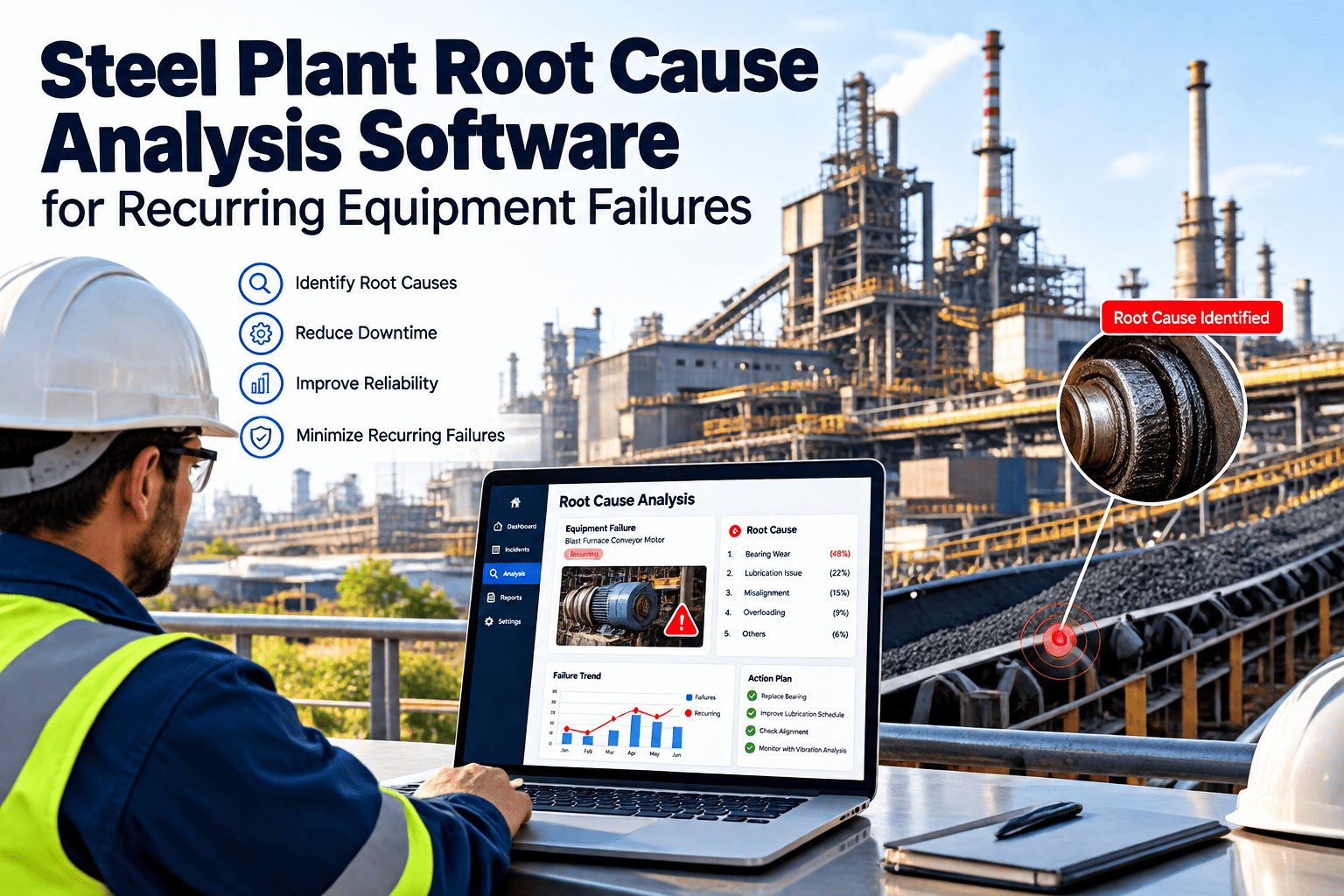
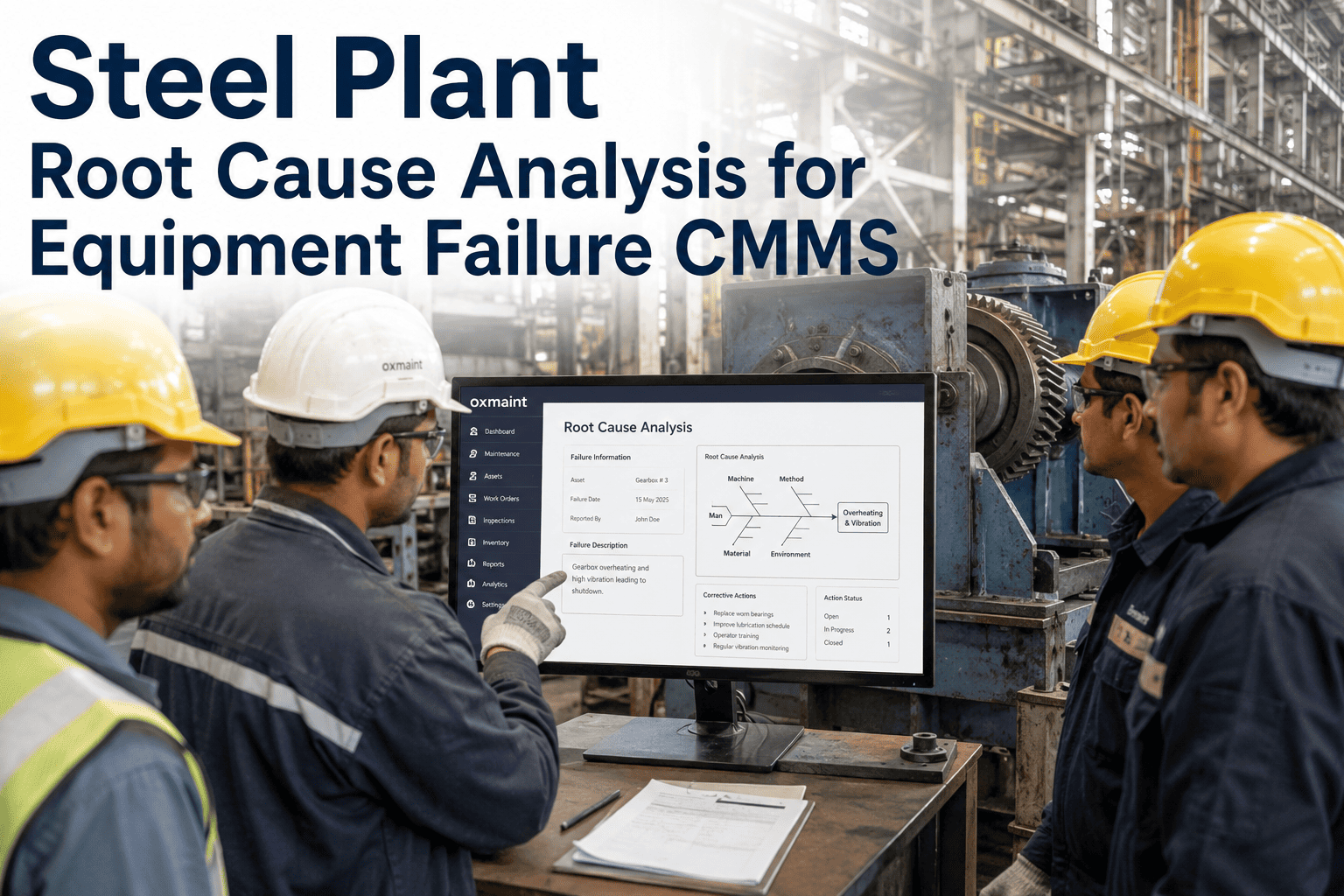
Steel manufacturing defects cost the global industry billions annually in rejected products, rework, and customer complaints. Traditional quality control catches defects after they occur, but root cause analysis (RCA) transforms reactive firefighting into systematic prevention. By combining structured analytical frameworks with production data analytics, steel manufacturers can identify why defects happen—not just that they happened—and eliminate them at the source. Schedule a consultation to explore how Oxmaint can streamline defect tracking and RCA workflows at your steel plant.
Why Root Cause Analysis Matters in Steel Production
Steel defects originate from complex interactions between raw materials, process parameters, equipment conditions, and human factors. Surface cracks, inclusions, porosity, and dimensional variations each have distinct root causes that require systematic investigation rather than guesswork.
The Business Case for Systematic RCAMeasurable results from steel plants implementing structured root cause analysis
$1.8M
Average Annual Savings
from reducing defect recurrence through systematic root cause elimination
67%
Reduction in repeat defects when RCA findings are linked to preventive maintenance
45%
Improvement in first-pass yield after implementing data-driven RCA processes
3x
Faster defect resolution when RCA is integrated with maintenance management
Ready to eliminate recurring defects? Join steel manufacturers using Oxmaint to track defects, document RCA findings, and trigger corrective maintenance automatically.
Effective root cause analysis follows a systematic process that moves from symptom identification through cause verification to permanent corrective action. Each phase builds on the previous, creating a documented trail from defect to solution.
Five-Phase RCA FrameworkFrom defect detection to permanent elimination
1
Define the Problem
Document the defect with specific details: what, where, when, and how much. Quantify the impact on production, quality, and costs. Avoid jumping to conclusions about causes.
2
Collect Data
Gather production parameters, equipment logs, material certifications, and operator records from the time of defect occurrence. Include both normal and abnormal conditions.
3
Analyze Causes
Apply analytical tools like 5-Why, Fishbone diagrams, and fault tree analysis to identify potential root causes. Correlate defect occurrence with process variations and equipment conditions.
4
Verify Root Cause
Test the hypothesis by reproducing or preventing the defect through controlled changes. Confirm that addressing the identified cause eliminates the defect consistently.
5
Implement Corrective Actions
Deploy permanent solutions including equipment modifications, process changes, and maintenance procedures. Sign up for Oxmaint to automate corrective action tracking and verification.
Common Steel Defects and Root Cause Categories
Different defect types point to different areas of investigation. Understanding the typical root cause categories for each defect type accelerates the analysis process and focuses data collection efforts.
Defect-to-Root Cause Mapping
Defect Type
Typical Root Causes
Key Data Points
Corrective Focus
Surface Cracks
Thermal stress, improper cooling rates, high sulfur content
Cooling water temperature, casting speed, chemical analysis
Cooling system maintenance, process parameter control
Roll wear, alignment issues, temperature non-uniformity
Roll gap measurements, mill alignment data, thermal profiles
Roll change schedules, alignment procedures
Scale Defects
Furnace atmosphere, descaling pressure, roll contamination
Furnace oxygen levels, descaler performance, roll surface condition
Furnace maintenance, descaler optimization
See how Oxmaint connects defects to equipment history. Book a demo and we will show you integrated defect tracking and maintenance management for steel operations.
Root cause analysis becomes most powerful when findings automatically trigger maintenance actions. Connecting defect investigations to your CMMS ensures that equipment-related root causes result in scheduled repairs, PM adjustments, and spare parts procurement.
RCA-to-Maintenance Workflow
Defect Detected
RCA Investigation
Work Order Generated
Defect Eliminated
Production Analytics for RCA Support
Modern steel plants generate massive amounts of process data that can accelerate root cause identification when properly analyzed. Statistical process control, trend analysis, and correlation studies reveal patterns invisible to manual investigation.
Trend Analysis
Track defect rates over time to identify gradual equipment degradation, seasonal patterns, or process drift before they cause major quality issues.
Correlation Studies
Link defect occurrence with specific process parameters, raw material batches, equipment states, and environmental conditions automatically.
Pareto Analysis
Identify the vital few defect types and root causes that account for the majority of quality losses to prioritize improvement efforts.
Transform Defect Management with Oxmaint
Stop treating defects as isolated incidents. Oxmaint connects quality data with equipment history, maintenance records, and process parameters—giving your RCA team the complete picture needed to eliminate root causes permanently and prevent costly recurrence.
Simple defects with clear causes can be resolved in hours. Complex defects involving multiple interacting factors may require days or weeks of investigation. Having integrated data from production systems and maintenance history significantly accelerates the process. Schedule a consultation to learn how Oxmaint streamlines RCA workflows.
What data should we collect for effective RCA?
Essential data includes process parameters at defect occurrence, equipment maintenance history, raw material certifications, operator logs, and environmental conditions. The key is having this data readily accessible and linked to specific production batches and equipment assets.
How do we prevent the same defect from recurring?
Effective prevention requires documenting RCA findings, implementing corrective actions through your maintenance system, updating procedures, and monitoring for recurrence. Sign up for Oxmaint to automatically track corrective actions and verify their effectiveness.
Can RCA be applied to equipment failures as well as product defects?
Absolutely. The same RCA methodology applies to equipment breakdowns, safety incidents, and process upsets. In fact, equipment failures and product defects are often connected—addressing equipment root causes frequently eliminates associated quality problems.
How does Oxmaint support steel plant RCA processes?
Oxmaint provides integrated defect logging, equipment history tracking, corrective action management, and analytics dashboards. RCA findings link directly to work orders, ensuring identified root causes result in scheduled maintenance and verified repairs. Book a demo to see the complete workflow.