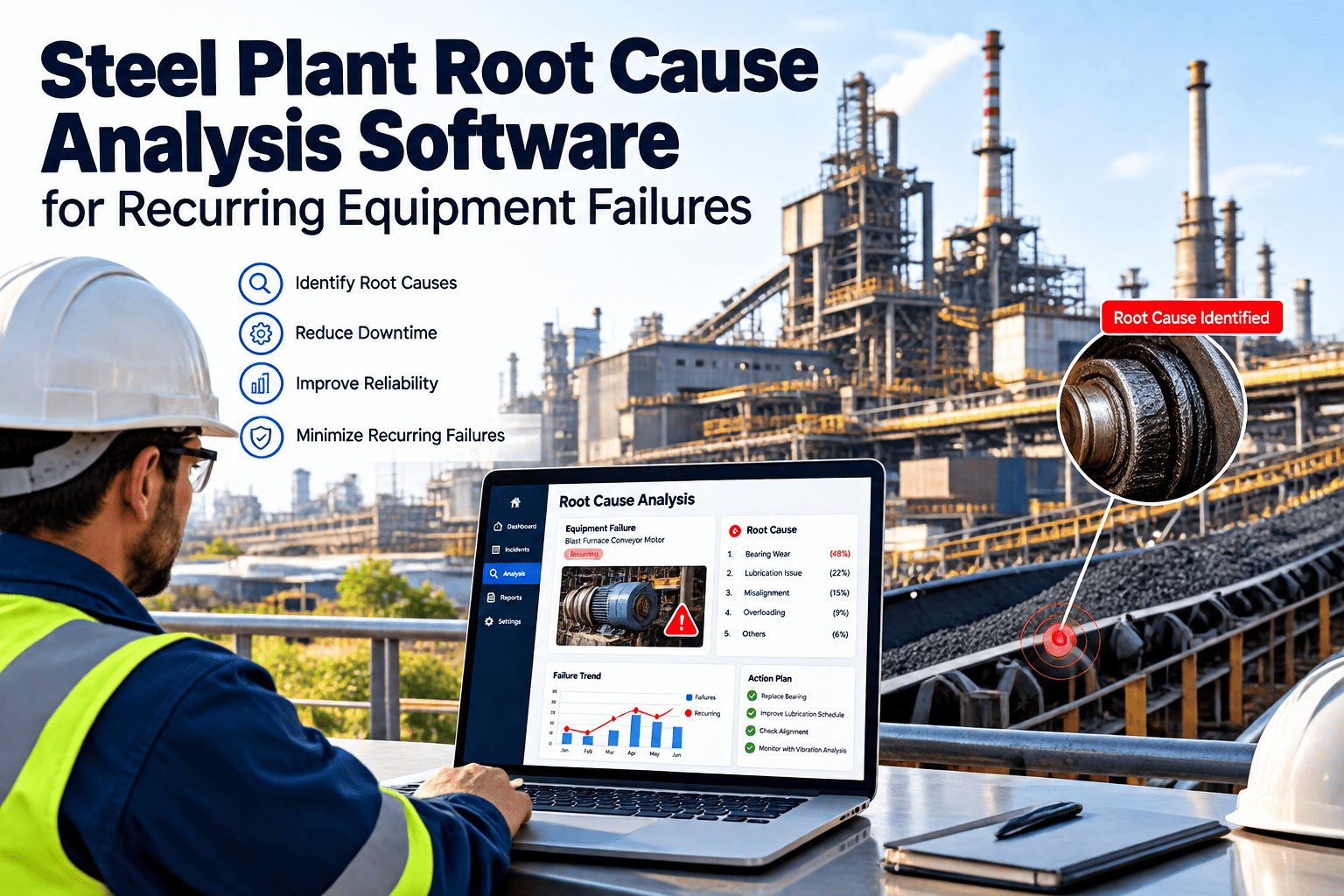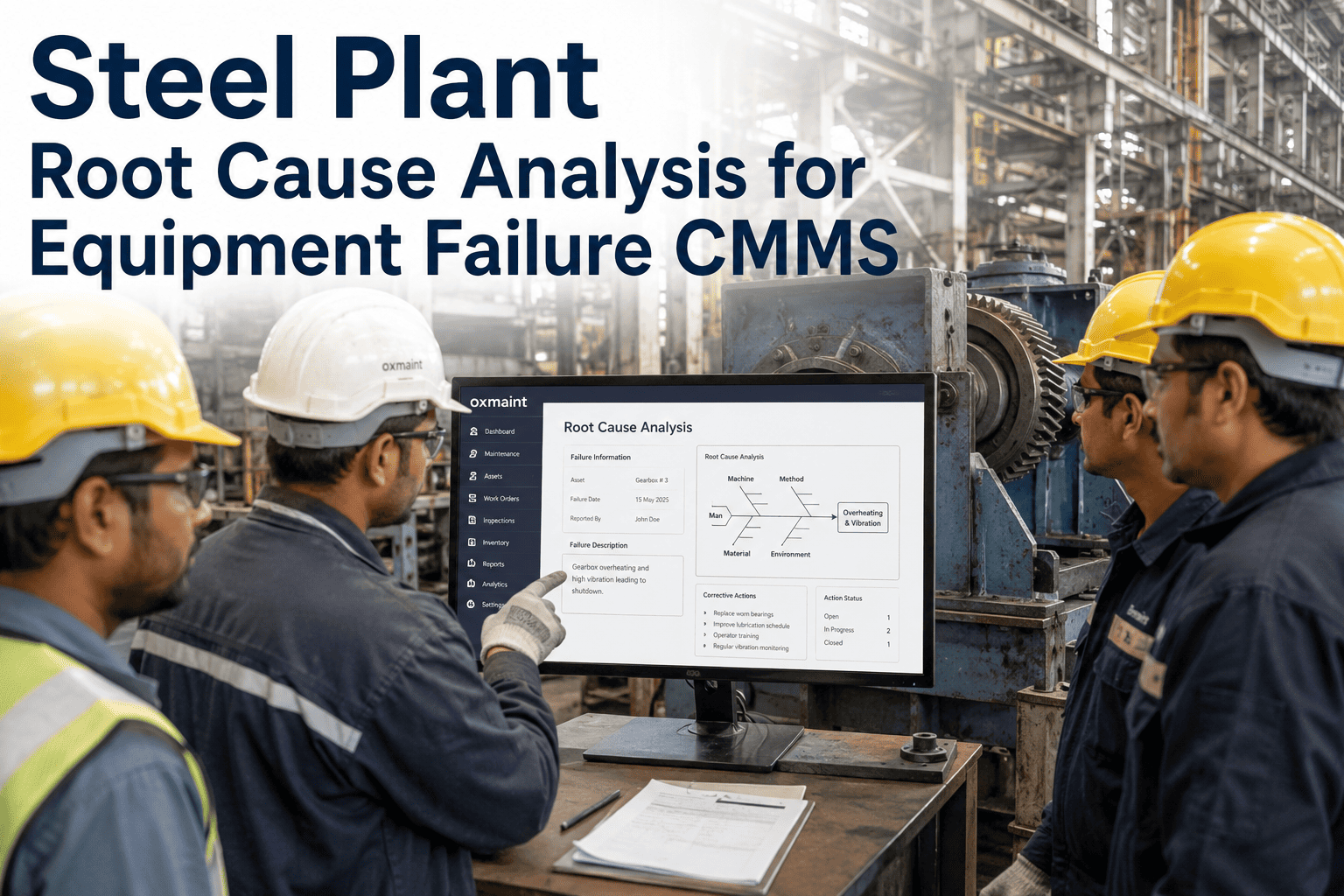
A hot strip mill in Indiana experienced the same roll bearing failure four times in eighteen months. Each failure caused 8-12 hours of unplanned downtime and cost approximately $180,000 in lost production, emergency parts, and overtime labor. Maintenance teams replaced bearings each time without investigating why the failures recurred. When they finally conducted a structured root cause analysis using Oxmaint's RCA templates, they discovered that a cooling water flow restriction was causing thermal damage—a $2,400 valve replacement eliminated a problem that had cost over $700,000 across four incidents. This blog explains how systematic failure analysis prevents recurring problems in steel plant operations.
Steel plants operate equipment at extreme temperatures, pressures, and mechanical loads where failures create significant production and safety consequences. Blast furnaces, casters, rolling mills, and auxiliary systems each present unique failure modes requiring structured investigation methods. Root cause analysis moves beyond symptom treatment to identify and correct the underlying conditions that allow failures to occur. When failure analysis data integrates with CMMS history, patterns emerge that predict and prevent future problems. Schedule a consultation to discuss failure analysis capabilities for your steel operation.
Root Cause Analysis for Steel Plant Failures: RCA, FMEA & AI Insights
Systematic methods for identifying failure causes, preventing recurrence, and building reliability into steel plant maintenance programs.
Why Failures Recur
Understanding the reasons failures repeat helps establish effective investigation practices.
Symptom Treatment
Maintenance replaces the failed component without investigating why it failed. The underlying condition remains, and the same failure occurs again—often on the same equipment, sometimes propagating to similar assets elsewhere in the plant.
Time Pressure
Production demands push equipment back into service before analysis completes. Teams promise to investigate later but rarely return to incidents once production resumes. The opportunity to examine evidence and interview operators passes.
Missing Data
Work orders lack detail needed for analysis. Technicians record "replaced bearing" without documenting failure mode, operating conditions, or visual observations. Without data, analysis cannot identify patterns or root causes.
No Follow-Through
Analysis identifies root cause but corrective actions stall. Recommendations require capital investment, procedure changes, or cross-functional coordination that doesn't happen without accountability tracking.
The 5-Why Method
Oxmaint's RCA templates guide teams through structured questioning that reveals root causes.
Stop Treating Symptoms—Find Root Causes
Oxmaint provides structured RCA templates, failure history analysis, and corrective action tracking that ensures identified problems actually get solved. Teams document findings in work order records, building a knowledge base that prevents future failures and reduces repeat incidents across your steel operation.
FMEA Framework
Failure Mode and Effects Analysis systematically identifies and prioritizes potential failures before they occur.
FMEA examines each equipment component to identify how it could fail (failure modes), what happens when it fails (effects), and how likely failure is to occur and be detected. The Risk Priority Number (RPN) combines these factors to prioritize where preventive efforts should focus. Steel plant FMEA typically covers critical assets where failure consequences include safety hazards, major production loss, or environmental impact.
Severity
How serious are the consequences if this failure occurs? Severity ratings consider safety impact, production loss magnitude, equipment damage extent, and environmental consequences. A scale of 1-10 captures the range from negligible impact to catastrophic safety or environmental events.
Occurrence
How likely is this failure mode to happen? Occurrence ratings reflect failure frequency based on historical data, similar equipment experience, and operating condition severity. CMMS failure history provides the data foundation for realistic occurrence estimates.
Detection
How likely are current controls to detect this failure before it causes harm? Detection considers inspection methods, condition monitoring capabilities, and warning signs visibility. Low detection scores indicate hidden failure modes requiring enhanced monitoring.
Higher RPN values indicate failure modes requiring priority attention. Steel plants typically focus improvement efforts on failure modes with RPN above 100-150, though any high-severity failure mode warrants attention regardless of overall RPN.
Steel Plant Failure Categories
Oxmaint failure coding categorizes problems for pattern analysis and trending.
Mechanical Failures
Bearing failures, gear damage, shaft breakage, coupling failures, structural fatigue, and wear-related degradation in rotating and reciprocating equipment throughout the mill.
Electrical Failures
Motor winding failures, drive faults, power quality issues, control system malfunctions, and instrumentation problems affecting equipment operation and process control.
Hydraulic Failures
Pump degradation, valve malfunctions, cylinder seal failures, contamination issues, and pressure control problems in hydraulic systems throughout rolling mills and material handling.
Refractory Failures
Lining erosion, thermal spalling, chemical attack, and structural failure in blast furnaces, ladles, tundishes, and other high-temperature vessels and transfer equipment.
AI-Powered Failure Insights
Oxmaint's AI analytics identify patterns in maintenance data that manual analysis might miss.
Pattern Recognition
Machine learning algorithms analyze work order history to identify failure patterns across time, equipment types, operating conditions, and maintenance activities. The system surfaces correlations between failures that occur weeks or months apart, revealing systemic issues that episodic human analysis cannot detect.
Failure Prediction
AI models learn from historical failure sequences to predict which equipment is likely to fail in coming weeks. Early warning enables proactive intervention—scheduled replacement during planned downtime rather than emergency repairs during production. Prediction accuracy improves as the system learns from your specific equipment and operating conditions.
Root Cause Suggestions
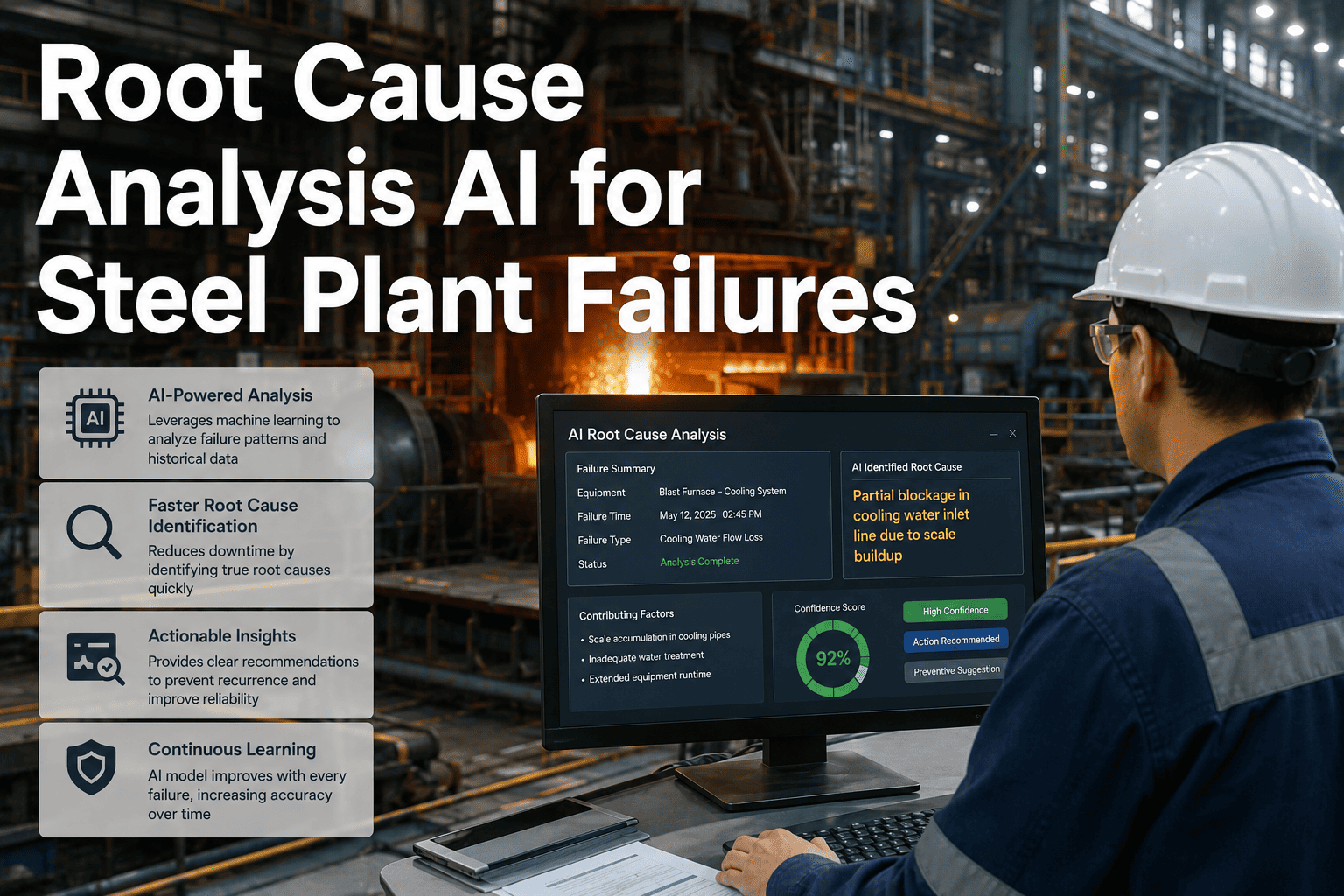
When failures occur, AI examines similar past incidents to suggest probable root causes. The system considers equipment type, failure symptoms, operating conditions, and maintenance history to rank likely causes and recommend investigation priorities. Teams start analysis with data-informed hypotheses rather than beginning from scratch.
Turn Failure Data into Reliability Improvement
Every work order in Oxmaint contributes to your failure analysis knowledge base. AI continuously analyzes patterns, surfaces insights, and helps teams focus improvement efforts where they'll have the greatest impact. Stop reactive firefighting and start building systematic reliability into your steel plant maintenance program.
Implementing RCA Programs
Building effective failure analysis capability requires organizational commitment and systematic process.
Define Triggers
Establish criteria for when RCA is required: failures exceeding cost thresholds, safety incidents, environmental releases, repeat failures on same equipment, or failures on critical assets. Clear triggers ensure significant events receive appropriate investigation without overwhelming teams with minor issues.
Assign Accountability
Designate who leads investigations, who participates, and who approves corrective actions. Cross-functional teams typically include maintenance, operations, engineering, and reliability personnel. Clear roles prevent investigations from stalling when responsibility is unclear.
Standardize Methods
Adopt consistent RCA methodologies and documentation templates. Standardization enables comparison across incidents, builds organizational learning, and ensures investigations meet quality expectations. Oxmaint templates guide teams through proven analysis workflows.
Track Corrective Actions
RCA value comes from implementing solutions—not from producing reports. Track corrective action assignments, due dates, and completion status. Escalate overdue actions to management. Verify effectiveness by monitoring for failure recurrence after implementation.
Common Investigation Mistakes
Awareness of typical pitfalls helps teams conduct more effective failure analysis.
Stopping Too Soon
Teams identify an immediate cause and stop investigating. "The bearing failed because it ran out of grease" answers why the bearing failed but not why it ran out of grease. Continue asking why until you reach causes that can be corrected through maintenance, engineering, or operational changes.
Blaming People
Attributing failures to human error without examining why the error occurred or why systems didn't prevent it. Effective RCA asks what system conditions allowed or encouraged the error, what training or procedures were inadequate, and what design changes could make errors less likely or less consequential.
Single Root Cause
Complex failures rarely have single causes. Multiple contributing factors typically align to create failure conditions. Investigate all branches of the cause tree—addressing only one contributing factor may not prevent recurrence if other factors remain present.
Analysis Paralysis
Investigations that continue indefinitely without reaching conclusions or recommendations. Set time limits for investigation phases, make decisions with available information, and implement corrective actions even when some uncertainty remains. Perfect analysis isn't necessary—adequate analysis implemented beats perfect analysis delayed.
Frequently Asked Questions
Build a Learning Organization
Every failure contains lessons that can prevent future problems—if you capture and act on them. Oxmaint's RCA tools, failure analytics, and AI insights transform individual incidents into systematic reliability improvement. Stop repeating the same failures and start building the knowledge base that makes your steel plant progressively more reliable over time.