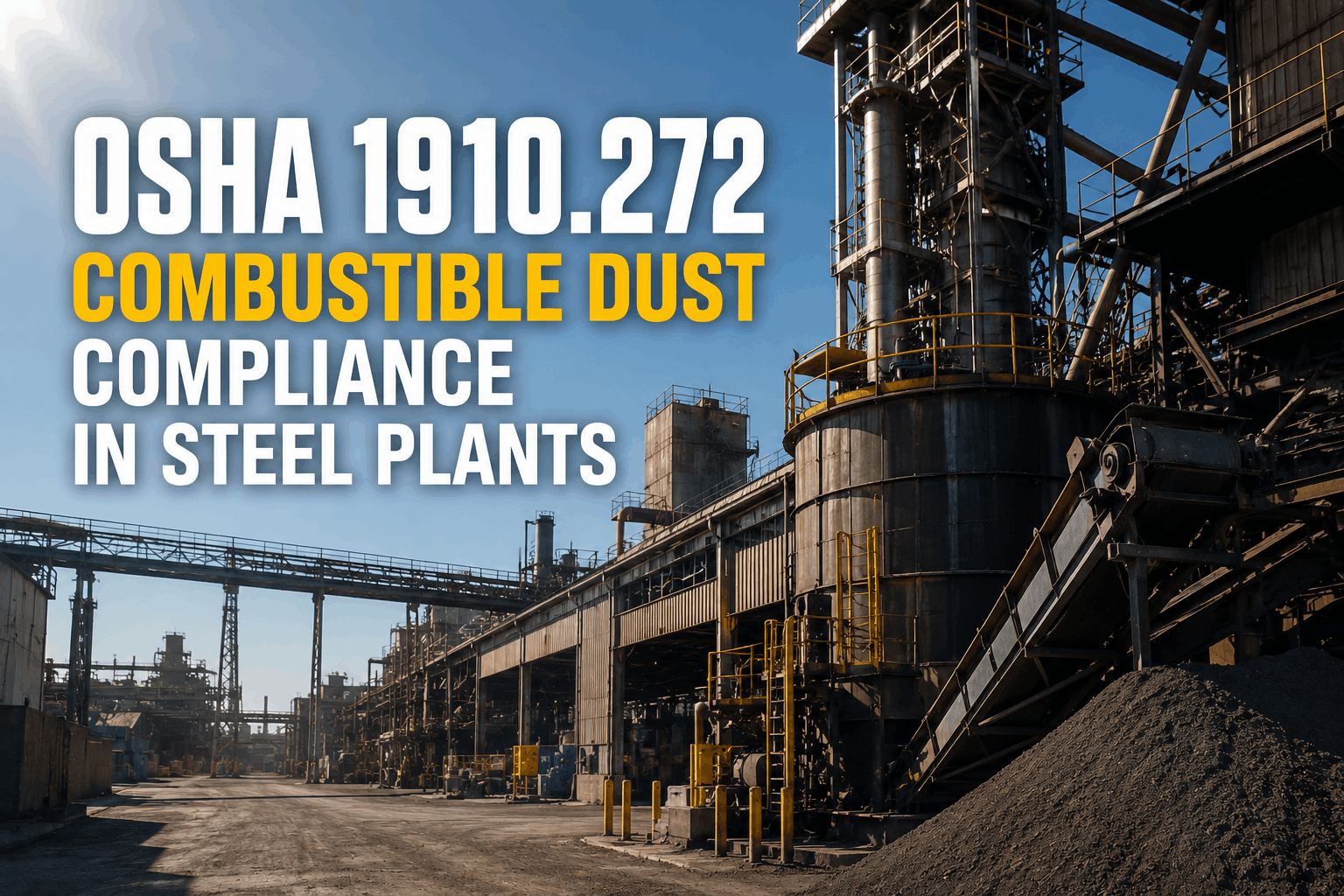
OSHA 1910.272 Combustible Dust Compliance in Steel Plants
By Alex Jordan on June 1, 2026
Steel plants generate combustible dust from coal dust, iron oxide fines, and metal powders where fire or deflagration hazards can occur if dust concentration, oxygen, and ignition sources align. Schedule your compliance audit to see how Oxmaint tracks dust hazard analysis (DHA) requirements, NFPA 652/664 inspection deadlines, and ignition source controls across USA steel plants, or contact support to learn more.
OSHA 1910.272 Combustible Dust Compliance in Steel Plants
Monitor dust hazard analysis (DHA) deadlines, housekeeping compliance, ignition source controls, NFPA 652/664 inspection frequency, and deflagration vent functionality across coal dust, iron oxide, and metal powder process areas.
Cite lack of hazard analysis as primary violation in combustible dust investigations.
5 Yrs
DHA Review Cycle
NFPA 652 requires dust hazard analysis review and update every 5 years minimum.
3 Mths
Housekeeping Frequency
Dust accumulation >1/32 inch on surfaces triggers OSHA violations in combustible areas.
$12.8K
Average Penalty
Per OSHA citation for combustible dust violation in 2024–2025.
Combustible Dust Hazards in Steel Plant Operations
OSHA defines combustible dust as "a solid material composed of distinct particles or pieces, regardless of size, shape, or chemical composition, which presents a fire or deflagration hazard when suspended in air over a range of concentrations." In steel plants, this includes coal dust from fuel preparation, iron oxide fines from blast furnace operations, metal powders from grinding and pickling, and dust from ore handling. Steel plant combustible dust creates a "perfect storm" when three conditions align: suspended particles (fuel), adequate oxygen (always present), and an ignition source (hot surfaces, sparks, static discharge). The National Fire Protection Association standards—NFPA 652 (Fundamentals of Combustible Dust), NFPA 654 (Manufacturing/Processing), and NFPA 664 (specific commodity standards)—guide hazard analysis and control design. OSHA does not directly enforce NFPA standards but uses them as the basis for general duty clause citations under the OSH Act. A formal Dust Hazard Analysis (DHA) is now mandatory for existing installations as of September 7, 2020, with updates required every 5 years. Facilities lacking documented DHA or housekeeping controls face significant liability.
Steel Plant Dust Hazard Classification
HIGH
Critical Risk Zones
Coal dust bunkers, iron oxide grinding circuits, pellet plant dust collection hoppers, sinter plant fines handling, metal powder storage. Dust concentration can quickly exceed Lower Explosive Limit (LEL) from small disturbances. Requires deflagration venting, explosion suppression systems, or inert atmosphere.
MEDIUM
Elevated Risk Areas
Dust collection ductwork, conveyor transfer points, filter cleaning areas, mill scale handling, crushing and screening operations. Dust layers accumulate and can be resuspended by process vibration or equipment movement. Requires strict housekeeping, separation of ignition sources, and routine inspections.
MODERATE
Controlled Process Areas
Wet pickling lines (acid baths inhibit dust clouds), furnace charging zones where dust is immediately exposed to heat, primary processing areas with enclosed systems. Dust hazard is present but process design controls limit hazard frequency. Seasonal or contingent ignition source controls required.
LOW
Incidental Dust Presence
Administrative offices, maintenance shops with occasional metal dust, remote storage areas away from active processing. Dust hazard is theoretically possible but real-world probability is very low. Standard industrial housekeeping is sufficient; no specialized combustible dust protocols required.
Core Combustible Dust Management Activities
Dust Hazard Analysis (DHA) and Documentation
CMMS-enforced DHA completion by September 7, 2020 (now past deadline; any new processes require immediate DHA). Oxmaint tracks DHA initiation date, assigned process areas, hazard identification checklist completion, and 5-year review schedule. Auto-generates compliance reports flagging any process without current DHA documentation.
Housekeeping and Dust Accumulation Control
OSHA standard: horizontal surfaces must not exceed 1/32 inch (0.8 mm) dust accumulation; vertical surfaces must not exceed 1/8 inch (3.2 mm). Oxmaint schedules quarterly housekeeping audits in HIGH and MEDIUM risk zones, monthly in areas with process dust generation. Enforces use of vacuum cleaners approved for dust collection (not compressed air—creates resuspension clouds). Documents completion with photos and worker sign-off.
Ignition Source Identification and Control
Hot surfaces, friction sparks, static discharge, and welding/hot work are primary ignition sources. Oxmaint tracks hot work permits in dust areas, verifies electrical equipment grounding compliance, logs hot surface temperatures in furnace zones, and enforces hot work exclusion zones >35 feet from combustible dust sources. Weekly audits in HIGH-risk areas.
Deflagration Venting and Explosion Suppression
Equipment >8 ft³ with dust explosion hazard must have venting per NFPA 68 or isolation/suppression systems. Oxmaint tracks vent panel condition, blast door operation (monthly functional tests), and isolation damper sealing. Suppression system certification and spray nozzle pressure testing required annually. Any damage triggers immediate repair scheduling.
Equipment Inspection and Maintenance Frequency
Dust collectors, cyclones, bagging stations, and conveyors in combustible dust areas require monthly inspection. NFPA 652 requires annual compliance verification for explosion-protected equipment (Category 2 or 3 equipment per ATEX standards). Oxmaint enforces inspection frequency by equipment location risk classification and flags any skipped inspections for escalation.
Formal Training and Competency Documentation
All staff working in or near combustible dust areas must receive formal training on hazards, evacuation procedures, and equipment operation. CMMS logs training completion by employee, tracks certification renewal (annually minimum), and flags overdue training before compliance audits. Training records are audit-ready and exportable for OSHA inspection.
Compliance vs. Non-Compliance: Risk and Penalty Comparison
Compliance Element
Non-Compliant Status
CMMS-Managed Compliance
DHA Documentation
Missing or outdated; not reviewed in 5+ years
Current DHA for all processes; 5-year review deadline tracked and enforced
Housekeeping Standards
Dust accumulation >1/32 inch on horizontal surfaces
Quarterly (or monthly in high-risk) audits with photo documentation and OSHA-compliant vacuum use
Ignition Source Controls
Hot work near combustible dust areas; no exclusion zones defined
Hot work permits required; >35 ft exclusion zones enforced; grounding compliance verified weekly
Equipment Inspection
Sporadic or deferred maintenance on dust collectors and venting systems
Monthly inspections in HIGH/MEDIUM zones; annual compliance certification logged
Training Documentation
No formal training records; hazard awareness absent
Annual formal training; certification tracking; overdue alerts sent to supervisors
OSHA Inspection Outcome
Multiple citations ($12.8K–$18K avg); facility work stoppage possible
Zero findings; audit-ready documentation; reduced insurance premiums
$127K
Avoided Risk per Year
Potential OSHA penalties, incident investigation costs, and potential worker injury liability reduction from systematic combustible dust management.
100%
Audit Readiness
All NFPA 652/654 requirements documented and timestamped; inspection-ready within 24 hours.
68%
Reduction in DHA Gaps
CMMS prevents process areas from falling through without current hazard analysis documentation.
5-Yr Cycle
DHA Review Management
Automatic deadline reminders prevent regulatory lapses; zero overdue DHA reviews.
Frequently Asked Questions
What is the difference between NFPA 652, 654, and 664 standards?+
NFPA 652 is the foundational standard covering combustible dust fundamentals (hazard analysis, housekeeping, equipment) applicable to all industries. NFPA 654 is more specific to manufacturing/processing and handling of combustible particulate solids. NFPA 664 covers wood processing; steel plants typically reference NFPA 652 and 654 for metal dust and coal dust hazards.
Does Oxmaint enforce USA-based OSHA/NFPA requirements specifically?+
Yes. Oxmaint's CMMS is configured for USA OSHA 1910.272 standards, NFPA 652/654 deadlines, and state-specific regulations. System tracks DHA deadlines (original September 7, 2020; now 5-year review cycles), housekeeping frequency, hot work permit requirements, and training compliance as mandated for US facilities.
What is the housekeeping threshold that triggers OSHA violations?+
OSHA standard: horizontal surfaces must not accumulate >1/32 inch (0.8 mm) of combustible dust; vertical surfaces must not exceed 1/8 inch (3.2 mm). Oxmaint schedules quarterly audits in combustible dust areas and logs findings with photographic evidence. Any exceedance triggers immediate corrective action scheduling.
Can compressed air be used for dust cleanup in combustible areas?+
No. Compressed air resuspends dust particles and creates a powder cloud that can ignite. OSHA and NFPA require HEPA-filtered vacuum cleaners or wet wiping only in combustible dust areas. Oxmaint training modules enforce this prohibition and track use of approved equipment only.
How are hot work exclusion zones defined and enforced?+
Standard exclusion is >35 feet from combustible dust sources (dust clouds, accumulation zones). Oxmaint tracks hot work permits and requires supervisor sign-off confirming no combustible dust in the work zone. GPS boundary maps help identify exclusion zones; any hot work outside exclusion is flagged as non-compliant.
What is the mandatory DHA review frequency under NFPA 652?+
Every 5 years minimum, or whenever processes change. Initial deadline was September 7, 2020 (now past); Oxmaint automatically schedules 5-year review cycles from completion date and flags overdue reviews to facility management 60 days before deadline.
How are deflagration vents and blast doors tested and maintained?+
Monthly functional tests of vent panel operation and blast door sealing are required. Oxmaint schedules these tests and logs any binding, corrosion, or malfunction. Annual certification by a qualified engineer verifies vent design per NFPA 68. Any damage triggers immediate repair before the equipment is returned to service.
What training is required for workers in combustible dust areas?+
All staff working in or near combustible dust areas must receive formal annual training on dust hazards, evacuation procedures, equipment operation, and ignition source awareness. Oxmaint logs training completion by employee, tracks certification, and sends overdue reminders. Training records are audit-ready documentation.
Achieve 100% Combustible Dust Compliance
Oxmaint's CMMS automates DHA tracking, housekeeping audits, hot work permits, equipment inspections, and training documentation. Stay ahead of OSHA inspections and eliminate combustible dust violation penalties.