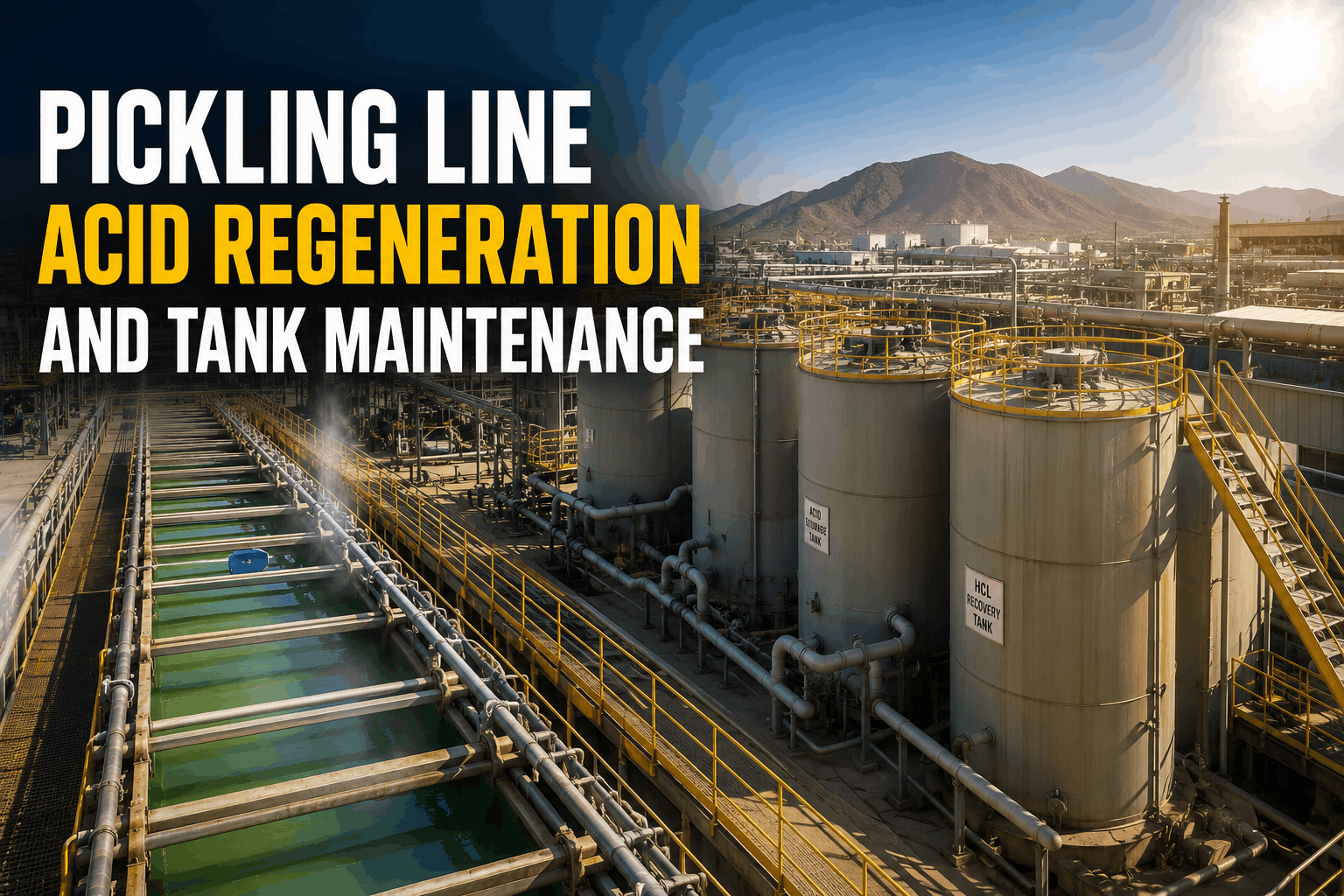
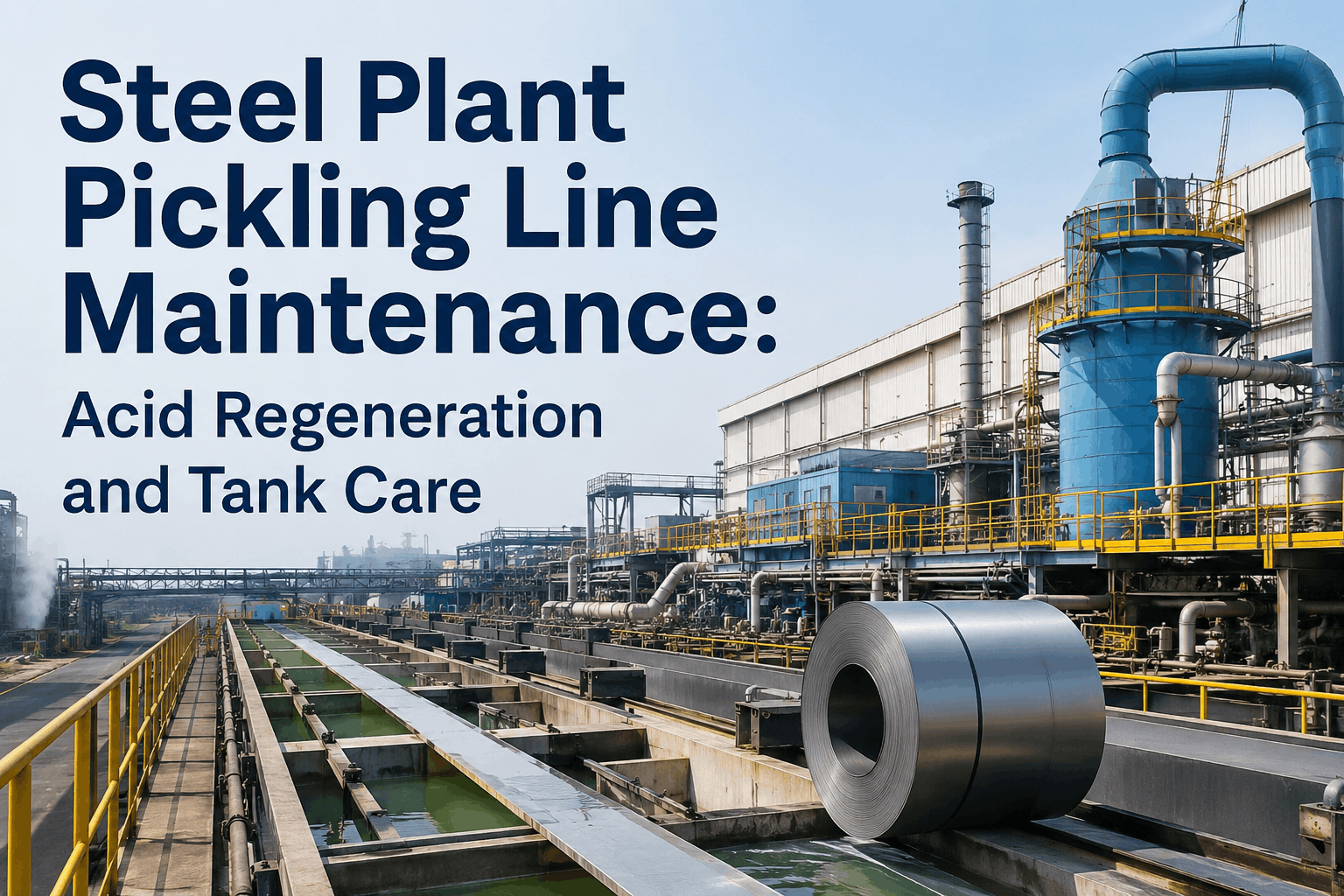
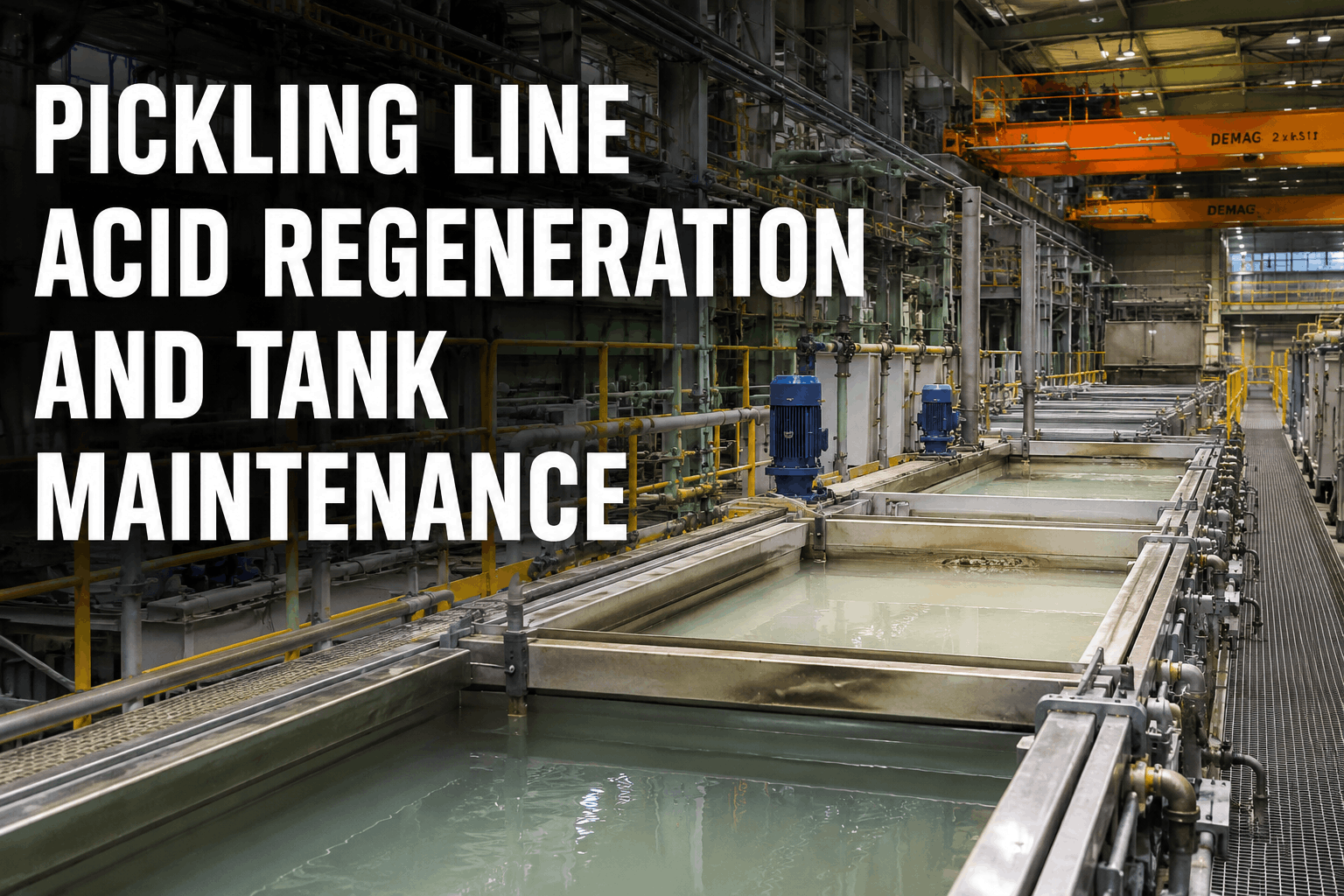
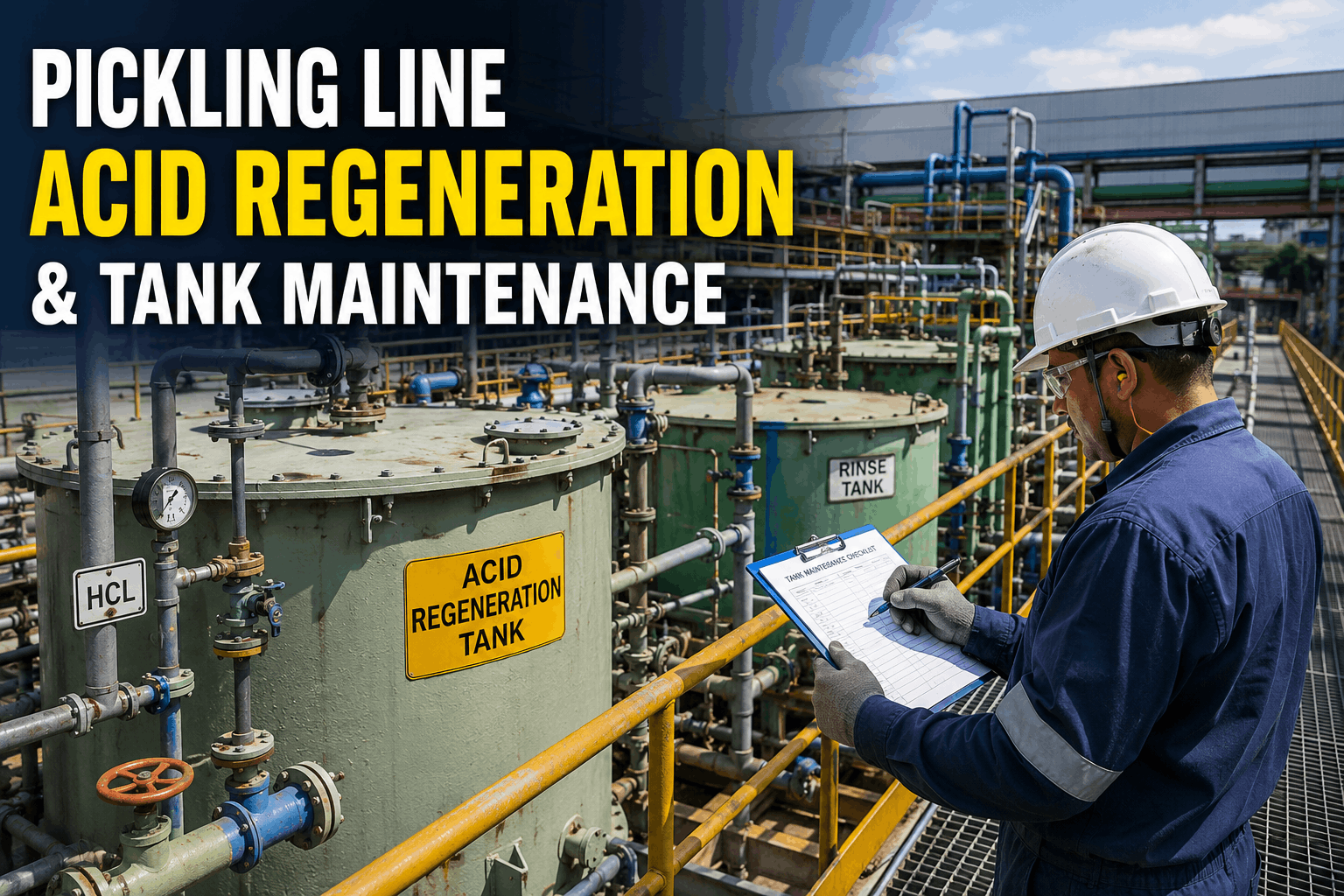
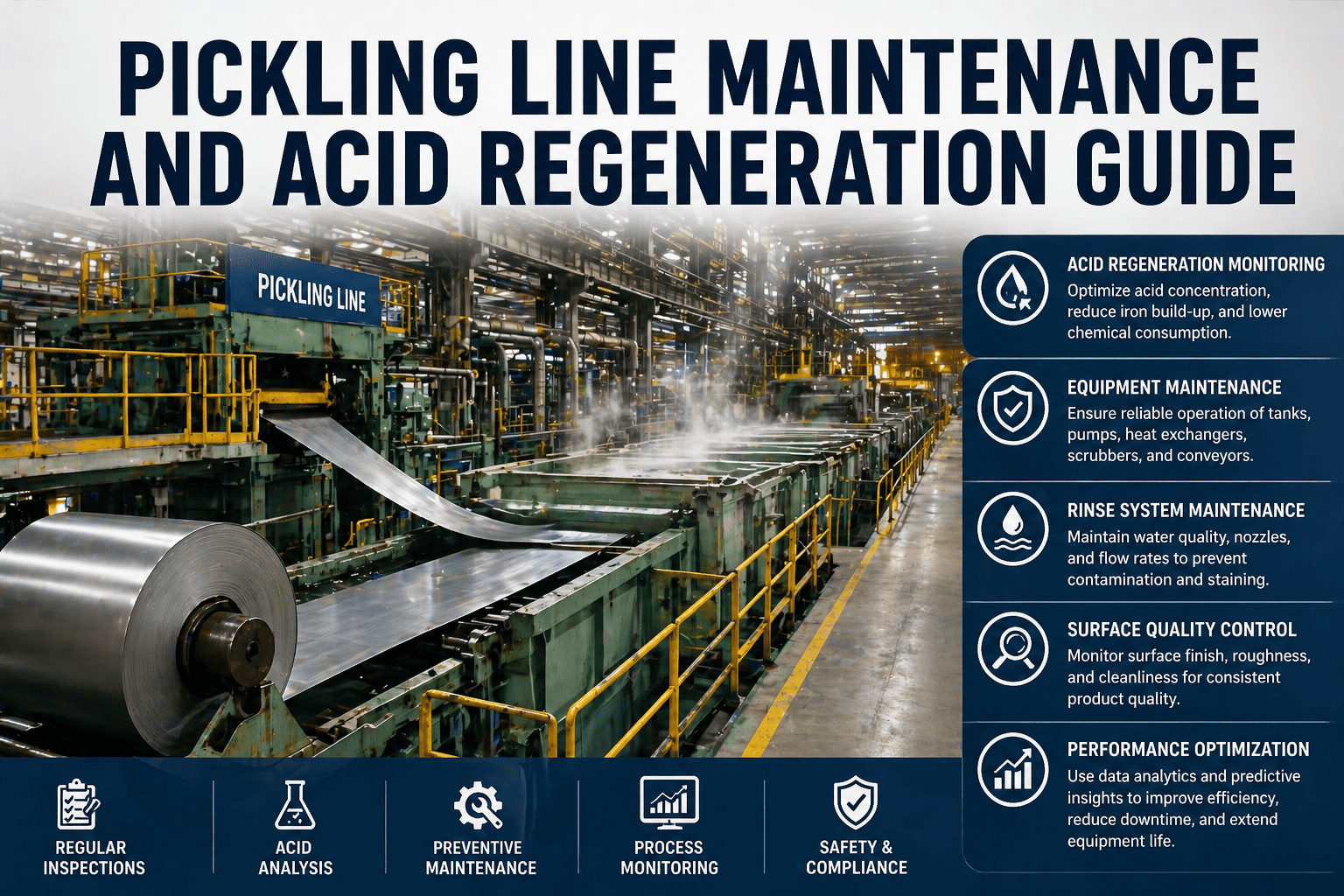
Pickling Line Acid Regeneration and Tank Maintenance
By Alex Jordan on June 1, 2026
Steel mill pickling operations generate spent pickle liquor (SPL) containing iron chloride or iron sulfate that must be continuously managed for regulatory compliance and cost recovery. Schedule a demo to see how Oxmaint's CMMS tracks acid regeneration cycles, tank maintenance intervals, and environmental compliance records for pickling line operations across North America, or contact support to learn more.
STEEL PLANT TEMPLATE · PICKLING LINE MAINTENANCE · 2026
Pickling Line Acid Regeneration and Tank Maintenance
Track HCl and H₂SO₄ regeneration cycles, rubber-lined tank deterioration, acid concentration drift, rinse station performance, and EPA compliance records in one unified CMMS workflow.
Lead time visibility from acid inventory to regeneration scheduling.
18%
Tank Life Extension
Rubber lining and structural integrity from condition-based maintenance.
Pickling Line Acid Chemistry and Regeneration
Continuous pickling lines operate with either hydrochloric acid (HCl) or sulfuric acid (H₂SO₄) to dissolve mill scale and surface oxides from steel before cold rolling or galvanizing. The acid becomes saturated with ferrous salts (FeCl₂ or FeSO₄) as pickling proceeds, reaching a saturation point around 13% iron content where effectiveness drops dramatically. Spent pickle liquor must then be either disposed of (high regulatory cost) or regenerated through thermal, hydrothermal, or membrane-based processes. Hydrothermal regeneration—now the industry standard for HCl recovery—operates at low temperatures (near 120°C), consumes minimal energy (~1,300 kJ per liter), and produces a high-purity iron oxide byproduct suitable for cement or pigment manufacturing. Tank linings, heat exchangers, and rinse station performance are all hydraulically linked to acid concentration and temperature control, making predictive monitoring critical for both safety and economics.
Critical Tank and Equipment Condition Zones
GRADE A
Optimal — Predictable Campaigns
Acid concentration stable ±1.5%, rubber lining intact with no visible pitting, heat exchanger delta-T within ±2°C of design, rinse station discharge pH stable. Tank can run 36–48 months before planned regeneration.
GRADE B
Good — Monitored Operation
Acid concentration drifts 2–3%, minor rubber lining wear visible at tank inlet corner, heat exchanger delta-T degrading ±4–5°C, early biofouling in rinse loops. Tank life: 24–30 months with weekly monitoring and monthly chemical balancing.
GRADE C
Fair — Intervention Required
Acid concentration fluctuates >3%, visible rubber lining pitting and blistering in multiple zones, heat exchanger delta-T loss >6°C, persistent biofilm in rinse lines. Tank approaching end-of-life: 12–18 months, requires urgent lining replacement planning.
GRADE D
Poor — Emergency Action
Acid concentration unstable >5%, rubber lining perforation or delamination visible, heat exchanger fouled and ineffective, severe corrosion and acid leakage detected. Tank must be removed from service immediately for urgent repair or replacement.
Core CMMS Maintenance Sections
Acid Inventory and Concentration Tracking
Tank volume measurements, specific gravity readings, iron content titration, free acid and bound acid calculations via digital refractometry, and predictive rundown forecasting. Automated alerts trigger regeneration requisition when iron load exceeds 12.5%.
Regeneration Cycle Scheduling and Compliance
Link regeneration windows to both mill schedule and acid saturation state. EPA 40 CFR 63 Subpart CCC requires continuous monitoring of HCl emissions, acid storage tank inspections, and monthly responsible official certifications. CMMS enforces these deadlines and auto-generates compliance reports.
Rubber Lining and Tank Integrity Inspections
Quarterly visual inspections with photo documentation of lining condition, pit depth measurement, and thickness trending. Alert system triggers lining replacement quotes when critical wear zones identified. Planned relining extends tank life 12–18 months vs. emergency intervention.
Heat Exchanger and Circulation System Performance
Track acid return temperature, delta-T across the heat exchanger bundle, and flow rate. Fouling or biofouling deposits reduce heat transfer efficiency, pushing acid above optimal range (70–75°C) and accelerating lining deterioration. Monthly cleaning cycles triggered by delta-T degradation >3°C.
Rinse Station and Neutralization Performance
Monitor rinse tank discharge pH, neutralizer chemical (lime or caustic) consumption, and sludge accumulation. Biofouling in rinse loops causes carryover of acid particles to subsequent processes. Weekly rinse tank cleaning and monthly filter changes maintain separation efficiency.
Environmental Controls and Mist Suppression
HCl vapor control requires scrubber tower inspection, water-acid demister functionality, and continuous emissions monitoring via CEMS. Mist elimination pads become fouled with iron oxides and must be cleaned or replaced monthly to maintain emission compliance <6 ppm (continuous lines).
Pickling Line Maintenance vs. Reactive Crisis Repair
Maintenance Factor
Reactive / Unscheduled
CMMS-Planned Schedule
Acid Regeneration Timing
Based on production backup or visible quality issues
Iron saturation targets + lead time for regeneration logistics
Tank Lining Replacement Costs
$480K–650K emergency contractor callout + production loss
$320K–400K planned relined job with 3-month notice window
Regulatory Compliance Gaps
Missing emissions logs or responsible official sign-offs
Continuous CEMS data, 100% audit trail for EPA inspections
Product Quality Impact
Acid saturation runs high → poor scale removal → rework
Acid concentration maintained within ±1.5% → consistent first-pass quality
Iron oxide produced under poor conditions (low purity, wet)
High-grade iron oxide (>98%) commands $45–60/ton vs. $8–12/ton waste disposal
$680K
Annual Economic Benefit
Regeneration timing optimization + lining life extension + byproduct value premium for typical 80-ton/day pickling line.
92%
First-Pass Quality Rate
Achieved with acid concentration maintained within specification range via CMMS alerts.
44 Months
Average Tank Campaign Life
With predictive rubber lining condition monitoring vs. 28 months with reactive repair cycles.
100%
Regulatory Documentation
Continuous CEMS logs, responsible official sign-offs, and audit-ready compliance files.
Frequently Asked Questions
How does Oxmaint predict optimal acid regeneration timing?+
Oxmaint integrates real-time acid concentration (specific gravity + iron titration), production volume, and historical rundown curves to project when iron saturation will reach 12.5%. System calculates regeneration window 2–3 weeks in advance, allowing logistics coordination and planned downtime scheduling without rush pricing.
Can the system track both HCl and H₂SO₄ pickling lines in the same plant?+
Yes. Each acid type has distinct regeneration chemistry, saturation points, and byproduct streams. Oxmaint configures separate chemical tracking logic for HCl regeneration (hydrothermal + iron oxide) vs. H₂SO₄ regeneration (distillation + ferrous sulfate crystallization), with unique compliance monitoring for each process stream.
How are EPA Subpart CCC emissions compliance records maintained?+
Oxmaint automatically logs CEMS data, timestamp every responsible official certification, and flags any gaps in monitoring continuity. Compliance reports are audit-ready and sortable by quarter or specific EPA inspection period.
What inspection frequency is recommended for rubber lining condition?+
Quarterly visual inspections with photo documentation are standard. Tanks in Grade B or C condition require monthly inspections; Grade D tanks demand weekly trending and immediate planning for replacement. Visual inspections are logged with pit depth measurements and lining thickness estimates.
How does heat exchanger fouling affect acid regeneration economics?+
Fouled exchangers lose 6–8°C of cooling capacity, pushing acid above 75°C and accelerating lining degradation. Monthly delta-T monitoring triggers chemical or mechanical cleaning, extending tank lining life and maintaining pickling efficiency within ±1.5% acid concentration variance.
What are the cost differences between planned vs. emergency tank relining?+
Planned relining costs 30–40% less ($320K–400K) vs. emergency jobs ($480K–650K) because you have contractor availability, no weekend premiums, and minimal production recovery time. Planned jobs also allow acid transfer to backup tanks; emergency jobs often require product stock depletion.
Can rinse station performance be predicted to prevent carryover failures?+
Discharge pH trending, neutralizer consumption tracking, and sludge accumulation data are logged daily. When discharge pH drifts >0.5 units or neutralizer usage increases >15%, system alerts operators for filter change or tank cleaning to maintain separation efficiency and prevent acid particle carryover to subsequent processes.
How is iron oxide byproduct quality monitored for maximum resale value?+
Hydrothermal regeneration produces high-purity iron oxide (>98%) when acid saturation and regeneration temperature are controlled precisely. Oxmaint logs each batch's saturation state and regeneration parameters, enabling traceability to cement makers and pigment suppliers who pay premium pricing ($45–60/ton) for documented high-grade material vs. generic disposal waste ($8–12/ton).
Optimize Pickling Line Economics and Compliance
Oxmaint's CMMS automates acid regeneration forecasting, regulatory tracking, and tank condition monitoring. Recover 18% more lining life, boost iron oxide byproduct value, and maintain EPA Subpart CCC compliance automatically.