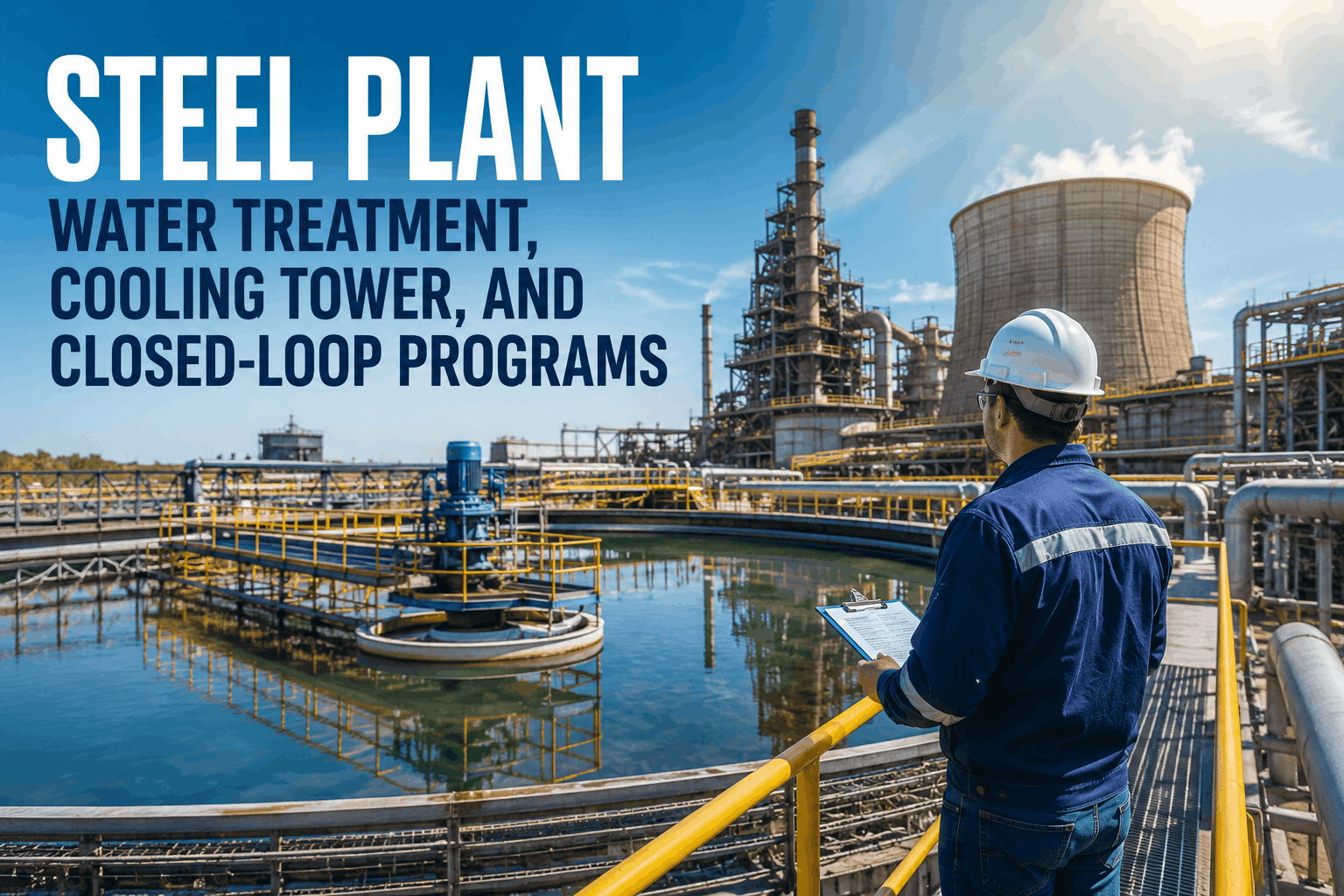
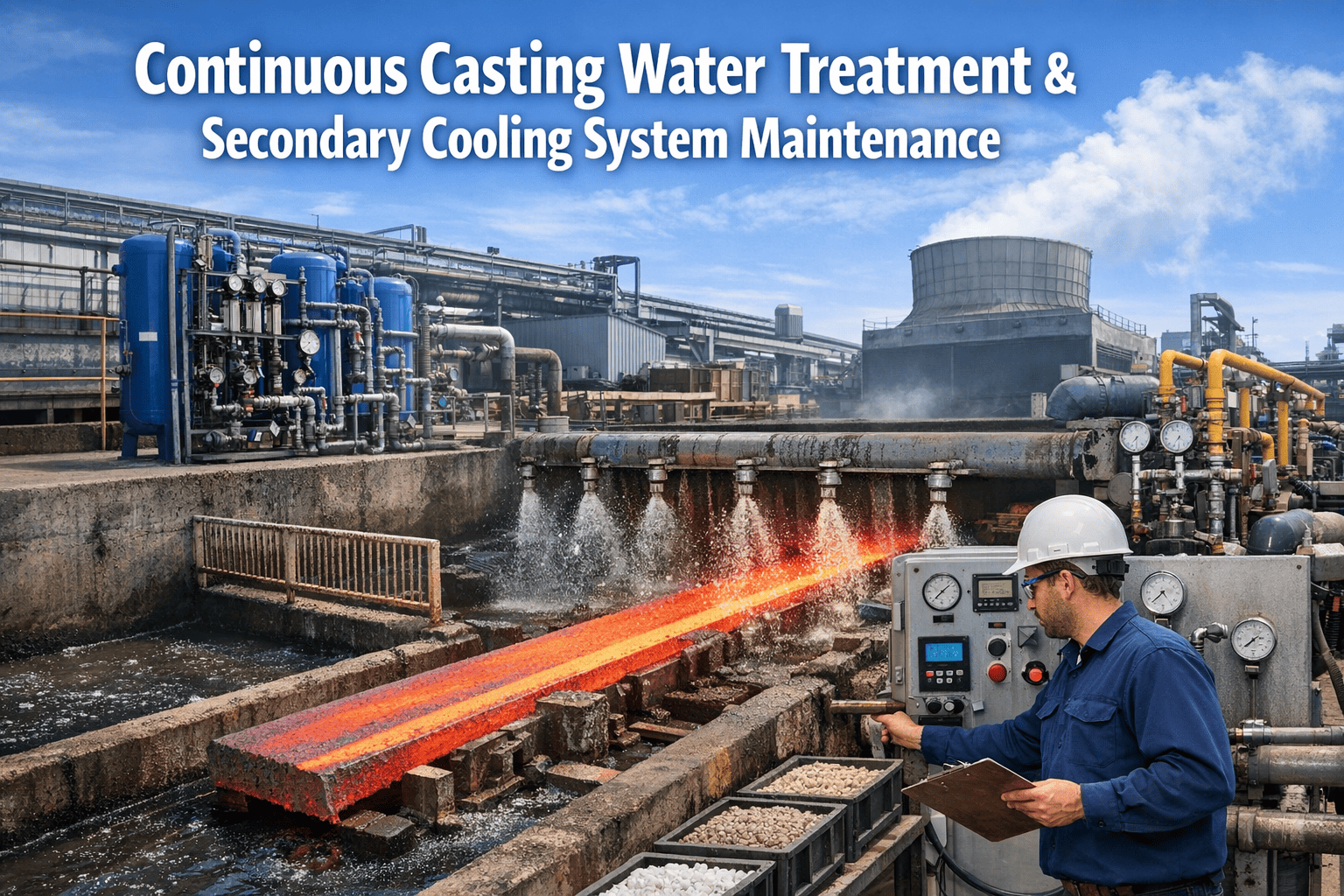
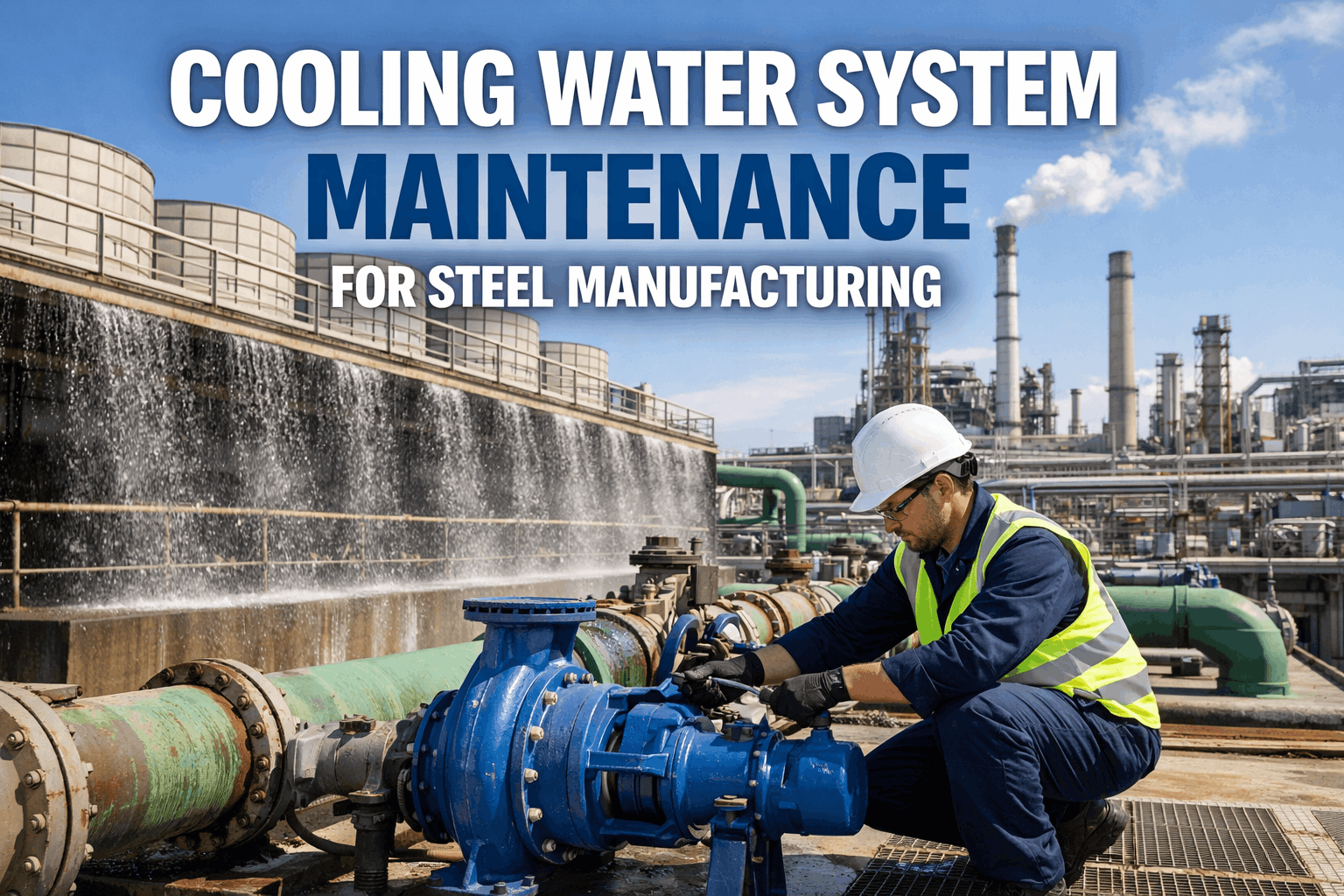
Steel Plant Water Treatment, Cooling Tower, and Closed-Loop Programs
By Alex Jordan on June 1, 2026
Steel plants circulate 50,000–300,000 gallons per minute through cooling towers for furnace equipment, gas compressors, and hydraulic systems where Legionella growth, scale fouling, and corrosion can cause catastrophic failures if water chemistry and biocide management drift. Book a water treatment audit to see how Oxmaint tracks cooling tower chemistry, Legionella risk assessment, biocide levels, blowdown control, and refractory water-cooled panel maintenance across steel plants in the USA, or contact support to get started.
STEEL PLANT TEMPLATE · WATER TREATMENT SYSTEMS · 2026
Steel Plant Water Treatment, Cooling Tower, and Closed-Loop Programs
Monitor daily water chemistry (pH, conductivity, biocide residual), Legionella risk assessments (6-monthly), cooling tower basin cleaning, heat exchanger fouling, blowdown control for scale prevention, and water-cooled refractory panel condition across all furnace and EAF cooling circuits.
Critical temperature zone where Legionella thrives; cooling tower operation below 77°F preferred.
6 Mths
Risk Assessment Cycle
CDC and ASHRAE require documented Legionella risk assessments every 6 months minimum.
20 ppm
Biocide Residual Minimum
Free available oxidant must be maintained continuously; zero residual for >2 hours = compliance gap.
8–14 Days
Hot Spot Formation Time
Blocked secondary cooler nozzles cause localized high temp; breakout risk if shell thickness drops.
Steel Plant Cooling System Hazards and Water Chemistry
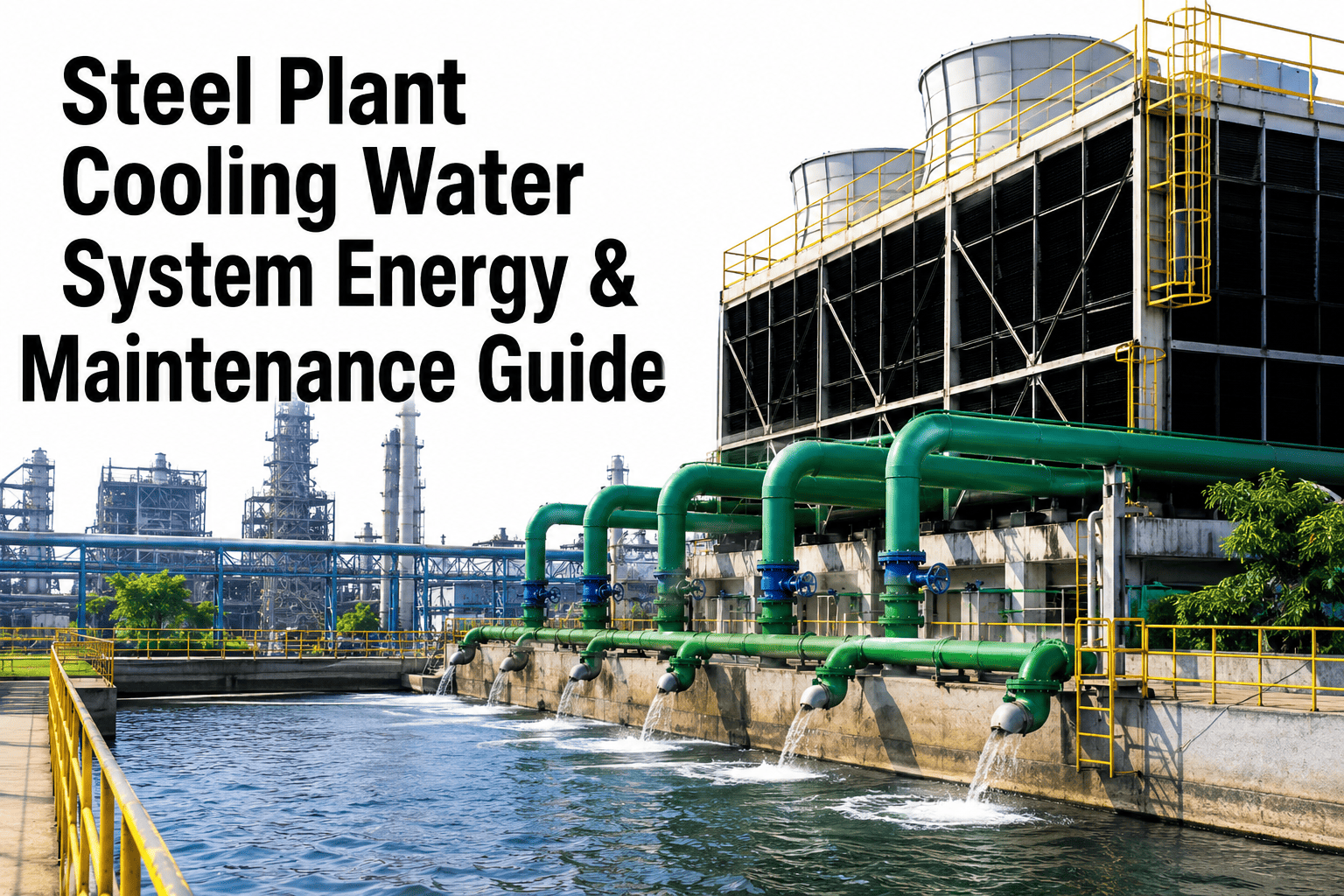
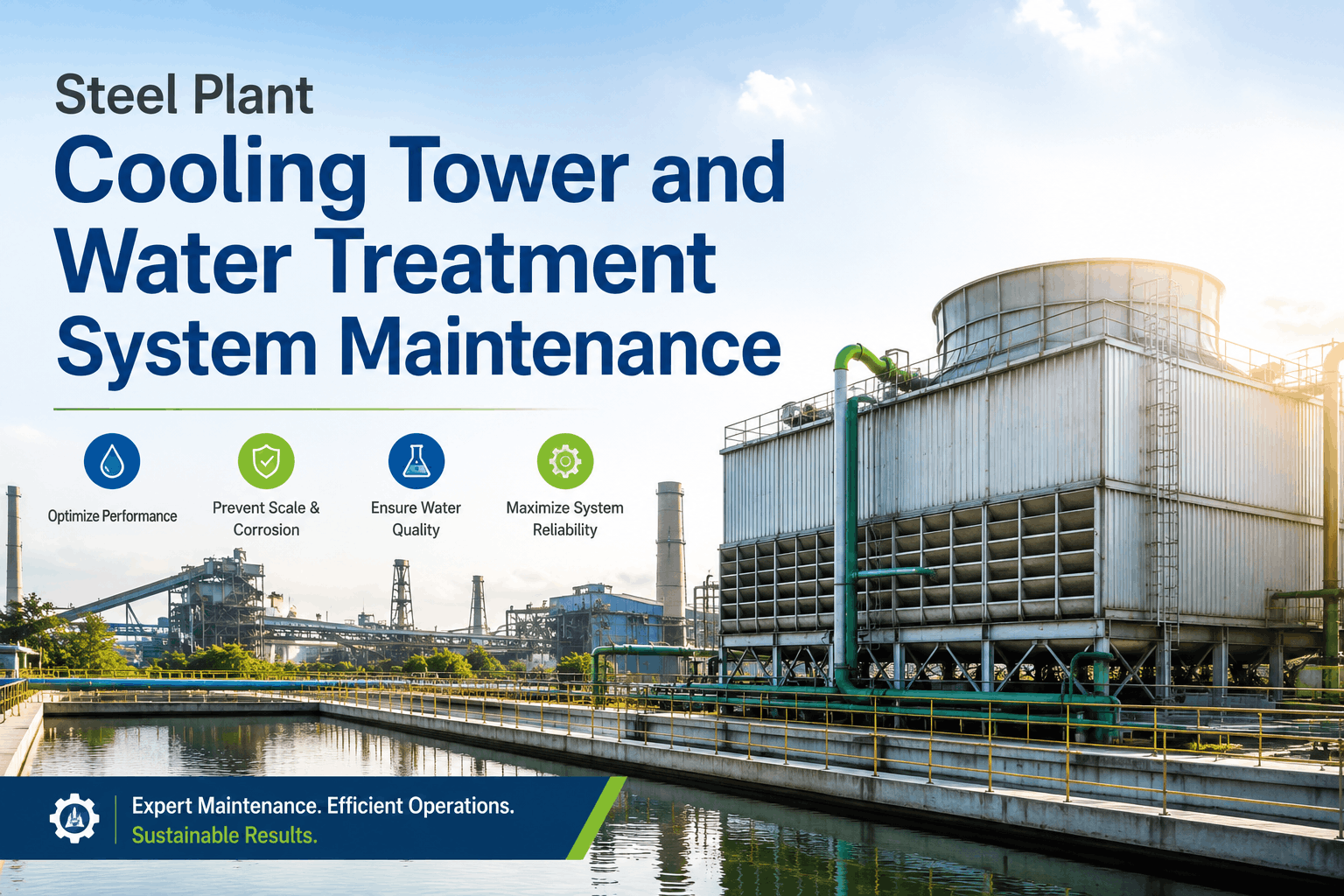
Recirculating cooling towers in steel plants are large volume, open-to-air systems operating at 25–45°C where furnace hot water is cooled by gravity and air draft. The perfect storm for Legionella and scale fouling exists because towers have large water surface area, biofilm-forming fill media, exposure to airborne contaminants, and sustained warm temperatures. Evaporative loss concentrates dissolved minerals (calcium, magnesium, silica) in the circulating water; blowdown (intentional discharge and replacement) is the mechanism to prevent scale accumulation on heat exchanger tubes. If blowdown is insufficient, calcium carbonate and silicate deposits build up, reducing heat transfer efficiency, raising return water temperature, and accelerating corrosion. Secondary cooling zones in continuous casters, EAFs, and oxygen converters use water-cooled panels and lances that are under extreme thermal stress—blocked nozzles create local hot spots in just 8–14 days, allowing molten metal to break through the cooled wall, causing catastrophic equipment damage and worker injury risk. Legionella prevention requires biocide dosing that maintains 15–20 ppm free available oxidant continuously; any gap >2 hours creates a window for microbial regrowth. Automated biocide systems often fail silently if not verified daily, making manual monitoring and backup procedures critical.
Cooling Tower and Water System Condition Grades
GRADE A
Excellent — Optimal Operation
pH 7.0–7.8, TDS (total dissolved solids) <1,500 ppm, biocide residual always >15 ppm, basin clean with <1/4 inch sludge, fill pack undamaged, heat exchanger delta-T within ±2°C design, no biofilm visible, Legionella sampling negative. 12-month maintenance cycle only.
pH uncontrolled >8.2 or <6.5, TDS >2,200 ppm, biocide residual frequently zero (system malfunction), basin heavily fouled >1 inch sludge, fill pack degradation visible, heat exchanger delta-T loss >5°C (fouling), moderate to heavy biofilm. Immediate cleaning, chemical system overhaul, and biofouling treatment required. Monthly risk assessments.
GRADE D
Poor — Imminent Threat
pH unstable, TDS >3,000 ppm, zero biocide residual sustained >4 hours, basin completely fouled with thick biological slime, fill pack structural damage, severe heat exchanger scaling (δT loss >8°C), Legionella detected in cultures. Tower must be isolated, drained, disinfected, and system reconfigured before return to service.
Critical Water Treatment and System Monitoring Activities
Daily Water Chemistry Monitoring
pH, conductivity (TDS proxy), and oxidizing biocide residual must be logged continuously or at minimum twice daily. Oxmaint creates automatic digital logs at 6 AM and 6 PM; deviations >0.5 pH units or biocide <10 ppm trigger operator alerts and corrective dosing. Manual readings verify automated system operation daily.
Legionella Risk Assessment Every 6 Months
CDC Toolkit requires documented risk assessment covering temperature stability (68–113°F danger zone), stagnant areas, biofilm formation sites, and system access for cleaning. Oxmaint schedules assessments automatically at 6-month intervals and tracks corrective actions tied to each risk factor. Any Legionella-positive culture triggers immediate system disinfection and root cause analysis.
Cooling Tower Basin Cleaning and Biofilm Removal
Quarterly basin inspections in Grade A/B condition; monthly in Grade C. Oxmaint schedules cleaning windows during low production periods. Mechanical scrubbing of basin surfaces + water pressure wash removes sludge and biofilm. Post-cleaning microbiological sampling confirms biocide effectiveness before return to normal operation.
Heat Exchanger Fouling Detection and Cleaning
Monitor delta-T (temperature difference across heat exchanger bundle). If delta-T degrades >3°C from baseline, fouling is occurring. Oxmaint logs delta-T hourly and triggers mechanical cleaning when target margin exceeded. Chemical cleaning (mild acid or inhibited HCl) may be needed for scale accumulation; alternative is tube-side water side pressure washing.
Automated Blowdown Control and Cycles of Concentration
Blowdown removes concentrated minerals to prevent scale. Conductivity controller automatically opens blowdown valve when TDS exceeds setpoint (typically 2,000–2,500 ppm depending on water hardness). Oxmaint monitors blowdown volume daily and cross-checks manual TDS readings against controller calibration to ensure proper operating window.
Water-Cooled Refractory Panel and Lance Maintenance
Secondary cooling zones in casters, EAFs, and converters use water-cooled panels that are under extreme thermal stress. Blocked nozzles create hot spots in 8–14 days, risking molten metal breakthrough. Oxmaint schedules nozzle inspections and chemical cleaning (calcium/scale removal) every 2–4 weeks in high-temperature zones. Flow rate monitoring alerts to blockages before hot spots develop.
Fill Pack Inspection and Replacement
Cooling tower fill (packing) media provides surface area for evaporative cooling; biological fouling and scale accumulation degrade efficiency. Annual visual inspection checks for visible biofilm, mechanical damage, or sagging. If >10% of fill area is compromised, replacement is triggered. Oxmaint logs fill condition and tracks replacement scheduling and material inventory.
Planned Maintenance vs. Emergency Water System Failure Economics
Impact Factor
Reactive / Unplanned Failure
CMMS-Planned Maintenance
Caster Secondary Cooler Nozzle Blockage
Hot spot → molten steel breakthrough → equipment damage + production loss 2–3 days + worker injury risk
2–4 week nozzle cleaning cycle prevents blockage; zero incidents
All daily chemistry logs, risk assessments, and cleaning records audit-ready for EPA/CDC inspection.
Frequently Asked Questions
What biocide concentration is required to prevent Legionella?+
Free available oxidant residual must be 15–20 ppm continuously (measured as free chlorine or equivalent oxidizer). CDC requires no gaps >2 hours. Oxmaint logs biocide residual twice daily; any dip below 10 ppm triggers operator alert and corrective dosing. Automated systems are verified manually to ensure they are functioning.
How often must cooling tower basin cleaning occur?+
Grade A condition: quarterly. Grade B condition: monthly. Grade C condition: every 2 weeks. Oxmaint automatically schedules cleaning windows during low production periods and tracks completion with photographic evidence. Post-cleaning microbiological sampling verifies biocide effectiveness before return to normal operation.
What is the threshold for heat exchanger fouling detection?+
If delta-T (temperature difference across bundle) degrades >3°C from baseline design value, fouling is occurring and cleaning is triggered. Oxmaint logs hourly delta-T and automatically compares to baseline. Exceedance triggers work order for mechanical or chemical cleaning before fouling becomes severe.
How are secondary cooler nozzles inspected for blockage?+
Monthly nozzle cleaning (calcium scale removal via mild acid or inhibited HCl) is standard for high-temperature zones. Oxmaint schedules these cleanings and logs flow rate measurements before/after to confirm effectiveness. Any nozzle with <80% of nominal flow is replaced immediately to prevent hot spot formation.
What parameters are included in a 6-monthly Legionella risk assessment?+
CDC toolkit requires evaluation of: system temperature stability (target <77°F to avoid 68–113°F danger zone), identification of stagnant areas, biofilm formation potential, system accessibility for cleaning, and corrective action verification. Oxmaint schedules these assessments automatically at 6-month intervals and tracks corrective actions tied to each risk factor.
How is the blowdown controller verified to work correctly?+
Automated blowdown controllers measure conductivity and open blowdown valve when TDS exceeds setpoint. Oxmaint requires daily manual TDS measurement (reagent test kit) to cross-check controller reading against actual conductivity. Any discrepancy >100 ppm triggers controller recalibration; process is logged for compliance documentation.
What happens if a Legionella culture comes back positive?+
Immediate system shutdown, basin drain and disinfection (>20 ppm oxidant exposure for 2+ hours), tube cleaning, system restart with elevated biocide level (20–30 ppm temporary), and repeat sampling after 48 hours. Oxmaint logs all corrective actions and coordinates regulatory notifications. Full root cause analysis identifies failure (inadequate biocide, stagnation, temperature drift).
What is the target operating temperature range for cooling towers?+
Target <77°F (25°C) if possible to avoid Legionella growth range (68–113°F). If operation >77°F is necessary (high ambient summer conditions), aggressive biocide management and temperature monitoring are required. Oxmaint logs basin water temperature hourly; any sustained temp >85°F triggers enhanced biocide dosing and risk assessment.
Prevent Cooling System Failures and Legionella Risk
Oxmaint's CMMS manages daily water chemistry, Legionella risk assessments, nozzle cleaning, biofouling prevention, and heat exchanger fouling detection. Avoid catastrophic breakouts, equipment failures, and regulatory penalties with continuous monitoring and automatic task scheduling.