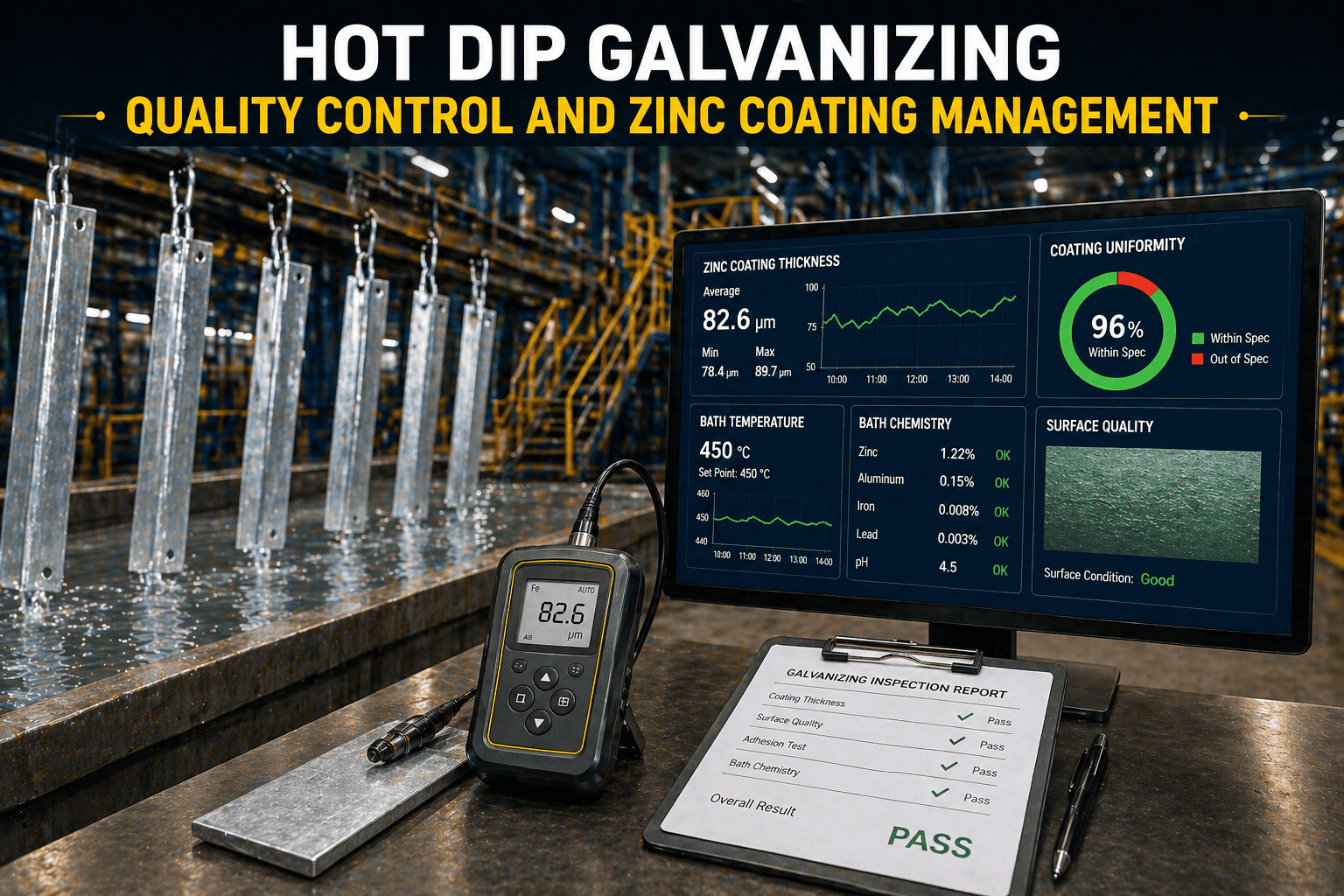
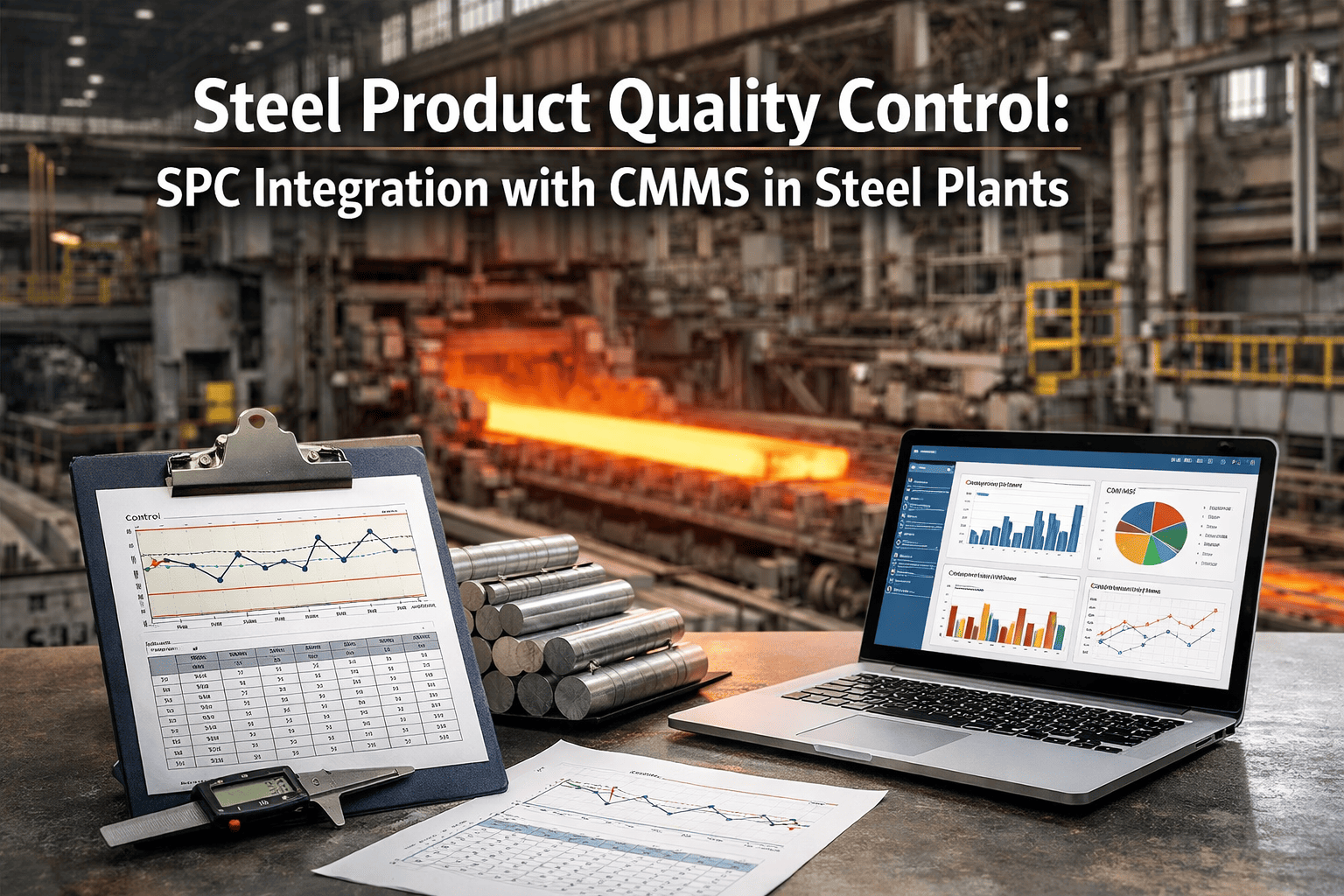
A continuous galvanizing line is one of the most complex and tightly sequenced systems in any steel plant. Strip moves at up to 200 metres per minute through cleaning, annealing at 700°C+, immersion in a 460°C molten zinc bath, air knife wiping, cooling, temper rolling, chromate treatment, and recoiling — all without stopping. Every second of unplanned downtime doesn't just halt one machine; it breaks a chain of interdependent processes that takes hours to restart, stabilize, and bring back to quality specifications. A single sink roll bearing failure can shut the line for 8–24 hours. An air knife malfunction creates coating defects that trigger customer rejections across an entire shift's production. A radiant tube crack in the annealing furnace means a cold shutdown, inspection, and replacement — potentially days of lost output.
Yet most galvanizing operations still manage this high-precision, high-speed production line with paper-based inspection logs, spreadsheet maintenance schedules, and reactive repair culture. The equipment that demands the most disciplined maintenance gets the least digital support. That gap between the precision of the process and the crudeness of the maintenance system is where quality escapes, unplanned shutdowns, and millions in lost production hide. It's time to close it.
The CGL Process — and Every Point Where Maintenance Matters
A continuous galvanizing line is a single, interconnected process. A failure at any stage stops the entire line. Here's the equipment chain your maintenance team needs to keep running — without interruption:
Entry Section
Uncoilers, stitchers, laser welders, and accumulators that join coils and feed the line continuously. A welder failure means a line stop within minutes.
Cleaning Section
Alkaline cleaning tanks, brushes, electrolytic cells, and rinsing systems that remove oil, dirt, and oxide. Poor cleaning creates bare spots on finished product.
Annealing Furnace
Radiant tube furnaces, direct-fired sections, and controlled atmosphere systems heating strip to 700°C+. Tube cracks and atmosphere leaks cause cold shutdowns.
Zinc Pot & Submerged Hardware
Molten zinc bath, sink rolls, stabilizing rolls, snout, and pre-melt pot. Dross buildup, roll bearing failure, and snout leaks are the top shutdown causes.
Air Knife System
High-pressure air or nitrogen wiping system controlling zinc coating thickness to micron precision. Blade wear, gap drift, and nozzle clogging create instant quality defects.
Cooling, Temper Mill & Exit
Cooling towers, galvannealing furnace, skin pass mill, tension leveler, chromate treatment, and recoiler. The final stage where surface quality is locked in or lost.
The Maintenance Challenges Unique to Galvanizing Lines
A CGL isn't like other steel processing lines. The combination of molten metal, corrosive chemicals, extreme temperatures, and micron-level quality tolerance creates maintenance challenges that standard CMMS approaches fail to address:
Molten Zinc Destroys Hardware on a Schedule
Sink rolls, stabilizing rolls, and bearings operating submerged in 460°C molten zinc corrode and wear on predictable cycles — typically 14–21 days. Miss the change window, and a bearing seizure shuts the entire line for 12+ hours. The replacement itself takes only 4 hours; the unplanned shutdown and restart takes 8–20 more.
Quality Defects Are Invisible Until They're Costly
Coating weight variation, bare spots, dross inclusions, and spangle defects often aren't caught until post-production inspection — or worse, at the customer. Most originate from equipment conditions: worn air knife lips, contaminated cleaning solution, or dross-laden zinc. By the time the defect is visible, an entire shift's production may be compromised.
Radiant Tubes and Furnace Components Fail Without Warning
Radiant tube cracking in the annealing furnace doesn't announce itself gradually — it happens between inspections. A cracked tube introduces combustion gas into the reducing atmosphere, oxidizing the strip surface and contaminating the furnace. Recovery requires a full cold shutdown: cooldown, inspection, tube replacement, atmosphere purge, and gradual reheat — 2 to 5 days of lost production.
Corrosive Chemicals Attack Everything Around the Line
Hydrochloric acid in the cleaning section, zinc fumes in the pot area, and chromate chemicals in post-treatment corrode structural steel, electrical systems, and instrumentation aggressively. Equipment designed for 30-year lifespans can require major rehabilitation within 10 years in a CGL environment — as documented when a crane built for decades needed full rehab after just 10 years in a galvanizing plant.
Zero Tolerance for Downtime in a Continuous Process
Unlike batch processes, a CGL cannot pause. The strip is a continuous ribbon from uncoiler to recoiler. Any interruption requires welding a new strip, reheating the furnace, re-stabilizing the zinc bath chemistry, and running trial product until quality is confirmed. A 1-hour equipment fix can become an 8-hour production restart.
The core problem: Galvanizing lines demand predictive, precisely scheduled maintenance — but most plants run them reactively. The result is that the highest-value processing line in the plant also has the highest unplanned downtime cost.
Your CGL Deserves Maintenance as Precise as Its Process
Every sink roll change, air knife inspection, and furnace tube check should be scheduled, tracked, and data-driven. Oxmaint gives your galvanizing line the CMMS discipline it needs to run at full speed with zero surprises.
Critical Maintenance Schedule by CGL Section
Every section of a galvanizing line has its own wear patterns, inspection intervals, and failure signatures. Here's the maintenance blueprint that top-performing CGL operations follow:
Welders, Stitchers & Accumulators
Alkaline Tanks & Brush Rolls
Radiant Tubes & Atmosphere System
Sink Rolls, Bearings & Snout
Wiping System & Controls
Skin Pass, Leveler & Recoiler
Need a CGL-specific maintenance plan? Schedule a free demo and we'll build it around your line configuration.
The ROI of Proactive CGL Maintenance
When galvanizing operations shift from reactive to scheduled and predictive maintenance, the financial impact is immediate and measurable:
Based on industry benchmarks for continuous galvanizing operations. Results vary by line configuration, speed, and current maintenance maturity.
See What Proactive CGL Maintenance Looks Like
Book a personalized demo and we'll walk through how Oxmaint manages every section of your galvanizing line — from entry welder to recoiler — with maintenance schedules built for your specific line speed, product mix, and shutdown windows.
How Oxmaint Manages Galvanizing Line Maintenance
Oxmaint is built for the precision and urgency of continuous process lines — where a missed inspection doesn't just mean a repair, it means a full line shutdown and restart:
Map Your Entire CGL
Register every asset by line section — entry equipment, cleaning cells, furnace zones, pot hardware, air knives, cooling towers, temper mill, and recoiler. QR-code every component for instant mobile access to specs, manuals, and maintenance history.
Schedule Around Your Line
Set up cycle-based PM for sink rolls (14–21 day campaigns), time-based PM for radiant tubes, condition-based triggers for air knife lips, and shift-start checklists for operators. Work orders auto-generate and escalate when overdue.
Monitor Critical Parameters
Log and trend sink roll vibration, furnace tube thermal profiles, air knife gap measurements, and zinc bath chemistry. Get automatic alerts when any parameter crosses threshold — before it becomes a shutdown event.
Never Run Out of Critical Spares
Link spare parts to specific CGL assets — sink roll assemblies, radiant tubes by zone, air knife lip sets, welder electrodes. Auto-reorder alerts fire when stock hits minimum levels. No more emergency procurement at premium prices.
Measure and Optimize
Track MTTR, MTBF, and cost per section across the entire line. Correlate maintenance events with quality data to pinpoint which equipment conditions cause which defects. Build the business case for capital upgrades with hard data.
Before vs. After: CGL Maintenance Transformation
Frequently Asked Questions
Can Oxmaint handle campaign-based maintenance like sink roll cycles?
Yes. Oxmaint supports cycle-based, time-based, condition-based, and meter-based PM triggers. You can set sink roll campaigns at 14, 18, or 21 days — or trigger changes based on vibration thresholds. The system auto-generates work orders and tracks every campaign.
Can operators log inspections from the line floor?
Absolutely. Oxmaint is mobile-first with offline capability. Operators scan QR codes on air knives, pot hardware, or furnace panels to open inspection checklists on their phones. Photos, readings, and sign-offs sync automatically when connectivity returns.
Does it integrate with our line automation and quality systems?
Yes. Oxmaint connects via open API with SAP, Oracle, Level 2 automation systems, and quality management platforms. Maintenance events can be correlated with coating weight data, line speed logs, and defect records — giving you the full picture of how equipment condition drives product quality.
How quickly can we go live on a galvanizing line?
Most CGL operations are fully running on Oxmaint within 2–4 weeks. Asset registration follows your line sections, inspection templates are customized per equipment type, and PM schedules align to your current campaign cycles and shutdown windows.
Can it manage multiple galvanizing lines?
Yes. Oxmaint scales across multiple CGLs, annealing lines, pickling lines, and any other processing line in your plant. Each line gets its own asset tree, schedules, and dashboards — with unified reporting across the entire strip processing operation.
Run Your Galvanizing Line Like the Precision Process It Is
Your CGL operates at 200 metres per minute with micron-level coating control. Its maintenance system should match that precision. Oxmaint gives you the scheduling, tracking, and analytics to eliminate unplanned shutdowns and keep quality locked in — deploy in weeks, see results from day one.

-maintenance-and-zinc-pot-reliability.png)