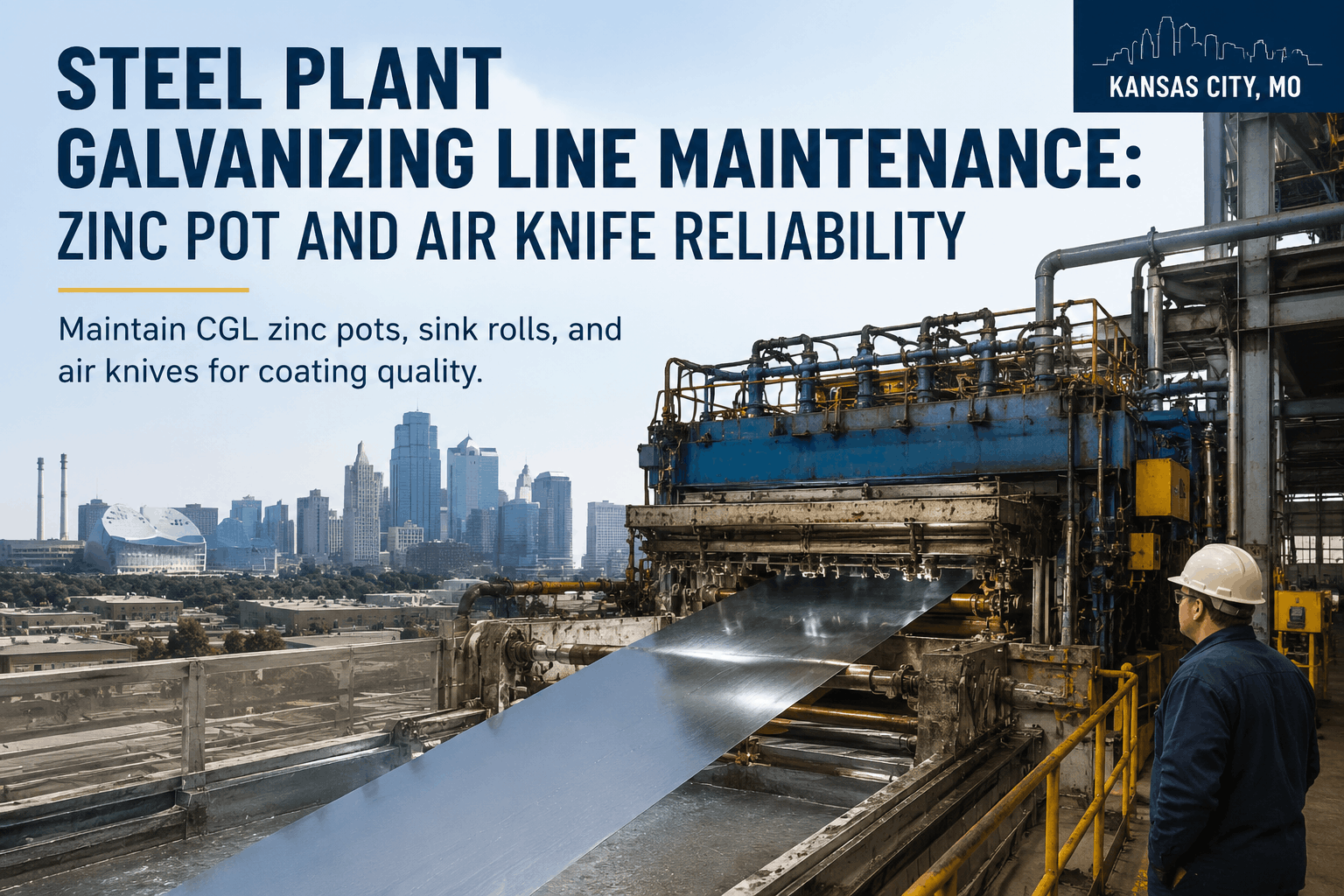
Continuous galvanizing lines (CGL) represent the final coating manufacturing step for corrosion-resistant steel strip before dispatch to automotive, construction, and appliance end-markets—and they tolerate virtually zero margin for quality deviation or unplanned downtime. A zinc pot temperature swing of just 5°C alters coating adhesion and spangle uniformity enough to trigger customer complaints. A bearing failure in a sink roll submerged beneath 1,200°C molten zinc forces a line-stop costing upwards of $25,000 per hour in lost production, rework labor, and logistics delays. An air knife nozzle blockage producing uneven zinc coating weight generates a cascade of failed tensile tests and dimensional inspection rejections that can consume 15–20% of daily production. OxMaint's CGL platform connects real-time monitoring of zinc pot chemistry (temperature, aluminum content, lead traces), sink roll and stabilizer roll bearing health via tonnage-based wear tracking and vibration sensing, air knife precision (gap measurement, pressure differential, nozzle cleanliness logs), and annealing furnace burner efficiency into a unified predictive maintenance ecosystem. Galvanizing maintenance teams receive automated alerts when bearing campaign tonnage approaches limits, when air knife pressure curves indicate nozzle partial blockage, or when furnace atmosphere composition drifts from specification—enabling proactive work order generation and scheduled bearing changes during strip join windows rather than mid-run mechanical seizures. US mills using OxMaint's galvanizing platform report 12–18% extensions in sink roll campaign life (adding 8–12 calendar days per campaign), 35–45% reductions in coating weight rejects through structured air knife maintenance, and zero customer complaints linked to furnace or pot-related quality excursions.
Continuous Galvanizing Line (CGL) Maintenance: Zinc Pot, Air Knife, and Roll Bearing Reliability
Comprehensive maintenance strategy for hot-dip galvanizing operations, covering zinc bath management, molten metal bearing systems, air knife coating weight control, annealing furnace precision, and quality protection protocols for zero-defect, high-availability galvanizing lines.
Zinc Pot Chemistry Monitoring and Coating Quality Specifications
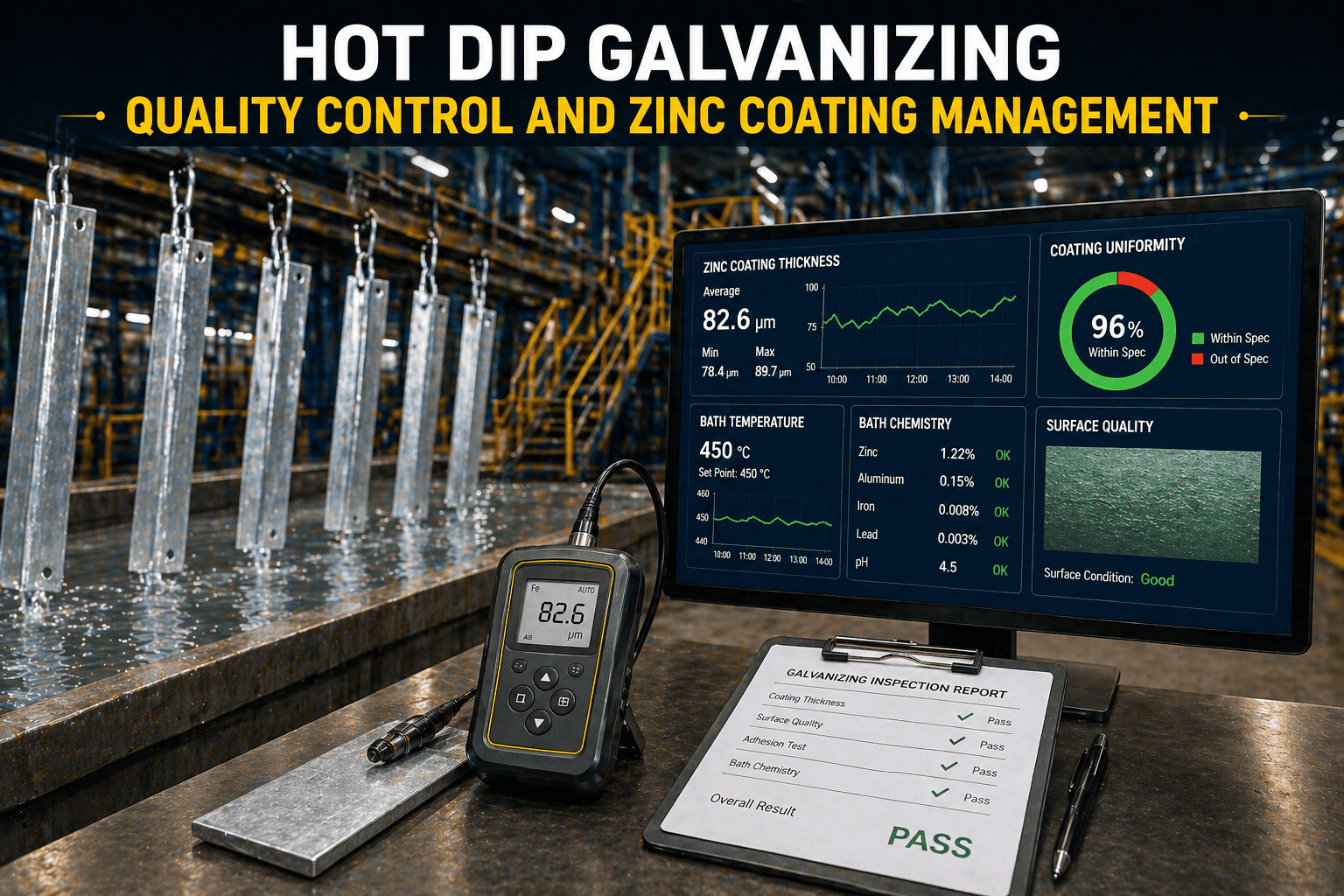
The zinc pot is a bath of molten metal maintained at 840–860°F (449–460°C) where steel strip becomes coated through immersion and subsequent air knife wiping. The chemical composition of the pot—zinc (Zn), aluminum (Al), lead (Pb), iron (Fe), and trace elements—directly determines coating adhesion, spangle pattern, and mechanical properties of the final product. Galvanize specifications typically require: total aluminum 0.15–0.20%, iron 0.01–0.03%, lead <0.005% (for zero spangle products), and antimony zero unless spangle is explicitly requested. Deviation from these windows produces coating defects ranging from poor strip-to-pot adhesion (causing coating flaking during subsequent forming operations) to rough surface texture that fails critical aesthetic standards for construction and automotive applications. OxMaint's zinc pot monitoring tracks bath composition through regular sampling and laboratory analysis, logging aluminum content (both total AlTOT and dissolved aluminum AlEFF), iron content trends, and lead contamination levels. When total aluminum rises above 0.22% or falls below 0.13%, the system alerts operators to adjust scrap metal feed rates or add pure aluminum ingot. A rising iron trend (>0.035%) indicates excessive dross accumulation or breakdown of the pot lining, triggering dross removal and eventual pot cleanup. Lead contamination above 0.01% requires immediate pot cleaning and raw material supply investigation. Beyond chemistry, OxMaint monitors pot temperature stability: deviations exceeding ±3°C from setpoint trigger heating or cooling system diagnostics. It also tracks zinc consumption metrics (kg/ton of strip coated) to identify thickness control issues early. Facilities that maintain tight pot chemistry and temperature control through OxMaint's monitoring achieve superior coating uniformity, fewer quality rejects, and extended pot useful life approaching 15–18 years compared to the 12–14 year baseline for facilities using manual pot management.
CGL Zinc Pot and Roll Bearing Performance Dashboard
Monitor pot chemistry, bearing wear, air knife alignment, and furnace performance across your galvanizing line in real time.
Aluminum Content and Dross Accumulation
Laboratory samples logged weekly track aluminum content against specification windows (0.15–0.20%). Deviations trigger aluminum feed adjustments. Rising iron (>0.035%) indicates dross, requiring mechanical removal and pot cleaning scheduling to maintain coating adhesion and prevent defects.
Tonnage-Based Wear Tracking and Campaign Life
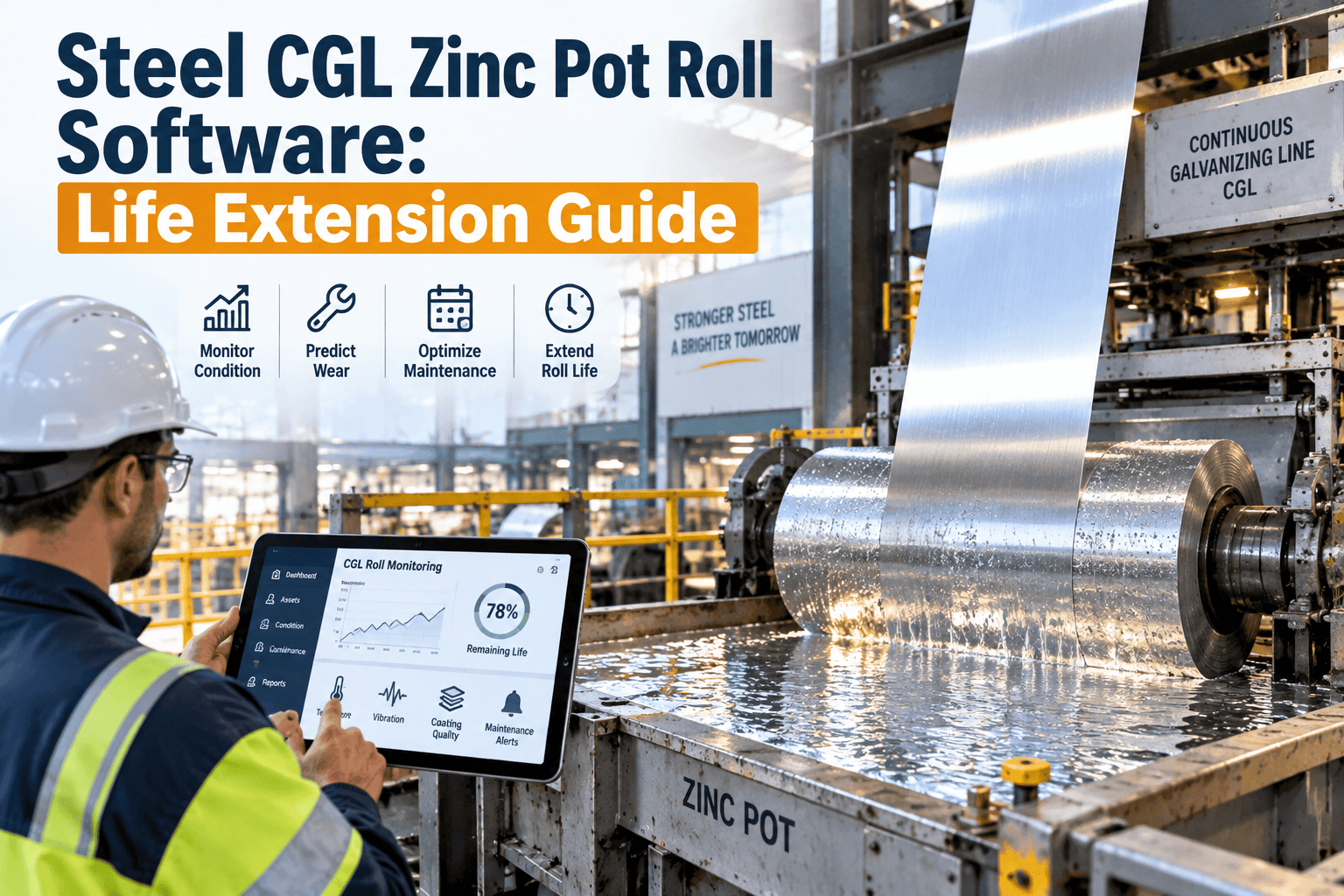
OxMaint accumulates tonnage stripped since bearing installation; at 12,400 ton campaign limit, automated alerts trigger bearing replacement scheduling. Early replacement prevents mid-cycle seizures that force emergency line stops costing $25,000+ per hour. Campaign extension via cobalt-based bearing alloys adds 15–20% additional tonnage capacity.
Nozzle Gap, Pressure, and Coating Weight Uniformity
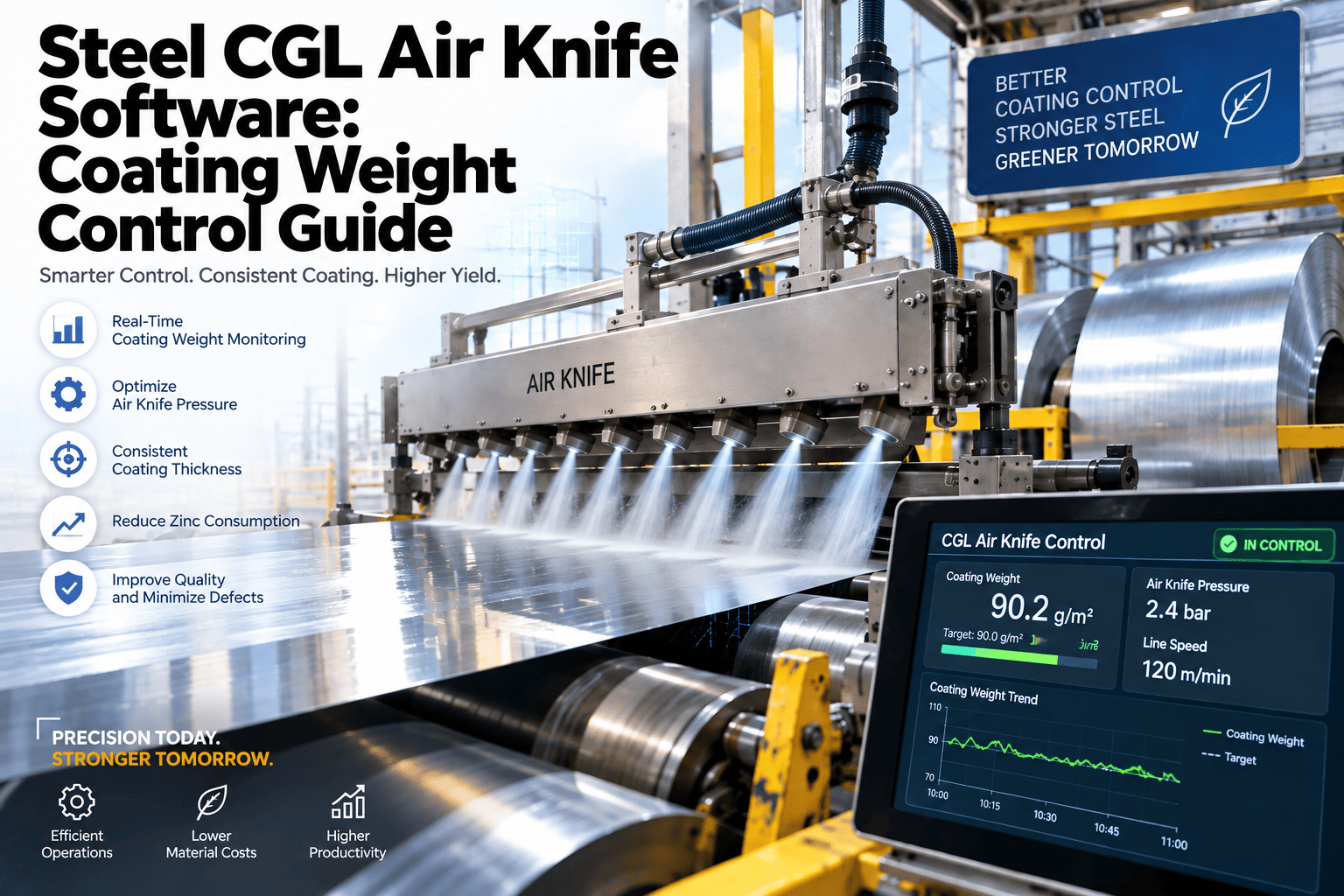
Shift-based gap measurements logged against coating weight targets identify mechanical drift in air knife positioning. Pressure asymmetries across the strip width indicate nozzle blockage. Proactive cleaning schedules triggered when gap deviation exceeds ±0.2 mm prevent coating weight rejects and ensure uniform coating thickness across all production orders.
Sink Roll and Stabilizer Roll Bearing Management in Molten Metal Environment
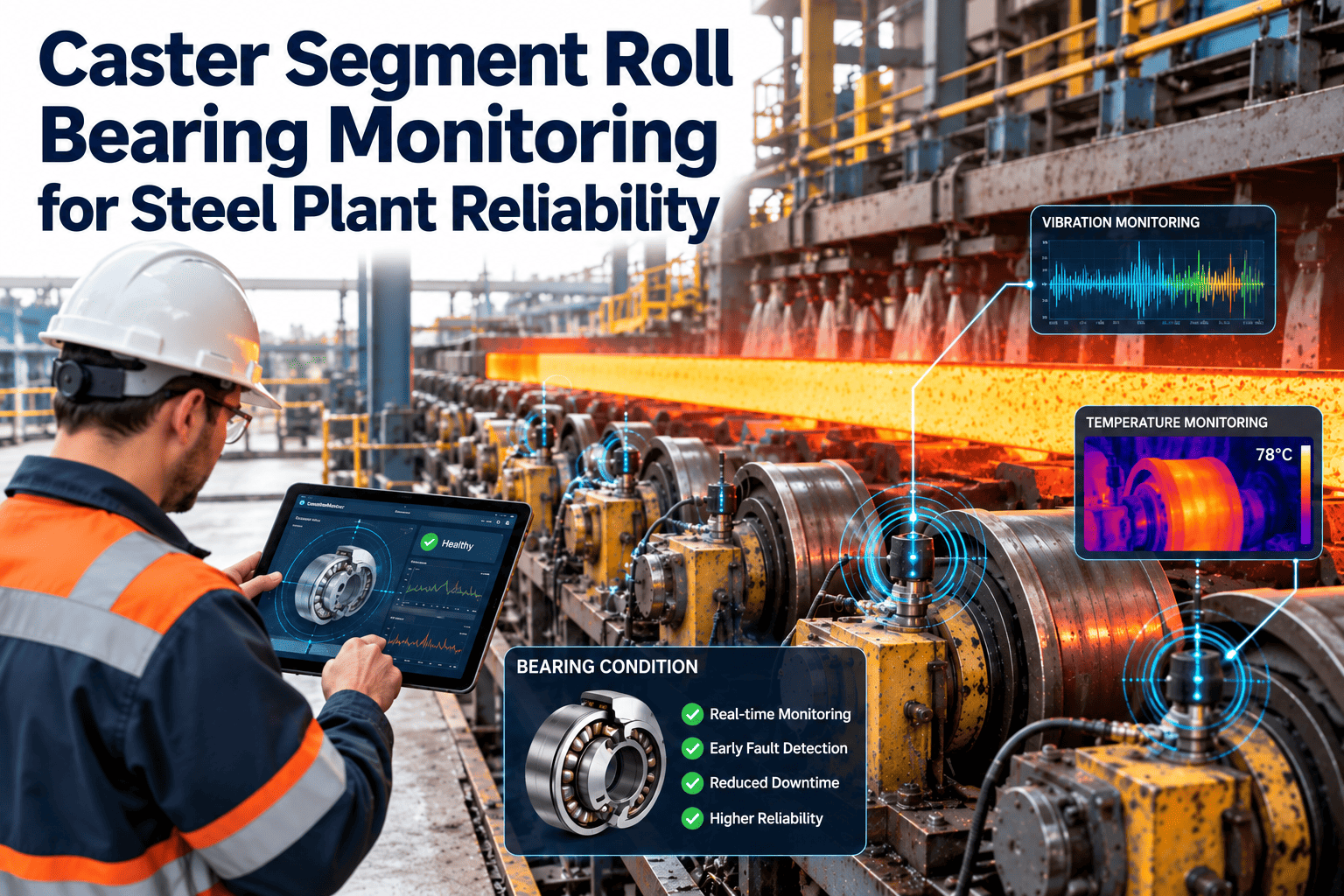
Sink rolls and stabilizer rolls operate submerged beneath molten zinc at 1,200°C, supporting and guiding strip through the pot while preventing sagging or horizontal deflection. These rolls employ specialized high-temperature bearings—typically oil-lubricated sleeve or tilting pad designs rated for sustained operation in the 80–100°C bearing outer race temperature range typical of molten metal environment. Standard bearing campaigns last 12,400–14,600 tons of strip before wear becomes critical; at that tonnage threshold, bearing internal clearance increases and vibration begins to rise. Waiting for catastrophic failure—sudden bearing seizure that jams the roll and forces emergency roll change during active coil run—costs $25,000–40,000 in emergency overtime labor, strip rework, logistics delay penalties, and customer service recovery. OxMaint's roll campaign management system tracks cumulative tonnage stripped since bearing installation, logging the data continuously from the line production schedule and strip coil weights. When accumulated tonnage reaches 80% of campaign limit (approximately 10,000 tons), the system generates an advance scheduling alert allowing maintenance teams to plan bearing replacement during the next scheduled strip join or line slowdown. At 95% of campaign limit, an urgent priority notification goes to shift supervision. Facilities that strictly adhere to tonnage-based bearing replacement schedules—changing bearings at 90–95% of rated campaign life rather than waiting for failure—achieve zero mid-cycle bearing seizures, extended overall equipment effectiveness (OEE) above 94%, and reduced emergency maintenance labor costs by 45–55% compared to facilities relying on reactive maintenance. Advanced bearing materials (cobalt-based alloys, specialized lubricants) can extend campaign life by 15–20%, adding 1,500–2,500 additional tons before replacement, further optimizing maintenance economics.
Air Knife Precision Maintenance and Coating Weight Control Systems
The air knife assembly—a high-velocity air stream directed at strip exiting the zinc pot—removes excess molten zinc coating, leaving a uniform layer that meets customer specification (typically 60–150 grams per square meter depending on end application). Air knife gap (distance between nozzle and strip surface), air pressure, and nozzle design collectively determine coating weight uniformity across the strip width. Even small deviations produce coating weight variations: a 0.05 mm gap increase reduces coating weight by 3–5 grams per square meter; a 0.1 bar pressure drop similarly reduces coating by 4–8 grams per square meter. Coating weight specifications for automotive applications often demand ±10 grams per square meter tolerance—meaning the air knife system must be maintained to sub-0.05 mm precision. OxMaint's air knife maintenance module tracks shift-by-shift gap measurements logged via digital calipers or laser measurement systems, correlating gap against actual coating weight results on each production order. When gap deviation exceeds ±0.2 mm from nominal, or when air pressure curves show declining differential across the nozzle width, mechanical drift in air knife positioning systems or nozzle blockage is indicated. Automated cleaning schedules triggered when early pressure indicators suggest partial fouling prevent complete nozzle blockage events that force emergency air knife changeouts. Gap measurement trending allows predictive detection of mechanical wear in the air knife positioning servos or hydraulic adjusters—triggering maintenance 2–4 weeks before loss of control. Facilities that maintain rigorous air knife measurement protocols achieve coating weight standard deviations <6 grams per square meter, virtually eliminating coating weight rejection rates and customer complaints. In contrast, facilities operating with only periodic (weekly or monthly) air knife checks experience 8–15% rejection rates linked to coating weight variation, consuming 12–18 shift hours weekly in rework operations.
OxMaint CGL Maintenance Integration: Pot, Bearings, Air Knife, and Furnace Orchestration
Unified workflow for zinc pot chemistry monitoring, roll bearing campaign tracking, air knife precision maintenance, and annealing furnace optimization.
Annealing Furnace Reliability and Burner Efficiency for Thermal Cycle Control
The annealing section of a CGL pre-heats strip to enable oxide film removal before the zinc pot immersion, improving coating adhesion and surface cleanness. Burner efficiency testing and tube pressure monitoring should occur monthly; blocked or fouled burner nozzles reduce flame temperature and hot zone coverage, producing non-uniform strip heating that degrades coating uniformity. Similarly, radiant tube pressure-drop trends indicate tube scale accumulation or blockage. OxMaint flags these drift patterns early, triggering burner cleaning or tube descaling before thermal control failures cascade into quality deviations. Furnace atmosphere balance (combustion air vs. fuel flow) must be maintained to prevent excessive oxidation or fuel carryover—parameters tracked continuously through oxygen and CO analyzers connected to OxMaint's monitoring system.
Frequently Asked Questions on CGL Maintenance
Running a mid-scale CGL without coordinated bearing and air knife monitoring left us vulnerable to 8–12 quality incidents per month and the occasional bearing seizure that forced emergency maintenance. After deploying OxMaint's CGL platform, our zinc pot chemistry stays within specification windows, bearing campaigns are extended through tonnage tracking, and air knife gap precision is maintained shift-by-shift. We've eliminated coating weight rejects linked to air knife drift, reduced unplanned bearing changes from 3–4 per year to zero, and achieved 99.2% line uptime. Customer satisfaction metrics improved dramatically, and our maintenance team transitioned from reactive firefighting to predictive engineering. This is the infrastructure investment that transformed our finishing line operations.
Maximize Your CGL Availability and Product Quality Today.
OxMaint's galvanizing line platform integrates zinc pot chemistry tracking, sink roll bearing campaign management, air knife precision maintenance, and furnace optimization into one unified system — fully free to start, setup in minutes for existing operations or new deployments.
-maintenance-and-zinc-pot-reliability.png)