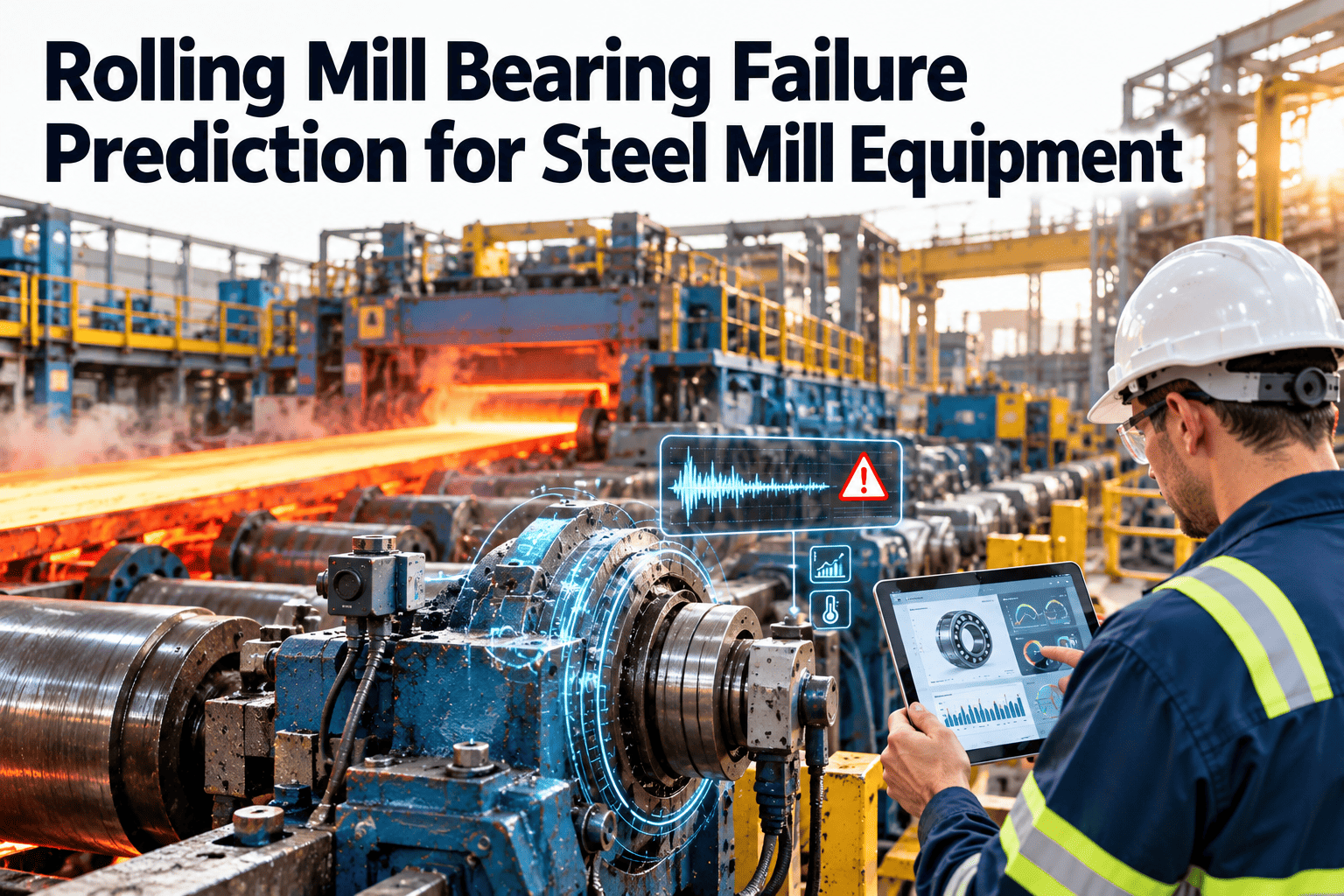
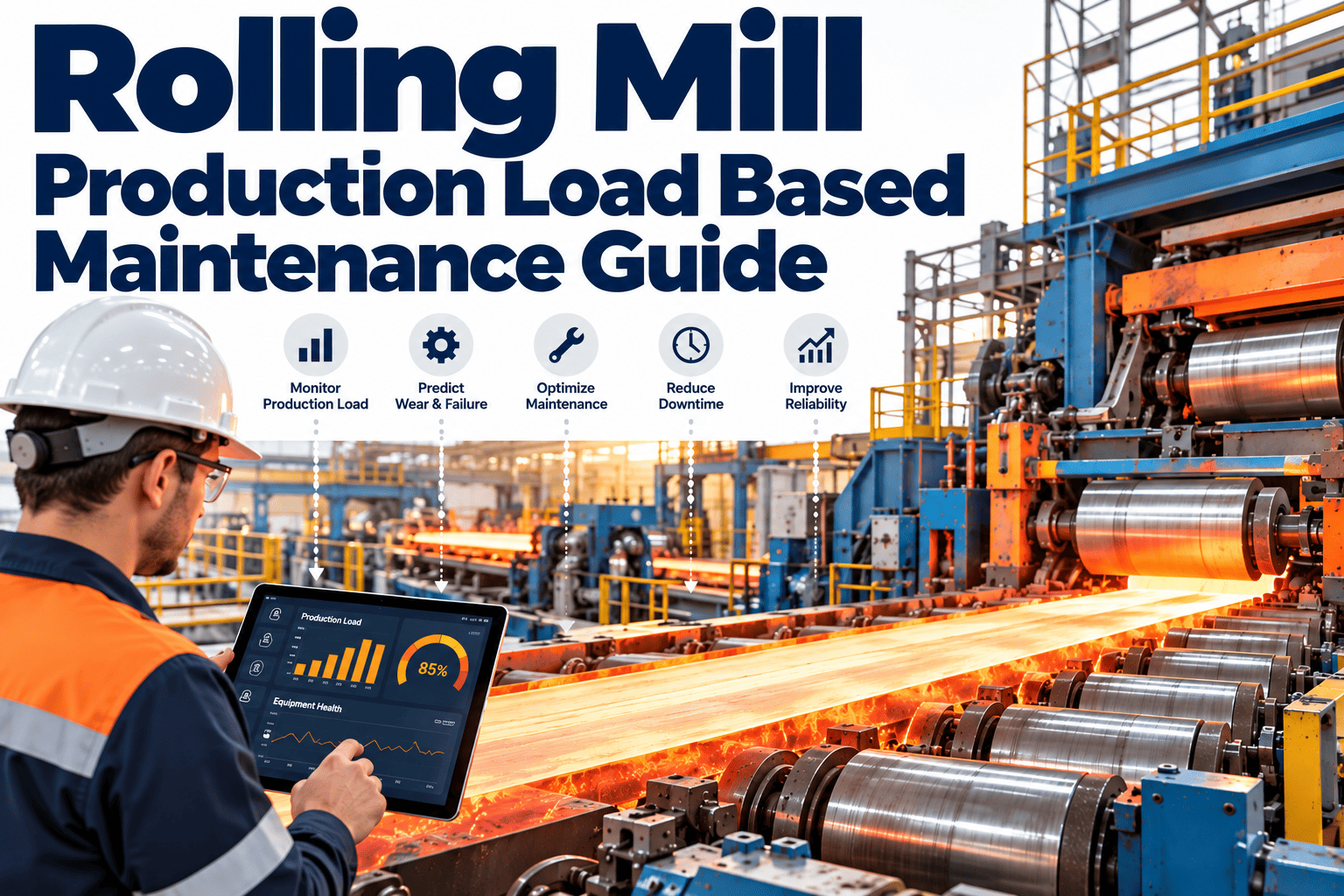
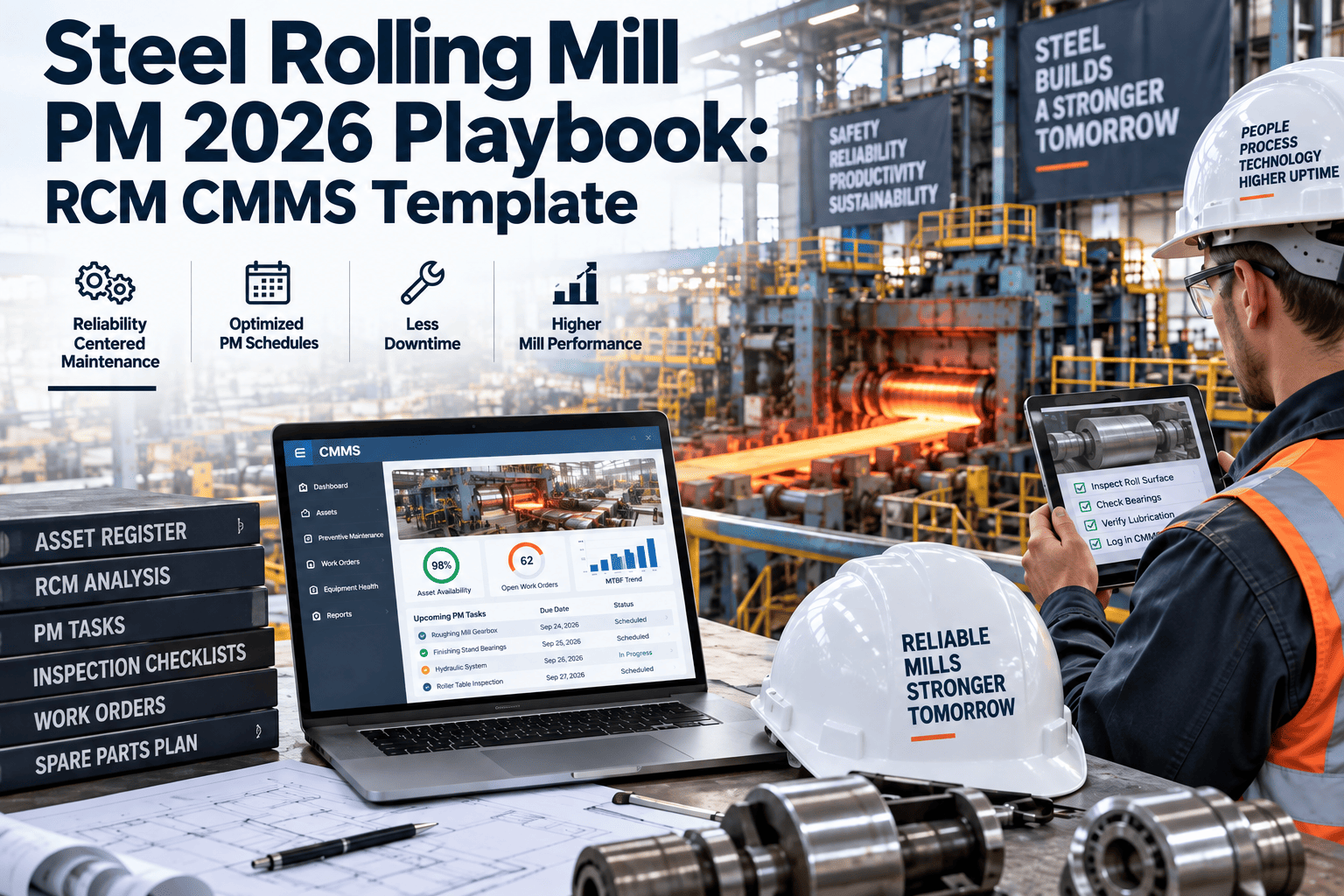
Long product rolling mills — section mills, bar mills, and structural mills — are among the most mechanically stressed assets in any steel plant. A single unplanned stoppage can halt output for hours, costing $20,000+ per minute in lost production. Yet industry data shows that over 80% of unplanned stoppages are preventable with the right maintenance strategy. Oxmaint helps long product mills move from reactive firefighting to predictive reliability — tracking roll campaigns, guide wear, stand health, and pass design compliance in one unified CMMS platform.
Long Product Rolling Mill Maintenance
Section Mill • Bar Mill • Structural Mill • Guide Systems • Roll Pass Design
Why Long Product Mill Maintenance Is Different
Bar, section, and structural mills run multiple product sizes through a sequence of roughing, intermediate, and finishing stands. Every pass change, roll swap, and guide adjustment is a potential failure point. Unlike flat rolling, long product mills deal with free-end instability, cobble risk, and complex guide alignment — all while operating three shifts, up to 299 days per year.
| Mill Type | Target Utilization | Key Failure Mode | Avg. Roll Campaign | Main Downtime Driver |
|---|---|---|---|---|
| Rod & Bar Mill | 90 – 93% | Guide wear / cobble | 8 – 12 hrs | Bearing fatigue spalling |
| Section Mill | 75 – 78% | Groove wear / misalignment | 6 – 10 hrs | Roll pass deviation |
| Structural Mill | 75 – 78% | Refractory & universal stand | 4 – 8 hrs | Universal stand chock wear |
| H-Beam / Heavy Section | 72 – 76% | Drive coupling & spindle | 4 – 6 hrs | Gearbox misalignment |
Source: IspatGuru Industry Benchmarks & Oxmaint Mill Analytics, 2025
The 5 Failure Modes Behind 80%+ of Stoppages
Understanding failure patterns is the first step to prevention. These five categories account for the vast majority of unplanned long product mill downtime and must each be addressed with dedicated monitoring and PM routines.
Bearing Fatigue & Spalling
Four-row tapered roller bearings under 15,000–25,000 kN rolling force cause 29% of all unplanned stoppages. Contamination and lubrication starvation accelerate failure by 500x.
Roll Pass Groove Wear
Groove wear leads to dimensional non-compliance, section distortion, and cobbles. Without tracked pass histories, mills react to scrap instead of scheduling regrinding proactively.
Guide Box Misalignment
Guide misalignment causes 50–70% of mill vibration problems and is a leading cobble trigger. Entry guide gaps and twist guide condition must be verified at every pass change.
Gearbox & Spindle Wear
2,000–8,000 kW drives transfer torque through herringbone or planetary gearboxes. Gear tooth wear and coupling degradation develop over weeks and are detectable well before failure.
Lubrication System Failure
Water ingress of just 1% in bearing oil reduces bearing life by 90%. Lube line blockages and incorrect grease grades are frequently missed until secondary damage has already occurred.
Mill Zone Maintenance Requirements
A long product mill is a chain where the weakest link sets the maximum production rate. Each zone has distinct wear profiles and maintenance cycles that must be managed both independently and as an integrated system.
Heavy Reduction Stands
- Roll barrel spalling — inspect every 8 hrs
- Chock liner wear — check per 500 t rolled
- Screwdown lubrication — weekly
- Drive spindle universal joint — per campaign
Shape Development Stands
- Groove profile — measure per pass change
- Guide box roller bearing — replace at 50% wear
- Inter-stand looper tension arm — inspect
- Cooling header nozzle — clean weekly
Dimensional Control Stands
- Work roll surface roughness — every 4 hrs
- Guide gap setting — verify after roll change
- Twist guide alignment — per pass change
- Cobble detector calibration — weekly
Track every stand, roll campaign, and guide PM in one place.
Oxmaint connects roughing, intermediate, and finishing zones with condition-based work orders and real-time asset health dashboards.
Maintenance Strategy by Equipment Category
Applying the right strategy to each equipment type is what separates world-class mills from average performers. Over-maintaining some assets while under-maintaining others is one of the most common and costly mistakes in long product operations.
| Equipment | Strategy | Key Trigger | Typical Interval | Oxmaint Feature |
|---|---|---|---|---|
| Work Rolls | Condition-Based | Groove wear / surface temp | Per campaign | Roll Campaign Tracker |
| Stand Bearings | Predictive | Vibration + oil analysis | Continuous | IoT Sensor Integration |
| Guide Boxes | Preventive | Per pass change | Every 4–8 hrs | PM Checklists |
| Gearboxes | Predictive | Vibration signature | Weekly analysis | Condition Monitoring |
| Cooling Bed | Preventive | Rake wear + drive hours | Quarterly | Asset PM Calendar |
| Cold Shear | Preventive | Cut count & blade wear | Per 50,000 cuts | Counter-Triggered PM |
Results: What Mills Achieve with Oxmaint
Mills that implement structured maintenance tracking see measurable improvements across availability, roll life, and cost per tonne. The shift from calendar-based to condition-based PM is the single largest driver.
Achieved within 14 months by deploying IoT sensors on work roll bearings and main drive gearboxes integrated with Oxmaint CMMS.
Vibration-based scheduling detects inner race spalling and cage wear 2–6 weeks before functional failure, enabling planned intervention.
Switching from calendar-based to condition-based roll changes reduced consumable spend and unplanned change downtime significantly.
Down from $4.80/t in a reactive program — delivering over $850K in annual savings per mill line within 14 months.
Expert Perspective
A long product mill is only as reliable as its weakest maintained stand. We see facilities focus heavily on roll management while completely neglecting guide box roller bearings and inter-stand looper tension arms. These smaller components trigger cobble events that damage multiple stands simultaneously — turning a $2,000 guide repair into a $200,000 incident. Structured CMMS-driven PM at every level of the mill is non-negotiable for serious production reliability.
Roll pass design and maintenance must be treated as one function. Once we connected pass data to Oxmaint, maintenance engineers could see groove life consumed per tonne and plan regrind schedules three days ahead — instead of reacting to product non-conformances discovered on the cooling bed.
Frequently Asked Questions
Stop Reacting. Start Predicting.
Join long product mills worldwide using Oxmaint to track roll campaigns, manage guide PM, and eliminate unplanned stoppages — from roughing stand to cooling bed.