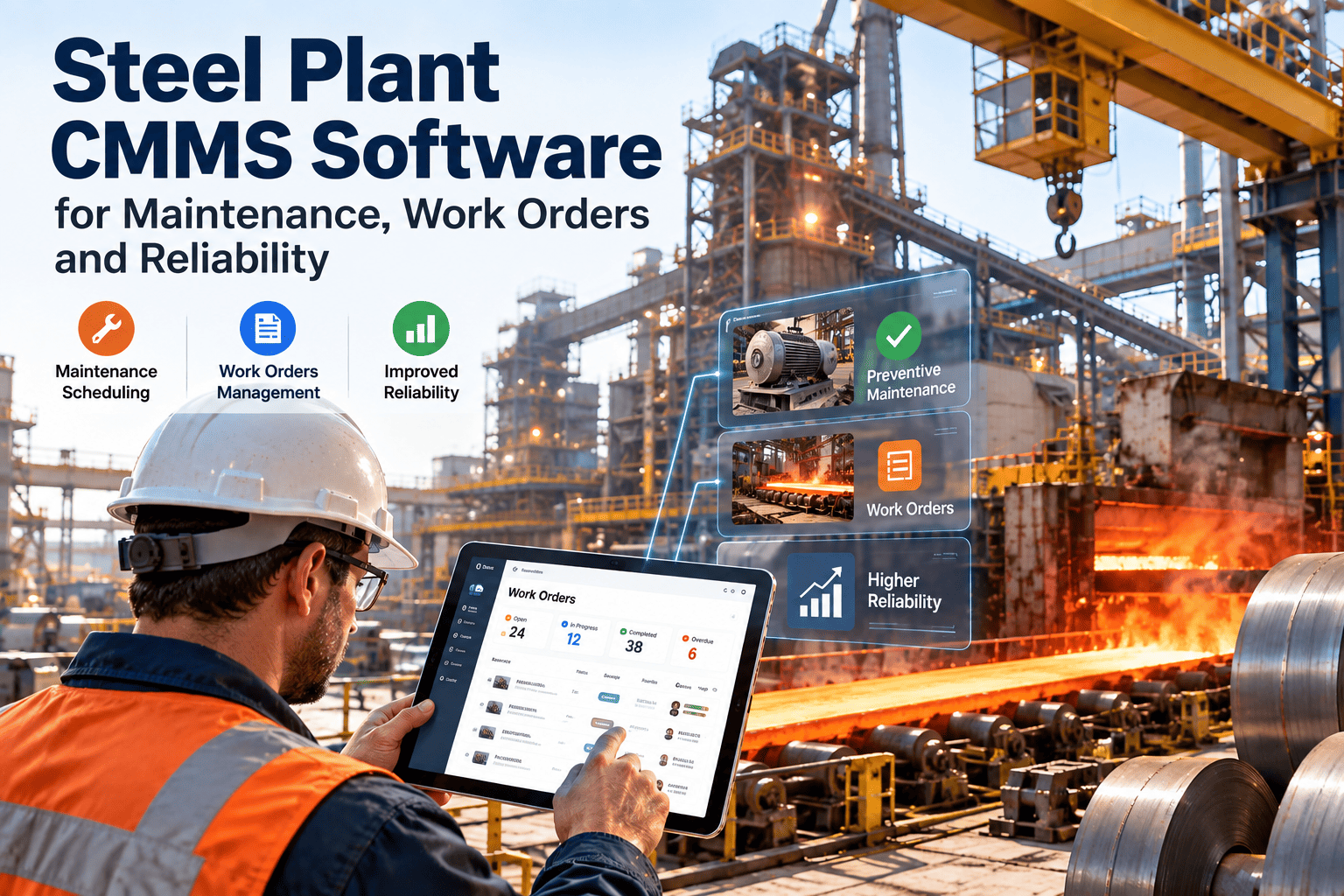
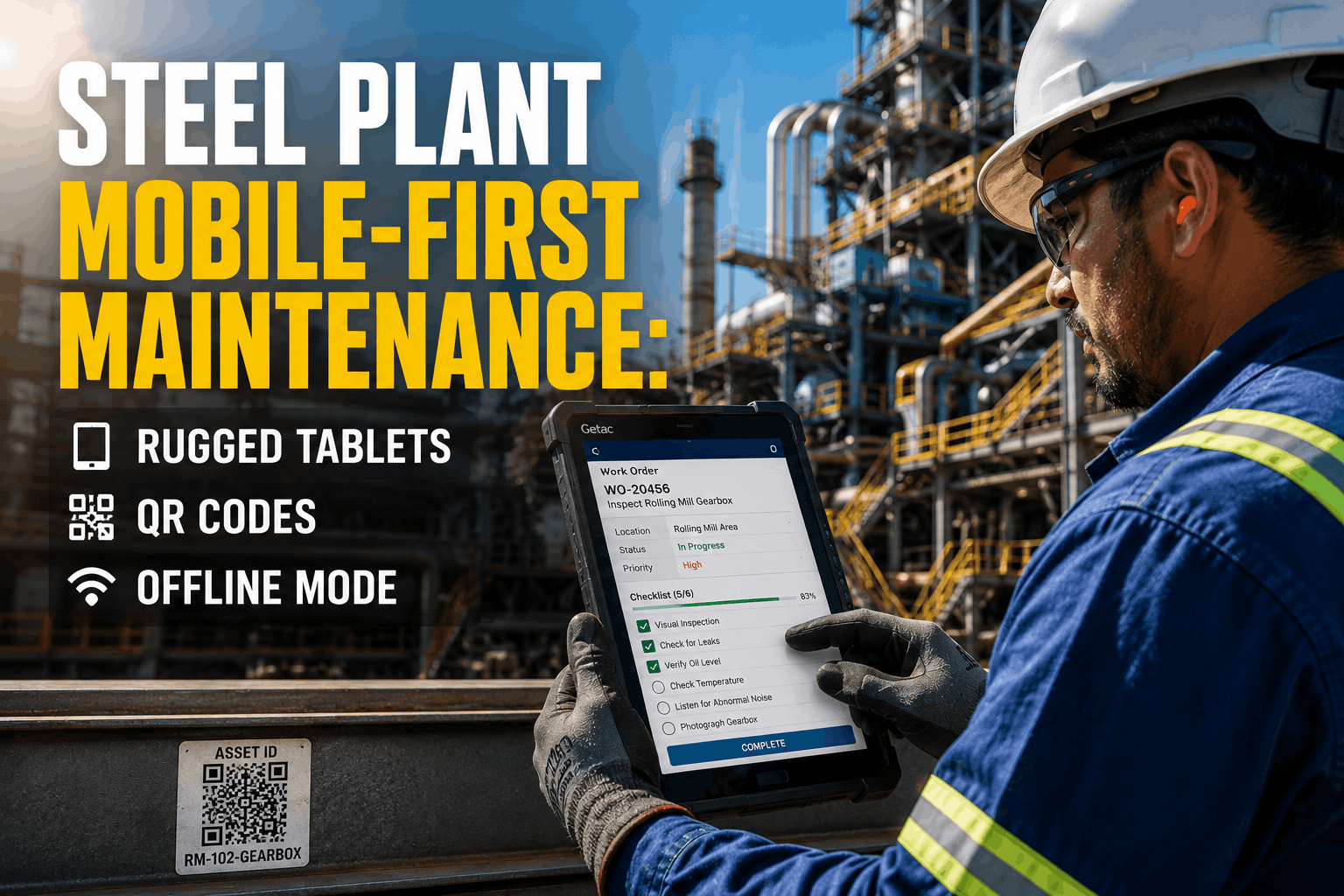
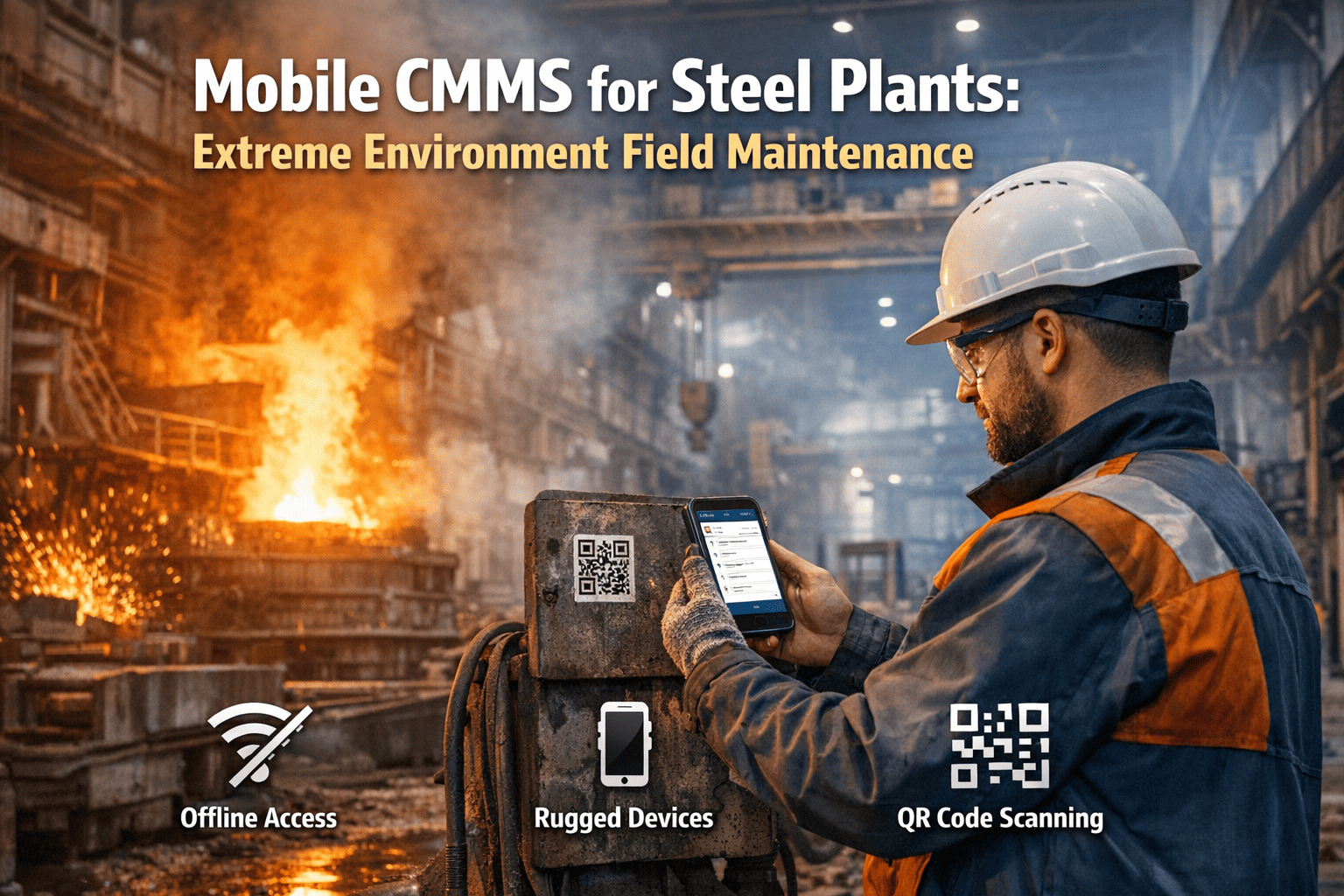
Mobile CMMS technology has evolved from a convenient add-on to an operational necessity for steel plant maintenance technicians working in some of the most demanding industrial environments on earth. In facilities characterized by extreme heat, heavy dust, limited connectivity, and complex asset hierarchies, traditional paper-based or desktop-bound maintenance management systems create bottlenecks that delay critical repairs and compromise data accuracy. A purpose-built mobile CMMS empowers technicians to access work orders, capture asset data, and manage inventory directly from the shop floor—enabling them to work smarter, safer, and more efficiently even in the harshest conditions. By bridging the gap between planning and execution, mobile solutions put the power of the maintenance system directly into the hands of those doing the work. Schedule a consultation to discover how mobile solutions can elevate your maintenance workforce.
The Technician's Reality: Why Mobile Matters
Steel plant technicians spend the majority of their time on their feet, moving between furnaces, rolling mills, and finishing lines. Requiring them to return to a desk or clipboard to log work creates friction that reduces wrench time and delays critical information flow. Mobile CMMS bridges this gap, putting real-time data and decision-making tools directly into the field where they are needed most.
Essential Features for Harsh Environments
Not all mobile apps are built for the steel mill. Effective mobile CMMS must account for physical constraints like protective gear, environmental hazards, and the need for rapid interaction without compromising safety or usability. The right platform adapts to the environment rather than forcing the environment to adapt to the technology.
Overcoming Connectivity Challenges
One of the biggest barriers to mobile adoption in steel plants is unreliable Wi-Fi or cellular coverage in certain areas. A robust mobile CMMS uses store-and-forward technology to ensure work continues uninterrupted regardless of network status. This architecture guarantees that maintenance activities are recorded accurately even in the deepest connectivity dead zones.
| Phase | Action | Technical Approach | Benefit |
|---|---|---|---|
| Work Order Download | Technician downloads assigned work orders | All asset data, manuals, and parts lists are cached locally on the device while in connected zones | Ensures access to critical information regardless of location |
| Offline Execution | Technician performs maintenance in dead zones | All data entry, photos, and signatures are saved securely to the device's local database | Zero interruption to maintenance workflow |
| Auto-Sync | Device returns to connected area | App automatically syncs all changes to the central CMMS. Conflicts are resolved intelligently without data loss | Real-time visibility for planners and managers |
| Data Integrity | Verification and backup | Encryption both in transit and at rest. Automatic backups prevent data loss from device failure | Secure and reliable maintenance records |
Impact on Maintenance KPIs
Mobilizing your maintenance workforce doesn't just make life easier for technicians; it drives measurable business results. Real-time data capture leads to better decision-making, faster root cause analysis, and improved asset reliability across the entire production chain.
Implementation Best Practices
Rolling out mobile CMMS requires more than just installing an app. Success depends on device selection, user training, and change management to ensure adoption across the maintenance team. A structured approach minimizes disruption and builds confidence among technicians.