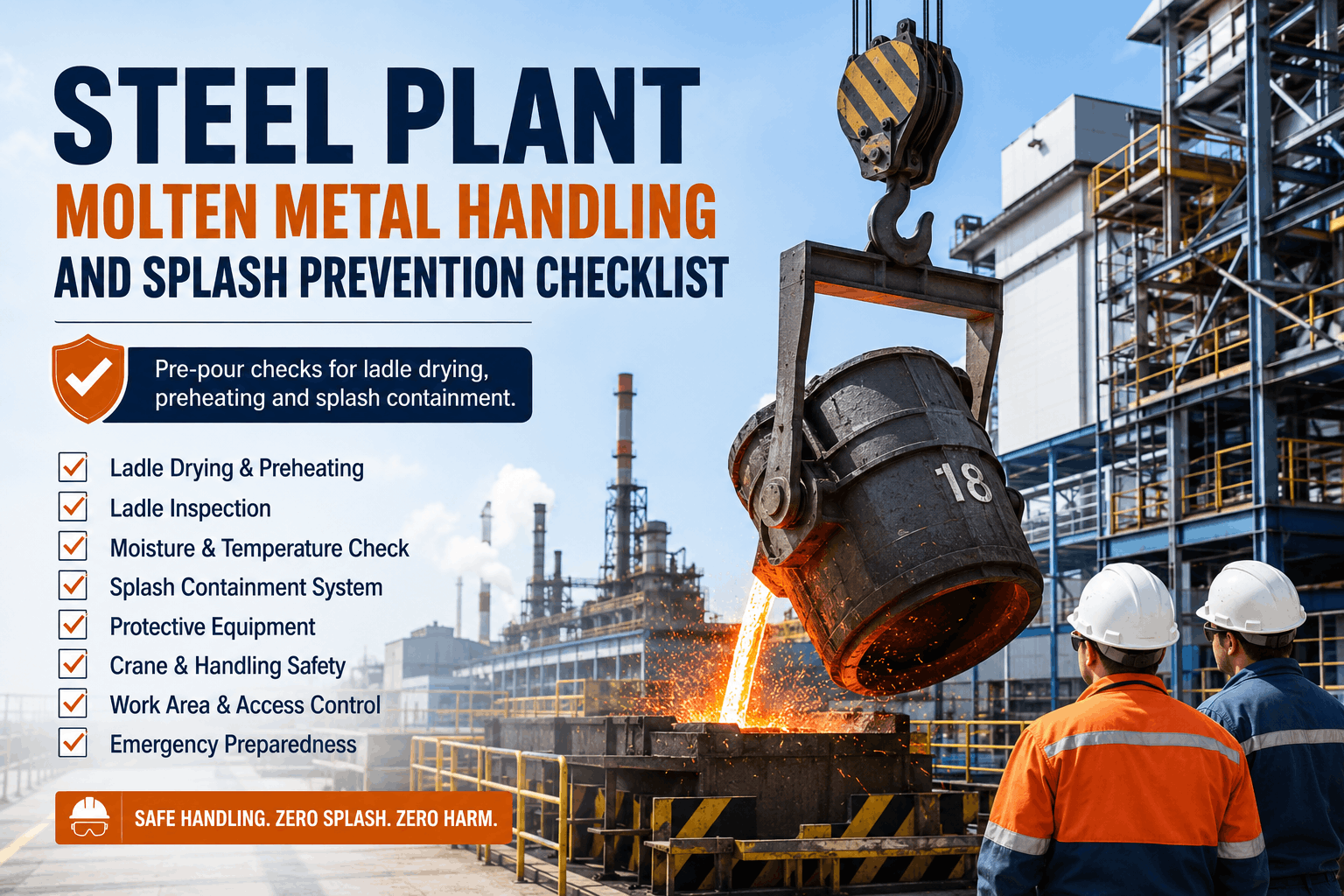
A single moisture-contaminated ladle refractory patch turned a routine tap into an explosive event that injured three operators and shut a caster down for eleven days. Molten metal safety is the highest-consequence topic in steel production, and nearly every serious incident traces back to a procedural gap, a missed inspection, or a training lapse rather than an unforeseeable failure. Ladle integrity checks skipped during a busy shift, a tundish preheat cut short to save time, or a hot metal transport route crossing an unmarked walkway are the kinds of small deviations that compound into catastrophic outcomes. Plants that treat molten metal safety as a tracked, auditable program rather than a set of posted rules see incident rates drop sharply within the first year. Start free and build a molten metal safety program your teams actually follow.
Molten Metal Safety for Ladle and Caster Operations
Water-in-vessel prevention, ladle integrity inspection, tundish preheat discipline, breakout response, and hot metal transport safety — tracked as auditable, scheduled programs instead of posted signage. The goal is not another binder on the shelf; it is a system where every safety-critical step is logged, every skipped step is flagged, and every near miss feeds back into the program instead of disappearing at shift change.
Where Molten Metal Incidents Actually Start
Explosive water-to-metal reactions, ladle breakouts, and hot metal spills rarely come from a single dramatic failure. They start with moisture trapped in a refractory patch that wasn't given time to dry, a tundish preheat cycle cut short under production pressure, a ladle slide gate inspection deferred to the next shift, or a transport route where pedestrian and hot metal paths were never formally separated.
Each of these is a small, familiar decision made under time pressure — and each is exactly the kind of gap that a scheduled, auditable inspection program is built to close before it becomes an incident. Investigations after serious events almost always find that the warning signs were visible days or weeks earlier, logged nowhere, and known only to the one person who happened to notice them.
| Safety Check | Frequency | Owner | Failure Consequence |
|---|---|---|---|
| Ladle refractory & shell inspection | Every heat | Ladle crew | Breakout, molten spill |
| Tundish preheat & dryness log | Every cycle | Caster operator | Explosive reaction |
| Slide gate mechanism check | Every heat | Ladle crew | Uncontrolled pour |
| Transport route barrier audit | Weekly | Safety team | Personnel exposure |
| Breakout detection calibration | Monthly | Instrumentation | Delayed response |
| Zone access authorization review | Monthly | Safety team | Unauthorized exposure |
| Emergency response drill | Quarterly | Plant safety | Slow, uncoordinated response |
Building a Molten Metal Safety Program in Four Stages
Mills that move from posted procedures to a genuinely followed molten metal safety program tend to progress through the same four stages, each one closing a different category of gap. Skipping straight to stage three without the mandatory verification step in stage two is the most common reason these programs stall out after a strong start.
We used to think of molten metal safety as training posters and a checklist nobody double-checked. After the near miss we had, we rebuilt the whole thing around mandatory, logged verification steps — nobody can mark a tundish preheat complete without the dryness reading attached. Near-miss reports went up at first because people were finally catching things, and actual incidents have gone to zero since. The biggest shift wasn't technology, it was making the safe way also the fast way to close out a step.
Make Every Molten Metal Safety Step Auditable
Ladle integrity, tundish preheat, breakout detection, transport route audits, and access control — scheduled, logged, and reviewed in one system built for steel plant safety teams, so every skipped step is visible before it becomes an incident.
Frequently Asked Questions — Molten Metal Safety
Protect Your Crews With a Molten Metal Safety Program
Move ladle integrity, tundish safety, breakout response, transport control, and access management from posted procedures to a tracked, auditable program your teams actually follow every shift.