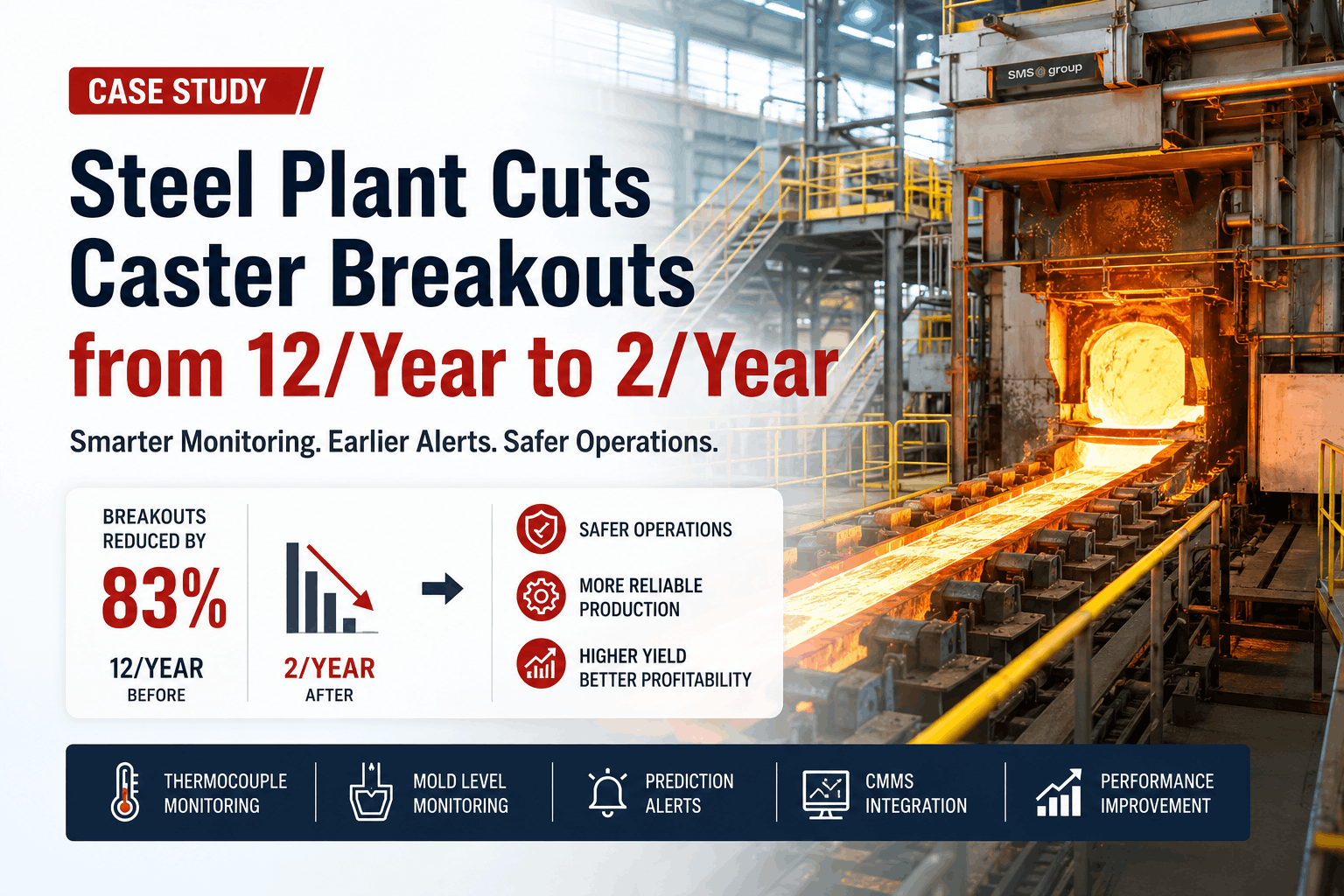
A 3 MTPA integrated steel plant operating two slab casters was experiencing 14 breakout events per year at a combined cost of $18M in equipment damage, lost production, and remediation. Each event shut down a strand for 8–36 hours, damaged mold copper plates, contaminated the secondary cooling zone, and created a safety emergency in the casthouse. The plant had vibration sensors on some equipment and a paper-based PM log. What it did not have was a unified system connecting mold thermocouple data, segment maintenance records, and spray system PM to a single condition-aware work order engine. Start free with Oxmaint and build that system before the next breakout event.
Zero Caster Breakouts in 12 Months
How a 3 MTPA integrated steel plant eliminated breakout events, recovered $18M in annual losses, and extended segment bearing life by 40% using Oxmaint AI mold monitoring and full CMMS deployment.
The Operation and the Problem
The plant operates two 2-strand slab casters producing a combined 3 million tonnes of slab per year across carbon, HSLA, and API pipeline grades. Each caster has 12 containment segments per strand, over 300 rolls per strand, and 2,400 spray nozzles across the secondary cooling zones. At 14 breakout events per year — an industry average rate of 1.8 per 10,000 heats — the plant was spending $18M annually in direct breakout costs: mold copper plate replacement, segment roll damage, casthouse cleanup, strand restart costs, and the lost production value of 8–36 hours per strand per event.
The maintenance team knew the events were preventable. Post-breakout root cause analysis consistently pointed to the same failure chain: a mold thermocouple anomaly that was logged but not actioned, a spray nozzle zone that was partially blocked reducing secondary cooling uniformity, or a segment roll bearing that had been running above temperature threshold for two sequences before seizure. The data existed. The CMMS to act on it did not. Sign up for Oxmaint to connect your mold monitoring data to automated maintenance responses.
How the Deployment Progressed Over 12 Months
Mold Thermocouple Integration and Baseline Mapping
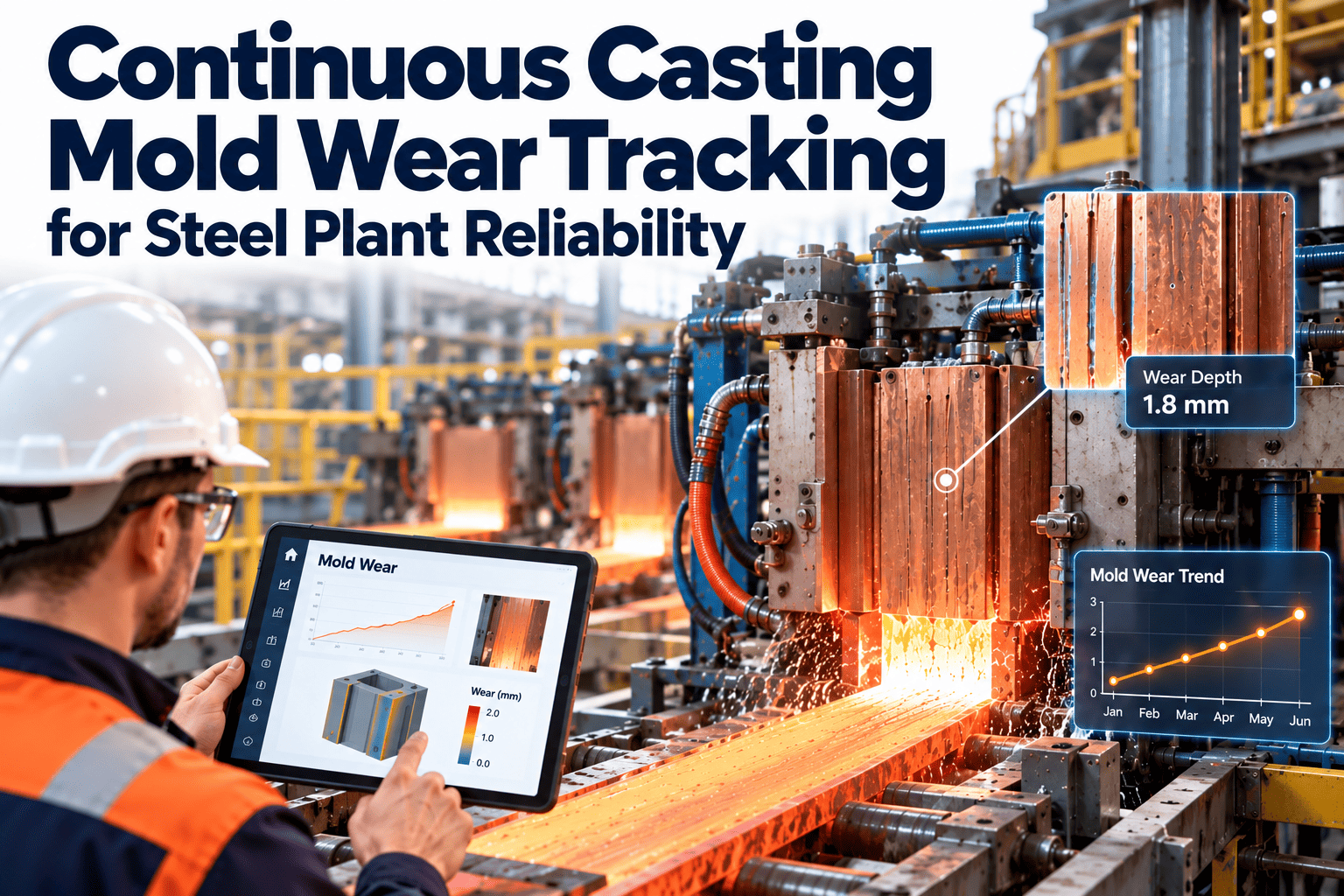
Oxmaint connected to the plant's existing mold thermocouple arrays — 180 thermocouples per mold across 4 active molds. Historical thermocouple data from the previous 6 months was ingested to establish the heat flux baseline patterns for each steel grade and casting speed combination. The AI model began identifying the characteristic temperature signatures associated with sticker-type breakout precursors: diverging temperature patterns between adjacent thermocouple rows in the mold lower zone indicating shell thinning or sticking.
Segment Condition Records and PM Schedule Migration
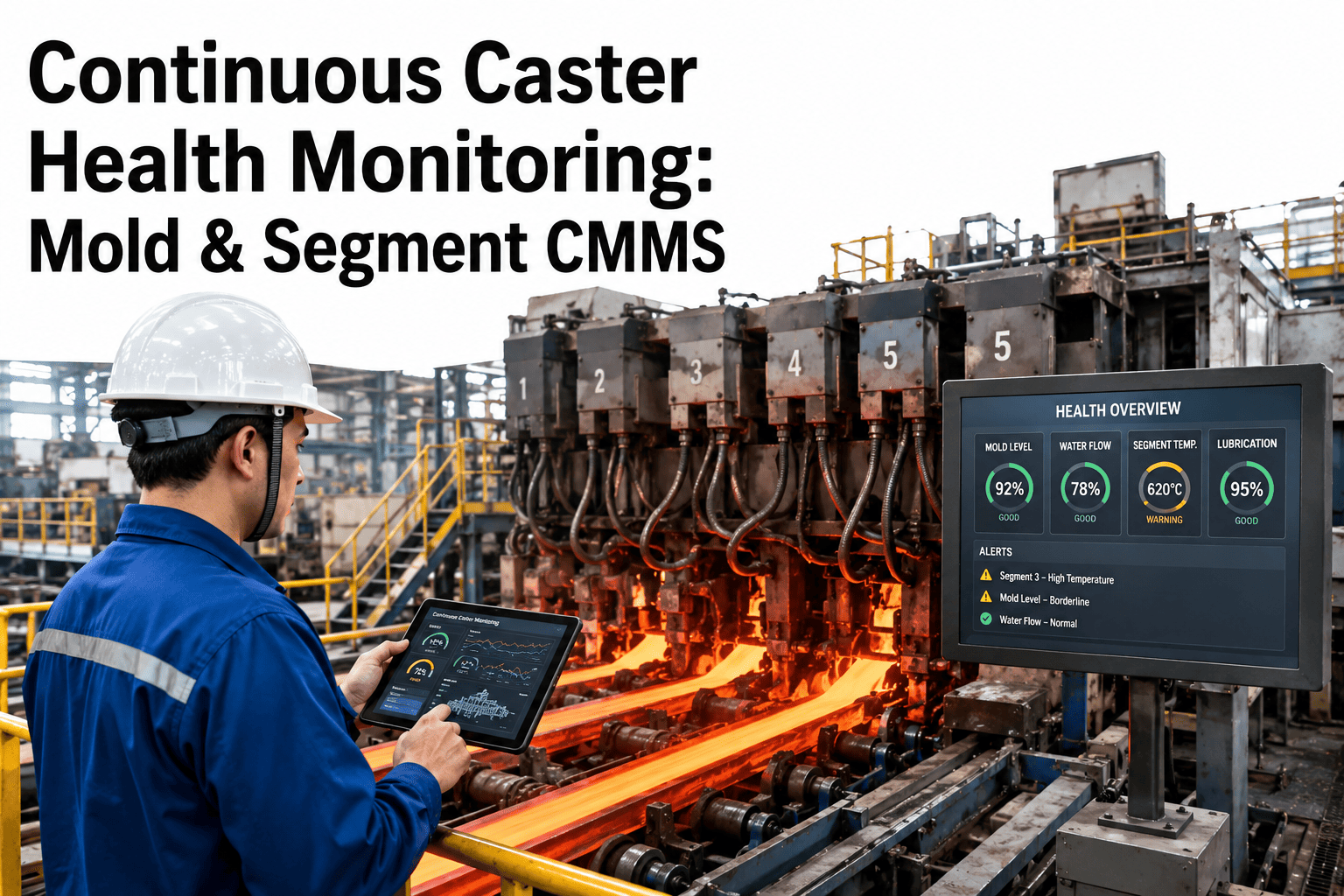
All 48 active segments across both casters were entered into Oxmaint as individual asset records with serial numbers, zone positions, current heat counts, and last inspection findings. Paper PM records from the previous 18 months were digitised into each segment's condition history. Heat-count-based PM triggers were configured for bearing inspections (every 500 heats), roll surface measurements (every segment change), and spray nozzle audits (every planned outage). The first automated segment PM work orders generated within the week.
Spray System Audit and Nozzle Condition Baseline
A comprehensive spray nozzle audit was conducted on both casters during planned maintenance windows. Of 2,400 spray nozzles, 340 were found partially plugged and 87 were completely blocked — a 17.8% nozzle failure rate that the previous maintenance system had not detected. All plugged nozzles were replaced. Nozzle condition inspection was added as a mandatory checklist item for every planned outage, with flow rates logged per zone against design specifications. Motor current trending on drive rolls was configured to detect bearing load increases.
First Breakout Prevention Events — AI Detects Stickers Before Shell Failure
In month 4, the Oxmaint AI detected the temperature signature of a developing sticker breakout on Caster 1, Strand B, 2.1 seconds before the plant's existing BODS system would have triggered. Casting speed was automatically reduced and a strand stop initiated. Post-event inspection confirmed a shell thinning event that would have resulted in a breakout within the next 30 seconds of casting. In month 5, a second sticker event was detected and resolved. In month 6, the plant recorded its first breakout-free month in four years. Book a demo to see AI mold monitoring detection in action.
Full Campaign — Zero Breakouts, Measurable Quality Improvement
The final six months of the 12-month period ran with zero breakout events. Segment bearing life extended by 40% as condition-based replacement replaced conservative calendar intervals — replacing only when bearing condition data indicated degradation rather than at fixed heat counts. Internal crack rates on HSLA grades dropped by 22% as segment alignment became systematically tracked and corrected at every maintenance window. Caster availability increased 2.4% as unplanned stops were replaced by planned maintenance windows. Total value delivered in the 12-month period: $21.4M.
The same deployment can work on your caster configuration
Oxmaint supports slab, bloom, billet, and beam blank casters across single and multi-strand configurations. Baseline models are effective from day one using pre-trained knowledge from similar caster types.
12-Month Results Compared to Baseline
| Metric | Baseline (Pre-Oxmaint) | Month 12 Result | Change |
|---|---|---|---|
| Breakout events per year | 14 events | 0 events | 100% reduction |
| Annual breakout cost | $18M | $0 | $18M saved |
| Segment bearing replacement interval | 3,500 heats (calendar) | 4,900 heats avg (condition) | +40% life extension |
| Caster availability | 91.8% | 94.2% | +2.4 percentage points |
| Internal crack rate (HSLA grades) | Baseline index 1.0 | Index 0.78 | 22% reduction |
| Spray nozzle plugging rate at audit | 17.8% plugged at deployment | 2.1% at month 12 audit | 88% reduction |
| PM compliance rate | 61% (paper-based) | 97% | +36 percentage points |
| Sticker detection lead time | 0.5–1.2 sec (legacy BODS) | 2.1–3.8 sec (Oxmaint AI) | 3–4× earlier detection |
| Segment change decisions | Calendar-based, conservative | Condition-based, data-driven | Intervals optimised per asset |
| Oxmaint deployment cost | — | $3.1M (12-month total) | 6.9× ROI in year one |
Swipe to view all columns on mobile
The Four Systems That Eliminated Breakouts
AI Mold Thermocouple Monitoring
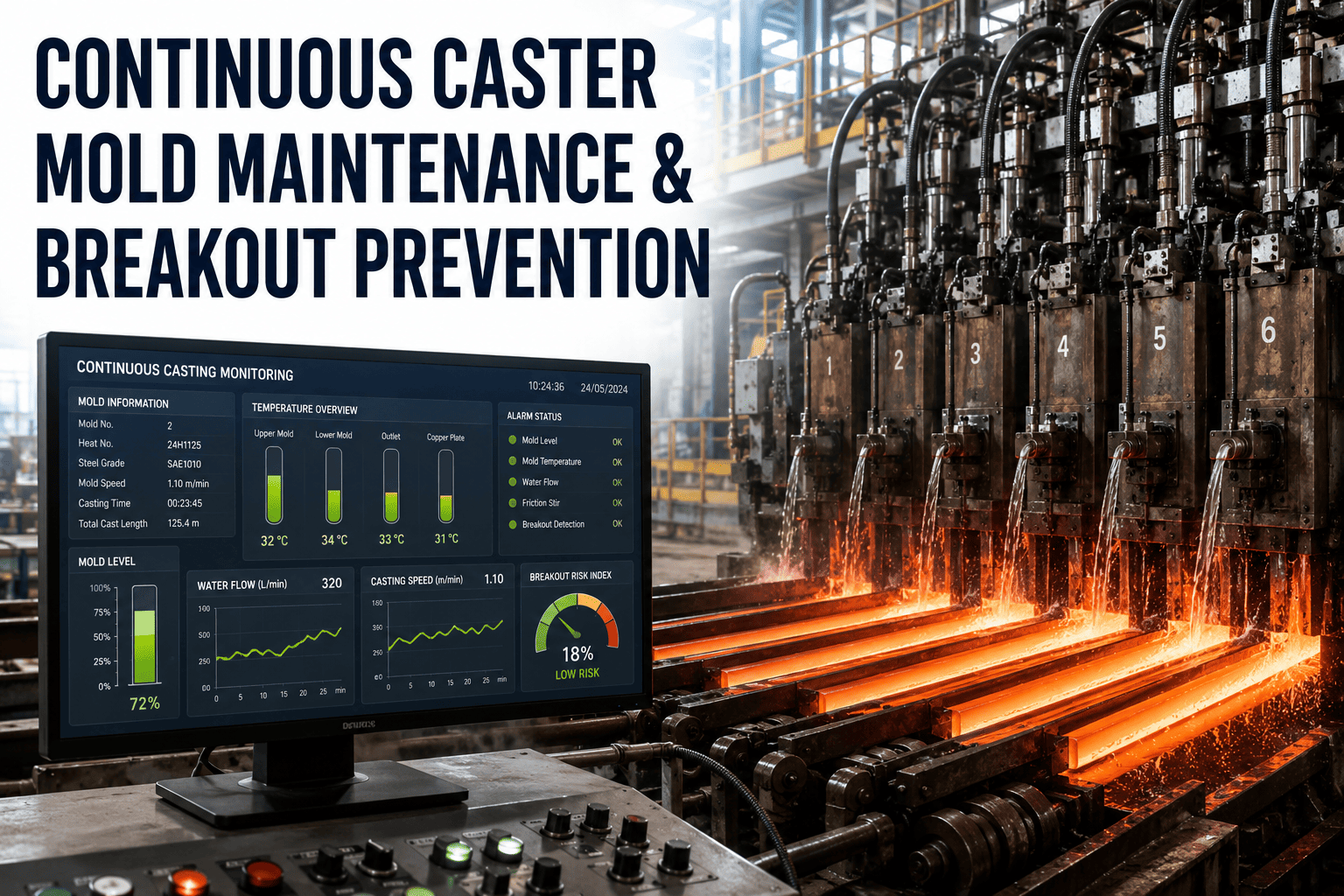
180 thermocouples per mold, monitored continuously. ML model trained on grade-specific and speed-specific heat flux baselines. Sticker breakout precursor detection 2–4 seconds before shell failure — earlier than any existing BODS system at the plant. Automatic speed reduction and strand stop commands without operator intervention. False alarm rate below 1.5% across 12 months. Sign up for Oxmaint to see AI mold monitoring configured for your caster.
Segment Condition Tracking Across the Campaign
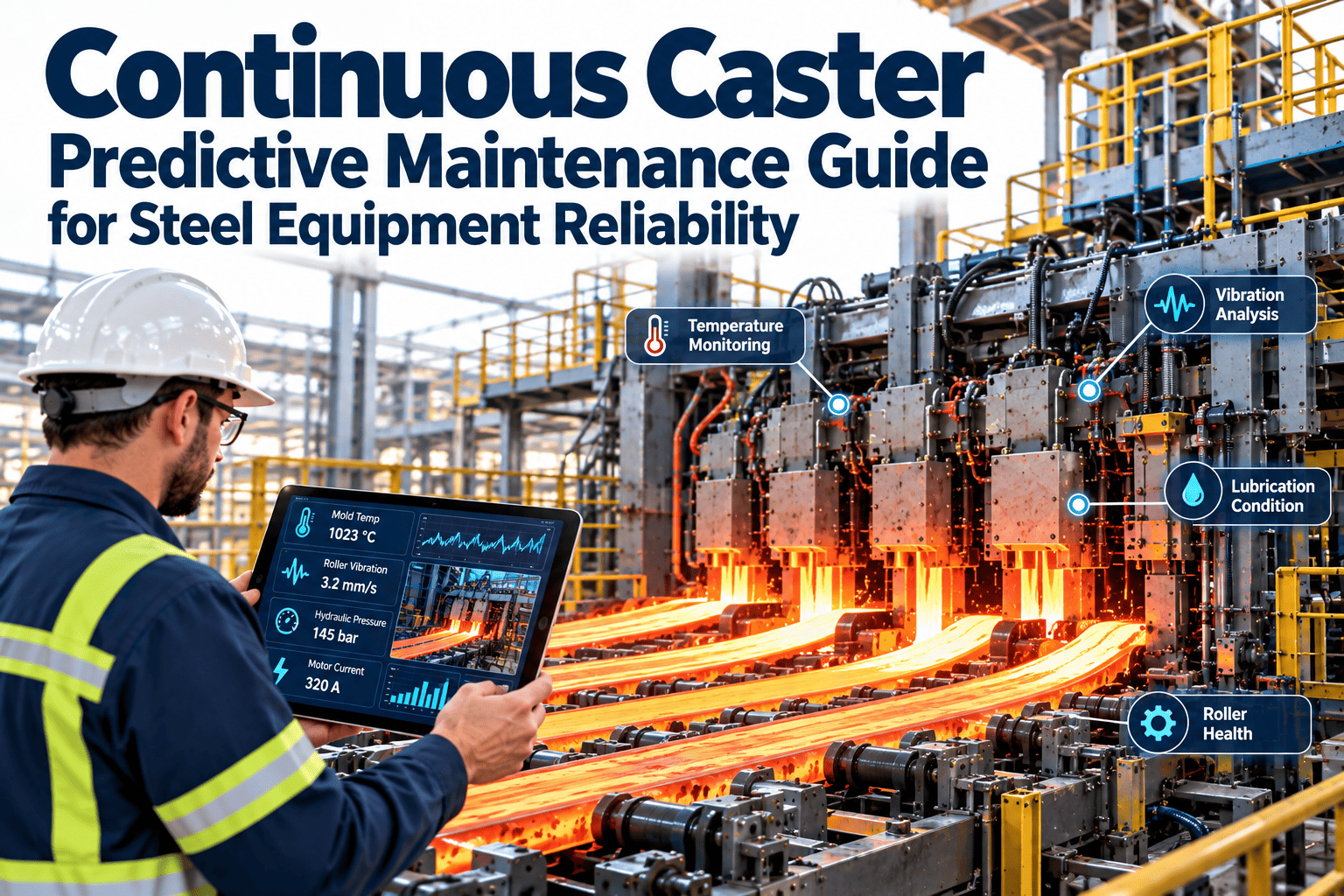
Every segment tracked by serial number with full condition history: heat count, zone position history, roll surface measurements at every change, bearing temperature trending, spray nozzle audit results. Condition-based replacement decisions triggered by bearing load trending — not conservative calendar intervals. 40% extension in average bearing life with zero bearing seizure events in the 12-month period. Book a demo to see segment tracking configuration.
Spray System PM and Nozzle Flow Verification
Spray nozzle audit included as a mandatory digital checklist at every planned outage. Flow rate per zone logged against design specification. Plugged nozzle count tracked per segment per campaign. Monthly outage work packages pre-generated by Oxmaint including all nozzle zones with flow below 80% of design flagged for replacement. Spray nozzle plugging rate dropped from 17.8% at deployment to 2.1% at month 12 audit.
Automated Outage Work Package Generation
When a maintenance window opens, Oxmaint generates the complete work package automatically: all segment PM tasks due by heat count, all alignment measurements due by stoppage count, all lubrication routes due by shift, and all spray nozzle zones flagged by condition data. PM compliance rate increased from 61% on paper-based system to 97% in month 12. No task missed because it required manual coordination. Start free to configure outage work packages for your caster.
We had the thermocouple data. We had the vibration readings. We had the spray flow meters. What we did not have was a system that connected all three and generated a maintenance action before the shell failed. Oxmaint closed that gap. Fourteen breakouts a year to zero is not an incremental improvement — it is a fundamentally different operating mode for this casthouse.
Frequently Asked Questions
How long does Oxmaint AI mold monitoring take to become effective on a new caster?
Baseline models are effective from day one using pre-trained knowledge from similar caster types. Full adaptation to your specific machine — including grade-specific wear patterns, seasonal cooling variations, and your sequence lengths — takes 2–3 months of casting data. In this deployment, the first actionable sticker precursor alerts appeared within 72 hours of mold integration going live, and the first breakout prevention event occurred in month 4 after the model had adapted to the plant's grade mix. Accuracy improves continuously after initial adaptation. Sign up for Oxmaint to begin the adaptation period on your caster.
Does Oxmaint work with existing mold thermocouple systems or does new hardware need to be installed?
Oxmaint integrates with existing mold thermocouple infrastructure via OPC-UA, Modbus TCP/IP, and direct historian connections including OSIsoft PI and Aspen InfoPlus.21. In this deployment, no new thermocouple hardware was installed — the integration connected to the plant's existing 180-thermocouple mold monitoring arrays on all four active molds. For plants where thermocouple coverage is sparse or legacy systems are not connectable, Oxmaint can specify the minimum hardware addition required. Most integrations complete within 2–3 weeks. Book a demo to review your existing mold monitoring infrastructure.
What is the typical Oxmaint deployment cost for a 2-caster slab operation?
Deployment cost for a 2-caster slab operation including full CMMS, AI mold monitoring integration, segment asset management, and spray system PM is typically in the range of $2.5–4M annually including implementation, licensing, and ongoing support. In this case study, total 12-month cost was $3.1M against $21.4M in value delivered — a 6.9× first-year ROI. For casters with higher breakout rates or more strands, the ROI ratio is typically higher because the cost base grows slowly while the breakout prevention value scales with production volume. Contact the Oxmaint team for a cost model specific to your configuration.
Can Oxmaint improve quality outcomes, not just prevent breakouts?
Quality improvement is a direct consequence of the same maintenance discipline that prevents breakouts. Segment alignment tracking — logging roll gap measurements at every planned stoppage and trending deviation per segment over the campaign — reduces internal crack rates in crack-sensitive grades because misaligned rolls are corrected before they accumulate enough deviation to cause crack-inducing stress in the strand. The 22% reduction in internal crack rate on HSLA grades in this deployment came from systematic alignment measurement and correction, not from any additional monitoring technology. The alignment data was already being generated by the plant's strand condition monitor — Oxmaint made it actionable by linking it to work orders. Start free to configure alignment tracking for your segment fleet.
From 14 Breakouts a Year to Zero — Your Caster Can Run the Same Way
AI mold monitoring, segment condition tracking, spray system PM, and automated outage work packages — all in Oxmaint, connected to your existing thermocouple and sensor infrastructure.