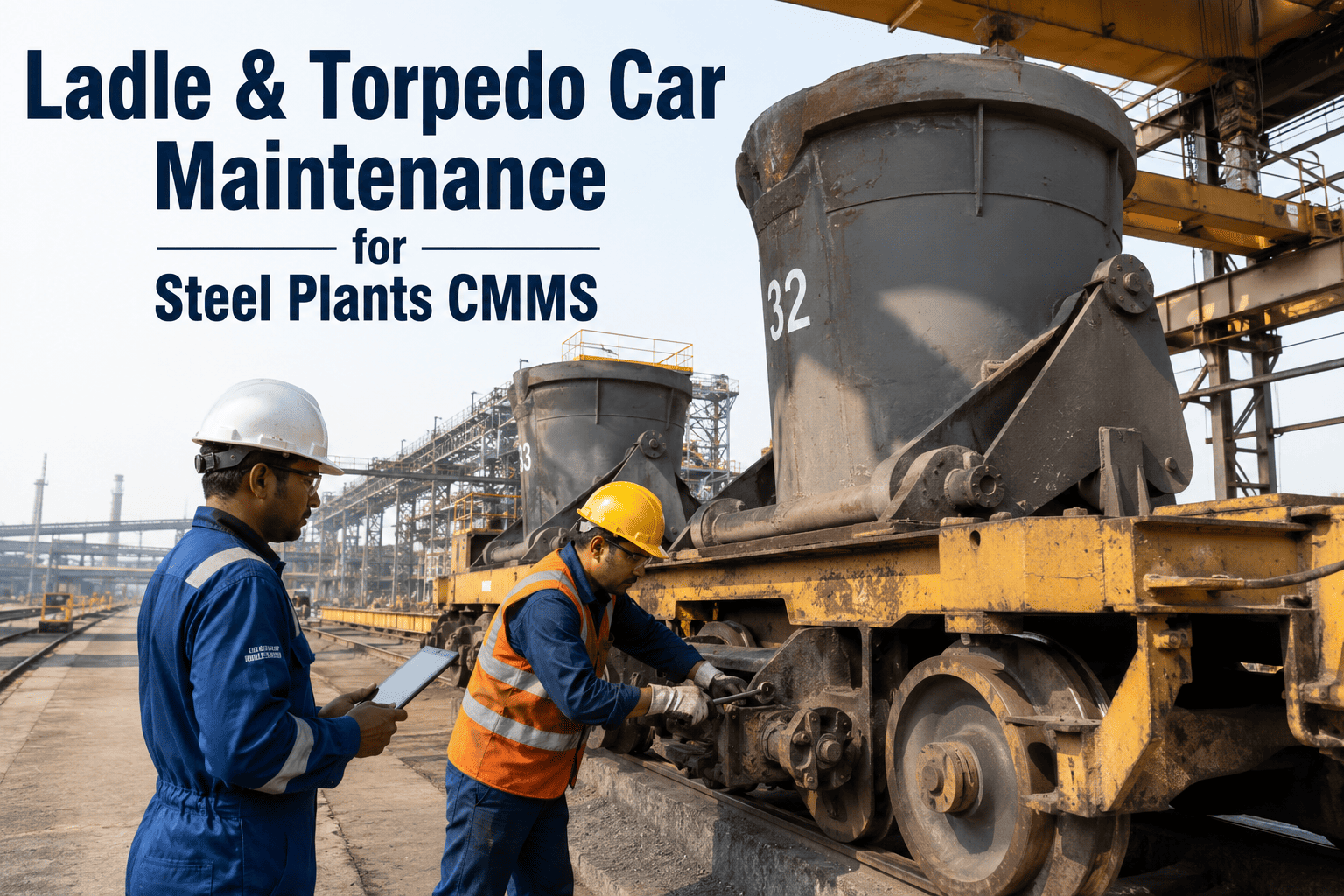
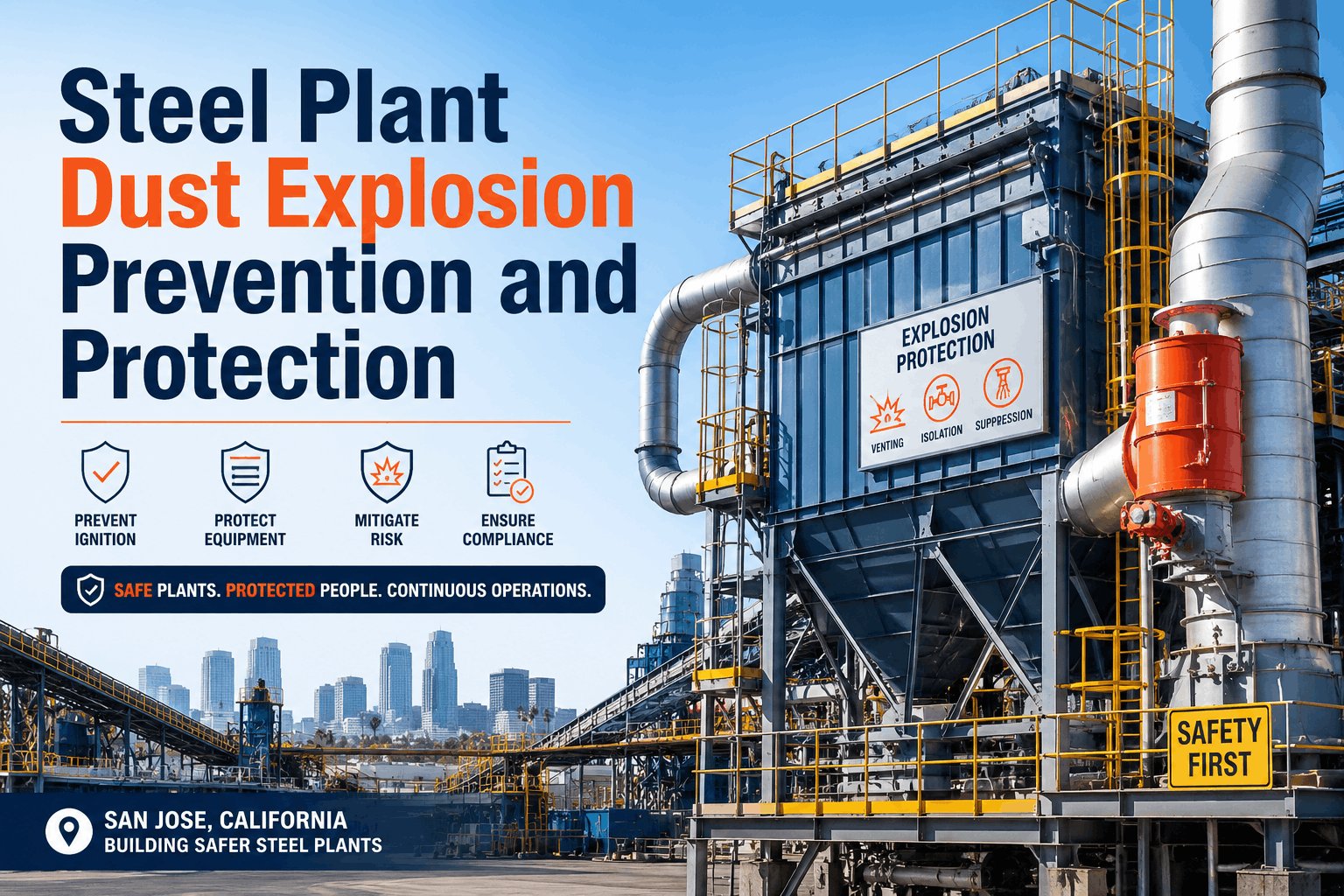
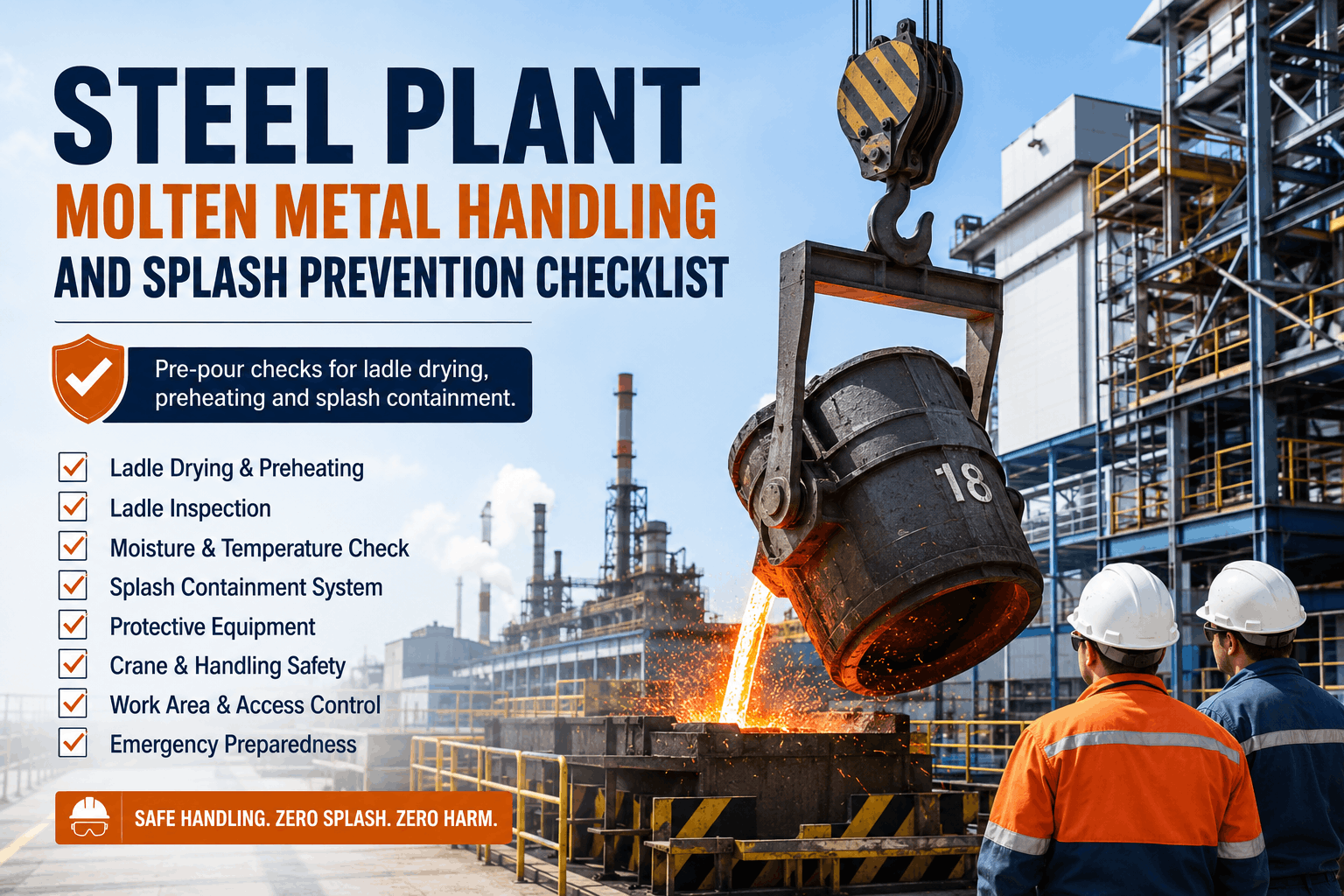
Molten Metal Safety in Steel Plants provides essential safety protocols for handling molten metal, hot metal, and slag in steel operations. It covers key procedures like ladle safety, tundish operations, and preventing water-molten metal contact. The article emphasizes the importance of proper safety measures to avoid risks like explosions and accidents. It is a vital resource for ensuring a safe working environment in steel plants, with a focus on safety and compliance.OxMaint helps steel plants enforce every molten metal safety procedure digitally — pre-task checklists, PPE compliance tracking, and real-time hazard alerts — so nothing is missed before the pour begins. Book a demo to see how safety procedures are enforced, not just documented.
Safety & Compliance — Steel Industry
Molten Metal Safety in Steel Plants
Hot Metal, Slag & Liquid Steel Handling Procedures
Steel plants handle liquid metal at temperatures above 1,550°C — hundreds of times per shift. A single procedural gap can cause an instantaneous, fatal explosion with no time for correction. This is what effective molten metal safety looks like.
1,600°C
Temperature of liquid steel during tapping
31%
Of all steel plant accidents involve high-temperature molten metal
1,600x
Volume expansion when water contacts molten metal — steam explosion
Why This Matters
Molten Metal Incidents Are Not Accidents — They Are Procedural Failures
In 2024, worldsteel members reported 67 fatalities globally. Molten metal incidents — ladle failures, torpedo ladle derailments, water-metal contact explosions — are responsible for a disproportionate share. Unlike most industrial injuries, these events are instantaneous and catastrophic. The root cause in nearly every investigation: a missed pre-task check, an uninspected ladle, or a wet surface that should have been flagged.
CRITICAL
Water-Molten Metal Contact
Even a few drops of water contacting molten steel creates an instantaneous steam explosion — expanding to 1,600 times the original volume. Wet scrap, damp ladles, condensation from overhead pipes, and leaking cooling systems are all live triggers.
CRITICAL
Ladle Structural Failure
Refractory lining degradation, trunnion wear, and unchecked heat cycle counts lead to ladle runouts. A tipping ladle at height can spray molten metal across a 10+ metre radius. Ladle inspection records are the first line of defence.
HIGH
Torpedo Ladle Derailment
Hot metal from the blast furnace travels in torpedo ladles at 1,450–1,500°C. Track condition, ladle overfill, and speed limit violations are the primary derailment causes — each with catastrophic consequence if the vessel tips.
HIGH
Slag Pit Explosions
Pouring or dumping slag onto wet ground, ice, or standing water causes violent steam eruptions. Slag pits must be pre-inspected for moisture before each pour. This check is frequently skipped under production pressure.
HIGH
Tundish & Mould Breakouts
Stopper rod failure, slide gate malfunction, or refractory erosion in the tundish can release uncontrolled liquid steel into the casting machine — causing fire hazards and metal spillage across the casting floor.
MODERATE
Radiant Heat Exposure
Molten metal radiates intense infrared energy that causes burns, eye damage, and heat exhaustion at distance — without direct contact. Workers not wearing rated aluminised PPE are at sustained risk throughout every shift near active ladles or furnaces.
Operation-by-Operation Protocols
Safety Procedures for Every Molten Metal Operation
Each operation in the molten metal handling chain carries its own specific pre-task requirements. These are the critical checks that must be completed and verified before the operation is authorised to begin.
01
Hot Metal Transfer — Blast Furnace to Steelmaking
Torpedo ladle inspected for refractory condition and heat count
Track cleared and speed limits confirmed for hot metal route
Ladle not overfilled — 300mm clearance from tank edge mandatory
Trunnions lubricated — minimum once per shift before hot metal loading
Exclusion zone established and all non-essential personnel cleared
Emergency spill sand deployed at all transfer stations
02
Ladle Safety — Pre-Tap Inspection
Refractory lining thickness verified — remaining safe heat count confirmed
Ladle preheated to required temperature — no moisture in lining
Shell temperature scan completed — no hotspot zones detected
Trunnion and crown block hook in serviceable condition
No wet materials, water, or condensation inside ladle
Ladle support clearance: 2m minimum between ladle positions on floor
03
Tundish Operations — Continuous Casting
Tundish dried and preheated to specification before first heat
Stopper rod and slide gate function tested before casting begins
Refractory condition checked — no erosion at nozzle or impact zone
Mould cooling water flow confirmed — differential pressure monitored
Breakout detection system active and alarm tested before casting
No wet tools, instruments, or wet flux powder near tundish
04
Slag Handling — Pit and Ladle Disposal
Slag pit inspected for moisture, standing water, or ice before pouring
No wet materials in slag path — pre-pour walk-down completed
Slag ladle inspected — no water or wet residue inside tank
Minimum 1.5m clearance from adjacent equipment during crane lift
All workers behind designated exclusion barriers during pour
Slag not poured horizontally if ladle contains uncooled residue
05
Water-Molten Metal Contact Prevention
All scrap charged into furnace inspected and dried — sealed containers prohibited
Cooling water system leak detection active — differential pressure monitored
No puddles, condensation, or drainage paths leading into metal zones
Overhead pipes inspected for condensation drip risk above active vessels
Floor around furnaces and ladles dry before every heat
Emergency shut-off for cooling water clearly marked and accessible
Are Your Pre-Task Checks Being Completed — or Just Signed?
OxMaint enforces every molten metal pre-task check digitally. Geo-stamped at the equipment location, time-locked, and blocked from back-dating. A supervisor alert fires on any failed item — before the operation proceeds.
PPE Requirements
Mandatory PPE for Molten Metal Operations
PPE for molten metal work is non-negotiable. Standard cotton and synthetic fabrics melt on contact. Only rated aluminised and flame-resistant garments provide meaningful protection.
A
Full Body
Aluminised coverall or coat rated to ISO 11612 — covers all molten metal splash exposure zones
B
Face & Eyes
Aluminised face shield for tapping, teeming, slagging. Safety goggles with IR protection for radiant heat proximity work
C
Hands
Heat-resistant gloves rated to EN 407. Aluminised gloves for direct furnace and ladle work. No synthetic liners
D
Feet & Legs
Metatarsal safety boots. Spats covering boot lacing to prevent molten splash entry. Pants over boots — never tucked inside
E
Respiratory
Respirator for confined space entry near furnaces or slag pits. Air monitoring required before entry into tundish pits or enclosed casting areas
F
Head
Hard hat with flame-resistant suspension. No combustible hat liners. Neck and ear protection where radiant heat exceeds safe exposure limits
Clothing must not trap molten metal — no cuffs, open pockets, or loose legging tops. All PPE inspected and replaced on a documented maintenance schedule.
Training & Certification
Why Paper-Based Training Fails in Molten Metal Environments
The most common finding in post-incident investigations at steel plants is not absent procedures — it is procedures that existed on paper but were not followed in practice. Pre-tap inspection forms filled in after the event. Training records that cannot be verified. Workers cleared for operations they were never formally assessed on.
01
Operation-Specific Certification
Every molten metal operation — tapping, ladle handling, tundish change, slag disposal — requires specific training and certification. Workers must not perform an operation until they are verified as trained and current.
02
Documented Competency Assessment
Training completion is not the same as competency. Assessments must be conducted at the actual work location, against the actual procedure, with results recorded and linked to the worker's authorisation to perform the task.
03
Refresher Cycles and Near-Miss Learning
Molten metal training must be refreshed on a regular cycle — and immediately after any near-miss, incident, or procedure change. Near-miss learnings must reach every trained worker, not just the shift on duty at the time.
04
Real-Time Training Status at the Operation
Supervisors authorising a molten metal operation must be able to verify — at the point of authorisation — that every worker involved is currently trained and certified. A training record sitting in an office is not a control.
OxMaint Platform
How OxMaint Enforces Molten Metal Safety Procedures
OxMaint's Safety Procedures and Training platform gives steel plants the digital infrastructure to enforce every pre-task check, track PPE compliance, verify worker training status, and maintain audit-ready safety records — all from the plant floor.
01
Digital Pre-Task Permits
Every molten metal operation requires a completed digital pre-task checklist before authorisation. Geo-stamped at the ladle or furnace. Time-locked. Supervisor-signed on mobile. A failed check blocks the operation — not a note to follow up later.
02
PPE Compliance Tracking
OxMaint tracks PPE compliance at every access point to molten metal zones. Workers without verified PPE are flagged before zone entry. Every violation is logged with photo evidence for training and audit use.
03
Ladle Health Records
Each ladle carries a digital refractory record — heat count, lining inspection dates, shell temperature history, and remaining safe heats. OxMaint automatically blocks ladle use when the inspection interval is exceeded.
04
Training Certification Dashboard
Supervisors see the real-time training and certification status of every worker before authorising a molten metal operation. Expiring certifications trigger automatic alerts before the worker reaches the operation, not after.
Frequently Asked Questions
Molten Metal Safety — Common Questions
What causes most molten metal fatalities in steel plants?
The majority of fatal molten metal incidents involve water-metal contact explosions, ladle structural failure from missed refractory inspections, and torpedo ladle derailments. In nearly every post-incident investigation, a specific pre-task check was either not completed or completed on paper after the event. Digital enforcement of pre-task checks is the single most effective control available.
Why is even a small amount of water near molten steel so dangerous?
When water contacts molten steel, it instantaneously converts to steam — expanding to approximately 1,600 times its original volume. This creates an explosive force that propels molten metal and equipment fragments across a wide area. A few drops falling into a ladle is sufficient to trigger a life-threatening event. Every source of moisture — condensation, puddles, damp scrap, cooling line leaks — must be eliminated before any molten metal operation begins.
How often should ladle refractory be inspected?
Ladle refractory inspection frequency depends on heat count, steel grade, and operating temperature. Most plants operate on a per-campaign inspection cycle with mandatory visual inspection and thickness measurement at each defined interval. Shell temperature scanning should be conducted before every heat. Any ladle exceeding its inspection interval — even by one heat — must be taken out of service until inspected and cleared.
What PPE is mandatory for ladle tapping and teeming operations?
Minimum PPE for tapping and teeming includes: aluminised coverall or coat (ISO 11612 rated), aluminised face shield, heat-resistant gloves rated to EN 407, metatarsal safety boots with spats covering laces, and hard hat with flame-resistant suspension. Standard cotton and synthetic materials are prohibited — they melt on contact with molten metal splash and cannot be worn in these zones under any circumstances.
How does OxMaint prevent pre-task checklists from being filled in after the event?
OxMaint's digital pre-task checklists are geo-stamped at the physical location of the equipment and time-locked to the authorisation window. They cannot be submitted from outside the designated zone or after the operation has commenced. Supervisor sign-off is required on mobile before the permit is issued — and any failed check item generates an immediate alert that blocks the operation from proceeding.
How quickly can OxMaint's safety procedures go live at our plant?
Digital pre-task checklists and training tracking are typically live within 3 to 4 weeks of implementation. Ladle health tracking and PPE compliance monitoring follow in the subsequent phase. OxMaint is built to connect to your existing plant infrastructure — no replacement of current systems is required. Book a demo to assess your plant's readiness.
Every Molten Metal Operation Deserves a Verified Pre-Task Check
OxMaint's Safety Procedures and Training platform ensures no pre-task check is skipped, no PPE violation goes unlogged, and no worker operates near molten metal without verified certification. Protect your people before the pour begins.