Molten metal temperatures in steel plants exceed 1,600°C — hot enough to burn through inadequate PPE in milliseconds. The average hospital stay for a molten metal burn victim is 17 days, and burns to the eyes or extremities can cause permanent disability. The hazard is not theoretical: in 2024, worldsteel recorded 67 fatalities across member plants, with molten metal incidents and loss-of-containment events among the leading causes. This checklist covers every layer of a steel plant molten metal safety program — from PPE specifications to handling protocols to CMMS-driven inspection schedules — so every worker near a furnace, ladle, or casting line goes home safely. Start tracking molten metal safety inspections in Oxmaint or book a walkthrough with our compliance team.
Hazard Overview
Where Molten Metal Accidents Happen in a Steel Plant
01
Ladle Operations
Ladle tilting, tapping, and transport. Wet or contaminated ladles cause violent steam explosions. Skull buildup causes erratic flow. Every ladle transfer is a potential splash event.
02
BOF / EAF Tapping
Oxygen lance withdrawal, furnace tilting, and slag-metal separation during tapping. Slopping events push liquid steel over the furnace lip without warning.
03
Continuous Casting
Mold level fluctuations, nozzle blockages, and breakout events send liquid steel through the secondary cooling zone. Breakouts are the most catastrophic single event in a steel plant.
04
Scrap Charging
Wet, sealed, or hollow scrap in EAF or BOF charge reacts explosively when it contacts the liquid bath. Water inside sealed containers expands to 1,600 times its volume in steam instantly.
05
Refractory Failure
Worn refractory in ladles, torpedoes, and tundishes allows metal breakthrough — runout events with no warning time. Most fatalities involve workers in the path of a runout rather than a splash.
06
Cooling Water Contact
Liquid steel or iron contacting any wet surface — floors, equipment, tools — causes explosive steam generation. A single liter of water produces 1,700 liters of steam at atmospheric pressure.
PPE Specification Checklist
Minimum PPE Requirements by Work Zone
| Work Zone |
Head |
Face/Eyes |
Body |
Hands |
Feet |
| Furnace / Tapping Floor |
Hard hat + aluminized hood |
IR-filtered face shield + safety glasses |
Aluminized coat + aluminized leggings — no synthetic fabrics |
Aluminized gloves — gauntlet style |
Aluminized spats over metatarsal boots |
| Ladle Transfer / Crane Bay |
Hard hat + FR balaclava |
IR face shield |
FR coverall over cotton base layer — aluminized coat for close approach |
FR gloves + leather palm |
Metatarsal boots — no laces that can trap metal |
| Casting / Tundish Area |
Hard hat |
Full face shield |
FR coverall — aluminized required during tundish approach |
FR gloves |
Safety boots with steel toe + metatarsal |
| Scrap Yard / Charging |
Hard hat |
Safety glasses + face shield during charging |
FR coverall |
Heavy leather work gloves |
Safety boots |
!
PPE must not ignite or allow molten metal penetration. Materials must allow metal to roll off — not stick. Synthetic fabrics (polyester, nylon) melt at temperatures far below molten steel. Every garment in the molten metal zone must be tested to EN ISO 11612 or ASTM F1506 as a minimum. PPE compliance must be verified through inspection, not assumed — include aluminized garment condition checks in your CMMS quarterly inspection routes.
Prevention Checklist
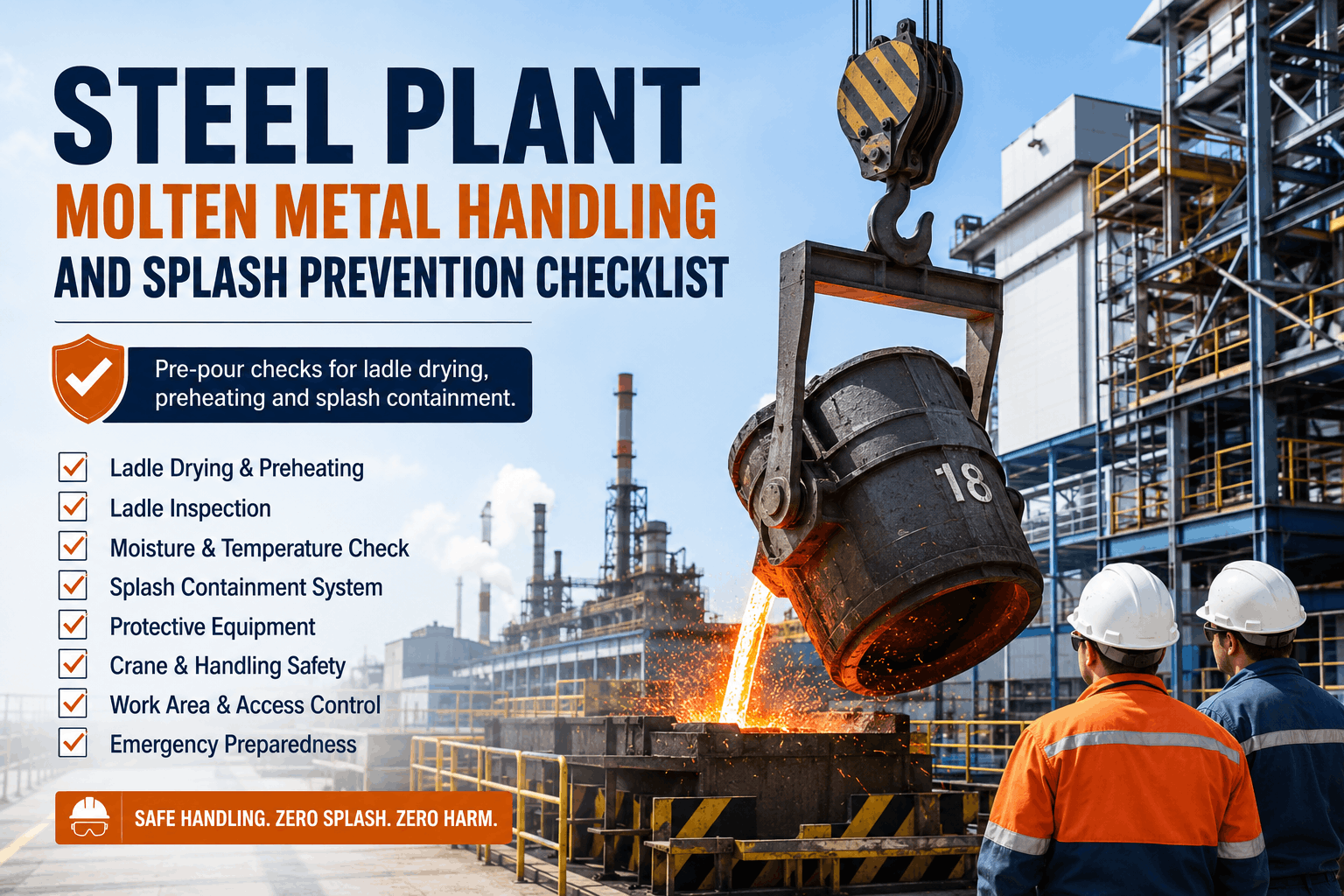
Molten Metal Splash Prevention — 6-Area Checklist
A
Scrap and Charge Inspection
All scrap inspected and certified dry before charging — 24-hour minimum covered storage recommended
Sealed containers, closed-end tubes, and hollow-profile scrap rejected or pre-drilled to prevent steam buildup
Bales examined for residual moisture — squeezable or oil-saturated bales do not enter the charge
Charge preheating system verified operational before charging begins — temperature log on record
Remote charging systems used where available — operators behind protective screens during charging event
B
Ladle and Equipment Condition
Ladle refractory thickness verified against minimum spec before each heat cycle — visual + UT check on schedule
Ladle dried and pre-heated to minimum temperature before first fill — heat log documented in CMMS
No skull buildup exceeding specification — skull removal completed and documented before tapping
Ladle gate and slide valve inspected and confirmed operational before tapping authorization
Torpedo cars, transfer ladles, and tundishes dry — zero water contact verified at handover
C
Floor and Work Area Preparation
Melt shop floor dry — all standing water removed and floor dried before any tapping or casting begins
Splash pits and skimmer channels clear of debris and water — inspect before each heat
Emergency runout area identified and kept clear — all personnel out of runout path before tapping
All floor penetrations, cable trenches, and service pits covered or protected from metal entry
Exclusion zone barricaded and signed during tapping — unauthorized personnel cleared and verified absent
D
Refractory Monitoring Program
Ladle refractory thickness tracked by heat count — CMMS auto-schedules relining inspection at 80% of life limit
Tundish refractory inspected between casting sequences — replacement threshold enforced before runout risk develops
Blast furnace cooling panel temperatures monitored continuously — shell temperature alarm set at 180°C
Infrared thermography on all refractory surfaces quarterly — hot spots documented with photographs in CMMS
Refractory failure history tracked per ladle number — ladles with repeat hotspots flagged for early relining
E
Casting Line Safety Controls
Breakout detection system active and tested before start of each casting sequence
Mold level control verified — automatic casting speed reduction on mold level deviation configured and tested
Cooling water system pressure and flow verified before casting — blockage or low-flow alarm set
Dummy bar insertion and withdrawal procedures followed per standard — no improvised starts
Personnel exclusion zone maintained below strand during casting — access restricted via permit
F
CMMS-Driven Inspection Schedule
Aluminized PPE condition inspection: monthly — garments with penetration points or delamination taken out of service
Ladle refractory thickness measurement: every 50 heats or per CMMS heat-count trigger, whichever comes first
Floor drainage and splash pit inspection: weekly — standing water findings trigger immediate corrective work order
Breakout detection system function test: before each casting sequence — documented in CMMS as a pre-start work order
Full area safety audit (melt shop + casting): quarterly — findings tracked to closure in CMMS with corrective action ownership
Track Every Safety Inspection. Close Every Finding.
Oxmaint's Compliance Tracking module schedules refractory inspections by heat count, tracks PPE condition reviews, and generates immutable audit records for every molten metal safety check — linked to asset records and fully retrievable during OSHA inspections.
Expert Review
What Steel Plant Safety Managers Say
"Every molten metal runout we have investigated traces back to one of three causes: refractory run past its service life, a wet ladle that wasn't caught in the pre-heat check, or a breakout detection system that wasn't tested before the sequence started. All three are inspection failures, not equipment failures. The asset was fine — the maintenance system failed to catch the warning."
Process Safety Manager
Integrated Steel Plant — 20 years melt shop safety management
"Aluminized PPE is expensive to replace and workers stretch its service life. We found garments with penetration points from previous minor splashes still in active rotation. Monthly CMMS-tracked garment inspections with photo documentation changed that — we removed 14 garments from service in the first three months that would otherwise have still been worn."
EHS Coordinator
Electric Arc Furnace Plant, South Asia — post-PPE audit review
Frequently Asked Questions
Molten Metal Safety — Common Questions
Make Molten Metal Safety Inspections Audit-Ready
Oxmaint schedules ladle refractory checks by heat count, tracks PPE condition monthly, and generates compliance evidence automatically. No binders. No missed inspections. Fully retrievable in 60 seconds when OSHA walks through your door.



.png)