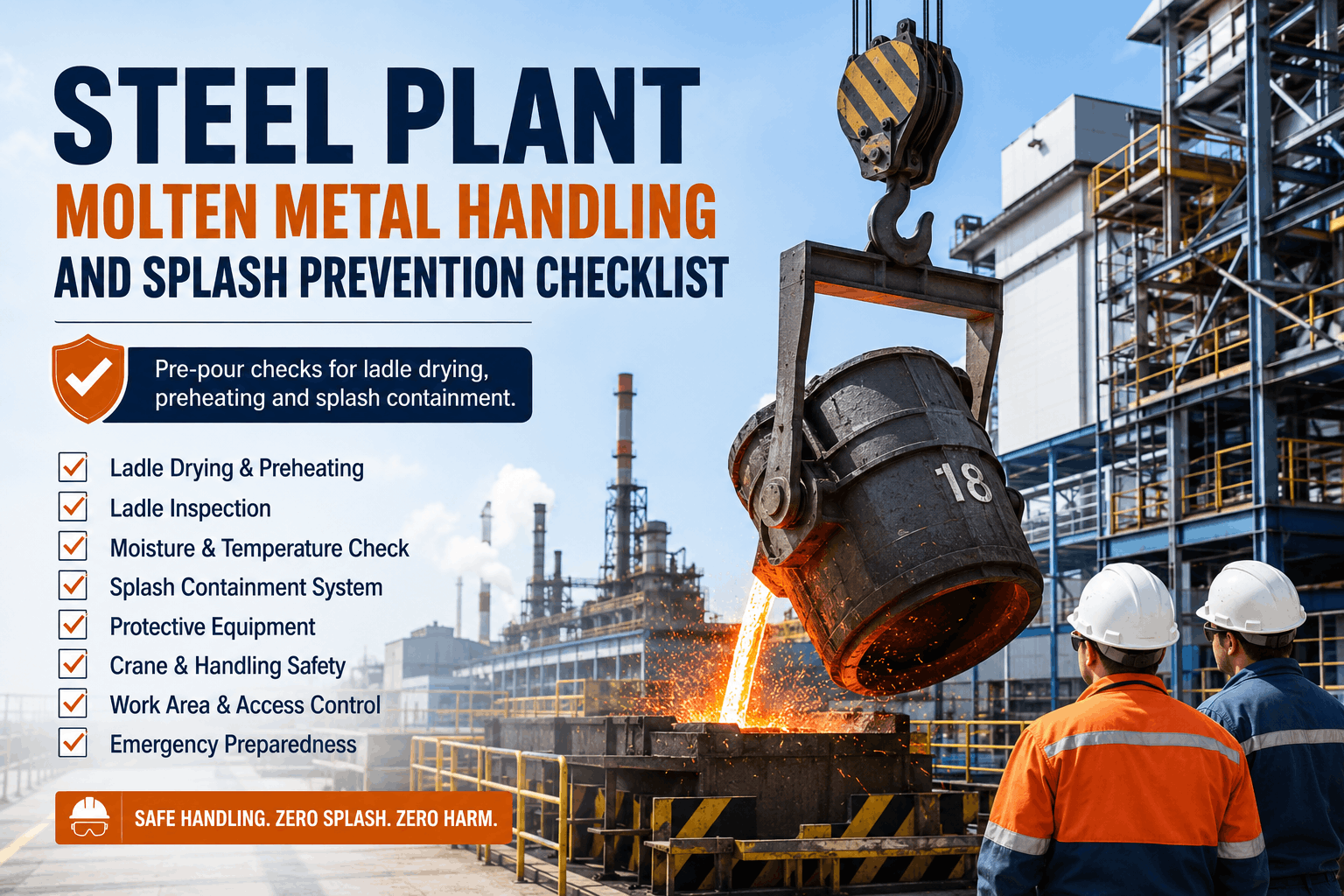
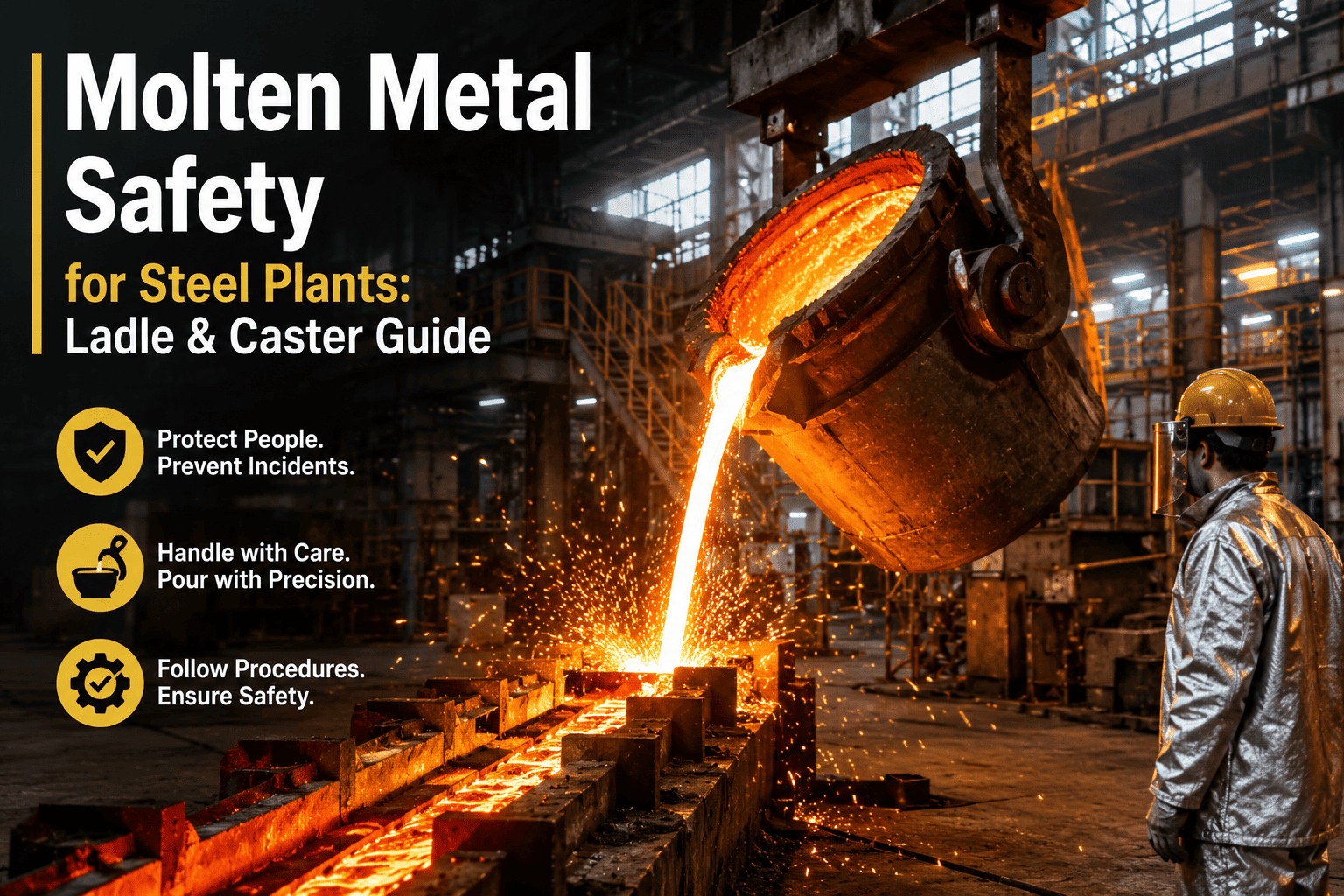
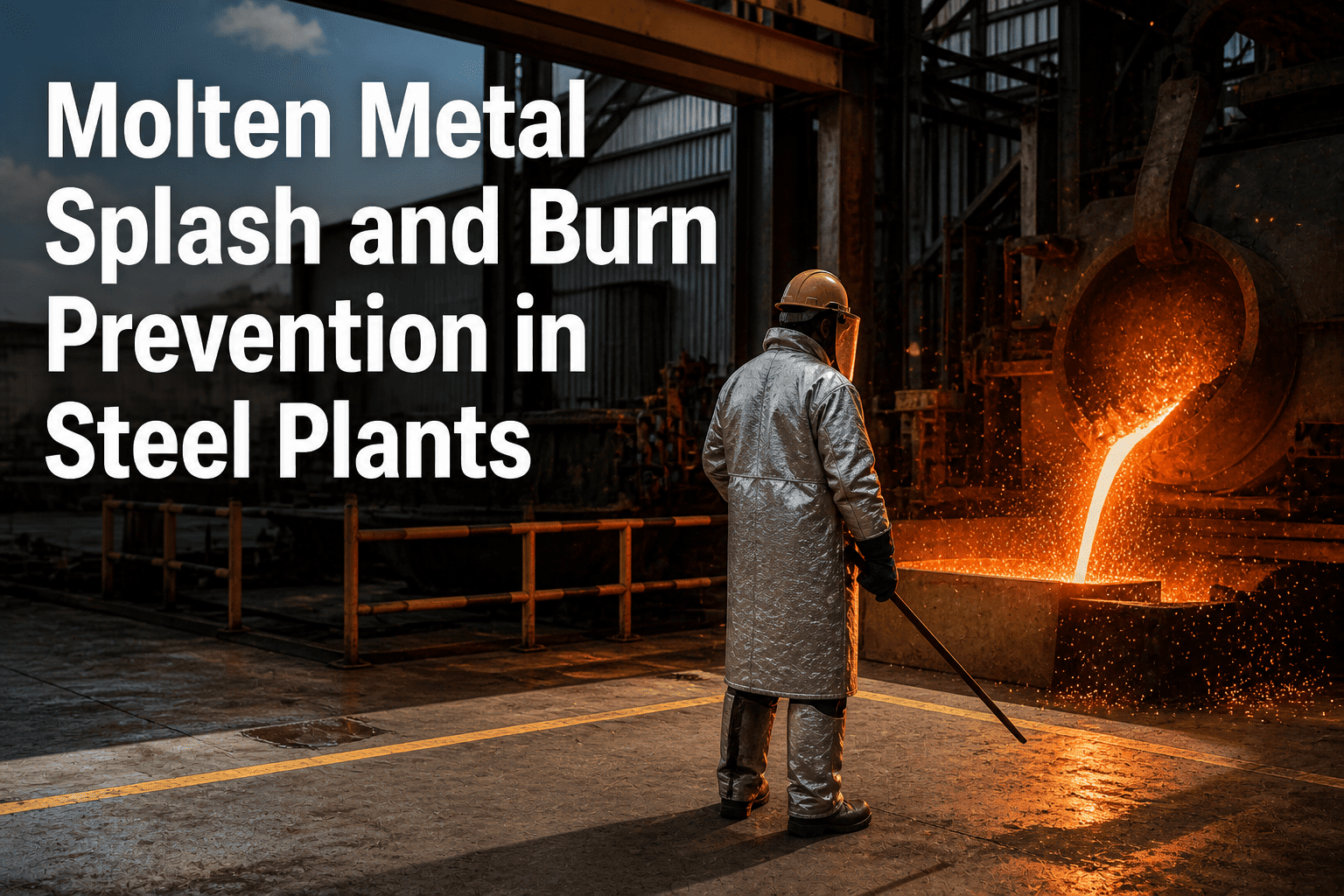
Molten metal incidents are among steelmaking's most catastrophic events. Liquid steel at 1,550–1,600°C and blast furnace hot metal at 1,450–1,500°C represent thousands of megajoules of thermal energy. When water contacts molten metal, the resulting steam explosion occurs instantaneously — a single ladle failure can cause multiple fatalities and shut an integrated steel mill for months. The American Iron and Steel Institute (AISI) reports that ladle-related incidents represent 18% of all serious burns in steel operations, yet 94% of these incidents are preventable through systematic pre-pour preparation and ladle condition verification. Oxmaint's molten metal safety platform enforces every pre-pour checklist digitally — ladle drying verification, preheating temperature confirmation, splash guard installation, and supervisor sign-off — creating an unbreakable safety culture where hot metal pours never begin until every control is confirmed.
Prevent Molten Metal Catastrophes Before the Pour
Geo-stamped digital pre-pour checklists, real-time ladle condition tracking, and supervisor-enforced sign-offs eliminate the devastating gaps that lead to water-molten metal contact explosions.
1. Ladle Drying & Moisture Elimination Verification
Water is molten metal's deadliest enemy. A single water droplet on ladle walls can vaporize catastrophically when molten steel is poured. Comprehensive drying protocols must eliminate free water, chemically bound moisture in refractory lining, and crystalline water from aging — three distinct moisture sources requiring different treatment.
2. Ladle Shell & Refractory Lining Condition Assessment
Ladle refractory linings degrade with each heat cycle. Cracks, thin spots, and lining loss create paths for water infiltration and metal leakage — potentially catastrophic during pour. Supervisors must assess lining remaining service life and shell integrity before every major operation.
3. Splash Prevention Systems & Containment Setup
Splash containment systems prevent molten metal from escaping ladle vicinity during pour. Splash guards, slag baskets, and splash basins must be positioned, secured, and operational before pouring begins — a single oversight can spray molten metal across the melt shop, burning multiple workers.
4. Operator Safety & Burn Prevention During Pour Operations
Molten metal burns are catastrophic. Workers directly handling ladles, positioning tundishes, and controlling pour flow must wear complete thermal protection — and supervisors must verify this protection before operations commence. A single unprotected arm can result in permanent disability.
Eliminate Water-Molten Metal Explosions from Your Facility
Digital pre-pour checklists, automatic ladle condition tracking, and supervisor-enforced safety protocols make catastrophic incidents impossible.
Frequently Asked Questions — Molten Metal Safety
1. What is the minimum target temperature for ladle preheating before pouring molten steel?
Target ladle interior surface temperature is 800–1,000°C (1,472–1,832°F). Temperature must be verified via pyrometer, not estimated by visual inspection, and held for 30–60 minutes to ensure chemically bound water is fully evaporated.
2. What happens if water contacts molten metal at high temperature?
The water instantly vaporizes, creating a steam explosion with force exceeding 200 psi locally. This can eject molten metal droplets at 100+ mph, burn multiple workers simultaneously, and cause catastrophic ladle failure including bottom failure or sidewall rupture.
3. How long does ladle preheating typically take and can it be rushed?
Proper preheating takes 4–6 hours following controlled heating curves. Rushing creates thermal shock that cracks refractory and causes violent moisture release — incidents happen when plants skip steps to save time. Never rush preheating.
4. What is a "campaign" in ladle refractory management and why does it matter?
Campaign life is the maximum number of heats a ladle refractory is rated to withstand (typically 150–300 heats). Once campaign is exhausted, lining must be replaced. Using ladle beyond campaign life dramatically increases failure risk during pour.
5. Are splash guards mandatory during every molten metal pour operation?
Splash guards are required per AISI standards for all molten metal operations. Guard must be positioned 4–6 inches from ladle mouth, fully secured, and removed only after pour completion. Guards have prevented thousands of serious burns.
6. What should emergency responders do if a worker receives a molten metal splash burn?
Call 911 immediately, begin ice slurry or cold water immersion for 20+ minutes to stop thermal progression, do not attempt to remove adhered metal, and arrange transport to hospital burn center. Molten metal burns are medical emergencies requiring specialized treatment.
7. Can a ladle be reused immediately after an emergency repair (gunning)?
No. Any ladle that has undergone emergency gunning must be subjected to the full preheating cycle before reuse, and gunnied ladles should be used cautiously for critical pours. Some operations prohibit gunnied ladles for high-grade steel.
8. How are ladle campaign lives predicted and managed in modern steel plants?
Modern CMMS systems track heat counts automatically and predict remaining campaign life with wear-rate trending. Oxmaint alerts supervisors when ladles approach reline point, enabling scheduled maintenance rather than emergency repairs.
"Before implementing Oxmaint's pre-pour checklist system, we experienced two water-related incidents in a 12-month period. The explosive ladle failure resulted in a three-month shutdown and multiple burn injuries. After going digital with Oxmaint's geo-stamped checklists and mandatory supervisor sign-off, we've completed 18 months without a single moisture-related incident. More importantly, our plant team now sees safety protocols as enforcement, not paperwork." — Melt Shop Manager, North American Integrated Steel Producer
Dr. Jennifer Paulson, Melt Shop Director | ArcelorMittal USA, Indiana
Transform Molten Metal Safety from Checklist to Culture
Oxmaint's platform makes safety compliance systematic, auditable, and undeniable — preventing incidents before they start.