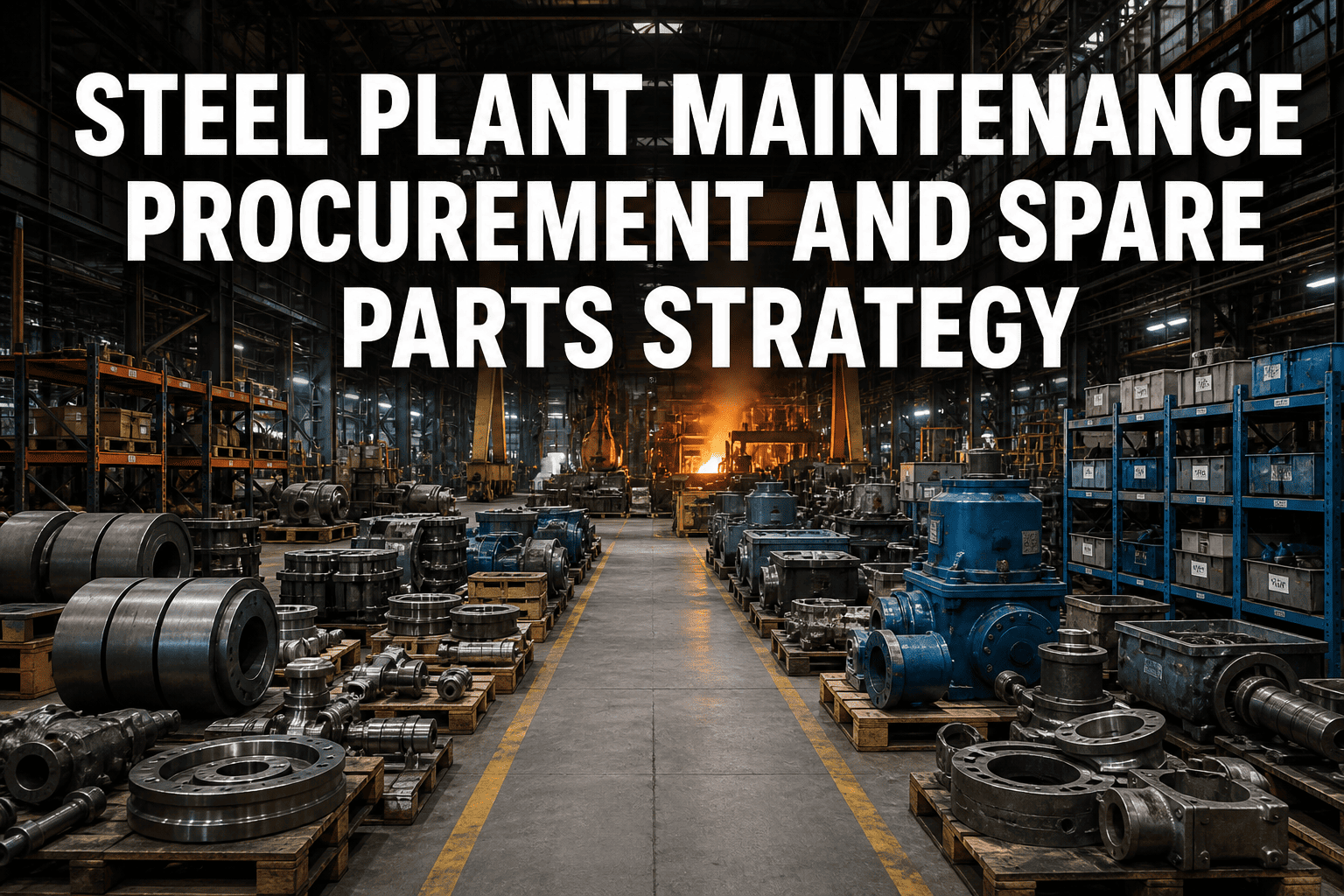
Multi-Plant Maintenance Management for Steel Enterprises: Centralizing Operations Across Locations
By John Mark on March 12, 2026
Multi-plant maintenance management for steel enterprises represents one of the most complex operational challenges in modern industrial organizations. When steel companies operate multiple facilities across different regions—each with unique equipment portfolios, local regulations, workforce capabilities, and production demands—coordinating maintenance activities becomes exponentially more difficult. Siloed operations lead to inconsistent practices, duplicated efforts, missed optimization opportunities, and vastly different performance levels across sites. Centralized maintenance management transforms this complexity into strategic advantage—enabling steel enterprises to standardize best practices, share resources intelligently, benchmark performance accurately, and drive continuous improvement across their entire portfolio. This comprehensive guide explores how leading steel enterprises are leveraging digital platforms, standardized processes, and data analytics to centralize maintenance operations while respecting local operational realities. Schedule a consultation to explore how intelligent multi-plant management can transform your enterprise operations.
The Enterprise Maintenance Challenge
Steel enterprises operating multiple plants face maintenance challenges that single-site operations never encounter. Each facility develops its own practices, systems, and culture—often resulting in significant performance variation. One plant may achieve 95% PM compliance while another struggles at 65%. One site may have maintenance costs at 3% of RAV while another burns through 6%. Centralized management doesn't mean one-size-fits-all control—it means creating the infrastructure, standards, and visibility that enable every site to perform at the level of the best.
20-35%
Cost Reduction
Through standardized processes and shared resources across plants
40%
Performance Gap
Typical variation between best and worst performing plants
60%
Faster Best Practice
Deployment of improvements across all facilities
$5M+
Annual Savings
Typical for enterprises with 3-5 facilities
Ready to centralize your maintenance operations? Join steel enterprises using unified platforms to drive consistency and performance across all facilities.
Not all centralization approaches are created equal. The right model depends on your enterprise structure, geographic distribution, operational autonomy requirements, and maturity level. Understanding the spectrum of centralization options enables informed decisions that balance control with flexibility.
Multi-Plant Management ModelsChoose the approach that fits your enterprise
Federated Model
Structure: Corporate sets standards, plants execute with autonomy
Best For: Diverse operations with different equipment and processes
Key Benefit: Balance between consistency and local flexibility
Implementation: Standard KPIs, shared best practices, local execution
Hub-and-Spoke Model
Structure: Center of excellence supports multiple operating sites
Best For: Enterprises with one mature plant and developing sites
Key Benefit: Leverage expertise from best-performing facility
Implementation: Expert teams, shared resources, knowledge transfer
Fully Centralized Model
Structure: Corporate directs all maintenance strategy and execution
Best For: Similar facilities with standardized equipment and processes
Key Benefit: Maximum standardization and resource optimization
Effective multi-plant management requires standardizing the right elements while allowing flexibility where it matters. This framework identifies what to standardize across all facilities and what to adapt to local conditions.
What to Standardize vs. Localize
Standardize Enterprise-Wide
KPI Definitions & TargetsEnsure consistent measurement and benchmarking across all plants
CMMS Platform & Data StructureUnified system enables consolidated reporting and analytics
Critical Equipment StandardsPM procedures, spare parts, and reliability targets for critical assets
Safety & Compliance RequirementsNon-negotiable standards for worker protection and regulatory adherence
Budget Categories & ReportingConsistent financial tracking enables accurate comparison and allocation
Localize by Plant
Equipment-Specific ProceduresAdapt to actual installed equipment and local operating conditions
Workforce Structure & RolesAlign with local labor agreements, skills availability, and organizational design
Vendor & Contractor NetworksLeverage local suppliers and service providers for responsiveness and cost
Scheduling & Execution TimingAdapt to local production schedules, shutdown windows, and operational constraints
Continuous Improvement InitiativesEmpower local teams to identify and implement site-specific improvements
See standardization in action. Book a demo and we'll show you how Oxmaint enables enterprise-wide standards with local flexibility for your multi-plant operations.
One of the most powerful advantages of multi-plant management is the ability to benchmark performance across facilities. When all plants measure the same KPIs the same way, you can identify top performers, understand what drives their success, and replicate best practices across the enterprise.
Multi-Plant Performance ComparisonIdentify gaps and opportunities across your facilities
PM ComplianceTarget: 95%
Plant A
92%
Plant B
78%
Plant C
88%
Plant D
65%
Maintenance Cost/TONTarget: <$25
Plant A
$18
Plant B
$28
Plant C
$22
Plant D
$35
Emergency Work %Target: <10%
Plant A
8%
Plant B
18%
Plant C
12%
Plant D
28%
Key Insight: Plant A consistently outperforms across all metrics. Document their practices and deploy to Plants B and D for immediate improvement opportunities.
Shared Resource Optimization
Multi-plant enterprises have unique opportunities to optimize resources across facilities. Specialized expertise, expensive equipment, and critical spare parts can be shared strategically to reduce costs while maintaining or improving service levels at all sites.
Specialist Teams
Deploy vibration analysts, reliability engineers, and specialized technicians across multiple plants rather than duplicating at each site. Central experts support all facilities with scheduled visits and remote assistance.
40-60% reduction in specialist labor costs
Critical Spare Parts
Maintain strategic spares at central locations or rotate high-value items between plants based on need. Shared inventory reduces total carrying costs while maintaining availability through coordinated logistics.
25-35% reduction in inventory investment
Specialized Equipment
Share expensive diagnostic and maintenance equipment (laser alignment tools, thermal cameras, balancing equipment) across facilities. Schedule usage to maximize utilization and minimize duplicate purchases.
50-70% reduction in capital equipment costs
Knowledge & Documentation
Centralize maintenance procedures, failure analyses, and improvement projects. Make all learnings accessible to all plants, preventing each site from reinventing solutions to common problems.
Accelerated improvement across all facilities
Technology Architecture for Multi-Plant
Supporting multi-plant maintenance management requires technology architecture that balances centralized visibility with local operational needs. The right platform enables enterprise oversight without creating bottlenecks or limiting local responsiveness.
Enterprise Layer
Consolidated DashboardsEnterprise KPIs & BenchmarksCross-Plant AnalyticsStrategic Planning ToolsBest Practice Library
Local Work ExecutionEquipment-Specific DataLocal SchedulingInventory ManagementContractor Coordination
Not sure which architecture fits your enterprise? Our engineers will analyze your organizational structure and recommend the optimal technology configuration for your multi-plant operations.
Successfully implementing multi-plant maintenance management requires a phased approach that builds momentum while minimizing disruption. Start with quick wins that demonstrate value, then expand scope as confidence and capability grow.
Phase 1
Foundation (Months 1-3)
Assess current state at all plants
Define enterprise KPIs and standards
Select and configure unified platform
Establish governance structure
Outcome: Unified visibility into all plant performance
Phase 2
Standardization (Months 4-9)
Deploy standard PM procedures
Implement enterprise reporting
Launch benchmarking program
Train plant teams on new processes
Outcome: Consistent practices and measurable performance gaps
Phase 3
Optimization (Months 10-18)
Deploy shared resource programs
Implement best practice transfer
Optimize inventory across plants
Launch continuous improvement program
Outcome: Measurable cost reduction and performance improvement
Phase 4
Continuous Improvement (Ongoing)
Regular performance reviews
Expand shared services
Advanced analytics and AI
Integrate new facilities
Outcome: Sustained competitive advantage through maintenance excellence
ROI of Multi-Plant Management
Centralizing maintenance management across multiple plants delivers returns through multiple value streams—standardization benefits, resource optimization, performance improvement, and strategic advantage. The business case typically shows compelling returns within 12-18 months.
Value Creation BreakdownTypical savings distribution for 3-5 plant enterprise
Shared specialists, equipment, and inventory across plants
25%
Performance Improvement
Lagging plants adopting best practices from leaders
15%
Strategic Benefits
Better decision-making, risk management, and capability building
Typical Total Annual Savings: $3M-$8M for enterprises with 3-5 facilities
Calculate your enterprise ROI. Create a free Oxmaint account and our team will model the potential savings for your specific multi-plant configuration and current performance levels.
Multi-plant maintenance management implementations face unique challenges from organizational resistance, system complexity, and change management. Understanding these challenges and proven solutions accelerates successful deployment.
Plant Autonomy Resistance
Challenge: Plant managers resist corporate oversight and standardization
Solution: Involve plant leaders in standard development, demonstrate quick wins, show how centralization supports rather than constrains local operations. Celebrate plant-level successes publicly.
Data Quality Inconsistency
Challenge: Different plants record data differently, making comparison unreliable
Solution: Standardize data definitions and entry requirements. Implement validation rules. Provide training on proper data entry. Start benchmarking only after data quality reaches acceptable threshold.
System Integration Complexity
Challenge: Different plants use different systems, making consolidation difficult
Solution: Phase system consolidation starting with reporting layer. Use integration middleware for transitional period. Prioritize plants with worst systems for earliest replacement.
Cultural Differences
Challenge: Different plants have different cultures, work practices, and labor relationships
Solution: Respect local culture while standardizing outcomes. Allow flexibility in how standards are achieved. Use change champions at each plant to bridge cultural gaps.
Resource Allocation Conflicts
Challenge: Plants compete for shared resources, creating tension
Solution: Establish clear allocation rules based on criticality and ROI. Use transparent scheduling system. Create governance committee with plant representation for dispute resolution.
Sustaining Momentum
Challenge: Initial enthusiasm fades, plants revert to old practices
Solution: Establish regular performance reviews with executive participation. Tie management compensation to enterprise metrics. Continuously communicate successes and lessons learned.
Centralize Your Multi-Plant Operations Today
Your enterprise can't afford to have some plants performing at world-class levels while others struggle with basic maintenance fundamentals. Oxmaint helps you deploy unified maintenance management that provides enterprise visibility, enables best practice sharing, optimizes resources across facilities, and drives continuous improvement at every location—transforming maintenance from a local cost center into an enterprise competitive advantage.
How do we balance enterprise standardization with local operational needs?
Use the hybrid model—standardize what matters for visibility and comparison (KPIs, data structure, critical equipment standards) while allowing local flexibility on execution details (scheduling, workforce structure, vendor selection). Involve plant leaders in standard development to ensure standards are practical. Review and adjust standards regularly based on feedback. Schedule a consultation to develop the right balance for your enterprise.
What's the typical timeline for implementing multi-plant maintenance management?
Foundation phase (unified platform, standards definition) takes 3-6 months. Standardization phase (deploying procedures, training) takes 6-9 months. Optimization phase (shared resources, best practice transfer) takes 9-12 months. Full maturity typically requires 18-24 months. Quick wins in first 6 months build momentum for longer-term transformation.
How do we handle plants with different equipment and processes?
Standardize at the right level—enterprise KPIs and reporting, not necessarily identical PM procedures. Group similar equipment types across plants for benchmarking. Allow equipment-specific procedures while maintaining common structure and data capture. Focus on outcomes and reliability rather than identical activities. Sign up for a free account to see flexible standardization tools.
What governance structure works best for multi-plant maintenance?
Effective governance includes: Enterprise Maintenance Council (VP level, quarterly), Regional/Division Reviews (monthly), Plant Performance Reviews (weekly). Include plant representation at all levels. Establish clear decision rights—what decisions are enterprise, regional, and plant-level. Document and communicate governance structure clearly.
How do we measure success of multi-plant management implementation?
Track both leading and lagging indicators: Performance gap reduction between plants (target: <15% variation), cost per unit convergence, best practice adoption rate, shared resource utilization, employee engagement scores, and enterprise-level KPIs (total maintenance cost, reliability metrics, safety performance). Review quarterly with executive team. Book a demo to see multi-plant dashboards.
Can we integrate multi-plant management with our existing ERP and operational systems?
Yes. Oxmaint integrates with all major ERP platforms (SAP, Oracle, Microsoft Dynamics) and operational systems through APIs and standard data formats. Multi-plant architecture supports different systems at different plants while providing consolidated enterprise visibility. Our implementation team works with your IT organization to ensure secure, scalable integration across all facilities. Schedule a consultation to discuss your specific integration requirements.