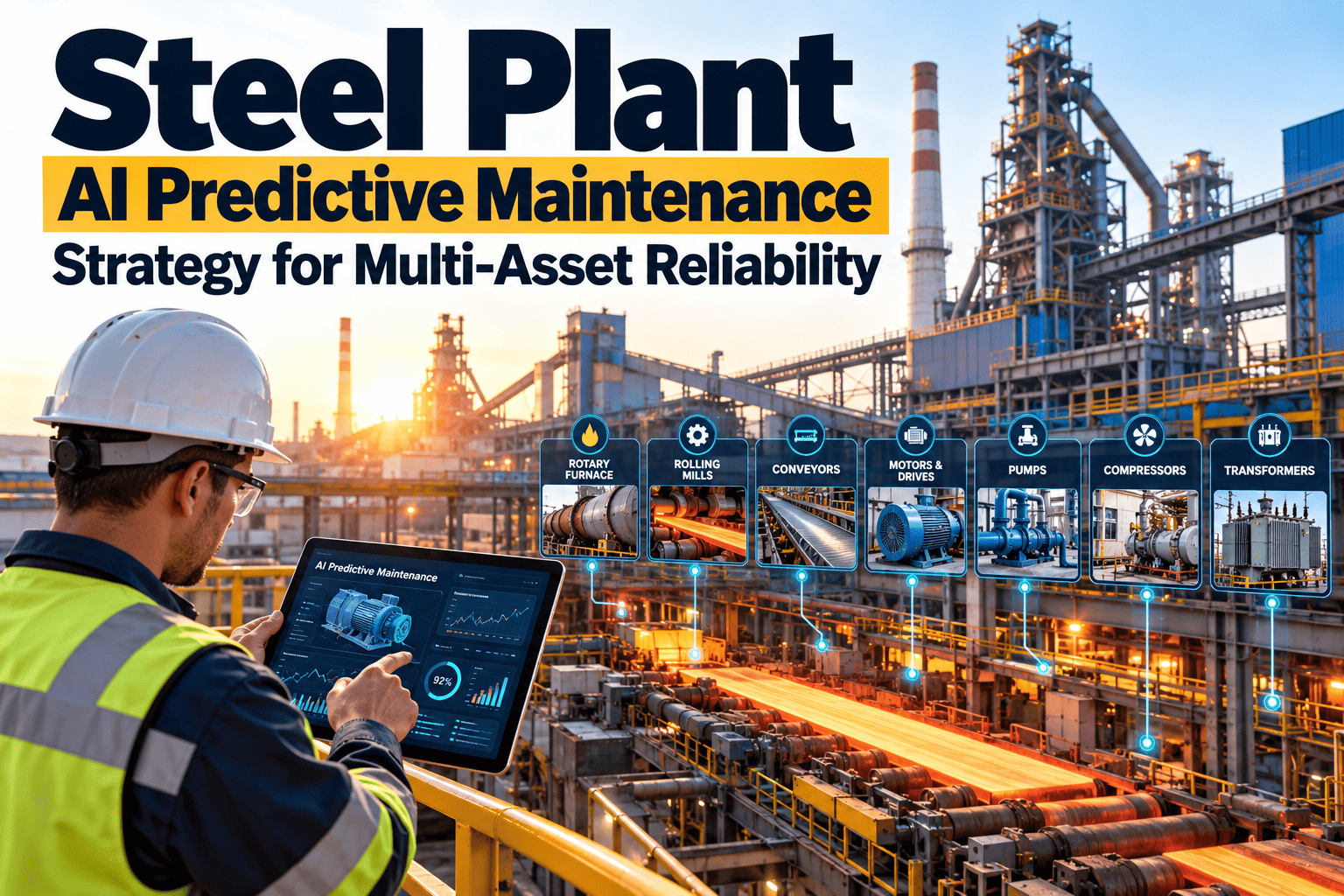
A vibration alarm on a rolling mill gearbox means very little if two plants in the same company define "critical" differently, name the asset differently and respond to the alert in different ways. Many steel producers have predictive maintenance pilots running at individual sites, yet few can compare asset health across the group. The gap is rarely sensors or analytics. It is the lack of a shared maintenance language that lets every plant act on condition data the same way. This guide explains how to standardize that language, and how a maintenance management platform like Oxmaint turns it into daily workflow.
Steel Operations / Predictive Maintenance
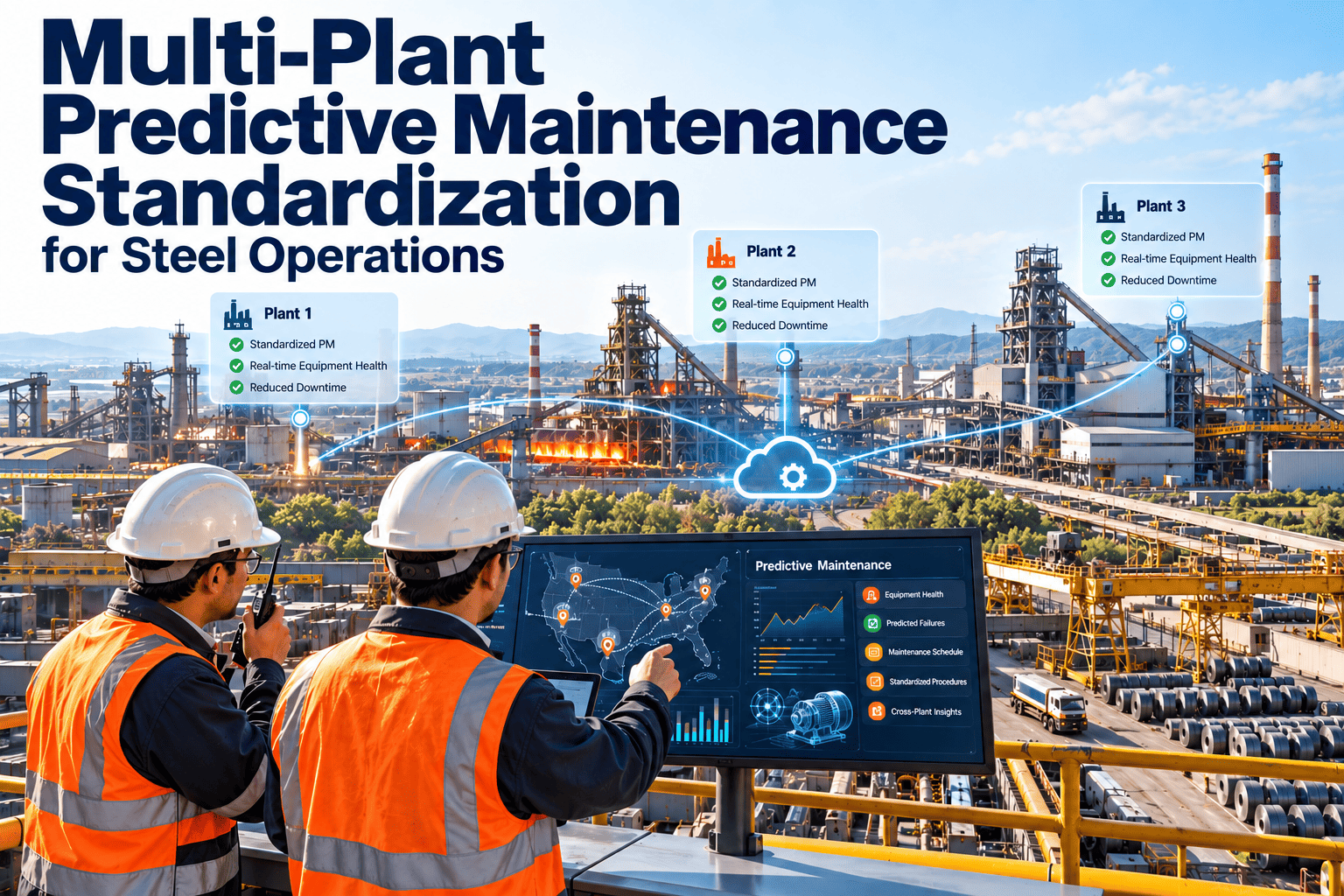
Multi-Plant Predictive Maintenance Standardization for Steel Operations
One asset structure, one failure vocabulary and one alert-to-action rule set across every mill, so condition data at one plant means the same thing at all of them.
The Core Problem
Why predictive maintenance stalls after the first plant
A pilot succeeds because a few motivated people at one site tune it by hand. Scaling fails because the tuning lives in their heads, not in a shared standard.
Operational Impact
What inconsistent standards cost a steel producer
Steel is a continuous, heavy, high-temperature process. Unplanned stops ripple upstream and downstream within minutes.
Alerts without ownership
- An early bearing warning is raised but no one is assigned to it
- Different plants wait for different confirmation before opening a work order
- Warnings expire when a shift changes
Duplicated engineering effort
- Every site rebuilds its own monitoring thresholds
- Lessons from one casting line never reach the next
- Central reliability teams spend time cleaning data instead of analyzing it
Weak investment decisions
- Capital requests rely on anecdotes, not comparable failure history
- Spare critical gearboxes are held at some sites and missing at others
- Sensor budgets go to visible assets, not the riskiest ones
The Standard
Five layers of a standardized predictive maintenance program
Standardization works best when built in order. Each layer depends on the one beneath it.
A common asset hierarchy
Define the same levels everywhere: plant, area, line, equipment class, component. A hot strip mill finishing stand should sit in the same position in the tree at every site that has one. This is the foundation for comparing like with like.
A shared failure code library
Use a controlled list of failure modes, causes and remedies per equipment class. Reliability data standards such as ISO 14224 are often used as a reference for structuring this taxonomy, adapted to steel equipment.
One criticality method
Score every asset on production loss, safety, quality, environmental exposure and repair lead time using the same scale. Criticality then drives monitoring depth, spares and response time.
Condition indicators and limits by equipment class
Agree which measurements matter for each class and how warning and alarm levels are set. Guidance such as ISO 17359 on condition monitoring can frame this, while limits are tuned to each machine's baseline.
Alert-to-work-order rules
State exactly what happens at each alert level: who reviews it, how fast, what inspection follows and when a work order is raised. This turns data into action.
Equipment Reference
Condition signals for common steel plant asset classes
The table below is a starting point for a group standard. Each plant should confirm it against its own equipment, operating conditions and OEM guidance.
| Asset class | Typical failure concern | Useful condition signal | Common technique |
|---|---|---|---|
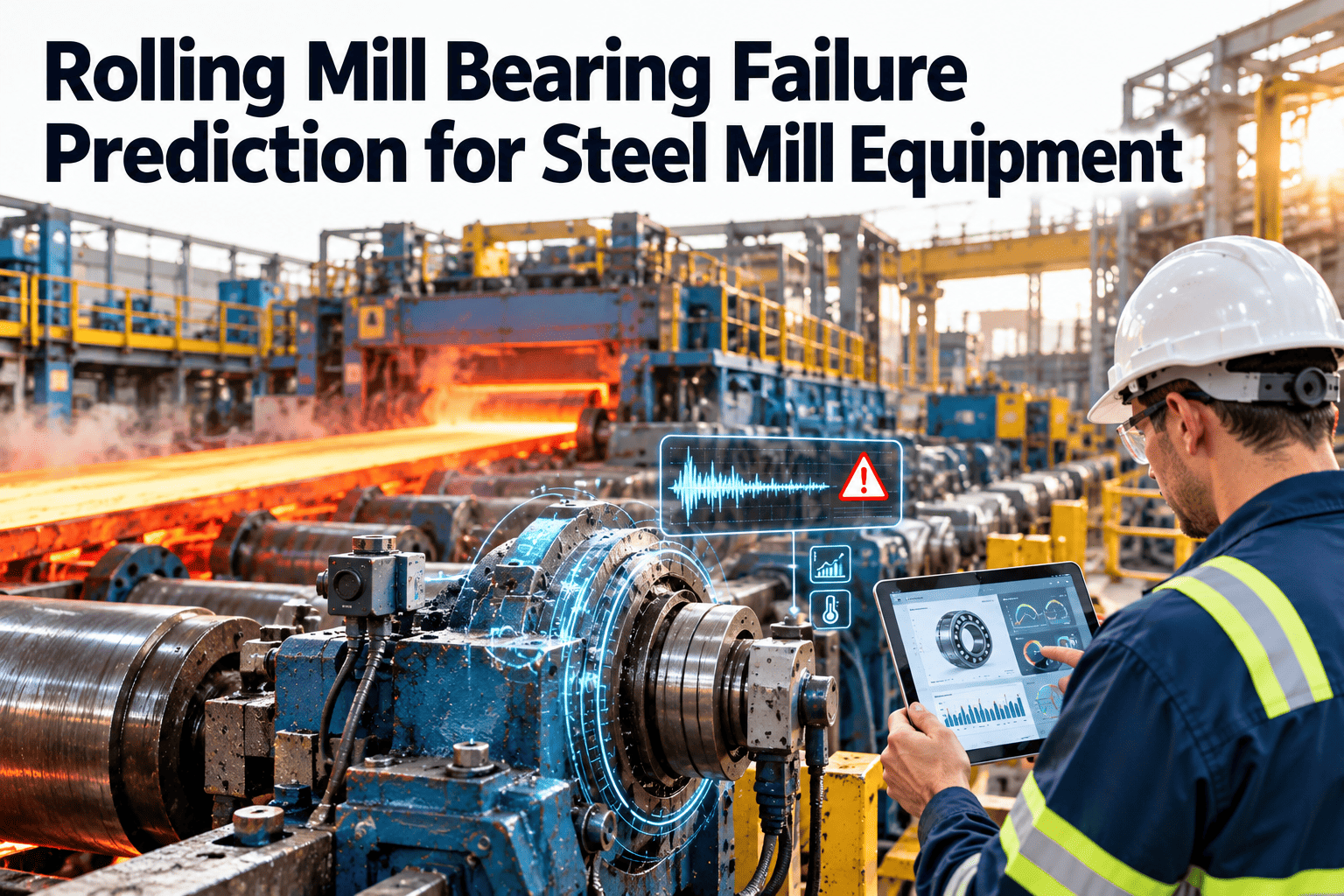
| Rolling mill gearboxes | Gear wear, bearing damage, lubrication breakdown | Vibration spectrum, oil particle trend, temperature | Vibration analysis, oil analysis |
| Main drive motors | Winding insulation, bearing wear, rotor issues | Current signature, winding and bearing temperature | Motor current analysis, thermography |
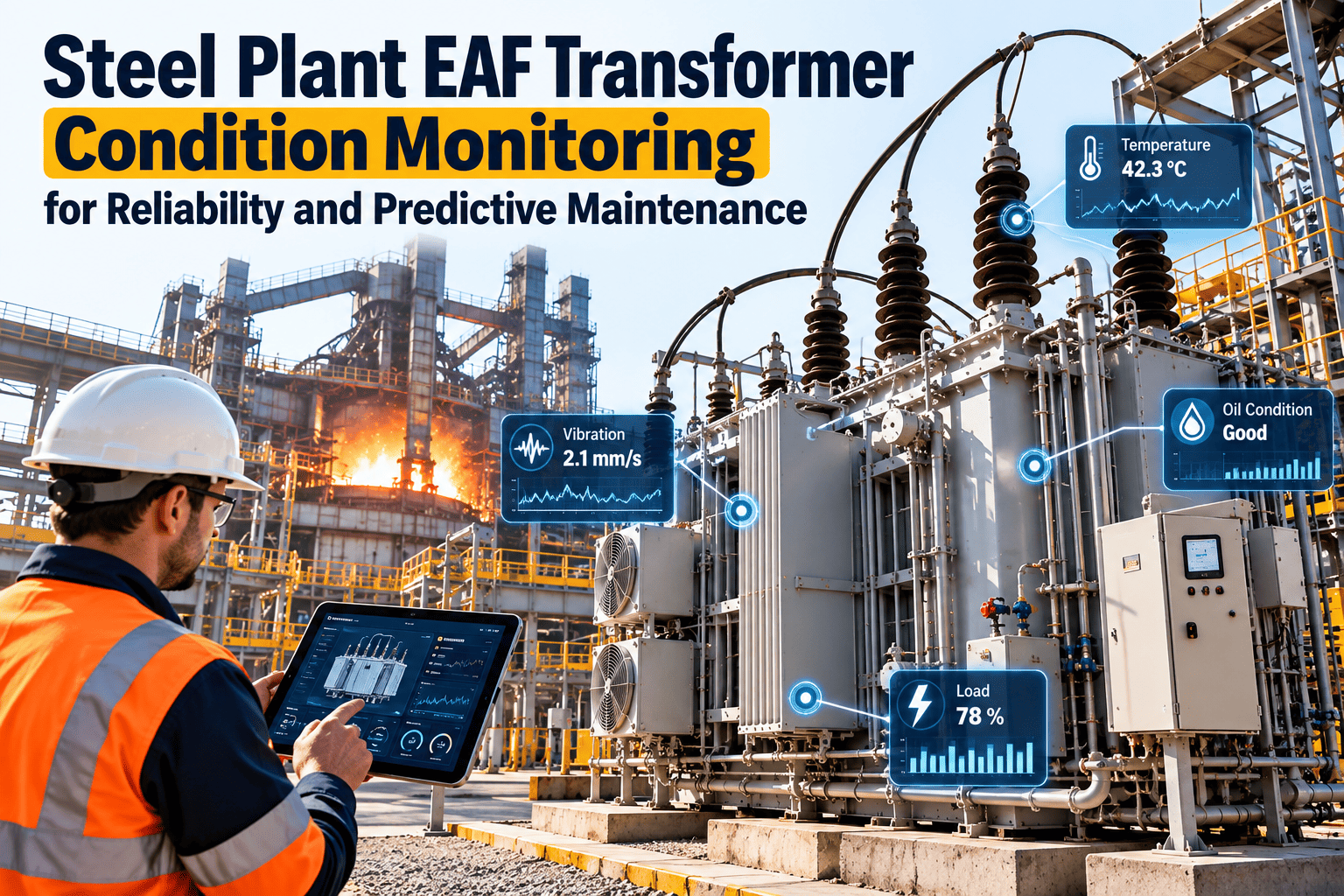
| Electric arc furnace systems | Electrode regulation faults, cooling leaks, transformer stress | Hydraulic pressure, cooling flow and temperature | Process trending, thermography |
| Continuous caster segments | Roll bearing seizure, cooling nozzle blockage | Roll rotation, spray pressure, segment temperature | Inspection rounds, process trending |
| Ladle and overhead cranes | Brake wear, wire rope fatigue, hoist gearbox wear | Brake response, rope condition, gearbox vibration | Scheduled inspection, vibration checks |
| Fans and blowers | Imbalance, buildup on blades, bearing wear | Vibration amplitude, bearing temperature | Vibration analysis |
| Hydraulic power units | Pump wear, contamination, filter loading | Pressure trend, oil cleanliness, case drain flow | Oil analysis, pressure trending |
| Descaling and cooling pumps | Cavitation, seal leakage, impeller wear | Vibration, discharge pressure, flow | Vibration analysis, performance trending |
Start With One Standard
Give every plant the same maintenance structure to build on
Set up a common asset tree, work order flow and inspection routine in Oxmaint, then extend it site by site.
Alert Prioritization
A shared risk matrix for deciding which alert gets action first
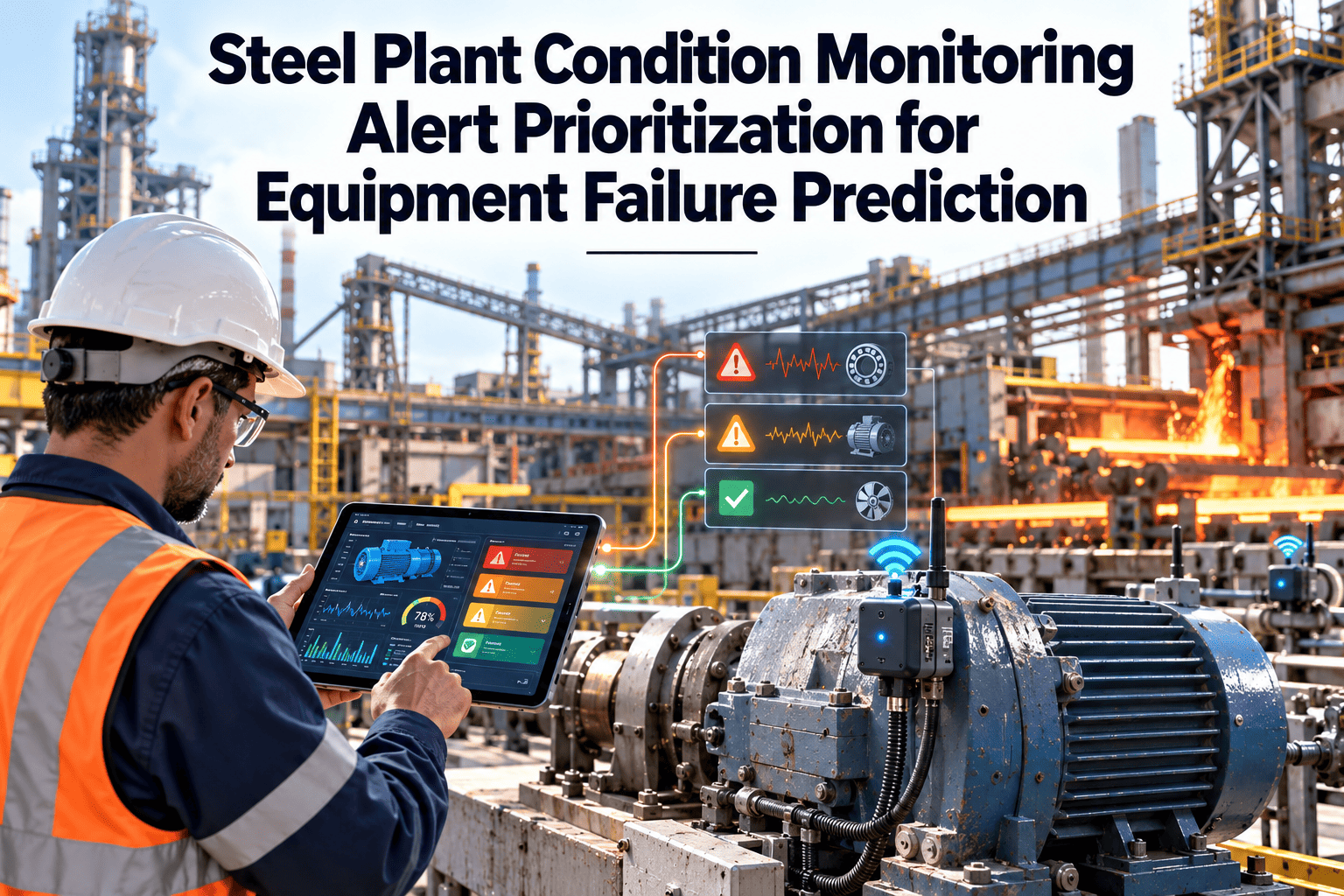
Alert fatigue is a leading reason predictive programs lose credibility. Combining asset criticality with alert severity gives every plant the same ranking logic.
Rules that keep the matrix honest
- Every alert closes with a recorded outcome: confirmed fault, false alarm or monitor
- False alarms feed back into threshold reviews, not into silence
- Response targets are the same at every plant for the same cell
Rollout Path
A phased timeline for taking one plant's practice to the whole group
Avoid a big-bang launch. Prove the standard where data is strongest, then replicate it with local adjustment.
Baseline and agree the standard
- Audit existing asset registers, naming and failure history at each plant
- Choose the lead plant and the equipment classes to start with
- Approve the hierarchy, failure codes and criticality scale as a group
Pilot on high-criticality assets
- Load the standard asset tree and link existing preventive routines
- Define alert levels and response rules for the pilot equipment
- Track every alert to a recorded outcome
Replicate with local tuning
- Roll out the same templates to the next plants
- Allow local baselines but keep codes and rules fixed
- Train technicians and planners on the shared workflow
Govern and improve
- Hold a recurring cross-plant reliability review
- Change standards only through a controlled review
- Expand into more equipment classes and condition-based triggers
Measurement
KPIs that only work when definitions match across plants
A metric is only useful for benchmarking when every plant calculates it the same way. Fix the definition before collecting the number.
Before And After
What changes when plants share one maintenance standard
- Each plant keeps its own asset names and failure descriptions
- Alerts reach people by phone, email or conversation
- Reliability engineers rebuild data sets before every review
- Spare parts decisions are made site by site without group visibility
- Technician knowledge leaves with the technician
- One asset tree and failure library across the group
- Alerts become assigned, tracked work with an outcome
- Cross-plant reports draw from the same structured records
- Critical spares are planned against shared criticality
- Inspection steps and repair history are held in the system
Technology Direction
Trends shaping predictive maintenance in steel
Technology keeps advancing, but the order of work matters more than the tool. Structured records come before advanced models.
Condition-based triggers
More teams are moving from calendar tasks to work triggered by measured condition, while keeping calendar routines for assets without monitoring.
Hybrid rules and models
Simple threshold rules remain useful. Machine learning tends to add value where clean, labeled failure history exists, which is why consistent failure codes matter.
Wireless and portable sensing
Lower-cost sensors and route-based tools extend coverage to assets that were previously checked only by walk-around.
Cross-plant benchmarking
Groups increasingly compare equipment performance across sites to find best practice and weak spots, which requires shared definitions.
Using Oxmaint
How Oxmaint supports a multi-plant predictive maintenance standard
Oxmaint does not replace condition monitoring hardware or analytics. It gives the standard a place to live and the alerts a path to action.
Asset management
Build the shared hierarchy and attach equipment class, criticality and history to each asset.
Preventive maintenance and inspections
Schedule standard tasks and inspection checklists that field teams complete on mobile devices.
Work orders
Convert alerts and inspection findings into assigned corrective work with recorded failure codes and outcomes.
Inventory
Link critical spares to the assets they protect so repair planning sees what is available.
Reporting and dashboards
Compare backlog, compliance and failure trends across plants from the same data structure.
Readiness Check
Checklist before extending the standard to another plant
Data
- Asset register reconciled to the group hierarchy
- Failure history mapped to the shared code library
- Duplicate and retired assets removed
Process
- Alert levels and response times agreed by the plant
- Named owner for every alert category
- Lockout and permit steps included in inspection and repair tasks
People
- Planners and technicians trained on the shared workflow
- Reliability lead assigned at plant level
- Feedback route to the group standard owner
FAQ
Multi-plant predictive maintenance: common questions
Where should standardization start?
Start with the asset hierarchy and criticality scale. Without them, failure data and condition alerts cannot be compared between plants.
Do all plants need the same sensors?
No. Sensors can differ by site and asset. What must match is the equipment class definitions, alert levels and the way alerts become work orders.
Can a CMMS support predictive maintenance?
Yes, as the system of record for assets, work orders and outcomes. You can book a demo to see this workflow.
How do we reduce false alerts across plants?
Record an outcome for every alert and review thresholds by equipment class. Shared codes make false alarm patterns visible.
How long does standardizing take?
It depends on data quality and the number of sites. A single-plant pilot is a practical first step, and you can start with Oxmaint at that scale.
Ready To Standardize
Turn plant-by-plant predictive pilots into one group maintenance system
See how Oxmaint can hold your asset structure, alerts, work orders and inspections in one workflow across steel plants.