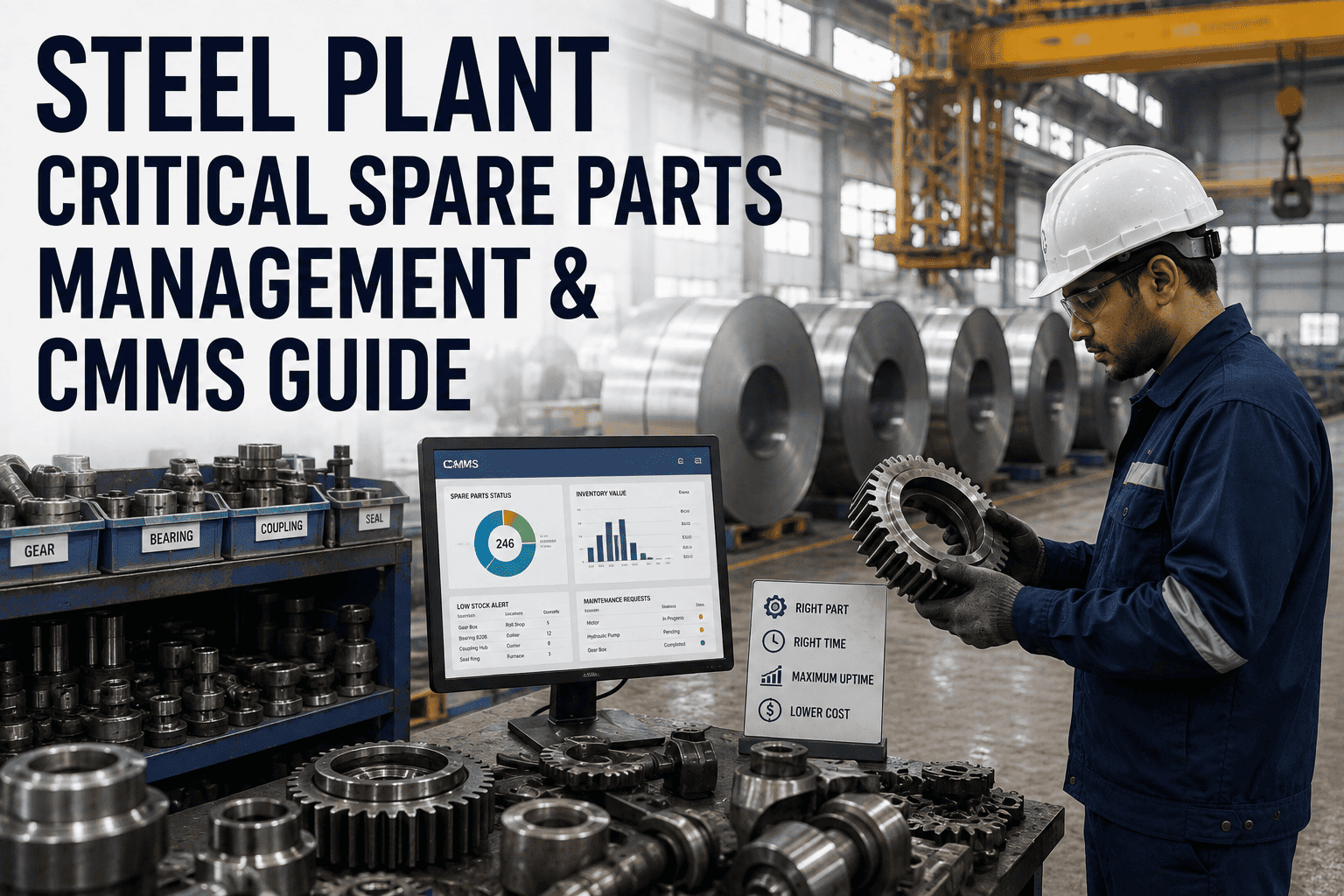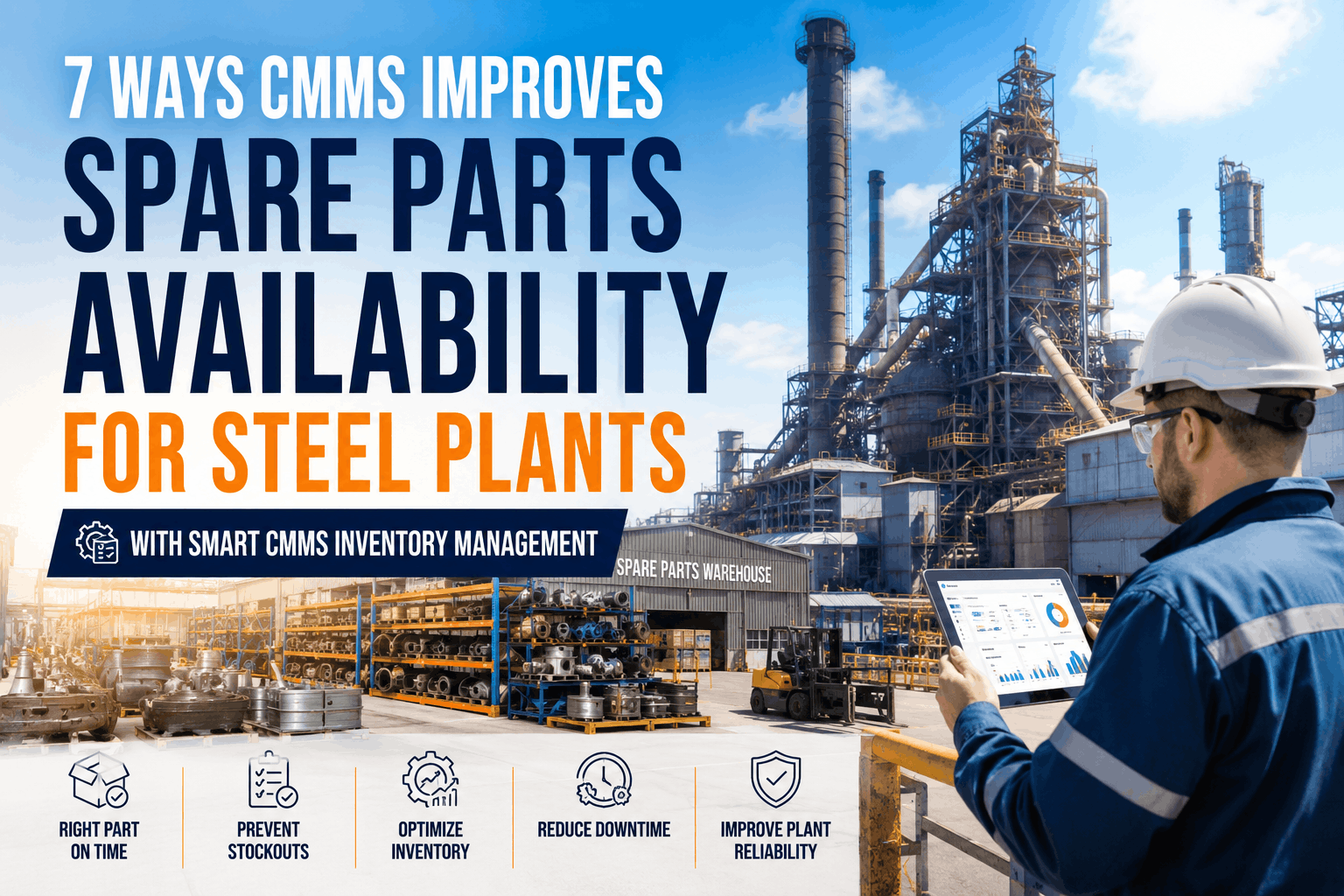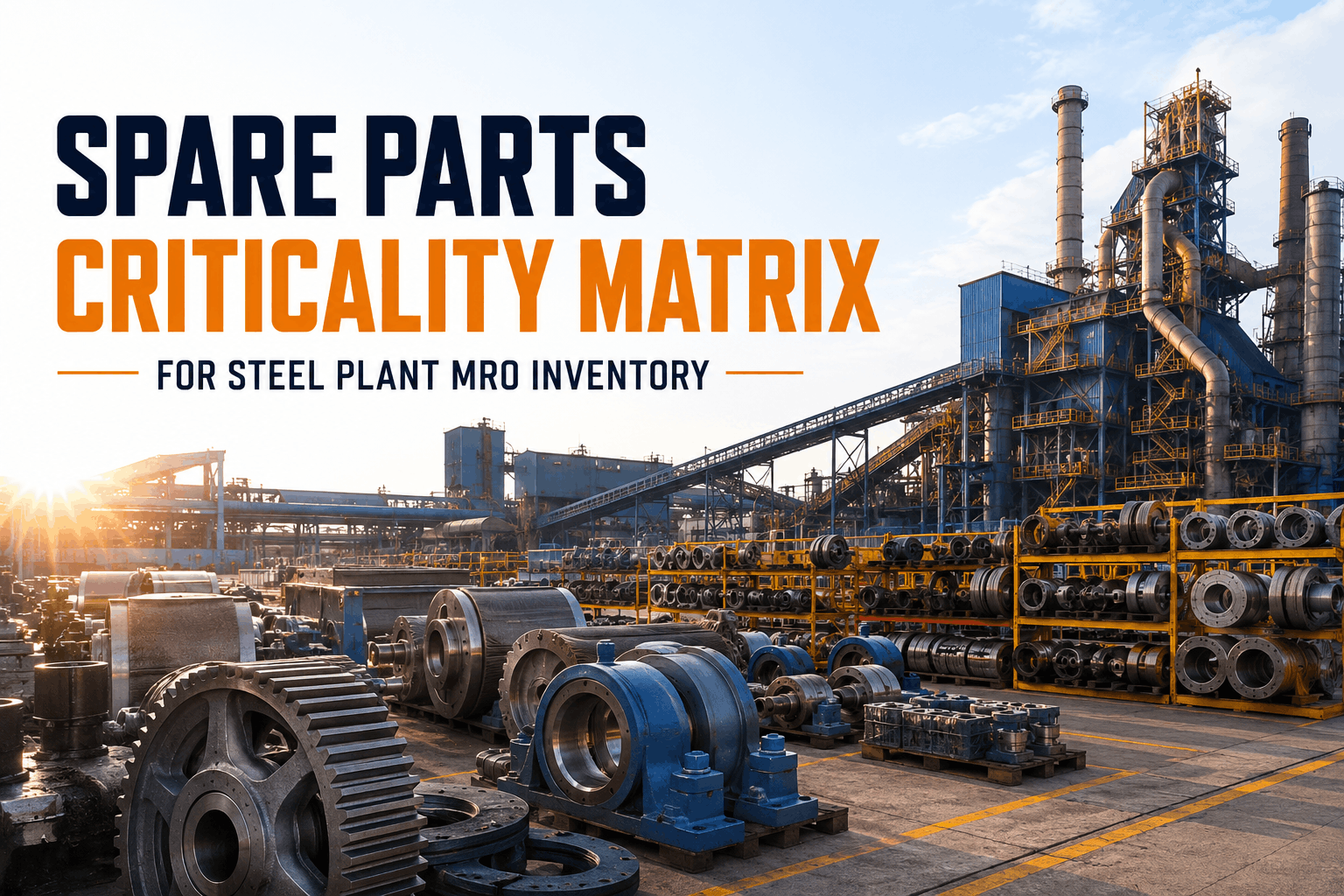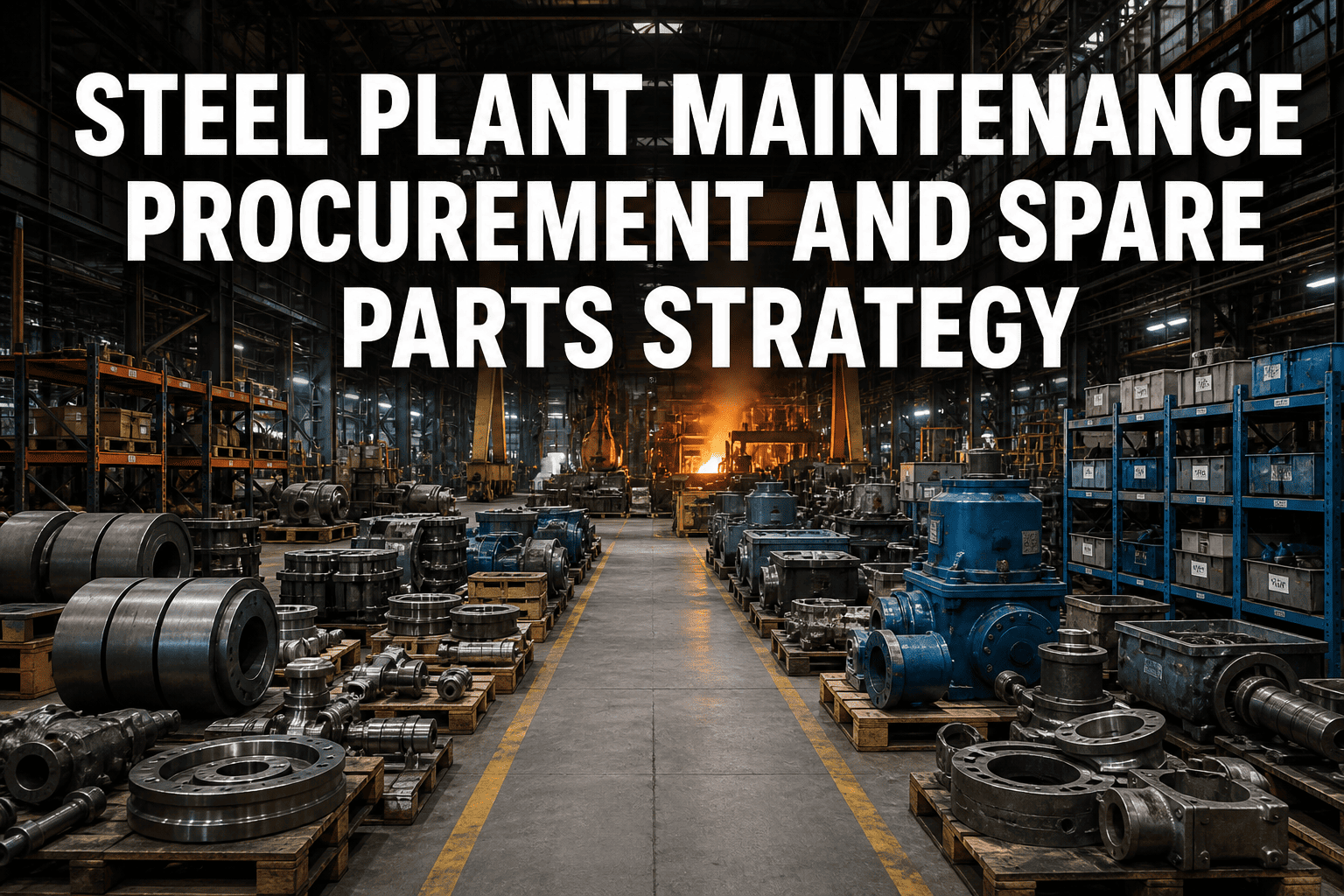
In the capital-intensive and high-velocity world of US steel manufacturing, an optimized MRO (Maintenance, Repair, and Operations) strategy is far more than a simple logistics function—it is the difference between a profitable, high-output quarter and a multi-million dollar downtime event that can jeopardize customer contracts and market position. A modern steel plant's storeroom is not merely a collection of mechanical and electrical components; it represents a sophisticated financial insurance policy against the catastrophic failure of mission-critical assets. From the custom-forged mill rolls with eighteen-month lead times and specialized high-voltage EAF transformers to high-consumption refractory liners and precision bearings, managing industrial spare parts requires a rigorous, data-driven criticality matrix. This matrix must balance the significant carrying costs of heavy inventory against the existential risk of a prolonged stockout. A CMMS-driven inventory program provides the visibility needed to ensure that strategic spares are ready for deployment at the moment of failure, while simultaneously optimizing min-max levels to free up millions in previously locked-up working capital. Sign Up Free to start building your comprehensive spare parts criticality roadmap today.
Connect Your Inventory Data to Maintenance Work Orders in Real Time
OxMaint's inventory module tracks every spare part as a unique asset record — with BOM integration, automated reorder points, and repairable spares tracking. No separate spreadsheets. No disconnected storeroom records. Eliminate the gap between your maintenance team and your storeroom inventory.
In a world-class reliability program, the "Insurance Principle" of critical spares dictates that for components with an extreme lead time and a near-certain probability of halting production, the annual carrying cost of the part is entirely secondary to the cost of its absence. A shattered mill stand bearing or a shorted EAF transformer isn't just a repair—it's an operational crisis that can halt a plant's revenue for months. A CMMS-integrated criticality matrix allows US steel reliability teams to objectively quantify this risk, providing a scientific justification for holding high-value "strategic" spares that otherwise might be cut during budgeting cycles. This shifts inventory from a "cost center" to a "risk mitigation" asset.
Primary Inventory Risks and MRO Failure Modes
The failure of an MRO strategy rarely happens as a single event; instead, it manifests as a series of cascading "information gaps" that prevent the maintenance team from having the right part at the moment of need. These risks represent the most significant threats to steel plant uptime today.
Spare Parts Criticality Matrix — Operational Framework
An effective MRO strategy utilizes a multi-dimensional matrix to categorize every SKU in the storeroom. By scoring parts based on the "Economic Impact of Failure" (EIF) and the "Difficulty of Replacement" (DOR), a plant can scientifically determine its stocking levels, reorder points, and procurement urgency without relying on the memory of senior technicians.
This distribution illustrates a balanced inventory profile where capital is concentrated in the 15% of parts that protect the 85% of production revenue. Strategic spares represent the highest financial value but the lowest turnover, while consumables drive the daily maintenance volume.
MRO Inventory Strategy by Part Category and Asset Class
Different types of steel mill assets require different procurement and stocking strategies. A "one-size-fits-all" approach to inventory results in either excessive capital tie-up or frequent, expensive stockouts. The following matrix details how OxMaint optimizes each category.
| Part Category | Example Steel Assets | Stocking Strategy | OxMaint Action Item |
|---|---|---|---|
| Strategic Long-Lead | EAF Transformers, Main Mill Rolls, Ladle Turrets | Strategic Stock (1+ Unit Always Ready) | Annual condition audit & lead-time verification |
| High-Wear Critical | Refractory Nozzles, Copper Staves, Mill Liners | Safety Stock / Just-in-Time (JIT) | Auto-PO trigger on campaign production start |
| Standard Reliability | Spherical Roller Bearings, Seals, VFD Modules | Min-Max (Inventory Optimized) | Dynamic Min-Max adjustment based on MTBF |
| Repairable Spares | Mill Motors, Main Gearboxes, Hydraulic Pumps | Rotational Asset Pool | Track lifecycle from "Floor" to "Repair Shop" |
| Consumables / PPE | Fasteners, Lubricants, Safety Gear, Welding | VMI (Vendor Managed Inventory) | Usage-based billing & automated replenishment |
How OxMaint Manages Complex Steel Plant Inventory
Unlike generic warehouse management systems, OxMaint is built specifically for the intersection of maintenance and materials. We treat a spare part not as a static SKU, but as a critical component of a machine's reliability lifecycle.
Every spare part in your storeroom is digitally linked to the specific machine it serves within your Bill of Materials (BOM). When a technician creates a work order for a caster oscillator, the system immediately displays the exact seal kit, bearing set, and solenoid required for that specific serial number. This eliminates "wrong-part" runs and ensures that the maintenance team arrives at the machine with every component needed to finish the job. Sign Up Free to build your digital BOM.
Eliminate the risk of manual stock-counting and the "clipboard and binder" inventory method. OxMaint tracks real-time part usage through work order closures and automatically generates a purchase requisition the second a part drops below its calculated "Min" level. The system factors in current vendor lead times to ensure that your replenishment order arrives before your safety stock is even touched.
Steel mills rely on a "Rotate and Repair" strategy for high-value gearboxes and motors. OxMaint tracks these parts through their entire lifecycle: from "Asset Failure" to "Offsite Repair," "Post-Repair Testing," and finally "Ready for Use" in the storeroom. This ensures your reliability engineer always knows the true state of your backup capacity, preventing the nightmare scenario of finding a "broken" spare when a machine fails. Book a Demo to see our repairable spares workflows.
Maintaining a high-value storeroom requires rigorous financial oversight. OxMaint automates your cycle counting by scheduling recurring "Part Audit" work orders for your storeroom personnel. This provides the 100% accurate, time-stamped digital record required for annual financial audits, insurance risk assessments, and executive-level ROI reporting on MRO spend.
Paper Records vs. CMMS-Integrated MRO Management
The transition from a manual or spreadsheet-based inventory system to a CMMS-integrated program represents one of the highest ROI investments a steel plant can make. The following comparison illustrates the functional gaps bridged by digital transformation.
"Before we moved our entire MRO strategy into OxMaint, managing spare parts for our US rolling mill was a game of 'finding the guy who has been here for 30 years and knows where the part is hidden.' We had millions of dollars tied up in inventory, yet we still faced catastrophic stockouts on simple fifty-dollar sensors that would shut down the entire hot strip mill for a shift. By digitizing our storeroom and building a rigorous criticality matrix in the CMMS, we reduced our total inventory value by 22% within the first eighteen months while simultaneously increasing our 'first-pick' availability to over 98%. The ability to track our repairable motors from the mill floor to the rewind shop and back to the shelf has been a game-changer for our reliability planning. We are no longer guessing what we have; we are managing our inventory like the strategic financial asset it truly is."
Frequently Asked Questions
Strategic parts are defined as those with a lead time exceeding 6-12 months and whose failure would result in a total plant stoppage, such as EAF transformers or main drive spindles.
OxMaint helps you rank these by an objective 'Criticality Score,' ensuring you hold these as strategic stock despite their high individual carrying costs.
The Bill of Materials (BOM) is a digital relationship between a specific machine and every part it requires, linked directly within your CMMS asset register.
OxMaint's BOMs eliminate the risk of technicians ordering the wrong size bearing or seal, saving hundreds of hours of downtime and return-shipping costs every year.
OxMaint tracks the status of the part (Ready, In-Use, Failed, In-Repair) as it moves through its lifecycle from the storeroom to the plant and the offsite shop.
This prevents high-value backup motors from sitting unrepaired and forgotten, ensuring you always have a 'ready-to-go' spare when the active unit fails.
VMI allows trusted vendors to manage high-volume, low-criticality items like welding consumables and safety gear, reducing your storeroom's administrative burden.
OxMaint integrates with VMI usage data, providing maintenance managers with full visibility into consumption trends without the need to manually count every bolt.
Dead stock typically originates from 'just-in-case' ordering of non-critical parts; a matrix identifies parts with low impact and short lead times for reduction.
OxMaint automatically flags parts that haven't been issued in over 24 months, allowing reliability teams to decide whether to scrap, sell, or relocate them.
Min-Max levels trigger an automated purchase requisition the moment your quantity on hand drops below a safe threshold based on historical usage and lead time.
This ensures that replenishment happens as a natural part of the maintenance workflow, rather than an emergency reaction to an empty shelf during a repair.
Cycle counting is a rolling audit that checks a few items every day, ensuring inventory accuracy remains high (98%+) throughout the entire calendar year.
OxMaint schedules these as daily PM tasks, avoiding the massive production stoppage, labor spike, and counting errors required for a full annual count.
Insurers provide lower premiums to mills that can demonstrate a robust strategic spares program for critical, long-lead equipment via a CMMS.
OxMaint provides the auditable digital history that proves your facility is prepared for catastrophic failure events, significantly lowering your risk profile.
Every Spare Part. Every BOM. In One Traceable CMMS.
Join the US steel mills using OxMaint to digitize their inventory records, optimize MRO spend, and eliminate downtime caused by missing spares. Get full control of your storeroom today.