
A plate mill or heavy section mill running on reactive maintenance is not a production asset — it is a liability accumulating costs with every untracked roller bearing, descaler nozzle, and shear blade. The operations teams that have moved to structured CMMS programmes are not achieving better uptime by chance; they are seeing failure modes weeks in advance, scheduling interventions during planned roll change windows, and eliminating the emergency stops that cost 4–8 hours of production per event. Oxmaint's rolling operations CMMS gives plate and section mill maintenance teams the asset tracking, condition monitoring, and automated work order capability to operate with that level of control.
Plate Mill & Heavy Section Mill Maintenance: CMMS for Rolling Operations
How structured CMMS programmes track table roller wear, manage descaler performance, monitor shear blade condition, and prevent the unplanned stops that cost plate and section mills hundreds of hours of production annually.
Why Rolling Mill Maintenance Breaks Down Without a CMMS
Plate mills and heavy section mills operate under loading conditions that accelerate wear at every contact point simultaneously. Table rollers carry slab weights of 5 to 40 tonnes at temperatures approaching 1,100°C. Descaler headers cycle through high-pressure water at 180 to 350 bar hundreds of times each shift. Shear blades cut sections with tensile strengths of 400 to 700 MPa across thousands of cuts per campaign. When maintenance records for these components exist only in shift logs, technician memory, or disconnected spreadsheets, the degradation patterns go untracked until a breakdown forces the issue.
The result is predictable: a bearing that showed rising temperature for three consecutive shifts fails during peak production. A descaler nozzle blocked for two days produces surface scale that generates customer rejects discovered at shipping. A shear blade worn past its effective edge radius produces burrs and dimensional non-conformance on the last 50 sections of a campaign — all preventable with the kind of systematic condition tracking that a CMMS makes routine. Sign up for Oxmaint to structure maintenance tracking across your rolling operations from day one.
Table Roller Wear Tracking and Bearing Condition Monitoring
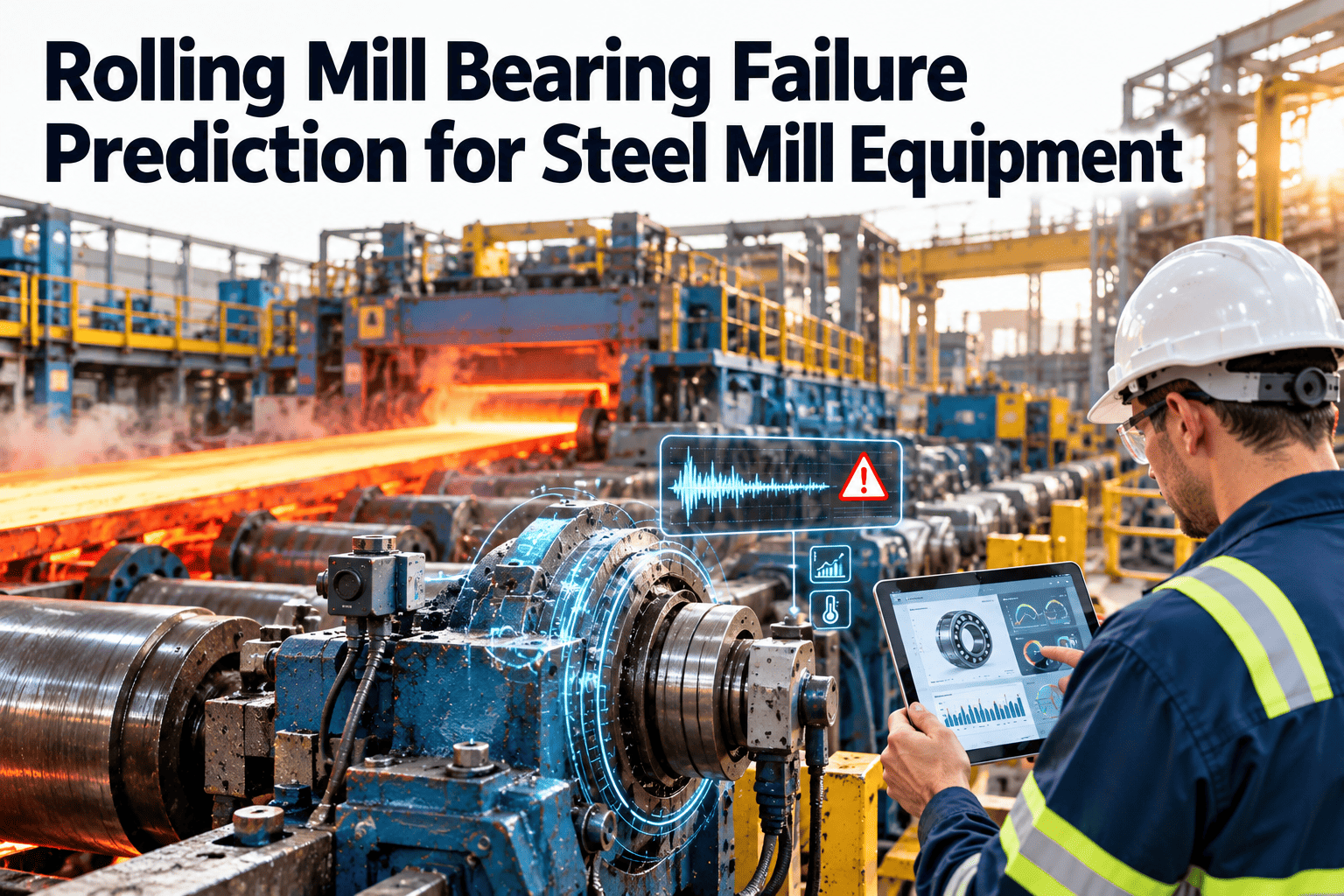
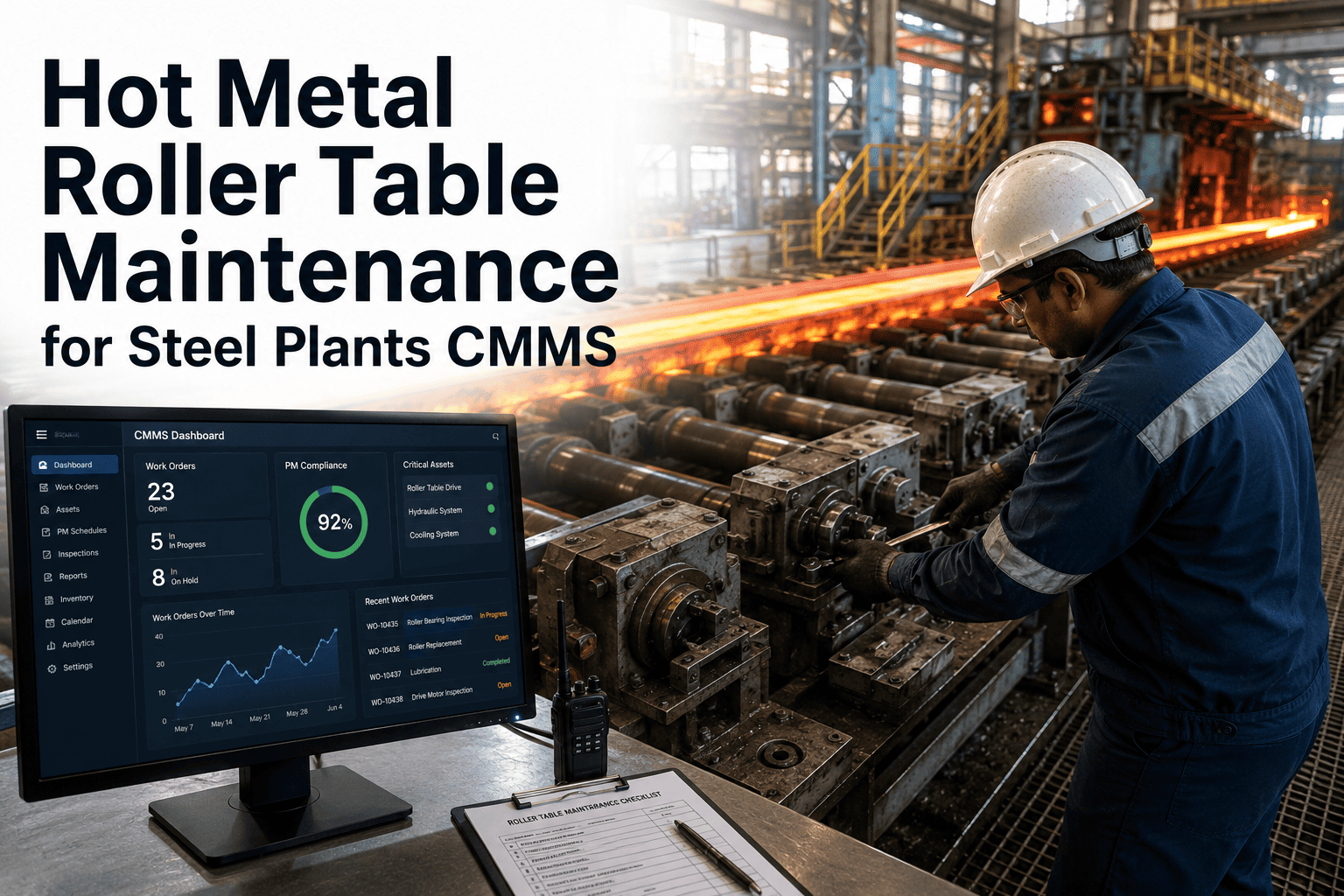
Table rollers are the highest-frequency wear item in any plate or section mill. With hundreds of rollers across entry, exit, and transfer tables, bearing degradation is a constant background risk that compounds across shifts when it goes unmonitored. A CMMS changes the equation by creating a condition history for every roller — bearing temperature trend, lubrication service record, surface wear measurement, and coupling condition — so deterioration is visible weeks before it becomes a failure.
What Structured Roller Tracking Catches
Bearing temperature scanning identifies thermal exceedance 48 to 72 hours before mechanical failure — time enough to schedule replacement during the next planned roll change rather than stopping mid-campaign. Water seal integrity monitoring on bearing housings catches the ingress from descaling spray that is the second leading cause of early bearing failure, contaminating grease and accelerating raceway corrosion invisibly until the bearing seizes.
Roller surface profile measurements logged against nominal diameter flag when wear approaches the replacement threshold, preventing the dimensional tolerance issues that arise when worn rollers begin to mark hot slab undersides. Drive coupling misalignment detected through vibration measurements during normal operation identifies accelerated bearing loads before bearing life is consumed at 2 to 3 times the rated rate.
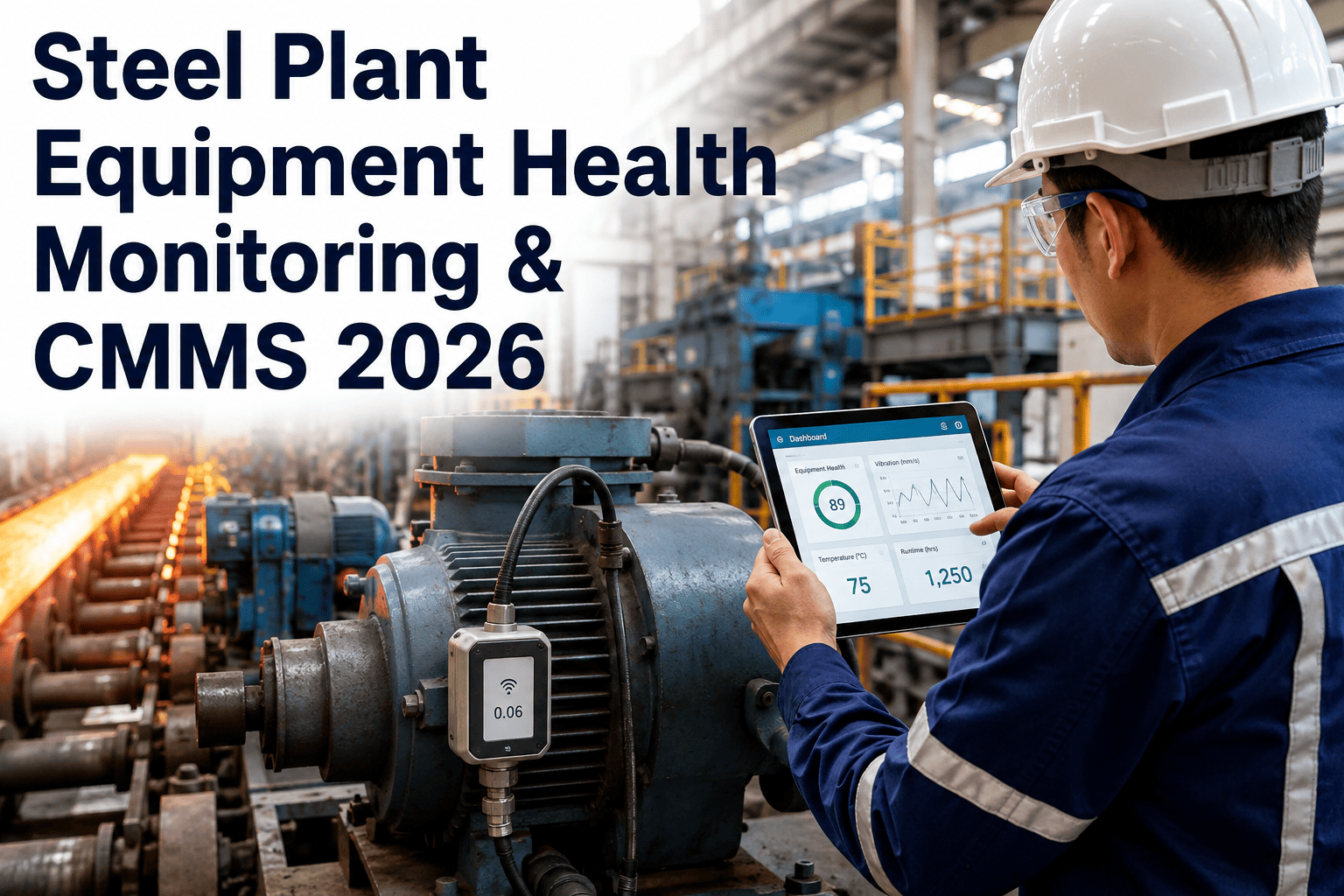
In Oxmaint, each roller is registered as an individual asset with its own condition history. Shift-by-shift thermal readings feed a trend chart that the maintenance engineer can review in 30 seconds rather than searching through paper logs. When a bearing approaches its temperature limit, Oxmaint automatically generates a work order for the next scheduled outage — with the roller location, bearing specification, and service history attached. Book a demo to see how rolling mill roller tracking is configured.
Descaler System PM and Nozzle Performance Tracking
Descaler performance is one of the most direct quality variables in plate and section mill production — yet it is one of the most poorly tracked. Blocked nozzles create surface scale patches that result in customer rejects and downstream processing issues. Pressure drops across the header signal pump or valve degradation before total failure. Because the consequences are quality-driven rather than mechanical, descaler degradation tends to accumulate silently until a quality hold forces investigation.
Nozzle Performance, Pump Condition, and Header Integrity
Descaler systems experience the most aggressive operating conditions in the mill — cycling from ambient to 180–350 bar operating pressure hundreds of times per shift, with nozzles handling scale-laden water at high velocity. Nozzle blockage builds gradually from scale particle accumulation in the orifice. A nozzle that produces 90% of nominal flow creates no obvious alarm — but the 10% coverage gap on every slab is creating the surface quality issue that arrives at the customer complaint three weeks later.
High-pressure pump condition tracking in the CMMS monitors plunger pulsation amplitude as an early indicator of valve seat erosion and plunger seal wear. Pulsation trending at 10% above baseline during normal operation typically gives a 4 to 6 week window for planned pump overhaul before pressure loss begins affecting descaling effectiveness. At 180 to 350 bar, even gradual pressure loss meaningfully affects scale removal on high-carbon and alloy grades.
Year-One Savings From CMMS Condition Tracking in Rolling Operations
A steel manufacturer connecting vibration sensors on critical rotating assets — including table roller drives and rolling mill equipment — to automated work orders in Oxmaint saved $1.5 million in year one from avoided emergency repairs alone. No new equipment was purchased. The savings came entirely from detecting bearing and mechanical degradation in advance, allowing scheduled intervention during planned windows rather than mid-campaign emergency stops.
Most Oxmaint customers in rolling operations report full platform payback within 3 to 6 months. Start your free account to begin structured condition tracking across your plate or section mill immediately.
Shear Blade Life Management and Condition Tracking
Shear blade condition is one of the most direct quality variables in plate and section mill finishing. Worn or chipped blades produce burrs, edge cracking, and dimensional non-conformance that fail customer specification. The challenge in most mills is that blade change scheduling is based on calendar intervals or technician judgement rather than actual measured blade condition — resulting in blades changed while still serviceable, and blades continued in service past their effective life producing quality failures on the final portion of a campaign.
Tonnes-Cut Tracking and Grade-Adjusted Life Management
Recording blade life in tonnes-cut against material grade in the CMMS creates the foundation for predictive blade change scheduling. Blade life on 700 MPa structural grades differs significantly from mild steel — a blade changed at a fixed 500-tonne interval is optimised for neither. When Oxmaint tracks actual tonnes-cut per blade set linked to production grade data, grade-adjusted change thresholds reduce premature changes by 15 to 20% while eliminating the quality failures that occur when worn blades continue past their effective life.
Blade clearance measurements logged against each blade position create a direct quality linkage — clearance exceeding 0.1 to 0.2 mm of material thickness causes rolled-over edges that fail edge quality specifications. Systematic clearance recording in the CMMS surfaces drift before it produces non-conforming product, rather than after the quality hold triggers investigation.
In Oxmaint, each blade set is registered with its own serial number, regrind history, and production log. Integration with Level 2 production data updates tonnes-cut counters automatically each shift. When a blade approaches its grade-adjusted threshold, Oxmaint generates a change-out work order for the next scheduled outage — with the blade specification, current clearance measurement, and regrind availability status attached. Sign up for Oxmaint to configure grade-based blade life tracking for your shear lines.
Structure Your Rolling Mill Maintenance in Oxmaint
Table roller tracking, descaler PM schedules, shear blade life management, and drive spindle condition monitoring — all configurable in a single platform built for heavy rolling operations.
Work Roll Drive Train and Cooling Bed Condition Monitoring
Work roll drive trains transmit the full rolling force to the material — in heavy plate mills, this can exceed 10,000 kN. Drive spindle and gear coupling wear accumulates slowly over hundreds of rolling hours, shows as gradually increasing vibration amplitude, and then fails suddenly when the backlash exceeds the coupling's load capacity. The characteristic feature of spindle failures is that they are entirely predictable from vibration trend data — and entirely unnecessary when a CMMS maintains that trend log across every roll change.
Spindle Vibration Trending and Coupling Backlash Tracking
Vibration measurements taken at each roll change and logged against spindle ID in Oxmaint create a trend record across 8 to 10 roll changes. Amplitude increasing by more than 15% over three consecutive measurements is a reliable 4 to 6 week warning of coupling wear approaching failure threshold — enough lead time to schedule spindle removal and refurbishment during a planned outage rather than an emergency callout during production.
Motor current trending provides a complementary signal — current drawing 5 to 8% above baseline at equivalent rolling load indicates mechanical resistance building in the drive train from coupling wear, spindle imbalance, or bearing degradation. Current trending in the CMMS often catches drive train deterioration before vibration amplitude has risen sufficiently to trigger vibration-based alerts.
Rack Wear, Chain Elongation, and Alignment Drift
Cooling bed failures rarely stop production immediately — but they cause camber, twist, and surface marking that generate customer quality complaints and increase straightening pass requirements. Rack tooth wear and drive chain elongation follow consistent degradation curves that CMMS condition tracking makes predictable. Rack tooth profile measurements indexed to total tonnage processed allow replacement scheduling during planned outages rather than emergency repair after rack tooth breakage disrupts production.
Drive chain elongation beyond 2% of nominal pitch causes skip-tooth engagement on sprockets, producing sudden shock loading and sprocket damage that creates a far more costly repair than the chain replacement itself. A CMMS that logs monthly chain elongation measurements against the replacement threshold provides the 4 to 8 week lead time needed to procure the correct chain specification for a specific bed configuration.
Failure Modes, Risk Levels, and PM Trigger Intervals for Oxmaint
Use this reference when configuring your rolling mill asset register and PM trigger intervals in Oxmaint.
| Component | Primary Failure Mode | CMMS Detection Method | Risk Level | Recommended PM Trigger |
|---|---|---|---|---|
| Table Roller Bearing | Fatigue spalling from grease starvation or water ingress | Thermal trend + vibration amplitude | Critical | Every shift thermal scan + trending alert |
| Descaler Nozzle | Scale buildup blockage causing coverage gaps | Spray pattern check + flow meter logging | High | Daily inspection with pass/fail per nozzle |
| Descaler Pump Plunger | Valve seat erosion and seal wear | Pressure trend + pulsation amplitude | Critical | Weekly pressure log with baseline comparison |
| Shear Blade | Edge chipping and clearance drift causing burrs | Gauge measurement + cut quality audit | High | Grade-adjusted tonnes-cut threshold |
| Drive Spindle | Coupling backlash causing imbalance and sudden failure | Vibration amplitude trend per roll change | Critical | Per roll change vibration measurement log |
| Cooling Bed Rack | Tooth wear causing product stepping and surface marking | Profile gauge measurement + tonnage log | Moderate | Weekly measurement + tonnage-based trigger |
| Drive Chain | Elongation causing skip-tooth engagement and sprocket damage | Pitch elongation measurement log | High | Monthly elongation measurement against limit |
| Trigger intervals based on heavy plate and section mill operating conditions. Adjust in Oxmaint for your specific mill configuration, production throughput, and material grade range. | ||||
How Oxmaint's CMMS Addresses Each Rolling Mill Maintenance Need
Oxmaint is built for the asset density, condition data volume, and production-linked triggering that rolling mill maintenance programmes require.
Table Roller Bearing Condition Tracking
Each roller is registered as an individual asset with its own thermal history, wear measurement log, lubrication service record, and condition threshold. Temperature trend charts update shift-by-shift. When a bearing approaches its alert threshold, Oxmaint auto-generates a replacement work order for the next planned outage — with asset location, bearing specification, and service history attached.
Descaler PM Schedule and Pressure Trend Logging
Daily nozzle inspection routes are configured in Oxmaint with per-nozzle pass/fail capture. Pressure trend data logged against each descaler head identifies gradual pump degradation before pressure loss affects surface quality. Blocked nozzle percentage per header is tracked on the maintenance dashboard, with cleaning work orders triggered when blockage exceeds configurable thresholds. Sign up free to configure descaler tracking.
Shear Blade Life Tracking by Tonnes-Cut
Oxmaint integrates with Level 2 production data to log tonnes-cut per blade set automatically, generating replacement recommendations based on grade-adjusted life thresholds. Blade serial numbers, regrind history, clearance measurements, and cut quality audit data are all tracked per position in the asset register. Book a demo to see grade-based blade tracking.
Drive Spindle Vibration Trend and Roll Change Integration
Vibration measurements taken at each roll change are logged against spindle ID in Oxmaint, building a trend record across multiple roll campaigns. Trend analysis provides the 4 to 6 week advance warning window needed to plan spindle removal and refurbishment during a scheduled outage rather than an emergency callout. Motor current trending provides a secondary condition signal for drive train degradation.
"Steel plants face the harshest reality — with rolling mills running 24/7, a single unexpected failure triggers catastrophic losses. Yet most plants still operate on reactive maintenance strategies developed decades ago. The ones that have moved to structured CMMS programmes are achieving 90% reductions in unplanned stops and 15% yield improvement."
Frequently Asked Questions
Build a Structured Maintenance Programme for Your Rolling Operations
Table roller tracking, descaler PM, shear blade life management, and drive spindle condition monitoring — configured in Oxmaint's CMMS for the asset density and production-linked triggering that plate and section mill maintenance requires.

.png)

