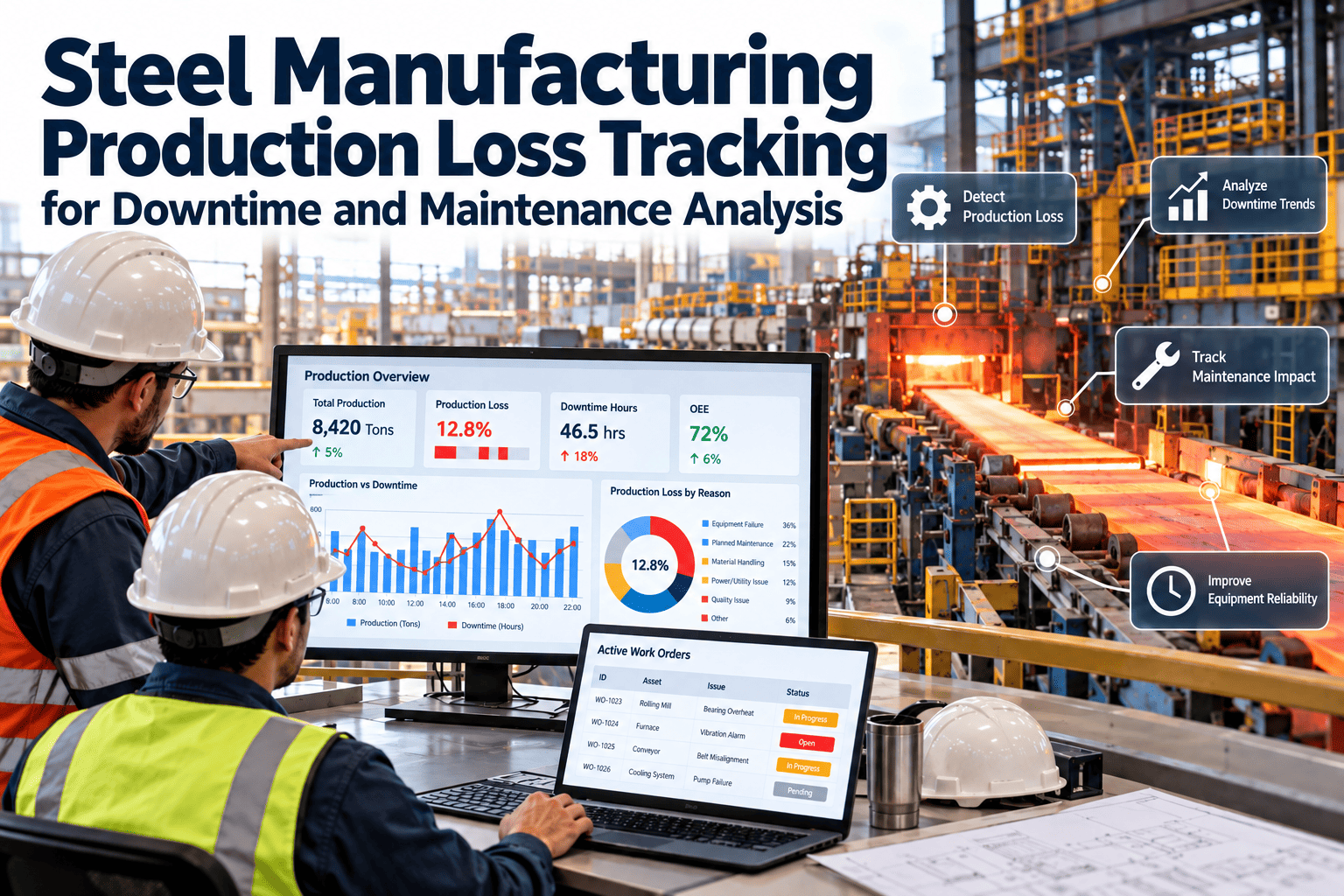
Your OEE score shows 72%—not terrible, but far from world-class. Production managers nod at the number, but here's the problem: OEE alone doesn't tell you if you're shipping defective products or burning money on rework. The Quality component buried inside that 72% could be at 60% while your team celebrates "good enough" availability numbers. Without tracking the right quality KPIs, you're flying blind on the metric that directly impacts customer satisfaction and profit margins.
Quality KPIs within OEE measure how effectively your manufacturing process produces defect-free products. While availability tells you if machines are running and performance shows if they're running fast enough, quality reveals the critical truth: are you making products customers will actually pay for? A factory running at 95% availability and 95% performance still achieves only 67% OEE if quality sits at 75%—meaning one in four products needs rework or ends up as scrap.
The Reality:
The Reality:
The 5 Essential Quality KPIs for OEE Excellence
Tracking quality within OEE requires more than just counting defects. World-class manufacturers monitor multiple interconnected metrics that reveal both current performance and emerging problems before they escalate.
Quality Rate (OEE Quality)
The core quality component of OEE calculation. Measures percentage of units that meet specifications without any rework or defects. A quality rate of 95% means 5 out of every 100 units fail inspection—costing you material, labor, and delivery delays.
First Pass Yield (FPY)
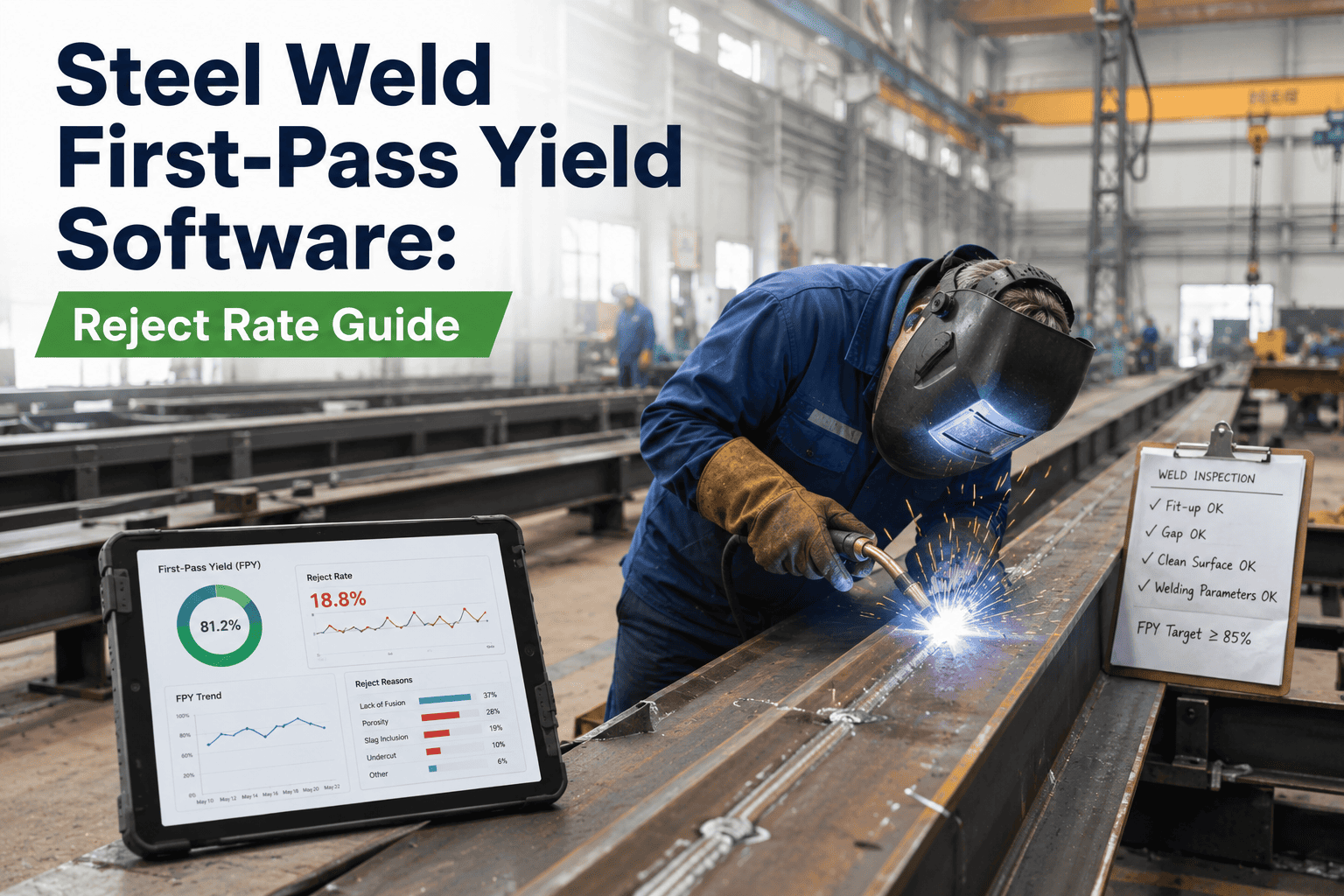
Measures products manufactured correctly on the first attempt without requiring rework. Unlike quality rate which may count reworked-then-passed units, FPY reveals true process capability. If 1000 units enter production and 920 pass initial inspection, FPY is 92%—even if you later fix the 80 defects.
Defect Rate
Inverse of quality rate, this KPI highlights the problem directly—how many units fail to meet standards. Tracking defect rate alongside defect categorization (dimensional, cosmetic, functional) enables targeted root cause analysis. A 4% defect rate means 40 defective units per 1000 produced.
Scrap Rate
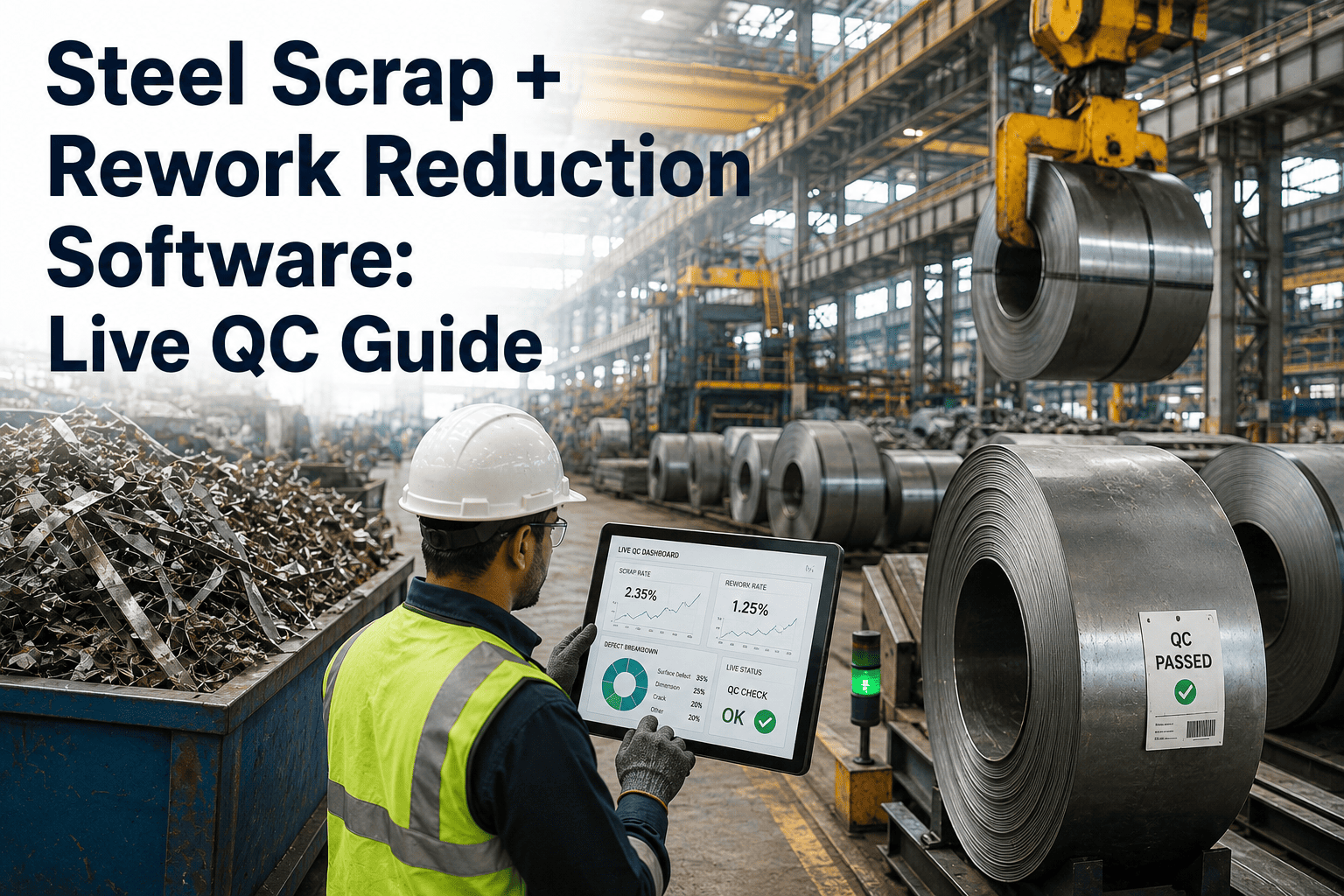
Percentage of units that cannot be salvaged and must be discarded entirely. Unlike rework, scrap represents complete loss—wasted materials, labor, and machine time with zero value recovery. Each scrapped unit directly reduces profit margin and indicates serious process failures.
Cost of Quality (COQ)
Quantifies total financial impact of quality issues. Includes material waste, labor hours for rework, inspection time, and delayed deliveries. A production line scrapping $500 in materials daily plus 10 labor hours for rework at $30/hour equals $800 daily COQ—$292,000 annually.
How Quality KPIs Impact Overall OEE Performance
OEE is calculated by multiplying Availability × Performance × Quality. This multiplicative relationship means poor quality performance dramatically compounds losses from availability or performance issues.
Scenario A: Ignoring Quality
Annual Impact: With $10M annual production capacity, 40% loss equals $4M in unrealized revenue—mostly from quality failures requiring rework and scrap.
Scenario B: Quality Excellence
Annual Impact: Same availability and performance, but 28% quality improvement drives OEE from 59.9% to 83.8%—recovering $2.39M in production value annually.
Common Quality KPI Mistakes That Kill Improvement Efforts
Even experienced operations teams fall into quality measurement traps that obscure real problems and prevent meaningful progress.
Counting Reworked Units as "Good"
The Error: Including units that required rework in quality rate calculation because they eventually passed inspection.
The Impact: Quality rate shows 95% while first pass yield sits at 78%. You're masking massive rework costs—every reworked unit consumes double the labor and delays production flow.
The Fix: Track both quality rate AND first pass yield. Quality rate measures final output, FPY measures process capability. Monitor FPY to eliminate root causes instead of accepting rework as normal.
Measuring Quality Only at Final Inspection
The Error: Waiting until products complete entire production process before quality checks, losing visibility into which process steps generate defects.
The Impact: A defect created at step 2 goes undetected until step 8. You've wasted materials and processing time on six additional steps before discovering the problem. Root cause analysis becomes guesswork.
The Fix: Implement in-process quality checks at critical control points. Track defect rates by production stage to pinpoint exactly where failures occur. Real-time monitoring systems enable immediate detection and response.
No Defect Categorization
The Error: Recording defects as simple pass/fail without categorizing defect types (dimensional, cosmetic, functional, material, assembly).
The Impact: You know defect rate is 6% but have no idea what's actually wrong. Is it measurement variance? Material quality? Operator error? Without categories, you can't prioritize improvements or measure intervention effectiveness.
The Fix: Implement standardized defect codes linked to specific failure modes. Pareto analysis of defect categories reveals the vital few issues driving most quality losses—focus fixes there first.
Ignoring Borderline Acceptable Units
The Error: Counting units that barely pass specifications as equivalent to perfect units in quality calculations.
The Impact: Process drift goes undetected. Today's borderline passes become tomorrow's failures. By the time quality rate drops, you're producing significant scrap and facing customer complaints.
The Fix: Track percentage of units within tighter internal specifications (e.g., ±0.001" instead of ±0.003" tolerance). Use statistical process control to detect drift before defects occur.
Implementing Quality KPI Tracking: Step-by-Step
Effective quality monitoring requires systematic data collection, clear accountability, and closed-loop corrective action. Here's the proven implementation path.
Define Quality Standards
Establish clear specifications for what constitutes a "good" unit versus defect versus scrap. Create visual work instructions showing acceptable vs unacceptable variations. Ensure every operator understands criteria—90% inter-rater reliability minimum when independently judging same units.
Establish Data Collection Points
Identify critical inspection points throughout production flow—not just final inspection. Determine sampling frequency (100% inspection vs statistical sampling) based on process capability and risk. For high-speed lines, automated inspection (vision systems, sensors) enables 100% coverage without slowing production.
Configure Real-Time Tracking
Deploy digital systems that capture defect data instantly at production point. Operators log defects via touchscreen, barcode scan, or automatic sensor detection. Data flows immediately to dashboards visible to production team—no end-of-shift manual tallying or spreadsheet delays.
Link Quality to Corrective Action
Establish trigger thresholds (e.g., FPY drops below 90% or 3 consecutive defects of same type) that automatically generate alerts and work orders. Quality issues must drive investigation and documented fixes—not just awareness. Track time-to-resolution as secondary KPI.
Quality KPI Benchmarks by Industry
Target quality performance varies by industry based on product complexity, regulatory requirements, and customer expectations. Use these benchmarks to set realistic yet ambitious goals.
| Industry | Quality Rate | First Pass Yield | Scrap Rate | Key Drivers |
|---|---|---|---|---|
| Pharmaceutical | 99.5-100% | 98-100% | <0.5% | FDA compliance, patient safety, zero tolerance for contamination |
| Automotive | 98-99.5% | 95-98% | <1% | High volume, JIT delivery, warranty cost exposure |
| Electronics | 97-99% | 92-96% | 1-2% | Complex assembly, miniaturization, functional testing critical |
| Food & Beverage | 96-98% | 93-96% | 2-3% | Perishability, contamination risk, labeling accuracy, fill weight |
| Aerospace | 99-100% | 97-99% | <0.5% | Safety criticality, traceability requirements, material cost |
| Consumer Packaging | 94-97% | 90-94% | 3-5% | High speed, aesthetic quality, retail presentation standards |
Track Quality KPIs That Drive Real Improvement
Stop guessing where quality problems come from. Oxmaint's intelligent quality tracking links defects to root causes, automatically triggers corrective actions, and proves ROI from your improvement initiatives.
Advanced Quality Metrics for Continuous Improvement
Once basic quality KPIs stabilize above 95%, mature operations add sophisticated metrics that predict problems before they occur and optimize total cost of quality.
Process Capability Indices (Cp/Cpk)
Measures how well your process performs relative to specification limits. Cp compares process spread to spec width; Cpk accounts for process centering. Cpk ≥ 1.33 indicates capable process; below 1.0 means defects are statistically inevitable even when everything runs "normally."
Defects Per Million Opportunities (DPMO)
Used in Six Sigma programs to normalize defect rates across different complexity products. Calculates total defects divided by (units produced × opportunities for defects per unit) × 1,000,000. Enables apples-to-apples comparison between simple 3-component assembly and complex 50-component product.
Yield Loss Pareto
Breaks down total quality losses by category, ranked by impact. Reveals that fixing top 3 defect types recovers 70% of quality losses. Focuses improvement resources on highest-ROI opportunities instead of spreading effort across all issues equally.
Customer Escape Rate
Percentage of defects that pass internal inspection but fail at customer site. The most expensive quality failures—already incurred full production cost plus shipping, now adding warranty/returns/reputation damage. Target: <0.1% of shipped units.
Integrating Quality KPIs with Maintenance Strategy
Quality performance directly correlates with equipment condition. Preventive and predictive maintenance programs that monitor quality KPIs alongside mechanical health achieve superior results.
Condition-Based Quality Triggers
Monitor quality metrics as leading indicators of equipment degradation. When FPY drops 2-3% or specific defect types increase, trigger maintenance inspection before catastrophic failure. Bearing wear shows up as dimensional variation before seizure; cutting tool wear appears as surface finish defects before breakage.
Maintenance Impact Validation
Track quality KPIs before/after every PM and corrective maintenance action. Did replacing that worn guide improve FPY from 89% to 96%? Prove maintenance ROI by quantifying quality improvements. Prioritize high-impact maintenance activities based on demonstrated quality effect.
Predictive Quality Analytics
Machine learning models correlate equipment sensor data (vibration, temperature, pressure) with quality outcomes. Identify subtle equipment condition changes that precede quality degradation by hours or days. Intervene before defects occur rather than reacting after quality drops.
Frequently Asked Questions
What's the difference between Quality Rate in OEE and First Pass Yield?
Quality Rate counts all units that eventually pass inspection—including those that required rework. If you produce 1000 units, 850 pass first time, 100 fail but are successfully reworked, and 50 are scrapped, Quality Rate = 95% (850+100)/1000. First Pass Yield = 85% (only the 850 that passed initially). FPY reveals true process capability; Quality Rate shows final output. Track both.
Should I include rework time in OEE performance calculation or quality calculation?
Rework impacts both Performance (slows effective production rate) and Quality (unit didn't pass first time). Standard OEE methodology: count reworked units in total production but not in good units for quality calculation. The performance loss from time spent reworking is captured in reduced throughput. Don't double-count the same loss in both factors.
How frequently should quality KPIs be reviewed?
Real-time monitoring for immediate response (alerts when FPY drops below threshold during shift). Daily review by production supervisors to identify trends. Weekly deep-dive with quality team for root cause analysis of persistent issues. Monthly executive review of quality costs and improvement initiatives. The key is layering: operators need instant feedback, leadership needs strategic view.
What quality KPI target should I set for a new product line?
Start with baseline measurement during ramp-up (first 2-4 weeks) to understand natural process capability. Set initial targets at 75th percentile of baseline performance—achievable but requires effort. As process matures, increase targets quarterly toward industry benchmarks (typically 95%+ FPY). New products need time to stabilize; don't set unrealistic targets that demoralize teams.
How do I prevent operators from gaming quality metrics?
Make quality KPIs informational, not punitive. Celebrate improvements, analyze failures as learning opportunities. Implement random audits of quality classifications—have supervisor independently judge 10-15 units per shift to verify accurate reporting. Link compensation to overall line performance (OEE including quality), not individual operator metrics. When operators trust that data drives support rather than punishment, gaming disappears.
Transform Quality Data Into Competitive Advantage
Oxmaint's intelligent quality tracking doesn't just measure defects—it predicts them, prevents them, and proves the ROI from every improvement you make. Real-time dashboards, automated root cause analysis, and seamless CMMS integration turn quality KPIs into your most powerful profit driver.