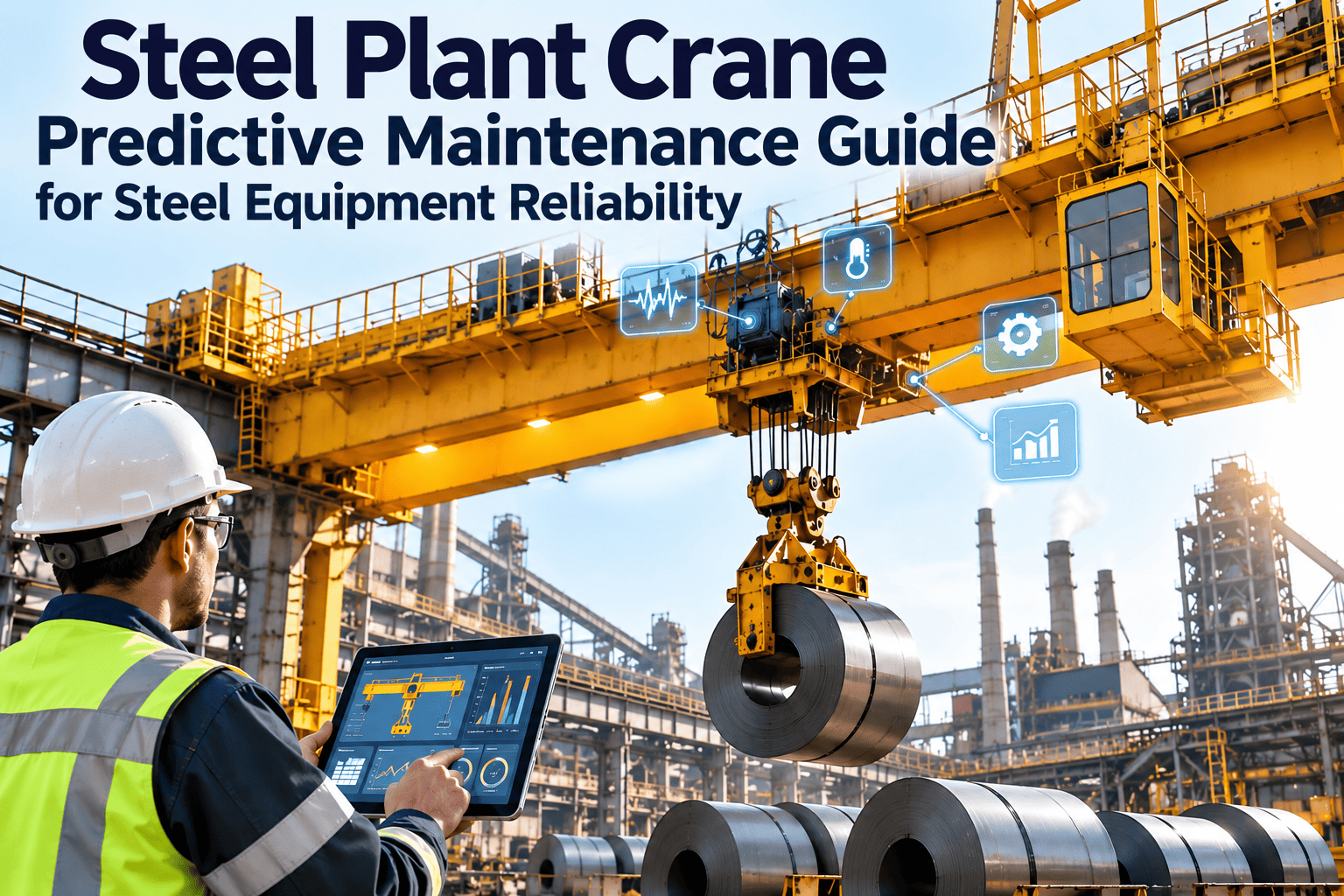
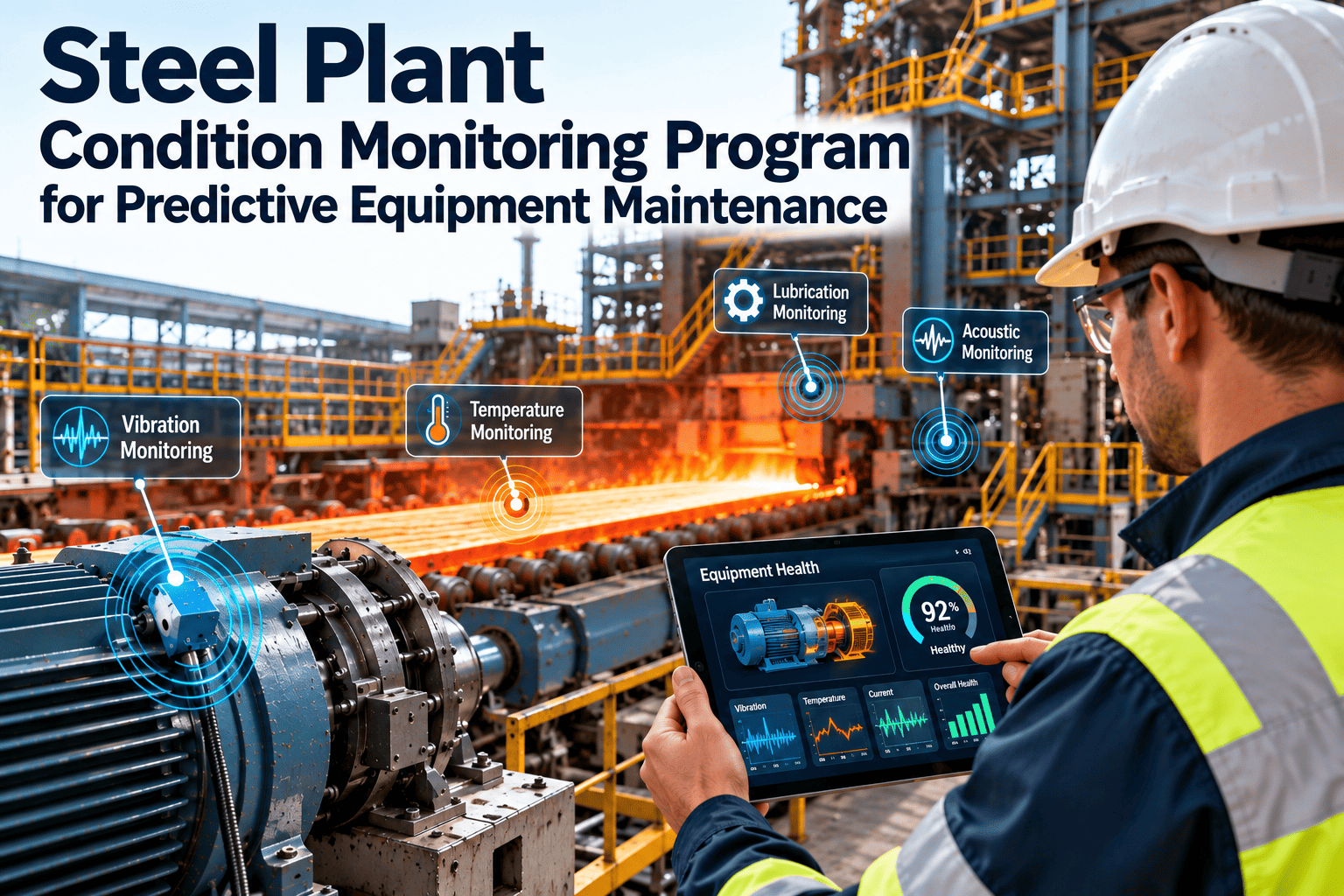
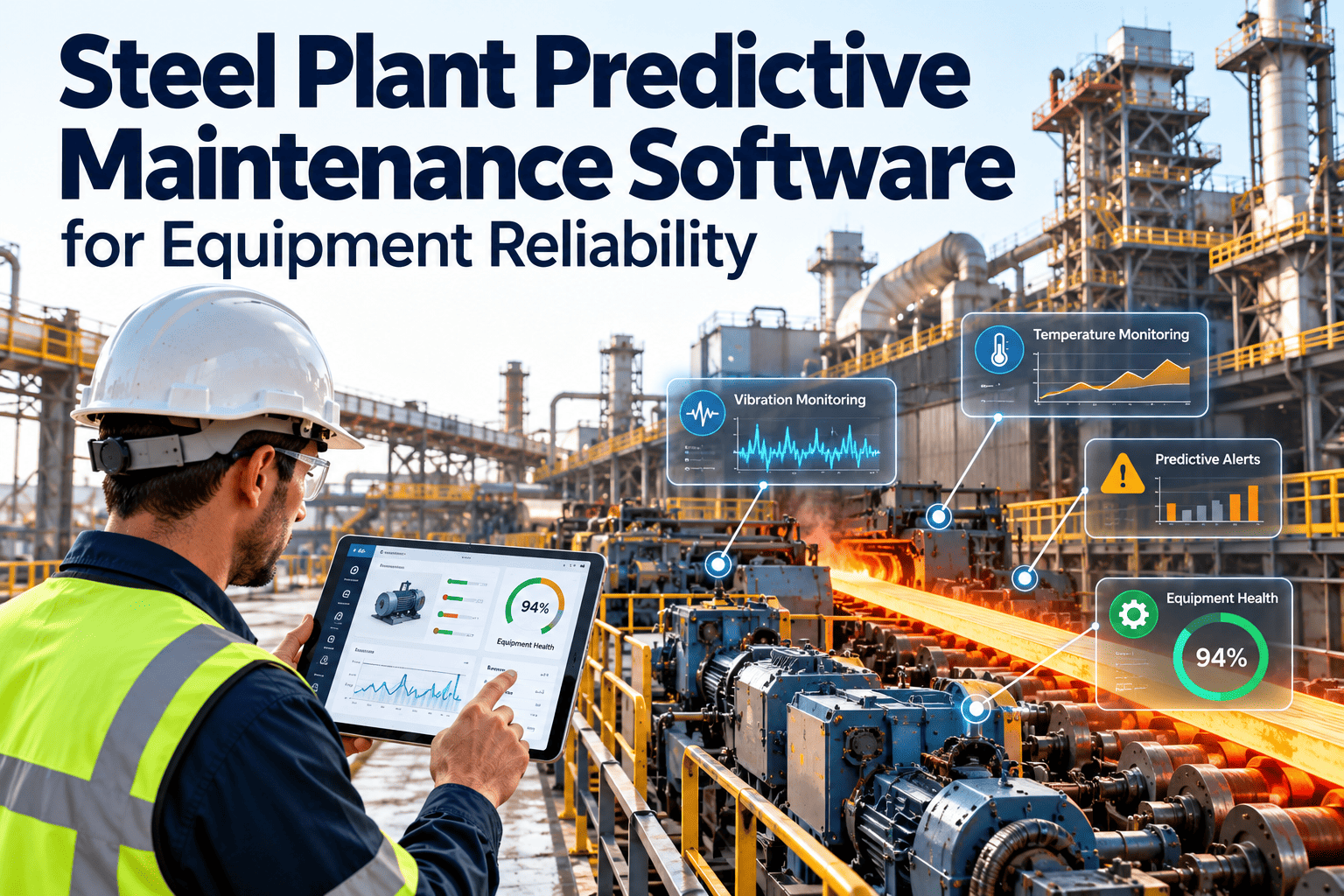
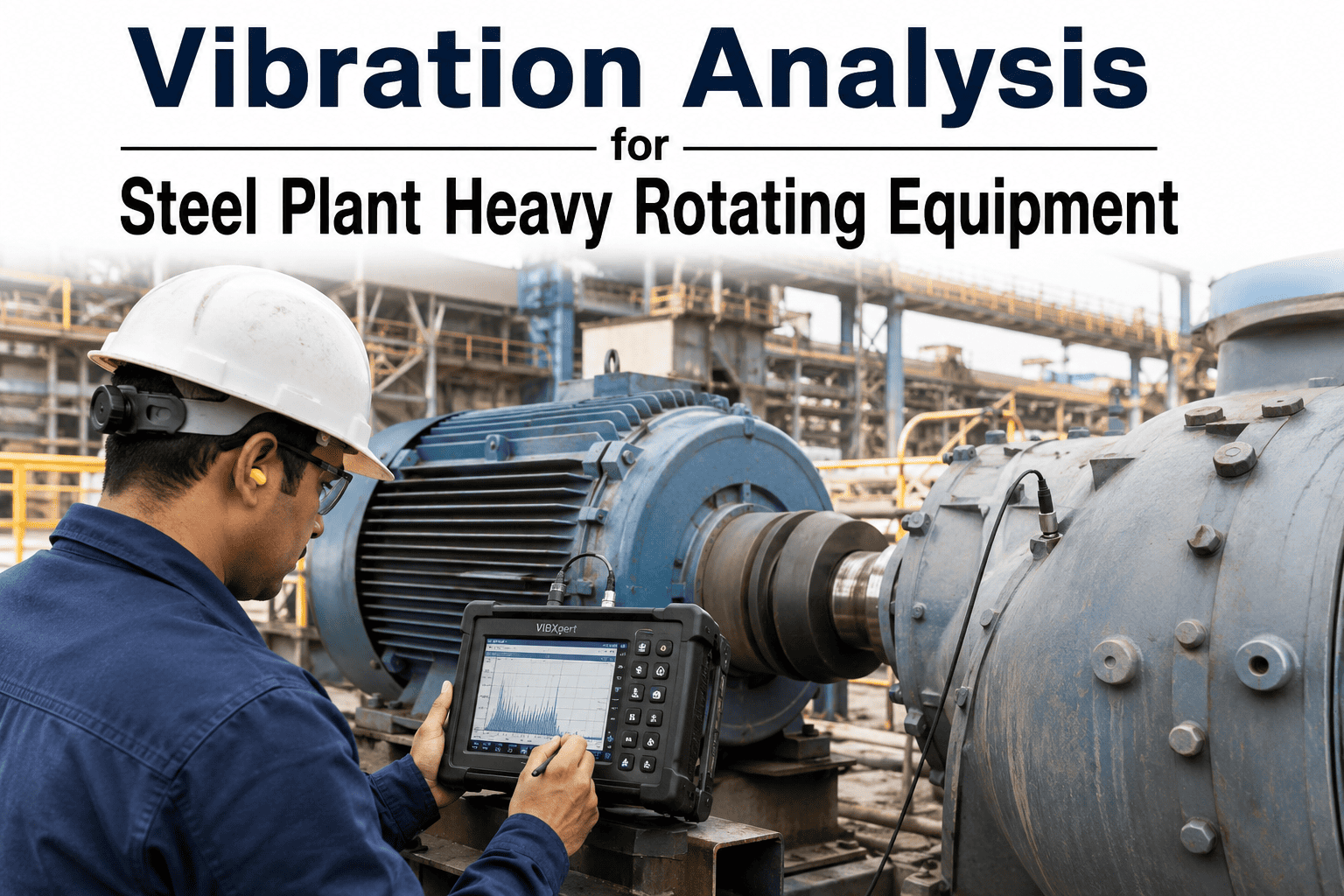
In the high-intensity environment of a modern steel plant, the failure of a single critical asset—such as a blast furnace blower, a multi-megawatt mill drive, or a high-capacity exhaust fan—can trigger a cascade of downtime costing upwards of $50,000 per hour. Relying on traditional preventive maintenance (time-based) often leads to over-servicing healthy equipment or missing "P-F interval" windows for complex fatigue failures. In 2026, the gap between mobile-first and desktop CMMS platforms has never mattered more to manufacturing plants. As technicians spend 80% of their shift on the floor — not at a desk — the best CMMS mobile app for manufacturing is no longer a convenience but a competitive differentiator. The solution is AI-Driven Predictive Maintenance (PdM), which shifts the strategy from "Fix-on-Fail" to "Predict-and-Prevent." By integrating high-frequency vibration sensors, oil chemistry analytics, and motor current signature analysis (MCSA) directly into a mobile-first CMMS, reliability engineers can identify sub-audible anomalies weeks before they become catastrophic. OxMaint provides the intelligent routing needed to turn AI insights into floor-ready work orders instantly. Sign Up Free to start your AI PdM journey. Book an AI Reliability Strategy Session
AI Predictive Maintenance for Steel Plant Critical Rotating Equipment
Mill Drive Vibration Analysis · Blower RUL Estimation · Motor Current Signature Analysis (MCSA) · Oil Chemistry AI Models · Gearbox Fatigue Detection · Sensor-to-CMMS Work Order Routing
Why Manufacturing Plants Are Going Mobile-First in 2026
The Shift from Desktop to Mobile CMMS in Industrial Maintenance
AI Failure Mode Detection: Critical Assets in Focus
The most expensive assets in a steel mill—the furnace blowers and rolling mill drives—are subject to extreme torque, vibration, and thermal stress. AI predictive maintenance moves beyond simple threshold alerts by analyzing the relationship between multiple data points to detect "fingerprints" of failure.
Blast Furnace Blowers
Vibration & Surge Analysis
AI detects surge precursors and impeller unbalance at high RPMs, preventing catastrophic case breach and mill-wide gas loss.
Rolling Mill Drives
Gearbox & Torque AI
Monitors gear mesh frequencies to detect tooth pitting and misalignment before they impact strip quality or cause drive-train lockup.
High-Voltage Motors
MCSA & Thermal AI
Analyzes current signatures to detect broken rotor bars and winding insulation breakdown without requiring a physical teardown.
Closed-Loop Reliability: Sensor to CMMS Routing
An AI insight is worthless if it sits on a dashboard. OxMaint bridges the gap between the "Digital Twin" and the "Physical Technician" by automating the work order lifecycle based on sensor data. This guide breaks down real-world performance differences between mobile CMMS and desktop CMMS.
Anomaly Detection (Edge/Cloud)
AI models process vibration and current data in real-time. If an 'Incipient Fault' is detected, a priority alert is triggered.
Automated WO Generation
OxMaint instantly creates a Work Order, attaches the diagnostic spectral data, and pulls the required spares from inventory.
Mobile Execution & Feedback
The technician receives a push notification on their rugged tablet. They perform the repair, log the findings, and the AI 'learns' from the confirmation.
CMMS Mobile App vs Desktop: Head-to-Head Comparison
Feature-by-Feature Breakdown for Manufacturing Plant Maintenance Teams
| Capability | Mobile CMMS App | Desktop CMMS | Impact for Manufacturing |
|---|---|---|---|
| Work Order Creation Speed | On-floor, real-time | Office/terminal-bound | Mobile reduces lag from fault detection to repair start |
| Offline Functionality | Full offline mode | Requires network connection | Critical for basement plant rooms and signal-dead zones |
| Technician Adoption Rate | High — familiar UX | Moderate — training required | Faster rollout, lower resistance from floor-level staff |
| Photo/Video Documentation | Instant capture | Manual upload only | Richer fault records; faster root cause analysis |
| QR Code Asset Scanning | Native camera scan | Not practical | Eliminates manual asset ID errors at point of service |
| Push Notifications / Alerts | Instant delivery | Email / dashboard only | Reduces response time for critical machine faults |
| Dashboard & Reporting | Summary view | Full analytics suite | Desktop preferred for management KPI reviews |
| Multi-Site Portfolio View | Available on leading platforms | Standard | Desktop preferred for portfolio-level oversight |
Failure Mode Matrix: Rotating Equipment Reliability
Effective AI PdM requires a library of known failure modes to train the models. Below is the reliability matrix for critical rotating assets in a steel environment.
| Asset Type | Primary Sensor | AI Detection Target | Impact of Failure | CMMS Trigger |
|---|---|---|---|---|
| Blast Furnace Blower | Tri-axial Accel | Incipient Surge / Impeller Crack | CATASTROPHIC | Emergency Inspection |
| Hot Mill Drive Motor | VFD Current / Temp | Stator Short / Rotor Bar Gap | MAJOR | Planned Refurbishment |
| Finish Stand Gearbox | Oil Particle / Vib | Micro-pitting / Misalignment | MODERATE | Lubrication Flush |
| Baghouse Fan | Sonic / Vibration | Bearing Fatigue / Loose Mount | MAJOR | Bearing Replacement |
| Hydraulic Pump Motor | Current / Pressure | Cavitation / Internal Leak | MODERATE | System Tuning |
Key CMMS Mobile App Features Manufacturing Plants Need in 2026
What Separates a Functional Mobile CMMS from a Floor-Ready Maintenance Platform
Predict Failure. Protect Uptime. Scale Your Mill's Intelligence.
Stop waiting for your critical assets to tell you they are broken. OxMaint provides the AI-powered infrastructure to detect incipient faults in blowers, drives, and motors before they become multi-million dollar problems. Integrate your sensors with the world's most advanced mobile CMMS today. Book a Predictive Reliability Demo
CMMS Mobile App ROI: What Manufacturing Plants Measure
Quantifying the Financial Return of Mobile Maintenance Management
"We were losing nearly $1M annually to unplanned mill drive failures. Our old CMMS was just a digital filing cabinet—it couldn't 'talk' to our sensors. Since moving to OxMaint's AI PdM module, we've integrated over 400 vibration points on our Cold Mill. Last quarter, the AI flagged a sub-audible bearing defect in Drive Motor 04 three weeks before our manual inspection was scheduled. We performed a planned swap during a 4-hour window instead of suffering a 48-hour unplanned outage. The ROI was clear in that single event alone. The mobile integration is the key—my guys get the spectral data right on their tablets at the machine side."
Frequently Asked Questions
What critical equipment in a steel mill benefits most from AI PdM?
Blast furnace blowers, hot/cold rolling mill drives, exhaust fans, and high-voltage motors are the primary candidates.
These assets have high failure costs and clear vibration/current 'fingerprints' that AI can analyze to predict remaining useful life.
How does OxMaint integrate with existing vibration or oil sensors?
OxMaint uses open APIs to ingest data from SCADA historians (like PI) or direct wireless IoT sensor clouds.
The AI then processes this data against historical failure models to trigger automated work orders and floor-level alerts.
Can AI detect gear mesh failures in mill drive gearboxes?
Yes, by analyzing spectral data at specific mesh frequencies, AI can detect incipient pitting, spalling, and misalignment.
This allows for 'Condition-Based Lubrication' or planned gear replacement before a catastrophic drivetrain lockup occurs.
What is Motor Current Signature Analysis (MCSA) and why does it matter?
MCSA analyzes electrical current to detect mechanical and electrical faults like broken rotor bars or air-gap eccentricity.
It is a non-invasive way to 'see' inside a multi-megawatt mill motor without requiring a physical teardown or offline testing.
How does AI improve the 'P-F Interval' for steel plant maintenance?
AI detects the 'Potential failure' point (P) much earlier in the cycle than manual human senses or simple threshold alarms.
This widens the P-F interval, giving the maintenance team more time to plan the 'Functional failure' (F) prevention repair.
Does the mobile app show the actual sensor data to the technician?
Yes, technicians can view real-time vibration spectral waves and trend lines directly on their rugged tablets at the machine.
This empowers them to verify the AI's findings and make informed decisions on the floor without returning to a reliability office.
Is AI PdM worth the investment for older steel mills?
Older mills often see the HIGHEST ROI because their aging assets are more prone to the 'wear-out' phase of the bathtub curve.
AI helps manage the reliability of these legacy machines, extending their useful life and preventing high-cost emergency rebuilds.
Can OxMaint's AI help with Baghouse emissions compliance?
Yes, by monitoring exhaust fan efficiency and pressure drop AI can predict filter bag failures before emissions exceed limits.
This keeps the mill in compliance with environmental regulations and avoids costly EPA fines for particulate discharge.