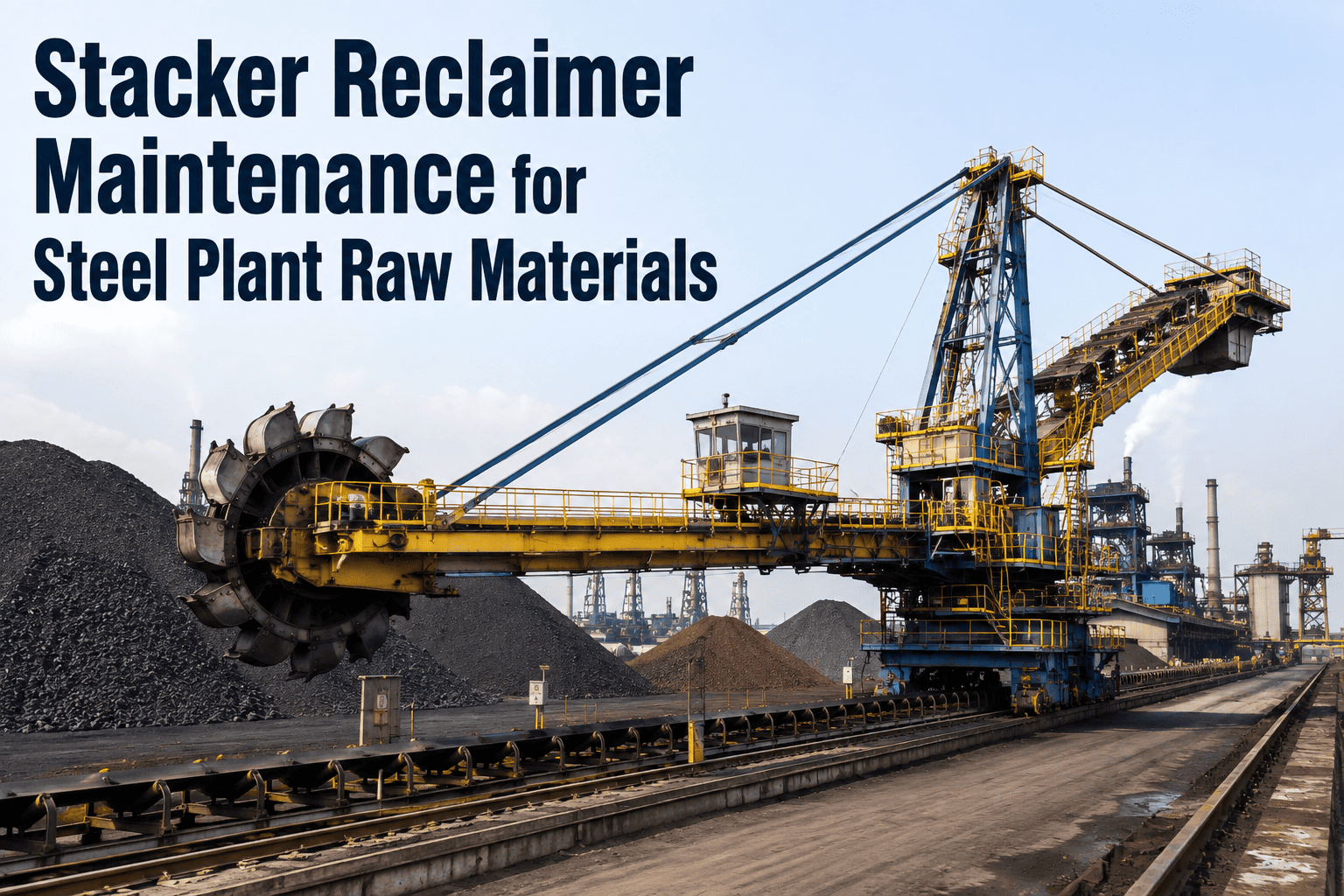
In a steel plant, the blast furnace and sinter plant are only as reliable as the raw material that reaches them. Crushers, feeders, stackers, reclaimers, conveyors, and transfer towers work in dust, moisture, and abrasive ore, often with long stretches between planned stops. One blocked chute or torn belt can starve sinter strands and disturb the whole burden plan. Maintenance teams need a way to rank this equipment by criticality and match each asset to the right strategy. This guide shows how, and how a steel plant maintenance software workflow keeps that plan running day to day.
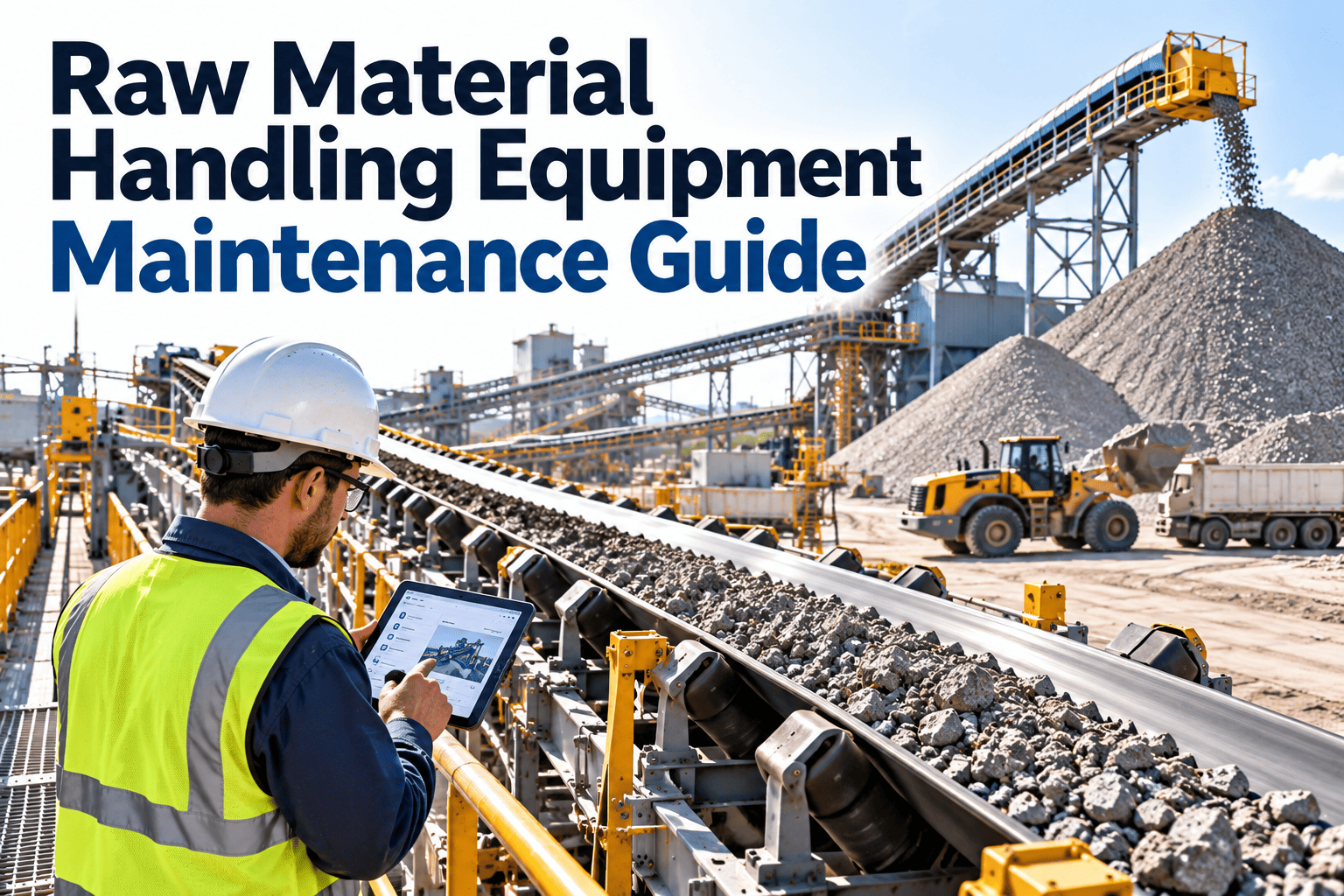
Raw Material Handling Equipment Maintenance Guide
Manage crushers, feeders, stackers, reclaimers, conveyors, and transfer systems with criticality-based maintenance built for steel manufacturing and sinter plant supply.
Why Material Handling Maintenance Is Different
Unlike a rolling mill, a handling system is a long chain with many moving parts spread over a wide area, and any weak link stops everything after it.
- Assets are spread across yards, tunnels, and towers, so inspection rounds take real time.
- Iron ore, coal, coke, limestone, dolomite, and fluxes wear equipment at very different rates.
- Rain, wet ore, and fine dust change conditions by season and by supplier.
- Shutdowns are short, so every job must be planned with parts and people ready.
What the line stops actually cost
The direct repair is rarely the big cost. Starved sinter strands, unstable blend, and emergency labor drive most of the impact.
- Reduced sinter output and unstable chemistry when blend feed falters.
- Spillage cleanup and safety exposure after belt or chute failures.
- Rushed repairs done without proper isolation or root cause work.
Criticality-Based Maintenance: Rank Before You Schedule
Treating every conveyor the same wastes effort. Rank each asset by what its failure does to sinter supply, then assign a strategy.
Questions that set the tier
- Does failure stop sinter or blast furnace feed within a shift?
- Is there a spare route, hopper buffer, or standby unit?
- How long does a repair take and are spares held on site?
- Does failure create a safety or environmental incident?
Equipment-by-Equipment Maintenance Focus
Each machine wears in its own way. Build tasks around the failure modes that actually occur.
| Equipment | Typical failure modes | Key inspection points | Strategy |
|---|---|---|---|
| Crushers | Liner wear, bearing heat, tramp metal damage, blocked discharge | Liner profile, setting, lubrication, drive belts and couplings | Wear tracking plus vibration checks |
| Feeders | Pan and liner wear, drive faults, bridging | Skirts, chain or plate wear, gearbox oil, hopper condition | Time-based PM, rounds |
| Belt conveyors | Belt tear, mistracking, idler seizure, pulley lagging loss | Idlers, belt edges, splices, scrapers, pull cords | Condition based plus scheduled rounds |
| Transfer chutes | Liner wear, blockages, spillage | Liner thickness, skirt seals, level switches | Thickness readings and shutdown relining |
| Stackers | Slew and luffing faults, structural cracks, cable problems | Slew bearing, wire ropes, hydraulics, travel drive | PM and structural inspection |
| Reclaimers | Bucket and wheel wear, drive gearbox faults, boom fatigue | Bucket teeth, gearbox oil, rail and wheel condition | Condition monitoring on drives |
Root Causes Behind Repeat Breakdowns
Most repeat stoppages trace back to a few habits, not bad luck.
The Conveyor Round That Prevents Most Surprises
A disciplined round, done on time and recorded, catches problems that sensors miss.
Rank Your Handling Assets and Schedule by Consequence
Set up asset criticality, inspection rounds, and work orders for every conveyor, crusher, and reclaimer in one system.
Condition-Based Methods That Fit Handling Equipment
Apply monitoring where it changes a decision, not everywhere.
Before and After: Moving From Rounds on Paper to Managed Work
- Paper rounds filed weeks later
- Liner wear judged by eye
- Spares found after the stop starts
- Repair history in individual notebooks
- Mobile rounds with photos and instant work orders
- Thickness trends set relining dates
- Spares linked to each asset and reserved for shutdowns
- Coded history reviewed for repeat failures
How Oxmaint Supports the Handling Maintenance Workflow
The software should mirror how the plant actually works, from yard to sinter feed.
| Need | Oxmaint capability |
|---|---|
| Know what matters most | Asset hierarchy from area to component with criticality ratings |
| Keep rounds consistent | Scheduled inspections and mobile checklists with photos |
| Act on findings | Work orders raised from inspections and assigned by trade |
| Prepare shutdowns | Scheduling of planned jobs with parts and labor listed |
| Hold the right spares | Inventory linked to assets with reorder levels |
| Prove compliance | Inspection and isolation records available for review |
| See the picture | Dashboards and reports on backlog, overdue work, and downtime causes |
Safety, Dust, and Compliance Records
Handling areas combine moving machinery, dust, and confined spaces, so records matter as much as repairs.
- Lockout and isolation steps attached to any job that needs access to belts, chutes, or crushers.
- Guard, pull cord, and emergency stop tests logged on a schedule.
- Dust suppression and extraction checks recorded to support environmental requirements.
- Confined space and work-at-height permits referenced from the work order.
- Coal and coke areas checked for ignition sources and dust accumulation per site procedures.
Measures That Show the Plan Is Working
A Practical Rollout Plan
- List every asset from unloading to sinter feed and place it in a hierarchy.
- Rate criticality using the tier questions above.
- Write inspection rounds for Tier A first, then Tier B.
- Attach critical spares and wear parts to each asset.
- Define failure codes for cause, component, and location.
- Review delay causes monthly and adjust intervals.
Frequently Asked Questions
How do I decide which handling equipment is critical?
Which handling assets benefit from condition monitoring?
Can inspection rounds be managed on mobile?
How should liner wear be planned?
Can this work for a plant with several yards?
Keep Sinter Feed Steady With a Maintenance Plan You Can Follow
Bring rounds, work orders, spares, and downtime history for your raw material handling equipment into one workflow.