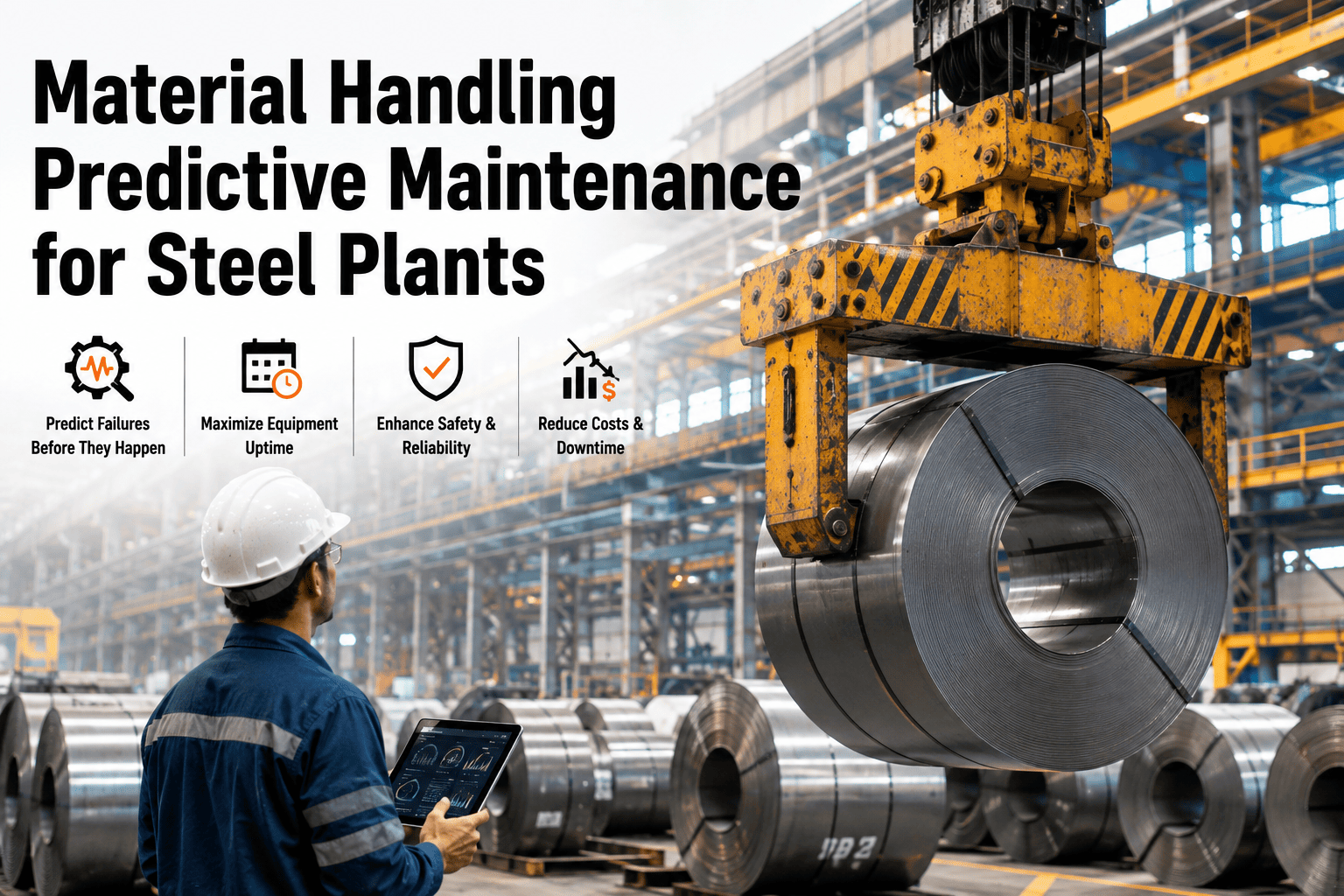
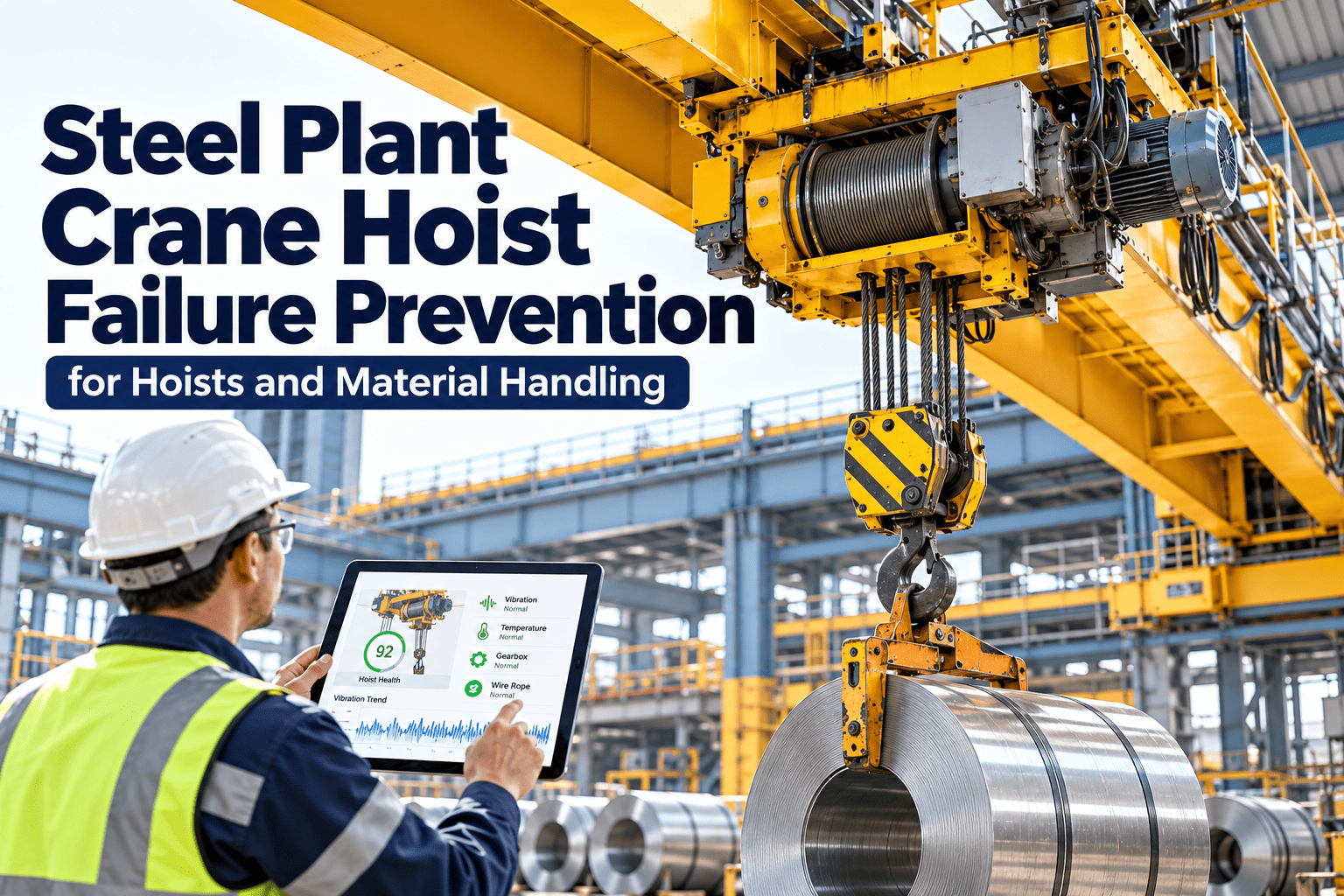
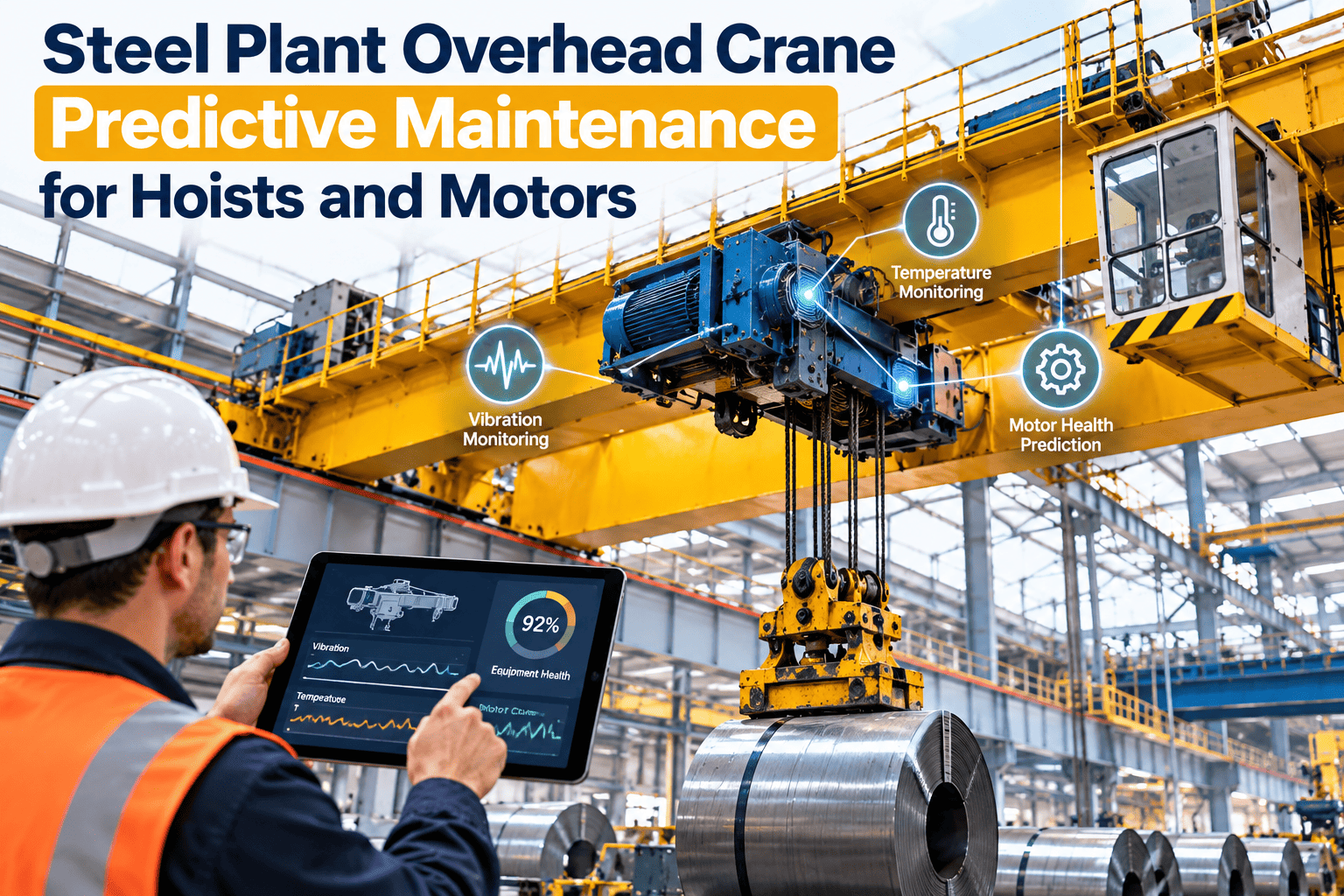
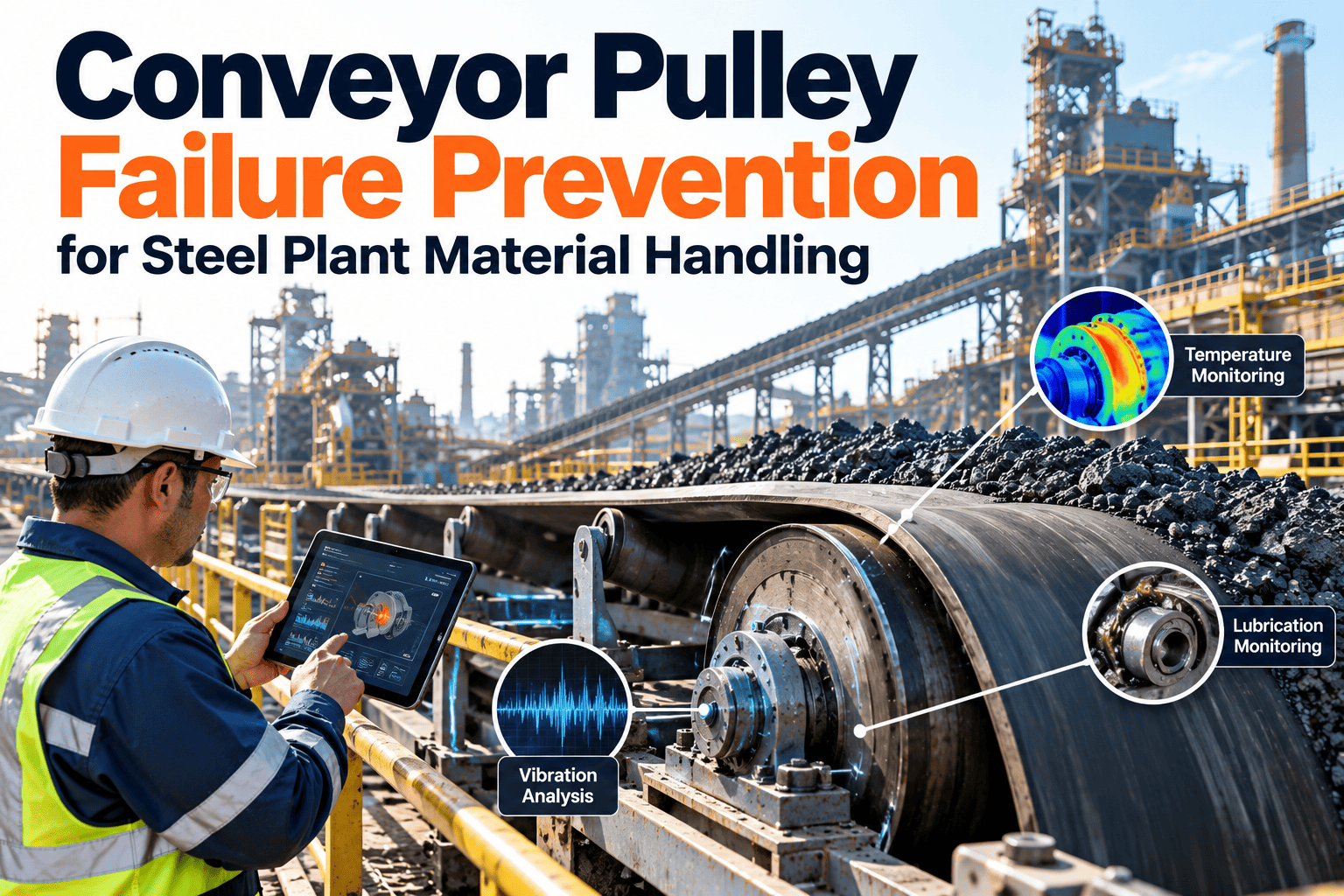
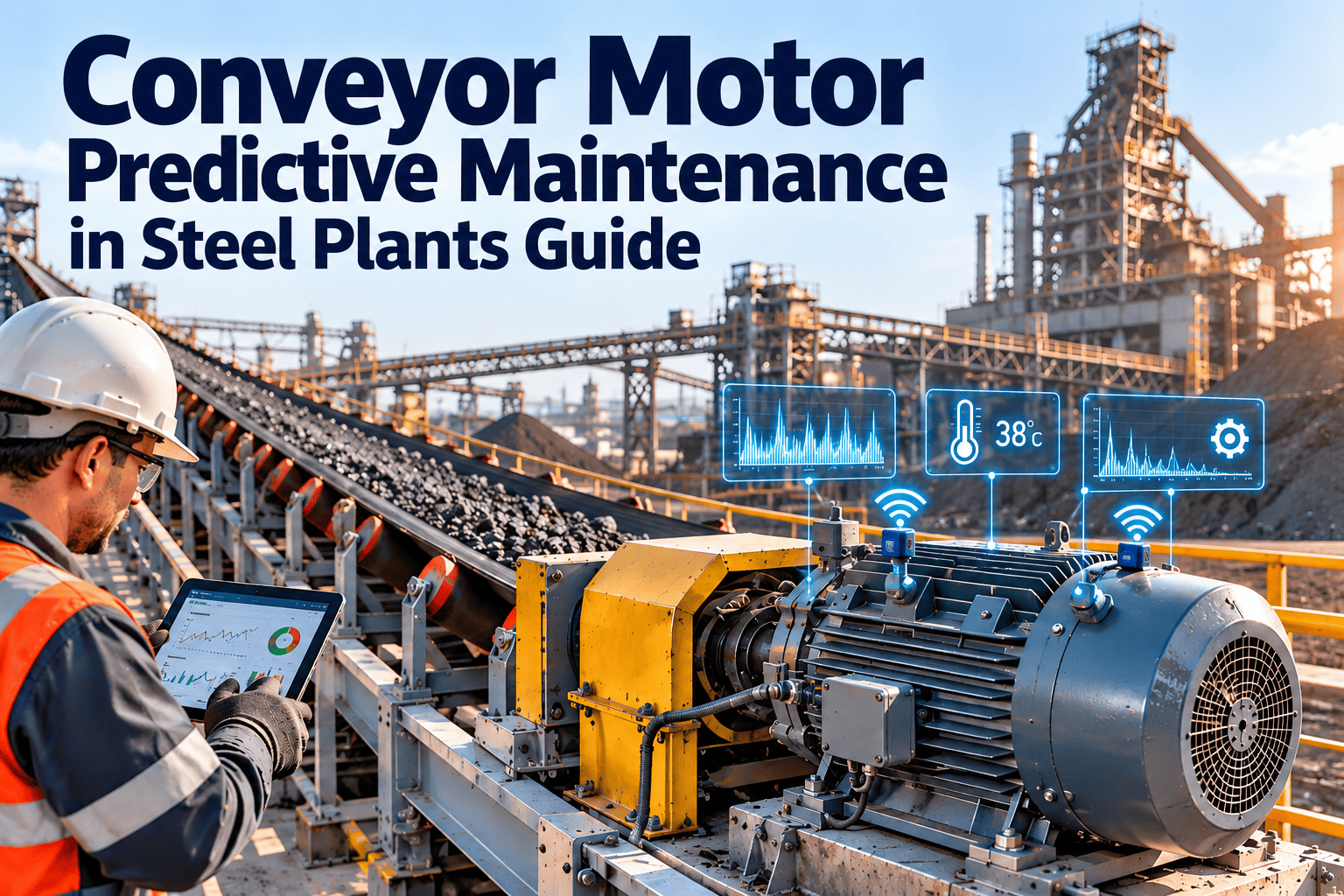
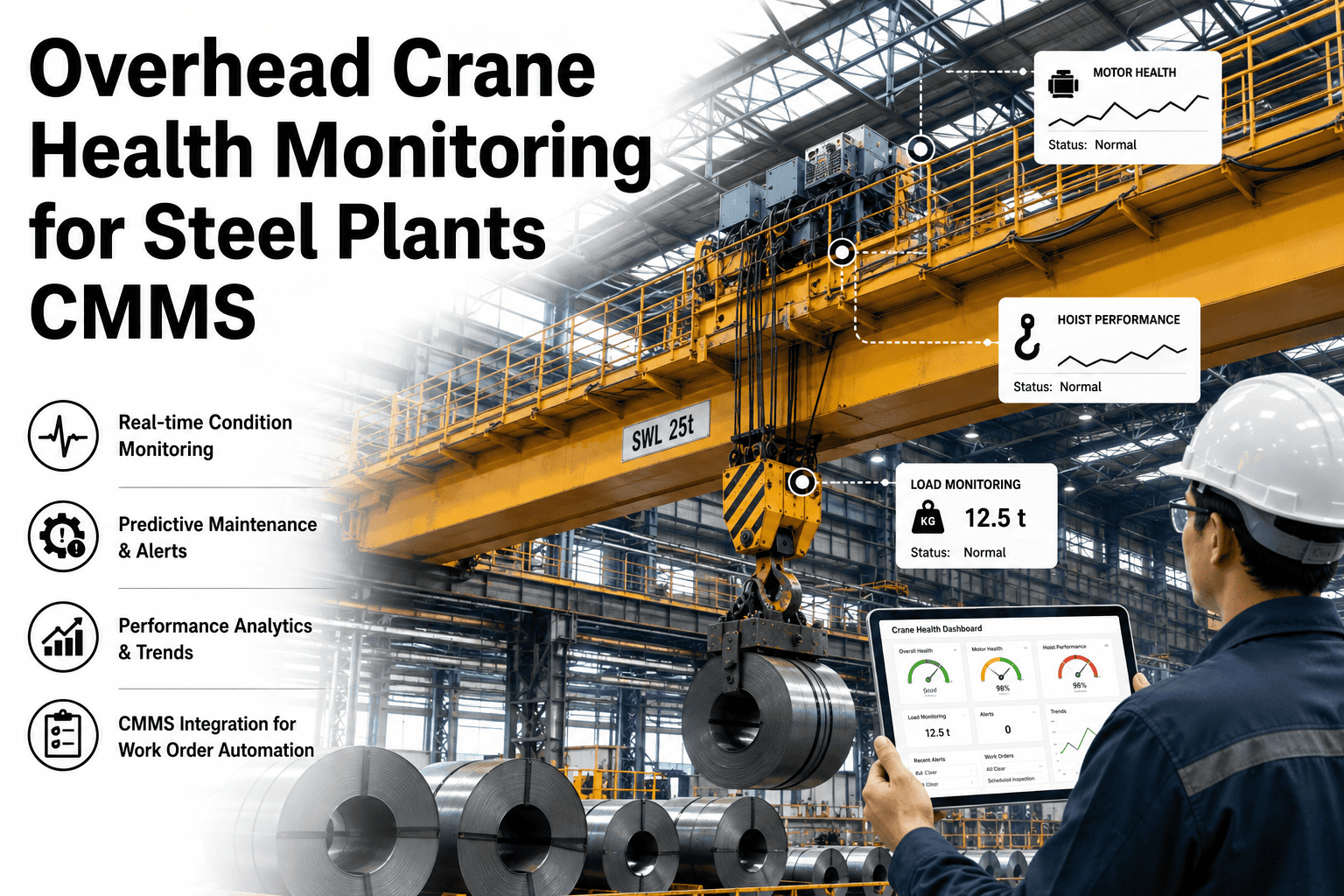
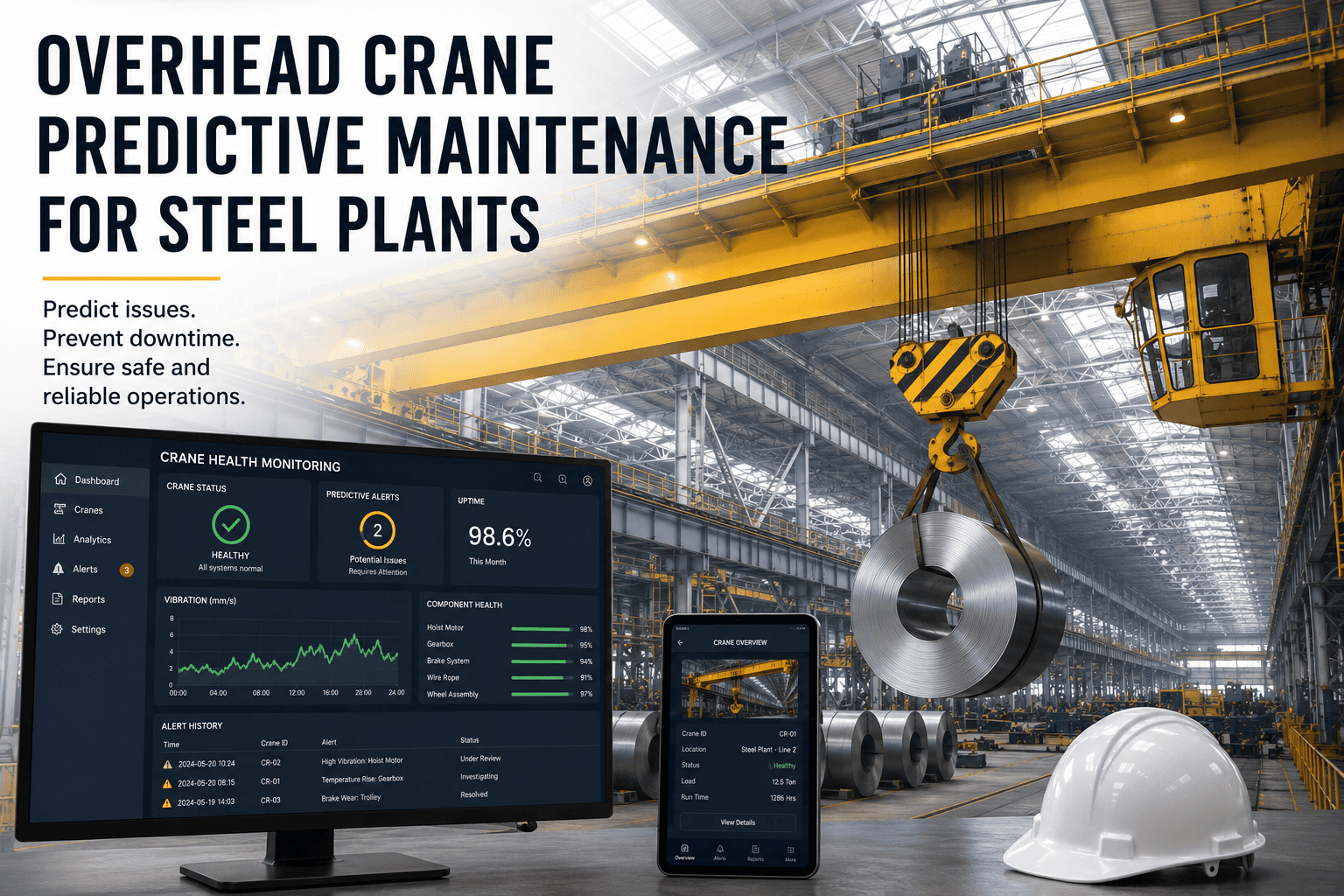
Steel plants lose material handling capacity in ways that rarely show up until a conveyor stops mid-shift or a ladle crane throws a fault code during a heat. Thousands of idlers, dozens of conveyor drives, and a fleet of overhead cranes run continuously across ore yards, coke ovens, and finishing lines, and one seized bearing or frayed wire rope can idle a furnace within minutes. Predictive maintenance built on IoT sensors changes this picture — wireless vibration monitors, crane load cells, and thermal scanners catch degradation weeks before failure. This guide covers how integrated mills apply predictive maintenance across conveyors, cranes, and roller tables using Oxmaint.
Why Material Handling Downtime Hurts Steel Plants Most
Material handling equipment doesn't fail in isolation. A stalled conveyor between the sinter plant and blast furnace, or a charging crane that misses its cycle, stops production upstream and downstream at the same time — and steel is one of the few industries where that delay carries a molten-metal safety risk as well as a cost one.
The Cost of Reactive Material Handling
$4.2B
Spent industry-wide on unplanned steel plant downtime in a single recent year — roughly 5-8% of total operating cost
$120K
Estimated cost of a single 2-hour unplanned conveyor stoppage before repair costs are even counted
58%
Drop in unplanned crane stoppages after deploying IoT load, vibration, and thermal monitoring
2-4 wks
Typical advance warning vibration trending gives before a drive bearing or gear failure
See where your conveyors and cranes stand today. Create a free Oxmaint account and map your material handling fleet in minutes.
How IoT Predictive Maintenance Covers Conveyors, Cranes and Roller Tables
A complete material handling predictive maintenance layer combines several sensor types with a connected CMMS so that detection turns into a scheduled work order automatically, instead of a phone call after the belt has already stopped.
01
Vibration Sensors on Conveyor Drives
Triaxial vibration sensors on drive motors, gearboxes, and head pulley bearings pick up defect frequencies days to weeks before a bearing seizes, the single highest-cost failure point on any conveyor line.
02
Belt Cover and Idler Scanning
Continuous thickness scanning flags belt cover wear as it approaches the replacement threshold, while infrared and vibration checks across thousands of idlers catch a seized roller before it flat-spots the belt.
03
Crane Load Cells and Brake Monitors
Calibrated load cells on hoist ropes log every lift and flag overload events automatically, while brake lining wear sensors track pad condition against CMAA and OSHA limits between statutory inspections.
04
Thermal Scanning at Transfer Points
Infrared imaging at chutes, splices, and drive housings flags hot spots caused by misalignment or friction before they turn into a fire risk or an unplanned line stop.
05
CMMS and PLC Integration
Sensor readings feed directly into a connected CMMS, auto-generating prioritized work orders and scheduling repairs during planned outages rather than production hours.
What Predictive Sensors Actually Detect
Every asset class in material handling fails differently, so the sensor mix and detection logic has to match the equipment — a conveyor idler and a crane hoist motor don't share the same failure signature.
Conveyor Drive Bearing Analysis
Vibration signatures isolate inner race, outer race, and misalignment faults on drive motors and gearboxes weeks before failure.
Belt Cover Wear Tracking
Automatic gauge scanning flags cover thickness at the 75% wear threshold, before the belt carcass is exposed to damage.
Idler Condition Monitoring
Infrared and vibration scanning across thousands of rollers catches a seized idler before it creates a flat spot or fire risk.
Crane Wire Rope and Load
Load cells and cycle counters record every lift, logging overload events and fatigue accumulation without manual inspection.
Brake and Hoist Motor Health
Motor current signature analysis and brake lining sensors track degradation continuously, without extra mechanical hardware.
Roller Table Vibration Profiling
Bearing and shaft vibration analysis on hot and cold roller tables catches misalignment and wear before it scores the product.
Curious what your fleet's failure signatures look like? Book a walkthrough and we'll show live sensor data from a comparable steel plant deployment.
Sensor Coverage by Material Handling Asset
Each asset class carries a different failure cost and a different lead time before that failure shows up in the data, which is why coverage plans usually start with the highest-consequence equipment first.
Monitoring Parameters by Asset
Lead times vary by duty cycle and asset criticality; high-tonnage conveyors and ladle cranes are typically prioritized first.
Reactive vs Predictive Material Handling
The gap between fixed-interval inspection and continuous condition monitoring shows up most clearly in how often a plant is surprised by a failure versus how often it schedules the fix on its own terms.
Reactive Maintenance
- Fixed-interval inspections regardless of actual condition
- Failures discovered after the belt or crane has stopped
- Idler and bearing wear tracked by memory and paper logs
- Wire rope and brake checks limited to annual statutory audits
Predictive Maintenance
- Continuous sensor monitoring on every critical asset
- Work orders generated weeks before failure occurs
- Unplanned conveyor and crane stoppages cut 30-58%
- Wire rope and brake condition tracked continuously, audit-ready
Documented ROI from Material Handling Predictive Maintenance
These figures come from steel plants that deployed vibration, load, and thermal sensors across conveyor drives and crane fleets, then connected the data to a CMMS for automated work order generation.
58%
Fewer unplanned crane stoppages
30%
Reduction in unplanned conveyor downtime
82%
Less time spent on inspection prep
11 mo
Typical payback period on sensor investment
We used to find out a conveyor was in trouble when it stopped moving ore to the furnace. Now the work order shows up on a technician's tablet two weeks before that would have happened, and the repair fits inside a planned outage instead of a shutdown.
Maintenance & Reliability Manager, Integrated Steel Plant
Rolling Out Material Handling Predictive Maintenance
Most mills don't sensor every asset at once. A phased rollout starting with the highest-consequence conveyors and cranes proves the model quickly, then scales across the rest of the plant.
Week 1-2
Criticality Mapping
Rank conveyors, cranes, and roller tables by downtime impact and failure history
Week 3-5
Sensor Deployment
Retrofit vibration, load cell, and thermal sensors without stopping production
Week 6-9
Baseline & Thresholds
Collect normal operating data and calibrate alert thresholds to plant conditions
Week 10+
Scale & Automate
Connect sensor data to CMMS work orders and expand across remaining lines
Connecting Sensor Data to Your CMMS
Sensor data only creates value once it turns into action — an automated work order, a flagged compliance record, or a cost report a plant manager can actually use.
Frequently Asked Questions
How fast do plants see results from material handling predictive maintenance?
Most mills see a measurable drop in unplanned conveyor and crane stoppages within the first quarter, once sensors have collected enough baseline data.
Book a demo to discuss a realistic timeline for your lines.
Do sensors need to interrupt production during installation?
No. Wireless and clamp-on vibration, load, and thermal sensors are retrofitted onto existing motors, ropes, and idlers without shutting the line down.
Can this connect with our existing CMMS or SAP PM?
Yes. Sensor data feeds standard work order and asset systems through direct integration, so alerts turn into scheduled jobs automatically.
Sign up free to see the setup.
What's monitored differently on a crane versus a conveyor?
Cranes add load cells and brake lining sensors to track lift weight and stopping distance, while conveyors focus on drive vibration and belt cover wear.
How is roller table vibration different from conveyor drive vibration?
Roller tables run many short, closely spaced bearings under rolling load, so monitoring focuses on shaft misalignment and bearing wear rather than gearbox or motor faults.
Stop finding out about conveyor and crane failures after they happen. Oxmaint connects vibration, load, and thermal sensors across your material handling fleet to a CMMS that schedules the fix before the failure — see it running on your production data.