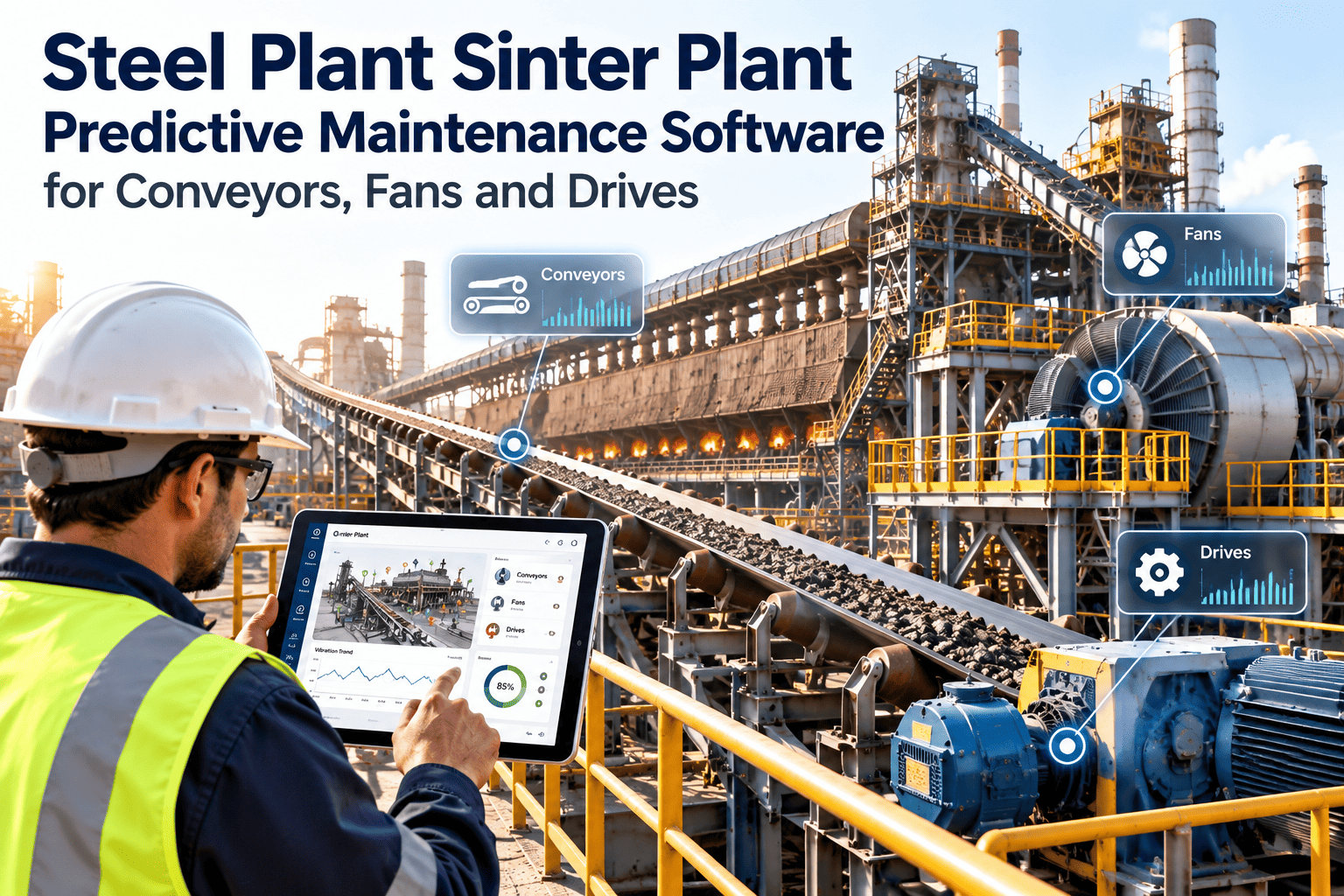
A sinter plant runs on continuous flow. Ore, coke and flux move on long conveyors, get crushed and screened, pass through the strand, and leave through coolers and more belts. One failed drive or fan can starve the blast furnace of sinter. This guide explains how steel plant maintenance teams apply condition-based and predictive methods to sinter equipment, and how a steel plant CMMS like Oxmaint turns alerts into planned work.
Sinter and Raw Materials | Predictive Maintenance
Sinter Plant Predictive Maintenance Software for Conveyors, Fans and Drives
Catch bearing wear, imbalance, belt damage and drive faults while there is still time to plan. Oxmaint connects inspection data, condition alerts and work orders for every sinter asset.
ARaw material yard: stacker reclaimer, feeders
BConveying and blending: belts, drives, gearboxes
CCrushing and screening: crushers, screens
DSintering: strand, main exhaust fan, dedusting
ECooling and product handling: coolers, screens, belts
Why Sinter Plants Are Hard on Equipment
Sinter plants combine abrasive material, heavy dust, heat and long operating hours. Equipment sits in dirty environments where manual inspection is slow and access is often awkward.
Abrasion and dust
Ore and coke wear chutes, liners, idlers and screens. Dust enters bearings, motors and gearboxes.
Heat and load swings
Hot sinter and process gas stress structures, seals and fans. Feed variation changes loads on drives.
Because downstream steelmaking depends on steady sinter supply, planned stops are far cheaper than surprise ones. That is the basic argument for predictive maintenance here.
The Failure Warning Window
Every failure has a period between the first detectable sign and functional failure. Different techniques detect different points on that curve. The bars below show relative detection stages, not measured times.
Oil or grease analysis
Earliest
Vibration analysis
Early
Thermal imaging
Mid
Noise and touch
Late
Breakdown
Failure
The further left you detect, the more room you have to order parts, book a crew and choose a stop window.
Conveyors: Where Most Sinter Stops Begin
Belt conveyors connect every process stage, so a single belt failure can stop a whole line. Focus on components that fail gradually.
| Component | Typical failure signs | Condition data |
|---|---|---|
| Idler and pulley bearings | Noise, rising bearing temperature | Vibration, thermal scans, greasing records |
| Gearbox and coupling | Oil contamination, misalignment, looseness | Oil sampling, vibration, alignment checks |
| Belt and splices | Edge damage, cracked splices, mistracking | Visual inspection, rip detection, tracking logs |
| Drive motor | Overheating, current rise | Motor current, temperature, vibration |
| Chutes and skirts | Wear, blockage, spillage | Thickness checks, cleaning records |
Simple conveyor route checklist
- Walk the belt for spillage, mistracking, damaged idlers and unusual noise.
- Scan drive ends, take-up and return idlers for hot bearings.
- Check gearbox oil level, leaks and breather condition.
- Record belt tension and take-up position where measured.
Fans and Drives: Protecting the Airflow
The main exhaust fan pulls air through the sinter bed and is one of the most critical rotating assets in the plant. Dust-laden gas can build up on the impeller and cause imbalance.
Vibration trend. Rising vibration at running speed often points to imbalance from deposits or wear.
Bearing temperature. Steady climb suggests lubrication problems, misalignment or overload.
Motor load and current. Changes can reveal damper problems, blockage or fouled ducting.
Lubrication condition. Oil analysis and filter records reveal contamination before it damages the bearing.
Variable frequency drives add another layer. Track drive fault codes, cooling fan condition, filter cleaning and cabinet temperature, since dust in electrical rooms is a common cause of drive trips.
Move From Breakdown Response to Planned Sinter Maintenance
Create routes, schedules and work orders for belts, fans and drives in Oxmaint. Start with your most critical lines.
Crushers, Screens and Coolers
Crushers and screens
- Track liner and hammer wear against tonnage or hours.
- Monitor bearing vibration and temperature on shafts.
- Watch motor current for jamming and feed changes.
- Inspect screen decks, springs and supports for fatigue.
Coolers
- Check drive, wheels, rails and seals for wear.
- Monitor cooling fan condition and airflow.
- Inspect hoppers and chutes for hot spots and blockage.
- Review fan motor loads and vibration trends.
Stacker Reclaimers and Yard Equipment
Stacker reclaimers travel, slew, luff and carry belts, so they combine many failure modes in one machine. Their outdoor location adds weather exposure and long travel distances between inspections.
| Subsystem | Maintenance focus |
|---|---|
| Travel and slew drives | Gearbox oil, brakes, motor temperature, vibration |
| Boom and bucket wheel | Structural inspection, wear parts, bearing condition |
| Boom belt | Idlers, splices, tracking, pulley lagging |
| Electrical and cable systems | Cable reel condition, connections, limit switches |
| Rail and structure | Rail wear, fasteners, alignment, corrosion |
From Alert to Repair: A Working Workflow
Sensors and routes only help if someone acts on them. A clear workflow keeps alerts from becoming noise.
1
Detect. A reading crosses a threshold or an inspector reports a defect.
2
Verify. Confirm the signal with a second method or a quick visit.
3
Rank. Score severity, criticality and likely time to failure.
4
Plan. Create the work order, reserve parts and pick a stop window.
5
Repair and close. Record cause, action and follow-up measurements.
Oxmaint supports this chain with asset records, inspection checklists, preventive maintenance schedules, corrective work orders, inventory and reports. Condition data from external monitoring can be used to prompt work while the maintenance record stays in one system.
Preventive, Condition-Based and Predictive Compared
| Approach | Trigger | Best for in a sinter plant |
|---|---|---|
| Preventive | Calendar or running hours | Greasing, oil changes, filter cleaning, routine walk-downs |
| Condition-based | Measured condition passes a limit | Bearings, gearboxes, belt wear, liners |
| Predictive | Trend analysis estimates remaining life | Main fans, large drives, critical crushers |
| Run to failure | Breakage | Low-cost, non-critical items with spares on hand |
Most plants use a mix. The skill is assigning each asset to the right approach based on criticality, failure pattern and cost of monitoring.
Criticality Ranking Before You Buy Sensors
Instrumenting everything is expensive and unnecessary. Rank assets by production impact, safety risk, repair time and failure history.
- List all sinter assets in the asset register with parent and child relationships.
- Score each asset for production loss, safety consequence and spare availability.
- Select monitoring methods only for high-scoring assets.
- Review the ranking after each major failure or process change.
Where Maintenance Data Comes From Along the Sinter Line
Predictive maintenance depends on knowing which signals each stage can offer. Sinter plants usually have a mix of process instruments, drive data and manual inspection results. The job is to bring these together against the right asset.
| Process stage | Main equipment | Useful maintenance signals |
|---|---|---|
| Receiving and yard | Unloaders, stacker reclaimers, feeders | Drive current, gearbox oil, structural inspection, travel wear |
| Blending and proportioning | Bins, weigh feeders, belts | Belt scale drift, feeder motor load, chute blockage records |
| Mixing and granulating | Drums, drive rings, trunnions | Drive vibration, roller wear, lubrication condition |
| Sintering | Strand, pallets, ignition, wind boxes | Pallet wear, suction levels, seal condition, fan trends |
| Crushing and cooling | Hot crusher, cooler, fans | Vibration, roll wear, cooler drive and wheel condition |
| Screening and delivery | Screens, belts, transfer points | Screen deck wear, spring condition, belt damage |
Map each row to your own plant and add the tags your control system already records. Many useful signals exist but are never linked to a work history.
The Sinter Strand and Its Supporting Systems
The strand carries the bed under the ignition furnace while air is drawn through it. Reliability depends on mechanical condition and on keeping air where it belongs.
Mechanical checks
- Inspect pallet bodies, grate bars and wheels for wear and cracks.
- Check rails, drive sprockets and tracking for uneven wear.
- Review drive motor and gearbox trends for load changes.
- Track pallet replacement history to see wear patterns.
Air path checks
- Inspect seals and wind box connections for air leakage.
- Clean ducts and dust hoppers on a defined schedule.
- Check dust handling systems and rotary valves.
- Watch suction and fan load together to spot restrictions.
Air leakage wastes fan energy and lowers process stability, so it belongs in the maintenance plan rather than being treated as a process issue only.
Dust Control Equipment as a Reliability Asset
Dedusting systems protect people, fans and the environment. Bag filters, electrostatic precipitators, screw conveyors and dust valves all wear, and their failure eventually affects the main fan and production rate.
Filter systems. Track differential pressure, cleaning cycle behavior and bag replacement history.
Dust transport. Inspect screw conveyors, rotary valves and chutes for wear and blockage.
Electrical fields. Where precipitators are used, keep records of rappers, transformers and insulators.
Stack and compliance records. Link emission-related maintenance to inspection records for audit needs.
Lubrication: The Quiet Driver of Sinter Reliability
Many sinter failures start with lubrication problems. Dust contaminates grease, heat thins oil, and long lines of points are easy to miss. A structured lubrication program is one of the cheapest reliability improvements available.
- List every lubrication point with lubricant type, quantity and interval.
- Group points into routes by area so one visit covers many assets.
- Record actual grease quantity and any abnormal findings.
- Sample gearbox and hydraulic oil for larger assets and trend the results.
- Review contamination sources such as failed seals and breathers.
Over-greasing can damage bearings and seals as surely as under-greasing does, so quantity records matter as much as frequency.
Spare Parts Strategy for Continuous Lines
Sinter plants need spares that match how they fail. Stocking everything is costly, and stocking too little turns a small repair into a long stop.
| Spare category | Examples | Stocking logic |
|---|---|---|
| Fast-wearing items | Idlers, liners, screen decks, hammers | Stock by usage rate from work order history |
| Critical rotating parts | Fan bearings, gearbox sets, couplings | Keep at least one set for high criticality assets |
| Electrical modules | Drive boards, contactors, sensors | Stock based on obsolescence and lead time |
| Long lead assemblies | Fan rotors, large gearboxes, crusher shafts | Plan through supplier agreements and repair pools |
Track parts against assets and work orders in the CMMS. After a few months, usage data shows which stock levels are wrong.
Planning Shutdowns Around Condition Data
Planned stops are the best time to fix what condition monitoring has found. The quality of the stop depends on how early the work list is prepared.
1
Collect all open defects and condition alerts by asset.
2
Group them into a scope and estimate hours by trade.
3
Order parts and book cranes, contractors and permits.
4
Execute with daily progress checks in the work order system.
5
Record findings, measurements and deferred items.
Getting Started Without a Large Project
You do not need a full sensor network to begin. A staged approach builds data quality first.
- Load the asset register for one line and mark the most critical items.
- Create inspection and lubrication routes with clear pass and fail criteria.
- Start using work orders for every repair, with cause and action fields required.
- Add portable vibration and thermal readings for critical drives and fans.
- Review results monthly, then extend to other lines.
Each step produces records that make the next step easier. By the time online monitoring is added, the asset structure and failure codes are already in place.
Common Reasons Sinter Predictive Programs Stall
Data without ownership
Readings pile up, but no one is responsible for reviewing them and creating work orders. Assign each route and alert type to a named role.
Alerts without a repair path
Findings are noted, but parts, crews and stop windows are never arranged. Tie every confirmed alert to a work order and a target date.
Solve both problems first. Technology only adds value once the maintenance process can act on what it reveals.
Transfer Points and Chutes: Small Parts, Large Stoppages
Transfer chutes, skirts and diverters cause a disproportionate share of belt stoppages in raw material handling. Blockages, wear-through and spillage often begin with humid or sticky feed.
- Inspect liners and skirt rubber at set intervals and record remaining thickness.
- Log every blockage with the material type and weather conditions.
- Check level switches, pull cords and belt sway switches for function.
- Review cleaner blade wear, because carryback damages return idlers and pulleys.
Involving Operators in Condition Checks
Operators pass equipment every shift and notice changes in sound, smell and appearance before instruments do. Give them a simple way to report what they see.
- Provide short checklists for noise, vibration feel, leaks, hot spots and spillage.
- Let operators raise a request from a mobile device, with a photo where useful.
- Acknowledge every report so operators see that it leads to action.
Sinter Reliability KPIs
Unplanned downtime by area
Separate yard, conveying, crushing, strand and cooling.
Planned versus reactive work
Track the share of work that was scheduled in advance.
Mean time between failures
Trend by asset class such as belts, fans and crushers.
Alert-to-action time
Time between a condition alert and the work order start.
Frequently Asked Questions
Which sinter equipment should be monitored first?
Start with the main exhaust fan, key conveyor drives and crushers, based on criticality. Register assets in Oxmaint to rank them.
Is vibration monitoring enough for conveyors?
Not alone. Combine it with thermal scans, oil analysis and visual belt inspection for wider coverage.
Can a CMMS work without online sensors?
Yes. Route-based readings and inspections can feed condition-based work orders before you add sensors.
How does dust affect maintenance planning?
Dust shortens lubrication and filter intervals and hides defects, so cleaning and sealing checks belong in the schedule.
Can we see a sinter maintenance setup?
You can book a demo and walk through belt, fan and drive workflows.
Keep Sinter Flowing With Maintenance You Can Plan
Bring conveyors, fans, drives, crushers and coolers into one steel plant maintenance system with schedules, inspections and clear failure history.