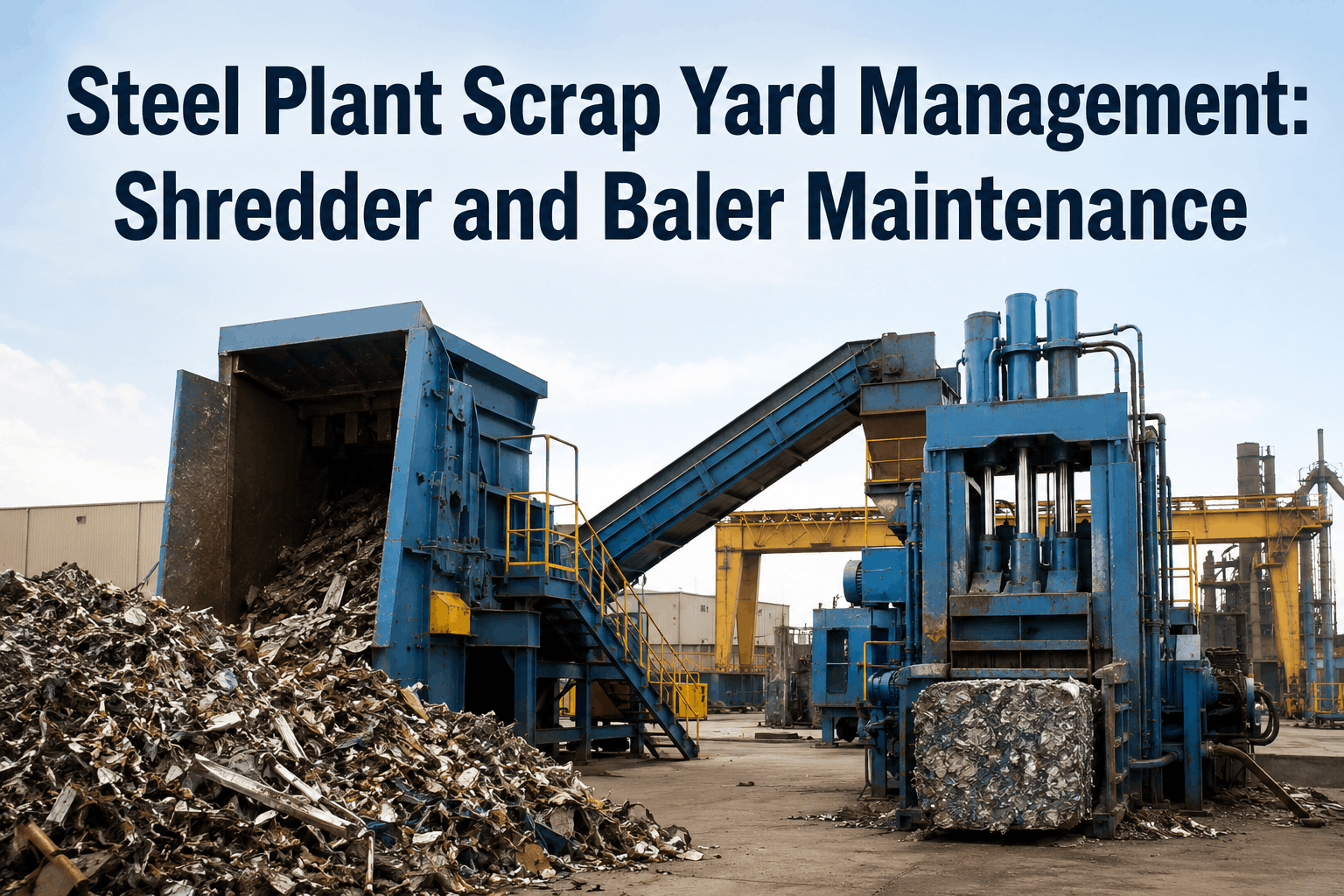
A scrap processor in Texas watched their mega-shredder sit idle for 11 days after a rotor bearing failure that could have been prevented with vibration monitoring. The downtime cost exceeded $340,000 in lost processing capacity, emergency repair costs, and customer penalties. Their paper-based maintenance system had no way to track equipment condition or predict failures across 47 mobile equipment units and 12 fixed processing lines. After implementing maintenance management through Oxmaint, the operation reduced unplanned downtime by 62%, extended shredder hammer life by 35%, and achieved 94% fleet availability across their yard equipment. This blog covers maintenance strategies for scrap steel processing and recycling operations.
Scrap steel recycling forms the backbone of circular economy steelmaking—EAF mills depend on consistent scrap supply, and processing operations must maintain high throughput to meet demand. The equipment is brutal: shredders consume entire automobiles, balers compress heavy gauge steel, and material handling equipment operates in abrasive, dusty environments 24/7. Effective maintenance keeps the scrap flowing to steelmakers while controlling operating costs. Book a demo to see how Oxmaint supports scrap yard maintenance operations.
Scrap Steel Processing & Recycling Maintenance: CMMS for Shredders, Balers & Yards
Equipment maintenance strategies for scrap processing operations supporting circular economy steelmaking.
Scrap Processing Flow
Understanding material flow helps prioritize maintenance across processing stages.
Receiving
Truck scales, rail unloading, material inspection
Sorting
Grapple cranes, material handlers, grading
Processing
Shredders, balers, shears, torching
Separation
Magnetic drums, eddy current, air classification
Shipping
Rail loading, truck dispatch to EAF mills
Primary Processing Equipment
Oxmaint tracks maintenance for high-value scrap processing assets.
Mega-Shredders
High-horsepower hammer mills processing automobiles and light gauge scrap into fist-sized fragments at 150-300 tons per hour.
Scrap Balers
Hydraulic presses compacting heavy gauge steel, turnings, and loose scrap into dense bales for efficient transport and EAF charging.
Hydraulic Shears
Guillotine and alligator shears sizing heavy plate, structural steel, and oversized scrap for baler or shredder feed.
Optimize Scrap Processing Uptime
Oxmaint provides maintenance tracking for shredders, balers, and yard equipment.
Material Separation Equipment
Separation systems determine product quality and recovery rates.
Magnetic Separators
Drum magnets and overhead magnets pulling ferrous material from shredder output stream for clean steel recovery.
Eddy Current Separators
High-speed rotating magnets ejecting non-ferrous metals (aluminum, copper, brass) from mixed material stream.
Air Classification
Cyclones and air knives separating light fraction (plastics, foam, fabric) from dense ferrous material.
Optical Sorters
Camera and sensor-based sorting for stainless steel, copper wire, and specialty alloy recovery from mixed streams.
Mobile Equipment Fleet
Scrap yard fleet management covers material handlers, loaders, and transport equipment.
Material Handlers
Wheeled or tracked machines with orange peel grapples or magnets sorting and feeding processing equipment.
Wheel Loaders
Front-end loaders with grapple or bucket attachments moving loose scrap and loading trucks and rail cars.
Gantry Cranes
Overhead cranes with magnets or grapples loading rail cars and managing large stockpiles in covered storage.
Transfer Conveyors
Belt and apron conveyors moving material between processing stages. Abrasive environment accelerates wear.
Manage Your Entire Fleet
Oxmaint tracks mobile equipment, fixed processing lines, and support systems in one platform.
Maintenance Challenges
Scrap operations face unique maintenance conditions requiring robust tracking systems.
Abrasive Environment
Metal dust and debris accelerate wear on all moving components. Filters, seals, and exposed surfaces require frequent attention.
High Impact Loads
Shredders and balers absorb tremendous shock loads. Structural fatigue, foundation integrity, and drive components need monitoring.
Continuous Operation
24/7 processing schedules limit maintenance windows. Planned downtime must maximize work accomplished per hour.
Distributed Assets
Equipment spread across large yards. Mobile technicians need digital access to procedures, history, and parts information.
Shredder Wear Management
Shredder components require systematic tracking for optimal performance and cost control.
High-manganese steel hammers wear rapidly against scrap. Rotation extends life; replacement consumes major maintenance hours.
Sizing grates control output fragment size. Worn grates reduce throughput and product quality.
Internal housing liners protect structure from impact and abrasion. Breakthrough creates safety hazard.
Main rotor shaft and spider arms carry hammer pins. Fatigue cracking requires NDT inspection programs.
EAF Scrap Quality Impact
Equipment condition directly affects scrap quality delivered to electric arc furnace customers.
Fragment Size
Shredder grate condition determines fragment sizing. Consistent sizing improves EAF charging density and melting efficiency.
Ferrous Purity
Separator effectiveness removes non-ferrous contamination. Clean scrap commands premium pricing and reduces EAF slag volume.
Moisture Content
Covered storage and material handling protect scrap from excessive moisture that causes EAF safety concerns.
Tramp Element Control
Optical sorters remove copper, stainless, and other tramp elements affecting steel chemistry specifications.
Frequently Asked Questions
Keep the Scrap Flowing
Join scrap processors using Oxmaint to maximize equipment availability and processing throughput.