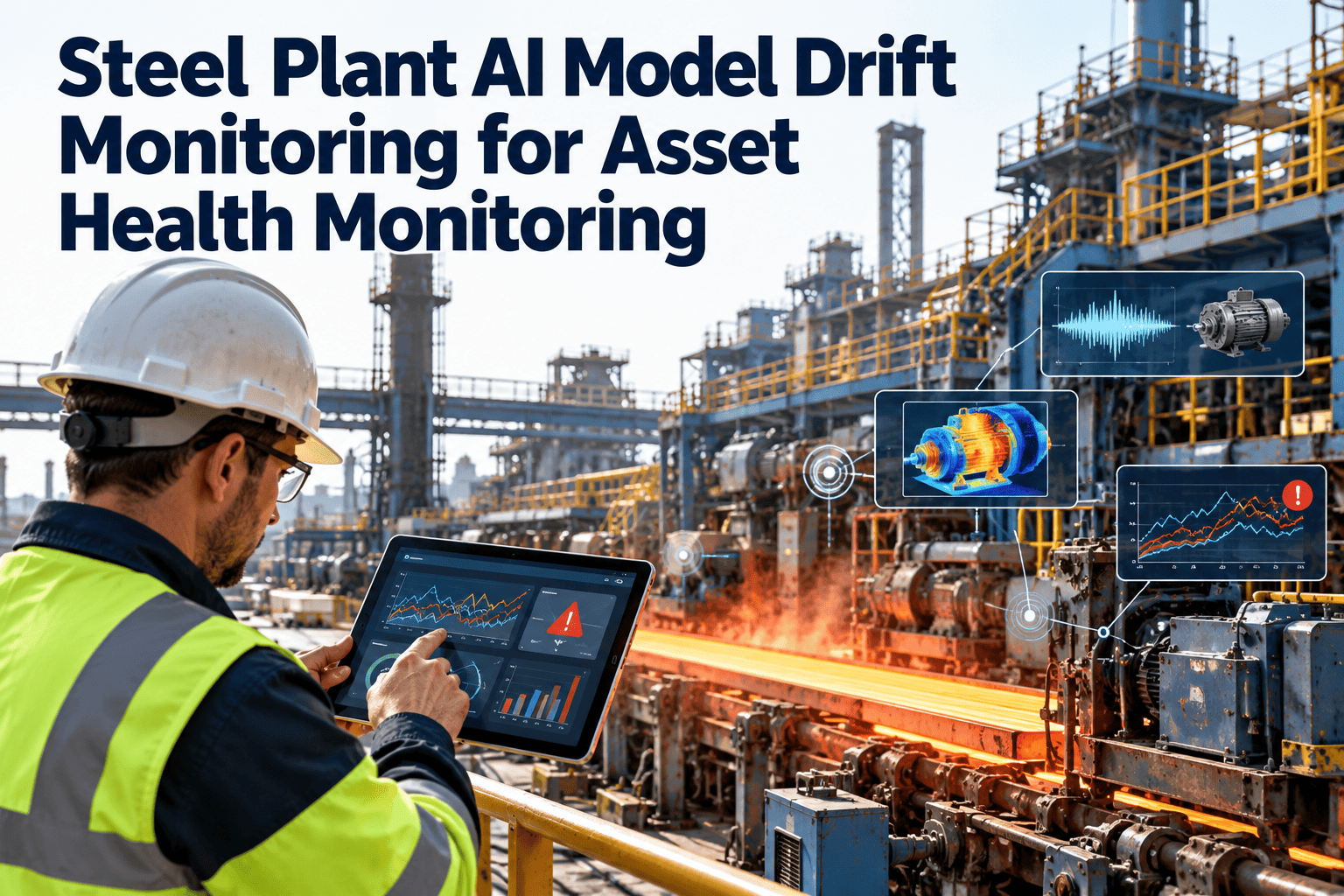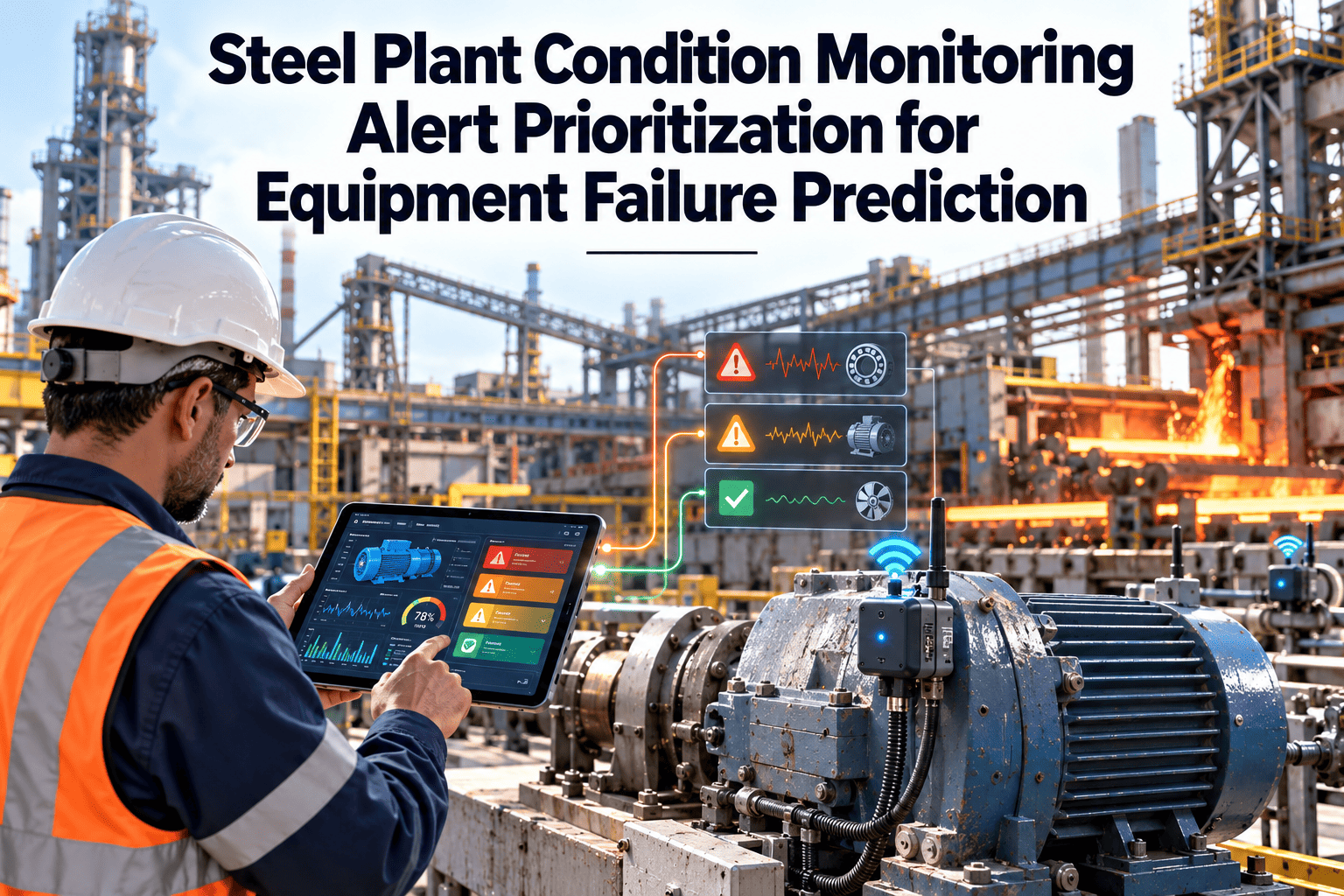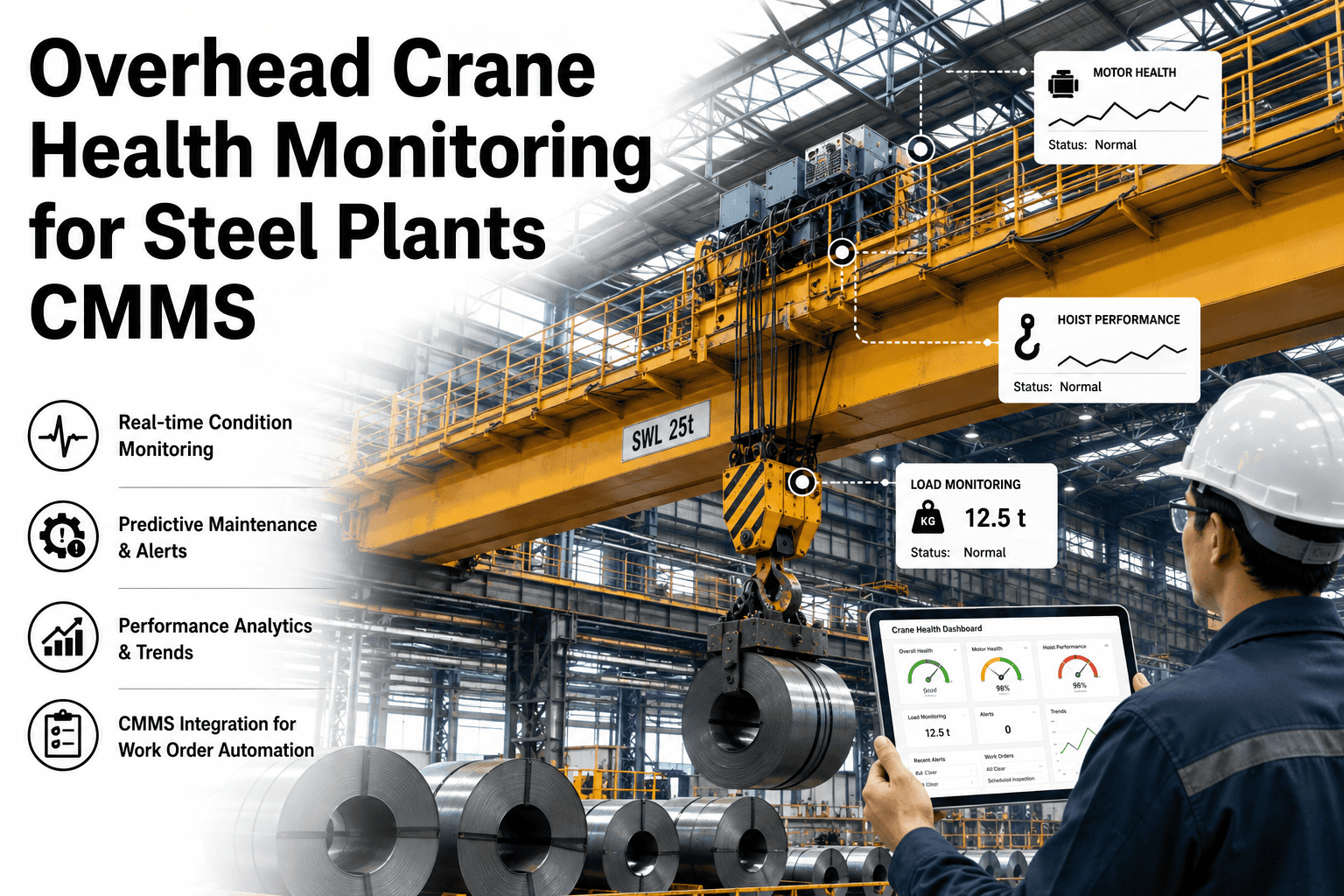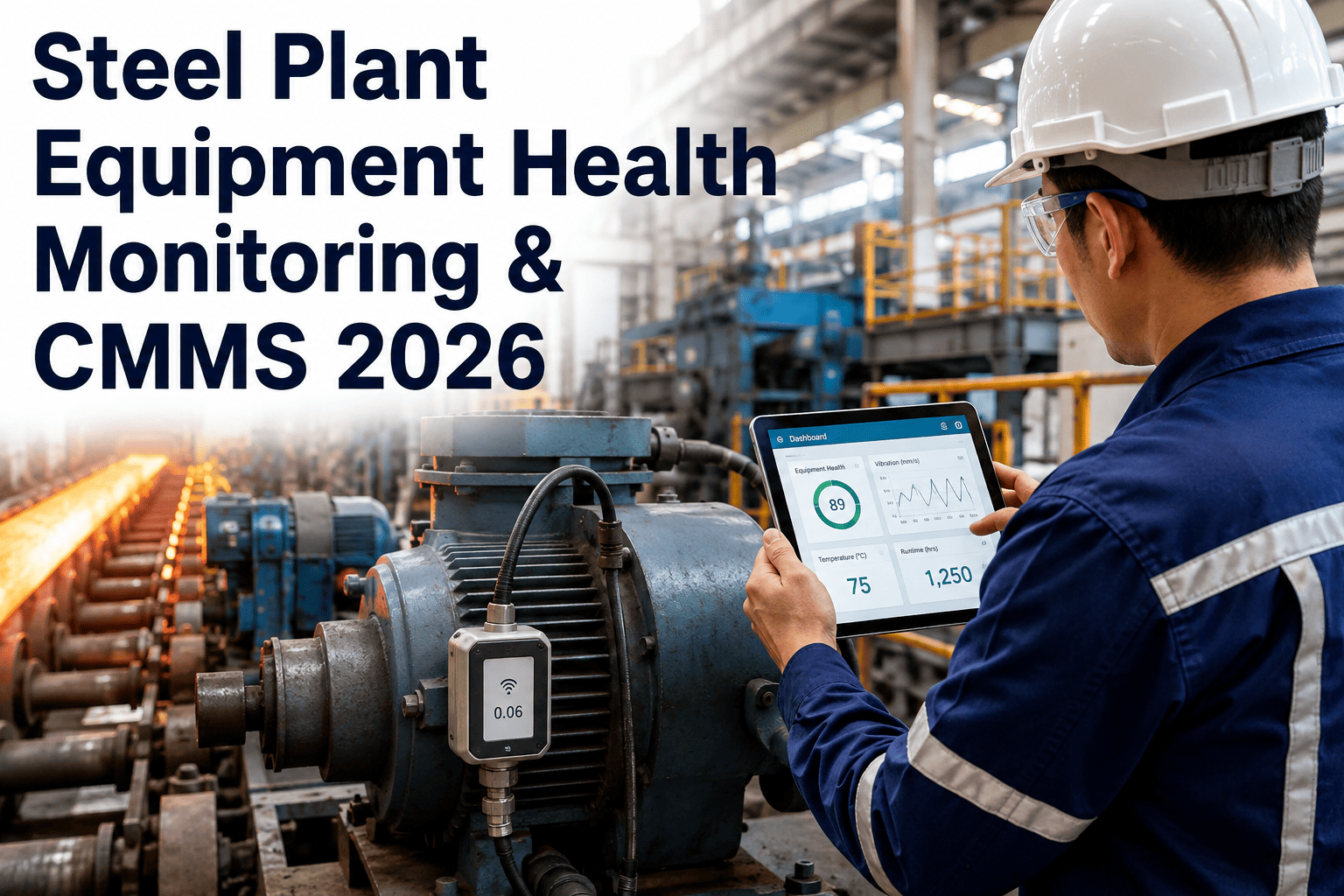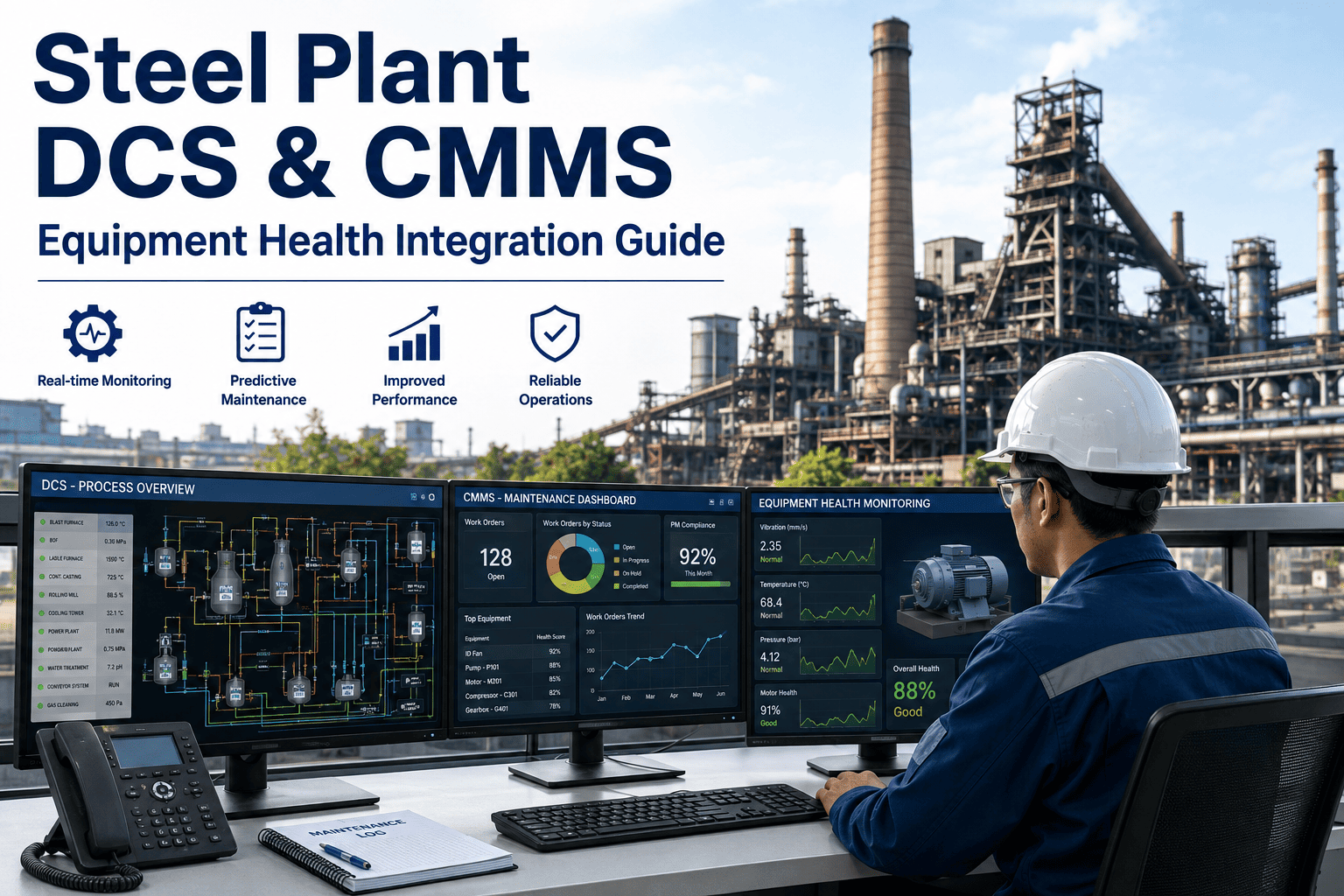
In a steel plant, the DCS sees a bearing temperature climb past its threshold the moment it happens. The maintenance team, working off the CMMS, usually doesn't find out for hours. That gap between what the control room knows and what the workshop acts on is where most rolling mill and caster stoppages quietly take root. Closing it means mapping every process tag to a real asset, filtering out the noise before it reaches a technician's queue, and turning a genuine alarm into a scheduled work order without a single phone call or shift-handover note. This guide walks through exactly how that architecture comes together, and how a live demo can show it running on your own DCS data.
Why This Gap Costs Steel Plants More Than Downtime
Every steel plant runs two parallel worlds. The DCS layer sees temperatures, pressures, currents, and vibration in real time, millisecond by millisecond. The maintenance layer finds out about most of it secondhand, if at all. The numbers below are typical across integrated mills before the two systems are connected.
How a DCS-to-CMMS Integration Actually Works
Connecting a DCS to a CMMS isn't one integration step, it's five layered decisions. Get any one of them wrong and you either drown technicians in false alerts or miss the alarms that actually matter.
Where Process Tags Land Once They're Mapped
Tag mapping is the part most integration projects rush through, and it's the part that decides everything downstream. Here's what a mapping table looks like once it's actually built for steel plant assets.
| Process Variable | DCS Source | Mapped Asset | CMMS Trigger |
|---|---|---|---|
| Bearing Vibration | Vibration probe, cooling pump | Blast Furnace Cooling Pump | Predictive work order on rising trend |
| Roll Temperature | Thermocouple, hot strip mill | Work Roll Stand 3 | Alarm work order if sustained 30 seconds |
| Hydraulic Pressure | Pressure transmitter, caster segment | Continuous Caster Segment 4 | Immediate high-priority work order |
| Motor Current | Current transformer, mill drive | Main Drive Motor | Trend log, work order on continued drift |
| Lubrication Level | Level sensor, gearbox reservoir | Reduction Gearbox | Scheduled work order within 24 hours |
| Furnace Gas Flow | Flow meter, reheat furnace | Reheat Furnace Burner | Immediate safety-priority work order |
Manual Handoff vs. a Closed-Loop Integration
The difference isn't just speed, it's whether the same fault ever gets noticed twice in a row before it becomes a failure.
- Alarms read off HMI screens by operators
- Maintenance hears about faults via shift handover
- Work orders written from memory, missing readings
- No link between alarm history and repair history
- Same fault recurs without anyone spotting the pattern
- Alarms mapped straight to the asset that raised them
- Work orders created within seconds of a validated breach
- Full parameter trend attached automatically to the order
- Alarm and repair history live on one asset timeline
- Recurring patterns flagged before they become failures
Keeping the Asset Hierarchy Sane
A flat list of a few thousand tags is unusable. Every mapped point needs a place inside the plant's real structure, so an alert about a single sensor tells you exactly which line, unit, and equipment it sits under.
Keeping the Control Network Safe While Data Flows Out
Connecting a CMMS to a DCS understandably raises a security question first. A properly designed integration never lets the maintenance system write back into the control network.
What Plants Actually See After Going Live
These are the outcomes that show up consistently once alarm-to-work-order flow is running end to end instead of depending on someone remembering to write it down.
How the Rollout Actually Gets Built
A phased build keeps the project from stalling and gives the maintenance team working alarms to react to within weeks, not months.