Conventional IoT sensors measure what they are pointed at. Smart sensors — stockline radars, tuyere cameras, AI vision systems, and infrared thermal imagers — measure what no human can safely observe continuously: burden distribution inside a 30-metre blast furnace stack, the condition of 40 tuyeres at 2,200°C, surface defects on steel strip moving at 120 metres per minute, and hot metal temperatures in ladle tracking. OxMaint's Smart Sensor Module connects these advanced sensing systems directly to work orders, asset health records, and predictive maintenance models — so every anomaly detected at 3 AM generates a maintenance action before the morning shift starts. Book a 15-minute demo to see smart sensor integration running in OxMaint for steel plant monitoring.
Smart Sensors for Steel Plant Monitoring: Radar, Thermal Camera & AI Vision Systems
BF stockline radar, tuyere thermal cameras, YOLOv8 conveyor belt vision, and infrared hot metal tracking — connected to OxMaint work orders and asset health dashboards automatically.
Four Smart Sensor Technologies — What They See and Why Conventional Sensors Cannot
Book a Demo — See Smart Sensor Alerts Becoming Work Orders in OxMaint Automatically.
Stockline radar deviations, tuyere flame anomalies, AI vision defect alerts, and thermal hotspots — every signal from every smart sensor generates a prioritised work order in OxMaint before the next shift starts. 15 minutes to see it live.
AI Model Selection for Steel Plant Vision Applications
| Application | AI Model | Input | Output | Accuracy | OxMaint Integration |
|---|---|---|---|---|---|
| Hot strip surface defect detection | YOLOv8-L / YOLOv9 | Line-scan 4k×1 at 120 m/min | Defect class, location, severity score | 99.8% detection | Defect event → quality WO + slab hold flag |
| Conveyor belt misalignment and damage | ResNet-50 CNN + rule engine | Frame camera 30 fps overhead | Belt position offset, tear length, splice condition | 99.5% classification | Misalignment alert → conveyor inspection WO |
| Tuyere flame asymmetry analysis | Custom CNN + optical flow | Tuyere camera 25 fps | Raceway geometry score, asymmetry index | ±5% shape accuracy | Asymmetry score → tuyere inspection WO |
| BF casthouse floor safety monitoring | YOLOv8-Pose / DeepSORT | PTZ camera 25 fps | Person proximity to danger zone, PPE detection | 97% person detection | Safety violation → immediate alert + WO |
| Ladle refractory wear estimation | PointNet++ 3D CNN | Laser profilometer scan pre/post heat | Wear map, remaining thickness, campaign prediction | ±3 mm thickness | Wear threshold → relining schedule WO |
| Caster strand surface crack detection | EfficientDet-D3 | High-speed camera 500 fps | Crack length, width, position on strand | 98.5% crack detection | Crack severity → strand speed reduction WO |
All models require minimum 5,000 labelled examples per defect class for production-grade accuracy. OxMaint stores AI model version, inference threshold, and false-positive rate against the sensor asset record. Book a demo to see AI vision result tracking in OxMaint.
Smart Sensor Coverage by Steel Plant Process Area
| Process Area | Smart Sensor | Primary Detection Target | Alert Lead Time | Environment Challenge |
|---|---|---|---|---|
| Blast Furnace Stack | Stockline radar (FMCW 76 GHz) | Burden level asymmetry, scaffold formation | Hours to days | 350°C top gas, CO atmosphere, heavy dust |
| Blast Furnace Hearth | Tuyere thermal camera | Raceway asymmetry, deadman state, tuyere damage | 1–3 weeks | 2,200°C flame, molten iron splash, vibration |
| BF Shell / Cooling Staves | Fixed IR thermal imager array | Hot spot formation, cooling stave breakthrough | 3–6 weeks | High ambient temperature, steam, dust |
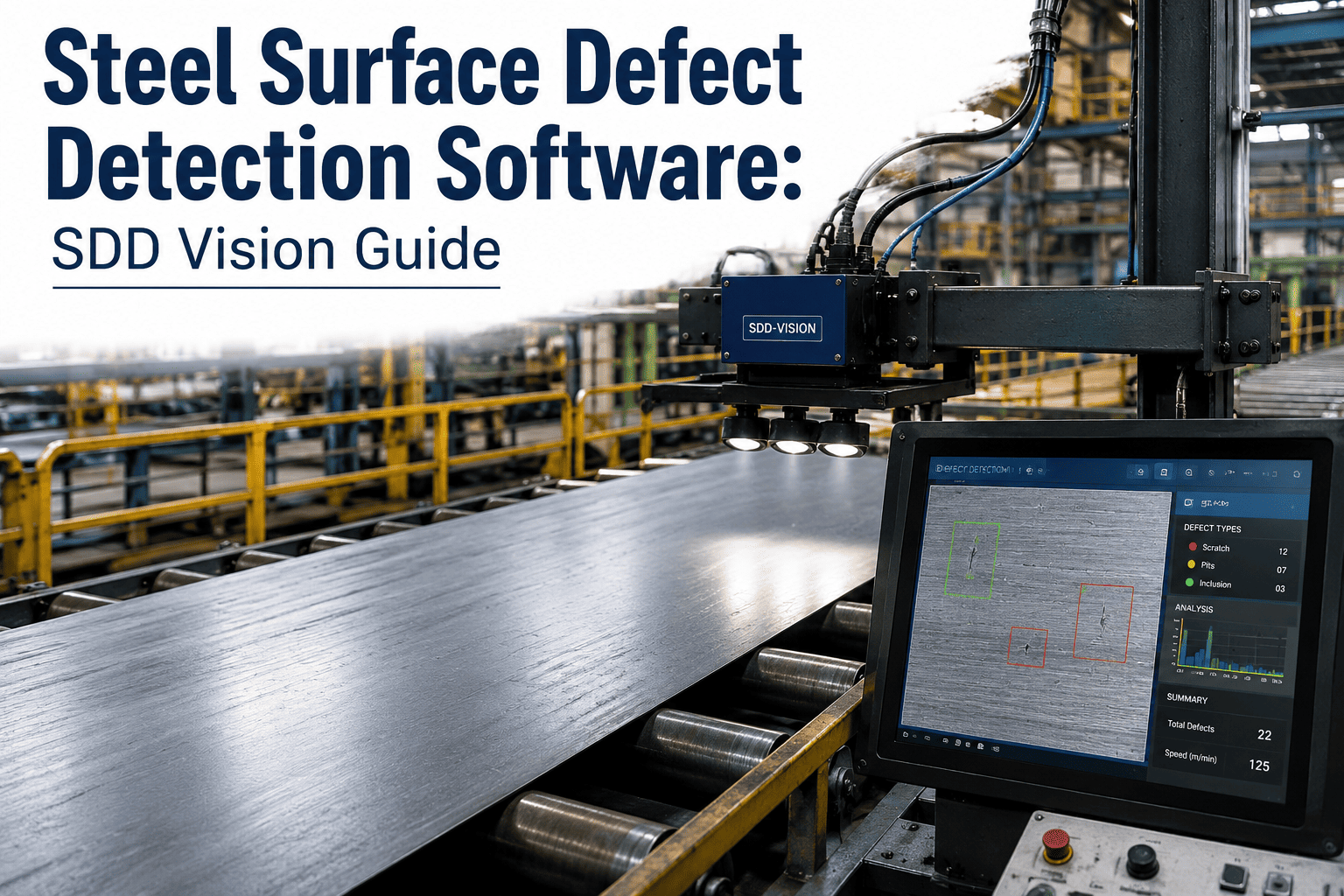
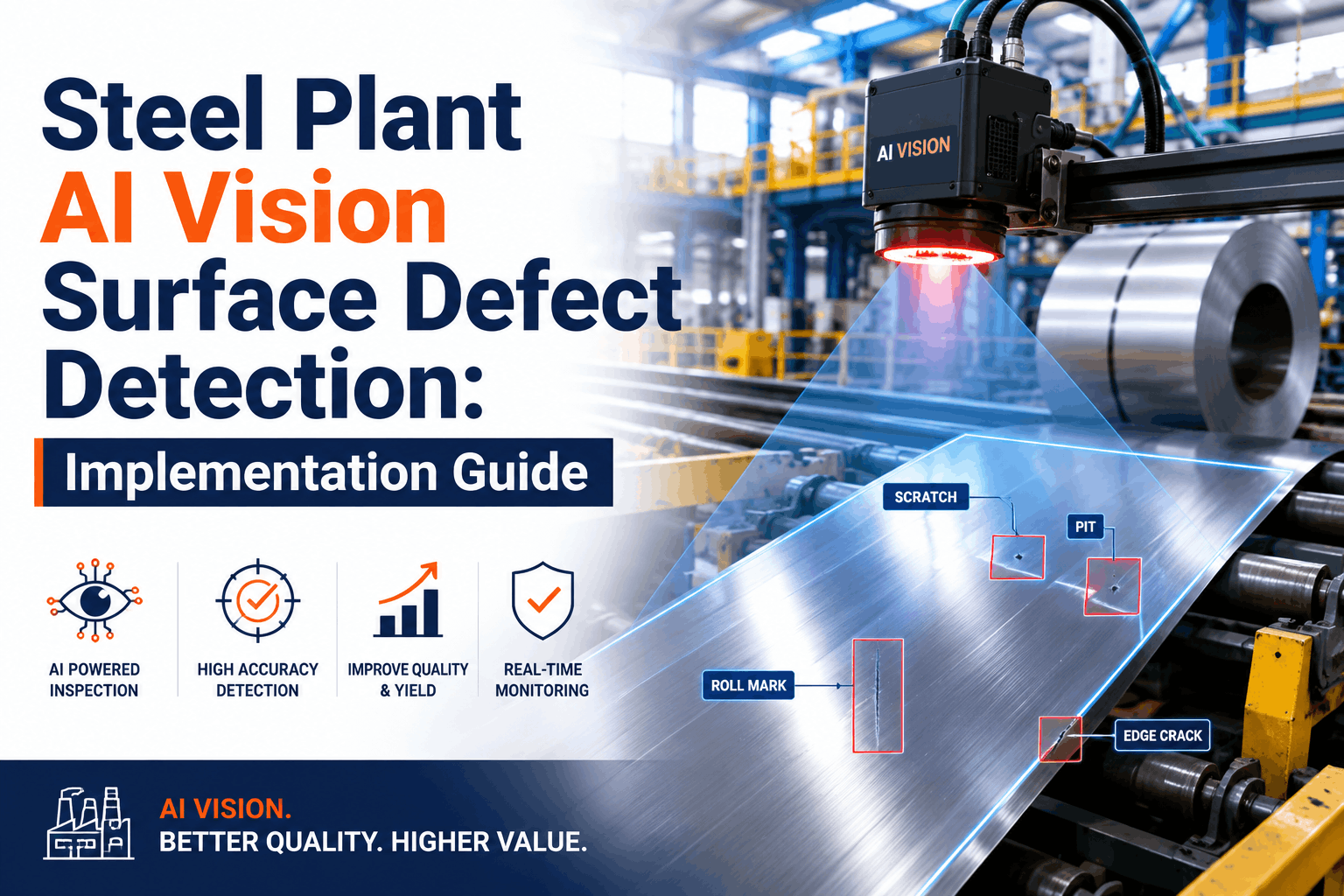
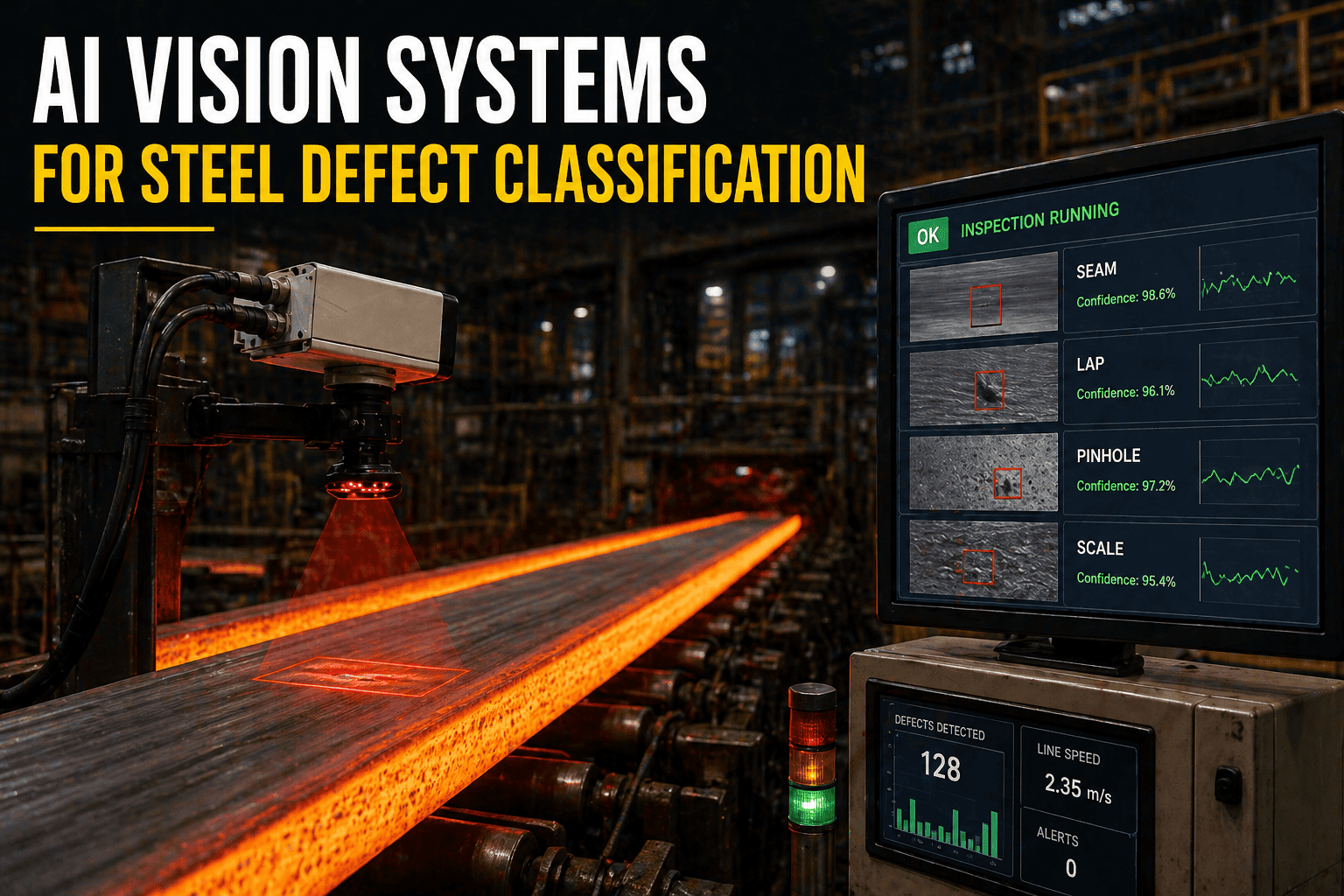
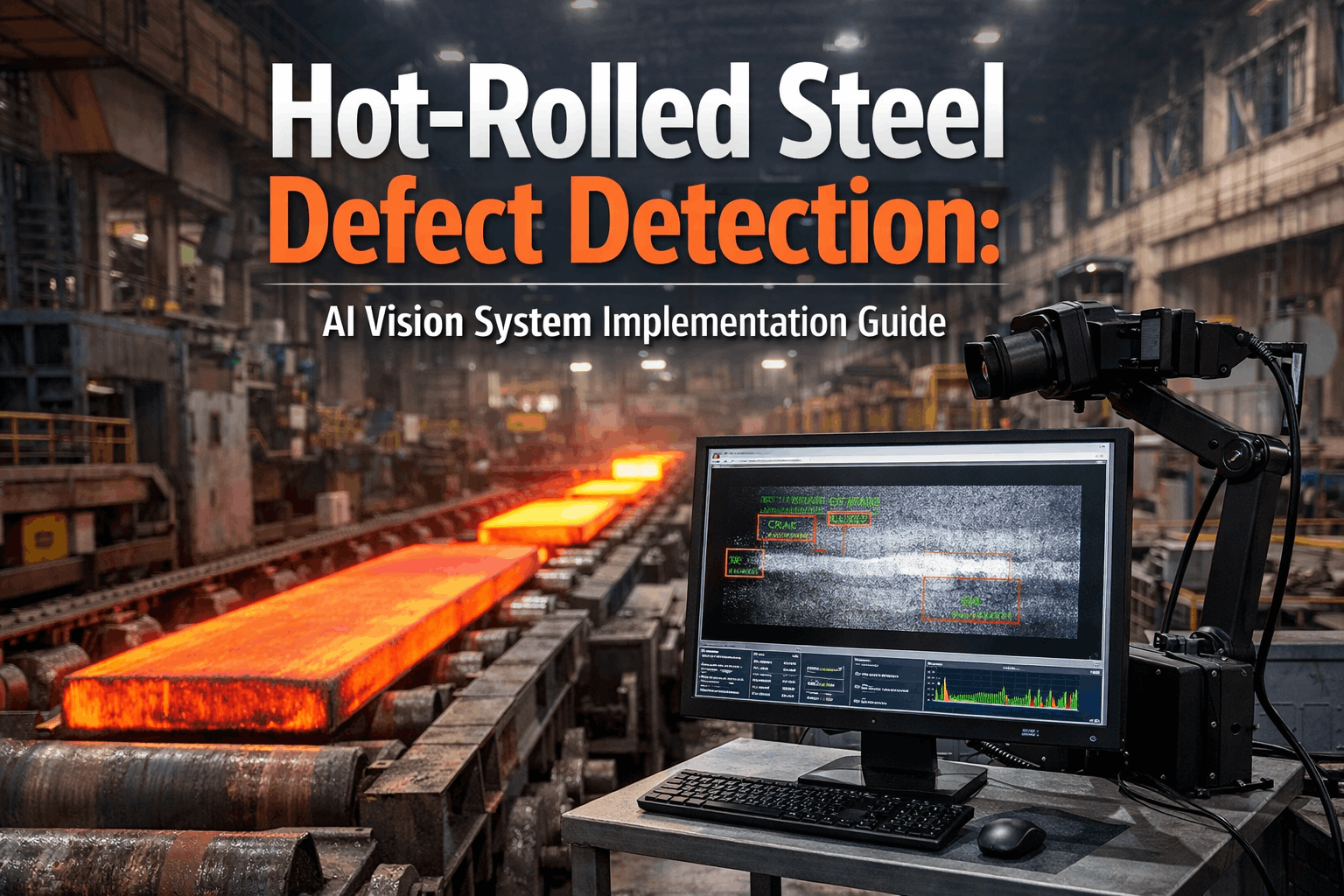
| Hot Strip Mill — Strip Surface | Line-scan AI vision (YOLOv8) | Scale pits, seams, laps, edge cracks | Real-time at speed | 120 m/min, 900°C surface, steam, vibration |
| Caster Strand | High-speed AI vision (EfficientDet) | Surface cracks, oscillation marks, breakout precursors | Real-time | Water spray, steam, 1,200°C strand surface |
| Conveyor Belt Network | Overhead AI vision (ResNet) | Belt misalignment, longitudinal tears, splice failure | Minutes | Dust, vibration, variable lighting, heat |
| Ladle / Torpedo Car | IR thermal camera (mobile tracking) | Shell hotspots, refractory wear prediction | 1–2 weeks | Mobile target tracking, 600°C shell ambient |
| Casthouse / Tap Floor | AI vision pose detection (YOLO-Pose) | Personnel proximity, PPE compliance, iron runner condition | Real-time | 1,500°C metal, smoke, variable lighting |
What Steel Plant Automation and AI Vision Engineers Say
The fundamental problem with conventional IoT sensors in a blast furnace is that they measure at the boundary of the process — thermocouples on the shell, pressure sensors on the gas main, flow meters on the cooling water. Smart sensors — stockline radar, tuyere cameras, thermal imagers — measure inside the process where the actual failure mechanisms develop. A cooling stave that is about to fail does not show its early warning signal on the shell thermocouple. It shows it in the tuyere flame geometry and the IR hotspot pattern on the shell three weeks earlier. That is the data that prevents campaigns from ending prematurely.
How OxMaint Connects Smart Sensors to Maintenance Actions
Smart Sensor Questions from Steel Plant Engineering Teams
Why does BF stockline measurement require radar rather than ultrasonic or laser sensors?
Blast furnace top gas at 300–400°C contains CO, CO₂, water vapour, and particulate dust at concentrations that absorb and scatter laser and ultrasonic signals completely. Microwave FMCW radar at 76–81 GHz penetrates this atmosphere without signal degradation and measures burden surface level to ±50 mm accuracy regardless of dust load or gas composition. Laser and ultrasonic alternatives routinely give false readings or complete signal loss in BF top gas conditions. OxMaint receives stockline radar data via OPC-UA and triggers charging rhythm WOs automatically on asymmetric distribution alerts. Book a demo to see stockline radar integration in OxMaint.
How many labelled training images does an AI vision model need for steel surface defect detection?
Production-grade accuracy for steel surface defect detection requires a minimum of 5,000 labelled examples per defect class — and typically 15,000–50,000 total images across all classes for robust YOLOv8 or EfficientDet models. Initial models trained on 2,000 examples per class can achieve 90–95% accuracy but suffer from high false-positive rates on uncommon defect variants. OxMaint stores AI model version, training dataset hash, inference threshold, and false-positive rate against the vision sensor asset record — enabling rigorous model performance tracking over time. Sign in to configure AI model tracking in OxMaint.
How does OxMaint handle tuyere camera events when all 40 tuyeres must be monitored continuously?
OxMaint receives structured anomaly events from the tuyere camera analysis system — not the raw video stream. The camera system's AI processes each tuyere image locally and emits an event only when the flame asymmetry score exceeds a configured threshold. OxMaint maps that event to the specific tuyere number as an asset, generates a work order with the anomaly score, the camera image reference, and the recommended inspection procedure. Routine scans within normal limits create log entries only — no WO, no alert fatigue. Book a demo to see tuyere event management in OxMaint.
Can OxMaint track ladle refractory wear across campaigns using thermal camera data?
Yes. OxMaint stores each ladle's thermal shell scan as a campaign-indexed record against the ladle asset. Shell temperature at defined measurement points is compared across campaigns — identifying stave zones where wear is accelerating and projecting remaining campaign life. When the shell temperature at a tracked zone exceeds the campaign-end threshold, OxMaint auto-generates a relining schedule WO before the ladle reaches operational risk. This replaces the manual end-of-campaign inspection with continuous data-driven campaign management. Sign in to configure ladle campaign tracking in OxMaint.
Book a Demo — See OxMaint Connecting Smart Sensor Intelligence to Maintenance Action.
Stockline radar alerts · Tuyere flame anomalies · AI vision defect events · Thermal hotspot trends · Smart sensor fleet PM and calibration. Every signal from every advanced sensor becomes a trackable, closeable work order in OxMaint.