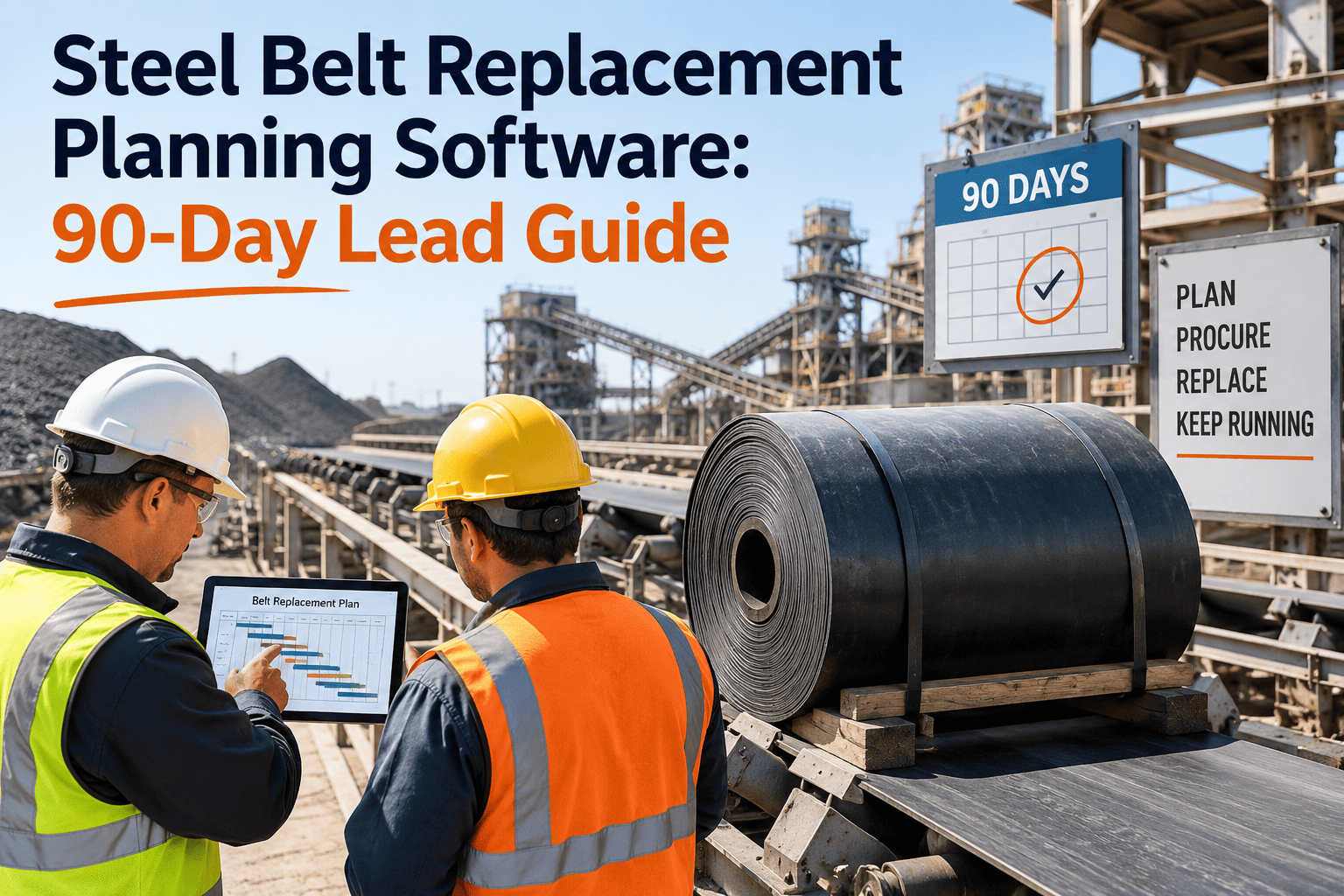
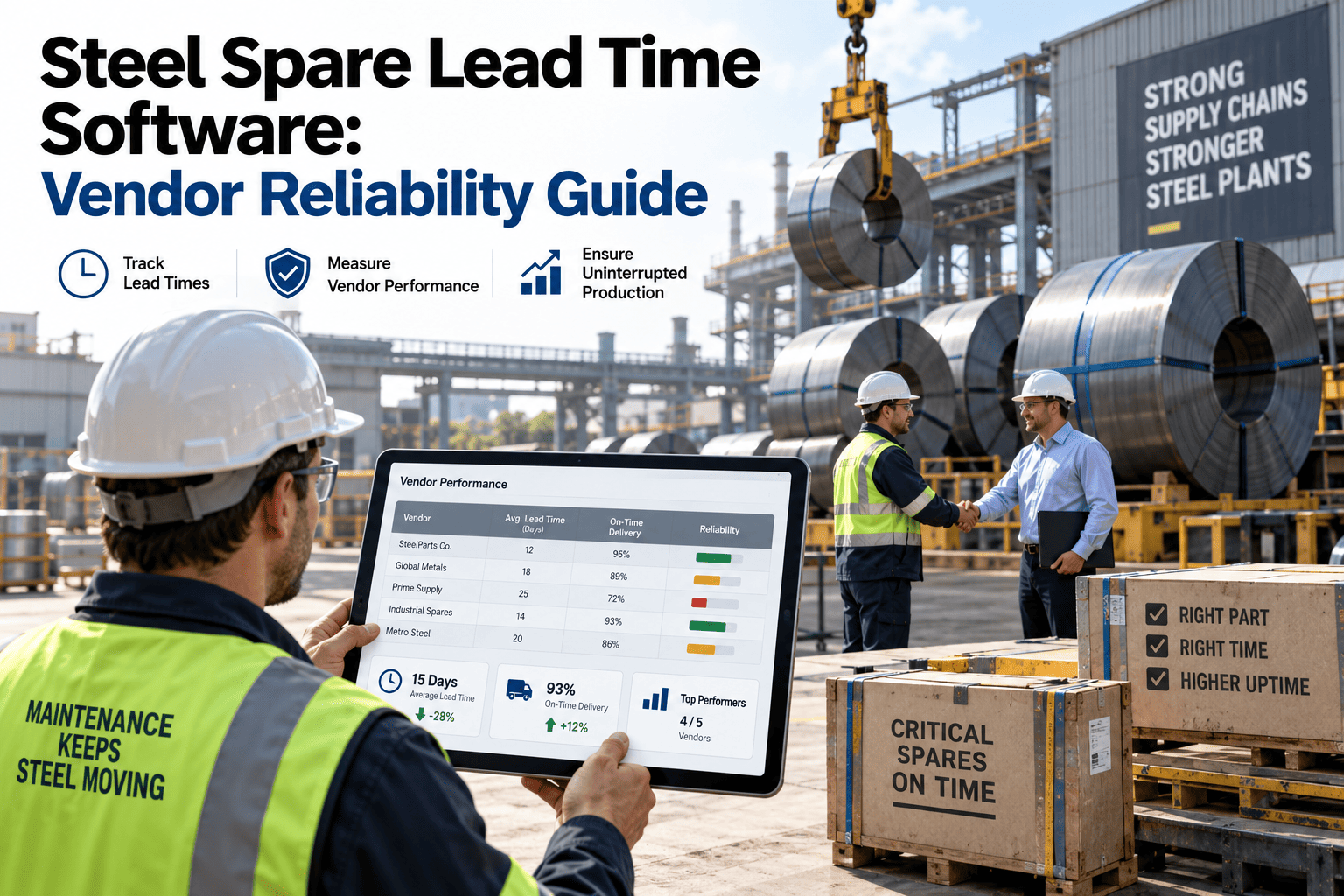
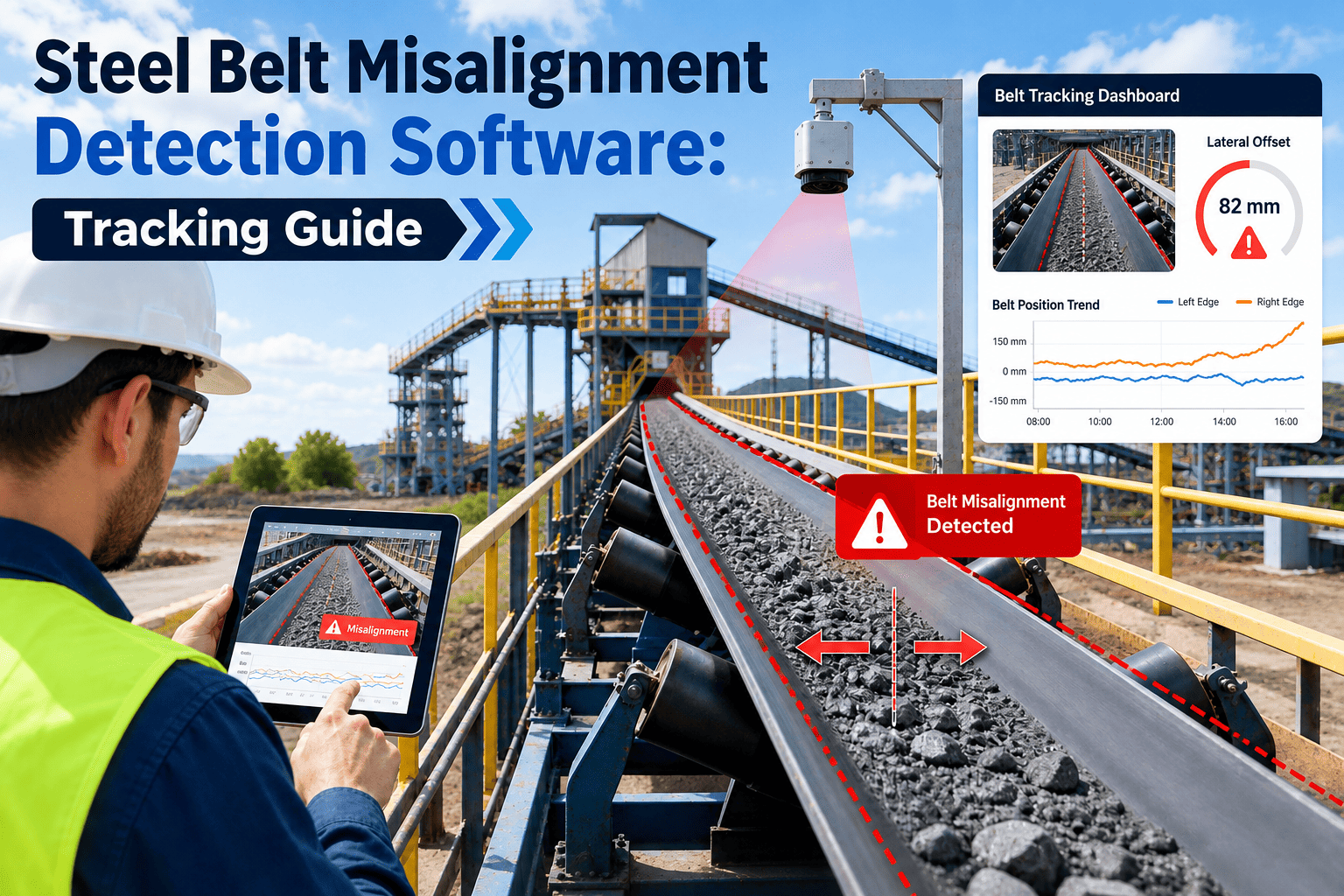
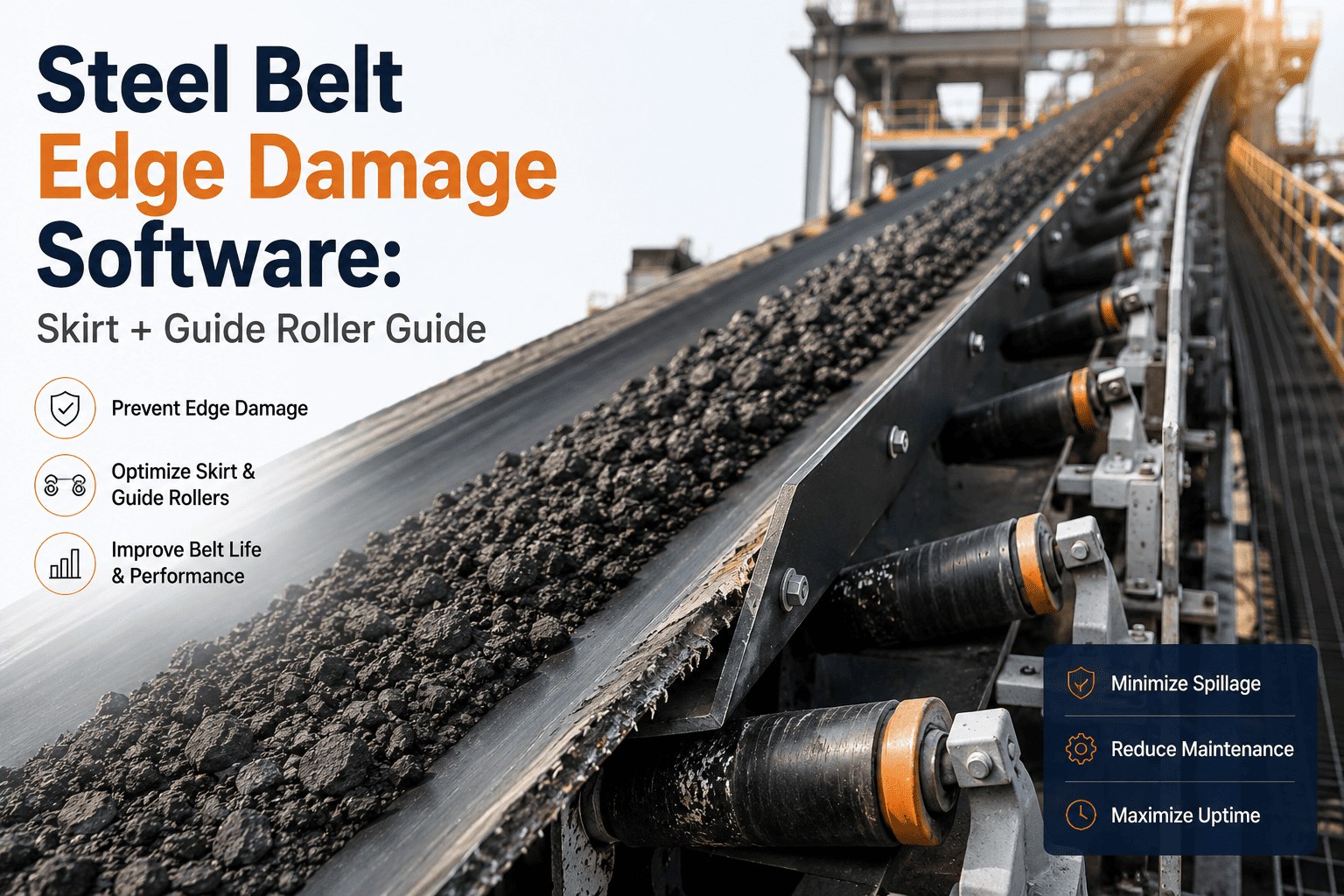
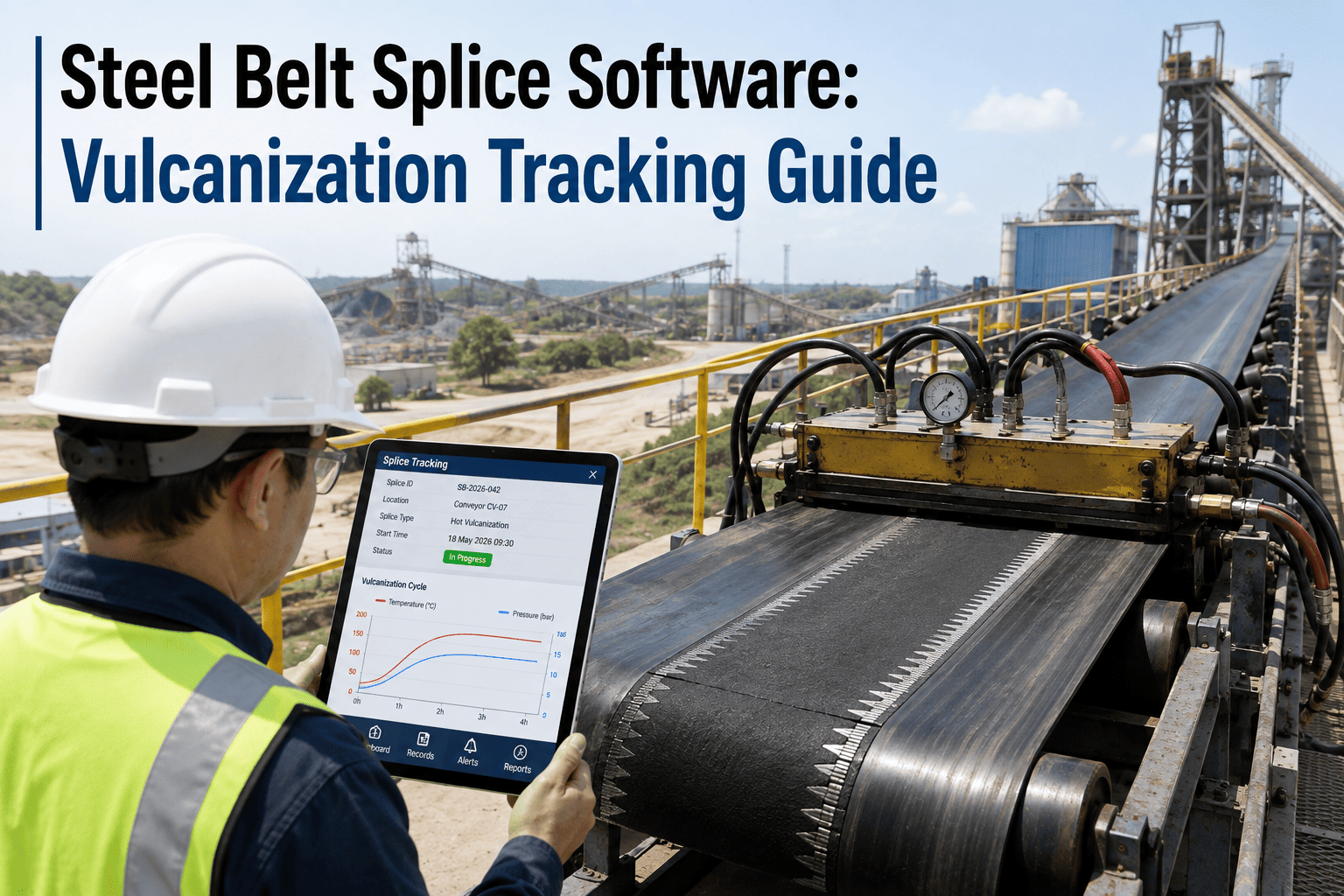
A conveyor belt replacement on a steel plant's ore, coke, or sinter line is never a same-week job. Custom-width, high-tensile belting is built to order, not pulled off a warehouse shelf, and a fabricator's production queue rarely bends to match a plant's shutdown calendar. Teams that wait until a splice fails before placing the order are left choosing between an extended unplanned outage and an emergency air-freight bill that can double the landed cost of the belt itself. Plants that avoid both outcomes start the clock 90 days out, lining up procurement, the shutdown window, and the vulcanization crew long before the belt reaches true end-of-life, and treating the whole sequence as one connected plan rather than three separate tasks owned by three separate people. That is the sequence Oxmaint's CMMS is built to keep visible in one place.
10–12 wks
Typical fabrication lead time for a custom-width steel plant conveyor belt
$250K+
Cost per hour once a stalled supply conveyor starves a furnace feed buffer
3–6 wks
Early warning window that cover-wear and splice data typically give before failure
27%
Average shutdown-duration reduction when procurement and crew scheduling are coordinated in one plan
The 90-Day Belt Replacement Clock
Once cover wear, splice condition, or tension drift data crosses the replacement threshold, everything downstream is a sequencing problem, not a purchasing problem. The belt fabrication order, the shutdown window request, and the vulcanization crew booking all compete for the same calendar, and each one has its own lead time. Working backward from a target cutover date is what keeps a 90-day window from collapsing into a scramble at day 20, with a fabricator ship date confirmed but no crew booked to install it.
Day 90
Confirm the Trigger and Release the Purchase Order
Cover thickness, splice condition, and tension telemetry cross the replacement threshold. The order is released against the belt specification on file, including width, ply construction, cover compound, and splice type, so the fabricator can start tooling immediately. Confirming the spec here rather than at day 60 avoids the single most common source of delay: a mid-order change to width or cover type that resets the fabricator's queue position.
Day 75
Lock the Shutdown Window With Production
Reliability and production agree on a specific outage window, sized to the actual splice or full-belt swap duration rather than a generic shutdown template. Locking this early protects the date from being bumped by an unrelated outage request later in the quarter. A window that is only confirmed verbally tends to slip; one entered into the shared shutdown calendar with a named owner rarely does.
Day 60
Confirm Fabrication Progress and Order Splice Materials
Fabricator confirms the belt is in production against the committed ship date. Splice kits, mechanical fasteners or hot-vulcanization materials, and edge sealant are ordered separately, since these often carry their own four-to-six week lead time distinct from the belt itself. Confirming both orders together at this checkpoint is what prevents a finished belt from sitting in storage while splice materials are still in transit.
Day 30
Book the Vulcanization Crew and Stage Equipment
Internal or contract vulcanization crew is confirmed against the locked shutdown date. Rigging, belt pullers, splice press, and fall-protection equipment are reserved and staged, and permits for hot work and confined space are drafted ahead of the window. Staging equipment two weeks early, rather than the morning of the shutdown, gives the crew time to flag a missing or damaged tool while there is still time to source a replacement.
Day 0
Cutover and Verification
Old belt is removed, new belt is installed and spliced, tension and tracking are calibrated, and the conveyor is verified under load before handover to production. Baseline cover thickness and splice photos are logged on day one of the new belt's service life, so the next replacement cycle starts from a documented baseline instead of guesswork.
Stop tracking belt fabrication dates, shutdown windows, and crew bookings across separate spreadsheets and phone calls.
Belt Type, Lead Time, and Delay Risk
Not every conveyor belt on a plant carries the same procurement risk. Custom cover compounds, oversized widths, and specialty splice types stretch fabrication time well past what a standard catalog belt requires, and a delayed order on a high-tonnage line has a very different production impact than a delay on a low-volume auxiliary conveyor. Building this table into the belt asset record means the lead-time assumption is documented once, rather than re-estimated by whoever happens to be planning the next shutdown.
| Belt Type |
Typical Width |
Fabrication Lead Time |
Risk If Ordered Late |
| Standard fabric ore conveyor belt |
1,200–1,600 mm |
6–8 weeks |
Moderate – catalog stock sometimes available |
| High-tensile steel-cord belt |
1,600–2,200 mm |
10–14 weeks |
High – no substitute width in stock |
| Heat-resistant sinter feed belt |
1,000–1,400 mm |
8–12 weeks |
High – specialty cover compound only |
| Corrugated sidewall belt |
800–1,200 mm |
9–11 weeks |
High – cleat spacing built to spec |
| Auxiliary yard conveyor belt |
600–900 mm |
3–5 weeks |
Low – standard width, multiple suppliers |
What the 90-Day Plan Actually Coordinates
A belt replacement plan that lives only in the maintenance planner's head breaks the moment that person is out for a week. Building the plan into the CMMS keeps every dependent task, and the person responsible for it, visible to the whole reliability team.
Procurement Tracking
Purchase order status, fabricator ship-date confirmations, and splice material orders are tracked against the belt's replacement trigger date, with automatic flags when a supplier confirmation is overdue. This turns a supplier delay into a visible planning risk weeks before it becomes a shutdown-day surprise.
Shutdown Window Coordination
The locked outage window is linked to the belt work order, so production scheduling and maintenance planning are working from the same date instead of two separate calendars that can silently drift apart. Any proposed change to the date triggers a notification to both teams instead of surfacing after the fact.
Vulcanization Crew Scheduling
Internal crew availability or contractor booking confirmations are logged against the same shutdown window, along with the rigging and splice press equipment each crew needs reserved ahead of time. If a contractor cancels, the gap shows up immediately rather than during shutdown-week scrambling.
Belt Condition Trend Logging
Cover thickness readings, splice inspection notes, and tension data are logged against the belt asset record over time, so the 90-day trigger is based on a documented trend rather than a single inspector's judgment call. New team members can see the full wear history the first time they inspect a line.
When to Trigger the 90-Day Clock
The hardest part of belt replacement planning is not the logistics — it is deciding when to start. Waiting for a visual failure means starting the 90-day clock too late, and ordering too early ties up capital and warehouse space on a belt that still has months of usable life left. These are the condition signals that should trigger the order before a belt reaches the point of no return, drawn from cover thickness, splice condition, and tension trend data rather than a single walk-by inspection.
Monitor
Cover wear at 50–60% of original thickness, splice showing initial edge lift. Increase inspection frequency; no order yet.
Plan
Cover wear at 65–70%, tension drift exceeding 10% of spec, or a repaired splice showing renewed separation. Release the purchase order and start the 90-day clock now.
Urgent
Cover wear beyond 75%, cord or fabric visible at the loading zone, or a splice requiring localized repair. Escalate to the earliest available shutdown window, even if it means compressing other planned work.
Common 90-Day Planning Mistakes
Most late belt deliveries are not the fabricator's fault. They trace back to a handful of planning gaps that repeat across plants regardless of belt type or supplier.
Ordering the belt without confirming splice material lead time
Splice kits and vulcanization materials are frequently sourced from a different supplier than the belt itself, and can carry a separate four-to-six-week lead time that gets missed until the shutdown window is already locked. A finished belt with no splice kit on hand simply pushes the cutover date back by however long that second order takes.
Locking a shutdown window before confirming crew availability
A vulcanization crew booked too late, whether internal or contracted, can force the shutdown window to move, which cascades into every other outage scheduled around it that quarter. Confirming crew availability before the window is locked, not after, keeps that cascade from starting in the first place.
Treating the 90-day figure as fixed for every belt
A standard-width fabric belt on an auxiliary line may only need 30–40 days of lead time, while an oversized steel-cord belt can need 14 weeks. Applying one blanket timeline either wastes planning cycles on a belt that did not need that much runway, or triggers the order too late on one that did.
Losing the plan when the responsible planner is unavailable
When procurement status, crew confirmations, and the shutdown date live in one person's inbox and notebook, a single absence can stall the whole sequence at a critical point in the 90-day window. A shared, work-order-linked plan removes that single point of failure entirely.
Who Owns Each Part of the Plan
A 90-day belt replacement touches more than one department, and clear ownership at each checkpoint is what keeps the plan moving without someone having to chase down a status update by phone. Assigning an owner to each task also makes it obvious, at a glance, which part of the plan is at risk when a date starts slipping.
Purchase order release and fabricator follow-up
Maintenance planner
Shutdown window approval
Production scheduler
Splice material ordering
Procurement lead
Crew booking and equipment staging
Reliability supervisor
Permits and safety sign-off
Plant safety officer
Cutover verification and baseline logging
Reliability supervisor
Turn belt condition data into a scheduled replacement instead of a shutdown surprise.
What Coordinated Planning Changes
Plants that move belt replacement out of ad hoc spreadsheets and into a tracked CMMS workflow report measurable improvement across the four numbers that matter most to a shutdown-driven procurement process.
27%
Shorter Shutdown Duration
When procurement, crew, and window are locked together instead of separately
40%
Fewer Emergency Orders
Belts ordered against a documented trend instead of a visual failure
2x
Longer Belt Service Life
When cover wear and splice trend data are logged consistently over time
91%
On-Time Cutover Rate
Shutdown windows held to their original planned date
Numbers explain what changes on paper. The account below is what that change looks like from inside a plant that moved its belt replacement program out of spreadsheets and phone calls and into a single tracked plan.
We used to find out a belt was 12 weeks out the same week we needed it. Now the order goes in the moment cover wear crosses our threshold, and the shutdown window is locked before the fabricator even confirms a ship date. The whole sequence lives in one place instead of three inboxes, and nobody has to remember to chase the splice kit order separately anymore.
Reliability Manager, Integrated Steel Plant
Frequently Asked Questions
Why does a steel plant conveyor belt need 90 days of lead time?
Custom-width, high-tensile belting is built to order rather than kept in stock, and fabrication alone can run 10–14 weeks for steel-cord or specialty cover types. The 90-day window also covers splice material ordering, shutdown scheduling, and crew booking, which all run in parallel with fabrication rather than after it. See how
Oxmaint tracks the full sequence against one shutdown date.
What condition data should trigger the replacement order?
Cover wear crossing roughly 65–70% of original thickness, tension drift beyond 10% of specification, or a repaired splice showing renewed separation are the signals that should release the purchase order, rather than waiting for a visible failure at the loading zone.
Do splice materials really have a separate lead time from the belt?
Yes. Splice kits, hot-vulcanization compounds, mechanical fasteners, and edge sealant are frequently sourced from a different supplier than the belt itself, and can carry their own four-to-six-week lead time that is easy to miss until the shutdown window is already locked.
How does a shorter belt need less lead time than a wider one?
Standard-width fabric belts on auxiliary or lower-tonnage lines are more likely to match catalog stock widths, cutting fabrication time to roughly 3–5 weeks, while oversized steel-cord belts on primary ore lines require custom tooling that can take three times as long.
How is a 90-day plan tracked without losing visibility if the planner is out?
Keeping procurement status, crew confirmations, and the locked shutdown window inside a shared CMMS work order, rather than a single person's spreadsheet, means any team member can see the current status.
Book a walkthrough to see the workflow.
None of this replaces good inspection practice or an experienced planner's judgment. What it changes is where that judgment gets recorded, and how easily the rest of the team can act on it once a threshold is crossed and the 90-day clock starts running.
Get ahead of the next belt replacement before the fabrication clock runs out.