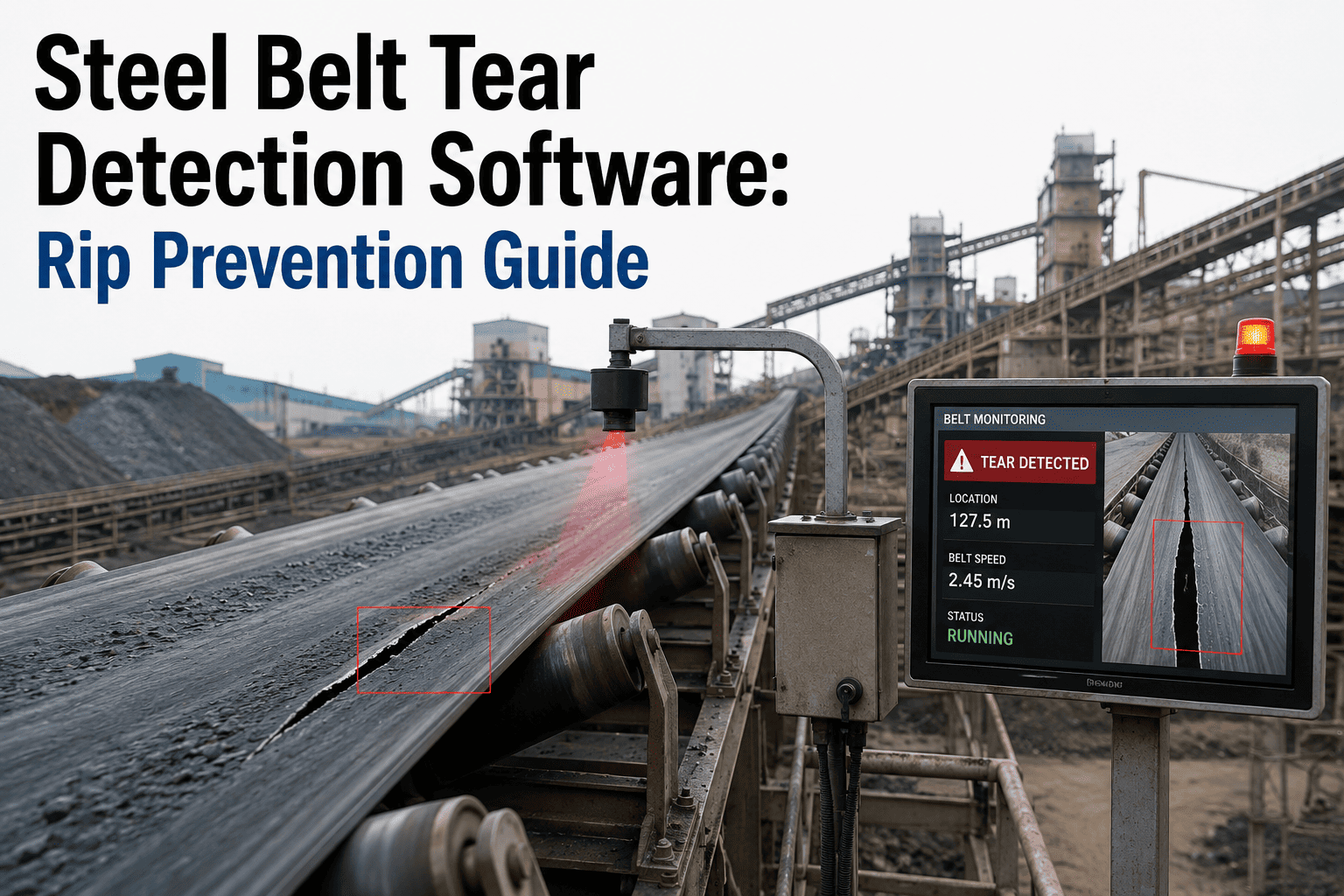
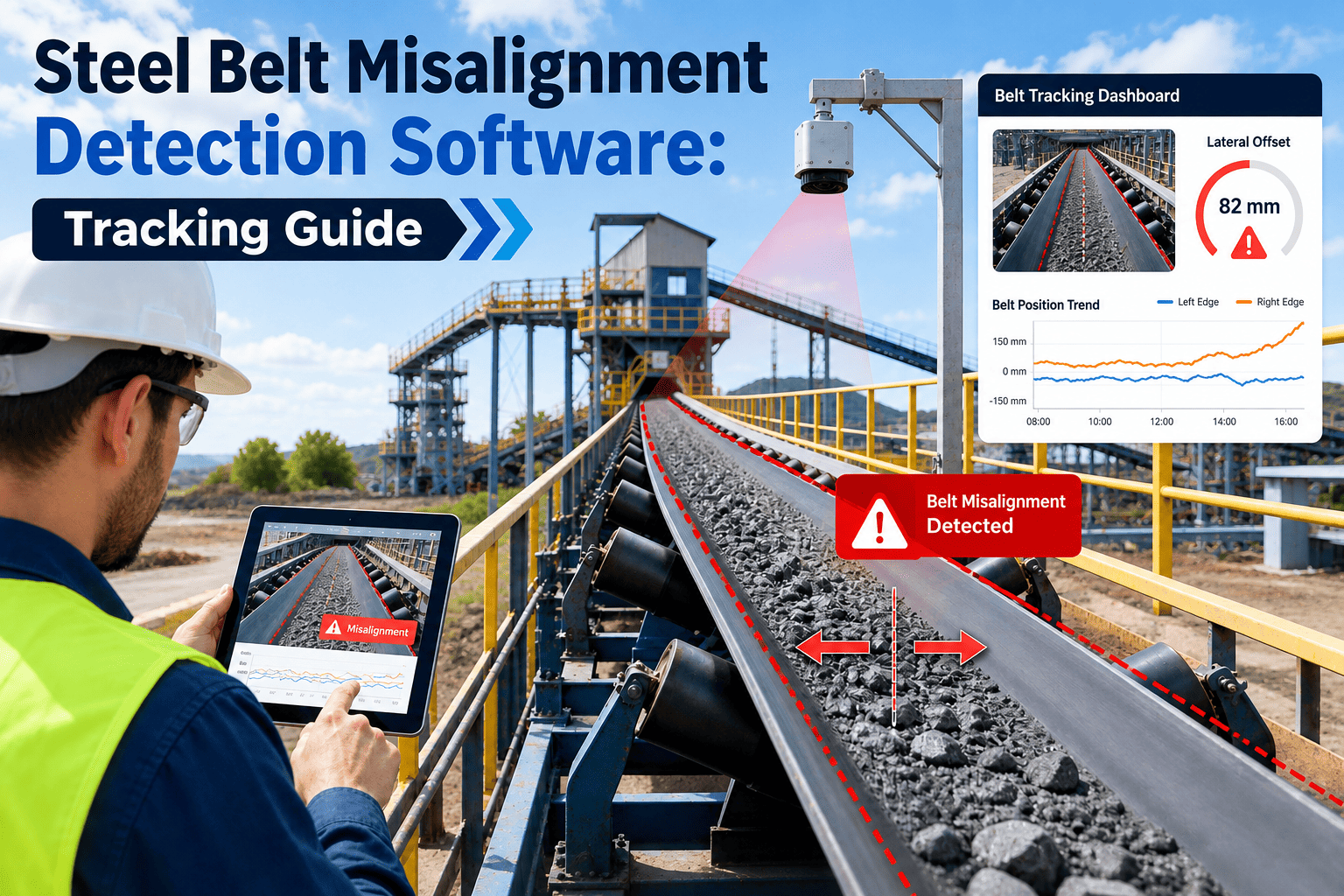
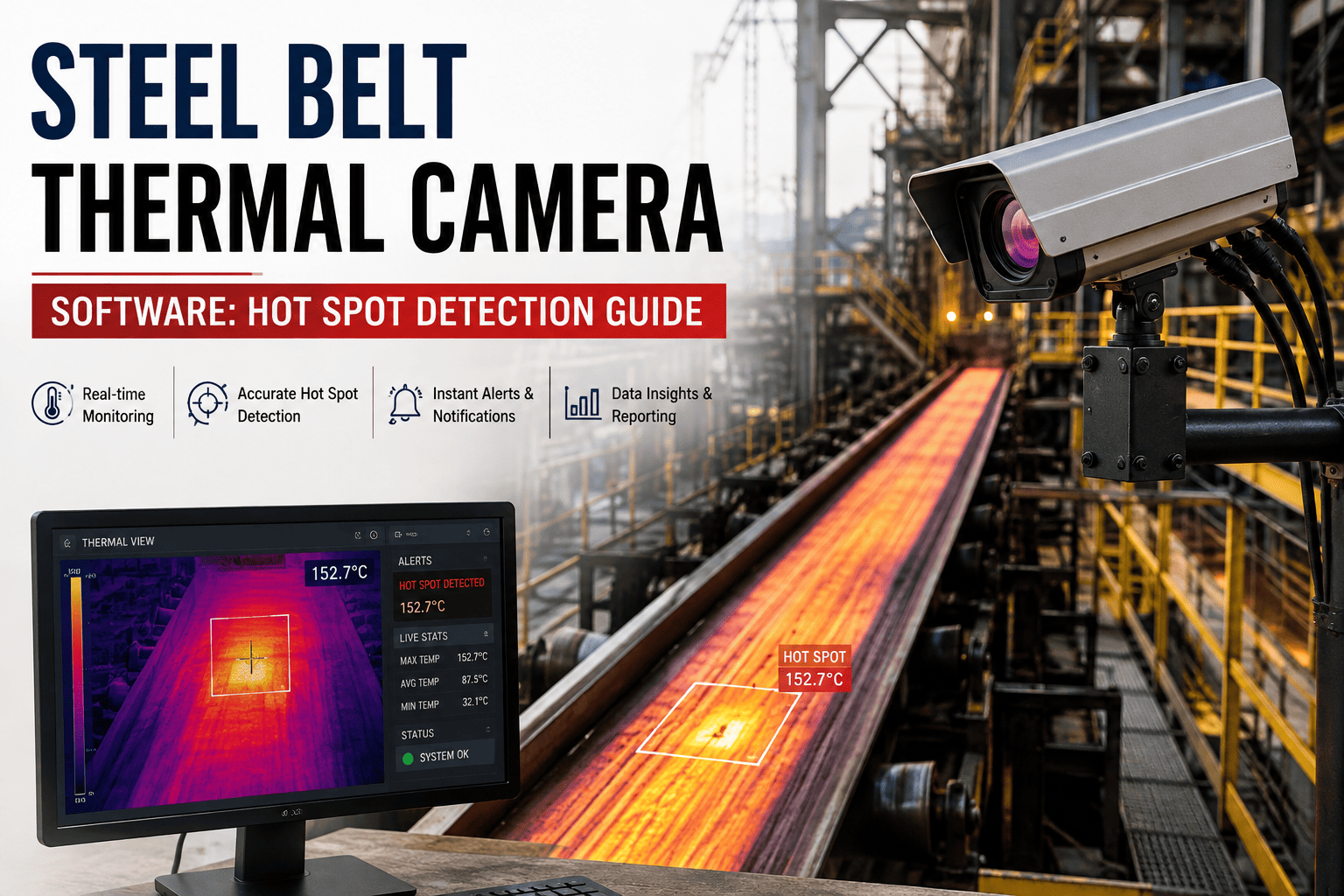
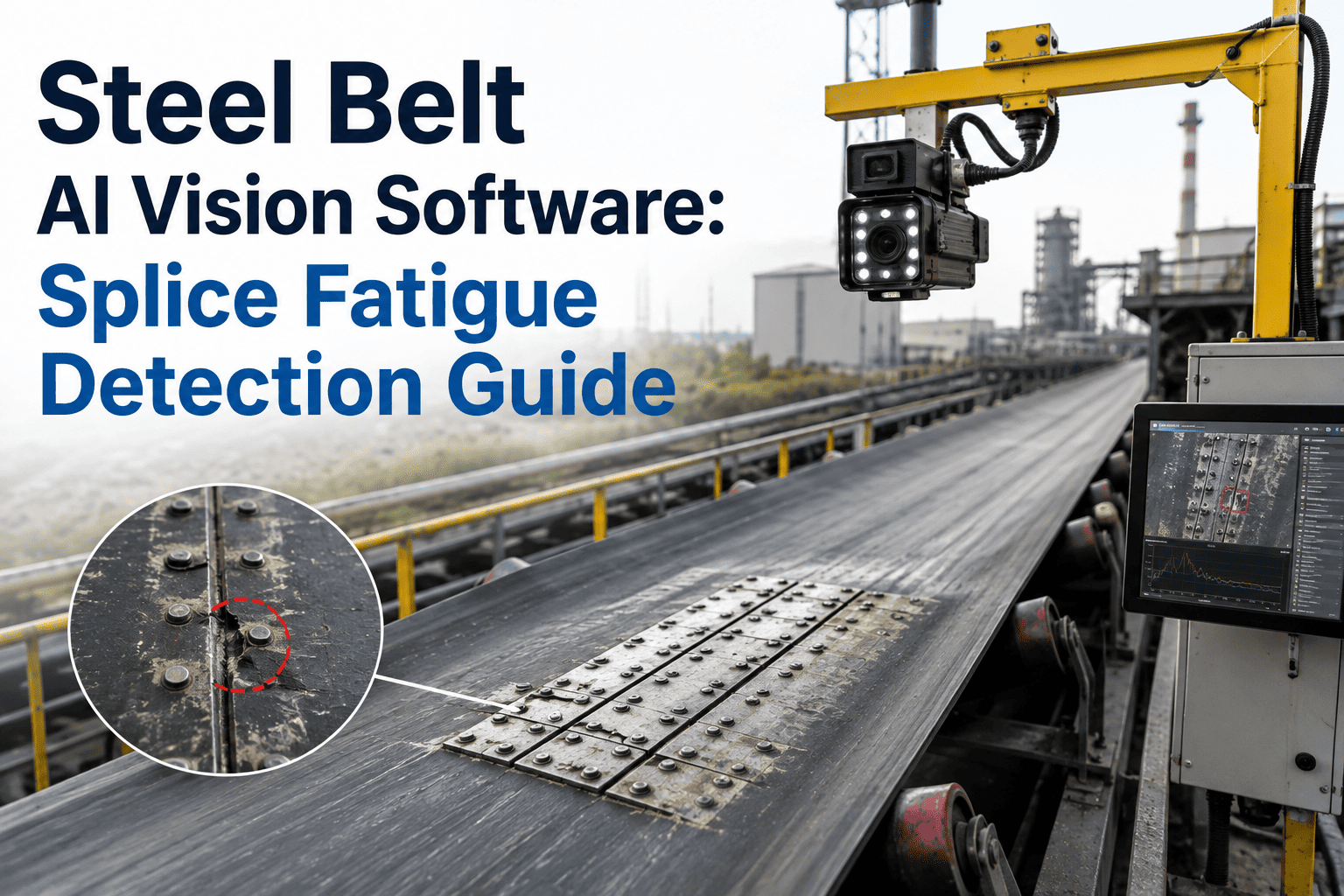
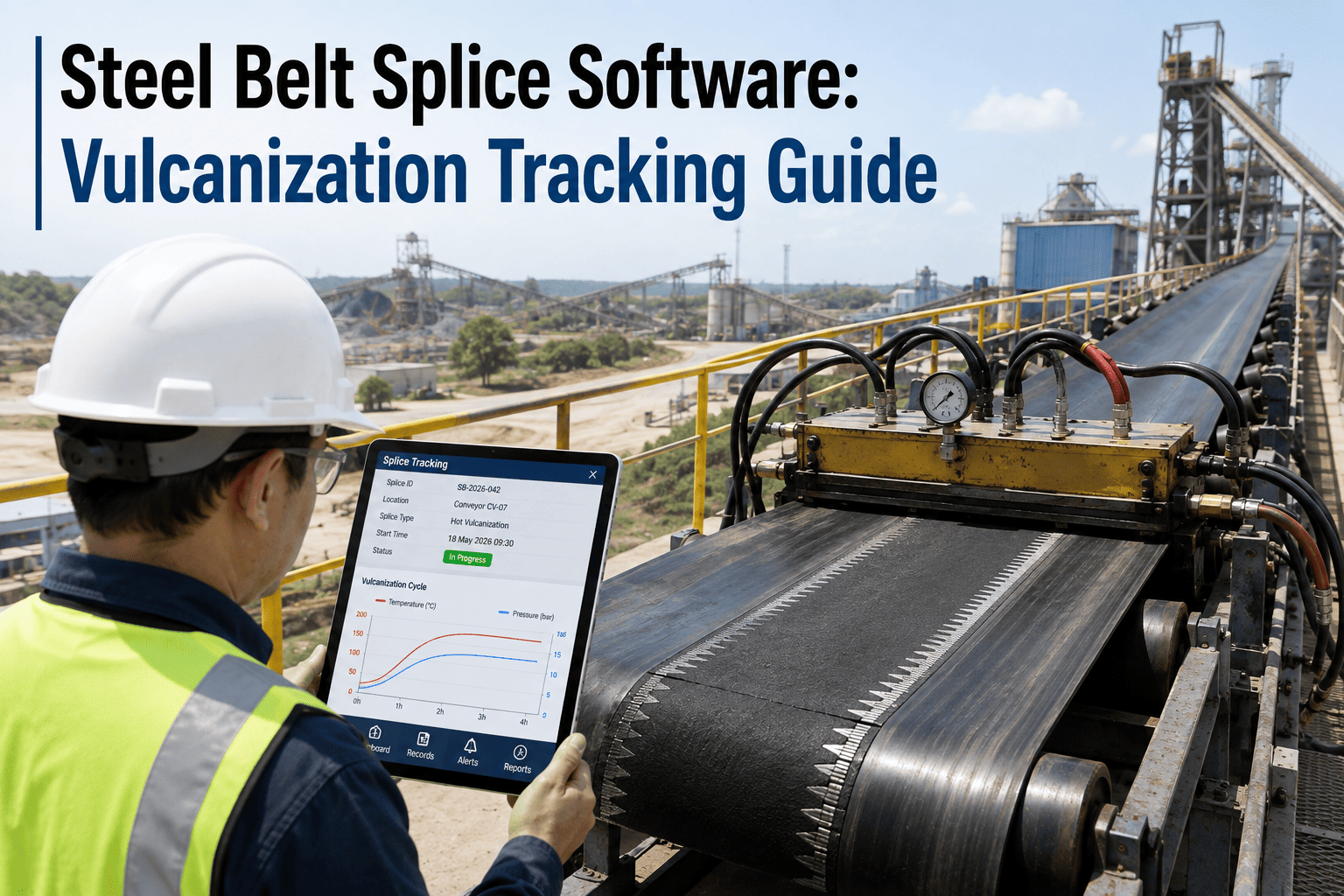
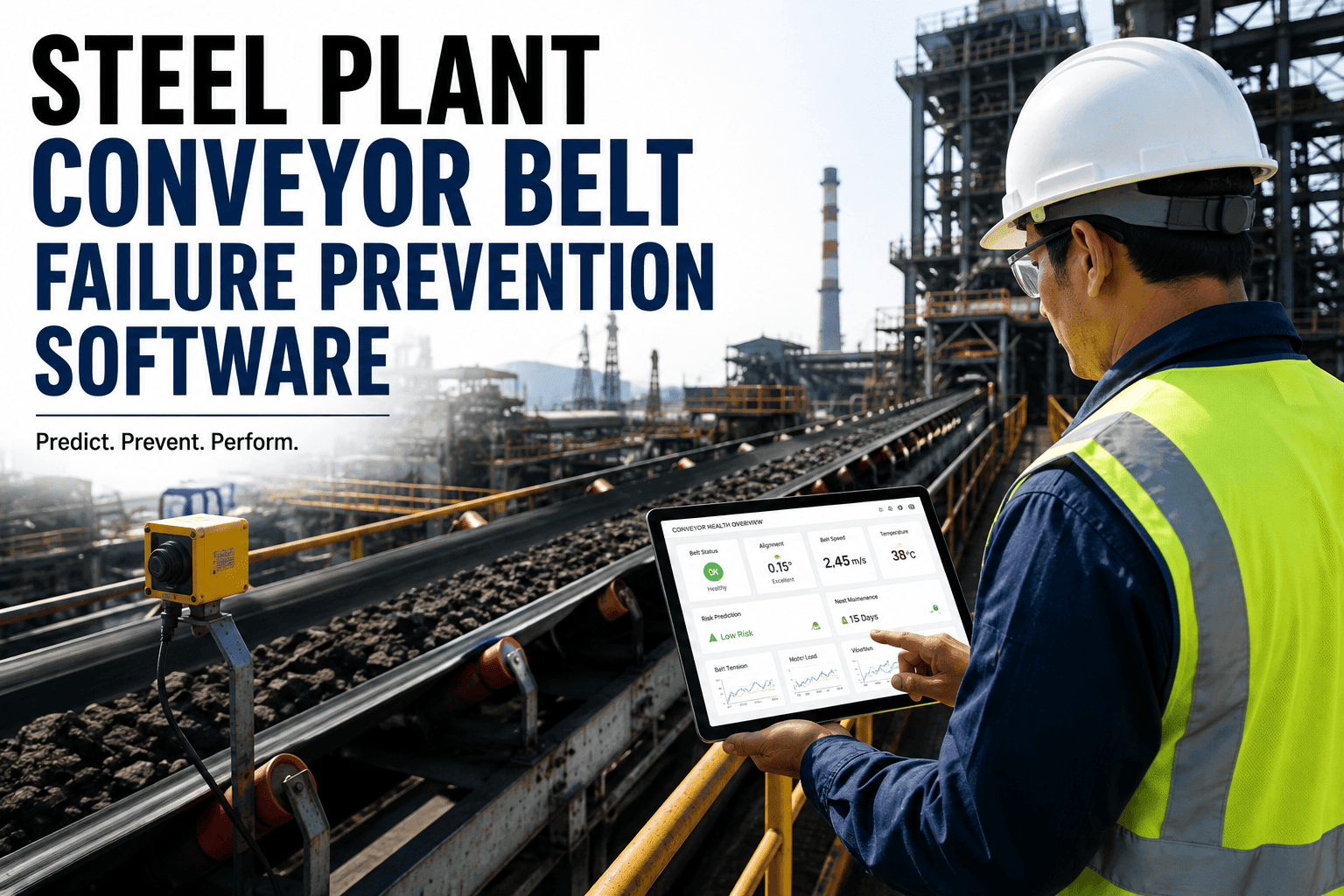
A longitudinal rip on a steel plant conveyor belt rarely starts as a dramatic tear — it starts as a small puncture from a tramp metal edge or a jammed chute, travelling quietly under the load for minutes before anyone sees it. By the time it surfaces, a single rip can shut down a sinter or pellet feed line for a full shift and cost far more in belt replacement than any inspection programme ever would. Most plants still rely on a patrol walking the line once a shift, which means a rip that starts twenty minutes after the last walk-through has almost two hours to run before the next one. The plants that avoid long conveyor outages are the ones layering camera-based rip detection, embedded loop sensors, and patrol logs into one monitored system instead of leaning on any single method alone. Book a 30-minute demo to see how Oxmaint brings all three detection layers into one CMMS-driven rip prevention workflow.
Predictive Maintenance · Conveyor Systems · Belt Integrity
Steel Belt Tear Detection Software: Rip Prevention Guide
How steel plants layer rip detection cameras, embedded loop sensors, and manual patrol logs into a single monitored detection chain — and how a connected CMMS turns an early rip signal into a stopped conveyor instead of a shift-long outage.
3 layers
Cameras, embedded loop sensors, and patrol logs working together
<2 sec
Typical belt stop response time once an embedded loop sensor detects damage
Full shift
Production commonly lost to a single undetected longitudinal rip
1 hr
Typical gap between manual patrol rounds where a rip can run undetected
Three Layers of Belt Tear Detection — How They Work Together
No single detection method catches every rip cause. Cameras, embedded sensors, and patrols each cover a gap the other two leave open, which is why plants that combine all three see the sharpest drop in unplanned belt replacement.
Rip Detection Cameras
Continuous visual surveillance
Best atSpotting surface damage, tracking misalignment, and material spillage as it develops
CoverageFixed points along the belt line — loading zones, transfer points, splice areas
LimitationCannot see damage on the underside of the belt or inside the carcass
Embedded Loop Sensors
Conductor loops inside the belt carcass
Best atDetecting a full-depth rip the instant it breaks a loop, triggering an immediate stop
CoverageThe entire belt length, since loops are woven through the belt at set intervals
LimitationOnly detects damage that reaches the loop depth — surface scoring can go unnoticed
Manual Patrol Logs
Human inspection rounds
Best atCatching issues no sensor is built for — splice wear, idler noise, edge fraying, pulley lagging condition
CoverageThe full line, but only at the frequency of the patrol schedule
LimitationA rip that starts between rounds can run for the entire interval before it is found
Five Warning Signs a Belt Is About to Tear
A rip is almost never the first symptom. These five signals typically show up days or weeks earlier, and each one is something a layered detection system can trend before the belt actually fails.
01
Tracking
Belt drifting off-centre at transfer points
Persistent mistracking wears one edge of the belt faster and increases the chance of edge contact with the frame, a common starting point for tears.
02
Load Impact
Repeated tramp metal or oversized lump strikes
Metal detectors that are miscalibrated or missing let sharp material reach the belt surface, where a single strike can puncture the carcass.
03
Splice Condition
Visible fraying or separation at the splice
Splices are the weakest structural point on a belt, and early fraying caught on a patrol log or camera frame is one of the most reliable early-tear indicators.
04
Chute Buildup
Material carryback and blocked chutes
Buildup at a transfer chute can jam against a moving belt, creating a snag point that tears the belt surface within seconds of contact.
05
Idler Condition
Frozen or worn idlers scoring the belt underside
A seized idler drags against the moving belt continuously, gradually thinning the carcass at one point until it becomes a rip starting line.
Turn Every Rip Signal Into a Stopped Conveyor and a Work Order
Oxmaint brings camera alerts, embedded loop sensor trips, and patrol log findings into a single CMMS view — so whichever layer catches the first sign of damage, the response is the same: an immediate stop command and a work order with the exact location logged.
Belt Inspection Schedule — Method and Frequency
A layered detection chain only works if each method is checked and maintained on its own schedule. The table below sets a practical starting cadence for the three detection layers and the equipment that feeds them.
| Task |
Interval |
Who Performs |
Oxmaint Trigger |
| Rip detection camera lens and alignment check |
Weekly |
Instrument tech |
Weekly checklist + fault alert |
| Embedded loop sensor continuity test |
Daily |
Electrical tech |
Daily test log + open-loop alert |
| Manual patrol walk-through |
Per shift |
Conveyor operator |
Shift patrol log + finding entry |
| Metal detector calibration |
Weekly |
Instrument tech |
Weekly calibration work order |
| Splice visual inspection |
Monthly |
Maintenance tech |
Monthly PM + condition log |
| Idler rotation and drag check |
Monthly |
Maintenance tech |
Monthly PM + seized-idler alert |
From First Signal to Stopped Belt — The Response Chain
Detecting a rip is only half the job. What separates a near-miss from a shift-long outage is how fast the signal moves from sensor to stop command to work order.
01
Detect
A camera flags an anomaly, a loop sensor breaks continuity, or a patrol logs a finding — any one of the three layers can be the first to catch it.
02
Localize
The system pinpoints which belt section and which zone triggered the alert, so the response team knows exactly where to look before they arrive.
03
Respond
A stop command halts the conveyor and a work order is generated automatically, carrying the location and detection method straight to the maintenance team.
04
Learn
Each closed work order feeds back into the detection baseline, improving how quickly the next similar event is caught and reducing false stops over time.
The plants that stopped losing full shifts to belt rips are not the ones with the most expensive camera system — they are the ones where a camera alert, a loop sensor trip, and a patrol finding all land in the same work order queue. A rip caught by any one layer should never sit unacted on because the other two systems didn't see it too.
Daniel Osei
Conveyor Systems Reliability Lead, Bulk Materials Handling
Frequently Asked Questions
What causes most steel plant conveyor belt tears?
Tramp metal punctures, jammed chutes, seized idlers, and splice failure account for most longitudinal rips. Nearly all of them show a detectable warning sign days or weeks before the belt actually tears.
Are embedded loop sensors enough on their own for rip detection?
Loop sensors are excellent at catching full-depth rips instantly, but they cannot see surface damage or misalignment building up. Pairing them with cameras and patrols closes that gap.
Start a free trial to see a layered setup in practice.
How fast does the belt stop once a tear is detected?
A properly configured embedded loop sensor system can trigger a stop command in under two seconds, which is typically fast enough to limit a puncture to a short section instead of a full-length rip.
Can manual patrol logs be replaced entirely by sensors and cameras?
Not fully — patrols catch conditions like idler noise, edge fraying, and pulley lagging wear that neither cameras nor loop sensors are built to detect, so all three layers remain complementary.
How does a CMMS improve belt tear detection over time?
Every detected event and closed work order becomes part of the asset's history, sharpening the baseline used to flag the next anomaly and reducing false alarms.
Book a demo to see how Oxmaint builds that history automatically.
Stop Losing Shifts to Belt Rips You Could Have Caught Earlier
Oxmaint unifies rip detection cameras, embedded loop sensors, and patrol logs into one CMMS-driven response chain — detecting, localizing, stopping, and logging every rip event automatically, and getting smarter with every closed work order.