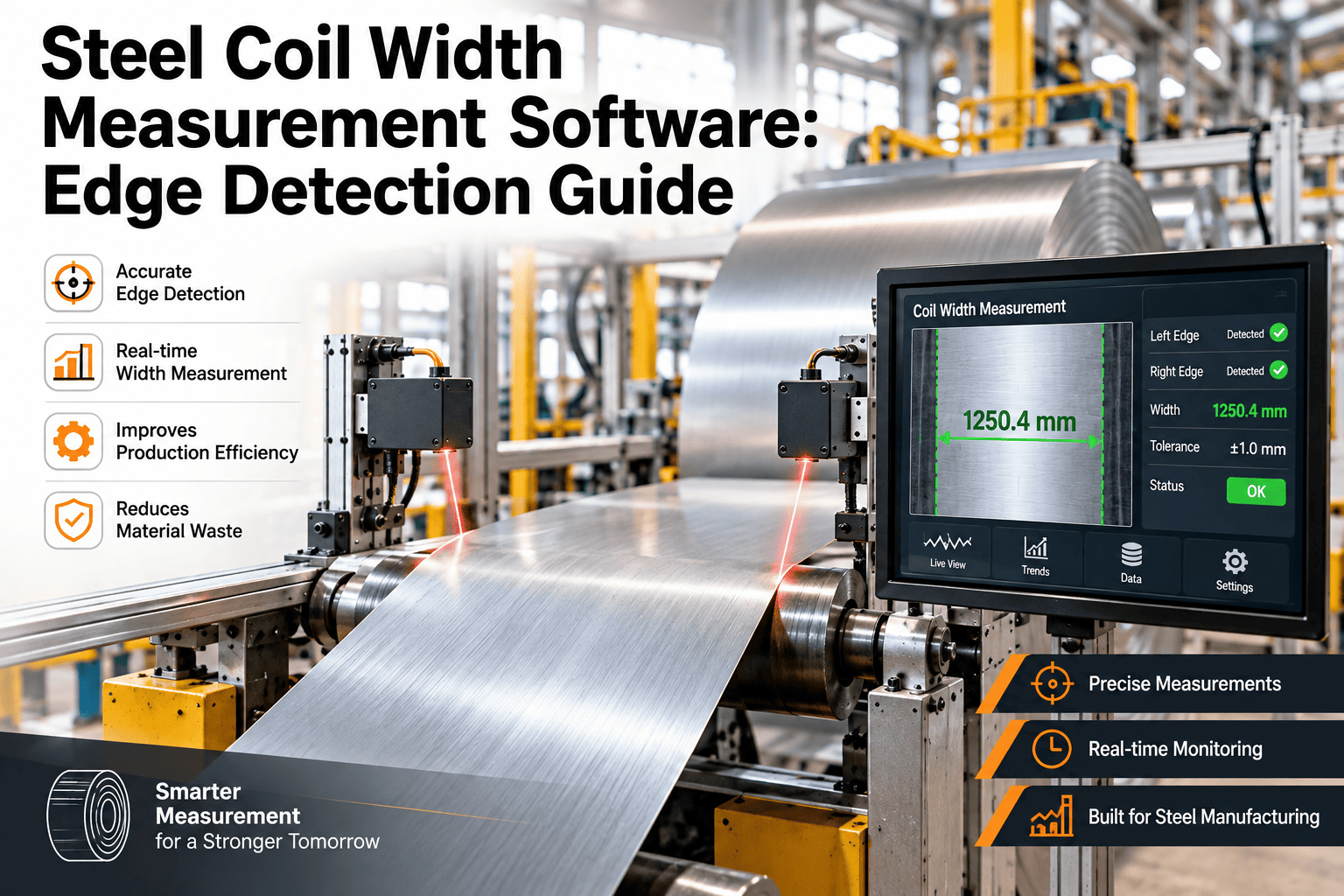
Coil width variance is a quiet quality problem until it isn't — a wide-coil automotive or appliance grade running a few millimeters out of tolerance doesn't trigger a visible defect on the line, it triggers a downstream customer claim weeks later when a stamping die doesn't fit. Manual calipers sample width at fixed intervals and miss transient variance between checks, which is why more steel plants are moving to AI-driven edge detection cameras that measure width continuously across the full coil length. This guide covers how width control programs are built around continuous edge detection and tied into maintenance workflows.
A caliper check every 500 feet misses the width drift that happens in between
AI edge detection cameras measure coil width continuously instead of sampling at intervals. OxMaint turns out-of-tolerance width readings into automated work orders — routed to the slitter or shear before an entire coil ships out of spec.
Manual calipers vs. AI edge detection: what changes on a wide-coil line
Both methods can hit the same accuracy spec on paper. The difference shows up in coverage — how much of the coil actually gets measured, and how fast a drift gets caught.
- Measures at fixed sample intervals, typically every 300–500 feet
- Requires the line to slow or stop for an accurate reading
- Operator-dependent reading consistency
- Drift between samples goes undetected until the next check
- Paper or spreadsheet logging with manual trend review
- Measures width continuously across the full coil length at line speed
- No line slowdown required for measurement
- Camera-based reading eliminates operator variance
- Drift is flagged the moment it crosses tolerance, not at the next sample
- Digital trend logging feeds directly into maintenance alerts
What actually causes coil width variance on a slitting or shearing line
Width variance almost always traces back to mechanical wear rather than the coil material itself.
Slitter knife wear
Worn or chipped slitter knives produce a ragged or tapering edge that drifts wider or narrower across a run as the blade dulls.
Arbor spacer misalignment
Incorrect spacer stack-up or spacer wear changes the effective cutting width gradually as the arbor runs, often without an obvious mechanical symptom.
Tension roll variance
Uneven strip tension across the coil width causes edge waviness that reads as false width variance on a single-point sensor.
Camera calibration drift
Edge detection cameras themselves need periodic calibration against a certified reference standard, or the system reports false-positive width alarms.
Coil width tolerance ranges by end-use grade
Width tolerance requirements vary significantly by end use, which is why a single plant-wide alarm threshold rarely works across every coil grade running through the line.
| Grade / end use | Typical width tolerance | Consequence of drift |
|---|---|---|
| Automotive exposed panel | ±0.5 mm | Stamping die misalignment, panel gap defects |
| Appliance grade | ±0.75 mm | Assembly fit issues on enclosure panels |
| Structural / construction | ±1.5 mm | Rare rejection unless drift is severe |
| Electrical steel (motor lamination) | ±0.25 mm | Stacking factor and stamping tool wear impact |
See coil width drift routed to a work order before the run finishes
Get a live walkthrough of how OxMaint connects edge detection camera alerts to slitter and shear maintenance workflows on your line.
What continuous width monitoring changes on the floor
Plants moving from sampled to continuous width monitoring report measurable shifts in how quickly variance gets caught and corrected.
Weekly width control maintenance checklist
Run this as a recurring digital checklist tied to each slitting or shearing line to keep the mechanical side of width control in tolerance.
- Inspect slitter knives for chipping, dulling, or uneven wear pattern
- Verify arbor spacer stack-up against the current run width specification
- Check tension roll pressure uniformity across the strip width
- Calibrate edge detection cameras against a certified reference standard
- Review width trend logs for gradual drift patterns between knife changes
How OxMaint supports coil width control programs
OxMaint connects edge detection camera data, slitter maintenance history, and calibration records into one system so width drift traces to a mechanical cause automatically.
Width alarm to work order automation
Configure width tolerance thresholds per grade so an out-of-spec reading auto-generates a work order routed to the responsible slitter or shear cell.
Slitter knife wear tracking
Track knife run-hours and coil-length totals against wear-based replacement thresholds instead of fixed calendar intervals.
Camera calibration scheduling
Schedule recurring edge detection camera calibration work orders with digital sign-off against certified reference standards.
Coil-level traceability
Attach the full width trend log to each coil's asset record for customer claim response and audit documentation.
Steel coil width measurement: frequently asked questions
How accurate is AI edge detection compared to manual calipers?
Camera-based edge detection systems typically match or exceed caliper accuracy while measuring continuously instead of at sampled intervals, which means the real advantage is coverage, not raw precision.
What causes coil width to drift during a run?
Most drift traces to slitter knife wear, arbor spacer misalignment, or uneven tension roll pressure — mechanical causes rather than variance in the incoming coil material itself.
Does edge detection require slowing down the line?
No. Camera-based systems measure at full line speed, which is the main reason plants are replacing sampled caliper checks that require a slowdown or stop for an accurate reading.
How often should edge detection cameras be calibrated?
Most plants calibrate against a certified reference standard weekly, though high-precision grades like electrical steel may require more frequent checks. Sign Up to schedule calibration work orders automatically.
What width tolerance applies to automotive-grade coil?
Automotive exposed panel grades typically require width tolerance around ±0.5 mm, tighter than structural or construction grades, because stamping die fit is sensitive to even small width variance.
Catch width drift before it reaches the customer, not after the claim
OxMaint connects continuous edge detection data to slitter maintenance history — so width variance gets fixed at the source instead of sampled and hoped past.