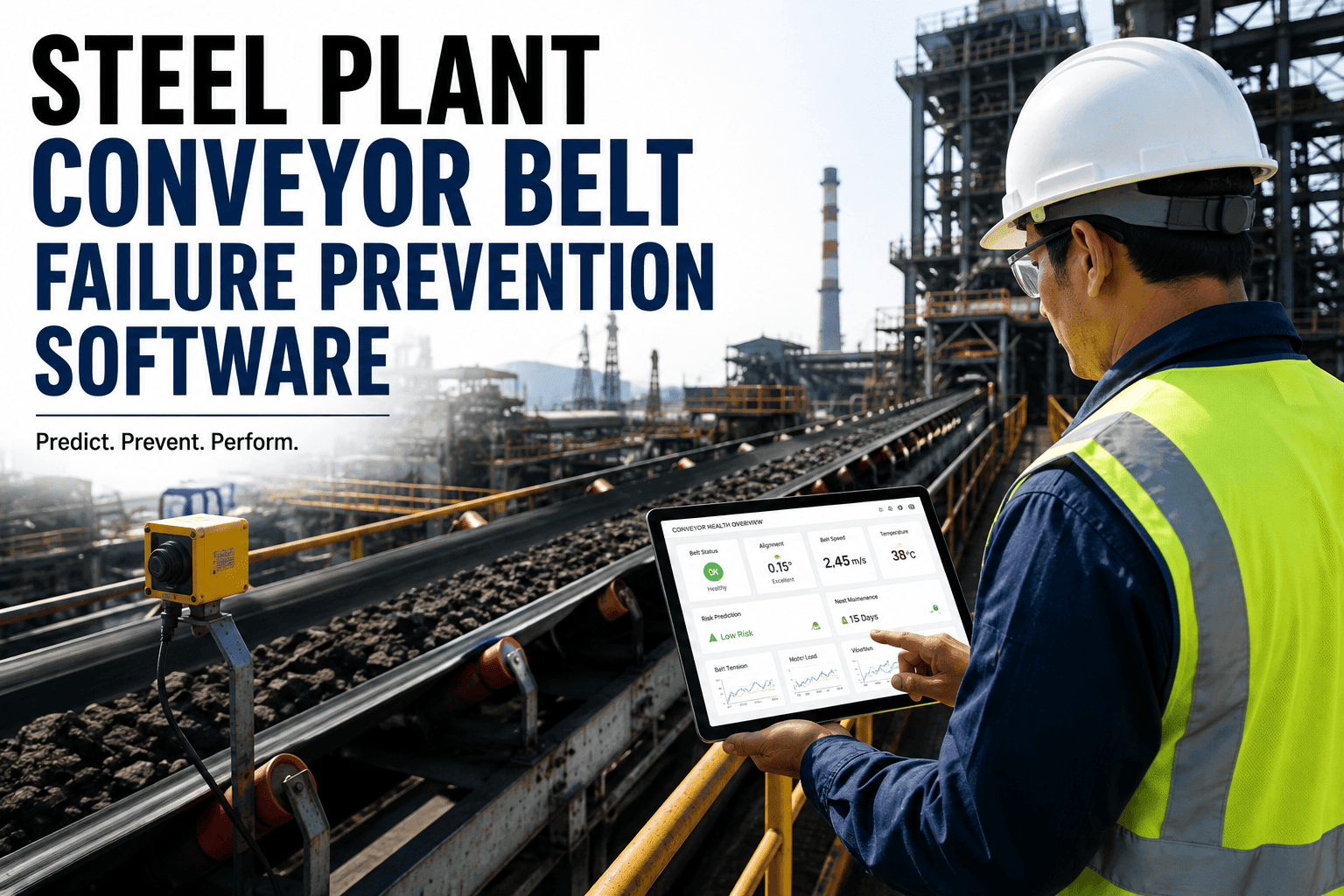
A conveyor line carrying iron ore, coke, or sinter through a steel plant rarely fails without warning — it fails after a splice that has cycled past its fatigue life, a belt cover that has thinned past its wear allowance, or a tracking drift that nobody logged twice in a row. Ore lines lose cover thickness to abrasion week over week. Coke lines run hot enough that one seized idler bearing can char the rubber it carries. Sinter lines combine heat above 100°C with some of the most abrasive material in the plant, and each of these three lines needs a maintenance profile the others do not share. Documented downtime costs on a major supply conveyor can climb past $250,000 an hour once a blast furnace or caster buffer runs dry, and the plants that avoid that number are the ones logging splice cycles and cover thickness as maintenance data. Book a 30-minute demo to see how it works on your lines.
Steel Plant Conveyor Belt Failure Prevention Software
Track splice fatigue, belt cover wear, and idler condition across every ore, coke, and sinter conveyor in one system — and turn three weeks of warning signs into a scheduled repair instead of a shutdown.
Three Lines, Three Failure Profiles
Ore, coke, and sinter conveyors move through the same plant but wear out in completely different ways. A maintenance schedule built for one line and copied onto the other two misses the failure mode that actually takes each of them down.
Crushed ore, limestone, and dolomite wear belt cover rubber down at a measurable rate every week, over distances that often run one to two kilometres from stockyard to process. Outdoor exposure adds weather cycling on top of abrasion.
Hot coke transport runs on heat-resistant belt grades for a reason — a seized idler bearing under a hot coke line generates enough friction heat to ignite the belt rubber, not just wear it. Coke's abrasive particle structure adds the highest cover wear rate of any material in the plant on top of that heat risk.
Sinter leaves the cooler at roughly 100–150°C and moves to the blast furnace skip or conveyor while still hot and highly abrasive. The combination of temperature and particle impact makes this one of the most demanding belt applications anywhere in the plant.
How a Belt Failure Actually Progresses
Splice separation and idler seizure are the two failure paths that stop the most conveyor lines — and both move through the same four stages before the belt actually goes down.
One System for Every Conveyor Line in the Plant
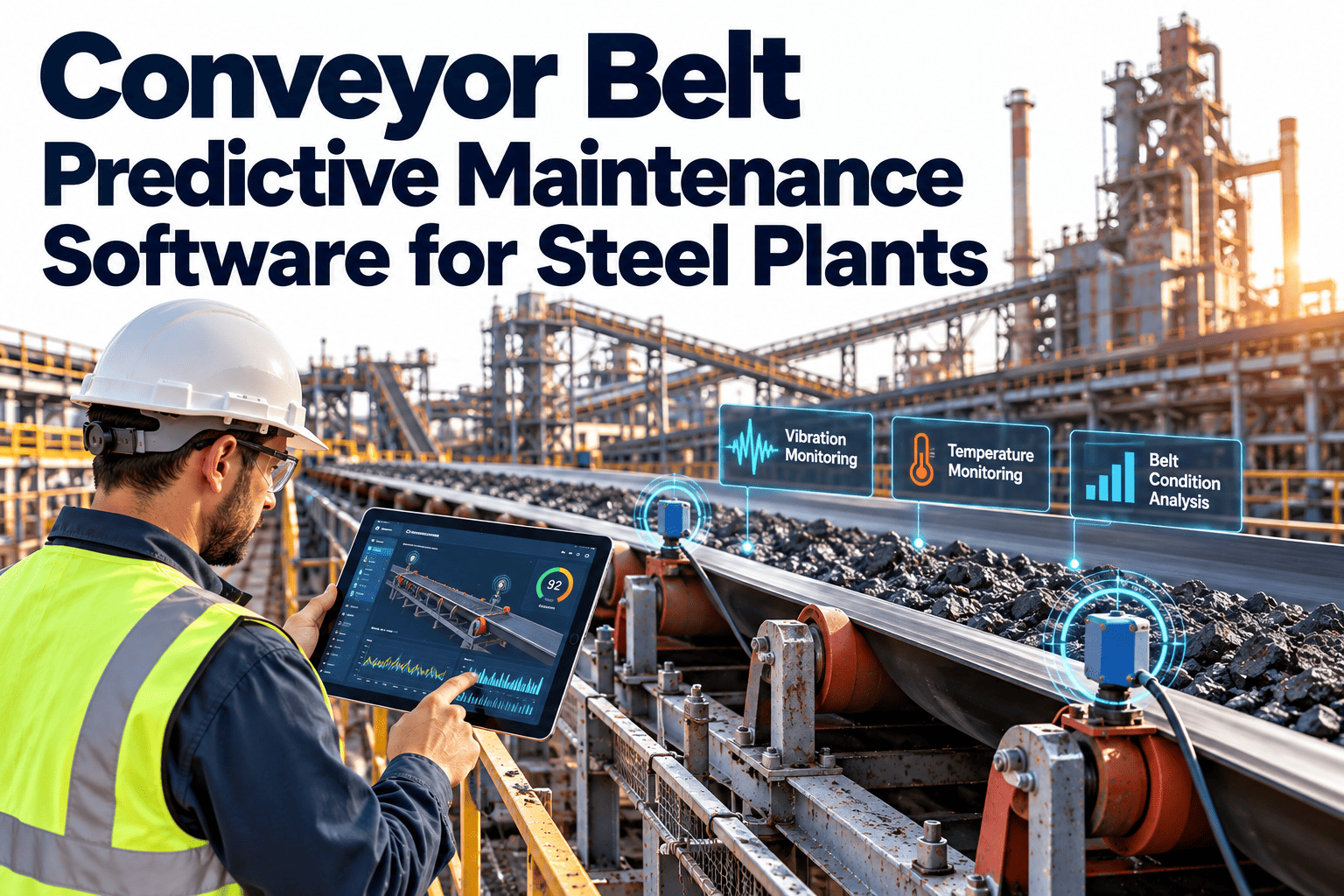
Oxmaint logs splice cycle counts, idler bearing temperature trends, and belt cover thickness by survey point — then generates a work order automatically the moment any reading crosses the threshold set for that specific line.
Conveyor Inspection Schedule by Line Type
Inspection frequency should scale with material abrasiveness and heat exposure, not run on one plant-wide calendar. The table below reflects intervals that hold across ore, coke, and sinter lines in a typical integrated plant.
| Task | Ore Lines | Coke Lines | Sinter Lines | Oxmaint Trigger |
|---|---|---|---|---|
| Visual belt surface walkdown | Daily | Daily | Daily | Digital checklist with photo log |
| Idler bearing temperature spot-check | Weekly | Daily | Daily | 15°F deviation alert per idler |
| Belt cover thickness survey | Monthly | Monthly | Bi-weekly | Trend log per survey point |
| Splice condition inspection | Monthly | Monthly | Monthly | Cycle-count based work order |
| Tracking and tension check | Weekly | Weekly | Weekly | Mistracking event alert |
| Full idler spin test (locked out) | Quarterly | Quarterly | Quarterly | Quarterly PM work order |