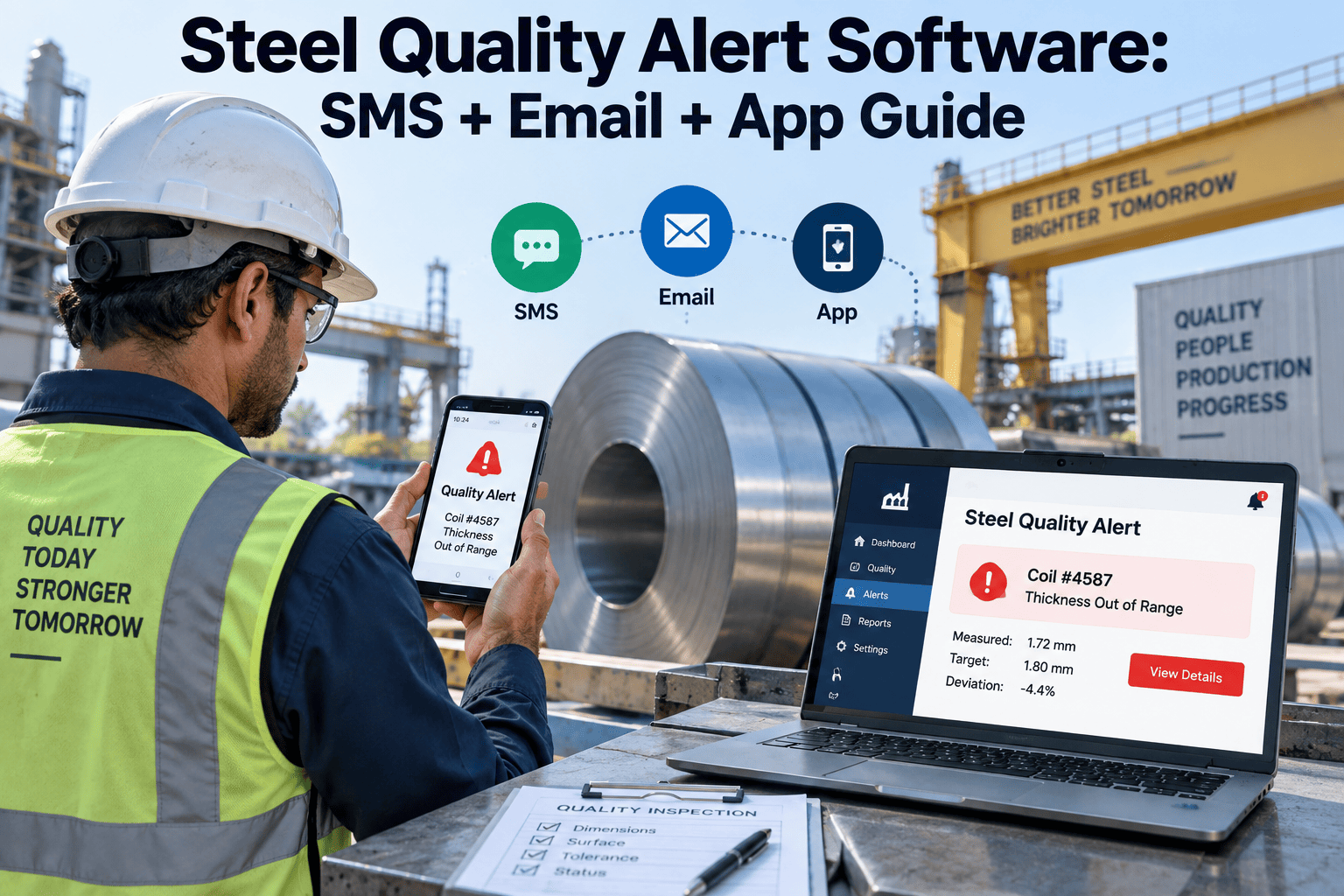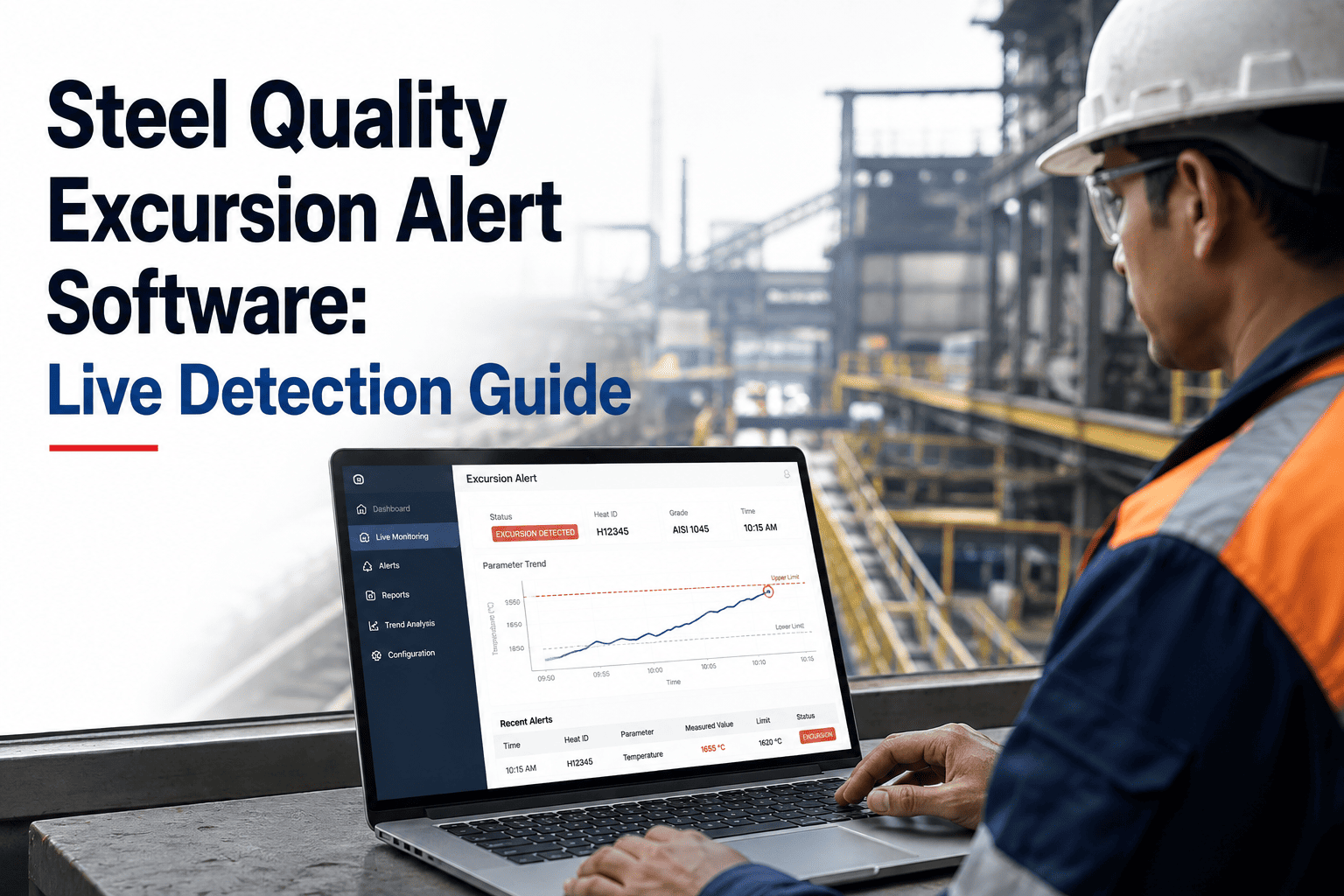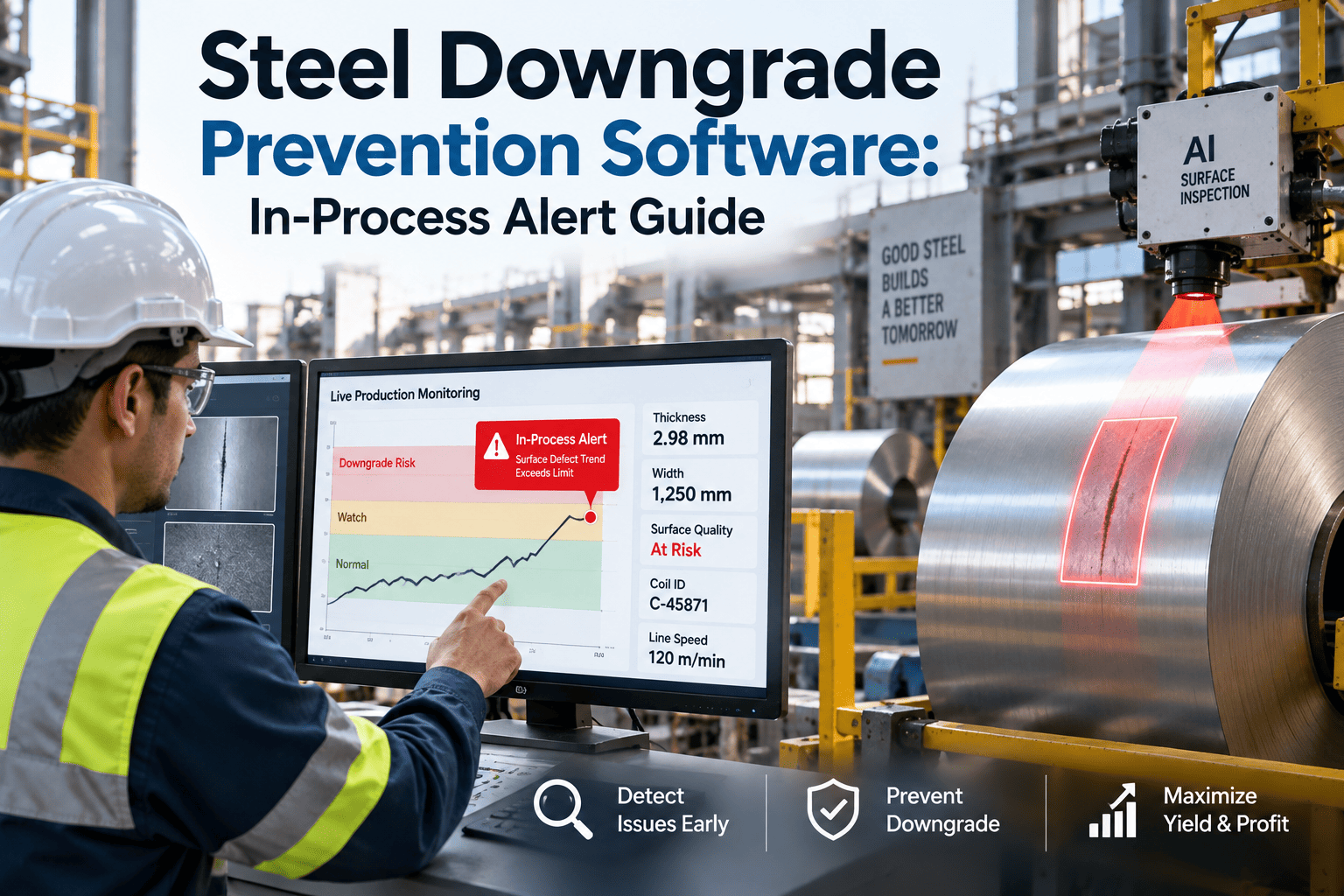
A single coil that fails final inspection can lose 200 to 400 dollars per ton the moment it drops from prime to secondary grade, and by the time the defect reaches quality control the melt, the cast, and the rolling pass that caused it are long finished. Chemistry drift, gauge deviation, and surface anomalies rarely announce themselves at the moment they happen; they surface hours later in a lab report or days later in a customer claim. In-process alerting closes that gap by watching the process variables as they happen and flagging deviations while the heat, slab, or coil can still be corrected or diverted. Steel plants that catch these signals during production save far more than the scrap value of one coil, because the same drift usually repeats across an entire campaign until someone intervenes. Oxmaint's downgrade prevention module turns scattered process alarms into a single alert stream tied to corrective work orders.
Why Spot-Check Sampling Misses What In-Process Alerting Catches
A lab sample taken once every fifteen or thirty minutes assumes the process stays roughly the same between checks. In a modern high-speed line, that assumption rarely holds. A ladle addition can miscalculate mid-tap, a roll gap can wander over a few hundred metres, or a cooling header can partially clog — all within the gap between two scheduled samples. By the time the next sample confirms a problem, the mill has already produced tons of material at the wrong specification, and that material is now mixed into inventory, waiting to be caught at final inspection or, worse, at the customer's dock.
The Three Downgrade Categories Every Mill Fights
Almost every downgrade traces back to one of three drifting variables: chemistry, dimension, or surface condition. Each moves slowly at first, which is exactly why lab sampling misses it — a spot check every twenty minutes cannot see a trend building between checks. In-process sensors read continuously, so the drift is visible long before it crosses the grade boundary, giving operators a window to correct it instead of a report to explain it.
Carbon & Alloy Drift
Ladle chemistry deviating from the grade window during tap or trim additions, caught by comparing live spectrometer feed against the active grade specification rather than a generic tolerance band. Catching it mid-tap allows a corrective addition before the heat is finished.
Residual Element Creep
Copper, tin, and nickel residuals from an inconsistent scrap mix drifting above customer limits gradually across a melt campaign, often invisible in a single heat's certificate but very visible once heats are tracked as a rolling trend.
Gauge Deviation
Thickness wandering outside tolerance from roll gap drift or tension control lag, flagged the moment the X-ray gauge feed crosses the control limit rather than at coil-end measurement, when the whole coil is already affected.
Width & Crown Variation
Edge trim loss and camber creeping over the length of a coil, usually from thermal roll expansion that a single end-of-coil check will never catch mid-roll, wasting saleable width along the way.
Emerging Roll Marks
A periodic surface pattern beginning to form before it is visible to the eye, identified by correlating stand vibration signatures with early surface texture readings, well before an inspector would flag a visible defect.
Cooling Rate Shift
The run-out table cooling curve drifting away from the target transformation profile, which quietly moves yield strength and elongation outside the customer's mechanical property window without ever changing what the coil looks like on the outside.
From Sensor Reading To Corrective Action In Five Steps
A downgrade prevention workflow is only useful if it closes the loop — a reading that never reaches an operator is just data. The five stages below describe how a raw sensor value becomes a documented, corrective response before the affected material leaves the line.
Inline Sensor Capture
Spectrometers, X-ray gauges, thermal arrays, and vibration sensors stream continuously from the caster, mill, and run-out table into a single process historian, so no reading is ever more than a fraction of a second old.
Live Spec Matching
Every reading is checked against the control limits of the active grade specification in real time, not against a generic plant-wide tolerance band, so a limit that is fine for one grade still flags correctly on a tighter one.
Tiered Notification
Watch, warning, and critical alerts route to the operator, shift supervisor, or metallurgist depending on severity and how much material is affected, so minor drift never floods the same channel as a critical deviation.
Guided Response
Each alert carries a recommended corrective action — adjust the ladle addition, reduce line speed, or redirect the coil — so the response starts in seconds, not after a meeting, and the operator is never guessing what to do next.
Closed-Loop Record
Every alert, response time, and outcome is logged, and when the root cause traces to an equipment condition a maintenance work order is generated automatically.
Stop Discovering Downgrades After The Coil Is Cold
Every hour a deviation runs undetected is more tonnage rolled at the wrong specification. In-process alerting gives operators the seconds they need to correct course while the material is still in motion, instead of a report explaining what already happened.
What An In-Process Alert Actually Looks Like
Alerts only matter if they carry enough context for someone to act immediately. The log below shows a representative shift on a high-grade flat steel line, with each entry showing what triggered the alert and what happened next.
Deviation Signal → Root Cause → Corrective Action
Alerting only pays off when the signal is mapped to a known cause and a known fix. The table below reflects the deviation patterns most commonly tracked across high-grade flat steel operations.
| Deviation Signal | Likely Root Cause | Corrective Action | Auto Work Order |
|---|---|---|---|
| Carbon above upper limit | Ladle addition miscalculation | Trim addition, re-sample | Ladle metallurgy review |
| Gauge trending thin | Roll gap wander | AGC gain adjustment | Roll stand calibration |
| Copper residual rising | Scrap mix contamination | Adjust scrap charge ratio | Scrap yard audit |
| Cooling rate lagging | Run-out table header blockage | Header flow correction | ROT header PM |
| Width narrowing | Edge trim guide wear | Guide realignment | Guide inspection |
| Crown variation | Roll thermal expansion | Roll cooling adjustment | Roll cooling system check |
The plants that get the most out of in-process alerting stop treating it as a warning system and start treating it as a second set of hands on the line. A lab certificate tells you what already happened. A live alert tells you what is happening right now, while there is still a heat, a slab, or a coil you can still correct. That single shift in timing is worth more than any amount of after-the-fact sorting, because you are no longer managing scrap, you are preventing it.
Frequently Asked Questions
Turn Every Deviation Into A Correction, Not A Claim
Oxmaint connects live process signals to the corrective actions and work orders that keep material inside the grade window, so quality control stops chasing coils after they have already gone cold.