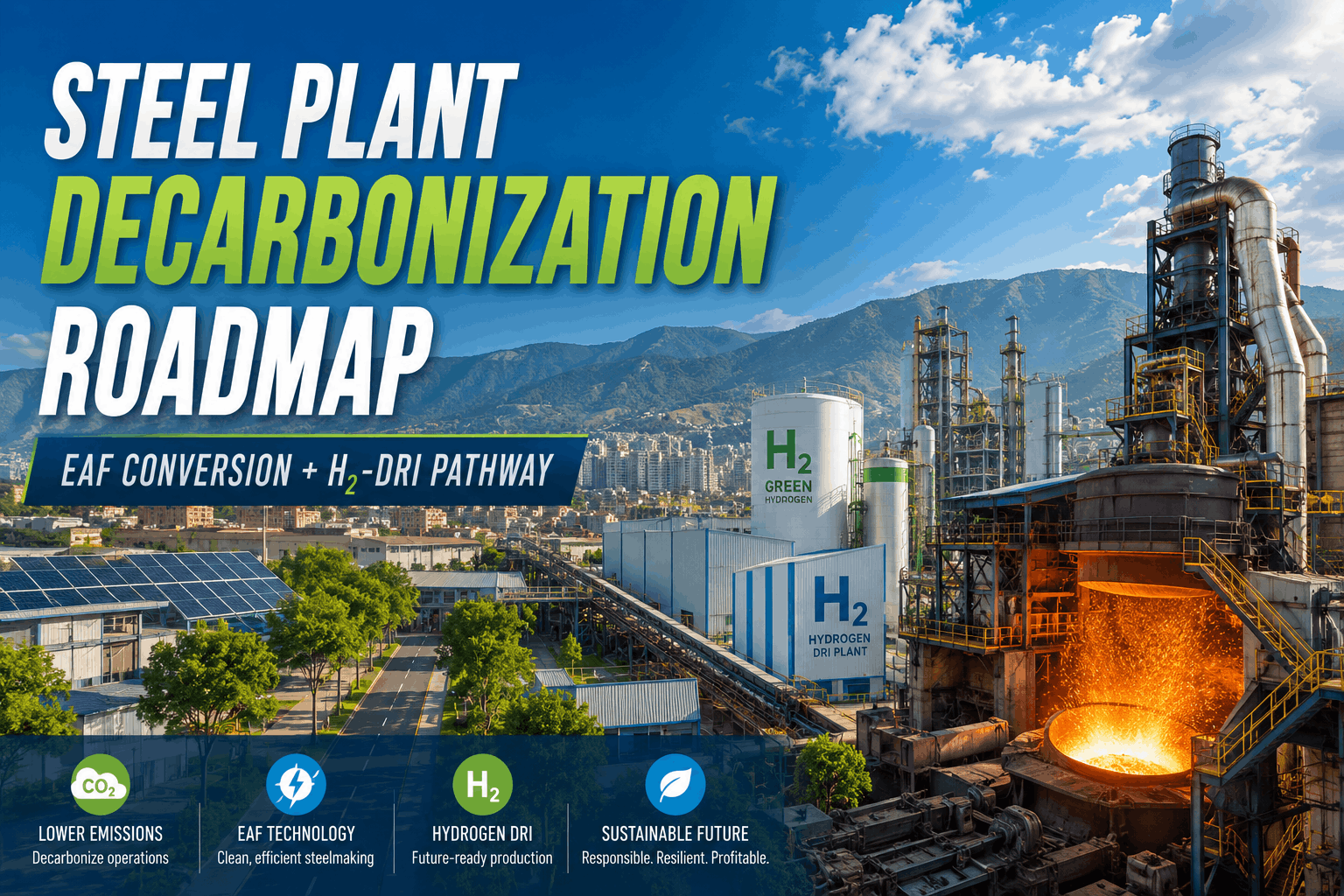
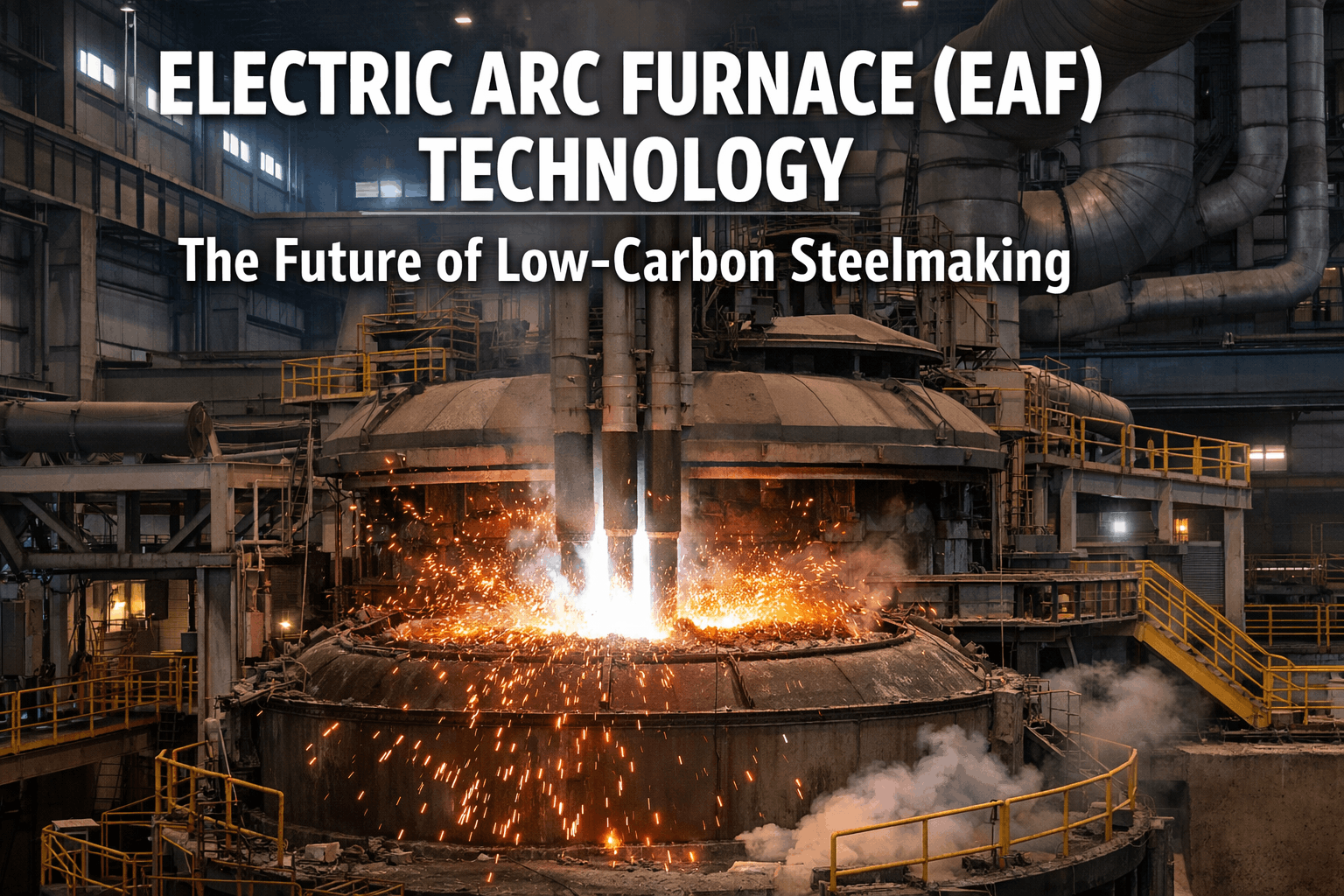
A steel plant CFO in Michigan made the most expensive capital allocation decision of her career in Q2 2025: convert a 35-year-old integrated blast furnace operation to electric arc furnace (EAF) production by 2028. The legacy blast furnace was profitable and reliable. The BF-BOF route generated $95 per tonne of steel. EAF route at the retrofit timeline would generate $108 per tonne, but only if the transition eliminated $4.2 million in unplanned downtime and repair costs during the 18-month retrofit window. A single unplanned BF shutdown during conversion preparation would destroy the entire project economics. She deployed OxMaint to predict and prevent the four most likely failure modes during the construction and transition period: refractory burnout, water system corrosion failures, caster roller bearing fatigue, and hydraulic system contamination from construction dust. Every failure was predicted 6-8 weeks early. Every repair was executed during planned maintenance windows. The conversion stayed on schedule and within budget. The EAF achieved target production rates one month ahead of plan. Today, that mill produces 180,000 tonnes annually of green steel premium, commands a $28/tonne sustainability premium, and has positioned itself to benefit from emerging EU ETS and CBAM regulations while competitors still run on coal-based carbon intensity. OxMaint predictive maintenance protects asset reliability during decarbonization transitions — the highest-risk operational periods when unplanned failures cascade into months of delay and hundreds of millions in stranded capital investment.
Decarbonization Without Operational Risk — Keep Production Running During Green Transition
Predictive maintenance protects assets during BF shutdown windows, EAF commissioning, and hydrogen DRI startup — preventing the unplanned failures that transform multi-year green transition timelines into decade-long disruptions
Capital cost of integrated BF to EAF conversion in Michigan — timeline protected by predictive maintenance during 18-month transition period
4 failures
Prevented during conversion: refractory burnout, water cooler breach, caster bearing seizure, and hydraulic contamination — each predicted 6-8 weeks early
$28/t
Sustainability premium earned by green steel from EAF production — zero fossil fuel carbon intensity qualifies for EU ETS and CBAM benefits
The Green Steel Transition Landscape — Four Pathways and Their Operational Risk Profiles
Steel industry decarbonization in 2026 operates along four parallel trajectories, each with distinct technical requirements, capital costs, and operational risks during transition. BF-BOF optimization reduces carbon intensity of conventional blast furnace operations by 20-30% through efficiency improvements, waste heat recovery, top gas recycling, and injection of hydrogen and biomass into the reduction zone. This pathway requires minimal capital ($50M-$150M for a typical mill) and can execute without major production disruption. However, carbon intensity remains 1.8-2.0 tonnes CO2 per tonne steel — insufficient to meet net-zero targets. BF-to-EAF conversion shuts down legacy blast furnaces and replaces them with electric arc furnaces fed by scrap or direct reduced iron. Capital cost runs $200M-$500M depending on site specifics. The transition window creates maximum operational risk: the old BF must stay running during new EAF construction, then both systems must operate in parallel during product transition and qualification, then the old BF must be safely decommissioned. Any unplanned failure during this period cascades through the entire timeline. Hydrogen-based direct reduced iron (H2-DRI) requires zero-carbon hydrogen supply, adds new equipment for hydrogen handling and storage, and runs at lower throughput than conventional DRI. Capital cost: $400M-$700M. Operational risk: the hydrogen supply chain becomes a critical dependency; a single hydrogen plant failure stops all downstream DRI production. Carbon capture and storage (CCUS) retrofits existing BF-BOF operations to capture CO2 from flue gas and either store it permanently or sell it for industrial use. This pathway preserves incumbent equipment and workforce but requires new infrastructure (separation, compression, transport, storage). Capital cost: $150M-$350M. OxMaint protects asset reliability through all four pathways — keeping production steady while transition teams manage technology risk in parallel.
BF Optimization + Hydrogen Injection
Reduce BF carbon intensity 25-35% through efficiency improvements, waste heat recovery, hydrogen injection into tuyeres, and biomass cofiring. Capital: $50M-$150M. Timeline: 18-30 months. Carbon intensity: 1.6-1.9 t CO2/t steel. OxMaint focus: prevent BF disruptions during retrofit piping installation and hydrogen system integration.
BF-to-EAF Conversion
Decommission legacy BF, build new EAF facility, transition product qualification. Capital: $200M-$500M. Timeline: 24-36 months. Carbon intensity: 0.4-0.7 t CO2/t steel (scrap fed) to 1.0-1.4 t CO2/t steel (DRI fed). OxMaint focus: protect incumbent BF during construction window; ensure caster and rolling system reliability during product transition.
Hydrogen-Based DRI Production
Build DRI plant fed by green hydrogen, integrate with EAF or conventional furnace. Requires zero-carbon hydrogen supply commitment. Capital: $400M-$700M. Timeline: 30-42 months. Carbon intensity: 0.3-0.5 t CO2/t steel. OxMaint focus: ensure hydrogen supply chain resilience; monitor DRI equipment for startup reliability.
CCUS / Carbon Capture
Retrofit existing BF-BOF with CO2 capture infrastructure; sell or permanently store captured carbon. Capital: $150M-$350M. Timeline: 18-24 months. Carbon intensity: 0.6-1.1 t CO2/t (after sequestration). OxMaint focus: protect BF during capture system installation; monitor compressor and transport infrastructure reliability.
Decarbonization Reliability
Green Steel Transitions Succeed When Operations Stay Stable. Protect Your Timeline. Protect Your Capital.
OxMaint keeps legacy assets and new decarbonization infrastructure running reliably during transition — preventing the unplanned failures that transform multi-year green transition timelines into timeline slippages that erode project ROI and delay carbon intensity improvements.
Critical Asset Risk During Decarbonization Transitions
The highest-risk assets during green steel transitions are not the new technology being installed — they are the incumbent production systems that must keep running while transformation happens. A BF-to-EAF conversion requires the legacy blast furnace to continue operating at full capacity while new EAF construction happens on the same site, using overlapping infrastructure (power supply, cooling water, product handling). Any unplanned BF failure during the 18-24 month construction window forces one of two terrible choices: 1) Shut down the BF early and lose revenue during new EAF startup ramp, or 2) Extend the retrofit timeline to allow BF repair, pushing EAF commissioning further into the future. Either choice vaporizes project economics. The second category of risk emerges in new decarbonization infrastructure: a hydrogen DRI plant coming online is essentially new production equipment with no historical failure data. The first hydrogen production plant failures, the first DRI reduction failures, the first EAF electrode control system failures will occur during commissioning — exactly when production is being ramped. Every failure delays revenue realization and erodes project payback. OxMaint monitors both legacy and new equipment through transition periods — predicting failures in conventional BF-BOF systems months before scheduled retrofit work, and flagging degradation in commissioning new EAF and DRI systems while crews still have time to troubleshoot and correct.
Asset Category
Failure Mode
Transition Period Risk
OxMaint Monitoring Strategy
Legacy Blast Furnace
Refractory burn-off / stave cooler leak
Critical — forced early shutdown loses revenue
Thermal imaging + pressure trending monthly during retrofit construction
BOF Converter
Refractory erosion / vessel integrity
High — affects product transition qualification
Automated vessel temperature mapping + refractory thickness trending
Caster System
Mold fatigue / guide roll bearing wear
High — delays product transition testing
Vibration envelope trending + ultrasonic fatigue detection on new molds
Rolling Mill
Bearing degradation / motor insulation
Medium — impacts product qualification throughput
MCSA trending + bearing vibration monitoring during retrofit window
New EAF Equipment
Electrode control / power circuit faults
Critical — delays revenue ramp during commissioning
Real-time power quality monitoring + electrode force feedback analysis during startup
Hydrogen Supply Chain
Hydrogen plant compressor failure
Critical — stops all H2-DRI production if single plant fails
Pressure drop trending across entire capture system; material integrity monitoring
"The decision to convert to EAF was a $420 million capital commitment. Every month of delay cost us $8.5 million in lost production revenue and stranded capital. The biggest risk wasn't the new EAF technology — it was keeping the legacy blast furnace running perfectly during the 18-month retrofit window. OxMaint predicted four major failures that would have forced early BF shutdown and destroyed the entire project timeline. We caught every one during planned maintenance, kept the BF running at full capacity, and delivered the EAF on schedule and under budget."
Financing Green Steel Transitions — How OxMaint Impacts Project ROI
Green steel transition projects are financed through combination of internal capital, government subsidies (IRA in the USA, Just Transition funding in Europe), green bonds, and project finance debt. Lenders and equity investors scrutinize downside risk carefully — a single major operational disruption during the conversion window can delay production ramp by 6-12 months and force project sponsors to carry unexpected debt. OxMaint reduces this risk premium by providing lenders with confidence that asset reliability will be maintained during the transition. Banks typically apply a risk multiplier of 1.3-1.5x to steel decarbonization projects compared to conventional asset financing because the execution risk is perceived as high. Demonstrating predictive maintenance discipline and early failure detection reduces that risk multiplier to 1.1-1.2x — equivalent to 200-300 basis points of financing cost reduction. For a $350 million decarbonization project with 15-year debt amortization, that difference translates to $15M-$25M in lower financing costs. The platform cost ($400K-$800K annually) is repaid within the first month of debt savings. Beyond financing, predictive maintenance directly improves project ROI by preventing the timeline slippages that erode capital payback periods. A one-year delay in EAF revenue realization typically costs $40M-$60M in opportunity loss, plus additional debt service on extended project duration.
Common Questions — Green Steel Transitions and Operational Risk
Q1Can OxMaint help us evaluate which decarbonization pathway makes most financial sense?▼
OxMaint doesn't make strategic pathway decisions, but it quantifies operational risk for each pathway. We provide failure probability modeling for legacy assets during transition windows, cost estimates for maintenance during new equipment startup, and timeline risk assessment for each approach. This data supports your pathway decision-making.
Q2How does OxMaint handle monitoring of equipment still under construction or being commissioned?▼
OxMaint integrates with commissioning SCADA and temporary sensor networks during construction phases. As new equipment is brought online, permanent sensor integration happens progressively. Commissioning test data feeds AI models to establish baseline "healthy" behavior before equipment enters production service.
Q3Does green hydrogen supply chain reliability fall within OxMaint's scope?▼
OxMaint monitors hydrogen production equipment reliability (compressors, storage, liquefaction) at your facility. We don't monitor hydrogen supply contracts with external producers, but we do help you identify hydrogen supply dependency risk and recommend redundancy strategies.
Q4Can OxMaint quantify the financing cost savings from reduced project risk?▼
Yes — we model the impact of project timeline confidence on debt financing terms. Lenders typically apply a 1.3-1.5x risk multiplier to steel decarbonization projects; demonstrated predictive maintenance discipline reduces this to 1.1-1.2x, worth 200-300 basis points in financing cost reduction on typical project debt.
Q5What metrics demonstrate success of OxMaint during a BF-to-EAF transition?▼
Key metrics include: unplanned BF failures during retrofit construction (target: zero), time between failures in new EAF equipment (target: extending month-by-month), product qualification timeline adherence, revenue ramp alignment with plan, and cumulative delay days (target: <5 days total during 18-month transition).
Q6How do we integrate OxMaint with our decarbonization project management office (PMO)?▼
OxMaint feeds asset reliability status to your PMO dashboard monthly. Predicted failures and maintenance windows become schedule inputs for project planning. This integration ensures production and construction teams coordinate around actual equipment condition rather than generic scheduling assumptions.
Q7Can OxMaint help optimize maintenance staffing during a multi-year decarbonization project?▼
Yes — predictive maintenance enables maintenance planning 6-8 weeks in advance. You can schedule maintenance crew work during planned windows rather than emergency response. This allows you to optimize staffing allocation between legacy asset maintenance and new equipment commissioning support.
Q8What happens to OxMaint monitoring when we permanently shut down the legacy blast furnace?▼
Monitoring transitions smoothly — BF sensors are decommissioned, and sensor networks shift focus to EAF and downstream equipment. All historical BF data remains in OxMaint for root cause analysis and lessons learned. New equipment baseline monitoring begins immediately as EAF ramps production volume.
Green Steel + Operational Excellence
Transform Your Carbon Footprint. Protect Your Transition Timeline. Secure Your Project Financing.
Zero
unplanned failures during decarbonization transition — target case study
200bps
financing cost reduction from demonstrated operational reliability
.png)