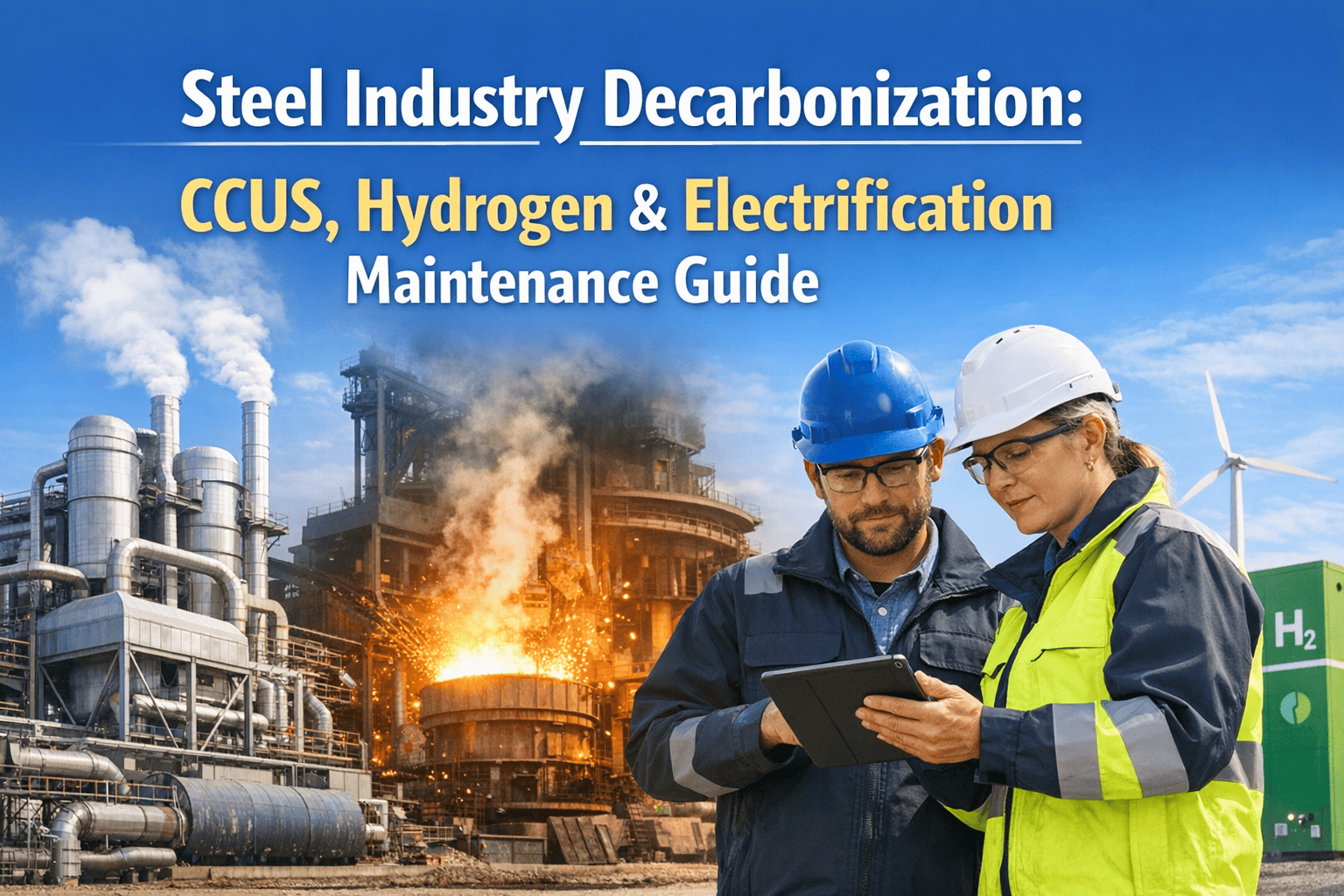
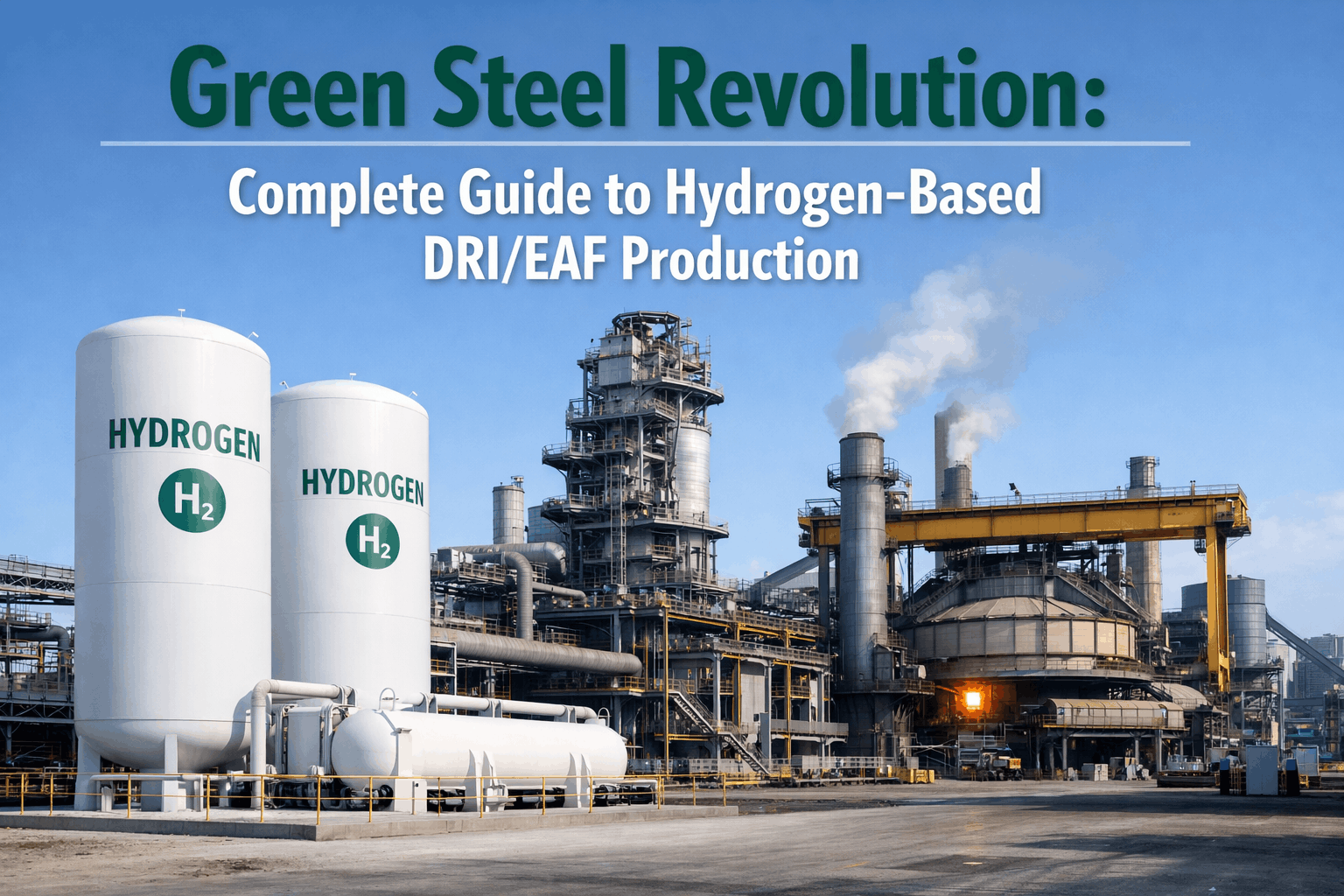
The transition from blast furnace-basic oxygen furnace (BF-BOF) steelmaking to hydrogen-based direct reduced iron with electric arc furnace (H2-DRI+EAF) is the most significant technological shift in the steel industry's 3,000-year history. Over $100 billion in green steel investments have been announced globally, with projects from HYBRIT in Sweden to H2 Green Steel in Boden already producing fossil-free steel. But the maintenance implications of this transition are barely discussed. H2-DRI plants introduce entirely new asset categories that traditional steel maintenance teams have never managed — electrolyzers, hydrogen storage systems, shaft furnace gas recirculation loops, and renewable energy infrastructure. Plants that build their CMMS foundation now will be operationally ready when hydrogen arrives. Those that wait will scramble to manage unfamiliar assets with inadequate systems.
Green Steel Transition: Hydrogen DRI & EAF Maintenance Requirements
Prepare your maintenance teams for the H2-DRI+EAF era. Covers electrolyzer maintenance, shaft furnace reliability, hydrogen safety systems, renewable energy integration, and new workforce skill requirements.
The Chemistry That Changes Everything
The fundamental shift from carbon-based to hydrogen-based iron reduction changes not just the emissions profile — it changes every asset in the plant. Understanding the chemistry explains why maintenance teams need entirely new competencies.
Carbon monoxide from coke reduces iron ore. Byproduct: 1.8-2.2 tonnes CO2 per tonne of steel. Coke ovens, blast furnace, and BOF are the core maintenance-intensive assets.
Green hydrogen reduces iron ore. Byproduct: water. Electrolyzers, H2 storage, shaft furnace, and EAF are the new maintenance-critical assets. CO2 reduced by up to 95%.
is the projected green hydrogen cost by 2028-2032 in favorable regions. At this price point combined with EU carbon prices above EUR 120-150/tonne CO2, H2-DRI+EAF becomes cost-competitive with BF-BOF without any green premium. With automotive and construction buyers already paying $30-80/tonne premiums for certified low-carbon steel, the economics are converging faster than most plant managers expect.
New Asset Categories Your Maintenance Team Has Never Managed
H2-DRI plants introduce six asset categories that do not exist in conventional BF-BOF operations. Each requires new maintenance protocols, new spare parts inventories, new safety procedures, and new technician competencies. Sign up for OxMaint to build asset registries for these new equipment types now — before your first electrolyzer arrives.
Electrolyzers
PEM, alkaline, or solid oxide electrolyzers split water into hydrogen and oxygen using renewable electricity. Stack degradation, membrane replacement, catalyst poisoning, and cooling system integrity are the primary maintenance concerns. One tonne of steel requires ~300 MW of electrolyzer capacity running continuously.
Hydrogen Storage & Distribution
Compressed gas tanks, pipeline networks, and pressure regulation systems operating at 30-700 bar. Hydrogen embrittlement of steel components, seal integrity, leak detection, and purging procedures require specialized maintenance protocols that conventional steel plant teams have never encountered.
DRI Shaft Furnace
Vertical reactor where hydrogen reduces iron ore pellets at 800-1,050°C. Gas recirculation loops, pellet distribution systems, refractory linings, and discharge mechanisms differ fundamentally from blast furnace operations. Hot DRI charging directly to EAF saves 15-25% energy but requires precise temperature management.
HBI Handling & Storage
Hot briquetted iron (HBI) is compacted DRI for storage and transport. HBI is pyrophoric — it can self-ignite when exposed to moisture. Handling systems, storage silos, and dust control require fire prevention maintenance protocols not found in conventional steelmaking.
Renewable Energy Infrastructure
Solar farms, wind turbines, battery storage, and grid connection equipment. H2 Green Steel's Boden plant alone requires 700+ MW of electrolyzer capacity fed by renewable power. Intermittency management and power electronics maintenance become core competencies for the green steel maintenance team.
H2-Ready EAF Systems
EAFs in H2-DRI plants process DRI with different chemical composition than scrap — lower carbon content, different impurity profiles. Electrode consumption patterns, refractory wear rates, and off-gas systems behave differently. Equipment modifications and new control systems require rigorous maintenance quality control.
Maintenance Comparison: BF-BOF vs. H2-DRI+EAF
The asset portfolio shift changes every aspect of maintenance operations — from the skills required to the safety protocols enforced. Book a demo to see how OxMaint configures maintenance workflows for H2-DRI operations.
| Maintenance Area | Conventional BF-BOF | H2-DRI + EAF |
|---|---|---|
| Primary Reduction Asset | Blast furnace (coke-based) | DRI shaft furnace (hydrogen-based) |
| Fuel/Reductant System | Coke ovens, coal handling | Electrolyzers, H2 storage, pipelines |
| Safety Protocols | CO gas, molten metal, heat | H2 leak detection, embrittlement, pyrophoric HBI |
| Energy Source | Coal, natural gas | Renewable electricity, green hydrogen |
| Refractory Profile | BF hearth (10-20 yr campaigns) | Shaft furnace lining (shorter, different wear) |
| Key New Competency | Not applicable | Electrochemistry, H2 systems, power electronics |
| CO2 per Tonne Steel | 1.8-2.2 tonnes | ~0.16 tonnes (95% reduction) |
New Skills Your Maintenance Team Needs
The workforce transition is as significant as the technology transition. Maintenance technicians trained on coke ovens, blast furnaces, and BOF steelmaking need entirely new competencies for H2-DRI operations. Sign up for OxMaint to track technician certifications and training compliance for green steel readiness.
Hydrogen Safety Systems
H2 leak detection, ventilation requirements, ATEX zoning, purging procedures, and emergency response for hydrogen releases. Hydrogen is colorless, odorless, and flammable in air at 4-75% concentration — requiring different detection and response protocols than CO or natural gas.
Electrolyzer Maintenance
PEM membrane replacement, alkaline cell stack reconditioning, solid oxide ceramic maintenance, water purification system upkeep, and stack degradation monitoring. Electrolyzer maintenance cycles are measured in thousands of operating hours rather than calendar months.
Power Electronics & Renewable Integration
Inverter maintenance, transformer cooling, battery management systems, solar panel cleaning and degradation tracking, wind turbine gearbox and blade inspection. Intermittency management becomes a maintenance scheduling variable.
Green Steel Certification & Compliance
EU CBAM reporting, ResponsibleSteel certification, emissions intensity documentation per tonne, and renewable energy certificate (REC) tracking. Maintenance records become part of the emissions audit trail — every PM event contributes to the carbon footprint calculation.
The question for steel companies is no longer 'if' but 'when and how.' The answer depends on green hydrogen availability, cost trajectories, infrastructure readiness, and the ability to manage entirely new asset types. First-mover advantage only matters if your plant actually runs.
-- Green Steel Transition Analysis, OxMaint Industry Research
Build Green Steel Maintenance Readiness Now
The H2-DRI transition introduces electrolyzers, hydrogen systems, shaft furnaces, and renewable energy assets that your current maintenance infrastructure was never designed to manage. OxMaint provides the CMMS foundation — asset registries, PM workflows, safety protocol tracking, and certification compliance — that green steel operations require from day one.