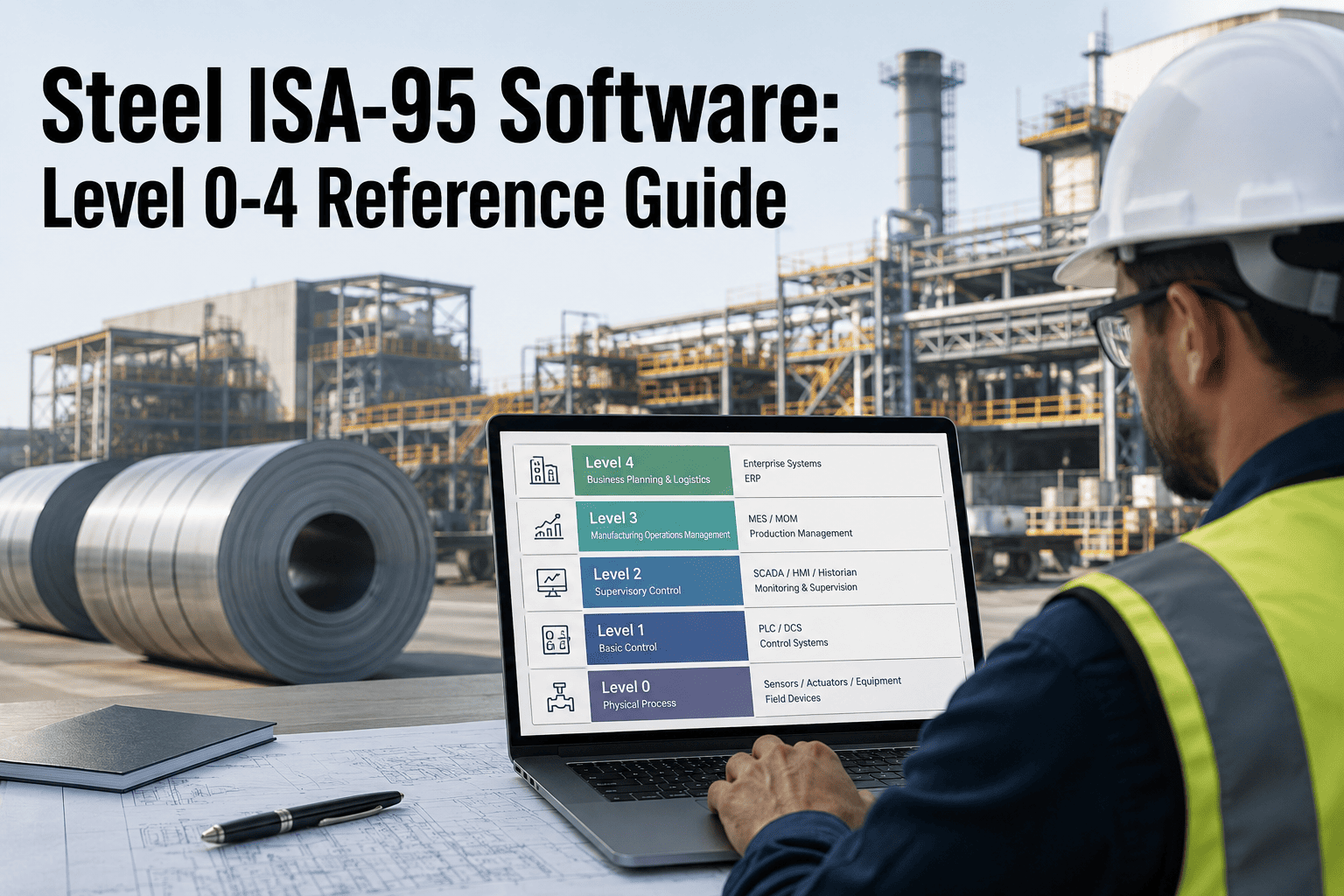
Every steel plant has an ISA-95 diagram somewhere — in an integration RFP, an IT architecture slide, or a consultant's report from three years ago. Almost none of them have software that actually behaves like the diagram. Sensor and PLC data sits at Level 0 through Level 2, locked inside SCADA historians the maintenance team can't touch, while work orders get written on paper at the mill floor and re-typed into the ERP at Level 4 days later. The Level 3 layer that is supposed to connect the two — manufacturing operations management — usually does not exist as real software at all. Put a real Level 3 layer under your plant with Oxmaint — free trial, live in under 60 minutes.
The ISA-95 Levels, From Sensor to Boardroom
The ISA-95 (IEC 62264) reference model splits plant operations into five layers, each with its own systems, its own data, and its own speed. Oxmaint is built specifically for Level 3 — the layer most steel plants have on a slide but not in production.
Why Level 3 Is Where Steel Plants Get Stuck
Level 2 systems generate more data than any human can act on, and Level 4 systems need clean, summarized numbers they can bill, plan, and report against — but almost nothing exists to translate between the two. Maintenance teams end up bridging Level 3 by hand: pulling a downtime report from SCADA, writing a maintenance note on paper, and emailing a summary to the planning office so it can be keyed into the ERP a week later. Every hand-off in that chain is a place where data gets lost, delayed, or never makes it at all. Oxmaint sits at Level 3, pulling structured data up from Level 2 and pushing clean summaries up to Level 4 automatically. Book a demo to see your Level 3 gap mapped out.
Your ERP Cannot Plan Around Data That Never Left the SCADA Historian.
Oxmaint builds the Level 3 layer your ISA-95 diagram already assumes exists — connecting sensor data to work orders to ERP, automatically.
Data Moves Both Ways Across the Levels
Integration is not just sensor data flowing up. Plans, schedules, and work orders need to flow back down just as reliably, or the floor ends up working from information the office already changed.
Built Around the Standards Your Architecture Diagram Already Cites
Oxmaint vs Other CMMS Platforms for ISA-95 Integration
Swipe to view full comparison table
| Capability | Oxmaint | MaintainX | UpKeep | Fiix (Rockwell) | Limble CMMS | IBM Maximo | Hippo (Eptura) |
|---|---|---|---|---|---|---|---|
| Level 0-2 OT Data Ingestion | OPC-UA, Modbus, SCADA | Not available | Not available | Rockwell ecosystem | Not available | Custom build | Not available |
| Level 3 MES/MOM Layer | Native, purpose-built | Not available | Not available | Custom config | Not available | Full (complex) | Not available |
| Level 4 ERP Sync | Built-in connectors | Manual export | Manual export | Enterprise tier | Manual export | Custom build | Manual export |
| OEE & Downtime Analytics | ISO 22400-aligned | Basic reporting | Basic reporting | Configurable | Basic reporting | Configurable | Basic reporting |
| Offline Mobile | Full offline + sync | Online only | Limited offline | Limited offline | Limited offline | Limited | Online only |
| Deploy Time | 7–21 days | 2–3 weeks | 2–4 weeks | 4–12 weeks | 1–2 weeks | 6–18 months | 2–6 weeks |
Proven Results
Your Architecture Diagram Already Has a Level 3 Box. Does Your Plant?
Oxmaint connects Level 0-2 sensor data to a real Level 3 operations layer, and syncs clean summaries up to your Level 4 ERP automatically.
Data Security
Frequently Asked Questions
Does Oxmaint replace our SCADA or ERP system?
What protocols does Oxmaint use to connect to Level 0-2 systems?
Can Oxmaint sync data to SAP or Oracle at Level 4?
Does OEE reporting follow a recognized standard?
How long does a Level 3 deployment take across a full steel plant?
A Level 3 Layer That Only Exists on a Slide Protects Nobody's Data.
Level 0-2 ingestion. Level 3 orchestration. Level 4 ERP sync. All from one platform, aligned to the standards your architecture already cites. Free to start. Running in 21 days.