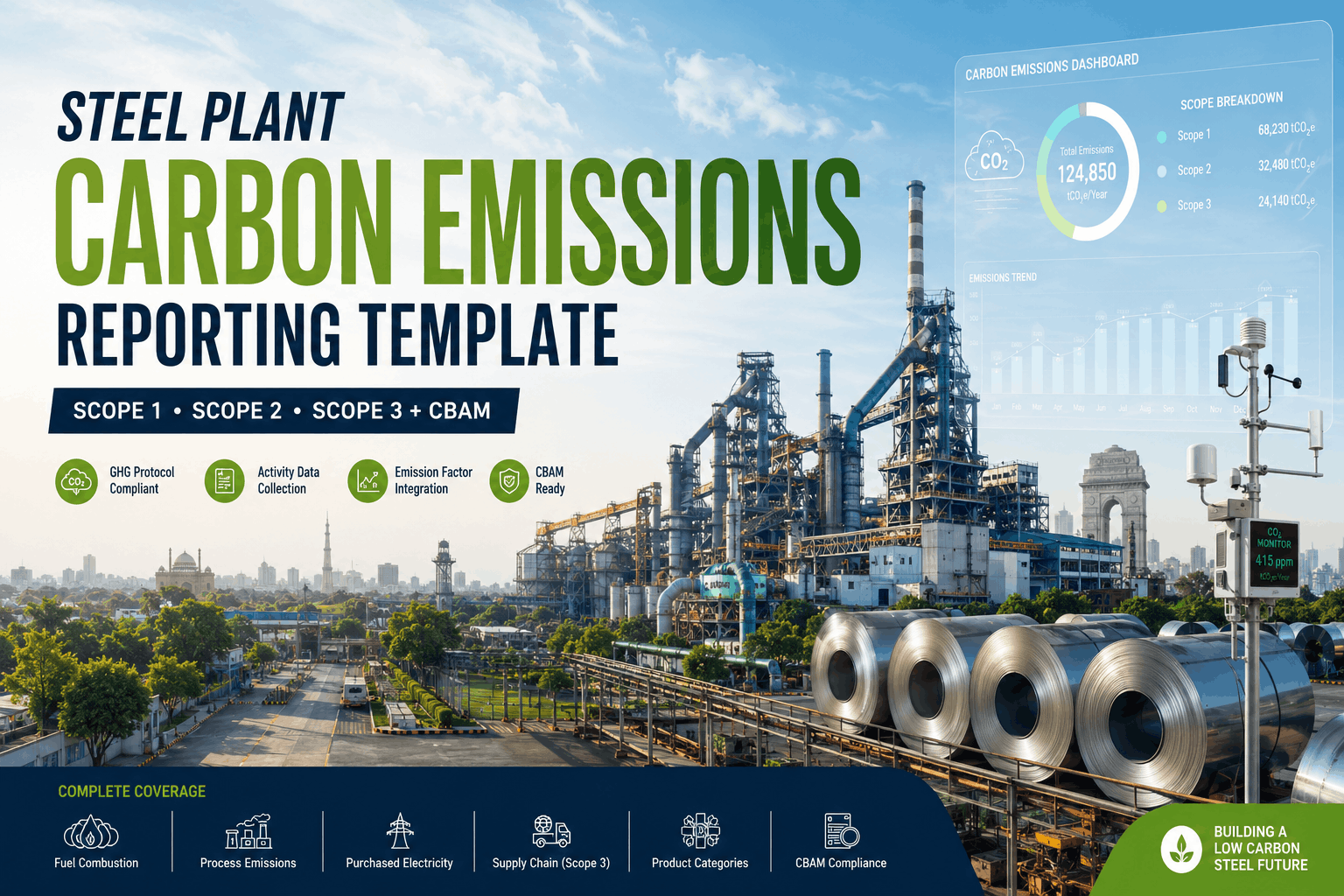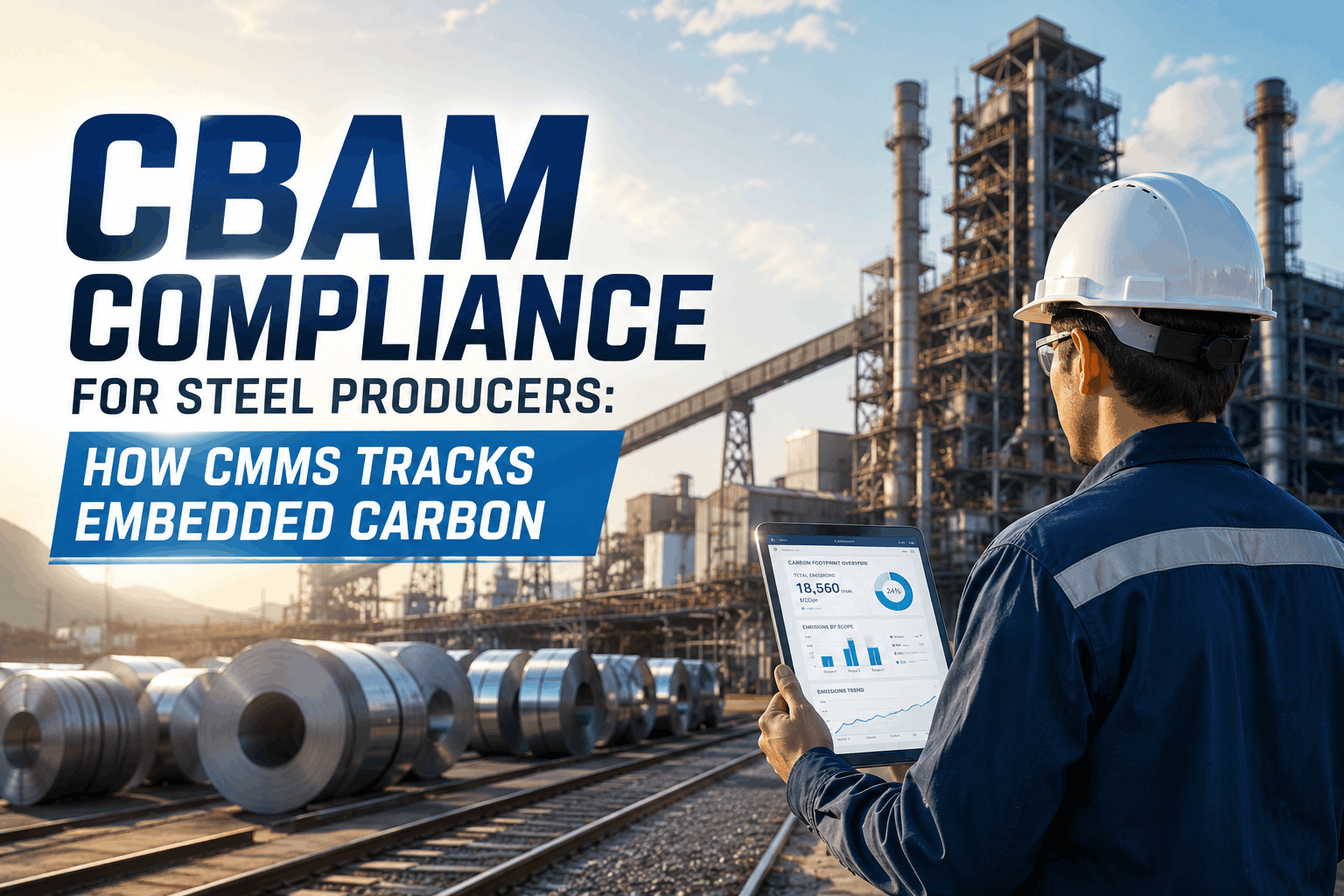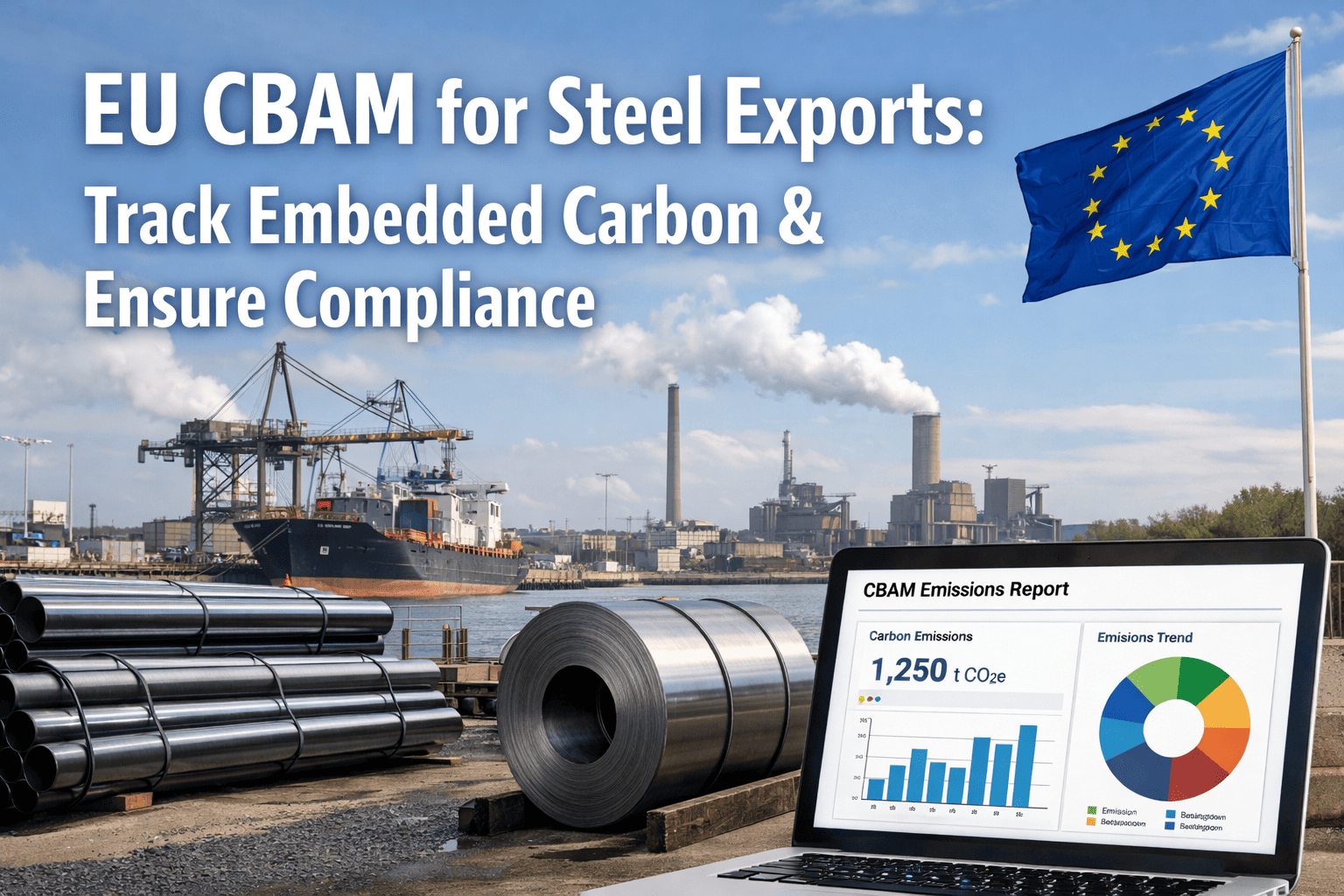
The EU Carbon Border Adjustment Mechanism (CBAM) entered its compliance phase on January 1, 2026, fundamentally reshaping how North American and global steel mills calculate, verify, and disclose the embedded carbon in every tonne of product exported to the European Union. For mills shipping flat-rolled steel, long products, or semi-finished material to EU customers, CBAM compliance is no longer a preparation exercise — it is a live operational mandate with significant financial penalties for non-compliance. The mechanism works by requiring importers bringing 50 tonnes or more of CBAM-covered goods into the EU annually to report the embedded emissions of those imports quarterly and surrender CBAM certificates corresponding to those emissions by September 30 each year. The certificate price is linked directly to EU Emissions Trading System (ETS) allowance prices, which averaged €85–95 per tonne in early 2026. For a steel mill exporting 100,000 tonnes of material annually at an average carbon intensity of 1.8 tCO₂/tonne, total annual CBAM liability could exceed €15 million — making carbon intensity reporting not a compliance checkbox but a profit-driver. A CMMS configured for real-time embedded emissions tracking gives mills the granular, production-route-specific carbon data required to meet CBAM reporting obligations, identify decarbonization opportunities, and quantify the financial exposure before deadlines arrive.
CBAM Compliance Phase 2026–2027: What Changed From Transitional Period
The transitional period (October 2023–December 2025) allowed mills to report embedded emissions via quarterly declarations to the CBAM Transitional Registry without financial penalty. That grace period ended December 31, 2025. Starting January 1, 2026, the compliance phase introduces three critical changes: (1) Annual rather than quarterly declarations due September 30 each year, (2) CBAM certificate purchases mandatory for all covered goods imported into the EU, with certificate prices set weekly at the EU ETS auction closing price, and (3) Actual embedded emissions data required — default values are available only if actual supplier data is unavailable, but using defaults significantly increases your certificate cost exposure as default values are set conservatively (typically 10–30% above industry average).
The calculation of embedded emissions under CBAM is not simple — it requires tracing Scope 1 (direct production emissions), Scope 2 (purchased electricity emissions), and Scope 3 (precursor) emissions through your supply chain, documenting each with third-party verification. For simple goods (primary steel, ingots), you report direct emissions from your mill. For complex goods (wire, fasteners, finished products), you must also account for precursor carbon — the carbon embedded in the scrap, DRI, semi-finished material, or alloys your mill used as input. Under CBAM rules effective 2026, at least 80% of reported embedded emissions must be based on actual verified data from upstream producers; only 20% can be default values. This creates urgent pressure to engage suppliers and establish verified carbon data pipelines within your organization.
North American steel mills — even those not in the EU — face CBAM exposure if they export to EU-based customers, tolling partners, or distributors. The mechanism applies to the exporter's product, not the exporter's location. A mill in Pennsylvania exporting coil to a German coil service center is immediately in CBAM scope. Indirect exposure extends further: if your mill supplies a North American automotive OEM that exports finished vehicles to Europe, that OEM's carbon reporting now includes your steel's embedded emissions, creating upstream pressure on carbon data. Many mills have not yet felt direct CBAM reporting obligations but are receiving supplier carbon data questionnaires from OEM customers — early signals that CBAM compliance is cascading up supply chains faster than anticipated.
Scope 1, 2, and 3 Emissions for Steel: CBAM Calculation Framework
CBAM's definition of embedded emissions follows the GHG Protocol and EU ETS precedent. Understanding the boundaries is critical because they determine your reported carbon intensity and CBAM liability. Scope 1 emissions are direct CO₂ released in your steelmaking process — blast furnace fuel (natural gas, coal), electric arc furnace electricity, oxygen generation, and process emissions from chemical reactions (limestone calcination). Scope 2 emissions are CO₂ associated with purchased electricity, steam, heating, or cooling. For most steel mills, Scope 1 dominates (70–85% of total); Scope 2 is minor unless the mill uses significant purchased steam. Scope 3 is the most complex — it encompasses the carbon footprint of purchased materials entering your mill (iron ore, coal, scrap, alloys) and the carbon footprint of products leaving your mill. For CBAM, precursor emissions (the carbon in purchased DRI, pig iron, or scrap) are counted as Scope 3 Category 1 and must be included in your product carbon footprint unless the precursor comes with independently verified emissions data that you can subtract out.
BF-BOF Route: Typical Scope 1 Emissions
Blast furnace fuel combustion (75% of mill's Scope 1), basic oxygen furnace refining (8%), ladle furnace heating (4%), oxygen generation compressor (3%), casting and cooling (5%), rolling mill fuel (4%). Typical result: 1.8–2.1 tCO₂/t crude steel (BF-BOF integrated mill benchmark). Scope 3 precursor carbon from mined iron ore is typically excluded from direct CBAM calculation (ore carbon is zero at extraction point); scrap carbon (if recycled) is counted if it originates from a secondary source.
DRI-EAF Route: Scope 1 + Precursor Carbon
Direct Reduction Iron (DRI) plant Scope 1 (natural gas or hydrogen reduction fuel) plus electric arc furnace electricity (dominant Scope 2). Typical emissions: 0.5–1.2 tCO₂/t crude steel (DRI-EAF) before accounting for precursor carbon. Precursor carbon from natural gas used in the DRI plant is counted within Scope 1 of DRI producer; your mill (the EAF operator) purchases DRI with embedded emissions already calculated. The boundary question: do you count only your EAF Scope 1/2, or do you allocate the DRI producer's emissions to your product? CBAM requires allocation — your product's CBAM carbon includes the DRI precursor carbon, making DRI supply chain transparency critical.
Scrap-Based EAF: Scope 2 Dominant
EAF melting 100% scrap has zero Scope 1 fuel combustion (electric-only process) but significant Scope 2 electricity demand (400–500 kWh/t). In regions with renewable or low-carbon electricity (Scandinavia, Pacific Northwest), scrap-EAF can achieve 0.3–0.5 tCO₂/t. In regions with coal-heavy grids (e.g., Poland, India), scrap-EAF may reach 1.0–1.2 tCO₂/t despite using 100% scrap feedstock. Scope 3 in scrap-EAF includes transportation carbon and end-of-life processing emissions from scrap suppliers.
Alloy & Special Steel: Scope 1 + Alloy Precursor
Specialty steel (stainless, tool steel, high-strength grades) requires precursor carbon from ferroalloy production, rare earth elements, or proprietary alloying materials. Ferroalloy carbon footprint can range 2.0–8.0 tCO₂/t depending on alloying element and production process. For a 0.2% molybdenum addition, precursor carbon might add 50–120 kgCO₂/t to your final product. Tracking alloy-by-alloy precursor carbon is complex; many mills use industry-average emission factors rather than product-specific data, which triggers CBAM default value penalties.
CBAM Benchmark Intensities: Country & Route Baselines
EU CBAM publishes default emission benchmarks by country and production route. For USA flat-rolled steel (BF-BOF route), the default benchmark is approximately 1.95 tCO₂/t; for DRI-EAF, 0.65 tCO₂/t. If your mill's actual emissions exceed the benchmark, you pay certificates on the difference. If below, you pay only on actuals. Using default values instead of verified actuals costs significantly more — defaults are set at the 90th percentile of observed data, penalizing mills that choose not to report actual figures.
CBAM Reporting Workflow & Data Verification Requirements
CBAM compliance is not a one-time report — it is a continuous data management system spanning your operations, your suppliers, and third-party verifiers. The workflow has five key stages: (1) Calculation — measure your mill's Scope 1/2 emissions and collect precursor emissions data from suppliers; (2) Documentation — compile energy bills, fuel consumption records, production data, and supplier emissions certifications; (3) Verification — engage an accredited third-party verifier to audit your emissions calculation against actual records; (4) Declaration — submit your annual CBAM declaration to the EU Registry by September 30, including all verified emissions data and certificate purchase requests; (5) Certificate Purchase — buy CBAM certificates at the quantity required to cover your reported embedded emissions, with prices linked to EU ETS weekly auction closing prices. Many mills lack the internal infrastructure for this workflow — if your CMMS cannot auto-generate Scope 1/2 reports, track supplier carbon data, or manage verification workflow, you'll rely on manual spreadsheets and external consultants, introducing significant delay and verification risk.
Third-party verification is mandatory for CBAM compliance and is more rigorous than voluntary ESG assurance. Accredited verifiers conduct on-site audits of your energy meters, fuel consumption logs, equipment efficiency data, and production records. They also review your supplier emissions data and verify the chain-of-custody documentation for precursor materials. The verification engagement typically takes 4–8 weeks for a first-time mill audit and requires 2–3 person-weeks of verifier effort on-site. If your data is incomplete, inconsistent, or unverifiable, the verifier will recommend default values for those emission streams, significantly increasing your CBAM cost exposure. Many mills are discovering in early 2026 that their historical data collection practices are inadequate for CBAM verification — meter readings are not time-stamped, fuel deliveries are recorded on paper, and production data is stored in legacy systems disconnected from emissions calculations.
Decarbonization Impact on CBAM Liability: Investment Case
Every improvement in your mill's carbon intensity directly reduces your CBAM certificate liability. The financial impact of decarbonization becomes immediately measurable under CBAM. For a mill exporting 200,000 tonnes annually at 1.9 tCO₂/t, total annual emissions = 380,000 tCO₂. At €85/tonne CBAM certificate, annual liability = €32.3 million. A 0.1 tCO₂/t reduction through energy optimization or alternative fuel adoption reduces emissions by 20,000 tCO₂, saving €1.7 million annually in CBAM costs. A 0.3 tCO₂/t reduction (conversion to 50% DRI, fuel switching) saves €5.1 million per year. Over a 10-year period, that's €51 million in CBAM cost avoidance — a compelling financial case for capital investment in energy-efficient equipment, alternative fuel systems, or hydrogen-capable infrastructure. The challenge is that most mills have not yet connected their decarbonization roadmap to CBAM financial modeling. OxMaint enables this connection by tracking real-time carbon intensity, forecasting CBAM liability under different decarbonization scenarios, and showing the exact ROI on carbon-reduction investments compared to certificate cost growth projections.
CBAM Compliance FAQs: Data, Cost & Decarbonization Strategy
Does CBAM apply to mills located outside the EU that export to EU customers?
Yes — CBAM applies to the product, not the mill location. A Pennsylvania mill exporting coil to Germany is immediately in scope. A North American mill supplying an EU OEM is in scope. The only exemption is mills importing fewer than 50 tonnes of covered goods annually into the EU (the de minimis threshold), which applies to most small mills but not integrated producers.
If we don't report CBAM data, what are the penalties?
EU importers face financial penalties ranging from €10 per certificate shortfall up to full certificate cost plus administrative fines. Non-reporting can trigger customs authorities to block goods or impose trading restrictions. Indirect exposure (supply chain pressure from customer OEMs) is often more damaging than direct regulatory penalties — OEMs increasingly require CBAM compliance as a supplier qualification criterion.
How do we verify our embedded emissions data? What does a third-party verifier look for?
Accredited verifiers conduct on-site audits of your energy meters, fuel consumption documentation, production records, and supplier emissions data. They verify data integrity, check for calculation errors, and confirm chain-of-custody for precursor materials. A first-year verification typically costs $15,000–$35,000 depending on mill complexity. If data is incomplete, verifiers recommend default values, increasing your CBAM cost exposure.
Can we negotiate lower CBAM costs with suppliers by requesting lower-carbon materials?
Yes — supplier engagement on carbon intensity is the fastest way to reduce your product's embedded emissions without major capital investment. Low-carbon DRI suppliers, scrap with documented provenance, and pre-verified alloying materials can reduce your carbon intensity by 10–20% and lower your CBAM liability accordingly. Many suppliers now offer carbon certifications or environmental product declarations (EPDs) that accelerate CBAM compliance.
Is there a CBAM equivalent in other regions, or is it only EU?
The UK is implementing UK CBAM (effective January 2027, aligned with EU rules). Several other countries including Canada and Japan are evaluating carbon border mechanisms. For now, EU CBAM is the primary driver, but expect regional carbon pricing to intensify globally through the 2020s, making low-carbon steel increasingly valuable across all markets.
How does CBAM interact with EU ETS for mills with EU subsidiaries?
EU-based mills participate in EU ETS (paying for emissions allowances internally); imports face CBAM charges. The phased phase-out of free allocations in EU ETS (to 0% by 2034) aligns with CBAM's schedule, so EU producers and non-EU exporters face converging carbon costs over time. Imported goods are charged CBAM at the same rate as EU-produced goods pay for ETS allowances, preventing carbon leakage.
What if our mill achieves lower carbon intensity than the EU CBAM benchmark — do we pay less?
Yes — CBAM charges are based on actual reported emissions, not benchmarks. If your mill's carbon intensity is 1.6 tCO₂/t and the EU benchmark is 1.95 tCO₂/t, you pay certificates only on the lower actual figure. This creates a competitive advantage for low-carbon mills and strong incentive for decarbonization investments.
How do we track precursor carbon from multiple suppliers when it varies by supplier and location?
This is the hardest CBAM workflow — managing precursor data from dozens of suppliers with varying documentation quality. OxMaint integrates supplier emissions data into your carbon calculation, tracks verification status per supplier, flags missing data, and applies default values only where actuals are unavailable. Engagement with suppliers on emissions transparency is essential and time-consuming; plan 6–12 months to establish a mature supplier carbon data pipeline.