Overhead cranes carry ladles, coils and slabs through steel plants, and their motors and brakes work through heavy duty cycles in heat and dust. A failed brake or overheated hoist motor is both a production stop and a safety event. Reliable lifting equipment comes from trending temperature, vibration, brake wear and operating cycles instead of waiting for a fault. This guide covers that routine and how crane maintenance software supports it.
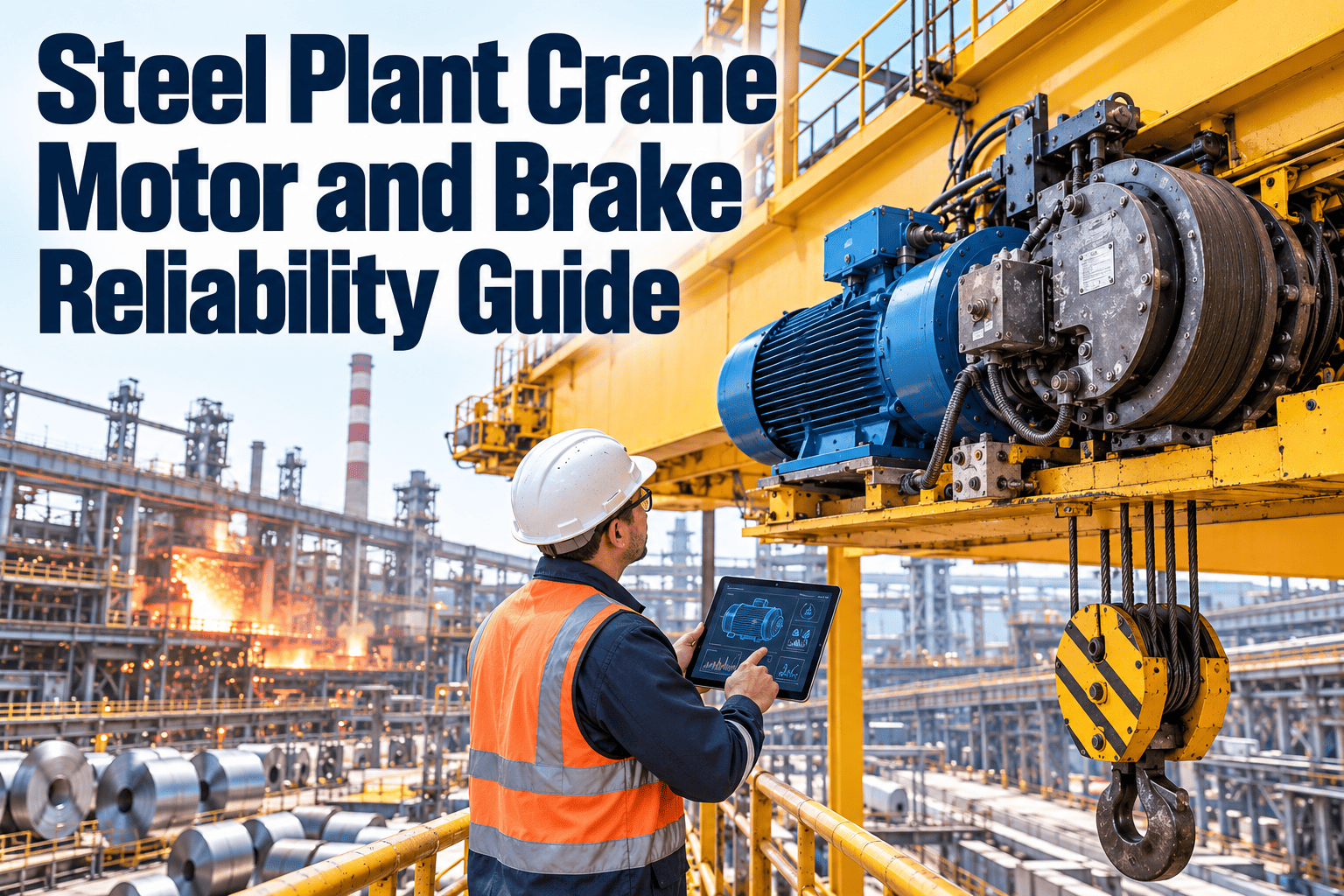
Steel Plant Crane Motor and Brake Reliability Guide
Track motor condition, brake wear and duty cycles so lifting equipment failures are planned out, not discovered.
MotorTemperature and vibration
BrakeWear and air gap
CyclesStarts and lifts
Failure Lifecycle of a Crane Brake
Normal
Even pad wear, correct gap
Even pad wear, correct gap
Early wear
Gap growing, slight drag
Gap growing, slight drag
Degraded
Heat, glazing, slow response
Heat, glazing, slow response
Failure
Slip, load drift, trip
Slip, load drift, trip
Motor and Brake Condition Checks
| Item | Check | Warning Sign | Response |
|---|---|---|---|
| Hoist motor | Winding and bearing temperature | Heat rising over time | Inspect cooling and load |
| Motor bearings | Vibration and noise | Rising vibration trend | Plan bearing replacement |
| Brake pads or discs | Thickness, glazing, contamination | Uneven wear, oil or dust | Clean or replace |
| Brake gap | Air gap and release | Dragging or late release | Adjust and retest |
| Brake torque | Holding test | Load creep | Remove from service until fixed |
| Electrical | Current, insulation, connections | Unbalanced current | Electrical inspection job |
Plan Crane Inspections Before Faults Appear
Build crane inspection routes and brake checks into scheduled work orders.
Why Duty Cycles Matter
Calendar-based only
- Same interval for every crane
- Heavy-duty cranes wear ahead of schedule
- Lightly used cranes get unneeded work
Usage-based
- Intervals follow hours, lifts or starts
- Duty severity shapes the plan
- Work lands closer to actual wear
Daily to Annual Inspection Rhythm
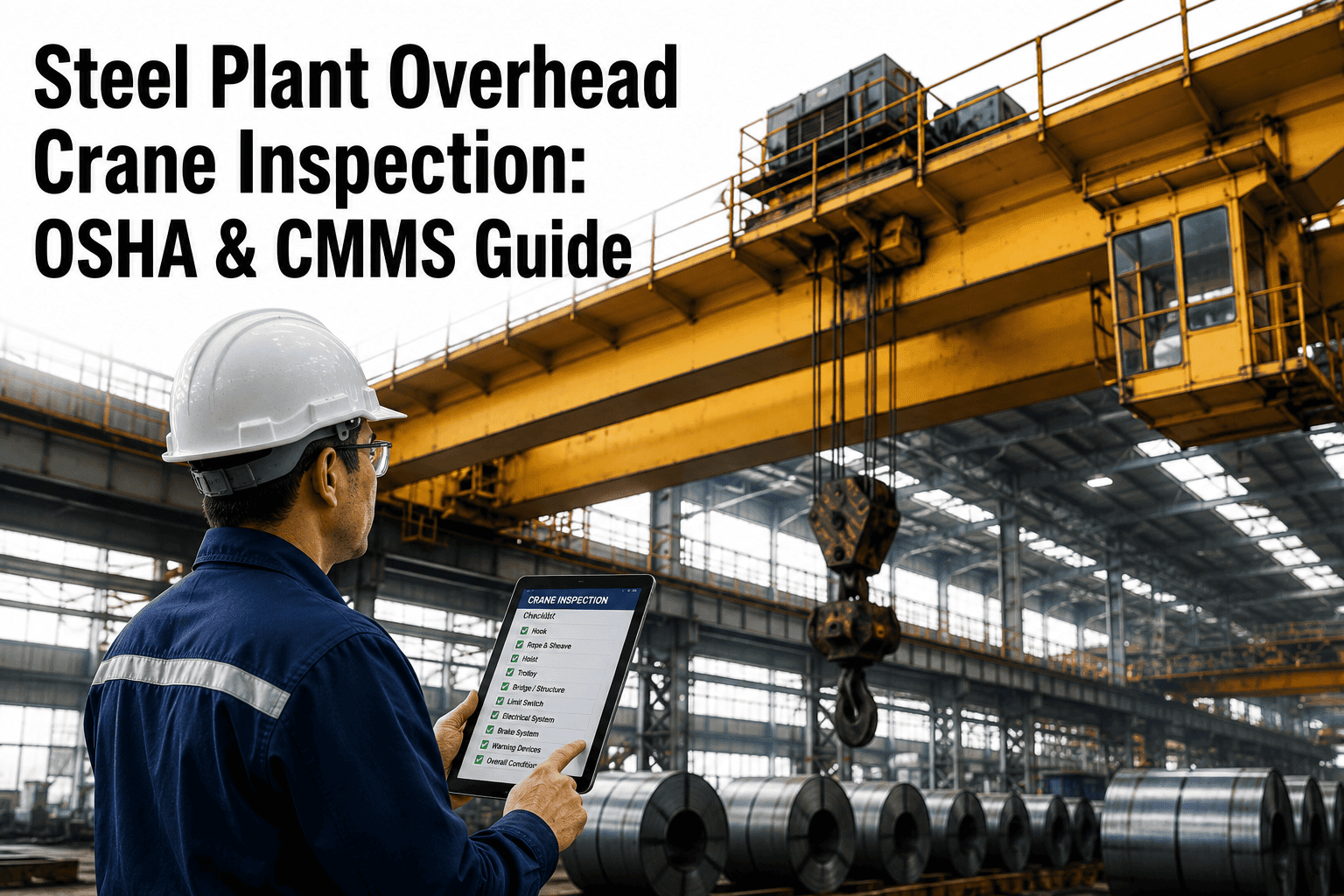
Every shift Operator checks for noise, drift and brake response.
Weekly Technician checks brakes, limit switches and wire rope condition.
Monthly Record temperature and vibration readings for trending.
Annual Full inspection by a qualified person to applicable standards.
Compliance and Records
- Keep dated inspection records for each crane.
- Record who inspected and what was found.
- Tie defects to work orders with closing notes.
- Follow your local regulations and manufacturer guidance.
KPIs for Lifting Equipment
Crane availability
Uptime per crane
Uptime per crane
Brake work orders
Planned versus emergency
Planned versus emergency
MTBF
Time between failures
Time between failures
Inspection compliance
Checks done on time
Checks done on time
Frequently Asked Questions
How often should crane brakes be inspected?
Follow manufacturer and regulatory guidance, and shorten intervals for severe duty.
Follow manufacturer and regulatory guidance, and shorten intervals for severe duty.
What signals a motor problem early?
Rising temperature, vibration or current compared with the baseline.
Rising temperature, vibration or current compared with the baseline.
Can inspections be done on mobile?
Yes. Book a demo to see mobile checklists.
Yes. Book a demo to see mobile checklists.
Does it track duty cycles?
Hours or cycle counts you record can trigger preventive tasks.
Hours or cycle counts you record can trigger preventive tasks.
Does it keep inspection records?
Yes. Findings and work orders stay linked to each crane.
Yes. Findings and work orders stay linked to each crane.
Keep Cranes Safe and Available
Give your team one place for crane inspections, brake history and work orders.