Direct Reduced Iron (DRI) production through MIDREX and HYL shaft furnace processes represents one of the most capital-intensive, least-tolerant-of-downtime operations in modern steelmaking. When a MIDREX furnace experiences an unexpected refractory failure, bearing degradation in the reformer catalyst tube system, or a gas recycling valve blockage, the cost extends far beyond parts and labor — the blast of lost production revenue, grid curtailment penalties, and committed EAF tapping schedules create cascading financial consequences across the entire melt shop. OxMaint's DRI plant predictive maintenance platform connects IoT sensors embedded in reformer inlet flange thermocouples, shaft furnace vibration nodes, hot gas duct pressure transducers, and syngas compressor discharge monitors into a unified cloud engine that flags mechanical drift patterns weeks before a catastrophic failure occurs. Engineers receive automated mobile alerts with corrective action sequences, spare parts inventory triggers, and scheduled intervention windows that allow maintenance teams to execute repairs during planned gas-recycling standdowns rather than emergency calls at 3 AM. By instrumenting your DRI plant with continuous condition monitoring, you transform shaft furnace reliability from a reactive crisis-management exercise into a predictable, budget-controlled engineering discipline.
DRI Plant Maintenance: MIDREX and HYL Shaft Furnace Predictive Strategies
Deep operational guidance for managing direct reduced iron furnaces, gas reforming systems, refractory integrity protocols, and predictive maintenance workflows — maintaining 8000+ annual operating hours and 95%+ availability targets for primary iron production asset classes.
MIDREX and HYL Shaft Furnace Operating Architecture
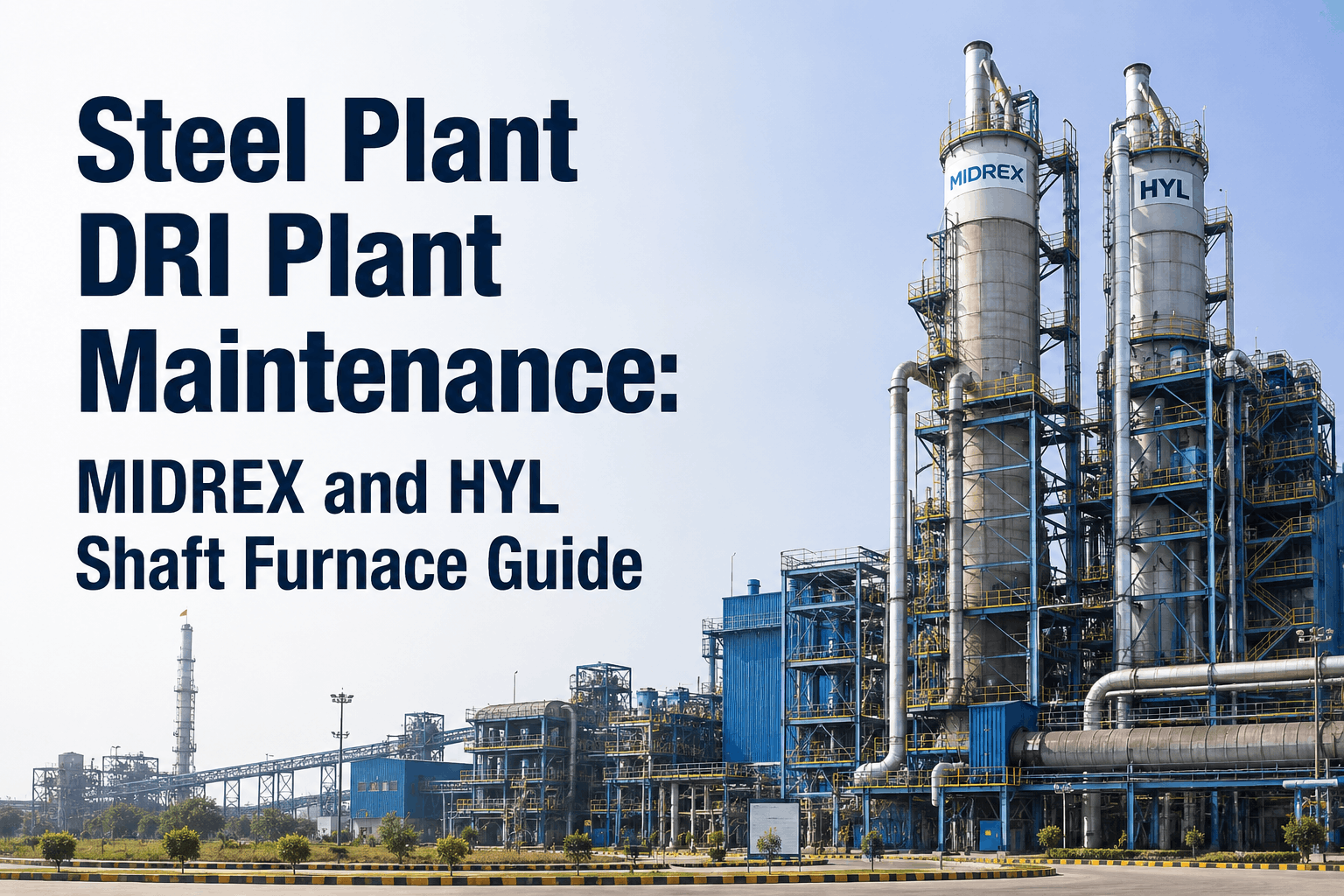
The MIDREX direct reduction process dominates roughly 67% of global DRI production capacity, with HYL (Energiron) holding the secondary position. Both processes employ vertical shaft furnaces operating at relatively low pressure regimes (≤1 barg for MIDREX, 2-3 barg for HYL/Energiron) where iron ore pellets or lump descend through multiple temperature zones, meeting ascending reducing gas streams composed primarily of hydrogen and carbon monoxide. The critical operational difference lies in their gas reforming architectures: MIDREX integrates a fired nickel-catalyst reforming furnace upstream of the shaft, which heats fresh natural gas with recycled top gas to produce reducing gas at stoichiometric H2/CO ratios of 1.5–1.8, achieving (H2+CO) concentrations exceeding 90%. HYL systems employ a tubular reformer configuration where gas transformation occurs internally, requiring different pressure management and heat recovery strategies. Both furnace types demand continuous monitoring of shaft refractory condition, reformer catalyst deactivation rates, gas recycling system integrity, syngas compressor performance parameters, and hot DRI discharge temperature stability. A single unplanned shaft furnace shutdown — whether triggered by refractory breakthrough, catalyst poisoning, or bearing failure in the syngas compression circuit — erases approximately $85,000–$155,000 in lost production value per day, depending on facility nameplate capacity and spot DRI pricing. Strategic predictive maintenance programs that intercept these failure modes 2–4 weeks before critical thresholds eliminate this financial exposure entirely.
DRI Shaft Furnace Condition Monitoring Dashboard
Review active sensor streams for reformer health, shaft refractory condition, gas recycling stability, and compressor wear patterns across your facility.
Catalyst Tube Thermal Gradient Drift
Thermocouples embedded in the reformer inlet manifold detect micro-coking of nickel catalyst tubes. When temperature rise rate drops below 5°C per minute per stage, carbon deposition on tube walls is imminent. Automated alerts trigger catalyst flushing schedules before reduction efficiency collapses, typically adding 18–24 weeks of campaign life extension.
Refractory Wear and Hot Spot Detection
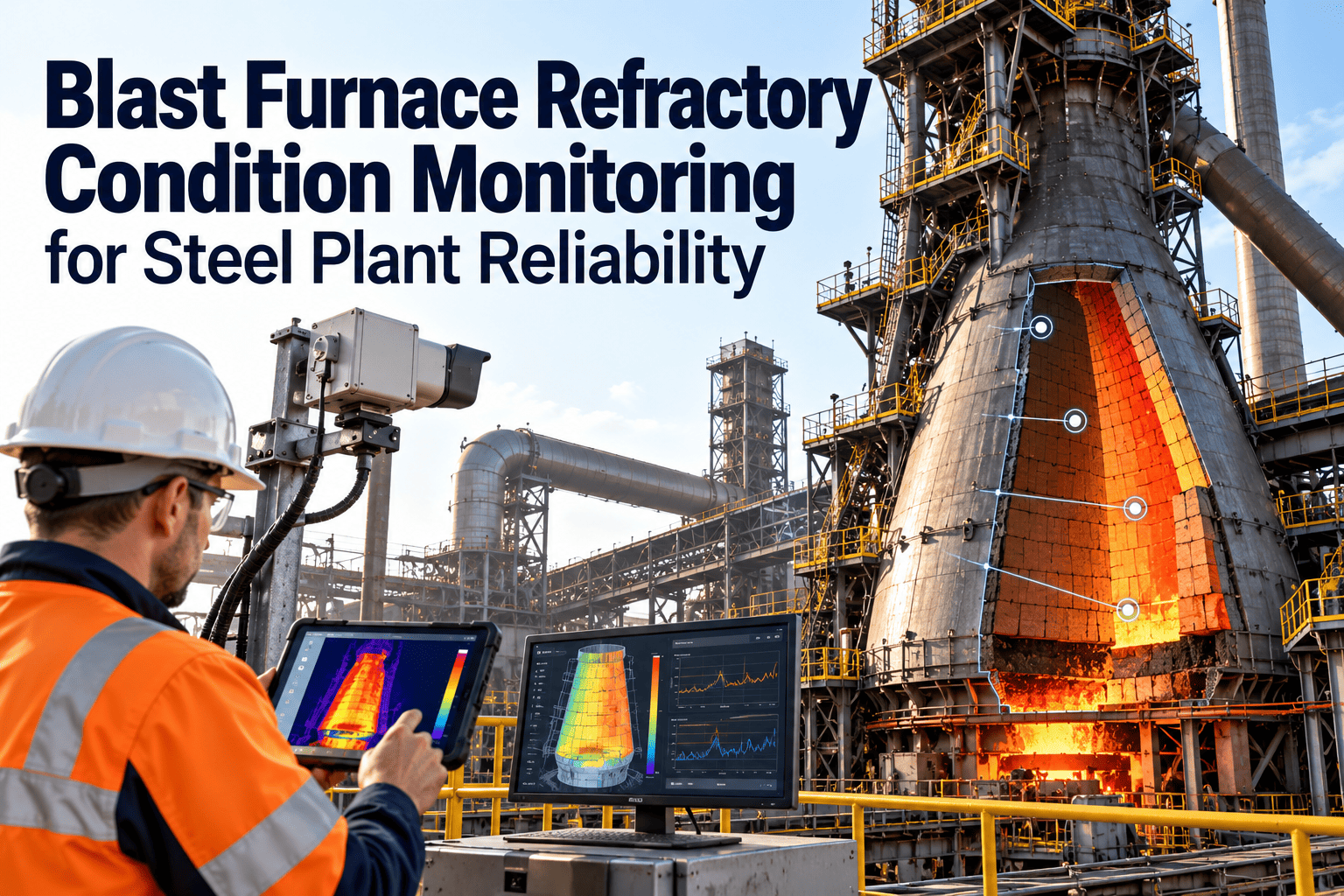
Infrared surface temperature mapping combined with shell thermocouples at the 5-meter mark identifies refractory thinning before metal breakthrough occurs. A deviation index exceeding 6% signals imminent failure requiring planned refractory patching. OxMaint tracks campaign age, accumulated operating hours, and thermal cycling events to predict optimal replacement windows during scheduled turnarounds.
Bearing Wear and Vibration Trending
Accelerometers mounted on compressor discharge housing detect bearing degradation and impeller wear patterns. When vibration amplitude exceeds 6 mm/s, bearing replacement becomes critical within 14 days. The system logs compressor run hours, discharge temperature, and inlet pressure to identify bearing failure root causes and schedule replacement during the next planned gas recycling shutdown, preventing catastrophic mid-cycle failures.
Five Critical DRI Maintenance Failure Modes and Predictive Detection Strategies
DRI plant failures are not random equipment breakdowns—they are measurable degradation curves that provide 2–8 weeks of warning before catastrophic loss of function. The six most costly DRI failure modes, their root cause signatures, and the predictive maintenance interventions that intercept them are detailed below. Each failure mode generates distinct sensor signatures across temperature, vibration, pressure, and flow rate parameters. Facilities that instrument DRI furnaces with connected IoT sensors can identify these signatures in real time, allowing maintenance teams to schedule repairs during controlled shutdown windows rather than responding to emergency alerts. A reformer tube micro-coking event typically manifests as a gradual reduction in reactor outlet temperature slope, declining natural gas consumption per ton of DRI, and increasing pressure drop across the catalyst bed. These markers appear 3–4 weeks before tube plugging forces an immediate furnace shutdown. Similarly, shaft furnace refractory wear creates thermal asymmetry patterns detectable via surface infrared measurement and internal shell thermocouples—allowing maintenance teams to schedule lining repairs during the next planned gas recovery shutdown rather than managing an unplanned breakthrough. Syngas compressor bearing failure announces itself through elevated vibration amplitudes (4.5–6 mm/s), rising discharge temperature, and audible high-frequency noise components visible in vibration spectrograms. Fleet operators using OxMaint's DRI module report consistent 8–12 week advance warning windows before compressor bearing failures, providing sufficient lead time to procure replacement components and schedule maintenance during coordinated turndowns. Hot gas duct accumulator pressure relief valve stiction produces intermittent pressure spikes in the recycled gas circuit, creating repeated automatic depressurizations that damage downstream scrubbers and precipitate cascade failures. Tracking valve opening frequency and pressure spike duration allows predictive maintenance teams to schedule valve replacement proactively. Cold DRI cooler tube erosion manifests as increasing pressure drop and declining outlet temperature stability—both detectable via continuous thermocouple and pressure transducer monitoring. Finally, magnetic separator bearing wear in the finished product handling system produces vibration signature changes that precede mechanical seizure by 2–3 weeks, allowing technicians to plan bearing replacement without disrupting production. Each failure mode becomes visible to maintenance and operations teams in OxMaint's DRI plant dashboard, with automated scheduling of corrective work orders and spare parts requisitions.
Gas Reformer System Condition Tracking and Catalyst Management Protocols
The MIDREX reforming furnace represents a distinct system operating at high temperature (900–950°C) with nickel-based catalyst tubes that gradually deactivate through carbon deposition, sintering, and chemical attack from sulfur-bearing impurities in inlet natural gas. Unlike the shaft furnace itself, which operates for 3–5 year campaigns between major refractory outages, the catalyst bed requires active monitoring and periodic regeneration every 18–36 months depending on inlet gas quality and operating severity. Continuous measurement of reformer inlet natural gas composition (methane concentration, H2S content, nitrogen contamination), outlet reducing gas analysis (H2/CO ratio, unreacted methane), and catalyst bed temperature gradients across multiple zones provides early warning of deactivation. When the outlet H2+CO concentration drops below 88%, or when outlet temperature at any catalyst stage lags more than 15°C behind the prior-month baseline, catalyst micro-coking is underway. Flushing procedures initiated at this threshold—involving controlled hydrogen purges and temperature adjustments—can extend catalyst life by 8–12 weeks. Delayed response to these signals forces either forced catalyst replacement or furnace shutdown for destructive inspection, both outcomes that disrupt DRI production and inflate maintenance cost structures. OxMaint's reformer monitoring module tracks catalyst bed performance against historical baseline trends, automatically flagging when drift rates exceed statistical control limits and escalating alerts to both operations and maintenance teams. Coordination between reformer condition and shaft furnace refractory planning allows efficient scheduling of catalyst replacement, refractory repairs, and bearing maintenance during unified turnaround events, minimizing the cumulative impact of planned maintenance on annual production throughput.
Refractory Lining Integrity Management and Hot Spot Prevention
Shaft furnace refractory linings represent 12–18% of DRI plant capital cost, with typical campaign durations of 3–5 years and replacement costs reaching $2–4 million for mid-scale facilities. The lining degrades through three primary mechanisms: thermal stress from cyclic heating and cooling during production swings, chemical attack from oxide-rich ore pellet surfaces at high temperature, and mechanical erosion where descending burden contacts the lining during process upsets. Traditional refractory management relied on visual inspections during cold outages and post-failure analysis — an approach that frequently resulted in unplanned shutdowns when thermal monitoring finally revealed breakthrough conditions. Modern DRI plants employ continuous shell thermocouples (measuring external furnace surface temperature at 2–3 meter intervals along the shaft height), infrared surface imaging at the furnace exterior, and internal furnace imaging via borescope ports to track refractory wear in real time. When the thermal gradient between the shell measurement point and the predicted heat loss profile indicates lining thickness loss exceeding 15–20% of the original specification, planned refractory patching becomes necessary within 4–8 weeks. Tracking cumulative thermal cycling events, monitoring for localized hot spots (temperature deviations exceeding 40°C from the circumferential average), and correlating thermal data against ore quality changes and furnace operating temperature allows predictive teams to schedule optimal replacement windows during planned production ramps rather than facing emergency cold repairs. OxMaint's DRI refractory module maintains continuous historical records of thermal profiles, correlates them against ironmaking performance metrics (DRI metallization, product temperature, furnace draw rate), and generates automated maintenance recommendations when trending analysis indicates imminent replacement need. This approach extends average refractory campaign life by 18–24 months, representing $300–550K in deferred replacement cost per facility.
OxMaint DRI Plant Maintenance Workflow: Predictive Intervention Architecture
Integrated sensor-to-action pathway: From condition signal detection through work order execution, spare parts requisition, and campaign extension documentation.
Hot DRI Transport, Product Quality Stability, and Cooler System Maintenance
MIDREX hot discharge furnace technology enables direct transfer of hot direct reduced iron (HDRI) at 650–700°C to the EAF, eliminating energy loss from cooling and reheating while adding significant value to the final steel product. However, hot DRI transport introduces unique maintenance challenges: hot discharge conveyor bearing life drops significantly compared to cold handling systems, HDRI cooler tube erosion accelerates due to higher temperature differential, and thermal reoxidation risk requires precise temperature maintenance during transport. The discharge system incorporates a barometric valve that maintains furnace internal pressure (≤1 barg) while sealing against external air exposure—preventing HDRI reoxidation. Stiction or leakage in this valve allows air infiltration, triggering surface oxidation that degrades product quality. OxMaint's DRI cooler monitoring tracks discharge temperature stability, logs cooler outlet temperatures at each section (primary, secondary, tertiary cooling zones), and monitors pressure differential across each cooling stage. When outlet temperature variability exceeds ±10°C or pressure drop trends indicate tube erosion accumulation, cooler maintenance becomes necessary within 2–3 weeks. Similar bearing temperature monitoring in the hot transport conveyor system allows predictive bearing replacement scheduling. Coordinating hot DRI product quality data (metallization percentage, oxygen content, surface appearance) against cooler system maintenance events creates a closed-loop feedback system that optimizes both product specifications and equipment reliability.
Frequently Asked Questions on DRI Plant Maintenance
Operating a 600,000 ton-per-year MIDREX facility on reactive maintenance left us exposed to $350–500K monthly downtime costs and constant furnace outages. Transitioning to OxMaint's predictive DRI monitoring transformed our asset management. Within six months, our shaft furnace campaign extended by 14 months, syngas compressor bearing replacement was scheduled proactively during our planned turnaround, and we eliminated seven unplanned shutdowns. The platform's ability to correlate thermal trending with product quality changes gave us real confidence that we were extending campaigns safely. Annual savings approached $1.2 million, and our operations team now sees maintenance as engineering rather than crisis management.
Optimize Your DRI Plant Reliability Today.
OxMaint's DRI plant predictive maintenance platform connects your MIDREX or HYL furnace, reformer system, refractory lining, and compressor network into a unified condition-monitoring ecosystem — fully free to start, setup in minutes for existing sensor arrays or new IoT deployments.



-maintenance-and-shaft-furnace-reliability.png)