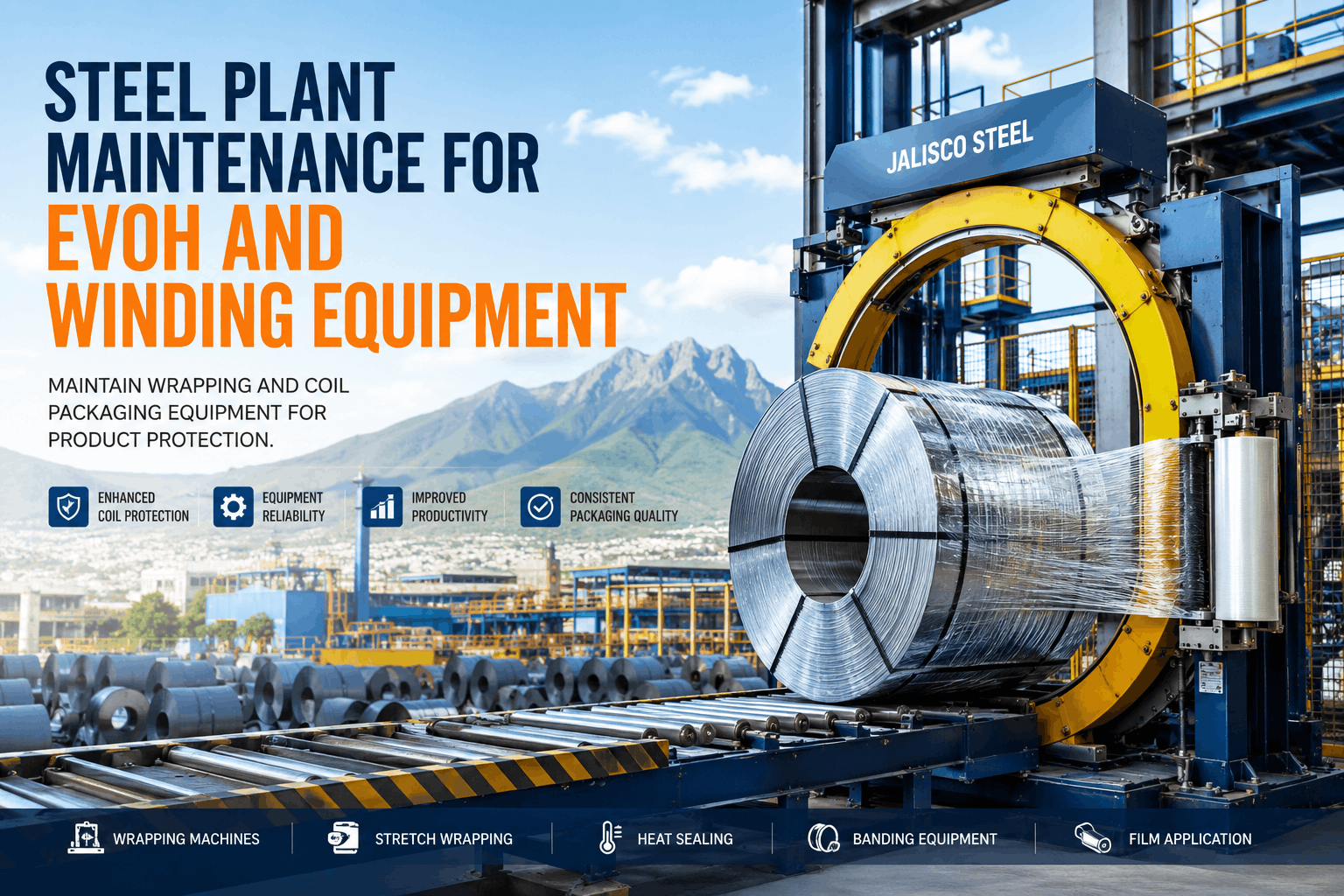
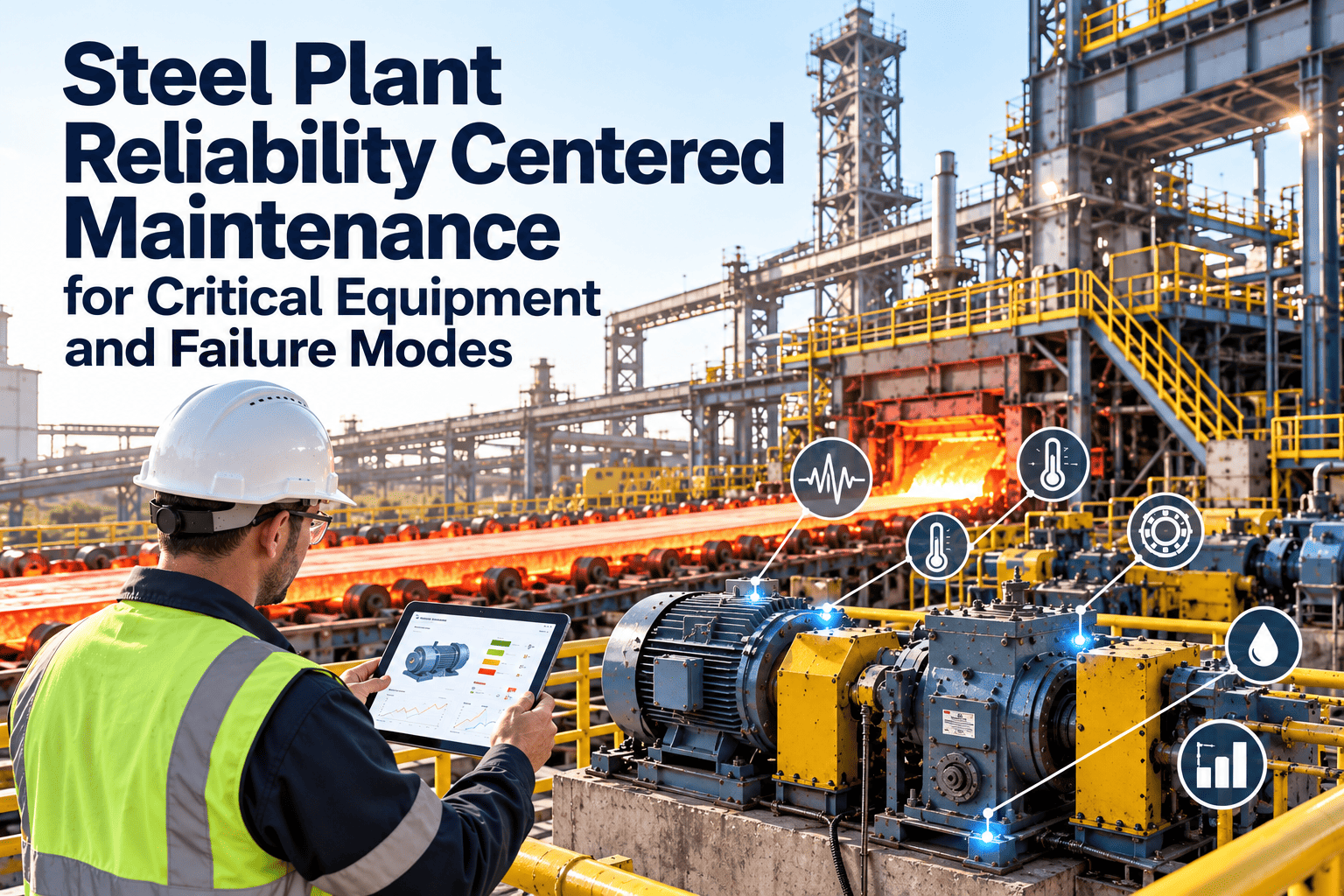
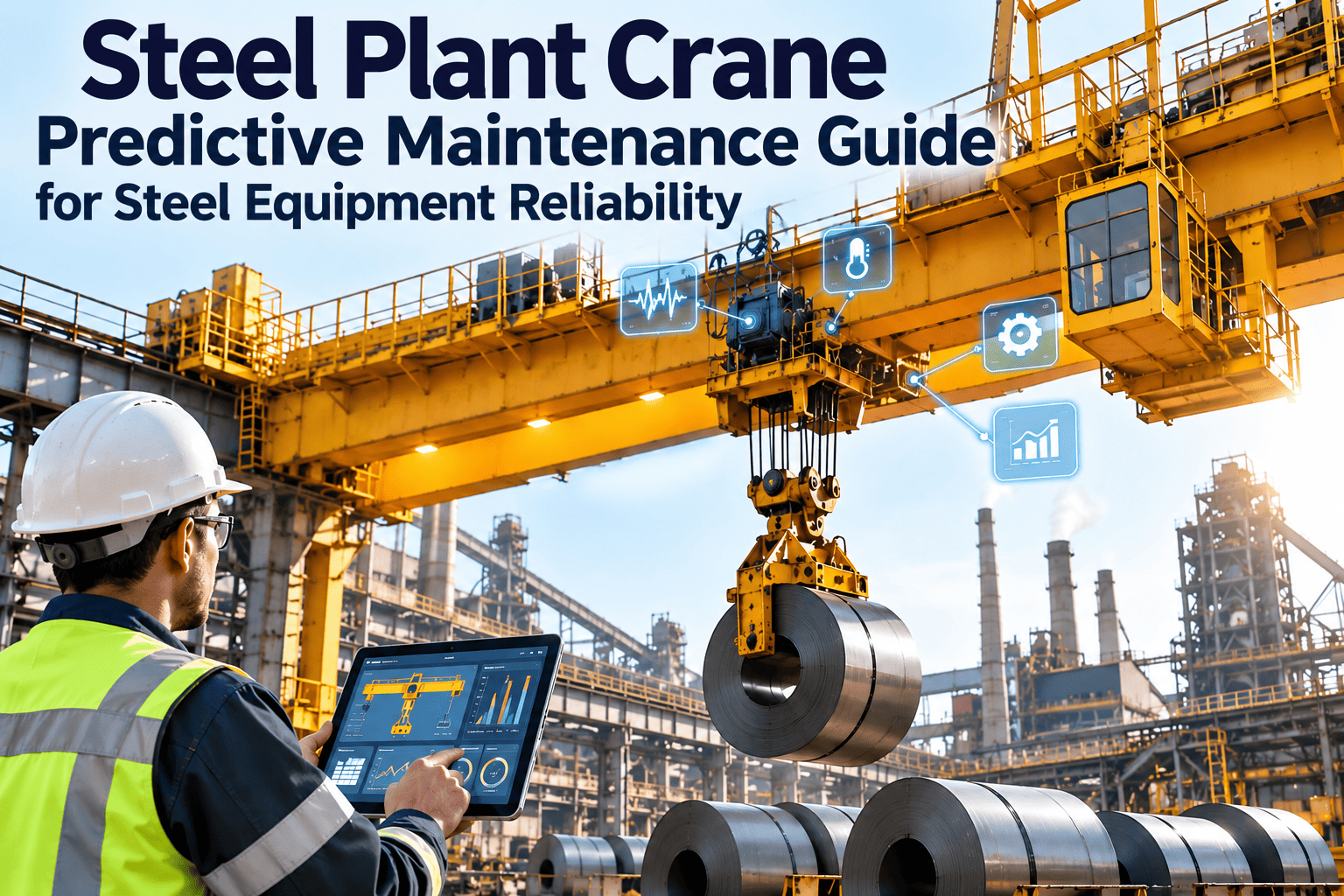
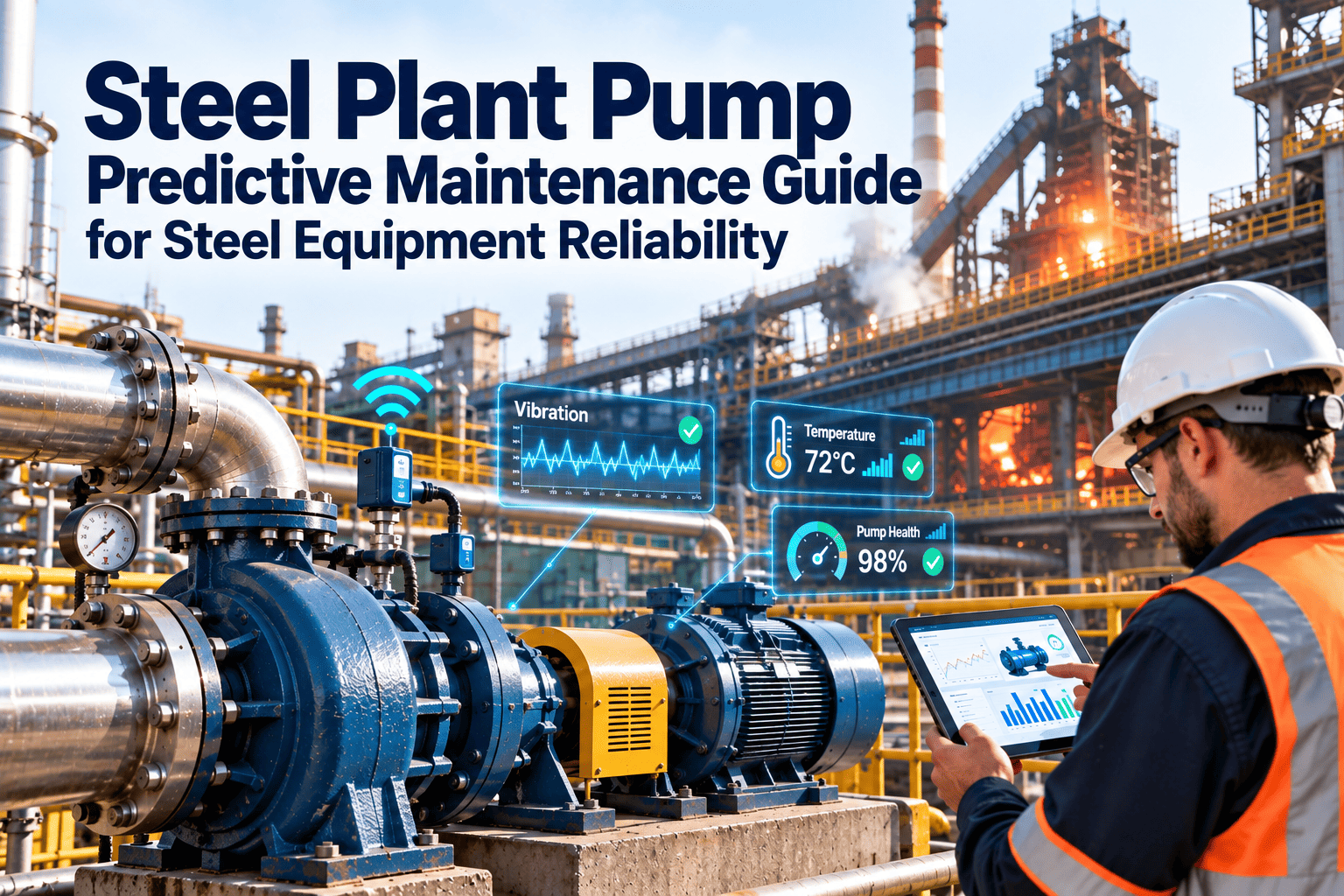
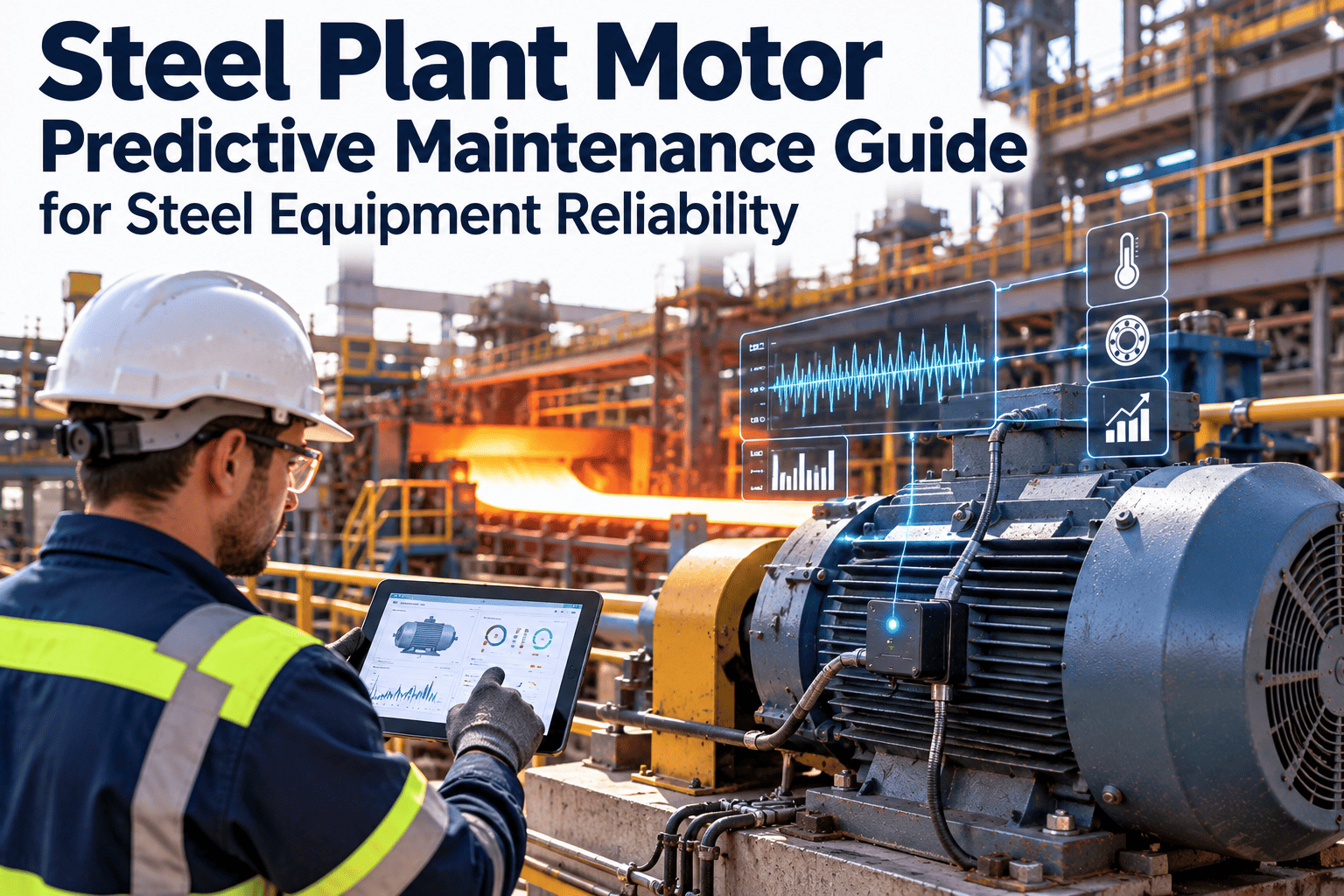
Steel Plant Maintenance for EVOH and Winding Equipment
By Alex Jordan on June 29, 2026
Steel coil packaging is the final, critical step before product reaches the customer. EVOH-based films and high-performance winding equipment provide exceptional protection against corrosion and damage during storage and transport. However, a packaging line failure is a direct path to production delays, product damage, and customer complaints. A robust, data-driven maintenance program is essential to maximizing the reliability and longevity of this sophisticated equipment [citation:4][citation:5]. Sign in to OxMaint to manage your steel plant maintenance, or book a demo to see how a CMMS can optimize your packaging line uptime.
Zero Unplanned Packaging Line Downtime. Every Coil Wrapped, Protected, and Ready for Shipment.
OxMaint automates preventive maintenance for EVOH wrapping and winding equipment — ensuring consistent packaging quality, protecting valuable steel from corrosion, and eliminating costly production stoppages.
reduction in unplanned downtime achievable with a well-maintained steel coil packing line [citation:6]
15-30 sec
typical wrapping time per coil, emphasizing the need for high equipment availability [citation:2]
97%
damage detection accuracy for packaging defects achievable with AI vision systems
30%
reduction in manual adjustments with automated control systems on modern film lines [citation:10]
$2.3M
In potential annual losses from undetected coil damage and packaging failures at a single steel processing hub — the majority attributable to inconsistent wrapping and undocumented pre-existing damage. AI-enabled inspection and a structured maintenance program create the accountability and quality assurance needed to protect product value.
EVOH Winding and Packaging Equipment — Critical Assets for Product Protection
Packaging Line Asset Classes · Maintenance Priorities
Steel Coil Packaging Asset Inventory
Wrapping Stations
Rotating ring mechanisms
Film carriage & tensioners
Cutting & sealing units
Protective roller systems
Material Handling
Conveyor systems
Coil upenders & turntables
Roller drives & motors
Positioning sensors
Control Systems
PLCs & HMIs
Sensors & encoders
Pneumatic & hydraulic valves
Automation software
Ancillary Equipment
Strapping & banding heads
Labeling systems
Film extrusion lines
Air compressors & dryers
The Maintenance Challenge — Common Failure Points in Winding and Packaging Lines
Mechanical Wear and Component Failure
Wrapping machines rely on rotating rings, friction wheels, and conveyor systems that experience continuous wear. Common issues include worn bearings, misaligned rollers, and broken drive belts, leading to inconsistent wrapping, film jams, and unplanned downtime [citation:1][citation:2][citation:5].
Inconsistent Packaging Quality
Improper film tension, incorrect overlap settings, or misaligned cutters and sealers can result in loose wrapping, failed seals, or film tearing. This compromises the protective barrier against moisture and corrosion, potentially leading to rust and customer complaints [citation:1].
Control System Malfunctions
Faulty sensors, PLC errors, or software glitches can disrupt the entire packaging sequence. Issues with photo-eyes for coil positioning or encoders on the rotating ring can cause mis-wraps, collisions, and safety hazards, bringing the line to a halt [citation:2].
Material Handling Bottlenecks
Coil upenders, conveyors, and turntables are critical for smooth material flow. Mechanical issues, such as hydraulic leaks or misaligned conveyors, can slow down or stop the line. Packaging material stockouts also cause costly delays [citation:4][citation:7].
Pneumatic and Hydraulic System Issues
These systems power many critical functions, from clamping mechanisms to cutting blades. Leaks, pressure loss, or contamination can lead to slow or failed operations, creating quality defects and significant downtime [citation:2][citation:5].
Safety Hazards from Neglect
Worn safety guards, malfunctioning E-stops, and compromised interlocks put operators at risk. In high-risk areas handling heavy steel coils, preventing accidents is vital for worker safety and avoiding costly production halts [citation:5].
Preventive Maintenance Workflow — From Schedule to Completion
OxMaint Preventive Maintenance Workflow
Step 1 · Schedule
PM Calendar Automation
Every asset on the packaging line—wrapping units, conveyors, strapping heads—has a PM schedule defined by run hours, cycles, or manufacturer recommendations [citation:5].
→
Step 2 · Execute
Digital Inspection & Work Orders
Technicians complete detailed inspection checklists on mobile devices—checking tension, lubrication levels, sensor alignment, and wear parts—and log any corrective actions.
→
Step 3 · Record
Maintenance Log & Analytics
All inspection findings, replaced parts, and service notes are logged. This data builds a complete repair history and provides the foundation for predictive maintenance and capital planning.
OxMaint · Steel Plant · Packaging Line Maintenance
Stop Unplanned Line Stoppages. Start Proactive Maintenance for Reliable Packaging.
Automate maintenance schedules, track work orders, and build a complete service history for your EVOH winding and packaging equipment — all from one dashboard.
OxMaint for Steel Plant Packaging — Full Feature Capability
Asset-Specific PM Schedules & Checklists
Create tailored preventive maintenance schedules and digital checklists for every piece of packaging equipment—from the coil upender to the final strapping station—ensuring critical tasks like lubrication, sensor checks, and wear part inspections are never missed.
Digital Inspection & Photo Documentation
Field technicians complete inspections on mobile devices, logging findings, capturing photos of wear or damage, and closing out work orders. This creates a visual history and audit trail for every asset [citation:5].
Work Order Management & Tracking
Track the status of all maintenance work orders—from creation to completion. Prioritize urgent repairs, assign tasks to the right technicians, and monitor progress to minimize downtime [citation:6].
Spare Parts Inventory & Reorder Alerts
Maintain a critical spare parts inventory for your packaging line. Set minimum stock levels and receive automated reorder alerts, ensuring you have the right parts on hand to make timely repairs [citation:4][citation:6].
Repair History & Cost Analytics
Build a complete repair and cost history for every asset. Analyze data to identify high-cost equipment, track mean time between failures (MTBF), and make data-driven decisions on replacement vs. repair.
Advanced Diagnostics & Predictive Maintenance
Integrate data from IoT sensors (vibration, thermal, pressure) to monitor equipment health in real-time. Early detection of anomalies allows you to schedule maintenance before a critical failure occurs [citation:4].
Maintenance Requirements — By Packaging Line Component
Component · Wrapping Unit
Coil Wrapping Machine
Critical tasks include daily cleaning of sensors and the film path, checking the film carriage tension, and lubricating the rotating ring [citation:1][citation:7]. Monthly inspections should cover friction wheel wear, drive belt condition, and the operation of the cutting/sealing mechanism.
Daily
Cleaning & tension checks
Monthly
Friction wheel & belt inspection
Component · Conveying
Conveyors & Rollers
Preventive maintenance focuses on belt/chain tension and alignment. Lubricate all moving parts like bearings and rollers to prevent seizing. Check for debris or packing material that could cause tracking issues or blockages [citation:5].
Weekly
Belt tension & tracking checks
Monthly
Lubrication & debris removal
Component · Controls
Control Systems & Sensors
Regularly inspect and clean sensors (photocells, limit switches) to ensure reliable coil detection. Check for loose wiring in control panels, confirm HMI functionality, and keep software updated to prevent glitches that can halt production [citation:2][citation:4].
Daily
Sensor checks
Annually
Panel inspection & calibration
Reactive vs Proactive Maintenance — The Cost of Unplanned Downtime
Equipment availability96% — Scheduled maintenance only
Line stoppagesRare — contained to PM windows
Repair costsControlled — predictable budget
Packaging qualityConsistent — product protection
Maintenance schedulePlanned & optimized
OxMaint Packaging Line Maintenance — Performance Metrics by Component
Component
Failure Type
Common Cause
Solution
Cost Impact
Rotating Ring
Stops/erratic rotation [citation:2]
Worn friction wheel
Adjust or replace friction wheel
High
Film Tensioning
Loose or sparse wrapping [citation:1]
Incorrect tension on film carriage
Adjust screw on film carriage
Medium
Conveyor System
Tracking issues / failure
Worn belt / debris
Clean belt, adjust tracking, check rollers
Medium
Control Sensors
Detection failure
Fouling from dust/debris
Clean sensors, check alignment
Medium
Hydraulic System
Slow operation / failure
Low fluid / leaks
Check and fill fluids, repair leaks
High
50%
reduction in unplanned line stoppages documented after implementing a structured preventive maintenance program in a steel mill [citation:6]
25%
reduction in downtime compared to single-stage systems, achieved through automation and predictive scheduling [citation:10]
$15K+
annual electricity savings possible through energy efficiency improvements identified by maintenance data [citation:10]
"Our packaging line was a recurring bottleneck. We were constantly dealing with film jams, sensor failures, and unexpected conveyor issues. Since implementing a scheduled maintenance program, our unplanned downtime has dropped by over 50%. Our maintenance is now proactive, not reactive, and we have a complete history for every machine on the line."
— Plant Maintenance Manager, steel processing facility, Southeast US
Every unplanned packaging line stoppage is a direct hit to your production targets and profitability.
OxMaint provides the structure to transform a reactive maintenance team into a proactive operation, ensuring your EVOH winding and packaging equipment delivers consistent, high-quality output.
What are the most critical preventive maintenance tasks for a steel coil wrapping machine?
The most critical tasks include daily cleaning of sensors and the film path, checking the film carriage tension, and testing safety devices [citation:1][citation:2]. Regular inspection and adjustment of the friction wheel, lubrication of the rotating ring, and calibration of cutters and sealers are also key to preventing downtime [citation:5].
How often should my steel coil packing line be inspected?
A comprehensive program includes daily checks (cleaning, visual inspections), weekly checks (belt tension, fastener tightness), and monthly checks (more detailed lubrication, electrical inspections, and calibration). Annual overhauls are also recommended for major components [citation:5].
How does a CMMS help with packaging line maintenance?
A Computerized Maintenance Management System (CMMS) like OxMaint automates the scheduling of tasks, creates a complete work order history, manages spare parts inventory, and provides data for decision-making. This helps eliminate guesswork and ensures nothing is missed [citation:5].
What causes inconsistent wrapping on a steel coil?
Common causes include incorrect film tension, improper ring position, worn friction wheels, or misaligned protective rollers [citation:1][citation:2]. Regular inspection and adjustment of these components are essential to maintain consistent wrapping quality.
How can I reduce costs associated with packaging line maintenance?
Transitioning from reactive to preventive maintenance is the most effective way to reduce costs. A well-maintained line reduces the need for expensive emergency repairs, extends the life of components, and minimizes production losses from unplanned downtime [citation:6].
Protect Your Steel Products. Protect Your Production Schedule. Deploy OxMaint Today.
Stop firefighting packaging line failures. Start preventing them with OxMaint's comprehensive maintenance solution.