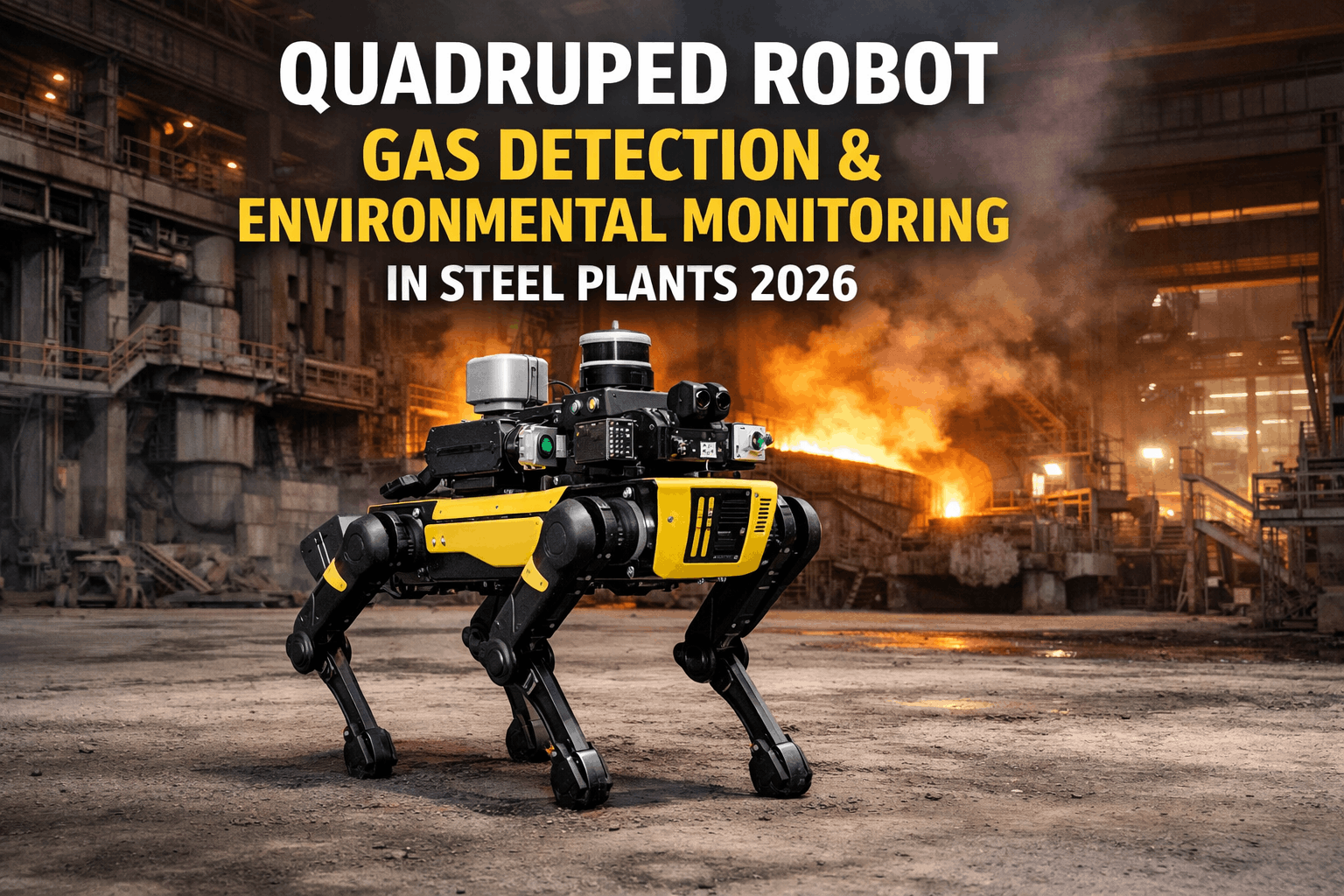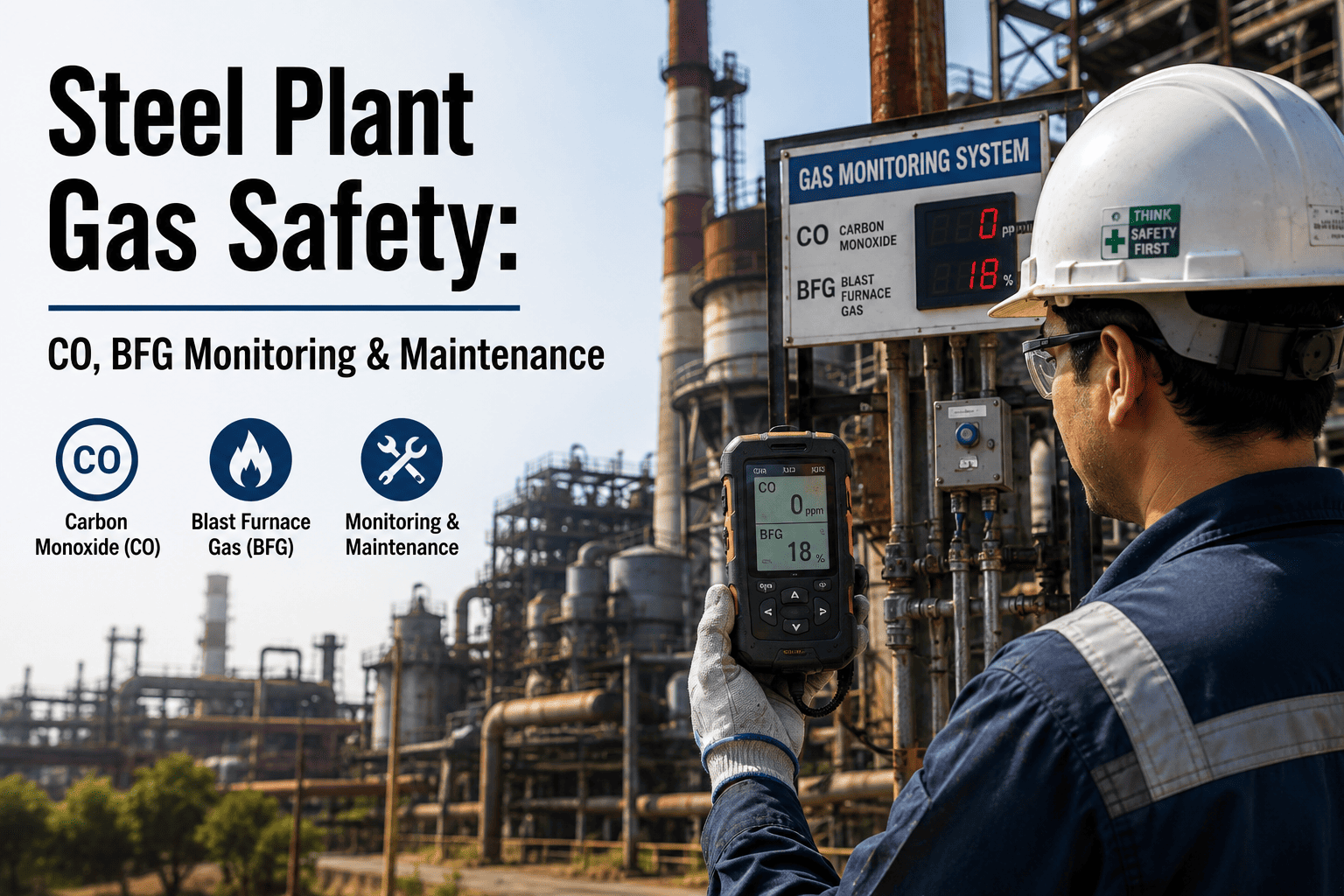
Steel plant gas safety hinges on rigorous CO and blast furnace gas (BFG) monitoring, yet carbon monoxide exposure remains one of the leading causes of serious incidents in steel manufacturing today. Mills that circulate coke oven gas, BFG, and converter gas face extreme risks unless they implement strict gas detection calibration, ventilation maintenance, and CMMS-driven preventive maintenance programs. This guide breaks down how modern maintenance and reliability teams build ironclad gas safety protocols—from CO detector maintenance to gas holder safety—while minimizing unplanned downtime. Discover how OxMaint's AI-powered CMMS streamlines these life-safety workflows when you Start Free Trial today.
Is a missed calibration turning your BFG system into a silent hazard?
Carbon monoxide leaks in steel plants cause catastrophic incidents within minutes. Reactive maintenance leaves gas detection networks blind. OxMaint enforces automated PM schedules, calibration tracking, and real-time compliance reporting across every CO monitor and ventilation system in your facility.
BFG gas system safety: why CO detector maintenance cannot be reactive
Blast furnace gas contains up to 25% carbon monoxide, making even minor leaks lethal. A single missed calibration on a fixed CO detector can render the sensor blind just when gas accumulates in a confined pump house or cast house.
Steel plant gas safety fails when maintenance teams rely on paper logs and memory. Without a CMMS enforcing BFG CMMS maintenance schedules, calibration drift goes unnoticed. Sensors exposed to high humidity, silica dust, and temperature swings in the blast furnace zone degrade faster than vendor specifications account for—often requiring monthly bump tests rather than quarterly ones. When a CO detector fails silently, workers entering a gas holder area or BFG pipeline manifold have no warning. OxMaint eliminates this gap by auto-generating work orders tied to each sensor's specific degradation profile, ensuring that no calibration date slips past due.
Steel plant gas detection checklist: essential PM tasks
A defensible gas safety CMMS program covers four detector tiers simultaneously. Missing any tier creates a blind spot in your facility's early-warning network.
Fixed CO detectors
- Monthly bump test with 50 ppm calibration gas
- Quarterly full span calibration (100 ppm CO)
- Replace sensor cartridge at end-of-life signal
- Verify audible/visual alarm outputs function
- Check conduit seals for water ingress
BFG pipeline monitors
- Weekly leak survey of flange joints and valves
- Monthly pressure-decay test on isolation sections
- Quarterly infrared camera sweep for gas escapes
- Annual flow-meter accuracy verification
- Inspect flame arrestors for blockage or corrosion
Ventilation systems
- Monthly belt tension and pulley alignment check
- Quarterly fan vibration analysis and bearing temp
- Inspect louvers and dampers for full stroke range
- Verify interlock with gas detection alarm logic
- Annual ductwork thickness UT measurement
Gas holder safety
- Weekly seal-fluid level and condition inspection
- Monthly guide-roller clearance and wear check
- Quarterly relief-valve set-point verification
- Continuous holder-position telemetry calibration
- Biannual internal holder inspection during outage
CO monitoring point coverage: where steel plants go blind
Most steel mills place CO detectors near known gas sources but miss dead zones where heavy CO accumulates. Strategic placement backed by maintenance analytics closes the gap.
| Plant zone | CO risk level | Detector spacing | PM frequency | Ventilation interlock |
|---|---|---|---|---|
| Blast furnace cast house | Critical | Every 10 m | Biweekly bump test | Auto-start at 25 ppm |
| BFG pipeline manifold | Critical | Every 5 m + dead ends | Weekly leak survey | Isolation at 35 ppm |
| Gas holder surroundings | High | Perimeter grid 8 m | Monthly calibration | Relief + purge at 30 ppm |
| Boiler house (BFG fired) | High | Every 12 m | Monthly calibration | Burner cutoff at 50 ppm |
| Control rooms (intake) | Moderate | 1 per air intake | Quarterly calibration | Intake closure at 15 ppm |
| Coke oven battery | Critical | Every 8 m | Biweekly bump test | Evacuation at 35 ppm |
A 1.8-million-ton integrated steel mill running 60 fixed CO detectors across its BFG system spends roughly 1,200 labor hours per year just on calibration and bump tests. When that work is tracked on spreadsheets, 15–20% of calibrations slip past due. OxMaint's automated work-order generation ensures every detector is serviced exactly on schedule, cutting overdue calibrations to near zero and producing a digital audit trail for every gas safety inspection.
CMMS-driven gas safety: how OxMaint protects your BFG system
OxMaint maps four concrete capabilities to your steel plant gas safety program—each delivering a measurable outcome that reduces both risk and maintenance cost.
Automated PM scheduling
OxMaint auto-generates work orders for every CO detector calibration, BFG valve inspection, and ventilation fan check based on actual sensor lifecycle data—no missed dates, no paper logs.
Real-time asset tracking
Track every gas detector, valve, fan, and gas holder component by serial number, location, and maintenance history. Know instantly which sensor is overdue and which pipeline section needs inspection.
Predictive failure alerts
OxMaint's AI analyzes sensor drift patterns, fan vibration data, and gas holder telemetry to predict detector end-of-life and ventilation failures before they create blind spots in your safety network.
Compliance audit readiness
Every calibration, leak survey, and evacuation drill is logged with timestamps, technician signatures, and gas readings. Generate OSHA and ISO 45001 audit reports in seconds, not weeks.
Gas safety guide for steel: evacuation procedure maintenance
An evacuation plan is only as reliable as the equipment and training behind it. Every component must be maintained on a strict schedule.
Monthly: alarm and beacon test
Trigger every gas alarm beacon and siren in the BFG zone. Verify sound levels exceed 85 dB at all operator stations. Log response time of control-room HMI—must display alarm within 2 seconds.
Quarterly: evacuation drill
Conduct full evacuation of cast house and BFG pipeline areas. Measure time-to-muster against the 4-minute target. Inspect all emergency escape breathing devices (EEBD) for cylinder pressure and seal integrity.
Semiannual: interlock logic test
Verify that CO alarms at 35 ppm automatically trigger ventilation interlocks, BFG valve isolation, and boiler burner cutoff. Test every PLC rung from sensor to actuator—no simulated bypasses.
Annual: full system audit
Third-party validation of all gas detection coverage maps, calibration records, evacuation times, and maintenance logs. OxMaint exports a complete compliance dossier in one click—covering every asset, work order, and reading.
Stop managing gas safety on spreadsheets
See how OxMaint automates CO detector calibration, BFG pipeline inspections, and evacuation drill compliance—all in one AI-powered CMMS built for steel plant reliability teams.
Steel plant gas safety: frequently asked questions
How often should CO detectors be calibrated in a steel plant?
Fixed CO detectors in high-risk steel plant zones like blast furnace cast houses and BFG manifolds require a bump test every 2 weeks and a full span calibration monthly using certified 50–100 ppm CO gas. Detectors in moderate-risk areas such as control-room intakes can follow a quarterly calibration cycle, but all sensors need immediate replacement when end-of-life signals appear or drift exceeds 20% of the span value.
What is the safe exposure limit for blast furnace gas (BFG)?
BFG contains up to 25% carbon monoxide, making any uncontrolled release immediately dangerous. The OSHA permissible exposure limit for CO is 50 ppm averaged over 8 hours, but steel plants must evacuate personnel when ambient CO reaches 35 ppm. Life-threatening concentrations can occur within minutes in confined spaces near BFG pipelines or gas holders—continuous monitoring and automated ventilation interlocks are mandatory.
How does a CMMS improve gas safety in steel manufacturing?
A CMMS like OxMaint eliminates missed calibrations and undocumented inspections by auto-generating preventive maintenance work orders tied to each detector's lifecycle. It tracks every asset by serial number and location, stores digital calibration certificates, and produces audit-ready compliance reports for OSHA and ISO 45001. You can Book a Demo to see how OxMaint enforces 100% on-time calibration schedules across your entire BFG system.
What maintenance is required for BFG gas holders?
Gas holder safety maintenance includes weekly inspections of seal-fluid levels and conditions, monthly guide-roller clearance checks, quarterly relief-valve set-point verification, and continuous monitoring of holder position telemetry. Biannual internal inspections during planned outages check for corrosion, coating breakdown, and structural fatigue. All findings must be logged with timestamps and trending data to predict when holder components need replacement.
What ventilation interlocks are required for steel plant gas safety?
Ventilation systems in BFG zones must interlock with gas detection alarms so that fans auto-start at 25 ppm CO and isolation valves close at 35 ppm. Boiler burner cutoff must trigger at 50 ppm. Interlock logic must be tested semiannually by verifying every PLC rung from sensor to actuator without simulated bypasses. All interlock test results, fan vibration data, and bearing temperatures should be tracked in a CMMS to detect degradation before failures occur.
Protect every worker, every detector, every shift
Join steel plants using OxMaint to automate gas safety maintenance, eliminate overdue calibrations, and build a defensible compliance audit trail—powered by AI-driven predictive maintenance.
Free 14-day trial · No credit card