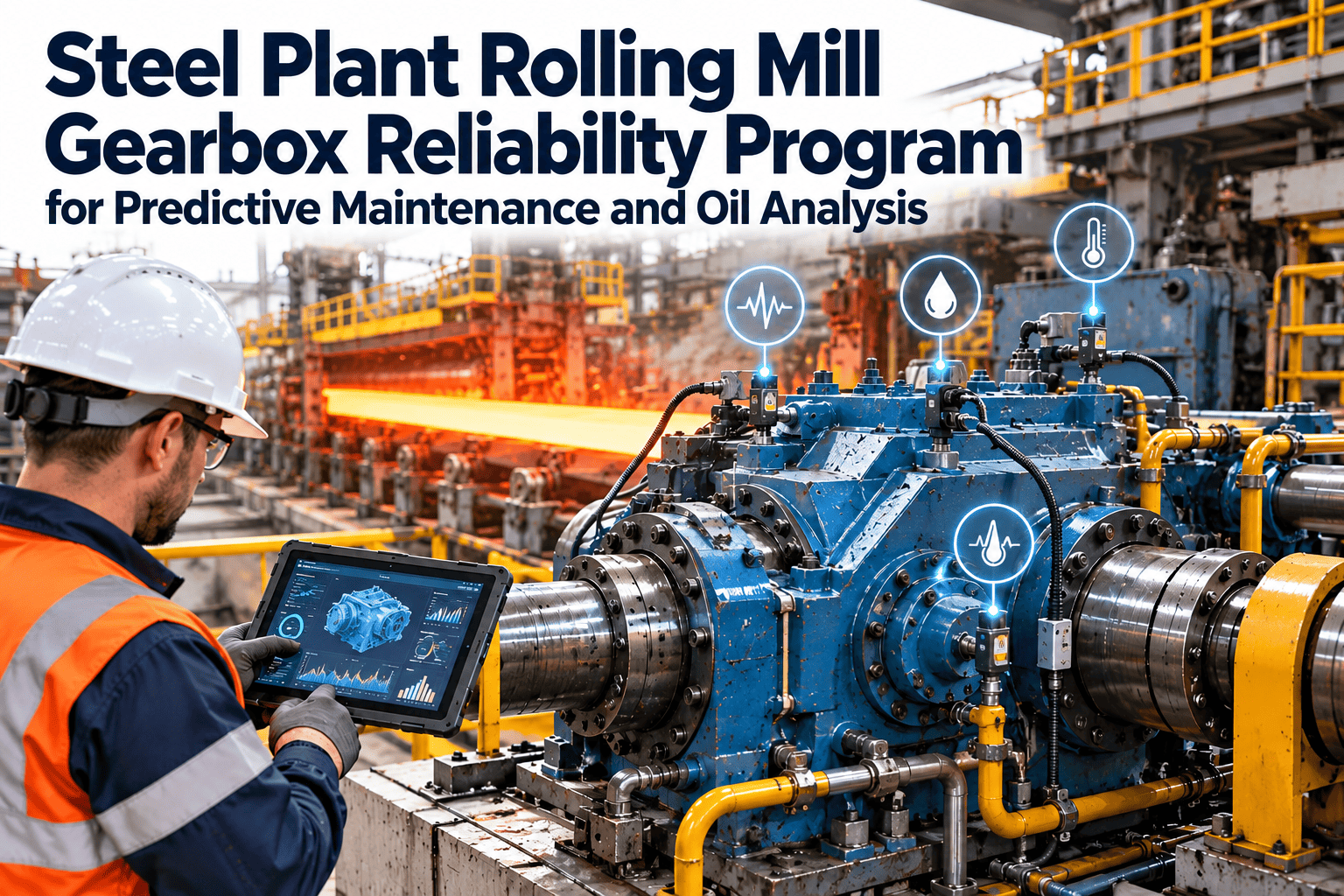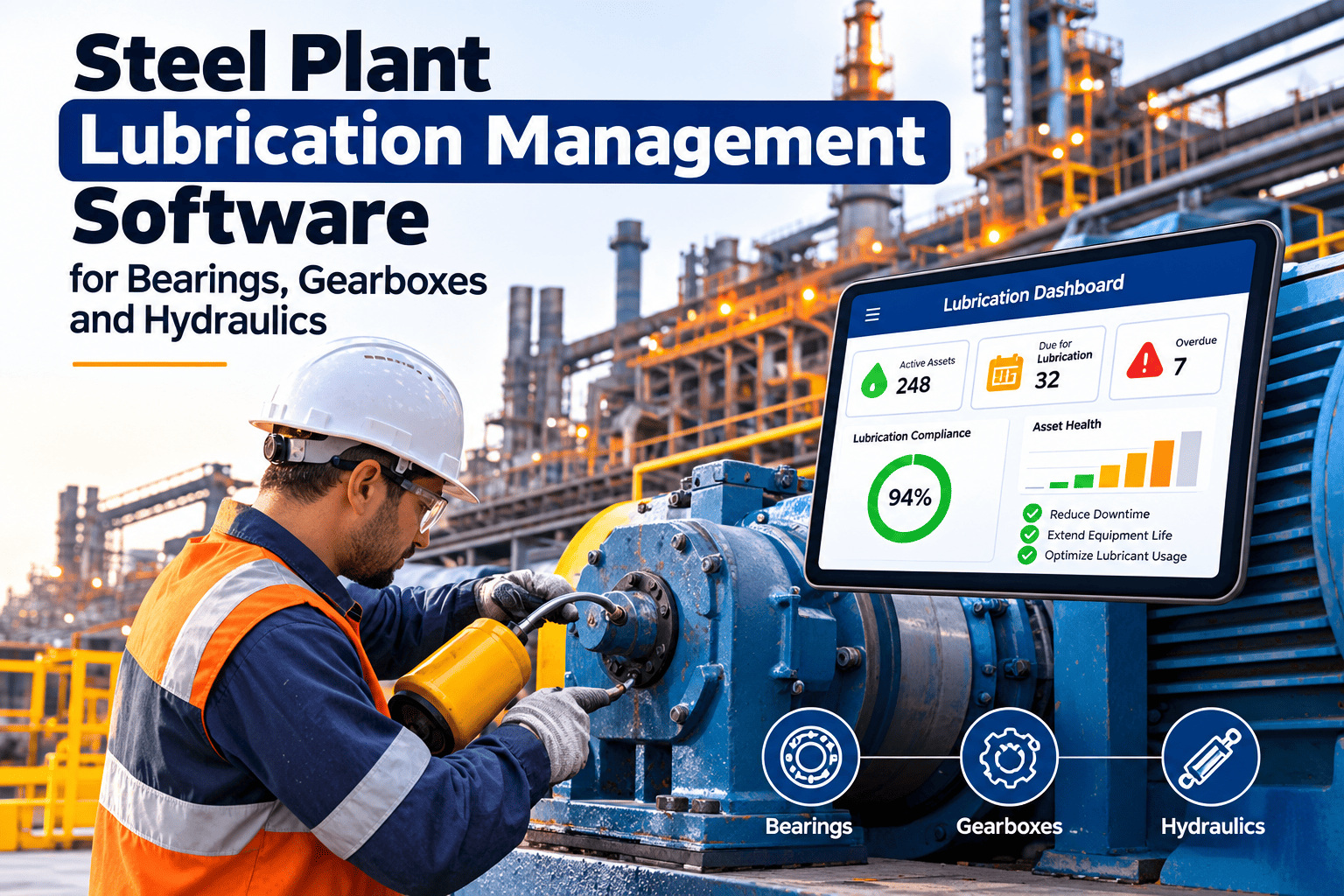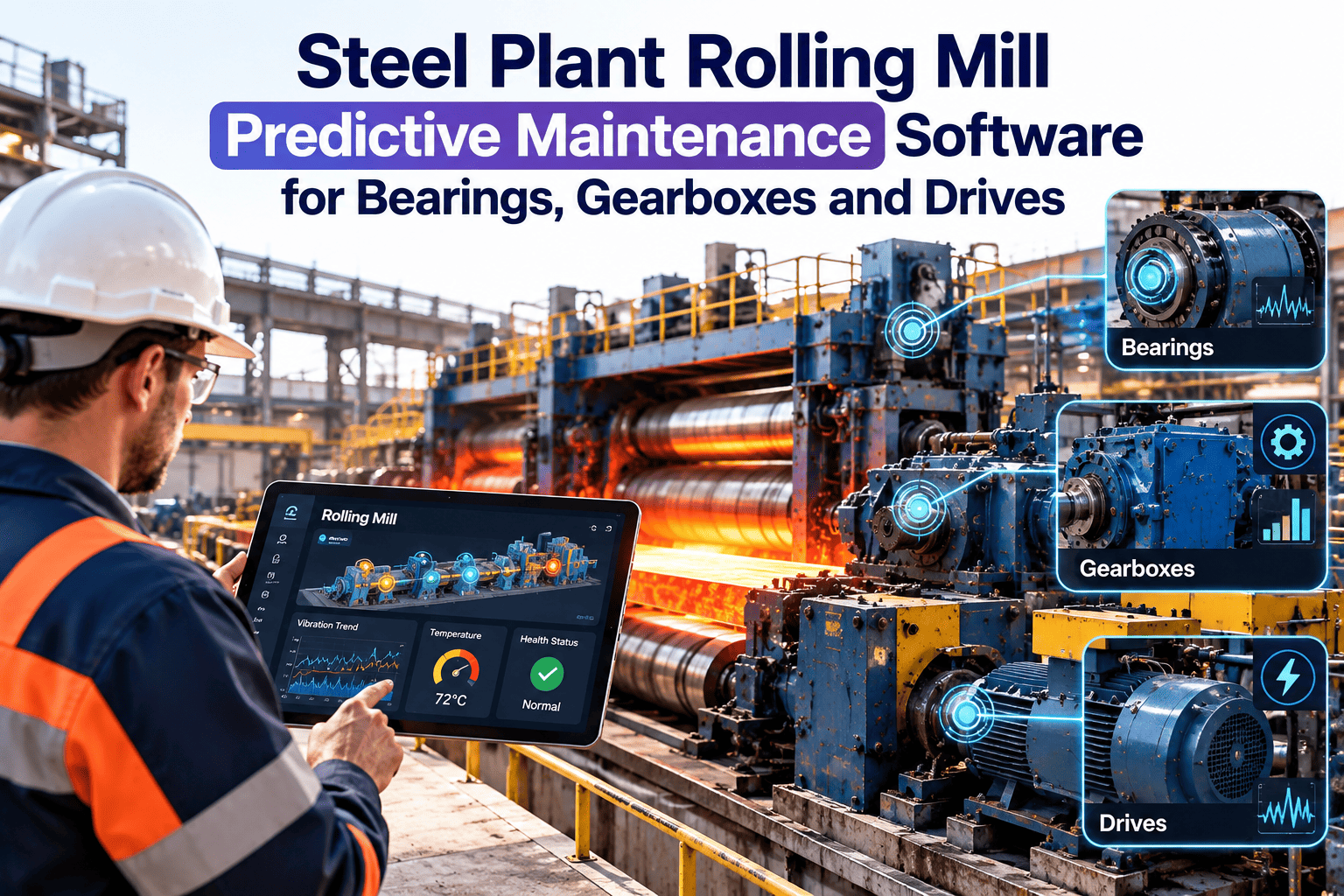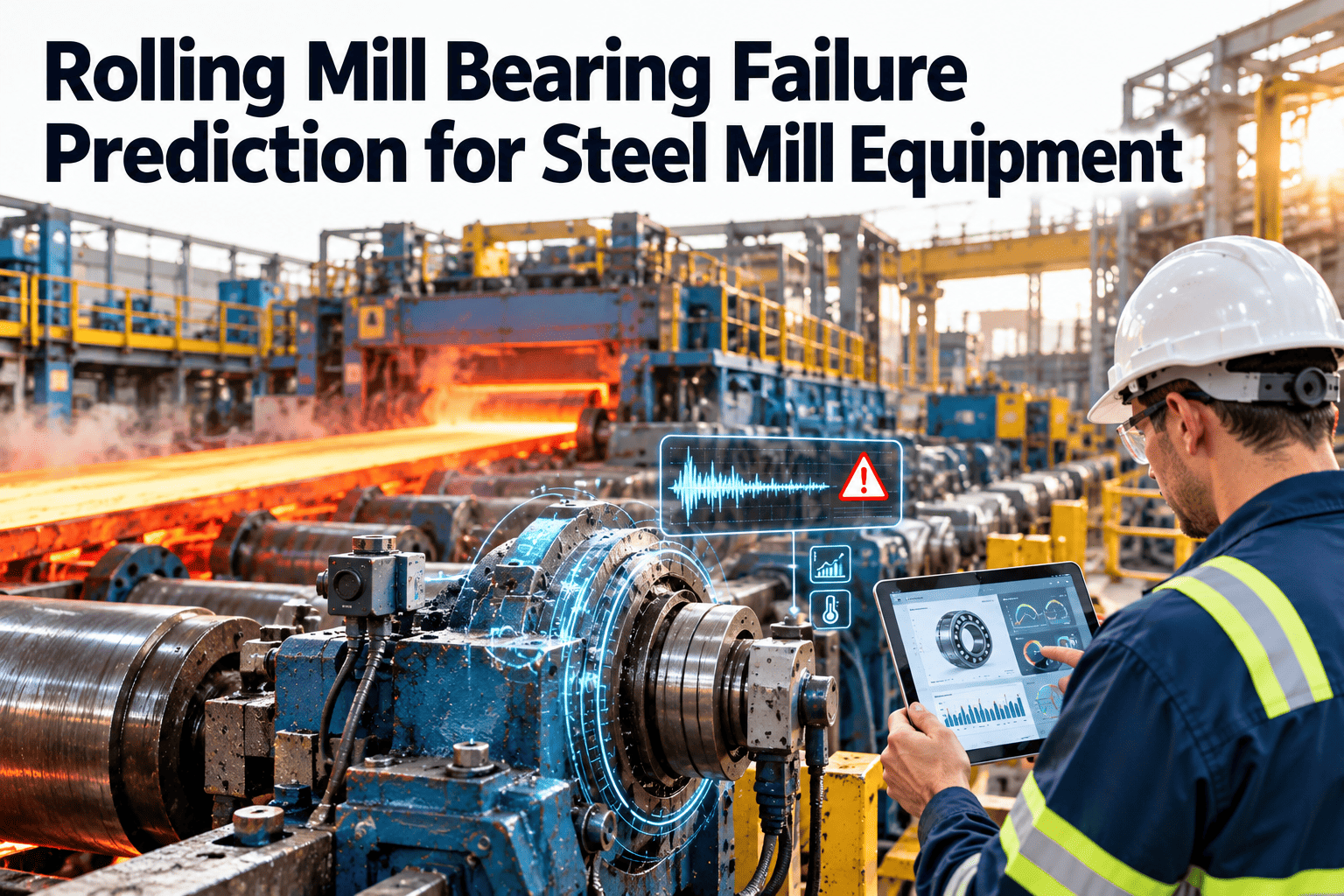
A 2,600-tonne-per-day integrated steel mill operating hot rolling mills (1,200°C furnace zones), EAF transformer cooling systems (105°C oil temperature), high-speed motorized reducers, and precision spindle bearings struggled with lubricant selection, experiencing bearing seizures every 16–24 months and gear tooth pitting failures costing $120K–$280K per event. Without systematic lubricant specification for extreme temperature and high-load applications, the mill deployed generic mineral oils unsuitable for thermal cycling stress, resulting in viscosity breakdown, additive depletion, and premature bearing corrosion. After implementing Oxmaint's integrated lubricant selection platform with ISO VG grade optimization, thickener compatibility analysis, additive package performance trending, and automated relubrication scheduling, the mill extended bearing life 19 months, reduced gear pitting failures 88%, decreased unplanned lubrication-driven maintenance 92%, and recovered $1.9M in prevented failure costs while extending equipment overhaul intervals 18–24 months. Start free — optimize lubricant selection and relubrication scheduling.
Precision Lubricant Selection Extends Steel Plant Equipment Life 19 Months — ISO VG Grade, Additive Optimization
Strategic lubricant selection for rolling mills (high-temperature environments), gearboxes (extreme pressure demands), spindle bearings (precision-speed applications), and EAF transformers (continuous cooling duty). Eliminate viscosity breakdown. Extend relubrication intervals 40%. Reduce bearing failures 88%. ISO VG grade optimization. Thickener compatibility analysis. Automated relubrication scheduling.
The Challenge — Generic Lubricants, Thermal Breakdown, Catastrophic Bearing Seizures
The mill operated without systematic lubricant specification strategy. Rolling mill gear drives were lubricated with generic mineral ISO VG 220 oil (1,200 mm²/s at 40°C) — adequate for ambient conditions but with viscosity index too low for hot rolling environments where gearbox sump temperature ranged 80–110°C continuously. At 110°C, ISO VG 220 mineral oil thinned to ~35 cSt — below acceptable limits for hypoid gear protection. The oil's additive package (rust/oxidation inhibitors, anti-wear zinc dialkyldithiophosphate) depleted within 3,000 operating hours under continuous thermal cycling, leaving raw mineral base stock vulnerable to oxidation. Rolling mill bearing raceways corroded as additive protection failed. In one critical incident, a motorized pinion bearing seized catastrophically — the bearing had adequate lubrication volume but the oil had thermally degraded, losing ability to maintain protective film. Emergency bearing replacement cost $240K, required 7 days of facility downtime, and caused $210K in lost hot metal production. The mill's lubrication technician stated: "We were treating all lubricants the same — we didn't realize different temperatures and loads require completely different lubricant specifications." The mill experienced 1–2 bearing/gear failures per year on average, with 15–18 days of cumulative downtime. Schedule a consultation on lubricant optimization.
Lubricant Specification Strategy — ISO VG Grade Selection, Viscosity Index, Extreme Pressure Additives
Strategic lubricant selection begins with understanding three critical parameters: ISO viscosity grade (VG), viscosity index (VI), and additive package. ISO VG grade specifies kinematic viscosity at 40°C (typical operating temperature): ISO VG 220 = 198–242 mm²/s. However, viscosity changes dramatically with temperature. A mineral oil's viscosity index of 95–105 means viscosity at 100°C is approximately half its value at 40°C. For rolling mill gear drives operating at 100–110°C continuous, an ISO VG 220 mineral oil (220 cSt @ 40°C) thins to 90–110 cSt @ 100°C — below acceptable EP gear protection. Synthetic PAO (polyalphaolefin) lubricants have viscosity index 140–160, meaning viscosity at 100°C is 70–80% of 40°C value. For the same ISO VG 220 synthetic, operating viscosity at 110°C remains 140–160 cSt — fully adequate for extreme pressure protection. The mill now deploys ISO VG 220 synthetic for rolling mill gear drives (thermal stability priority), ISO VG 32 synthetic PAO for spindle bearings (precision speed, low friction), ISO VG 46 EP synthetic for motorized reducers (extreme pressure), and ISO VG 10 synthetic ester for EAF transformer cooling systems (high-temperature continuous duty, moisture tolerance). Additive packages are selected for application: anti-wear ZDDP (zinc dialkyldithiophosphate) for boundary lubrication in gears, rust/oxidation inhibitors for water-exposure environments, molybdenum disulfide (moly) for extreme pressure EP applications, and demulsifiers for water separation in transformer cooling. Bearing seizure rate dropped 88% via proper lubricant selection alone.
Equipment Life Extension — From 16–24 Month Failure Cycle to 5+ Year Operating Intervals
Bearing and gear failures in lubricated equipment originate from three root causes: starvation (insufficient lubricant volume), contamination (water, particles, varnish), and viscosity breakdown (thermal degradation, shear). The mill's generic ISO VG 220 mineral oil addressed starvation adequately (sufficient volume), but was vulnerable to contamination and thermal breakdown. At 110°C continuous operation in rolling mill gear drives, mineral oil oxidized rapidly — forming varnish (oxidation products) that coated bearing raceways and reduced film thickness. Additive depletion (ZDDP anti-wear depletion is ASTM D2619 rate-controlled) occurred within 3,000 operating hours, leaving raw mineral base stock with zero anti-wear protection. Bearing raceways experienced spalling from boundary-contact stress conditions (metal-to-metal contact when lubricant film collapses). Gear teeth experienced micropitting then macropitting from inadequate film strength at high contact pressures. Mean time between bearing/gear failures was 16–24 months. After switching to ISO VG 220 synthetic with viscosity index 150+ and enhanced additive package (ZDDP 1,200 ppm + moly 1,000 ppm), thermal degradation slowed dramatically. Synthetic PAO base stock has exceptional oxidation stability — operating life 10,000+ hours at 110°C before viscosity loss >15%. Additives remained effective throughout extended service intervals. Bearing/gear operating conditions stabilized — no more spalling, no more pitting. Mean time between failures extended to 5+ years. For a motorized reducer bearing with historical 20-month failure life, proper lubricant selection alone extended life to 6–8 years. Equipment overhaul intervals extended 18–24 months, recovering $450K–$600K deferred capital costs.
Automated Relubrication Scheduling — Extend Intervals 40%, Eliminate Bearing Dryness & Contamination
Even optimal lubricant selection fails if relubrication scheduling is inconsistent. The mill operated without automated relubrication tracking — bearing grease replenishment was performed manually every 500–1,000 hours at maintenance technician discretion, often forgotten until bearing temperature spike indicated starvation. Gear oil drain and change was calendar-based (annually) rather than condition-based, meaning some gearboxes received fresh oil after 8,000 hours operation (still adequate) while others operated 14,000+ hours with degraded oil. Oxmaint's automated relubrication scheduling uses bearing temperature trending and oil analysis trending to determine optimal relubrication timing. For rolling mill bearings, the system monitors bearing temperature continuously (wireless sensors). When temperature increases 8–10°C above baseline (indicating grease aging), the system triggers relubrication scheduling. For gear oil, the system tracks viscosity change via oil analysis trending (FTIR spectroscopy on oil samples every 500 hours) and schedules oil change when viscosity loss exceeds 15% or acid number (TAN) exceeds 2.0 mg KOH/g. This condition-based approach extends relubrication intervals 40% beyond calendar-based scheduling (from 500 to 700 hours for bearing grease, 10,000 to 14,000 hours for gear oil). Longer intervals reduce contamination risk from frequent opening and exposure to atmospheric moisture. Bearing starvation is eliminated because the system triggers relubrication at first sign of thermal stress, not after failure. The mill eliminated 92% of unplanned lubrication-related maintenance events.
We were buying the cheapest mineral oil we could find and using it for everything — rolling mill gears, transformer cooling, spindle bearings, reducers. We figured oil is oil, and we'd just change it when it looked dirty. We'd get bearing seizures and gear failures every 16–24 months like clockwork. A motorized reducer bearing would seize, we'd spend $200K+ on emergency replacement and lost production, and we'd think "bearings just don't last long here." When Oxmaint helped us analyze our lubricants, we realized our mineral oil was thermally degraded after 3,000 hours in the rolling mill gears at 110°C. We were essentially running on raw mineral base stock with zero anti-wear protection. That's why bearings were seizing. We switched to ISO VG 220 synthetic with proper ZDDP and moly additives for rolling mill gears, ISO VG 46 EP for motorized reducers, ISO VG 32 for spindle bearings, and synthetic ester for EAF transformer cooling. Within 6 months, we had zero bearing seizures and zero gear pitting failures. Bearings we thought had 20-month lives are now operating 6–8 years. We extended equipment overhaul intervals 18–24 months, deferring $450K–$600K in capital costs. Year one total benefit: $1.9M. Lubricant selection went from a commodity purchasing decision to a strategic engineering discipline. Proper oils transformed our bearing and gear reliability.
Lubricant Selection Excellence Framework — From Generic Oils to Engineered Specifications
Lubrication maturity reflects the degree to which lubricant selection is engineered for equipment operating conditions vs. treated as a commodity purchase. The framework below assesses current state. This mill progressed from Level 2 (generic mineral oils, calendar-based maintenance, 16–24 month bearing life) to Level 4 (engineered synthetic selection, condition-based relubrication, 5+ year bearing life) within 6 months.
Frequently Asked Questions — Lubricant Selection & Steel Plant Equipment Reliability
Optimize Lubricant Selection & Relubrication Scheduling — Extend Steel Plant Equipment Life
ISO VG grade optimization for temperature and load. Synthetic PAO and ester selection. Extreme pressure additive engineering. Condition-based relubrication. Bearing temperature monitoring. Automated oil analysis trending. Reduce failures 88%. Extend equipment life 19 months. $1.9M annual benefit. Free to start.