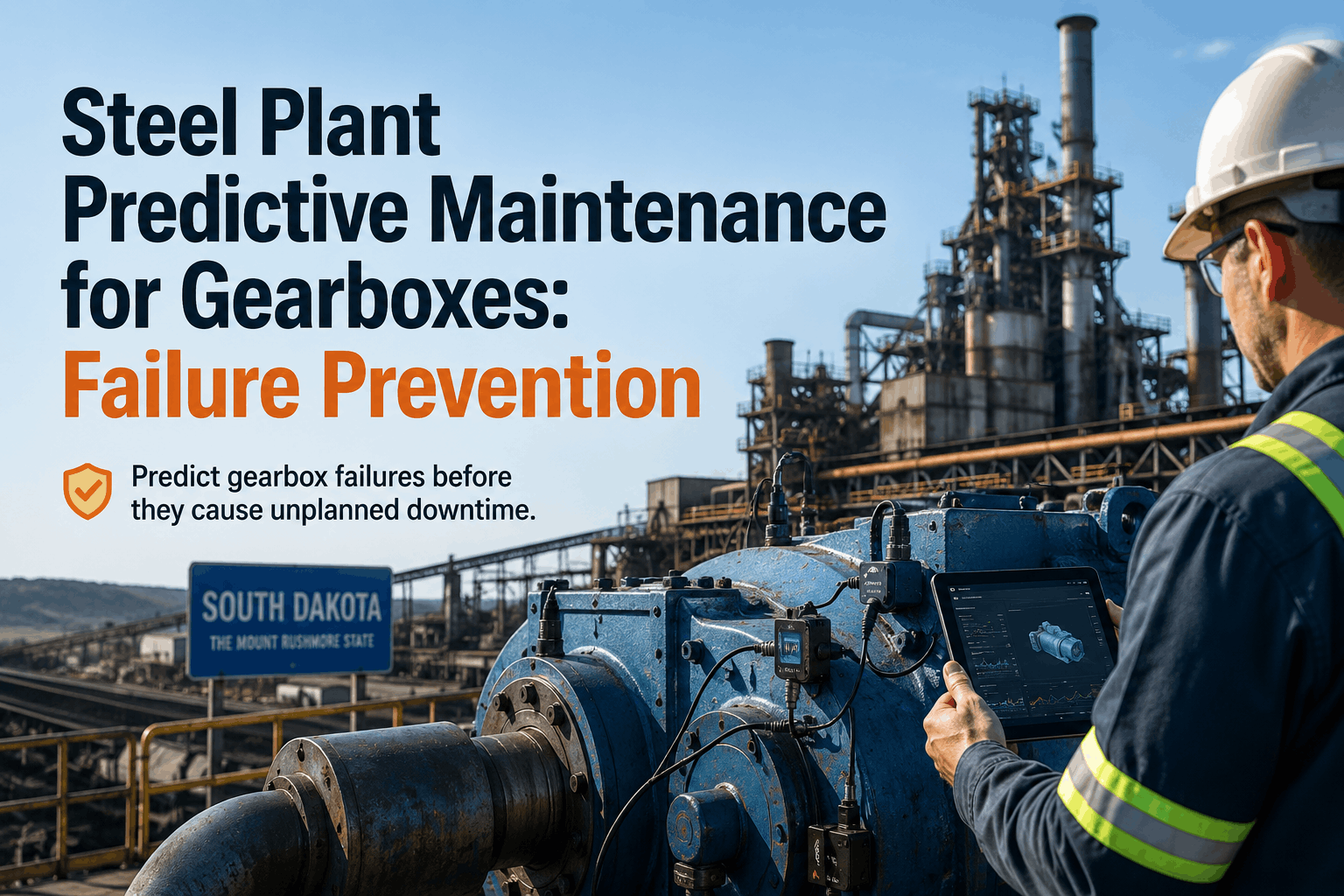
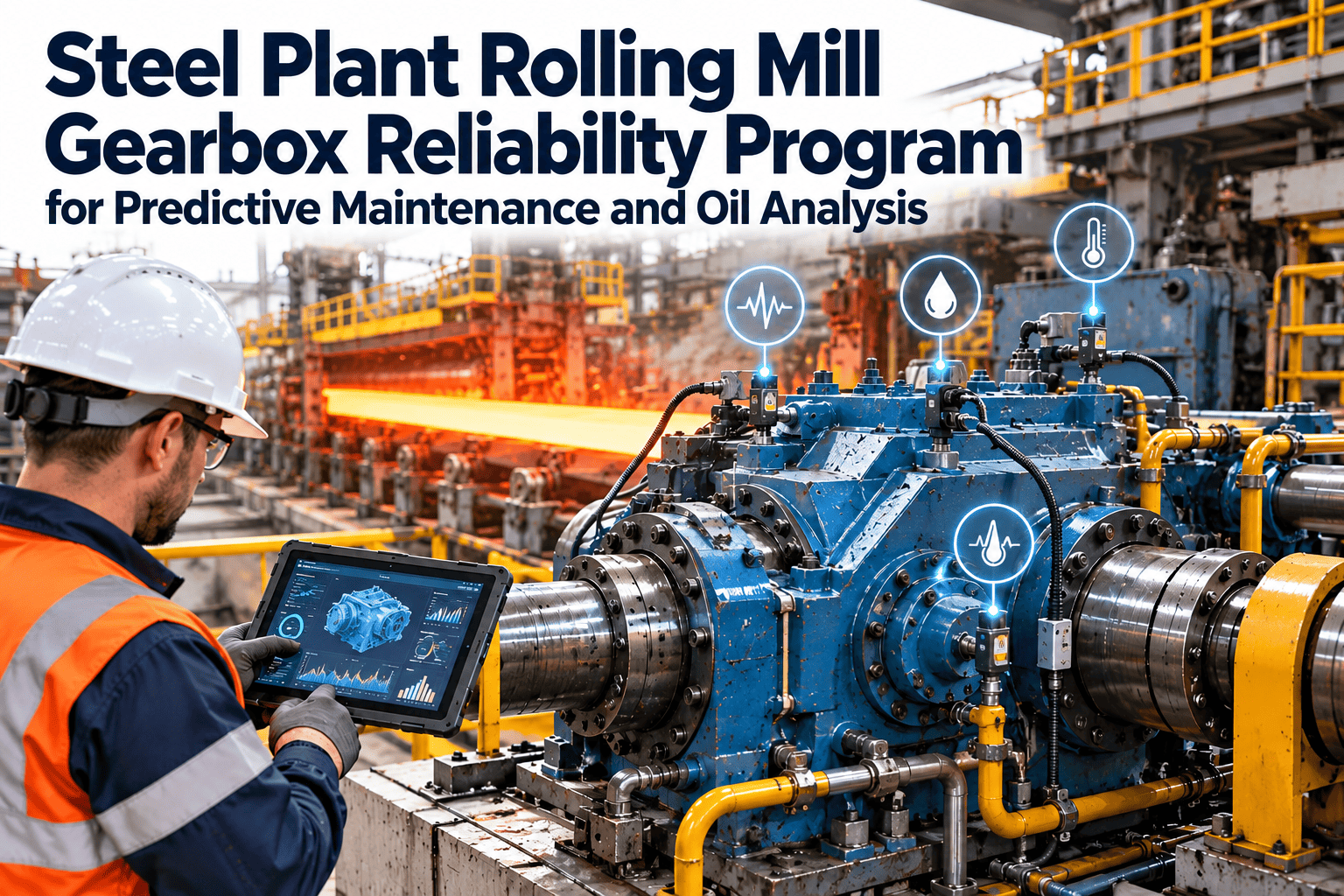
Steel Plant Predictive Maintenance for Gearboxes: Failure Prevention
By Alex Jordan on June 23, 2026
Gearbox failures represent some of the most expensive and disruptive equipment failures in steel plants. A rolling mill gearbox failure stops the entire mill line, creating immediate production loss of $100,000–$500,000 per event. A blast furnace ore hopper drive gearbox failure halts raw materials delivery, cascading into forced furnace shutdown and lost production worth millions. A continuous caster sprocket and pinion drive failure destroys the cast in progress, damages the caster itself, and requires emergency equipment replacement. Most plants manage gearboxes through time-based preventive maintenance — changing oil every 500 or 1000 hours regardless of condition, replacing bearings every 2–3 years on a calendar schedule, and conducting visual inspections quarterly. This schedule-based approach fails to account for the reality that gearbox condition varies dramatically based on actual operating loads, lubrication effectiveness, contamination exposure, and environmental conditions. A gearbox operating under light loads with clean oil may run indefinitely; the same gearbox under high-load conditions with contaminated oil fails catastrophically in 500 hours. Predictive maintenance using vibration analysis and oil condition monitoring provides a data-driven alternative: detect actual gearbox degradation before it becomes failure, schedule maintenance precisely when needed, and avoid both premature replacements and catastrophic failures.
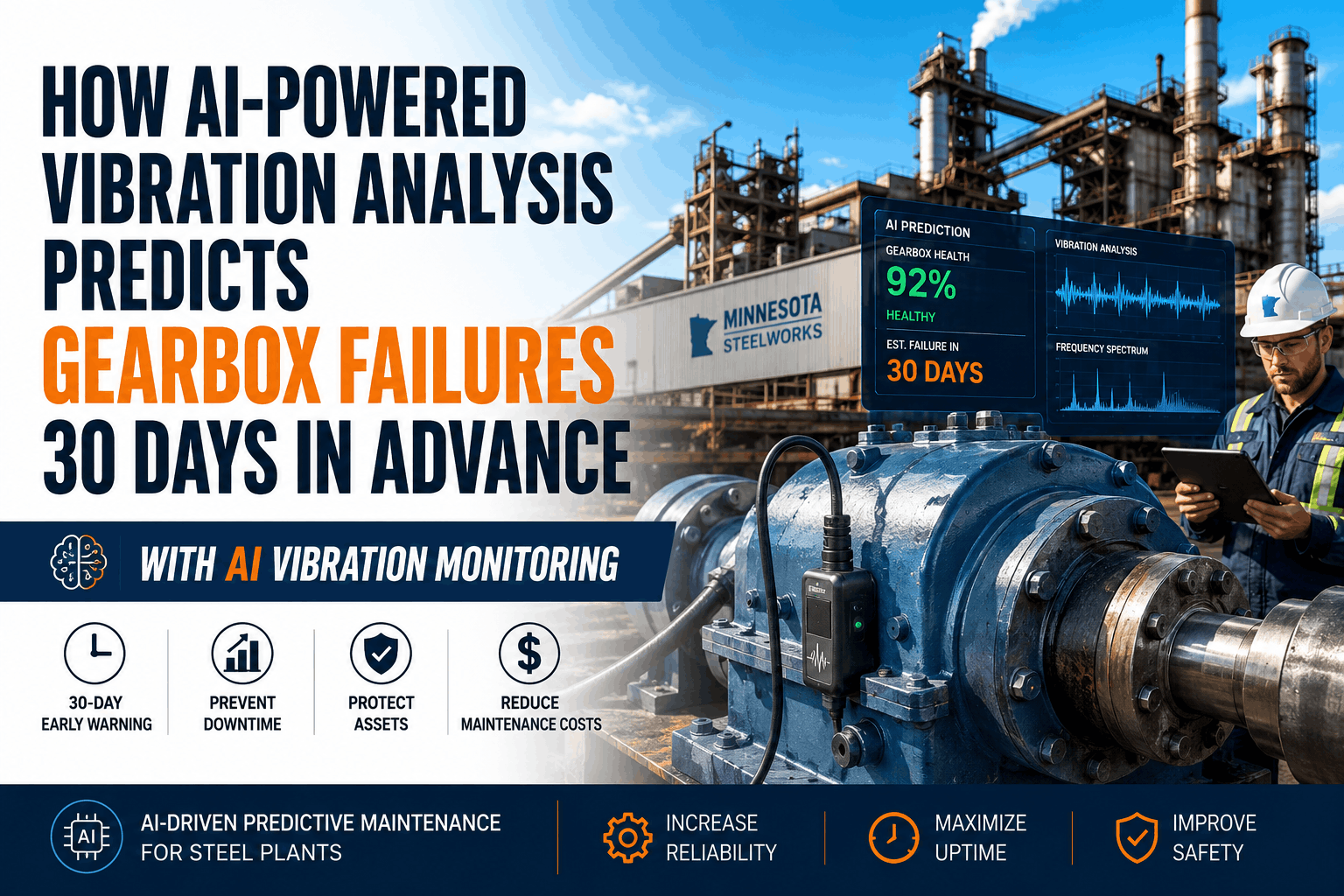
Prevent Gearbox Failures 14–30 Days Before They Occur
Vibration analysis, oil condition monitoring, thermal imaging, and AI-powered remaining useful life prediction — turning catastrophic gearbox failures into planned maintenance events
Cost of a single catastrophic gearbox failure in a rolling mill — production loss plus emergency repair
14–30 days
Advanced warning period: vibration and oil analysis detect bearing defects before catastrophic failure occurs
95%
Fault detection accuracy when combining vibration analysis with oil condition monitoring data
Gearbox Failure Modes: Understanding Degradation Pathways and Detection Methods
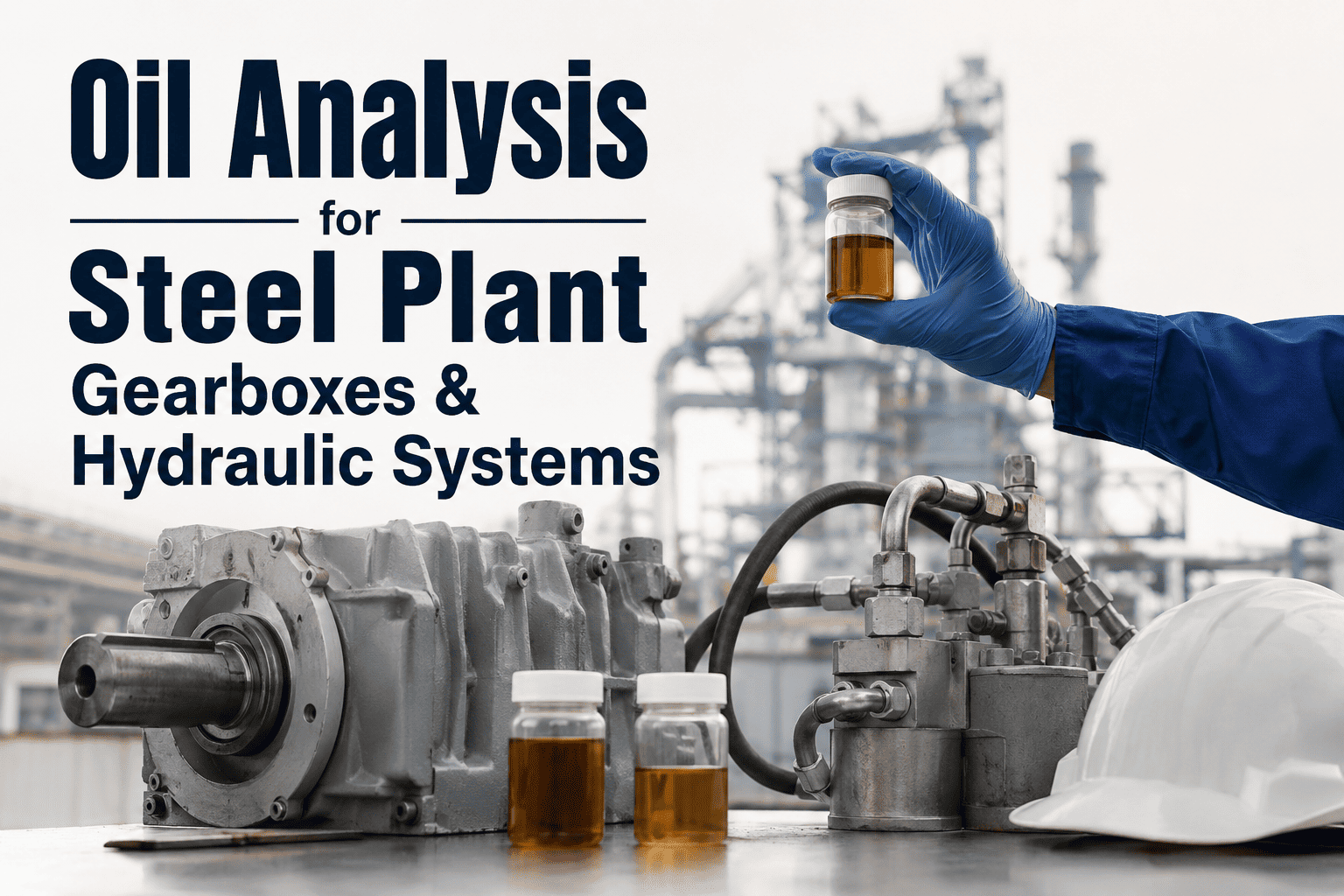
Gearbox failures don't occur suddenly; they develop through progressive degradation stages that generate measurable physical signals months in advance. Understanding these failure modes and their detection signatures is the foundation of effective predictive maintenance. Bearing wear is one of the most common gearbox failure modes. Rolling element bearings in the gear mesh support zone are loaded continuously at high speeds, and any misalignment, contamination, or lubrication breakdown accelerates wear. As bearing raceways degrade, rolling elements begin to spall (lose surface material), creating discrete impulses every time a rolling element strikes the damaged raceway. These impulses generate characteristic frequency signals in the vibration spectrum that experienced diagnosticians can recognize months before bearing seizure. Oil analysis complements vibration detection: as bearing material spalls, ferrous particles appear in the oil. Particle counting and morphology analysis reveals not just that wear is occurring, but the rate and severity of wear. Gear tooth wear and pitting follows a similar pattern: micro-pitting on tooth flanks begins under marginal lubrication conditions, progresses through surface spalling, and eventually propagates to gear body fracture. The gear mesh frequency and its sidebands in the vibration spectrum reveal tooth degradation, while oil debris (iron particles shaped like gear material) confirms the failure mode. Lubrication breakdown is the root cause of many gear and bearing failures. Contamination (water content, particle count, varnish formation), viscosity loss, or additive depletion reduces the protective oil film between contacting surfaces. Oil analysis tracks viscosity, particle count, water content, and acid number — all indicators of lubricant health. Once lubrication is compromised, bearing and tooth wear accelerate exponentially.
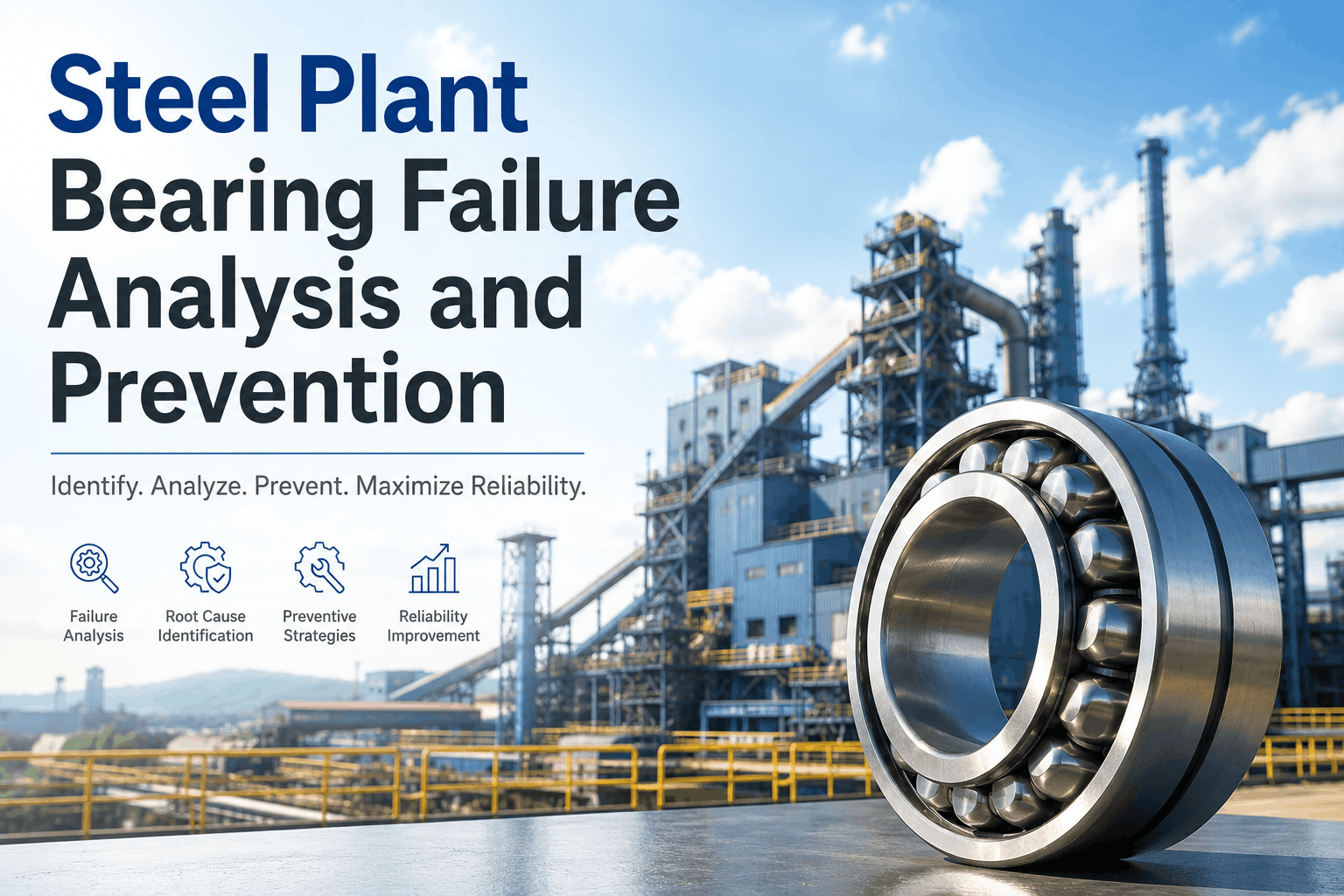
Rolling element bearing outer or inner race spalling initiates from material fatigue under load. Once a spall forms, every revolution of the bearing produces an impulse as rolling elements strike the damaged raceway. These impulses are detectable in acceleration waveforms at the bearing pass frequency outer (BPFO) or inner (BPFI), typically 3–6 months before complete bearing seizure. Vibration analysis detects BPFO/BPFI sidebands and trending shows deterioration velocity. Oil analysis detects ferrous particles from spalling. Early detection enables planned bearing replacement during scheduled maintenance; missed detection results in seizure and catastrophic gearbox damage.
Gear Tooth Surface Pitting and Flank Wear
High consequence — gear mesh failure
Gear tooth contact stress under high load without adequate lubrication initiates micro-pitting on tooth flanks. Pitting propagates from surface to subsurface, eventually breaking through the tooth body. Gear mesh frequency (GMF = teeth × RPM) and sidebands at slip frequency reveal tooth degradation. Oil analysis detects iron particles characteristic of gear material (large, plate-shaped particles from spalling). Temperature monitoring shows localized hot spots at the gear mesh zone. Once pitting is detected, the gearbox can continue operating under monitored conditions for several weeks to months while controlled load is maintained; allowing full failure creates risk of spalled material damaging other components.
Lubrication Failure and Oil Contamination
Root cause — enables other failures
Contaminated oil (water content >0.3%, particle count >ISO 19/17/14) loses its protective capability, allowing metal-to-metal contact between gears and bearings. Oil analysis reveals contamination 4–12 weeks before accelerated wear becomes critical. Viscosity change (thickening from oxidation, thinning from shear) reduces film thickness. Water content above 0.1% causes hydrogen embrittlement in bearing steel, reducing fatigue life. Early intervention (partial or complete oil change, filter upgrade) prevents secondary bearing and tooth failures from starting.
Thermal Degradation and Hot Spot Formation
Performance indicator — heat and load balance
Excessive load, misalignment, or bearing friction generates heat that concentrates at the failure zone. Infrared thermography reveals localized hot spots 10–20°C above surrounding bearing housing temperature. Temperature trending combined with vibration analysis pinpoints the failing component (bearing vs. gear mesh). Persistent temperature elevation indicates that cooling is inadequate; thermal management improvements (higher coolant flow, improved ventilation) combined with bearing or lubrication intervention extends remaining life.
Misalignment and Coupling Defects
Load distribution — shaft and bearing health
Angular or parallel misalignment between motor and gearbox input shaft creates periodic load variations that concentrate stress on bearing outer race. Vibration at 1× shaft speed with high phase coherence indicates misalignment; over time, misalignment accelerates bearing outer race wear. Misalignment is correctable through alignment adjustment, making it one of the highest ROI preventive actions. Early detection during bearing wear phase (before race spalling) allows correction before catastrophic bearing failure.
Seal Failure and Lubricant Escape
Lubrication loss — secondary failures
Shaft seals prevent lubricant escape and contamination ingress. A failing seal allows oil to leak out, rapidly reducing oil level and film thickness. Bearing temperature rises as oil starvation begins; operators or technicians notice oil seepage or smell hot oil. Early detection through visual inspection, oil level monitoring, or temperature trending allows seal replacement before bearing damage occurs. Run-to-failure on seals (because they're inexpensive) often leads to expensive bearing failures.
Gearbox Predictive Maintenance
Detect Failures 14–30 Days in Advance. Eliminate Catastrophic Downtime.
Vibration analysis, oil condition monitoring, and thermal imaging create a complete picture of gearbox health, predicting remaining useful life with 95%+ accuracy. Plan repairs during scheduled maintenance windows instead of responding to emergency failures.
Predictive Maintenance Technology Stack: Vibration, Oil Analysis, and AI Integration
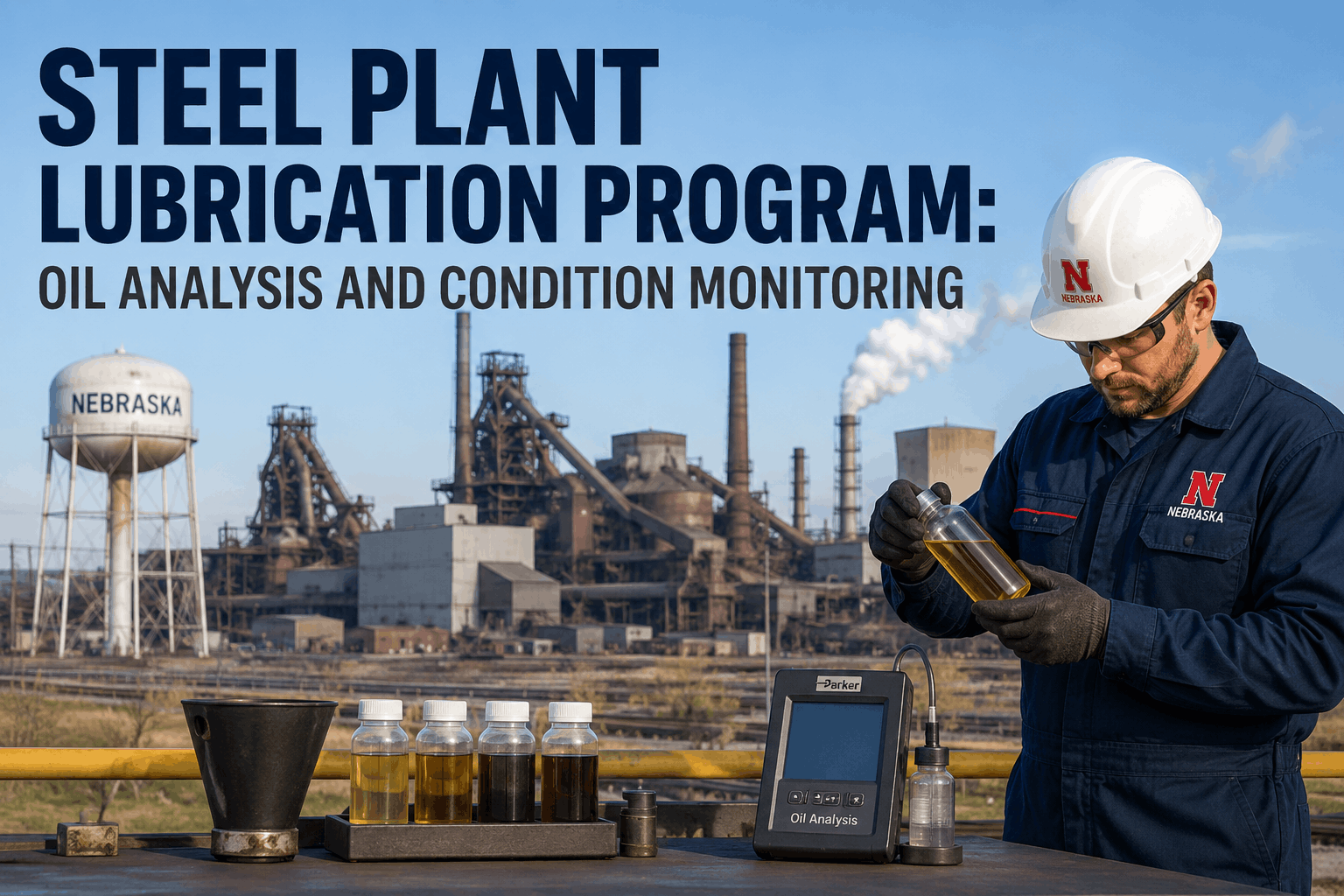
Effective gearbox predictive maintenance requires a multi-modal approach: vibration analysis alone misses certain failures (seal defects, lubrication breakdown without yet producing bearing wear); oil analysis alone provides late warning on bearing pitting (particles appear only after spalling is advanced). Combining modalities creates a force multiplier effect. Vibration sensors mounted on bearing housings capture acceleration waveforms at 10–20 kHz sampling rate, sufficient to resolve gear mesh frequencies and bearing pass frequencies. The data is analyzed using Fast Fourier Transform (FFT) to decompose the signal into its frequency components. Baseline signatures are established when the gearbox is new; degradation is tracked by trending specific frequencies (BPFO, BPFI, GMF and sidebands) over time. A bearing outer race spall that produces a BPFO amplitude of -45 dB (35 dB below line frequency) is not yet critical; the same defect at -35 dB warrants immediate bearing replacement. Oil condition monitoring involves monthly to quarterly sampling of gearbox oil for laboratory analysis: ISO particle count (particles >4 μm, >6 μm, >14 μm), water content (Karl Fischer titration), viscosity (ASTM D445), and acid number (TAN, indicating oxidation and corrosion). Wear debris analysis goes deeper: ferrography or particle morphology analysis characterizes the shape, size, and composition of ferrous particles, distinguishing between rubbing wear (fine, flat particles), adhesive wear (large, irregular particles from spalling), and abrasive wear (embedded particles from sand or mill scale contamination). Thermal imaging captures bearing housing temperature every 2–4 weeks using portable infrared cameras; trending of temperature against established baselines reveals heat generation accelerating as bearing defects develop. AI integration combines all three modalities: machine learning models trained on historical gearbox failures learn the patterns that precede specific failure modes. When current data matches learned degradation patterns, the system predicts remaining useful life (RUL) in days and generates maintenance work orders with confidence intervals.
Real-time data collection, trending, and alarm generation
Data collection frequency
High-speed vibration waveforms every 8–24 hours; temperature continuous; oil samples monthly or quarterly
Trending and alerting
BPFO/BPFI sidebands and GMF amplitude tracked daily; temperature trending plotted; oil particle count trended
RUL prediction
AI models predict remaining useful life (days until failure) when degradation trajectory detected; confidence intervals provided
Outcome
Real-time visibility into gearbox health; maintenance work orders generated 14–30 days before predicted failure
Phase 3: Planned Maintenance Execution and Continuous Improvement
Replace components before failure; capture lessons learned
Work order generation timing
PM work orders created 14–30 days before RUL expires, sufficient time for parts procurement and schedule coordination
Post-repair validation
Bearing and seal replaced per diagnostics; oil changed; vibration and temperature baselines re-established post-repair
RUL accuracy improvement
Compare predicted RUL to actual failure date; adjust AI model thresholds if variance exceeds tolerance
Outcome
All gearbox failures prevented; average replacement interval optimized per actual degradation patterns; zero catastrophic downtime
ROI Case Studies: Gearbox Predictive Maintenance at USA Integrated Mills
A 2.0 MTPA integrated mill in Pennsylvania deployed predictive maintenance on 12 critical gearboxes (rolling mill drives and auxiliary equipment) over a 10-week period. Before predictive maintenance, the plant experienced 2–3 catastrophic gearbox failures per year, each costing $120,000–$200,000 in emergency repair, parts expediting, and lost production. Total annual gearbox downtime cost: $400,000–$500,000. After predictive maintenance deployment with vibration sensors on all critical gearboxes and monthly oil analysis, zero catastrophic failures occurred in the first 18 months. Instead, two bearing defects (detected via BPFO trending 21 and 19 days before predicted failure) were identified and bearings were replaced during scheduled maintenance windows, eliminating all emergency repairs. Implementation cost (sensors, AI software, integration, training): $180,000. ROI: negative first year from implementation cost, but positive by month 16. The economic comparison: over a 5-year period, predictive maintenance costs $180K upfront + $15K annual operating costs = $255K total. Failure-based maintenance over 5 years costs ~$2M (4–5 catastrophic failures × $350K–$500K emergency cost each). The financial case is powerful, but the operational case is more powerful: zero unexpected downtime, predictable maintenance scheduling, ability to plan capital allocation across all equipment rather than responding reactively to failures.
"A bearing failure that would have cost us $300,000 in emergency repair and lost production was caught 19 days before failure through vibration trending. We replaced the bearing during planned downtime, zero impact on production schedule. That one detection paid for the entire predictive maintenance system."
— Maintenance Manager, Integrated Mill, Pennsylvania, USA · 2.0 MTPA
Frequently Asked Questions
Q1How do you establish the baseline signatures for a new gearbox before any degradation has started?▼
Baseline signatures are captured during the first 4–8 weeks of operation under normal load conditions. This data establishes what "normal" looks like for that specific gearbox under its operating environment. The baseline includes normal vibration levels at each key frequency, normal temperature range, and normal oil analysis results. All future trending is compared to this established baseline.
Q2What is the difference between vibration and oil analysis for gearbox condition?▼
Vibration analysis detects the dynamic behavior of mechanical degradation (bearing spalling produces impacts at bearing pass frequency); oil analysis detects the chemical evidence of degradation (ferrous particles from spalling, viscosity loss, water content indicating seal failure). Together they provide complementary information: vibration says "something is degrading," oil analysis says "here's what's degrading."
Q3Can existing gearboxes be retrofitted with vibration sensors, or do they need to be replaced?▼
Existing gearboxes can be retrofitted with portable accelerometers attached magnetically to bearing housings; no modification to the gearbox itself is required. For permanent deployment, accelerometers can be mounted on adapters bolted to the bearing housing. Oil sampling does not require any modification — standard drain plugs are used for sample collection.
Q4How frequently should oil samples be collected for analysis?▼
Monthly sampling for high-criticality gearboxes (rolling mill drives, continuous caster sprocket drives); quarterly for medium-criticality assets (auxiliary equipment, conveyors). Sampling interval can be adjusted based on trending: if particle counts are stable and water content low, sampling frequency can be extended to quarterly. If trends are deteriorating, sampling is increased to twice-monthly to track the degradation rate.
Q5What is the cost of a complete predictive maintenance program for 10 critical gearboxes?▼
Typical deployment cost: $15K–$25K (vibration sensors and mounting hardware), $40K–$80K (AI monitoring software and CMMS integration), $20K–$30K (baseline analysis and staff training) = $75K–$135K total implementation. Annual operating cost (oil sampling, software support, data storage): $8K–$15K. Full ROI typically achieved within 6–18 months if the plant experiences 1–2 major gearbox failures annually.
Q6How accurate is the remaining useful life prediction for gearbox failures?▼
AI RUL predictions typically have confidence intervals of ±3–7 days for a 30-day prediction window, improving as the failure date approaches. Accuracy depends on the richness of historical failure data the AI model has been trained on. Plants with 5+ years of gearbox failure history and condition data achieve >90% confidence in RUL predictions within 14 days of failure.
Q7What happens if predictive maintenance predicts a failure but it never happens — is that a false alarm?▼
Successful predictive maintenance can appear as "false alarms" — planned maintenance that prevents failure before it occurs. This is not a failure of the system; it's the system working correctly. A bearing that develops spalling but is replaced before full failure is evidence that the prediction worked. False positives (predictions of failure that don't materialize) are improved through AI model tuning based on actual outcomes.
Q8Can predictive maintenance extend gearbox service life or does it only prevent catastrophic failure?▼
Predictive maintenance extends service life by detecting and correcting root causes early. A bearing defect detected and bearing replaced at early stage of wear prevents secondary damage to gearbox housing and gear teeth. Early seal replacement based on oil analysis prevents oil starvation and bearing damage. Oil condition monitoring prevents lubrication-related failures. These interventions often extend gearbox life by 20–40% compared to run-to-failure operation.
Gearbox Predictive Maintenance
Predict Failures 14–30 Days in Advance. Eliminate Emergency Repairs.