Your CMMS already contains the data that could predict your next bearing failure in the steel plant — the problem is that 94% of steel plant maintenance teams never analyze it for root cause patterns. Every bearing replacement your technicians have performed, every vibration measurement they have recorded, every lubrication sample they have analyzed over the past 24 months contains failure signatures that repeat with statistical regularity across asset types, operating zones, and failure modes. A 2014 analysis of rolling mill and caster bearing failures found that historically, bearings only reach their calculated life an estimated 3% of the time. The other 97% of the time, the bearings tend not to run their entire life due to some form of failure [citation:3]. The bearing that fails at 18 months on your roughing mill is not a random event — it is the third bearing failure on that mill in your plant this year, and the previous two showed the characteristic spalling pattern weeks before failure. That pattern is sitting in your maintenance data right now, invisible because nobody has built the root cause analysis that surfaces it. Oxmaint's bearing failure analysis module turns your replacement history into a predictive tool — automatically identifying failure modes, flagging recurrence patterns, and generating preventive work orders before bearings fail. The data is already yours, and the analysis that prevents the next unplanned bearing replacement takes minutes to configure, not months. If your steel plant is still reacting to bearing failures instead of analyzing the patterns, start a free trial or book a demo to see how Oxmaint surfaces bearing failure patterns from your existing data.
Steel Plant Bearing Failure Analysis and Prevention
Identify and prevent common bearing failures in steel plant equipment — rolling mills, gearboxes, cranes, conveyors, and EAF transformers — through systematic failure analysis and condition monitoring.
You Already Have the Bearing Data — You Just Need the Analysis
Every bearing replacement recorded in your CMMS is a data point. Every vibration measurement is a health indicator. Every lubrication sample is a contamination signal. Oxmaint does not require new sensors or specialized consultants — it analyzes the bearing failure data you have already been collecting and surfaces the root cause patterns that prevent recurrence. Steel plants with 50+ critical bearings can start a free trial or book a demo to see how bearing failure pattern analysis works on your plant's actual data.
The Bearing Failure Challenge in Steel Plants
Bearings in steel plant applications face extreme operating conditions — high temperatures, heavy loads, water and scale contamination, shock loads, and marginal lubrication. A technical analysis of bearing failures in steel mills found that historically, bearings only reach their calculated life an estimated 3% of the time. The other 97% of the time, the bearings tend not to run their entire life due to some form of failure [citation:3].
These failures are costly. A case study of a steel works gas booster station found excessive bearing failures occurred on average every 15.7 days, with annual maintenance costs of $23,000 and additional energy costs of $850,000 from increased natural gas usage — totaling $873,000 annually. Notably, 97.4% of the financial impact was due to energy expenses from downtime [citation:1]. Premium bearing materials can dramatically extend life — one manufacturer found that in a cold rolling mill with contaminated operating conditions, standard bearings lasted only 3-4 months, while advanced steel bearings achieved 29-50 months of residual life, delivering $17,472 in documented cost savings [citation:2].
Six Common Bearing Failure Modes in Steel Plant Equipment
Bearing failures in steel plants can be divided into two categories — subsurface failures and surface failures. Subsurface failures occur due to cyclic stresses under the raceway surface eventually leading to flaking from rolling fatigue. Surface failures typically occur due to duress on the raceways from improper lubrication, contamination, installation errors, or misapplication [citation:3].
Additional Failure Modes — Fracture, Denting, Corrosion, and Seizure
Beyond flaking, contamination, and lubrication failures, steel plant bearings face fracture, denting, corrosion, seizure, smearing, and creep — each with distinct root causes and prevention strategies [citation:3].
Fracture can occur during installation if impact loading is subjected to bearings or if fits on shafts and housing are improper. In continuous casting applications, cracking can develop due to bending stresses acting on the outer ring during operation, or from differential sliding between two rows of rolling elements [citation:3]. Stress concentrations at the pure rolling point can also cause flaking that progresses to cracking.
Contamination from foreign particles — scale, metal debris, or wear particles — enters bearings and causes denting of raceways. These dents create stress concentrations that initiate flaking and spalling. In caster applications, ingress of water and scale is particularly problematic [citation:3].
Water contamination not only breaks down lubricant and prevents proper oil film formation, but can also induce rust and corrosion due to high temperature and humidity while the bearing is stationary. In continuous casting applications, bearings see very high heat, water cooling, and scale contamination — all of which promote corrosion [citation:3].
Smearing occurs when bearings are subjected to light load and sudden acceleration or deceleration, preventing proper lubricant film formation. Seizure can cause significant damage and costs due to poor lubrication, loading, fits, or internal clearance. Creep occurs from metal-to-metal contact due to improper fits, often causing fretting, oxidization, and potential cracking [citation:3].
How Oxmaint Turns Bearing Data Into Failure Prevention
Oxmaint's bearing failure analysis module is not a standalone root cause tool bolted onto your maintenance process — it is the CMMS that collects bearing data, structures it correctly, and surfaces failure patterns automatically as part of daily steel plant operations. Every bearing replacement, every vibration measurement, every lubrication sample feeds the analysis engine without any additional data entry. Steel plants ready to move from reactive to predictive bearing maintenance can start a free trial or book a demo to see the failure analysis workflow on live plant data.
Oxmaint captures and classifies bearing failures by mode — flaking, contamination, lubrication failure, fracture, denting, corrosion, seizure, smearing, and creep. Failure categorization enables root cause trending and prevention planning.
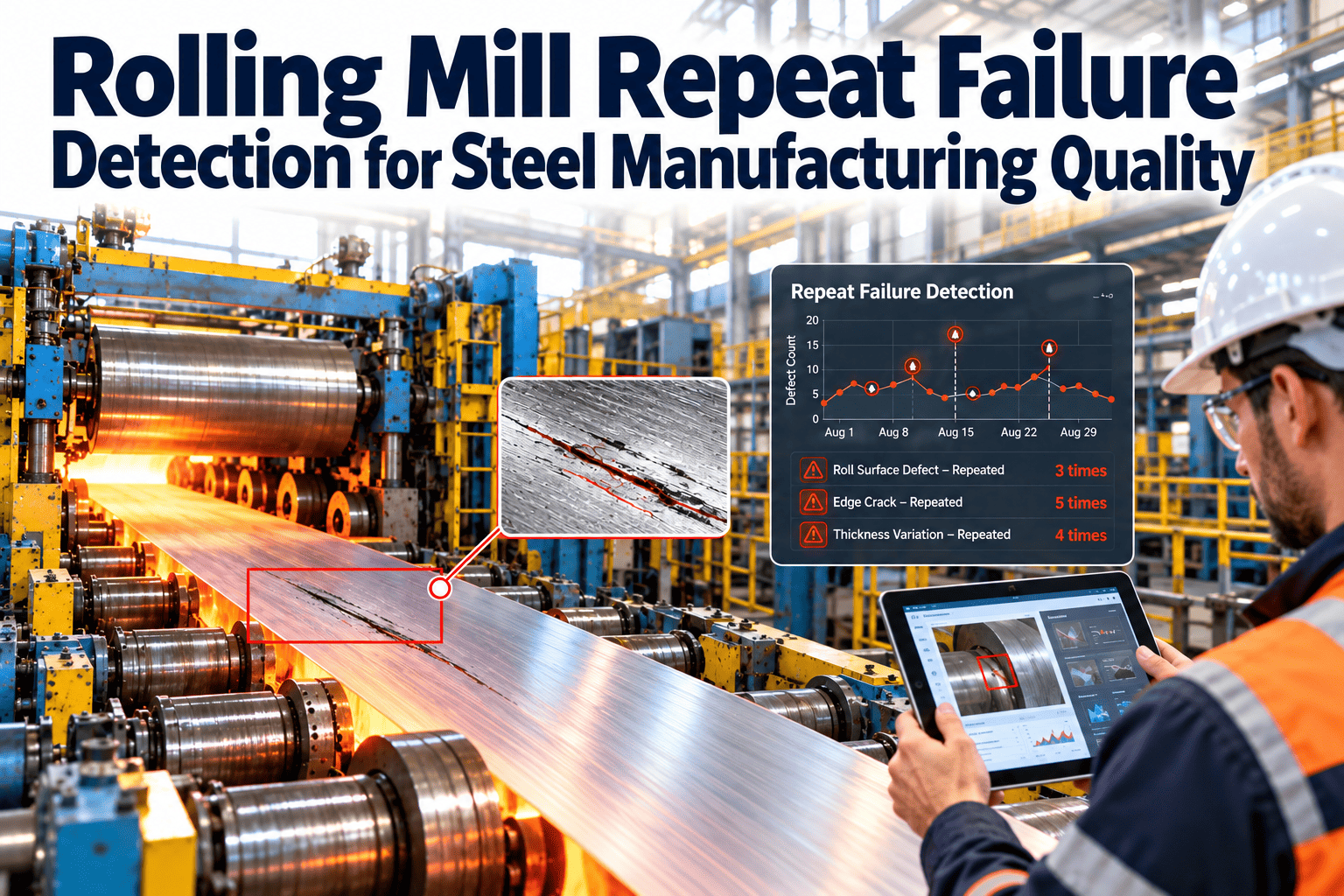
Oxmaint flags when the same bearing type fails repeatedly on the same equipment within short intervals — the pattern signal indicating a systemic issue that requires root cause investigation rather than simple replacement.
Track MTBF for every bearing type and application across your plant. Identify which bearings and assets are underperforming and prioritize improvement efforts based on reliability data.
Oxmaint provides structured root cause analysis workflows — guiding technicians through failure investigation, evidence capture, and documentation of contributing factors. Root cause data is stored for future analysis.
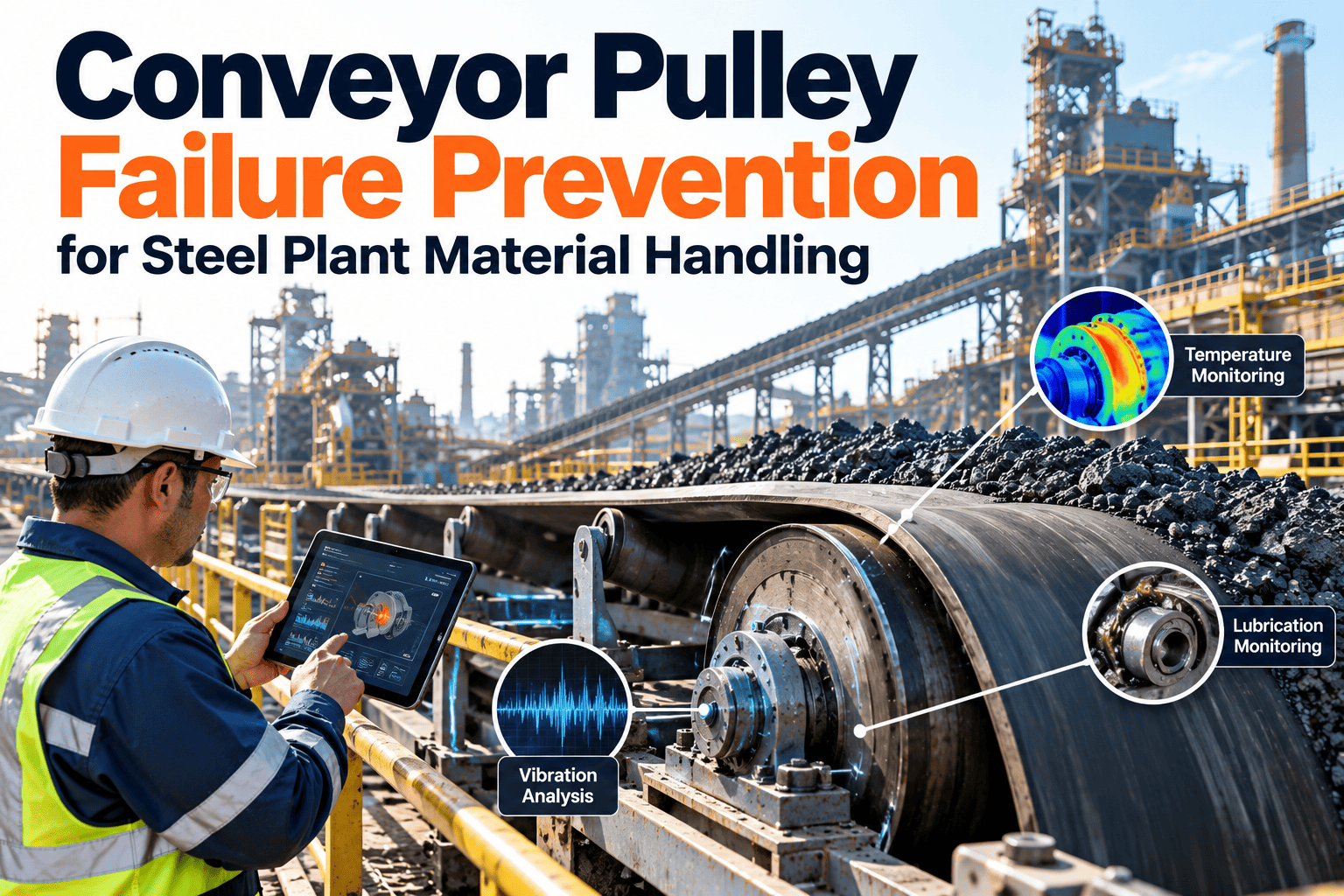
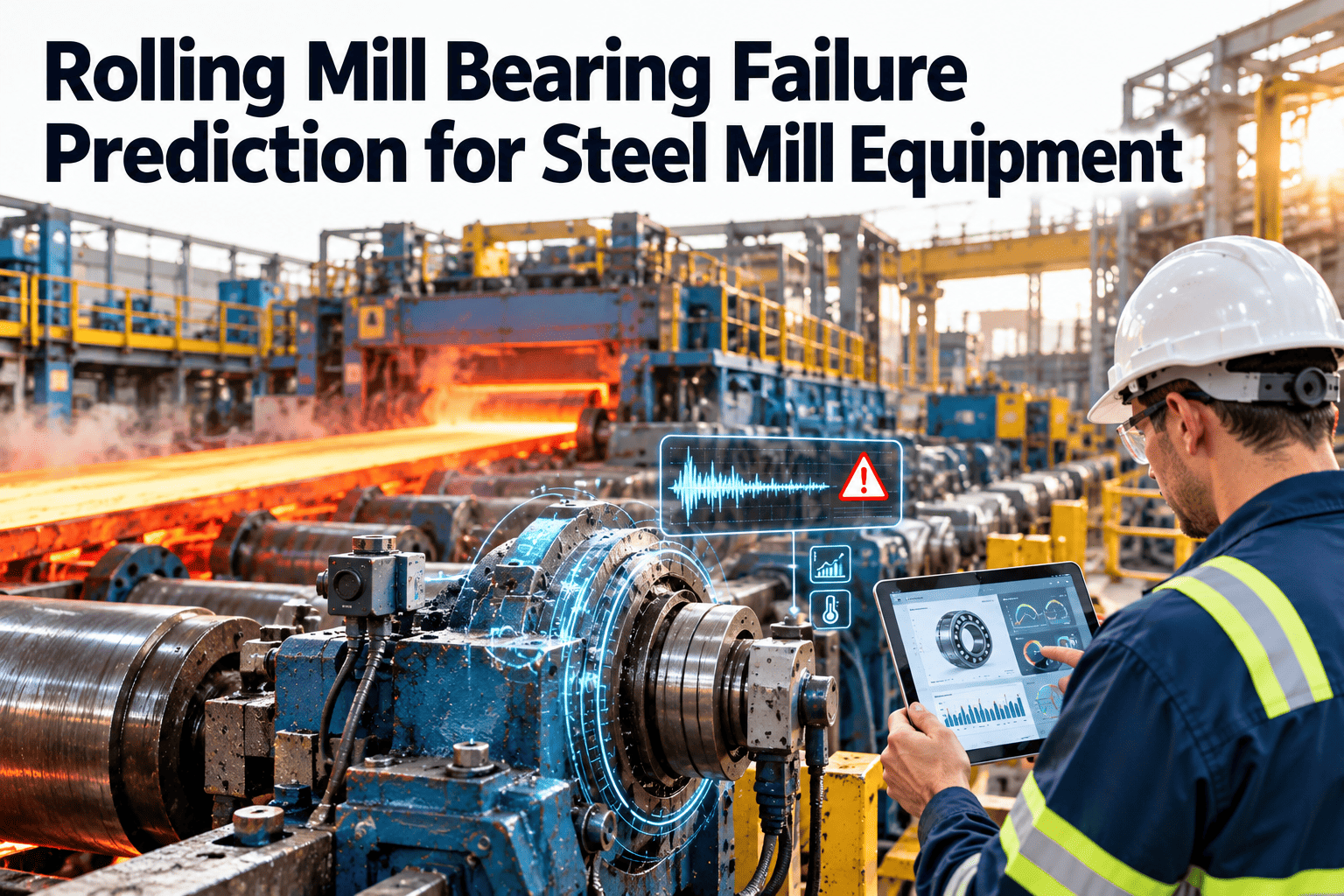
Correlate bearing failures with condition monitoring data — vibration trends, oil analysis results, and thermal images — to identify early warning signals that precede failure and enable predictive maintenance.
When failure patterns and condition data indicate an impending failure, Oxmaint generates preventive work orders with detailed failure history and recommended actions attached. Planned bearing replacements during scheduled outages eliminate unplanned downtime.
Reactive Bearing Maintenance vs Data-Driven Failure Prevention
Bearing Failure Modes by Steel Plant Equipment Type
Different steel plant equipment presents unique bearing failure challenges. The table below summarizes common failure modes by equipment type and recommends prevention strategies [citation:3][citation:1][citation:2].
| Equipment Type | Common Failure Modes | Key Causes | Prevention Strategies |
|---|---|---|---|
| Continuous Casters | Flaking, fracture, wear, denting, corrosion | High heat, water contamination, scale ingress, slow speeds, poor lubrication [citation:3] | Improved seals; water-resistant lubrication; corrosion-resistant materials |
| Rolling Mills | Flaking, smearing, cracking, denting, seizure, creep | Heavy loading, water and scale contamination, speed variations, improper fits [citation:3] | Heavy-duty bearing steel; proper lubrication; correct internal clearance; proper mounting |
| Gas Boosters | Vibration-induced fatigue, particle contamination | Liquid and solid particles in process gas; vibration accumulation [citation:1] | Particle filtration; condition monitoring; vibration analysis |
| Converter Trunnion | Lubrication contamination, abnormal wear | Low speed, heavy load, lubricant contamination [citation:4] | Stress wave monitoring; lubricant cleanliness control; preventive maintenance |
Four Steps to Start Preventing Bearing Failures from Your Data
You do not need a tribology specialist or a six-month investigation project. If you have 12+ months of bearing replacement history and condition monitoring data, you have enough data to identify actionable failure patterns within your first 30 days on Oxmaint.
Load your existing bearing replacement history into Oxmaint — CSV import from any previous CMMS, spreadsheet, or maintenance management system. Oxmaint maps each replacement to its equipment, bearing type, failure mode (if recorded), and replacement date. The import process takes hours, not weeks.
Oxmaint automatically calculates MTBF for every bearing type and application across your plant. Within the first week, you will see which bearings are failing fastest, which failure modes are most common, and which assets have the highest bearing failure rates.
Review the failure pattern dashboard for your top 10 bearing failure categories by frequency and cost. Identify which failures are recurring, which are one-off events, and which have clear root causes that can be addressed. Most steel plants identify 4-6 high-impact failure patterns within the first two weeks of analysis.
For each identified failure pattern, configure Oxmaint to generate predictive work orders when condition monitoring data indicates impending failure or when bearings approach their expected service life. Attach failure history and root cause data to each work order. From this point forward, every new bearing replacement feeds the analysis engine — making it more accurate with every data point.
ROI of Bearing Failure Analysis and Prevention
Systematic failure analysis and prevention reduces bearing-related unplanned downtime by 60-80% through early detection and planned replacement [citation:1][citation:2]
Premium bearing materials and contamination control can extend bearing life from 3-4 months to 29-50 months in contaminated steel mill conditions [citation:2]
Planned bearing replacements during scheduled outages cost 30-50% less than emergency repairs requiring overtime, expedited parts, and premium vendor services
The bearing failure analysis program pays for itself within 6 months through avoided downtime, reduced replacement costs, and extended bearing life
Frequently Asked Questions
What are the most common bearing failure modes in steel plants?+
How can I extend bearing life in steel plant equipment?+
What is the financial impact of bearing failures in steel plants?+
How does condition monitoring help prevent bearing failures?+
Your Next Bearing Failure Is Already in Your Data — Find It Before It Shuts Down Your Mill
Every bearing replacement your steel plant has ever performed contains a piece of the pattern that predicts the next failure. Oxmaint's bearing failure analysis module collects bearing data correctly, classifies failure modes automatically, and generates the predictive work orders that keep your rolling mills running and your casters operational. No tribology specialists. No consultants. Import your data, identify your failure patterns, and start preventing bearing failures in your first 30 days.