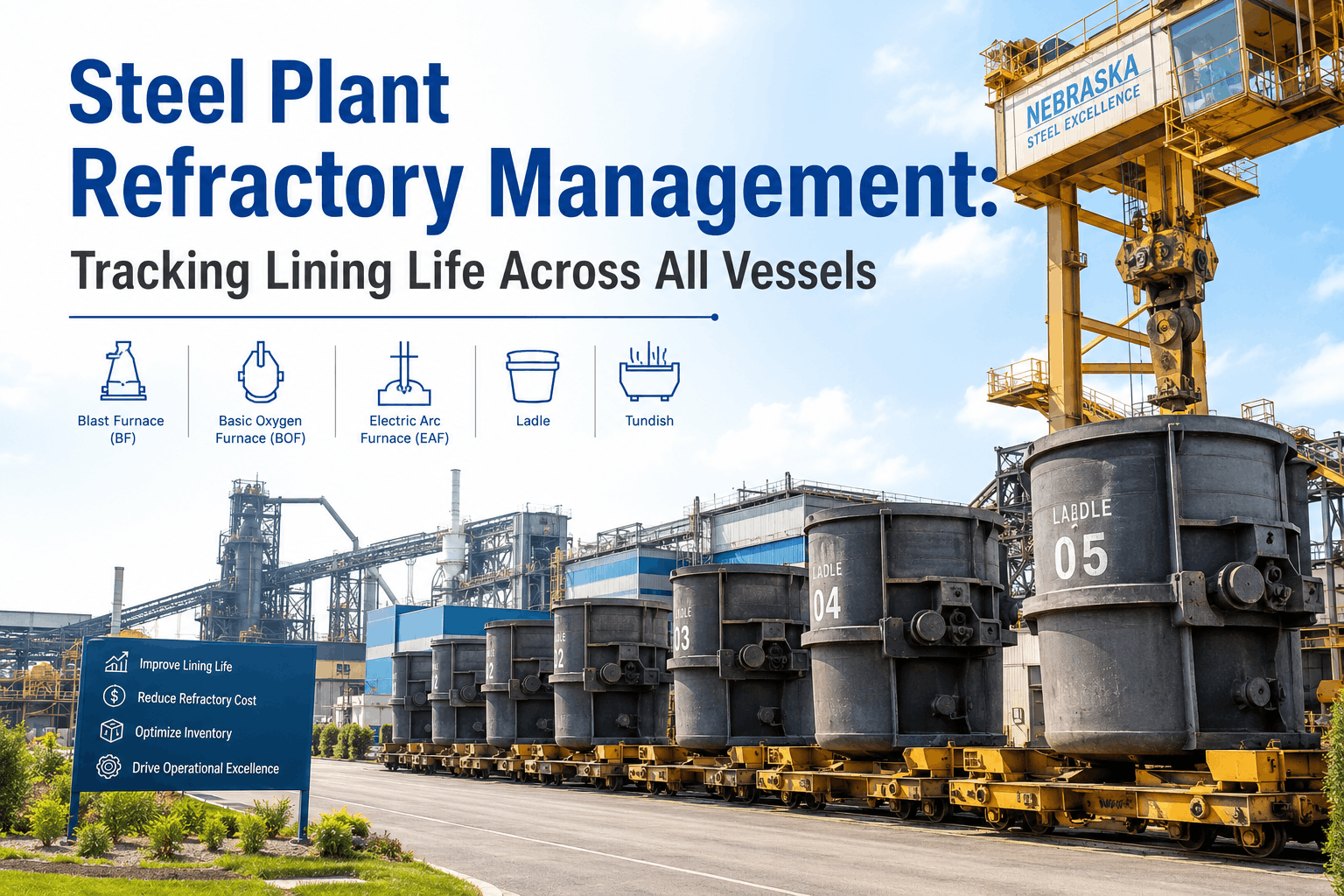
Steel Plant Refractory Management: Tracking Lining Life Across All Vessels
By Alex Jordan on June 17, 2026
Refractory linings protect blast furnaces, basic oxygen furnaces (BOF), electric arc furnaces (EAF), ladles, and tundishes from 1,500–1,800°C molten metal temperatures. A single refractory campaign failure can cost $500,000–$2,000,000 in emergency repairs, metal loss, and production downtime. Oxmaint's CMMS tracks refractory lining life across all vessels through digital lining records, gunning application logs, thermal monitoring data, and predictive remaining-life algorithms. Mobile technicians photograph lining condition at each inspection, log thickness measurements, record material consumption rates, and document hot-face temperature trends. CMMS calculates campaign lifespan by analyzing heat count history, material type, and operating temperature to predict failure weeks in advance. Real-time alerts notify operations when lining approaches critical wear limits. Schedule a refractory management consultation to reduce lining campaign costs by 20–35%, extend campaign life 15–25%, optimize gunning repair timing, and maintain continuous production reliability across all metallurgical vessels.
REFRACTORY MANAGEMENT · VESSEL LINING · 2026
Steel Plant Refractory Management: Tracking Lining Life Across All Vessels
Monitor blast furnace, BOF, EAF, ladle, and tundish refractory lining campaigns through digital thickness mapping, thermal imaging, gunning optimization, and predictive remaining-life forecasting. Extend lining life 15–25% through condition-based maintenance scheduling and reduce emergency refractory campaigns by 90%.
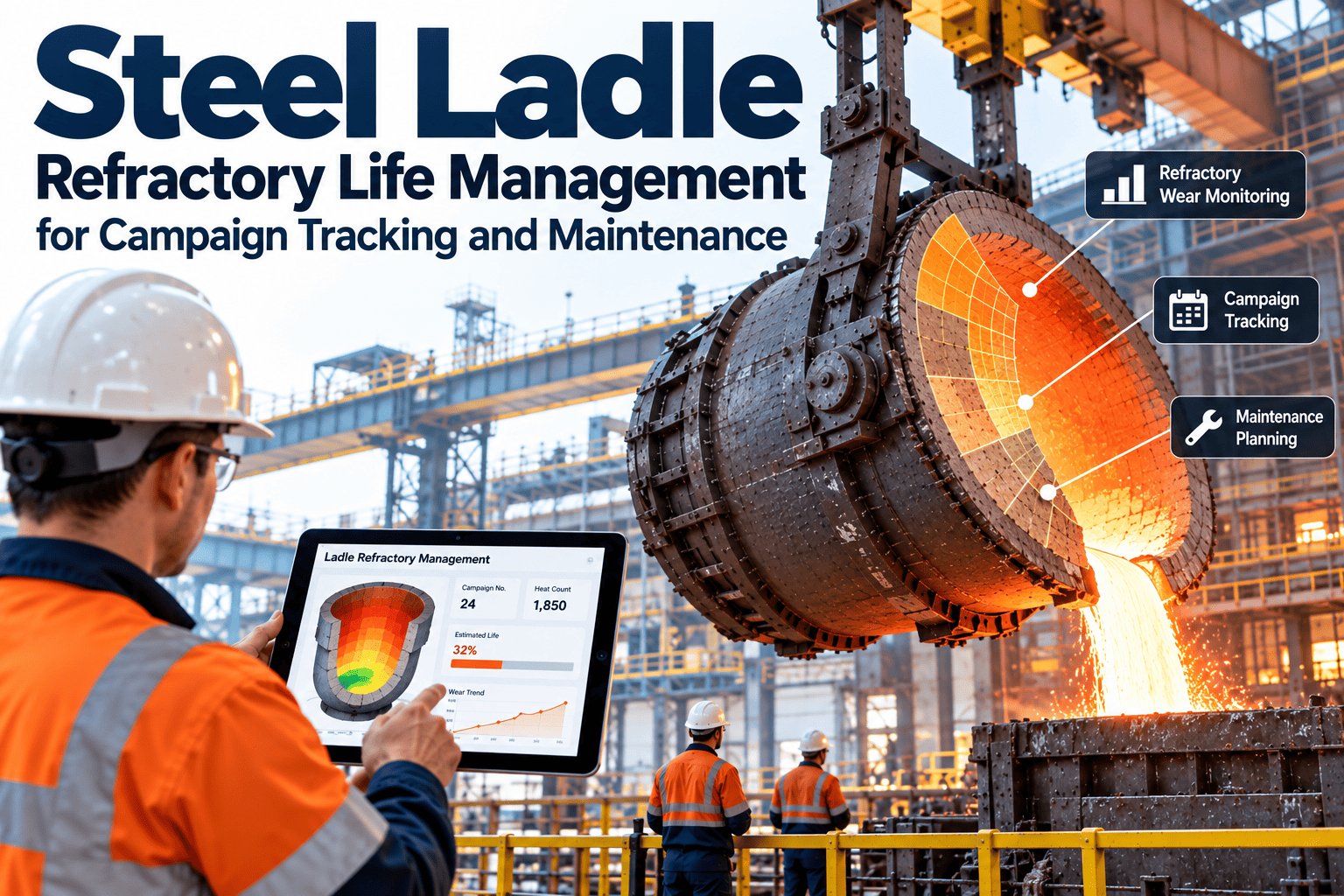
Real-time thermal imaging and thickness monitoring dashboard tracks all refractory campaigns continuously across entire plant.
Refractory Lining Systems and Metallurgical Vessel Architecture
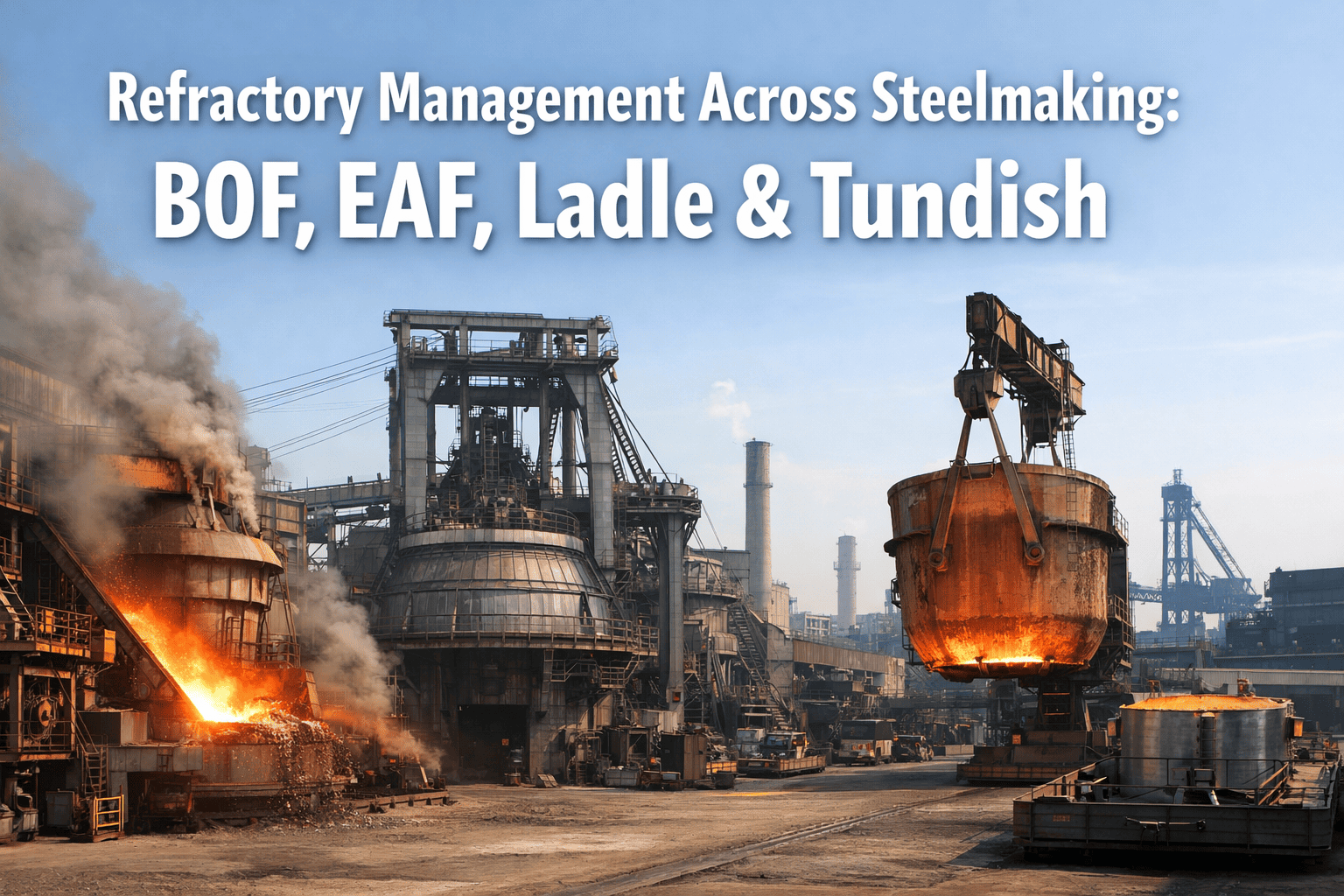
Steel plant refractory linings protect critical metallurgical vessels from extreme thermal and chemical conditions. Blast furnaces employ complex multi-layer systems: outer steel shell, refractory brick lining (firebrick, high-alumina, or carbon composites), and carbon blocks in the hearth facing molten metal directly. Temperatures at hot face (metal contact) reach 1,600°C; ambient external temperature 50–100°C. Thermal stress gradient creates mechanical stress that cracks and degrades lining over time. Basic oxygen furnaces (BOFs) operate at 1,700–1,800°C for brief durations (15–25 minutes) but experience thermal shock cycles—rapid heating and cooling—that accelerate lining wear. BOF campaigns typically last 150–300 heats before rebricking becomes necessary. Electric arc furnaces (EAFs) operate at 1,700°C continuously with frequent temperature cycling when material is charged and melted. EAF lining campaigns range 300–800 heats depending on power input and scrap quality. Ladle refractory systems consist of firebrick walls and alumina-magnesia (AL-MAG) working lining (replaceable hot-face layer) protecting 100–200-ton molten steel containers. Ladle linings typically support 50–100 heats before hot-face degradation reduces metal quality. Tundish refractory (pre-ladle buffer vessel) experiences 1,600°C molten steel for 30–60 minutes per heat cycle. Tundish lining campaigns are shortest (typically 15–30 heats) due to thermal shock from new metal charging and cooling cycles. CMMS-managed refractory lifecycle tracks heat counts, temperature data, gunning repair dates, material type changes, and predicted remaining-life forecasts to optimize replacement scheduling and cost control.
SECTION 1: Blast Furnace Refractory Campaign Management and Thermal Monitoring
MONTHLY INSPECTION
Wall Thickness Mapping and Brick Condition Assessment
Monthly BF inspections include ultrasonic thickness scanning at 20 measurement points on furnace shaft and belly. Temperature thermal imaging captures hot-face conditions (target 200–400°C cold face = healthy lining). Photograph any visible cracking, spalling, or discoloration. Log all measurements in CMMS with heat count, blast temperature, and wind velocity (correlates with combustion intensity affecting lining wear).
QUARTERLY ASSESSMENT
Gas Flow Analysis and Refractory Erosion Rate Calculation
Blast furnace gas flow data (furnace gas volume, temperature, dust content) correlates with lining wear. High dust carryover (>50 mg/Nm³) and elevated exit temperature (>350°C vs. baseline) signal excessive erosion. Compare monthly thickness trend to thermal data—rapid thickness loss in specific zones indicates localized erosion (typically at raceway where gas enters furnace). CMMS predicts remaining campaign life based on current erosion rate and target minimum thickness.
SEMI-ANNUAL REPAIR
Gunning Application and Material Consumption Tracking
As lining approaches wear limits, gunning (sprayed refractory application) is scheduled to restore worn areas. Gunning scope and material volume documented in CMMS with date, refractory material type, gun operator ID, and post-repair thermal imaging. Gunning material cost ($50–$100/ton) tracked against longevity gained (typically 500–1,000 additional heat cycles). CMMS analyzes gunning effectiveness—some repairs extend life 10+ months, others only 2–3 months, indicating declining lining integrity.
ANNUAL FORECAST
Remaining Campaign Life Prediction and Replacement Scheduling
CMMS calculates expected campaign end date based on thickness trend, erosion rate, current heat count, and target minimum thickness before lining failure. Typical BF campaigns: 8–12 years, 20,000–30,000 heats. Alert operations 12 months before predicted campaign end to coordinate rebricking during planned maintenance window. Failure to rebricking on schedule risks sudden furnace shutdown and catastrophic damage.
SECTION 2: BOF and EAF Lining Lifecycle and Thermal Cycle Management
Vessel Type
Typical Campaign Life
Critical Monitoring Parameters
BOF (Basic Oxygen Furnace)
150–300 heats (4–8 months) depending on scrap ratio and refractory type
Peak furnace temperature (1,750°C), cooling time between heats, chemical composition of scrap/ore (affects slag corrosion), thermal imaging of hot face
EAF (Electric Arc Furnace)
300–800 heats (3–12 months) depending on scrap quality, melting power, oxygen use
Arc power input (MW), cycle time (tapping to new scrap charge), oxygen injection rate, hot face temperature, electrode consumption (correlates with hearth thermal stress)
Ladle Furnace
50–150 heats (2–6 months) for working lining (AL-MAG), 300–500 heats for permanent lining
Steel temperature when poured (1,600°C), time at temperature (long holding = hot-face corrosion), argon bubbling rate, slag chemistry composition, cold-face temperature
Tundish Furnace
15–30 heats (1–3 weeks) due to rapid thermal cycling and short metal residence time
Metal temperature (1,600°C average), number of casting streams (determines heat load), ladle refill cycles (thermal shock), slag chemistry, pre-heating duration before first heat
SECTION 3: Ladle and Tundish Lining Optimization and AL-MAG Working Lining Management
Ladle AL-MAG Lining Inspection and Corrosion Assessment
AL-MAG (alumina-magnesia) working linings are sacrificial layers protecting permanent brick—cost $20,000–$50,000 per replacement. Inspect AL-MAG thickness monthly with caliper at 5 points on ladle sidewall. Target minimum thickness 80mm; when <60mm, hot-face metal erosion begins (visible orange/brown stains). Photograph any metal-face corrosion or cracks. Replace AL-MAG working lining when thickness <60mm or visible corrosion detected.
Ladle Preheating Duration and Thermal Conditioning Protocol
Proper ladle preheating reduces thermal shock when molten steel is poured (1,600°C into room-temperature ladle = extreme stress). Preheat ladles minimum 2–4 hours at 800–1,200°C using burners or waste heat. Temperature ramp-up maximum 100°C per hour to avoid rapid lining stress. CMMS logs preheat duration and achievement temperature. Inadequate preheating (common in high-throughput plants) accelerates AL-MAG erosion and shortens lining life by 30–40%.
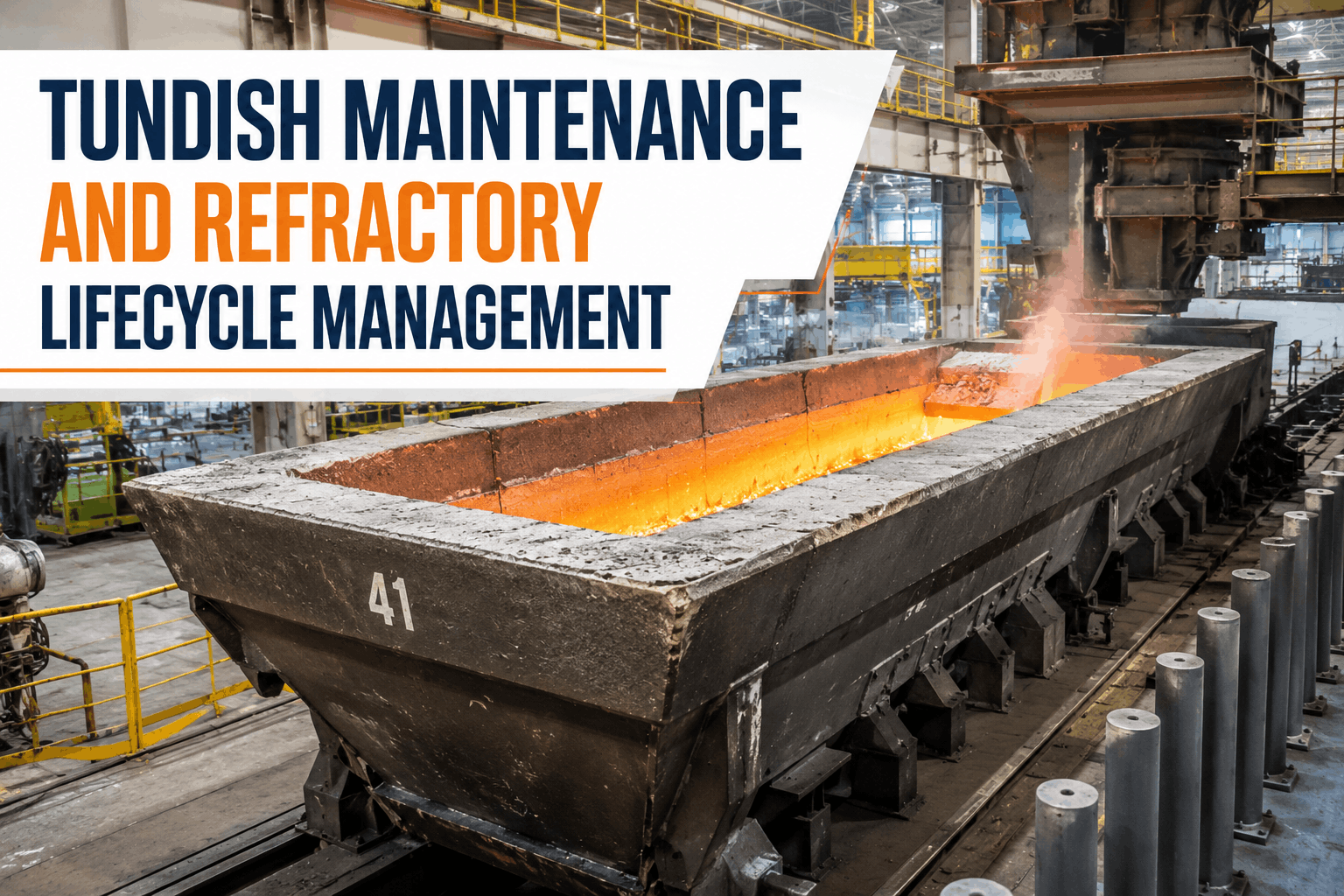
Tundish Lining Heat Count Tracking and Rapid-Replacement Strategy
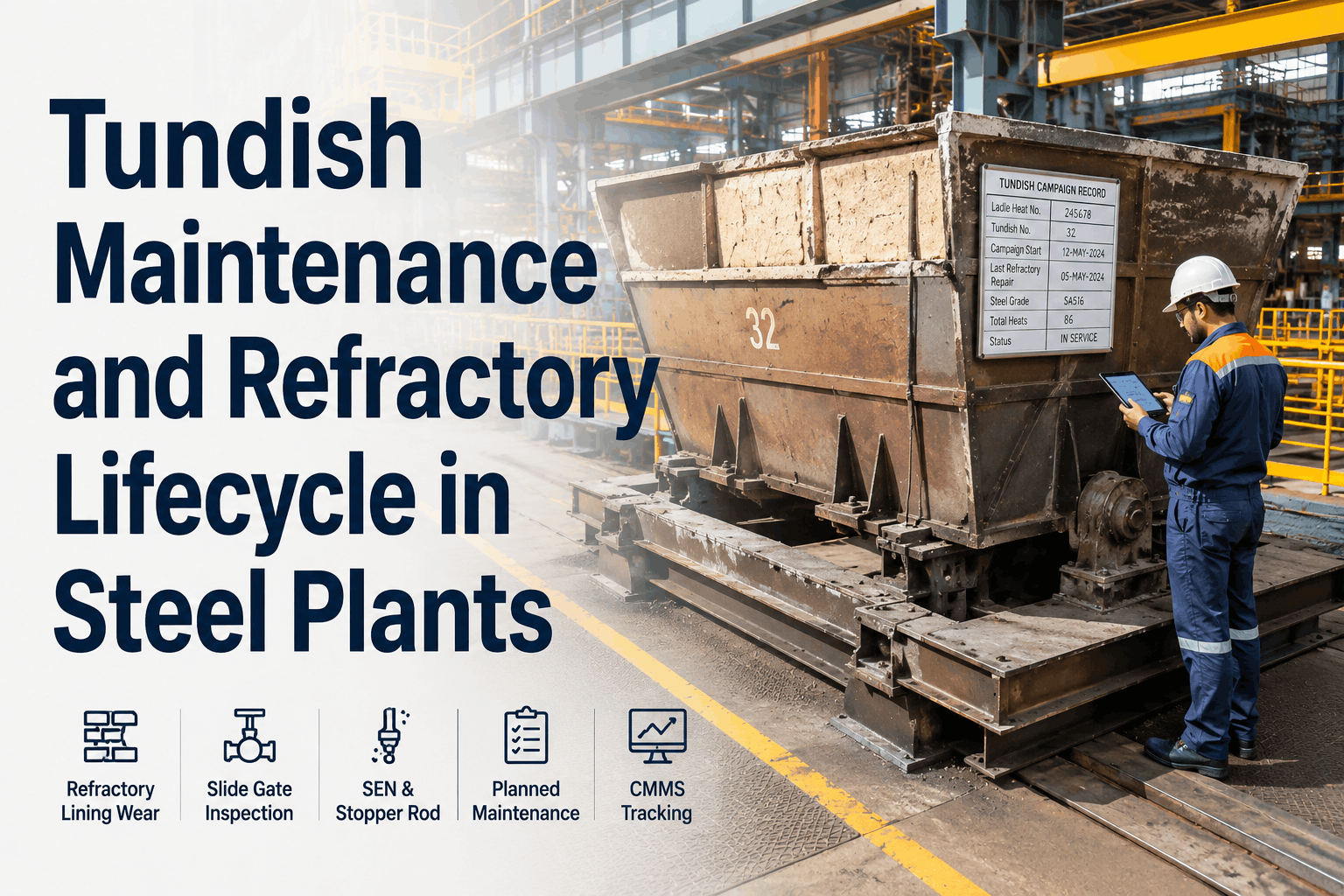
Tundish lining campaigns are shortest (15–30 heats) due to thermal cycling. CMMS tracks heat count accurately—every casting operation increments heat counter. When heat count approaches 25 heats, alert maintenance to prepare replacement tundish lining. Tundish lining replacement scheduled overnight (16–24 hour maintenance window). Failure to replace on schedule risks lining breakout (molten steel breakthrough) causing burn hazard and environmental release.
Slag Chemistry Impact on Lining Wear and Material Selection Optimization
Slag chemical composition (silica %, magnesia %, iron oxide %) determines refractory erosion rate. Acidic slag (high silica) attacks basic refractories; basic slag (high magnesia) attacks acidic refractories. CMMS tracks monthly slag analysis results and correlates slag chemistry with ladle lining wear rate. If slag composition changes (due to ore source change or scrap quality shift), CMMS recommends refractory material change—switching to lining type better suited to new slag chemistry can extend campaign life 30–40%.
CMMS Workflow for Continuous Refractory Lifecycle Optimization
Digital Lining Records and Heat Count Automation
CMMS maintains permanent digital record for each vessel: lining material type, installation date, lining thickness at installation, and real-time heat count. System auto-increments heat counter based on furnace operation data (BOF tapping, EAF tap-to-tap time, ladle metal pouring). Eliminates manual heat count tracking errors causing missed replacement schedules.
Thermal Imaging Integration and Real-Time Lining Condition Monitoring
Thermal imaging cameras (IR sensors) measure furnace cold-face temperature monthly. CMMS captures images, logs temperature, and trends hot-face thermal gradient. Rising cold-face temperature (50–100°C baseline → 150–200°C) indicates declining lining thickness and increased heat loss. System predicts remaining lining life based on thermal gradient trend combined with thickness measurements.
Gunning Application Scheduling and Material Cost Optimization
When lining thickness reaches 70% of minimum safe thickness, CMMS recommends gunning application. System predicts optimal gunning timing—too early wastes materials, too late risks failure. CMMS tracks gunning material type, application volume, cost, and longevity gained. Analyzes ROI of gunning vs. complete relining to identify most cost-effective repair strategy.
Campaign Remaining-Life Forecasting and Maintenance Window Scheduling
CMMS calculates expected campaign end date by analyzing current thickness, erosion rate trend, and target minimum thickness. Alert operations 12 months before predicted failure to coordinate scheduled rebricking during planned maintenance window. Prevents emergency furnace shutdowns and allows procurement of replacement lining materials in advance.
Multi-Vessel Refractory Portfolio Dashboard and Cost Benchmarking
Centralized dashboard displays all vessel campaigns: current heat count, remaining life, lining material type, repair history, and cost per heat. Operator identifies underperforming vessels (short linings, frequent gunning) and evaluates material changes. Compare actual campaign life against OEM specifications and industry benchmarks to identify operational improvements.
Supplier Performance Tracking and Refractory Material Quality Assurance
CMMS tracks refractory supplier, material batch numbers, and actual performance (campaign life achieved vs. supplier specification). If supplier material underperforms (campaign 20% shorter than expected), system flags deviation for quality investigation. Enable switching suppliers or negotiating refunds for substandard material. Over time, identifies highest-quality suppliers supporting longest campaigns.
15–25%
Campaign Life Extension
Predictive maintenance and condition-based repairs extend blast furnace campaigns from 8–10 to 10–13 years; BOF campaigns from 150–200 to 200–300 heats.
$300K+
Annual Cost Savings
Optimized gunning scheduling and avoided emergency campaigns save $100,000–$500,000 annually per integrated mill.
90%
Emergency Avoidance
Predictive alerts eliminate 90% of emergency furnace stoppages and unplanned rebricking events during production.
100%
Compliance Coverage
CMMS tracks all vessels (BF, BOF, EAF, ladle, tundish) with complete maintenance history and predictive trending.
Customer Success: Refractory Campaign Cost Control
"Refractory replacement was our largest unplanned maintenance cost—averaging $600,000 annually across blast furnace, BOF, and ladle systems. We tracked heat counts manually on spreadsheets, leading to timing errors and emergency campaigns interrupting production. Before Oxmaint, we had no way to coordinate furnace operations with predicted lining failure dates. After implementing CMMS refractory module, system auto-increments heat counts and predicts remaining campaign life with 95% accuracy. We now schedule lining replacements during planned maintenance windows 12 months in advance, avoiding $150,000+ emergency repair premiums. AL-MAG lining replacements are optimized—system predicts exact timing to replace working linings, extending permanent brick campaigns 20–25%. Annual refractory cost reduced to $380,000, saving $220,000 per year while improving furnace availability and steel quality consistency."
—Refractory Engineer, 2-Million-Ton Integrated Steel Mill, Pennsylvania USA
Frequently Asked Questions: Refractory Management
What is the typical cost of blast furnace rebricking?+
BF rebricking cost: $2–5 million depending on furnace size (1,500–3,000 cubic meters) and material type. Emergency rebricking (unplanned campaign failure) costs additional $500,000–$2,000,000 in lost production and expedited material procurement.
How does thermal imaging predict lining remaining life?+
Cold-face temperature rise indicates thickness loss. Healthy lining: cold-face 50–100°C baseline. Worn lining: 150–200°C. CMMS combines thermal trend with ultrasonic thickness measurements to calculate time to critical thickness.
What is AL-MAG working lining and how often is it replaced?+
AL-MAG (alumina-magnesia) is sacrificial hot-face layer protecting permanent brick in ladles. Replaced every 50–150 heats when thickness drops below 60mm. Cost $20,000–$50,000 per replacement. CMMS predicts replacement timing based on thickness trend.
What impact does ladle preheating have on lining life?+
Adequate preheating (2–4 hours at 800–1,200°C) reduces thermal shock stress and extends lining life 30–40%. Inadequate preheat (cold ladles) accelerates erosion. CMMS tracks preheat duration and temperature.
How does slag chemistry affect refractory wear rate?+
Acidic slag (high silica) attacks basic refractories; basic slag (high magnesia) attacks acidic refractories. CMMS correlates monthly slag analysis with wear rate trends. Recommends material change if slag chemistry shifts.
What is gunning and when should it be performed?+
Gunning is sprayed refractory application restoring worn lining areas. Performed when thickness reaches 70% of minimum thickness. Cost $50,000–$150,000 per application; extends campaign life 500–1,000 heats. CMMS predicts optimal timing.
How accurate is CMMS remaining-life prediction?+
CMMS remaining-life predictions achieve 90–95% accuracy when based on consistent thickness measurements, thermal data, and heat count tracking. Accuracy improves over time as historical data accumulates for specific vessel/material combinations.
Can operating temperature changes affect lining lifespan?+
Yes—every 10°C temperature increase accelerates lining wear 5–10%. EAF running hotter than normal (1,750°C vs. 1,700°C target) significantly shortens campaign. CMMS alerts operators if furnace temperature rises above design specification.
Reduce Refractory Costs and Extend Campaign Life 15–25%
Oxmaint CMMS automates refractory lining lifecycle management across blast furnaces, BOF, EAF, ladles, and tundishes. Predictive remaining-life forecasting enables planned maintenance scheduling, optimized gunning application timing, and elimination of 90% of emergency campaigns. Real-time thermal monitoring and thickness trending reduce annual refractory costs by 20–35% while improving metallurgical vessel reliability and steel quality consistency.