Steel manufacturing is among the most hazardous industrial operations globally, with injury rates (non-fatal injuries + fatalities per 200,000 worker-hours) 2-3 times higher than all-industry average. Typical large integrated mills employ 2,000-5,000 workers exposed daily to: high-temperature equipment (reheating furnaces at 1000-1200°C, molten steel at 1600°C+), rotating machinery (rolling mills operating at 100+ tons force and 50+ rpm), pressurized systems (compressed air, hydraulic systems at 3,000+ psi), and heavy material handling (cranes lifting 100+ ton loads overhead). Without systematic safety management, mills experience 20-50 reportable injuries annually, 5-15 serious injuries (requiring hospitalization), and occasional fatalities (industry average 2-5 fatalities per 50,000 workers annually). Beyond human tragedy, occupational injuries carry staggering financial costs: workers' compensation claims ($500k-5 million per serious injury), OSHA penalties ($10k-300k per citation), lost productivity (injured worker absence averages 100+ days), and reputational damage (customer perception, investor concerns, difficulty recruiting talent). Lockout/Tagout (LOTO) and Hot Work Permit programs are two foundational safety systems preventing 60-80% of occupational injuries in mills. LOTO prevents unintended machine startups during maintenance or repair—a 10-second startup of rolling mill can crush technician's arm, causing permanent disability. Hot Work Permit programs control welding, cutting, and grinding operations that ignite flammable materials or pressurized lines, causing explosions and fire. Oxmaint's safety management system automates LOTO authorization workflows, maintains permit documentation, tracks hot work certifications and training, schedules safety audit compliance, and generates incident investigation reports, transforming safety from reactive crisis response into predictable, managed process with documented compliance and measurable injury reduction.
Occupational Injury Epidemiology in Steel Mills: Root Causes, Financial Impact, and Prevention Framework
Occupational injury data from OSHA, Bureau of Labor Statistics, and steel industry safety organizations show consistent pattern: 60-80% of mill injuries result from energy release incidents (unintended machine startup, pressurized line rupture, falling loads) or thermal/chemical injuries from hot work operations (welding, cutting, grinding). Mills with injury rates above industry median (15+ reportable injuries per 200,000 worker-hours) typically lack systematic LOTO compliance (maintenance work conducted without proper lockout procedures), inadequate hot work permitting (welding and cutting conducted near flammable materials or pressurized lines without precautions), and poor incident investigation discipline (incidents recur because root causes not systematically prevented). Contrast: industry-leading mills with zero or near-zero injury rates implement: (1) mandatory LOTO training with annual recertification, (2) pre-job LOTO briefing verifying all energy sources isolated before technician enters work zone, (3) hot work permit requirement for all welding/cutting/grinding with fire watch personnel and extinguisher placement, (4) near-miss reporting culture encouraging workers to report unsafe conditions before injuries occur, and (5) incident investigation with root cause analysis and corrective action implementation. Financial case for safety investment is compelling: average occupational injury costs $50-500k per worker (medical treatment, lost wages, workers' comp insurance premium increases); serious injuries $1-5 million per worker; fatalities $5-10 million per family (settlements, lost productivity). A mill preventing 10 serious injuries annually through LOTO and hot work discipline saves $10-50 million—equivalent to 1-5% of operating budget. Safety is not cost center—it is profit center when viewed through injury prevention lens.
Lockout/Tagout (LOTO) Program: Energy Isolation, Verification, and Maintenance Safety
Lockout/Tagout is formalized safety system preventing unintended startup of machinery during maintenance or repair. OSHA 1910.147 mandates LOTO procedures at any facility where workers could be injured by unintended equipment startup. Steel mills contain hundreds of pieces of equipment requiring LOTO: rolling mills (rotating rolls at extreme force), hydraulic presses (3000+ psi pressure), motor-driven equipment (conveyors, pumps, fans), pneumatic tools (compressed air-powered devices), and piping systems (steam, hot water, pressurized gas lines). Proper LOTO requires: (1) identification of all energy sources (electrical, pneumatic, hydraulic, thermal), (2) isolation devices (circuit breakers, valve shutoffs) for each source, (3) lockout hasps allowing multiple workers to apply individual locks (preventing single worker from accidentally re-energizing equipment), (4) pre-job briefing verifying all energy sources isolated and equipment cannot move, and (5) work verification with zero energy testing (using testing devices to confirm electrical power is off, pressure lines are relieved, etc.). Common LOTO failure scenarios: maintenance worker assumes equipment is safe without verifying isolation (equipment starts, worker is crushed), worker removes LOTO lock before completing maintenance (co-worker unintentionally restarts equipment), or supervisor authorizes re-energization while maintenance worker still in area. Oxmaint automates LOTO authorization workflow: requires maintenance supervisor approval before LOTO lockout, documents all energy sources to be isolated, tracks lockout duration and lock removal, and verifies "all-clear" signal from maintenance technician before authorizing equipment re-energization.
Motor-driven rolling mills, conveyors, and cooling system pumps contain rotating elements that continue motion when power is cut (due to mechanical inertia). LOTO procedure: (1) locate circuit breaker feeding motor, (2) switch breaker to OFF position (isolation device), (3) apply lock to breaker preventing someone from switching back to ON, (4) test with voltmeter to confirm no electrical power present, (5) allow motor to coast to complete stop. Failure mode: technician assumes motor is stopped, attempts to oil bearing; motor starts from nearby switch, technician's arm caught in rotating coupling. Fatal outcomes common. Oxmaint documents each motor's circuit breaker location, required isolation steps, and test procedure in LOTO checklist.
Hydraulic systems (rolling mills, press equipment at 3000+ psi), pneumatic systems (compressed air at 100+ psi), and steam lines contain stored pressure that rapidly releases if lines rupture. LOTO procedure: (1) locate isolation shutoff valve upstream of work area, (2) close valve (isolation device), (3) apply lock to valve preventing re-opening, (4) open downstream relief valve to exhaust residual pressure, (5) verify pressure gauge shows zero before maintenance begins. Failure mode: technician loosens hydraulic fitting without relieving pressure; high-pressure jet penetrates skin, causing severe tissue damage. Fatalities from pressurized ruptures are common. Oxmaint documents system pressure, isolation valve locations, and relief procedure for each pressurized system.
Reheating furnaces, steam lines, and hot water systems retain thermal energy that can cause severe burns during maintenance. LOTO procedure: (1) shut down furnace/steam supply (isolation step), (2) apply lock to fuel/steam valve, (3) allow equipment to cool to safe handling temperature (typically <140°F for human contact), (4) test temperature with thermometer before maintenance. Failure mode: technician cuts open steam line before steam pressure is fully relieved; steam expands explosively, causing full-body burns. Slow cooling increases maintenance delays; facilities sometimes allow workers to proceed before equipment fully cools. Oxmaint tracks cool-down duration and prevents work authorization until thermal threshold is achieved.
Springs, counterweights, elevated loads, and mechanical linkages store mechanical energy that releases when constraints are removed. LOTO procedure: (1) identify stored energy sources (elevated platform supported by hydraulic cylinders, for example), (2) apply mechanical lock or block to prevent load from falling (e.g., place wooden block under elevated platform to prevent lowering if hydraulic pressure is lost), (3) apply electrical/pneumatic lock to actuators controlling the mechanism. Failure mode: technician removes hydraulic lock prematurely; 100-ton elevated platform collapses, crushing worker below. Oxmaint documents each energy source and required mechanical lockout procedure (not just electrical isolation).
Complex equipment often combines multiple energy sources: rolling mill powered by electric motor (electrical energy), cooled by chilled water (hydraulic pressure in cooling lines), with pneumatic control actuators (compressed air). Complete LOTO requires isolating ALL energy sources simultaneously. Failure mode: technician isolates electrical power but forgets compressed air supply; pneumatic valve actuates unexpectedly, causing injury. Multi-source energy equipment requires detailed LOTO checklist identifying each source, isolation device, and testing procedure. Oxmaint maintains equipment-specific LOTO worksheets listing all energy sources and prevents LOTO authorization until all isolation steps are documented.
Hot Work Permit System: Welding, Cutting, Grinding Safety and Fire Prevention
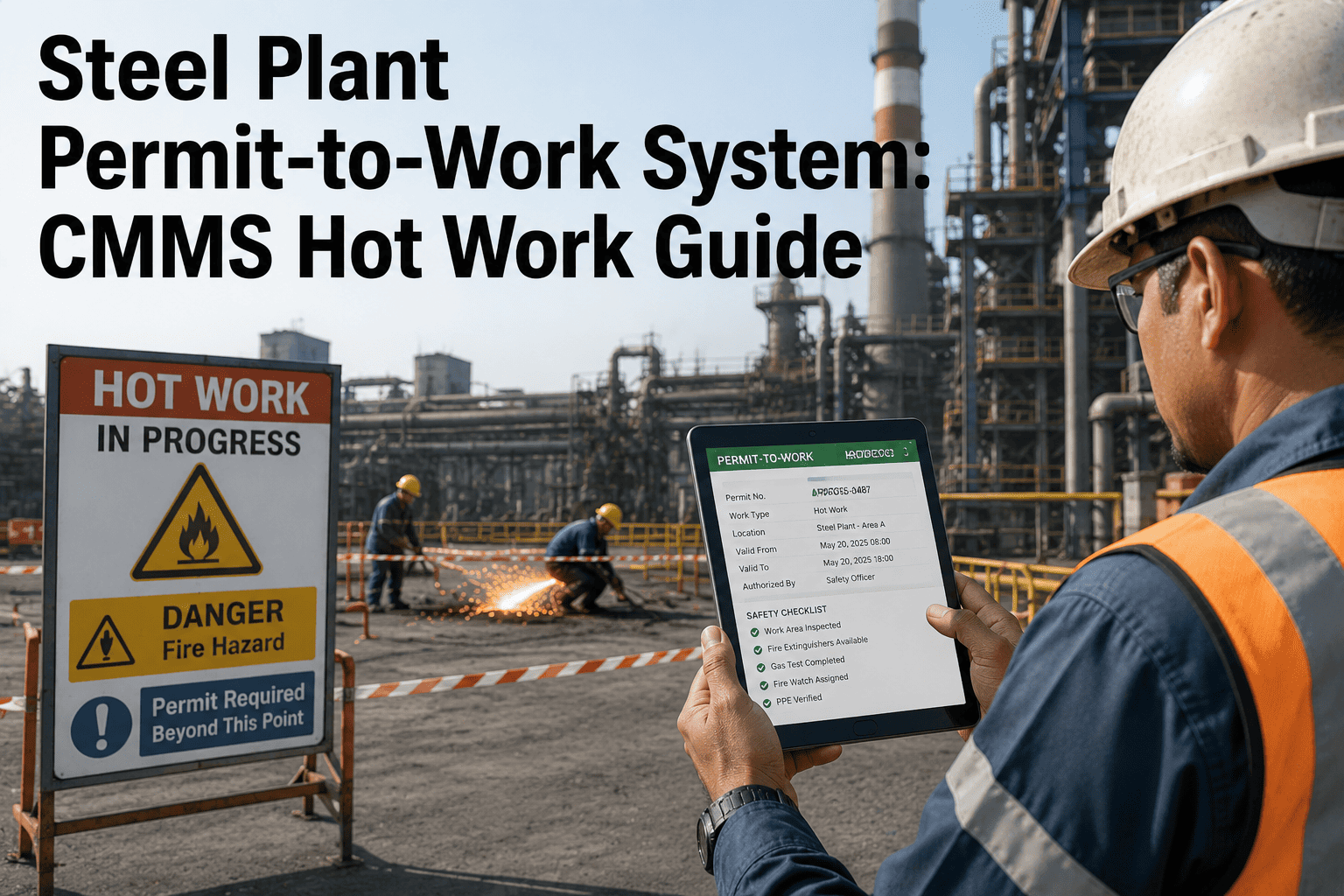
Hot work (welding, cutting with oxy-acetylene torch, grinding, thermal spray operations) generates extreme temperatures (welding arc 6000+°C, torch flame 3000°C) and creates airborne sparks traveling 10-20 feet from work area. Sparks ignite flammable materials (oil, hydraulic fluid, insulation, stored materials), causing fires in confined spaces, process equipment, and surrounding structures. Steel mills conduct hot work continuously: welding repairs on rolling mills, cutting old pipe sections, grinding weld seams, and thermal spraying for equipment coating. Without hot work permitting, mills experience 10-30 hot work fires annually—some minor (contained quickly), others catastrophic (destroying equipment, causing worker deaths). Hot work permit system requires: (1) pre-work fire hazard assessment (identify flammable materials within 35-foot radius), (2) removal or protection of flammable materials (move oil drums away, cover combustible surfaces with fire blanket), (3) fire watch personnel stationed with fire extinguisher during and 30 minutes after hot work, (4) hot work equipment certification (torch, welder, grinder maintained in safe condition), and (5) post-work inspection verifying no smoldering fires. Oxmaint automates hot work permit workflow: requires supervisor authorization, documents hazard assessment, tracks fire watch personnel certification, generates pre-work and post-work checklists, and maintains digital permit file with photos of work area and corrective actions taken.
| Safety Hazard Category | Primary Risk | LOTO/Permit Requirement | Verification Step | Documentation |
|---|---|---|---|---|
| Electrical Equipment Startup | Unintended motor startup; worker caught in rotating element; amputation/fatality | LOTO on circuit breaker; lock prevents restart; voltage test | Voltmeter confirms zero voltage; motor coasted to stop; visual inspection of rotating elements | LOTO permit signed by supervisor; circuit breaker number; lock serial number; test date/time |
| Hydraulic System Pressure | Pressurized fluid rupture; high-pressure jet penetrates skin; tissue destruction/fatality | LOTO on hydraulic shutoff valve; pressure relief to atmosphere; pressure gauge verification | Pressure gauge reads 0 psi; relief line open; test with pressure tester (not just visual) | LOTO permit; system pressure rating; isolation valve location; relief procedure; pressure test results |
| Pneumatic System Pressure | Compressed air rupture/release; projectile hazard; explosion | LOTO on pneumatic shutoff; trap air in lines with ball valve; pressure relief; vent to atmosphere | Pressure gauge zero; vent valve open; manual air escape attempted to confirm empty | LOTO permit; system PSI rating; trap valve location; relief procedure; test results |
| Thermal Energy (Steam/Hot Water) | Steam burn; explosive steam release; thermal expansion injury; severe burns | LOTO on fuel/steam supply; cool-down period until <140°F; temperature monitoring | Temperature gauge <140°F; manual touch test safe; thermometer verification before work | LOTO permit; shutdown time; cool-down duration; temperature readings at 30-min intervals until safe |
| Hot Work (Welding, Cutting, Grinding) | Spark ignition of flammable materials; fire in confined space; explosion of pressurized container | Hot Work Permit; fire hazard assessment; flammable removal; fire watch personnel | 35-foot radius inspected for flammables; fire watch stationed with extinguisher; pre-work/post-work photos | Hot Work Permit signed by supervisor; fire watch name/certification; hazard assessment checklist; post-work confirmation fire extinguished |
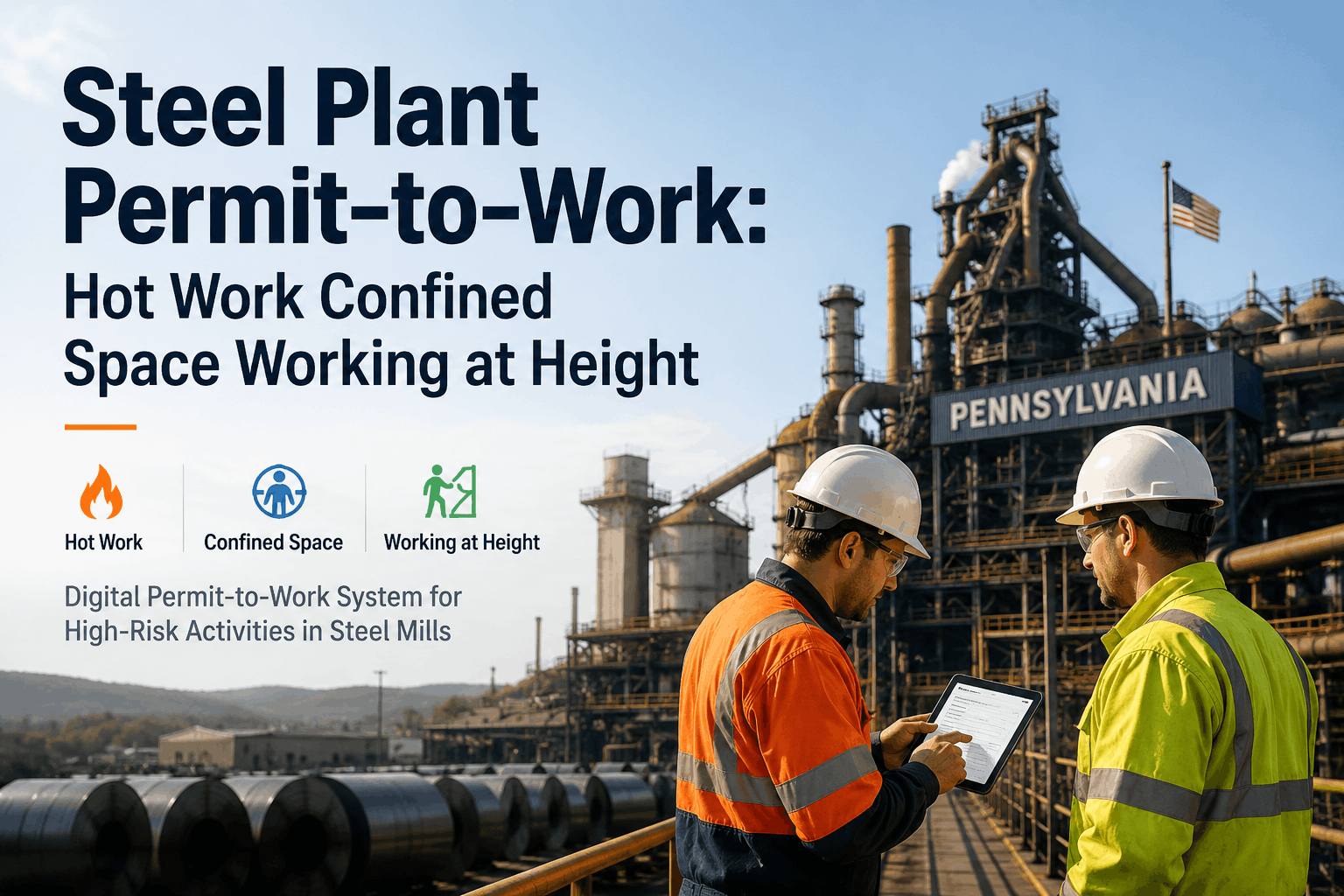
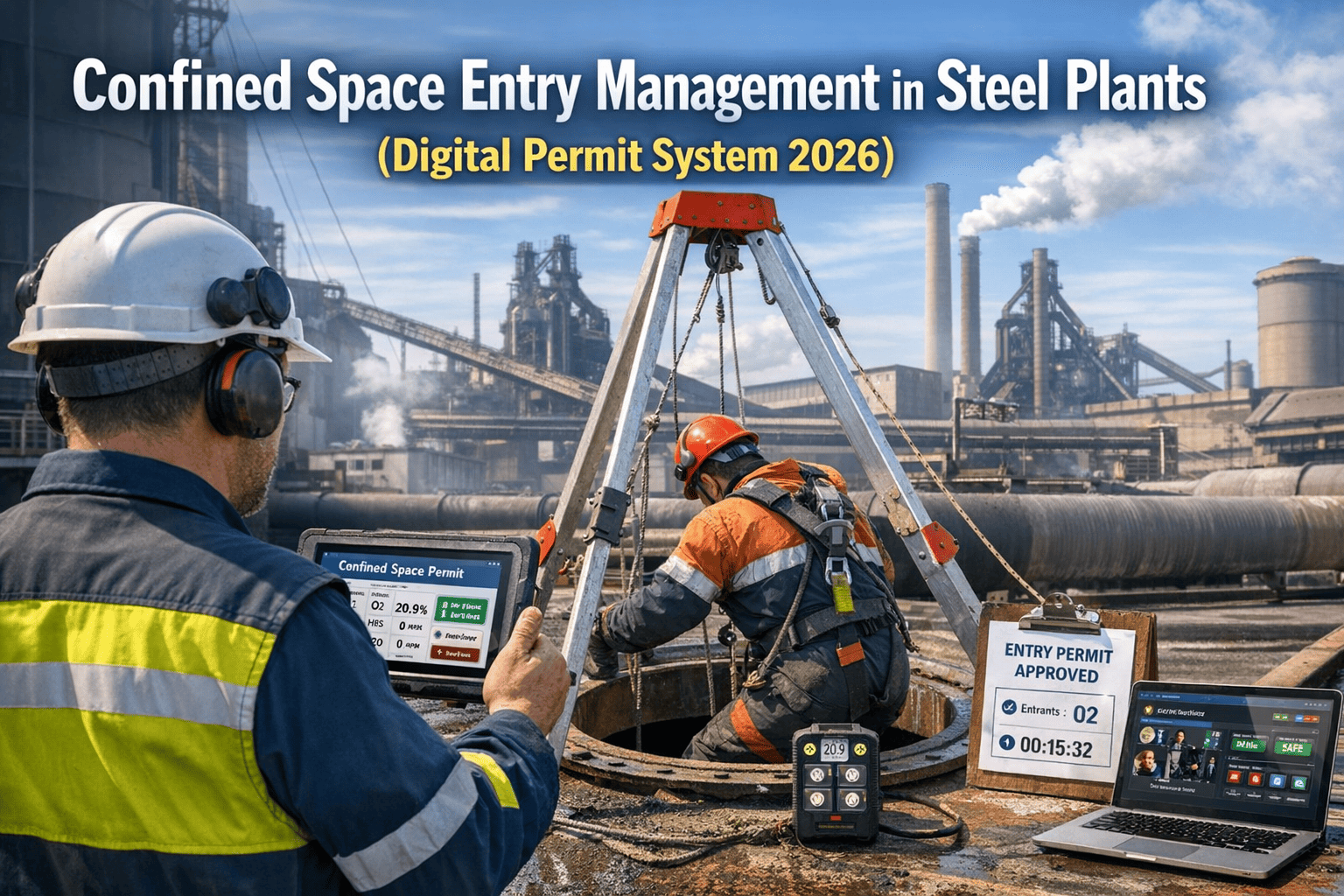
| Confined Space Entry | Atmospheric hazards (oxygen deficiency, toxic gas); engulfment; equipment hazards; unconsciousness/fatality | Confined Space Permit; atmospheric testing; ventilation; rescue equipment staged | Atmospheric test results within safe range; continuous monitoring; external observer posted; rescue team on standby | Confined Space Permit; atmospheric test results; entrant/attendant/rescue names; duration logged |
Safety Compliance Framework: Training, Incident Investigation, and Continuous Improvement Culture
Systematic safety management extends beyond LOTO and hot work permits to encompass: hazard awareness training (ensuring all workers understand energy isolation requirements, hot work fire risks, confined space dangers), incident investigation (determining root cause of every injury and implementing corrective actions to prevent recurrence), near-miss reporting (workers reporting hazardous conditions before injuries occur), and continuous improvement discipline (safety performance trending, identifying patterns of incidents, and implementing systemic improvements). Mills with zero or near-zero injury rates invest heavily in safety culture: supervisors held accountable for team safety performance (bonus/penalty tied to safety KPIs), workers encouraged to stop work if unsafe conditions observed (no retaliation for safety stoppage), and incident investigations conducted with focus on system failures, not blame on individual workers. Safety requires discipline, training, and leadership commitment—it is not achieved through policies and procedures alone. Oxmaint automates safety compliance tracking, eliminating administrative burden, freeing safety professionals to focus on culture-building and continuous improvement rather than paperwork.
- Conduct equipment hazard survey: visit all process equipment (rolling mills, hydraulic presses, motors, pumps, furnaces, conveyors). For each equipment piece, identify energy sources: electrical (circuit breakers), hydraulic (shutoff valves), pneumatic (shutoff valves), thermal (fuel/steam valves), mechanical (mechanical locks/blocks). Document location of isolation devices.
- Create equipment-specific LOTO procedures: for each major equipment, develop laminated LOTO card or electronic procedure listing all energy sources, location of isolation devices, lock application sequence, zero-energy testing method, and re-energization authorization process. Example: Rolling Mill LOTO includes electrical isolation (circuit breaker), hydraulic isolation (shutoff valve), pneumatic isolation (air supply valve), and mechanical lock on elevated platform.
- Train all maintenance personnel on LOTO: OSHA-required training covers hazard recognition, energy isolation procedures, lock application, testing, and authorization protocols. Annual recertification required. Track completion in Oxmaint: certifications expiring trigger retraining assignment.
- Designate LOTO-trained personnel: only personnel trained and certified in LOTO procedures may apply locks or remove LOTO lockouts. Create roster of authorized LOTO personnel maintained by Oxmaint; authorize LOTO requests only from certified individuals.
- Create LOTO work order template: technician submits LOTO request in Oxmaint specifying: equipment name, energy sources requiring isolation, maintenance task description, estimated duration. System validates technician is LOTO-certified before accepting request.
- Supervisor authorization: maintenance supervisor reviews LOTO request, verifies hazard assessment is complete, authorizes lockout procedure. Supervisor physically witnesses technician apply locks (or remotely via checklist confirmation), verifies all isolation devices are locked, confirms zero-energy testing completed, and approves work authorization.
- Electronic lock tracking: Oxmaint records all locks applied (lock serial number, person applying, time, equipment), maintains list of active lockouts in facility. Prevents accidental re-energization by providing visible lockout status on equipment via mobile app (technician scanning QR code on equipment sees active lockout status).
- Work completion and lock removal: when maintenance task complete, technician confirms readiness for re-energization via Oxmaint. Supervisor authorizes lock removal only when work area is clear of personnel. System logs lock removal time and authorizer. Equipment can be re-energized only after all locks removed and supervisor approval given.
- Create hot work assessment procedure: before any welding, cutting, or grinding work begins, supervisor or safety personnel conduct fire hazard assessment of 35-foot radius around work area. Identify flammable materials (oils, hydraulic fluid, paint, insulation, rubber, gases); remove or protect with fire blanket. Document assessment with photos showing cleared area and flammable items relocated.
- Hot work permit form: Oxmaint generates hot work permit requiring: work area description, equipment being worked on, hot work type (welding/cutting/grinding), fire watch personnel name and certification, fire extinguisher(s) stationed, estimated duration, supervisor approval. Electronic signature/ timestamp on form prevents unsigned work authorization.
- Fire watch personnel requirements: minimum one fire watch person per hot work location with current fire extinguisher training certification. Fire watch remains in work area during hot work and for 30 minutes after completion, monitoring for smoldering fires. Oxmaint tracks fire watch certifications; alerts when certifications expiring.
- Post-work inspection: after hot work complete, supervisor conducts final inspection verifying no smoldering fires, work area cooled to safe condition, flammable materials confirmed not exposed to residual heat. Oxmaint permit requires checkbox confirmation and supervisor sign-off.
- Incident investigation protocol: every occupational injury (lost time, medical treatment, near-miss with potential for injury) triggers investigation within 24 hours. Investigation team (safety professional, maintenance supervisor, worker representative) determines root cause(s): was LOTO not completed? were isolation devices inadequate? was hot work permitted without hazard assessment? Investigation identifies corrective action preventing recurrence.
- Near-miss reporting: workers encouraged to report unsafe conditions (frayed electrical cord, broken lock, missing fire watch during hot work) without fear of retaliation. Near-miss report triggers immediate hazard correction and preventive action (equipment repair, procedure revision). Oxmaint near-miss module enables quick reporting via mobile app; generates alert to maintenance to remedy hazard.
- Monthly safety performance review: safety coordinator compiles incident/near-miss data, injury rates, LOTO compliance percentage, hot work permit volume. Present trends to plant management and frontline supervisors; identify repeat problems requiring systemic solutions (e.g., if 3 incidents in past month involving inadequate pressure relief, conduct training on pressure isolation procedures for all maintenance staff).
- Continuous improvement: use incident and near-miss data to refine LOTO procedures, update equipment hazard assessments, and enhance training. Zero-injury facilities continuously improve procedures; incident-prone facilities remain reactive. Oxmaint data enables evidence-based improvement decisions.
- Leadership safety commitment: plant manager and executive team publicly commit to zero-injury goal. Safety performance (injury rate, LOTO compliance, incident investigation completion) becomes key performance metric for supervisors and operations managers. Supervisor performance reviews include safety accountability; bonuses/promotions tied to safety performance.
- Worker empowerment: train all workers that stopping work for safety reasons is not only allowed but expected and valued. Workers should feel empowered to stop unsafe conditions without fear of retaliation or blame. Post visible messaging: "Safety stops work—work doesn't stop safety." Example: worker observing technician working without LOTO authorization should feel safe stopping work and alerting supervisor, not fear "reporting" co-worker.
- Visible safety leadership: plant manager regularly observes safety practices on floor, attends incident investigations, participates in safety training. Visible leadership commitment signals to workforce that safety is genuine organizational priority, not just compliance checkbox.
- Recognize and celebrate safety achievements: when team reaches 100 days without lost-time injury, recognize achievement publicly (safety award, bonus, celebratory event). Celebration reinforces safety culture and motivates continued vigilance. Oxmaint milestone tracking enables recognition of achievement.
Safety Performance Metrics, KPI Tracking, and Continuous Improvement Outcomes
Steel mills tracking safety through systematic KPI measurement demonstrate measurable injury reduction: mills implementing comprehensive LOTO programs combined with hot work discipline report 30-50% reduction in energy-release injuries within first year. Near-miss reporting cultures identify 5-10 hazardous conditions per 100 workers per month—early detection and correction of hazards before injuries occur. Incident investigation discipline with root cause analysis and corrective action implementation prevents incident recurrence; industry data shows 80-90% of incidents never recur when corrective actions properly implemented. Mills achieving sustained zero-injury operations (3+ year periods) typically demonstrate: >95% LOTO compliance, >90% hot work permit usage for all applicable work, 100% incident investigation completion within 7 days, and active near-miss reporting programs (minimum 10 near-misses reported monthly per 500-worker facility). Financial impact on safety investment: every occupational injury prevented saves $50-500k in direct costs; sustained zero-injury operations over 3-year period saves $5-50 million on typical mill and improves recruiting/retention (workers prefer safe facilities, reducing turnover costs 10-20%).
Percentage of maintenance work orders completed with documented LOTO authorization. Below 90% indicates supervision gaps, inadequate LOTO training, or culture issues. Track: LOTO-authorized work orders / total maintenance work orders.
Percentage of welding, cutting, grinding operations with documented hot work permit. 100% usage indicates systematic enforcement. Below 90% indicates unauthorized hot work creating fire risk. Track: hot work permits issued / estimated hot work operations conducted.
Number of recordable occupational injuries (lost-time injuries, medical treatment) per 200,000 worker-hours. Industry median 15+ per 200,000; zero-injury facilities achieve <2 per 200,000. Direct measure of safety program effectiveness.
Percentage of incidents with root cause analysis completed and corrective actions documented within 7 days. Delays in investigation allow root causes to be forgotten and corrective actions not implemented, enabling incident recurrence.
Early hazard identification before injuries occur. Facilities with active near-miss reporting prevent 20-30% more incidents than reactive facilities. Low near-miss reporting (<2 per 100 workers monthly) indicates culture issue; workers not empowered to report safely.
Percentage of workforce with current certifications: LOTO training (annual), hot work fire watch certification, confined space entry training, etc. Gaps in training create incident risk. Oxmaint tracks expiration dates; alerts 60 days before training expires to schedule renewal.