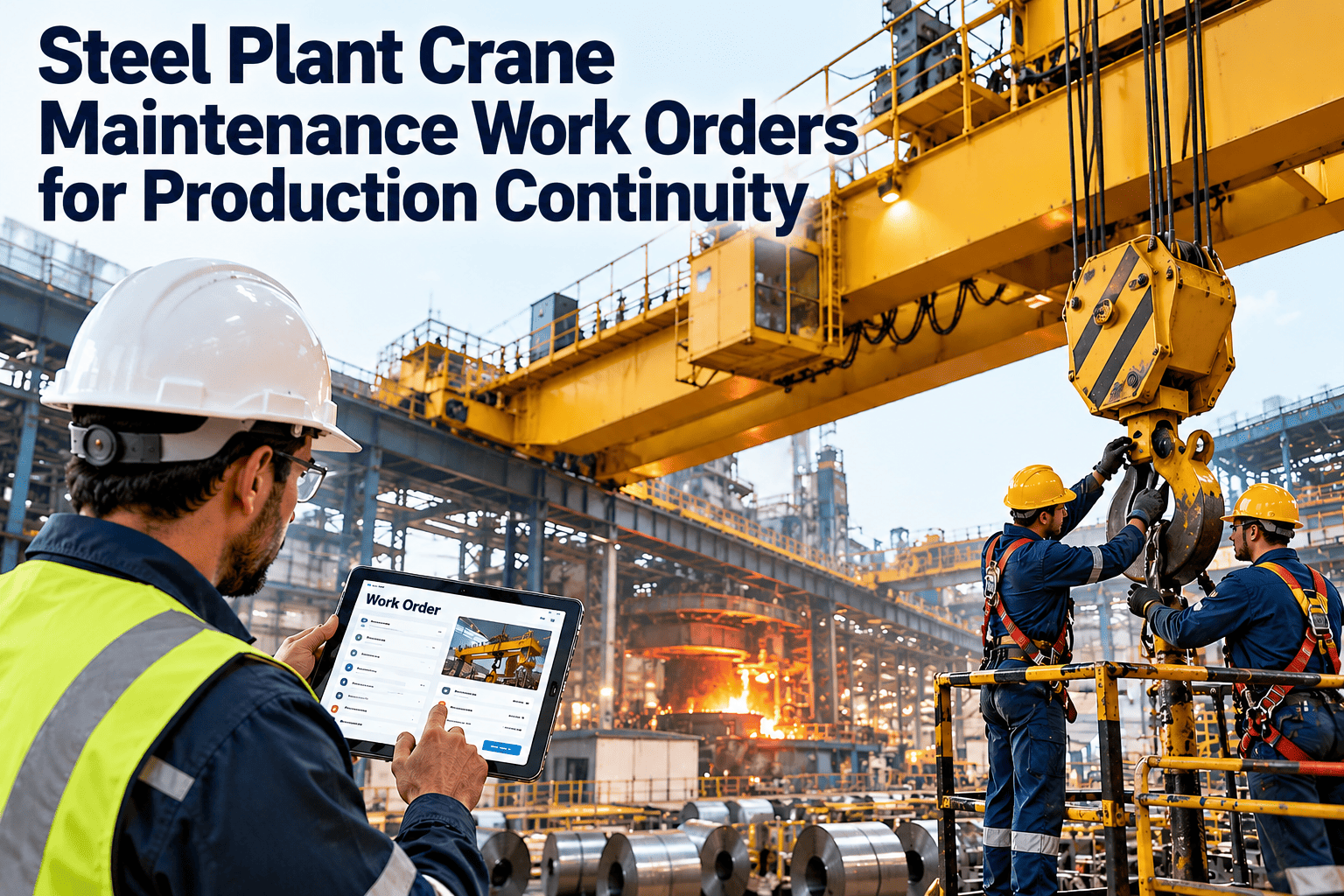
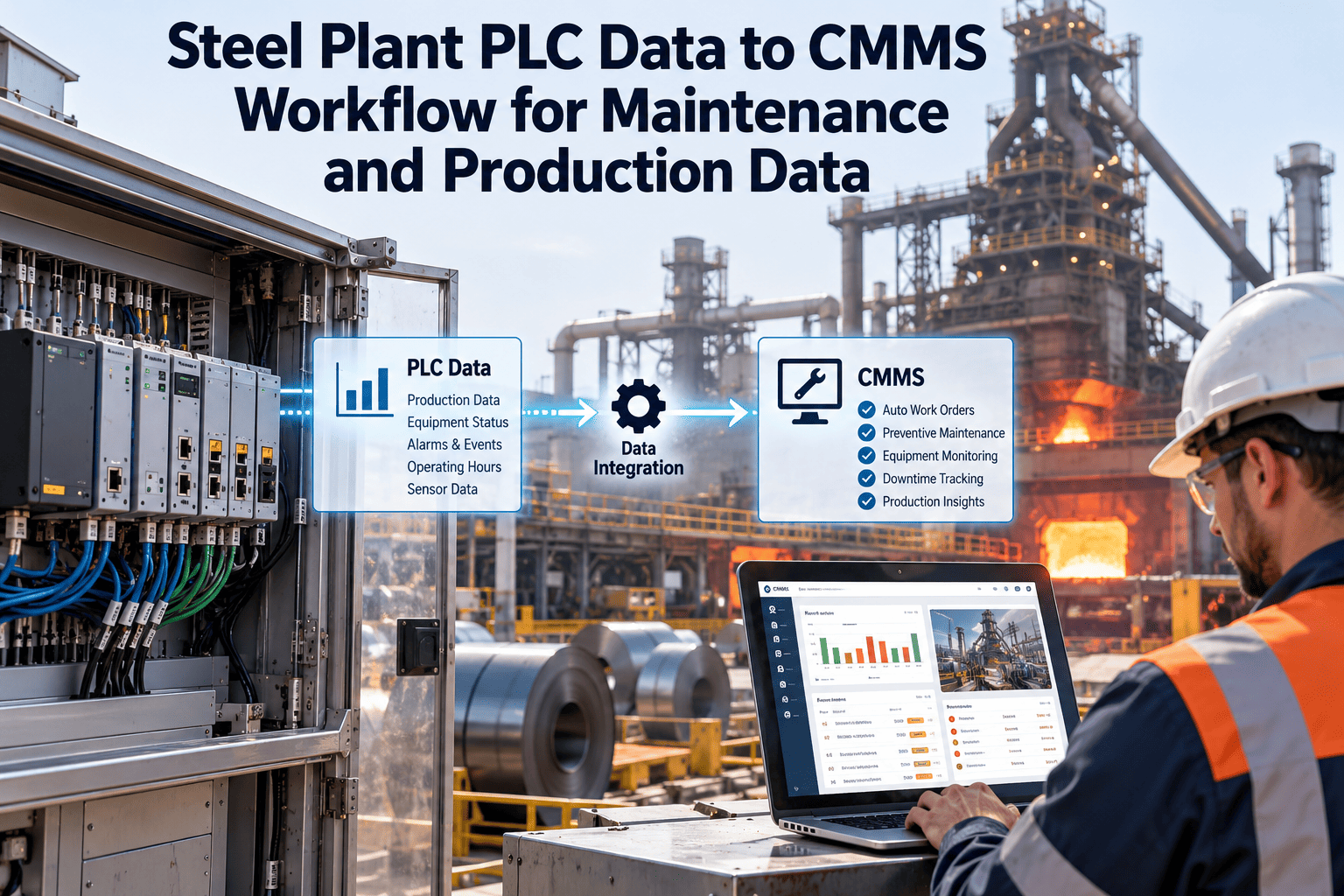
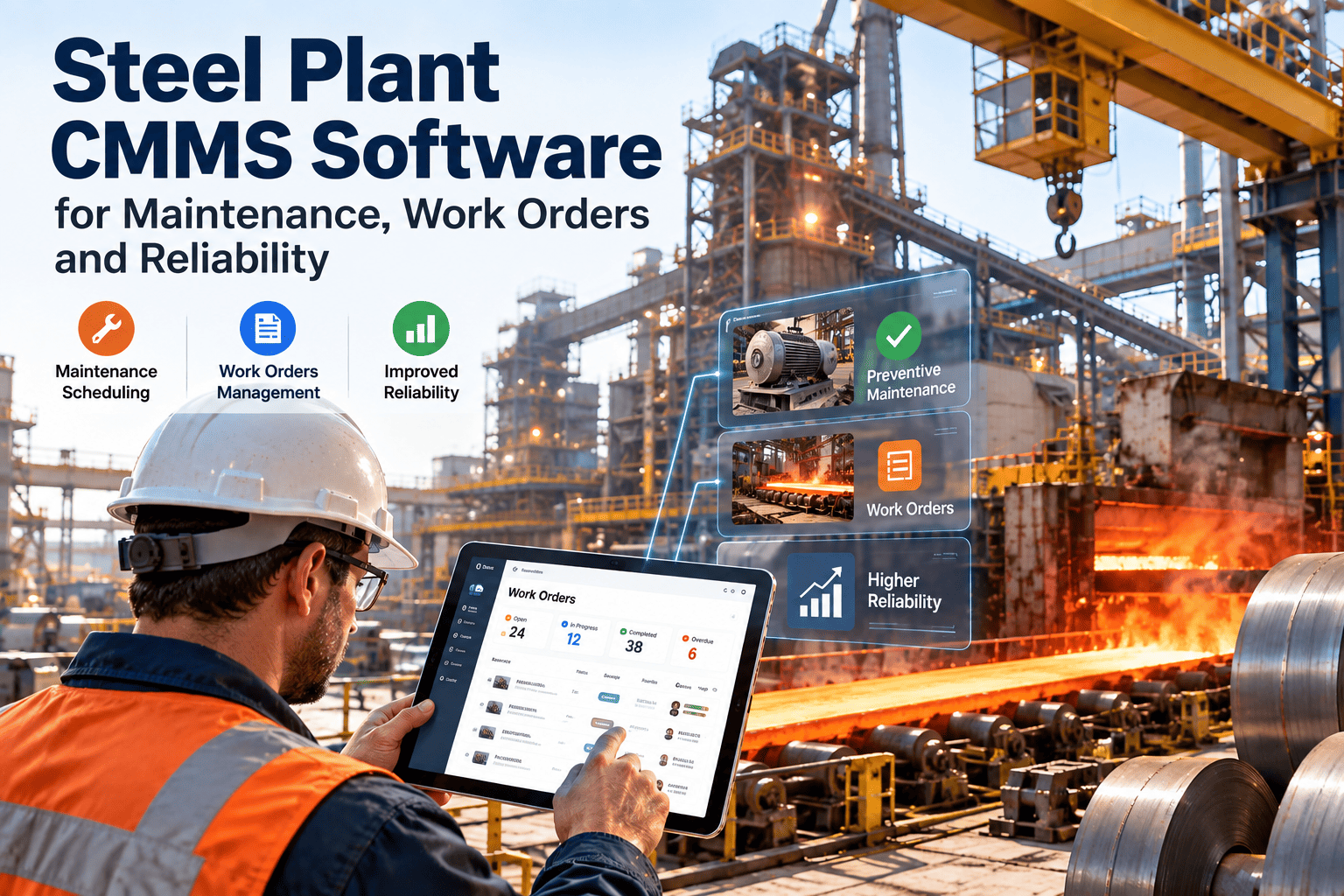
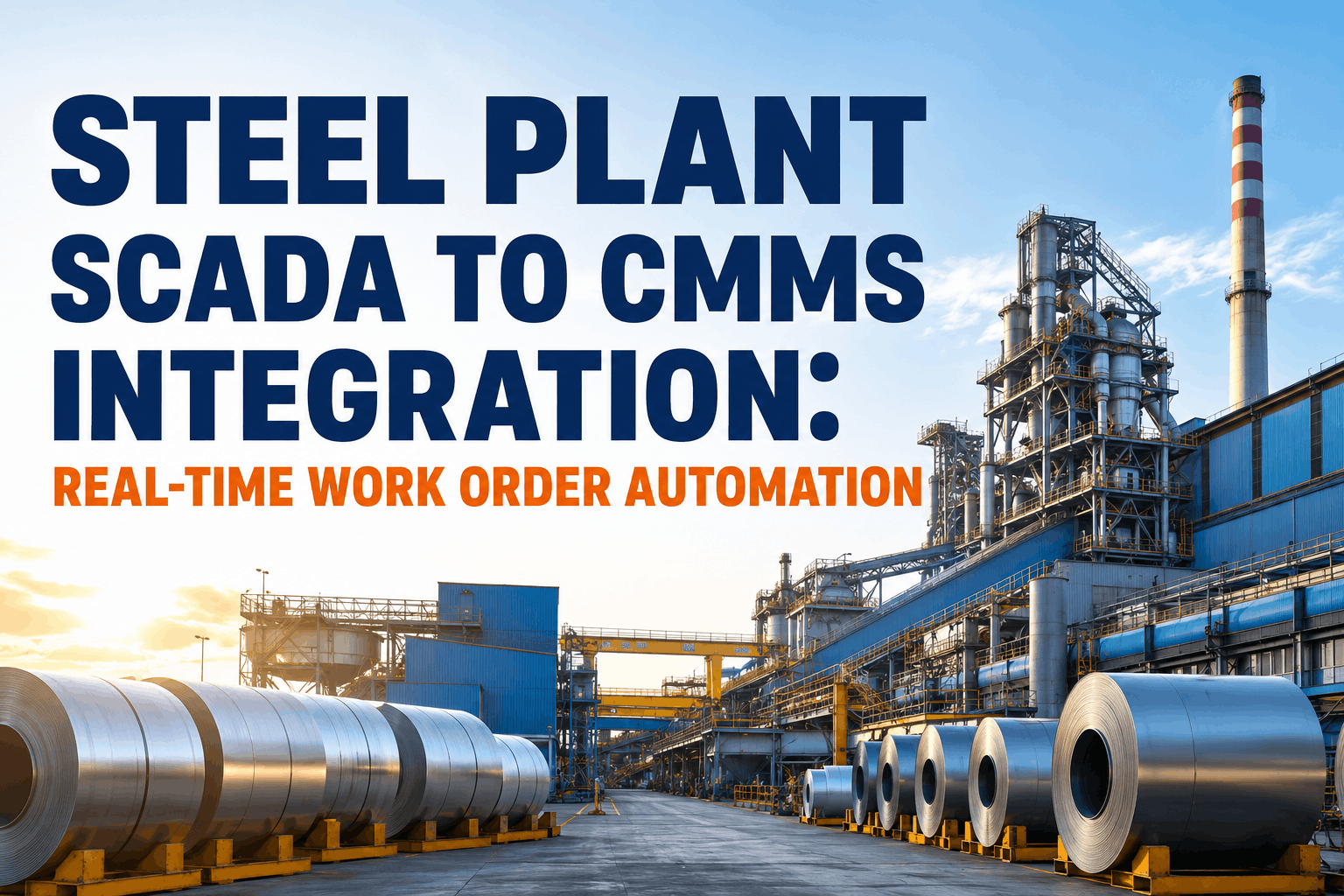
A steel plant generates more maintenance work orders per shift than almost any other industrial environment. A blast furnace running at campaign throughput may surface six to ten maintenance events between taps. A continuous caster in a 24-hour sequence generates mold delta-T alarms, segment roll vibration flags, and spray nozzle blockage findings that each require a structured work order response. A hot strip mill finishing campaign generates entry guide wear findings, roll force deviation alarms, and coolant header blockage events simultaneously across six stands. The volume, variety, and consequence hierarchy of steel plant maintenance work is not manageable on radio dispatch, paper forms, or shared spreadsheets — not because the technology is inadequate, but because the speed of event generation, the consequence differentiation between a P1 caster alarm and a P4 workshop equipment fault, and the compliance documentation requirements of hot work and confined space permits all demand a system purpose-built for structured work order management at this scale. Steel plant work order management starts with connecting the alarm source to the work order queue — and ends with every job closed with a documented asset record before the next shift starts.
Steel Plant Work Order Management: From Melt Shop to Shipping
How DCS-to-CMMS integration, priority-tiered routing, and zone-aware dispatch reduce MTTR 40% and eliminate the documentation gaps that cost steel plants compliance coverage and asset history.
How a Steel Plant Work Order Flows: DCS Alarm to Closed Record
In a steel plant with DCS-to-CMMS integration, the work order lifecycle begins at the control system — not at the maintenance supervisor's radio. Six steps from alarm to closed asset record, each automated where possible and documented where required. Book a demo to see OxMaint's DCS integration configured for your steel plant.
Alarm or Condition Trigger
DCS alarm, vibration threshold breach, temperature exceedance, or operator fault report generates the work order trigger. Via OxMaint's API integration, a P1 or P2 DCS alarm creates an OxMaint work order automatically — asset pre-populated, fault category assigned, priority tier set by the alarm severity classification configured in the integration.
Work Order Creation and Priority Classification
Work order created with asset link, fault description, zone location, and priority tier. For API-generated work orders, classification is automatic. For manually reported faults, the supervisor assigns priority from a configurable steel plant priority matrix — P1 (production-critical, immediate response) through P4 (deferred, planned schedule).
Permit-to-Work Pre-Clearance
For work requiring hot work permit, confined space entry, or electrical isolation, OxMaint blocks dispatch until the permit workflow is completed. Permit type is auto-assigned based on the asset zone and work category configured in the plant's permit matrix. The supervisor approves the permit in OxMaint — no separate paper system. Sign up to configure your steel plant permit matrix in OxMaint — free.
Skill-Matched, Zone-Aware Dispatch
Work order dispatched to the qualified technician — skill-matched (mechanical, electrical, instrumentation, refractory) and zone-aware (technician currently assigned to the correct production zone). P1 work orders push immediately to the technician's mobile with audible alert. P2–P4 dispatches add to the technician's queue with SLA countdown visible in the dashboard.
On-Site Execution and Documentation
Technician accepts on mobile, navigates to asset (QR scan or location hierarchy), executes repair with checklist visible throughout, captures photos at before/after, logs parts consumed, and records any findings requiring follow-up. All offline-capable — no connectivity dependency on the plant floor. Completion note created before leaving the asset.
Closure and Asset History Update
Supervisor approves closure — SLA compliance calculated automatically. Closed work order immediately added to the asset's permanent maintenance history. AI pattern detection reviews against all previous work orders on the same asset — if the same fault has appeared three times in 90 days, a root-cause investigation flag is generated. The asset record is richer after every closure.
Steel Plant Work Order Priority Matrix
Priority classification in a steel plant is not generic. A P1 in a blast furnace casthouse has a different response requirement than a P1 in the cold rolling finishing bay. OxMaint's steel plant priority matrix configures response time targets and escalation rules by zone and priority tier. Sign up to configure your steel plant priority matrix in OxMaint — free.
| Priority | Definition | Response Target | Resolution Target | Escalation Rule | Permit Required |
|---|---|---|---|---|---|
| P1 | Active production loss, breakout risk, safety hazard — any zone | Immediate · 0–15 min | Best effort, continuous | Supervisor alerted at creation; manager at 30 min if unresolved | Immediate hot work / LOTO as applicable |
| P2 | Degraded production, quality risk, imminent failure — production zones | Within 2 hours | Current shift | Supervisor alert at 2 hr; manager at 4 hr if open | Pre-clearance before dispatch |
| P3 | Equipment deficiency, PM finding requiring repair — no immediate production impact | Within 8 hours | Within 24 hours | Supervisor alert at 8 hr overdue | Standard PTW workflow |
| P4 | Planned maintenance, deferred repair, lubrication, inspection items | Scheduled | Within planned window | Planning cycle review | Planned in advance |
Swipe to view full table on mobile
Work Order Volume and Characteristics by Steel Plant Zone
Frequently Asked Questions
How does OxMaint integrate with a steel plant DCS for work order creation?
How does priority routing work for multiple simultaneous work orders in different zones?
Can steel plant permit-to-work be managed within OxMaint work orders?
From DCS Alarm to Closed Asset Record. Every Zone. Every Shift.
OxMaint connects your DCS to structured work orders, routes every job to the right technician, enforces permit compliance, and builds the steel plant asset history that prevents the next failure.