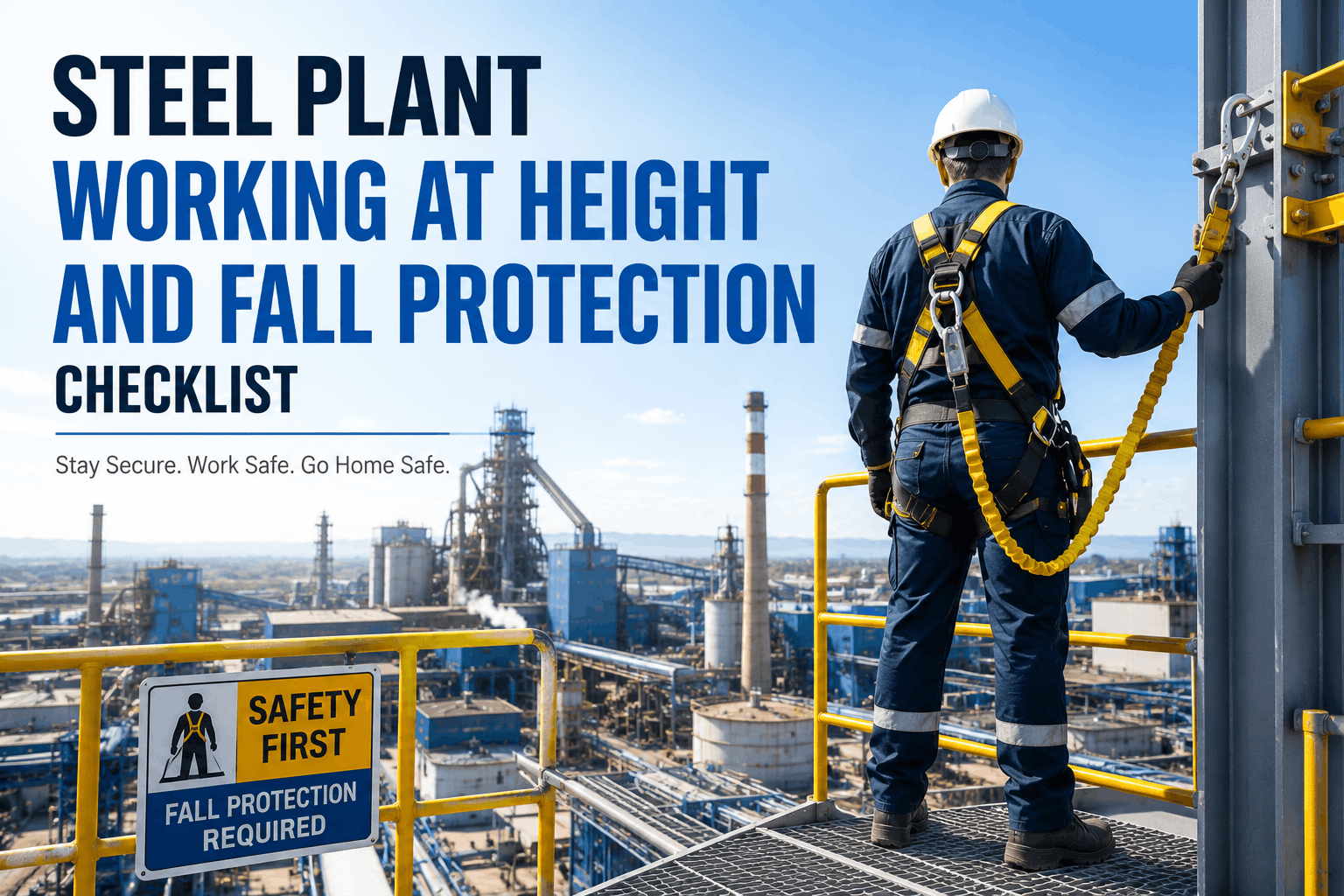
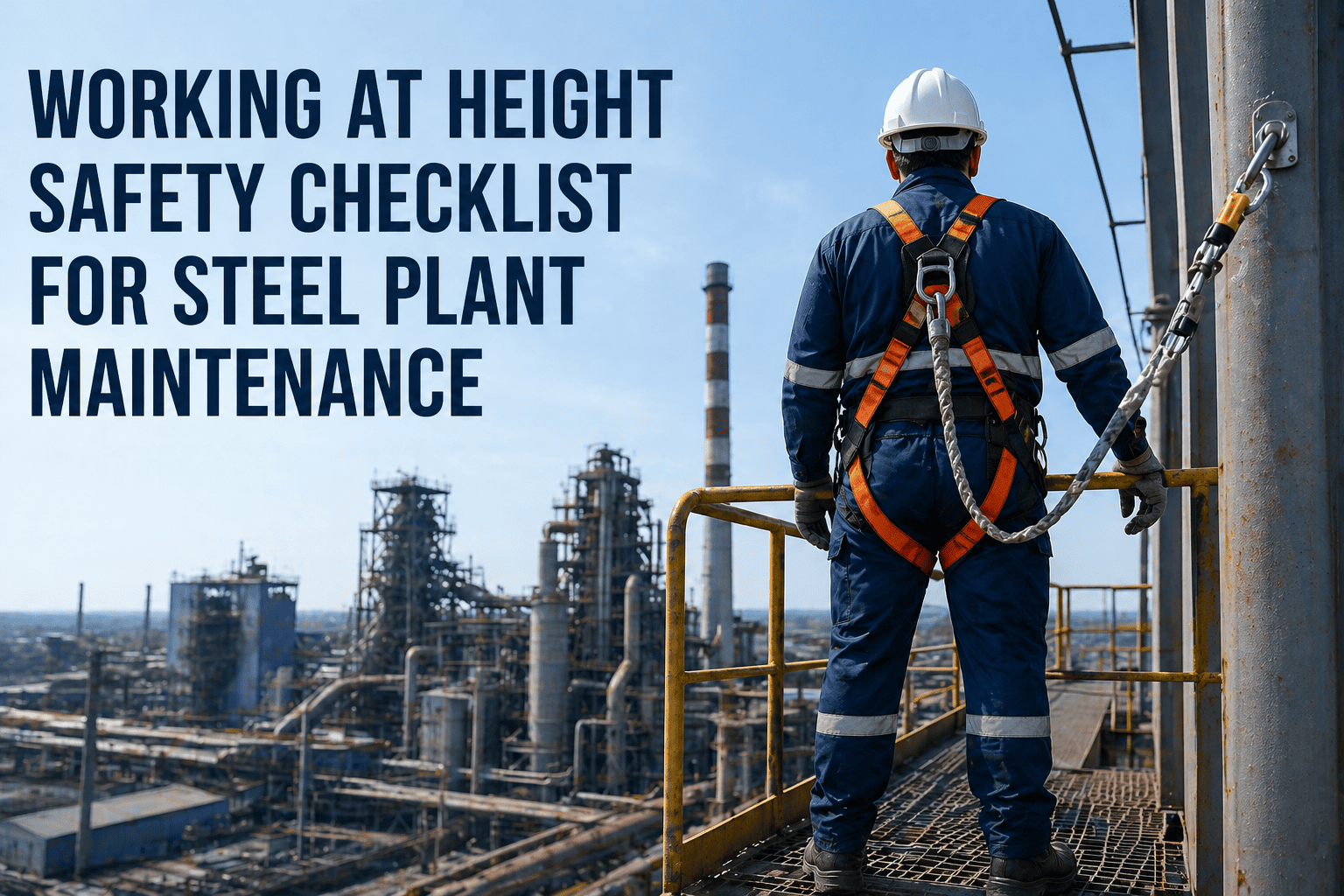
Working at heights above 4 feet in general industry and 6 feet in construction demands comprehensive fall protection protocols. Steel plants operate at extreme heights — from blast furnace charging platforms to crane catwalks and scaffolding systems. According to OSHA 29 CFR 1926.760, steel erection workers must implement fall protection at 15 feet or greater heights, with connectors protected at 30 feet or two stories, whichever is less. A single fall from height remains the leading cause of worker fatalities in industrial facilities, yet comprehensive pre-work checklists reduce fall-related incidents by 87% when executed systematically. Oxmaint's digital fall protection management platform enables supervisors to verify harness inspections, anchor point certifications, and rescue plan readiness in real-time before workers ascend — eliminating paper-based compliance gaps and creating an unbreakable safety record before anyone leaves the ground.
Digitize Fall Protection Compliance Across Your Facility
Real-time harness tracking, anchor point verification, and automated supervisor sign-off ensure every worker at height operates under verified fall protection — no exceptions, no delays.
1. Personal Fall Arrest System (PFAS) Equipment Inspection
Before ascending, every element of your PFAS must be certified. Full-body harnesses, lanyards, lifelines, and connectors that are damaged, frayed, or corroded can fail catastrophically at the moment workers depend on them most.
2. Anchor Point Assessment & Verification
Every fall protection system depends on an anchor point capable of withstanding the arrest force — 5,000 pounds minimum for personal fall arrest. Weak anchors collapse under fall forces, turning safety equipment into failure points. Steel plants must verify anchor capacity, geometry, and maintenance condition before workers tie off.
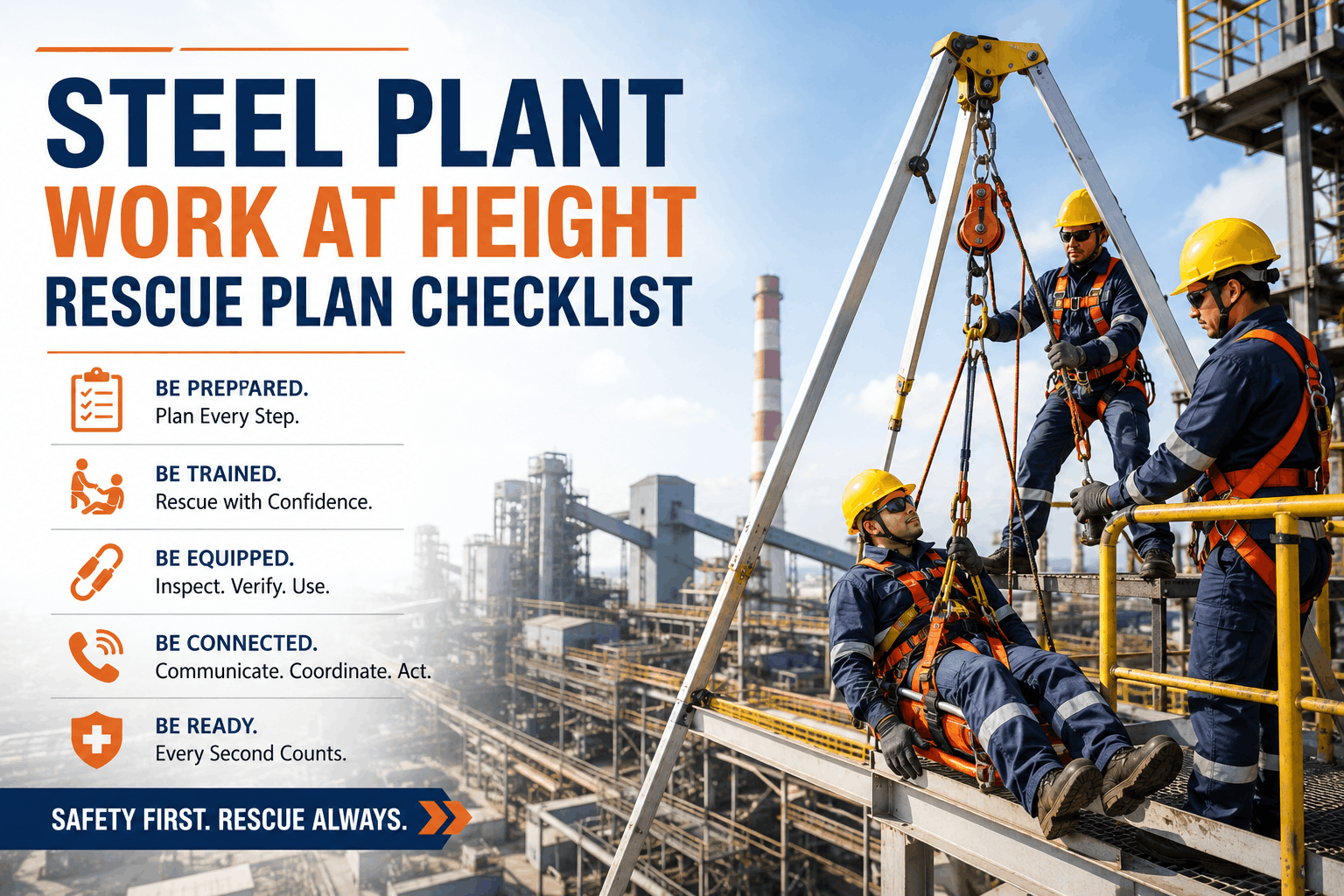
3. Rescue Plan & Emergency Response Readiness
A fall arrest happens in seconds. Rescue response must happen within minutes. Steel plants must verify rescue equipment is staged, personnel are trained, and response protocols are communicated before workers ascend to any height.
4. Height-Specific Work Location Assessment
Every height presents unique hazards. Blast furnace charging platforms differ from crane catwalks, which differ from scaffolding. Supervisors must assess location-specific hazards before work begins — what protects workers at 20 feet may be inadequate at 40 feet or during extreme weather.
Stop Preventable Falls Before They Happen
Oxmaint's fall protection module digitizes every safety control — from harness tracking and anchor verification to rescue readiness confirmation and permit sign-off — ensuring your team works at height with zero gaps.
Frequently Asked Questions — Fall Protection at Height
1. What is the minimum height requirement for fall protection in steel plants?
OSHA requires fall protection at 4 feet in general industry and 6 feet in construction. Steel erection specifically requires protection at 15 feet (30 feet for connectors per 29 CFR 1926.760).
2. How often must harnesses and fall arrest equipment be inspected?
Full inspection by qualified person minimum annually, though many facilities inspect daily before use. Never reuse harness that has arrested a fall — equipment must be removed from service immediately.
3. What is the maximum lanyard length and why does it matter?
Maximum safe lanyard length is 6 feet to limit fall distance. Longer lanyards mean greater fall distances, exceeding safe clearance zones and increasing suspension trauma risk if rescue is delayed.
4. Can workers tie-off to temporary anchors during steel erection?
Only temporary anchors that meet 5,000-pound capacity certified by engineer. Permanent, dedicated fall protection anchors are always preferable — never improvise anchor points using structural steel that may deflect under load.
5. What is suspension trauma and how is it prevented?
Suspension trauma occurs when hanging worker experiences blood pooling in legs, potentially causing cardiac shock within minutes. Prevention: rescue within 5 minutes, keep rescued worker horizontal, and prevent immediate standing to restore circulation gradually.
6. Who is responsible for verifying fall protection compliance — workers or supervisors?
Both share responsibility. Workers must refuse to work if they observe hazards; supervisors must enforce compliance and ensure all systems meet regulatory requirements. OSHA holds both accountable for violations.
7. Are there alternatives to harnesses and lanyards for working at height?
Yes: guardrails (most preferred per OSHA hierarchy), safety nets, horizontal lifeline systems, and controlled decking zones (CDZ). However, for most steel erection work, personal fall arrest systems (PFAS) remain the practical standard.
8. What training is required for workers at height and how long does certification last?
Workers must complete ANSI Z359.2 or equivalent fall protection training covering rescue procedures. Certification valid 24 months; recertification required when knowledge gaps are identified or job conditions change.
"Our blast furnace facility implemented Oxmaint's fall protection tracking system across all elevated work. Within the first month, our supervisors caught three harnesses with minor damage during pre-work inspections — harnesses that would have passed a casual visual check. More importantly, rescue plan verification went from 15 minutes of paperwork to 30-second digital confirmation. We've reduced fall risk incidents by 94% over 18 months. The system forces discipline where complacency used to hide." — Safety Director, Integrated Steel Producer, Pennsylvania
James Morrison, Safety Director | USSteel Operations, Pennsylvania
Eliminate Fall Protection Gaps Across Your Entire Facility
Real-time equipment tracking, automatic anchor verification, and integrated rescue plan confirmation make fall protection compliance a system, not a checklist.