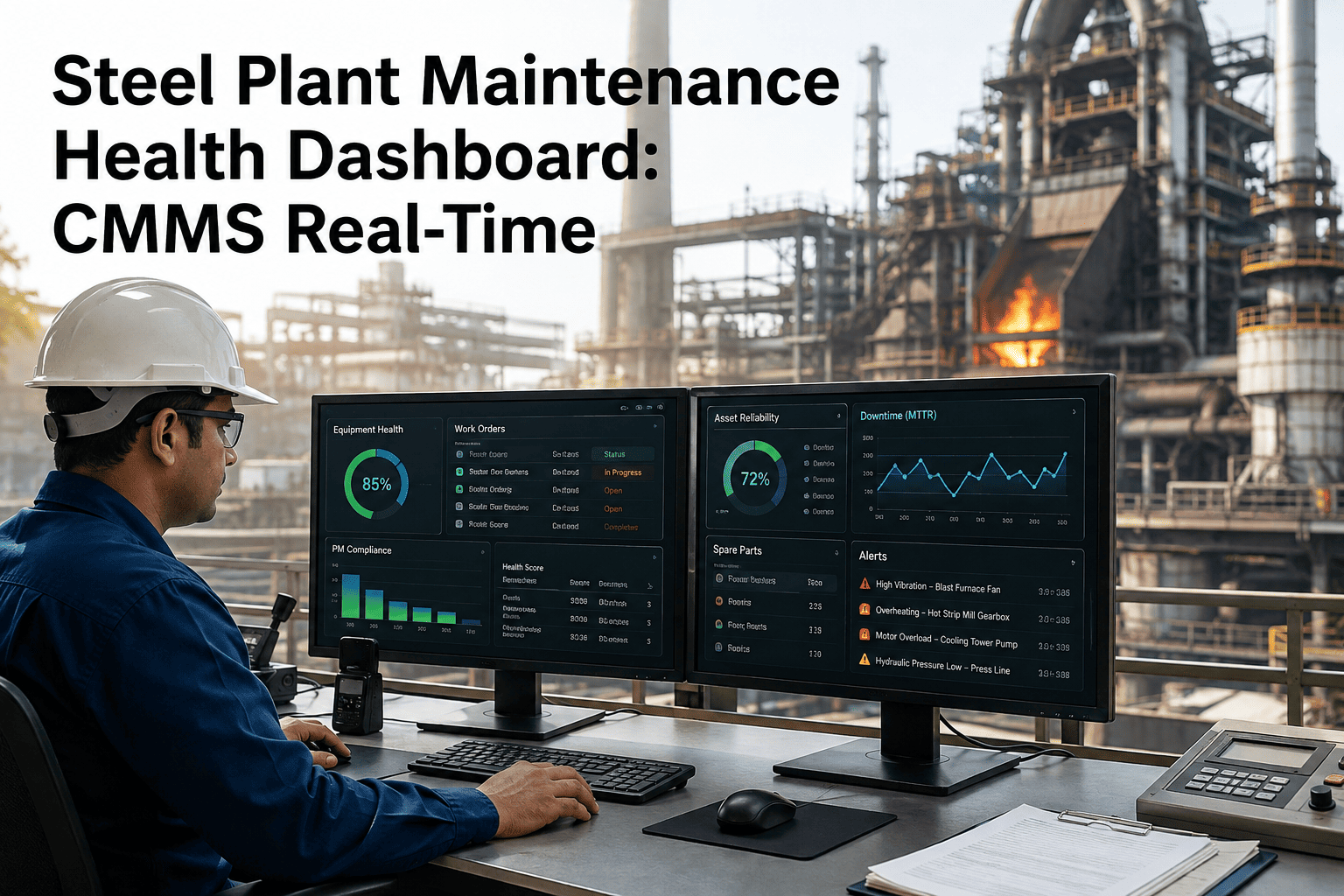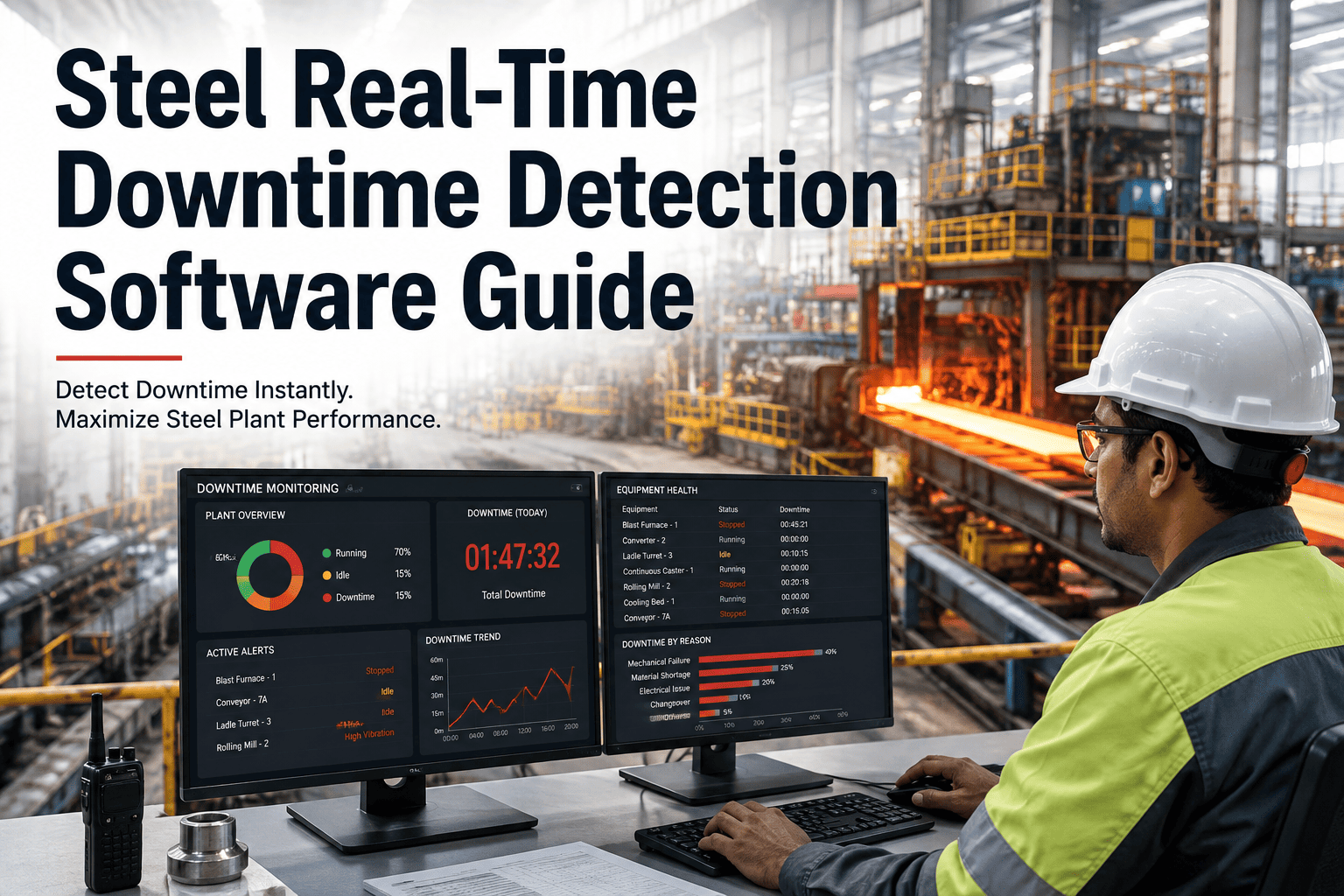
Most steel plants find out about downtime the same way, shift after shift — a supervisor walks the floor, sees a rolling mill standing still, and only then starts asking why. By the time that walk happens, the line may have been idle for forty minutes, the cause is already buried under three other things that happened since, and nobody can say exactly when the bearing temperature first crossed a dangerous line. Real-time downtime detection closes that gap by watching the signals as they happen instead of reconstructing them from memory after the fact. This guide breaks down what real-time detection actually looks like on a steel plant floor, why the walk-the-floor habit keeps costing more than plants realise, and how a connected system like OxMaint turns a stopped machine into an instant alert instead of an afternoon of guesswork.
Why Steel Plants Discover Downtime Too Late
A steel plant running blast furnaces, rolling mills, BOF converters, and continuous casters generates thousands of data points every minute — temperature, vibration, hydraulic pressure, line speed, cycle time. Most of that data is either not captured at all or sits inside a machine's local controller where nobody looks until something breaks. The result is a plant that is technically full of information but practically blind to what is happening right now. Maintenance teams end up managing yesterday's problems while today's warning signs quietly build up unnoticed, one shift at a time, until they surface as the next unplanned stoppage.
Downtime Is Noticed, Not Detected
A stopped conveyor or an idle rolling mill stand is usually spotted by a person walking past it, not by a system flagging it. On a large shop floor with three shifts, that gap between stoppage and notice regularly runs past thirty minutes.
No Single Source of Truth
Line speed sits in one controller, temperature in another, and the maintenance log is a separate spreadsheet altogether. Nobody can see the full picture of an asset's condition in one place, so early warning signs go unread until failure.
Root Cause Gets Reconstructed, Not Recorded
When a supervisor asks "what happened and when," the honest answer is often a best guess built from memory and a handwritten log entry, hours after the actual event took place on the shop floor.
Escalation Depends on Who's Nearby
Without automatic alerting, a critical fault on a BOF converter only reaches the right technician if someone happens to call them. Escalation is a phone chain, not a system, and phone chains break under pressure.
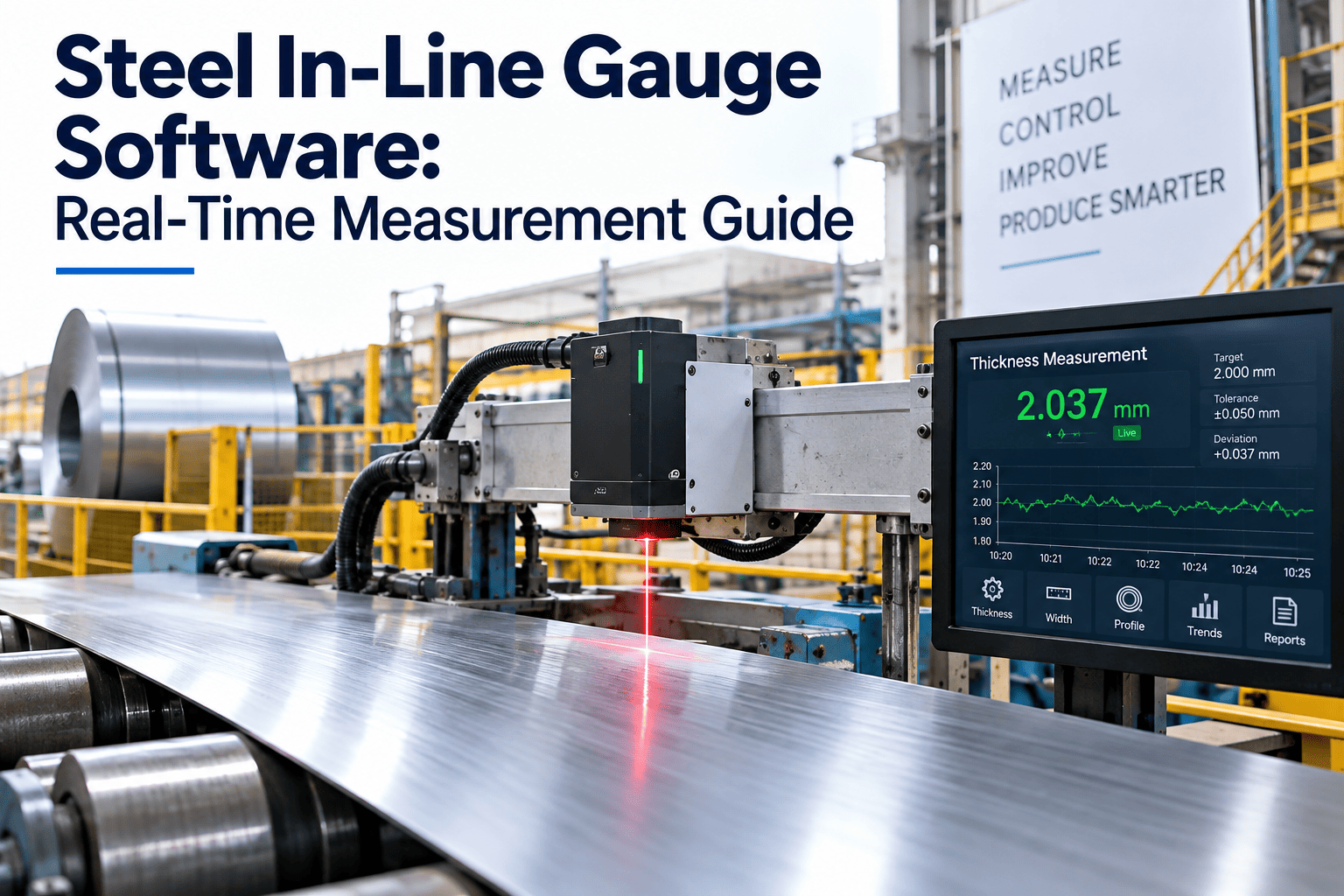
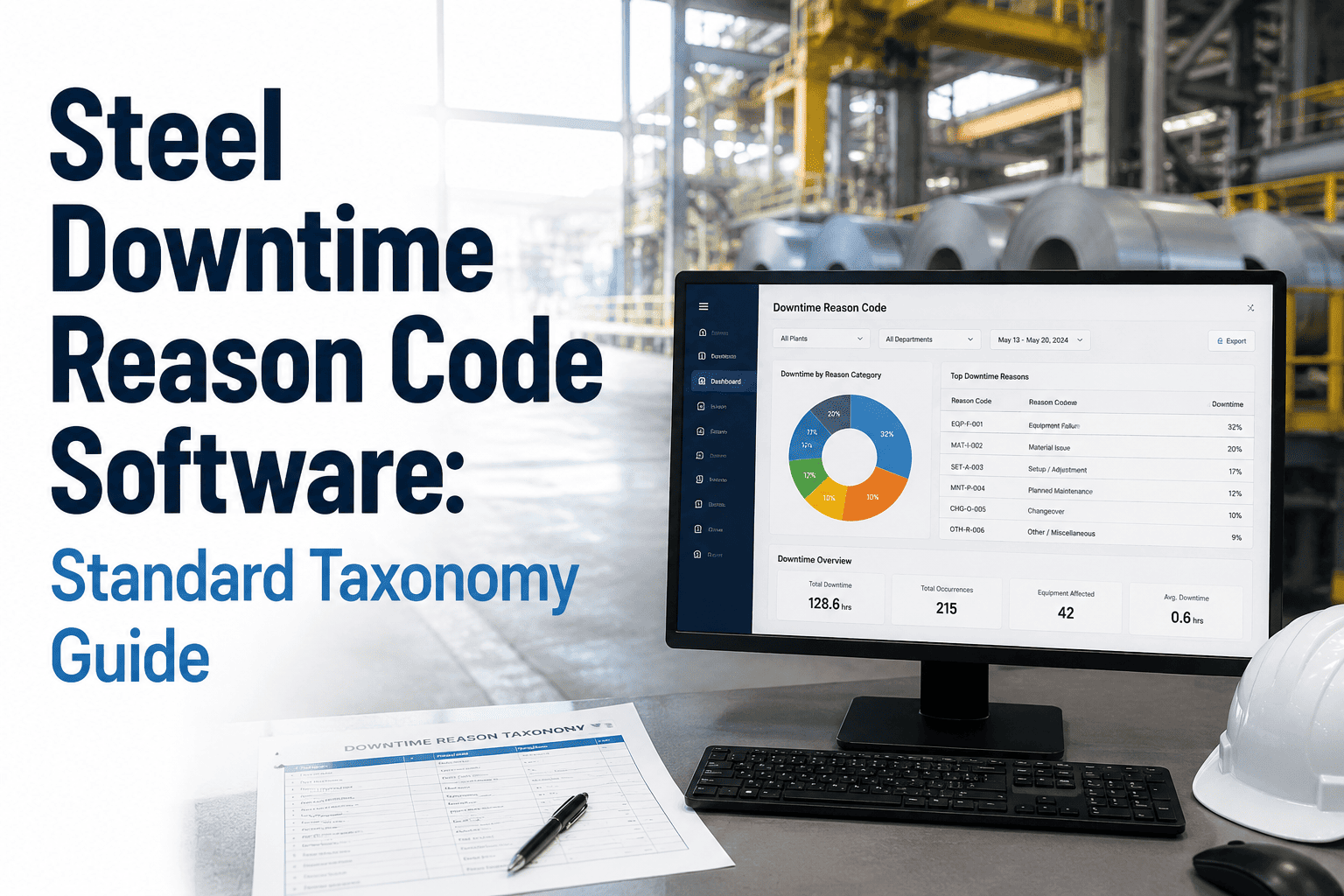
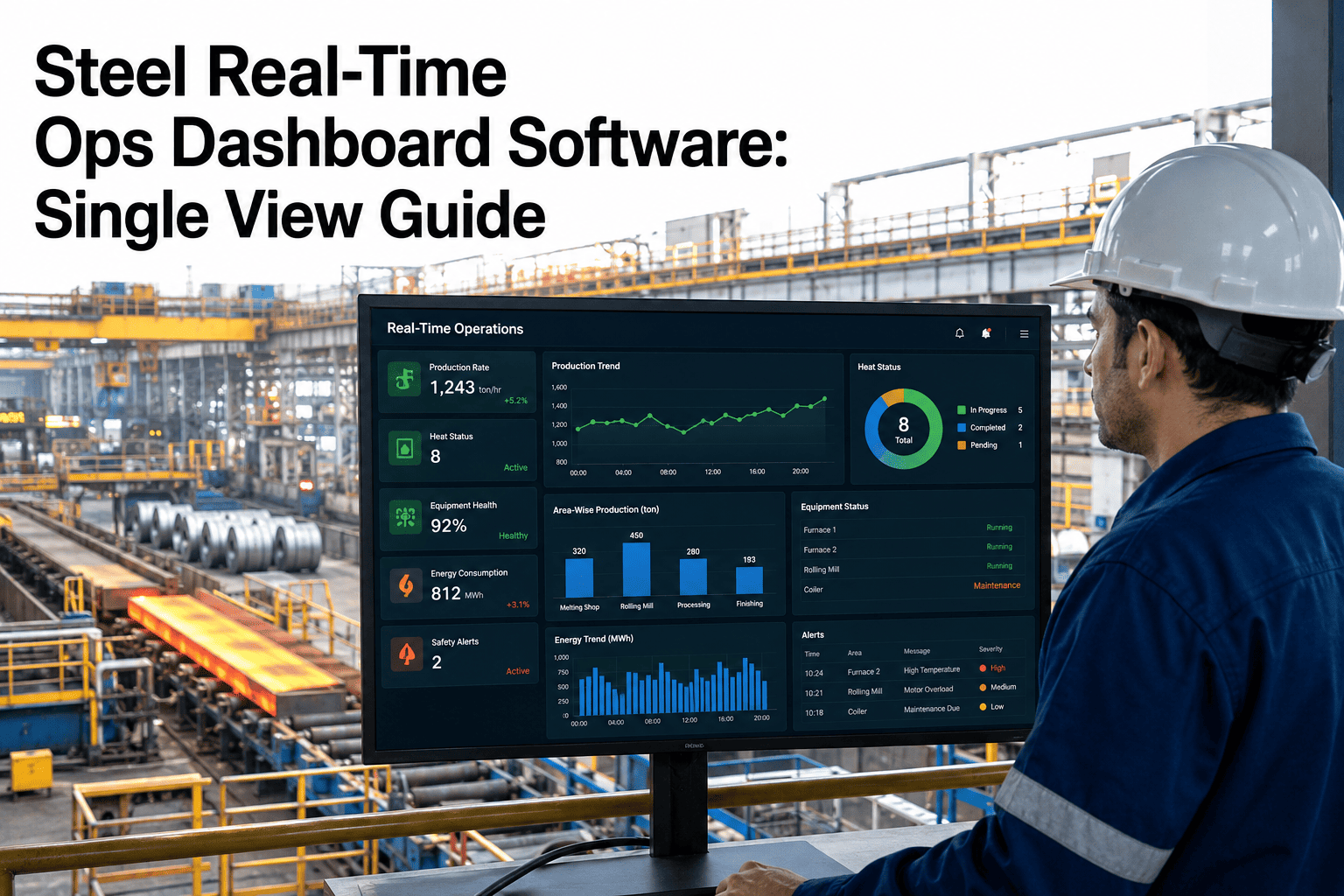
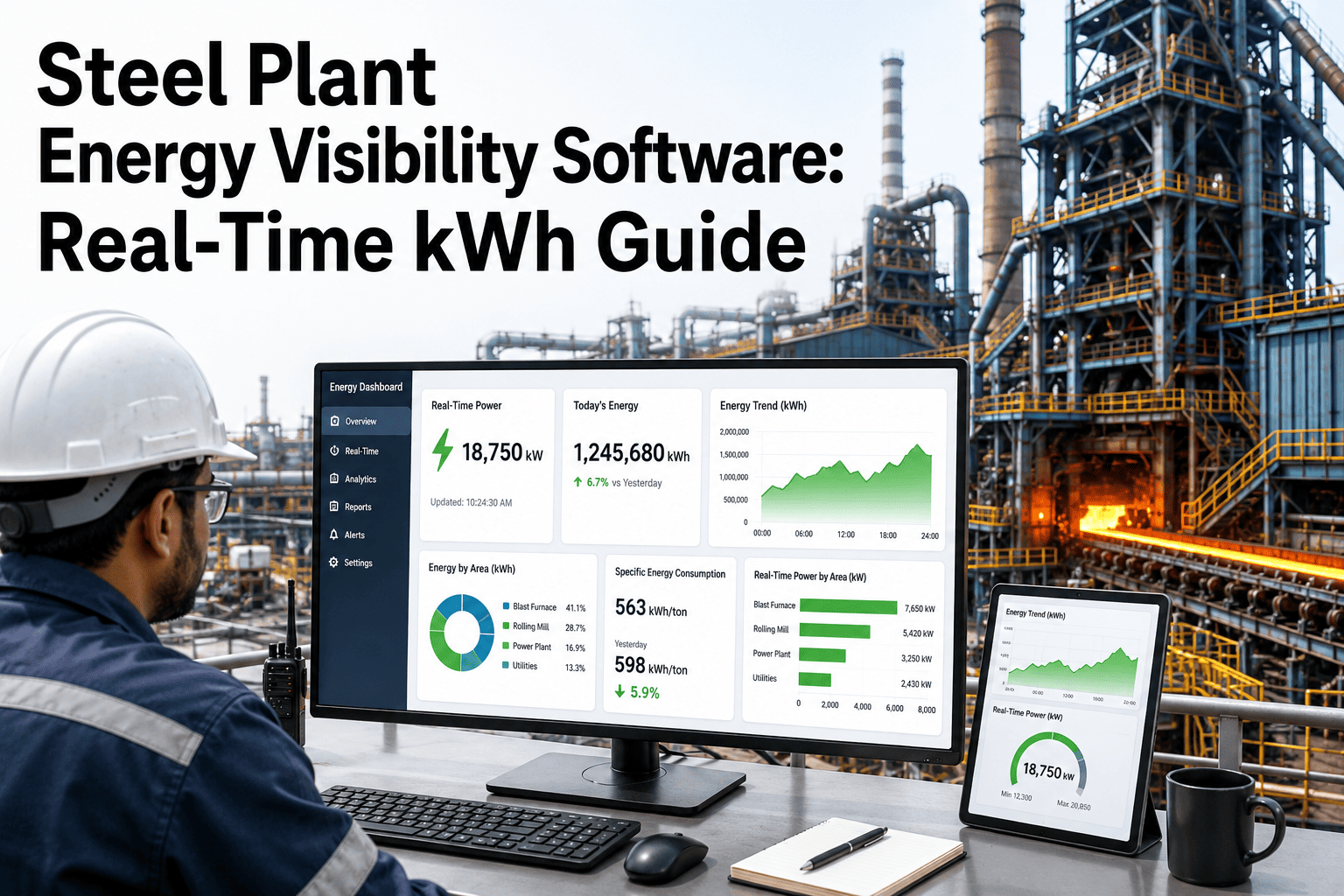
This is what a maintenance dashboard sees in practice — every stoppage, drift, and recovery logged the moment it happens, with no shift log entry required to reconstruct it later.
How Real-Time Detection Actually Reaches a Technician
The difference between reactive maintenance and real-time detection is not about having more data — most plants already have plenty of data sitting unused in controllers and PLCs. The difference is what happens in the seconds after a machine's condition changes, and whether that change reaches a technician before or after the shift log gets written. Below is what that exact moment looks like with a manual, walk-the-floor process compared with a connected detection workflow running on the same asset.
Without Real-Time Detection
With Real-Time Detection
Reactive Maintenance vs Real-Time Detection, Area by Area
This comparison covers the operational areas that actually change once a steel plant moves from noticing downtime to detecting it as it happens. None of these rows are theoretical — each one reflects a specific habit that either continues to cost a plant time or gets replaced once detection runs continuously in the background.
| Operational Area | Reactive Maintenance | Real-Time Detection |
|---|---|---|
| Downtime discovery | Found by a person, often 30+ minutes late | Flagged automatically the instant it starts |
| Root cause records | Written from memory after the event | Captured live with timestamped sensor data |
| Technician alerting | Phone calls or radio, if someone is free | Mobile push alert to the right person instantly |
| Early warning signs | Missed until the fault becomes visible | Threshold alerts before failure occurs |
| Shift handover | Verbal briefing, details often lost | Live status visible to the incoming shift |
| Downtime reporting | Rebuilt manually at month end | Categorised automatically, always current |
| Repeat failures | Pattern is invisible across scattered logs | Pattern surfaces from linked asset history |
These figures come from steel plants that moved priority assets onto real-time detection over a twelve-month period, measured against the same assets under a manual, walk-the-floor process the year before.
What Detection Delay Actually Costs a Steel Plant
A rolling mill running near capacity can lose eight to twenty lakh rupees of output for every hour it sits idle. The chart below is not about the failure itself — it is about how much of that loss is pure detection delay, the time between a machine stopping and someone actually responding to it.
Multiply that gap by the number of stoppages a busy line sees across a month, and detection delay stops looking like a small operational inefficiency and starts looking like one of the largest hidden line items on a steel plant's production report — one that never shows up as its own number on any spreadsheet.
Every one of those minutes on the chart above is a minute your team can get back. See what real-time detection looks like running on your own asset list, with your own downtime patterns, instead of a generic demo screen built for a plant that isn't yours.
Where the Signals Actually Come From
Real-time detection is not one sensor bolted onto one machine. It is a set of signal sources working together across the plant, each catching a different kind of early warning that a human walking the floor would never notice in time.
Machine Signal Taps
Direct connections into PLCs and drive controllers read line speed, cycle count, and fault codes the moment they change, without needing new hardware on the machine.
Condition Sensors
Vibration, temperature, and pressure sensors on bearings, motors, and hydraulic systems catch the drift that happens well before a fault code ever appears.
Operator Reason Codes
When a stoppage needs a human explanation, the operator logs a reason code from a mobile screen in seconds, right where and when the stoppage happened.
Downtime Timers
Every stoppage, planned or not, starts a timer automatically the instant a linked asset goes idle, so no downtime minute goes unrecorded.
What Real-Time Detection Looks Like on Each Major Asset
A blast furnace does not fail the same way a conveyor does, and a rolling mill does not drift out of condition the way a coke oven battery does. Real-time detection only works when the thresholds and signals are tuned to how each asset actually behaves on a steel plant floor, not a generic one-size-fits-all alert rule copied across every machine on the site map. Getting this tuning right is what separates a detection system that technicians trust from one that gets muted after the first week of false alarms.
Blast Furnace
Blower vibration, top pressure, and cooling water flow are watched continuously, so a slow drift toward failure is caught days before it turns into an unplanned shutdown of the whole furnace line.
Rolling Mill
Stand bearing temperature and line speed are tracked stand by stand, so a single overheating bearing triggers a targeted alert instead of the entire mill being treated as one large unknown.
BOF Converter
Hydraulic pressure and tilt cycle timing are monitored between heats, catching pressure drift that would otherwise only show up as a sudden converter stoppage mid-production.
Continuous Caster
Casting speed and mould level are tracked second by second, since even a short unplanned stoppage on a caster can affect an entire downstream production run.
Coke Oven Battery
Cooling water flow and door seal pressure are watched continuously, giving technicians time to act before a minor deviation becomes an environmental or safety incident.
Overhead Cranes
Run hours, load cycles, and hoist motor temperature are tracked automatically, replacing the manual logbooks that crane operators are otherwise expected to fill in by hand each shift.
Rolling Out Real-Time Detection Without Stopping Production
The biggest hesitation plant managers raise is not whether real-time detection works — it is whether turning it on will itself disrupt a plant that cannot afford downtime during the rollout. In practice, detection is added in layers, starting with the assets that already cost the most in unplanned downtime, so the plant sees value before the rollout is even finished and long before every line has been connected.
Start With Your Costliest Assets
Rolling mills, BOF converters, and casters are usually connected first, since these are the assets where a single unplanned hour costs the most in lost production.
Read Existing Controller Data First
Most assets already report speed, cycle counts, and fault codes through their PLCs, which means detection can go live on many machines without new hardware.
Add Condition Sensors Where Needed
Bearings, motors, and hydraulic systems without a usable signal get vibration or temperature sensors added, installed during planned maintenance windows only.
Expand Once the First Wins Land
Once technicians see faster alerts on priority assets, remaining lines, cranes, and utility equipment are added in planned phases across the following months.
Every plant manager already believes their team responds fast. The honest question is how fast compared to what — a clock that started when the machine actually stopped, not when someone happened to notice. That is the entire value of real-time detection. It is not a smarter dashboard, it is thirty lost minutes turned into thirty saved ones, on every single stoppage, every single shift, across every asset that matters to production. Once a team like ours saw the detection lag measured in seconds instead of minutes on OxMaint, going back to walking the floor and waiting on a phone call was never seriously on the table again.
Why This Is Moving From Nice-to-Have to Standard Practice
A few years ago, real-time detection was something only the largest integrated steel plants could justify. Sensor hardware was expensive, connecting it to older PLCs required custom engineering, and the software to make sense of the data lived in a separate system from the maintenance team's actual work orders. That has changed. Cloud-based platforms now read existing controller data directly, condition sensors are cheaper to deploy, and the detection layer sits inside the same system technicians already use to manage work orders and spare parts.
What used to be a multi-year capital project is now a phased rollout that starts paying for itself on the first few assets it touches. For a steel plant weighing whether this is worth doing this year rather than next, the honest comparison is not the cost of the software against doing nothing — it is the cost of the software against the downtime hours a plant is already losing to detection delay every single week.
Frequently Asked Questions
A work order system tracks tasks once they're created. Real-time detection is what triggers the work order in the first place, the moment a machine stops or drifts out of range, without waiting for a person to notice, walk over, and log it manually hours later.
Not always. Many steel plant assets already report speed, faults, and cycle data through existing PLCs and controllers, which OxMaint can read directly without extra hardware. New condition sensors are only added where a machine genuinely has no usable signal available today.
Most plants see automated alerts flowing to technicians' phones within the first two to three weeks of connecting priority assets like rolling mills or casters, well before the full plant rollout is complete across remaining lines and support equipment.
No, it works alongside it. Scheduled PM stays in place for planned checks and inspections, while real-time detection catches the unplanned failures and slow condition drift that a fixed calendar schedule was never designed to catch on its own.
Yes. Every detected stoppage is timestamped, categorised, and logged automatically, giving a complete record for internal reviews or external audits without the hours of manual compilation a spreadsheet-based process usually requires. Book a demo to see a sample report.
Turn Every Stoppage Into an Alert, Not a Mystery
Your plant already has the signals sitting in its controllers and sensors right now. What it needs is a system that reads them the moment something changes and puts the right technician on it before thirty minutes disappear into a shift log nobody reads until the next audit. See how real-time detection would run on your own asset list in a 30-minute walkthrough built around your plant.